Abstract
The Cosmoverse conference took place from September 26 - 28. The main theme focused on technical upgrades and new solutions for Cosmos 2.0, including Cosmos's interchain functionality and version 2.0 of $ATOM. In addition, Cosmos's main ecosystems, such as Osmosis, updated their progress and ideas and suggestions for Cosmos 2.0. This article analyzes the significance of the conference on Cosmos in 3 parts: (1) a comprehensive description and analysis of the current state of Cosmos development from the perspective of data, nodes and ecology; (2) a detailed analysis of the new three-layered architecture model of Hub in the whitepaper of Cosmos Hub 2.0; (3) a study comparing the ATOM 2.0 token issuance and distribution mechanism. In general, while there has been a breakthrough in Cosmos Hub 2.0, but due to the limited flexibility of Cosmos-SDK, Cosmos Hub has less control over the Dapp chains, and the recognition of the new version is subject to the censor of time. It is summarized as the following:
(1) The whole ecological volume of Cosmos is second only to Ethereum, cross-chain transactions from IBC are more active, and great potential lies within. However, the Cosmos ecology is too loose internally, the functionality of Cosmos Hub is incomplete, and the ability for value capture is poor on $ATOM.
(2) Four segments of functionality were introduced in Cosmos Hub 2.0: interchain security, liquid staking, interchain scheduler and interchain allocator, redefining the new role of Cosmos Hub as an ecological hub. Interchain scheduler and interchain allocator respectively act as tax enforcement and treasury management to drive the whole Cosmos ecology.
(3) The issuance scheme of ATOM 2.0 significantly reduces the high inflation problem brought by version 1.0, while the control power of issuance and circulation is in the hands of Cosmos treasury, reducing inflation while achieving ecological sustainability. Recognition on the new version of whitepaper is low, as reflected by the recent prices of $ATOM.
(4) The new output of $ATOM will not be directly effective as a validator’s incentive, but allocated in portion to project/interchain security/cross-chain, etc. Validators’ revenue may see some growth in the first few months of the ATOM 2.0 program due to interchain security and IBC transfer transaction fees, but in the long term, it depends on how well the new features are supported by each Dapp chain.
(5) The number of application scenarios of $ATOM increases, which diversifies the revenue stream for staking, continuously adding significance to the overall blockchain industry. Furthermore, earnings can be collected in liquid staking, governance, interchain security, cross-chain transaction and bridging in addition to staking as nodes. Besides, Dapp chains are able to enjoy more negotiating power and achieve a favorable position of the policy via staking $ATOM.
(6) The best way for Cosmos Hub to reflect its status is to use governance to participate in cross-chain and ecological construction. To this end, the Cosmos Hub has designed the governance stack as the infrastructure for arbitrary DAOs. A Cosmos power hierarchy model is also proposed, giving $ATOM holders the highest authority.
Table of contents
Abstract 1
1. Status Quo of Cosmos 4
1.1 Data 5
1.2 Ecological Development 7
1.3 Staking as Nodes 8
2. Cosmos Hub's New Module of Feature 8
2.1 Interchain Security 9
2.2 Liquid Staking 11
2.3 Value Capturer: Interchain Scheduler and Interchain Allocator 11
3. The highly controversial ATOM 2.0 14
3.1 Change 1: Issuance of ATOM 15
3.2 Change 2: Issuance Token Allocation 17
4. Standardization and flexibility of governance 18
5. Discussions and Opportunities 19
References 22
1. Status Quo of Cosmos
Cosmos has operated for more than 3 years since the mainnet was launched in 2019, and it is critical to the entire blockchain industry. Cosmos builds a multi-chain system, where each application is running on an independent chain of its own while each chain can communicate with each other smoothly. Technically, Cosmos has three major highlights: (1) Tendermint consensus engine: (2) Cosmos-SDK framework; (3) Interchain communication protocol—IBC; The three together solve the major problems of modularized building of chains, cross-chain for native tokens and security.
In addition, blockchains constructed with Tendermint and Cosmos-SDK are leading the industry, such as Nym as a privacy chain, Celestia that provides data availability, and Evmos as an EVM-compatible chain, etc. It is the flexibility and user friendliness that Cosmos offers enables that developers could focus on continuous innovations of their projects regardless of concerns with duplication of work.
Technical upgrades were planned as early as the end of 2021, including IBC upgrades, interchain accounts, interchain security, liquid staking, etc., which are not new to those who have their eyes on Cosmos.
In addition to its technical advantages, Cosmos has long been criticized for its $ATOM and governance. $ATOM has poor value capture capability. Fundamentally because it seems useless apart from rewarding validators for maintaining the security of Cosmos Hub. Compared with $DOT, Polkadot's shared security makes $DOT the core token of the entire network, as a token for cross-chain fees payment and parachain security pledge. Dapp chains utilizing the Cosmos-SDK and IBC protocols are capable of being operated independently in the absence of Cosmos Hub and ATOM, which aggregates the fragmentation of the whole Cosmos ecosystem.
Another factor is that the Cosmos Hub has a low influence on the ecosystem, because it has no governance rights over the Dapp chains. Anyone can submit a proposal to Cosmos, and if a proposal goes to the voting stage, there is a minimum deposit requirement. Therefore, the entire governance framework of Cosmos is very simple.
1.1 Data
Since the launch of IBC last year and the prevalence of the modular blockchain concept at the beginning of the year, Cosmos has seen rapid growth. The ecosystem currently has over 263 projects. The total market value of the project is US$11.7 billion, ranking 5th among all public chains, second only to RippleNet, although there is still a big gap when compared alongside Ethereum. There are two reasons: (1) The ability to capture the value of $ATOM is poor; (2) Many native tokens from Dapp chains are not listed on centralized exchanges, such as $OSMO. There are 5 projects that have been ranked in the top 100 by market value, namely Cosmos, Cronos, Terra Classic, THORChain, and Kava. According to Map of Zones, there are currently 49 chains integrated to IBC with 24-hour IBC trading volume of US$31 million. The top 10 projects in terms of 24-hour IBC trading volume are Osmosis, Axelar, Cosmos Hub, Juno, Kujira, Crescent Network, Injective, Evmos, Bostrom and Sercret. By data on September 28th, 24H IBC transaction amount of Cosmos is second only to Polkadot, surpassing projects like Multichain and Celer cBridge.
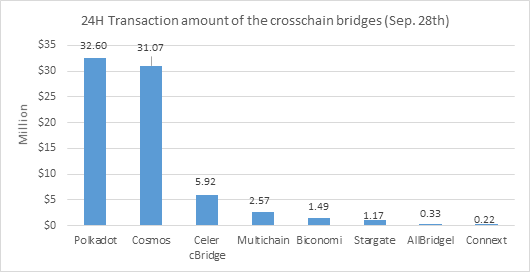
Figure 1. 24-hour transfer amount by cross-chain bridge (September 28)
(Source: Official websites, Map of zone)
In terms of the number of on-chain addresses, the number of Cosmos Hub's daily active address has remained above 10,000 on average since January this year, yet BSC, Ethereum, Solana, Polygon and other L1 chains are all above 300,000. Compared to major Layer2 projects, Cosmos’s number of active address is lower than Arbitrum and higher than Optimism. Despite the large number of ecological projects, Cosmos Hub currently has no applications and low adoption rate, resulting fewer active accounts than other ecologies. The number of active addresses on the DEX, Osmosis, top-of-the-line, is also slightly higher than Cosmos Hub.
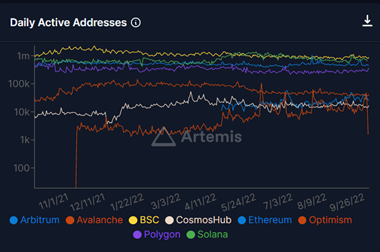
Figure 2. Number of daily active addresses of Cosmos Hub and other chains
(Source: Artemis)
Akin to a multi-chain platform, the development of Polkadot is inferior compared to that of Cosmos. At present, there are more than 179 Polkadot ecological projects, of which 66 chains launch on the Polkadot or Kusama, 35 projects launch on the testnet, 77 projects are under development based on substrate, and there is currently 1 project with a daily activity of more than 6,000.
Compared with Cosmos, Polkadot’s parallel chains are seeing gap ecosystem and marketcap wise. There may be several reasons: (1) Cosmos launched the main network in March 2019, and ecological development began earlier. In May 2021, IBC was successfully launched. Catching up with the blooming of the public chain ecosystem, the explosion of the Cosmos ecology has been successfully realized. On the other hand, Polkadot launched the main network in May 2020, and XCMP was launched in May 22. The imperfections associated with early development tools and infrastructure also caused Polkadot to miss the free ride that came with the 2021 ecological outbreak. (2) Cosmos has a lower threshold for developers to enter the ecosystem, and projects can participate freely without staking any tokens. (3) During the market upswing that took place over the past two years, staking Cosmos tokens allow for the receipt of airdrops from new projects, which has also facilitated many users in entering the Cosmos ecosystem, thus leading to the formation of a wealth effect of sorts.
1.2 Ecological Development
Many application chains built with Cosmos-SDK, except for Cosmos Hub which has no ecological applications, have unique characteristics and are favored by investment institutions. The Cosmos chains are independent but cooperate with each other and compete benignly. For example, Osmosis is the liquidity center of Cosmos. The tokens of the new chain will provide initial liquidity on it, and both Osmosis and the new chain will provide higher farm yield to increase the adoption rate of the new chain. Additionally, Cosmos projects observe an airdrop tradition. When new projects are issued, they will be airdropped to $ATOM stakers, Osmosis LP, and other IBC chains’ stakers. For the projects, these users are long-term supporters of the Cosmos ecosystem. Here is a brief of the latest development of several core projects.
(1) The liquidity hub of Cosmos is Osmosis, which was the first chain compatible with IBC. Osmosis achieved US$17.6 billion in trading volume in its first year online on the mainnet. Osmosis also achieved the highest IBC cross-chain volume in Cosmos with US$10 million in 24-hour volume. On the technical side, Osmosis has made improvements on PoS and developed superfluid staking, which reduced its losses during the Terra collapse. Osmosis is planning more developments - notably, Phase Finance will be introduced this November to build an automated investment strategy (DCA) for users.
(2) One of the most anticipated future chains, dYdX, is the largest derivatives exchange on the chain and the largest integrated Dapp for Ethereum L2, whose v4 was announced in June, and built by the Cosmos SDK; a public beta network is expected to be launched in Q1 2023. After this test network, dYdX plans to launch the mainnet with access to IBC and stablecoin integration.
(3) Celestia solves the Layer2 scaling problem and provides data availability to the layer. It is already live with Arabica as developer testnet and Mamaki as public testnet; the mainnet is expected to be launched in 2023.
1.3 Staking as Nodes
ATOM currently has 310 million tokens issued, of which 200 million (66.36%) are being staked, with a current annual inflation rate of about 12.81%. Cosmos Hub currently has 175 active verifying nodes, with validators and principals receiving rewards from inflation rewards and a portion of Cosmos Hub's transaction fees, both of which are then split. According to Stakingrewards and Mintscan, the current block reward is 9.13 ATOM, with approximately 43,624,800 ATOM of new issuance per year; daily transaction fees is 30.91 ATOM (30-day average), which accumulates to 11,282 ATOM for 1 year, ceteris paribus. The current overall APR for staking is about 18.94%, and the APR for staking to the first 10 verification nodes ranges from 15.51% to 19.19%.
2. Cosmos Hub's New Module of Feature
Cosmos Hub is the nuclear of the whole Cosmos ecosystem, where zones of Dapp chains reside. It is the genesis blockchain in the system; and can be deemed a blockchain competent at handling multiple assets. The assets are packed and transferred to different Zones through IBC, and the Hub come into play to ensure the global invariance of these tokens; the security of the Hub is crucial. The design of Cosmos Hub is also intended to be extremely simple - there is no ecological application, and IBC cross-chain does not necessarily have to go through the Hub, as any two chains can be connected. This further weakens the functionality of Cosmos Hub.
The role of Cosmos Hub ought to be redefined, and the function also needs to be upgraded from an interchain perspective. The whitepaper for Cosmos Hub 2.0 proposed to address the issues associated with interchain security, treasury and taxation, and ecological development by dividing the Hub into a three-layered architecture, as demonstrated in the figure below. The bottom layer is Cosmos Stack, funded by the Hub and managed by the core team, which contains the three major innovations of Cosmos. The middle layer is the Security Economic Scaling layer, which includes features for interchain security and liquid staking that have yet to be upgraded to the Hub. The top layer is the newly defined functional modules: Interchain Scheduler and Allocator. Cosmos Hub 2.0 is designed with the basic purpose of driving interchain development and the connection of $ATOM to the entire ecosystem.
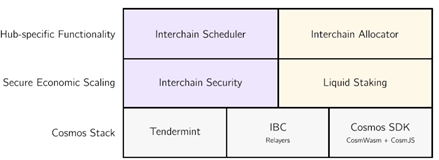
Figure 3. Cosmos Hub: three-tier functional architecture
(Source: Cosmos Hub 2.0)
2.1 Interchain Security
Currently, more problems have sprung up than the value capturing of ATOM tokens. One of the peculiarities of Cosmos that differs from Polkadot is that the security of each individual chain depends on themselves, and for new chains, having fewer validators present more vulnerability to attacks.
Taking this into consideration, Cosmos introduced its own interchain security technology that allows Dapp chains to rent security from Cosmos Hub. This interchain security is similar to Polkadot's shared security model, generating blocks on one chain and maintaining the security of another chain. Unlike Polkadot, Cosmos's shared security is more flexible in that no requirements are mandatory on all IBC chains. Regarding the cost of interchain security, the current version in the discussion is that application chains need to pay a percentage of the transaction fees, about 75% to validators and 25% to the Cosmos treasury.
Interchain security is divided into 3 phases:
Phase of V1: All validators are assembled as central radiating form, where all shared security chains are connected to Cosmos Hub, and validators are available to all. Secured consumer chains have the same security, constituting too much centralized power in Cosmos Hub, where sovereignty is weakened for secured consumer chains.
Phase of V2: Partial validators are in place, and part of the validators in Cosmos Hub can choose to participate in the consensus of one chain. This is similar to Avalanche's subnet which encounters the same challenge as V1, namely the lack of sovereignty in the consumer chain. However, the mechanism is more flexible, providing an open market to participate in the consensus of different chains.
Phase of V3: Layered security is deployed. V1 and V2 are mainly for new chains that have not yet recruited their own validators. However, if a chain has already been live and validators already exist, Cosmos Hub will still have a portion of validators that will participate in the consensus of that chain, ensuring both the security and partial autonomy of the chain.
The co-founder of Osmosis, Sunny Aggarwal, proposed the solution of Mesh Security to solve the interchain security problem at the conference. Polkadot's shared security model is that all parallel chains need to rely on the relay chain to provide the consensus layer, while Cosmos could utilize the Mesh Security solution to avoid relying too much on the Cosmos Hub. It fits with the Cosmos ecological structure, as IBC communication is not completely controlled by Cosmos Hub, but by multiple Hubs comprising different IBC cross-chain hubs which form a mesh communication structure.
Mesh Security differs from the above three versions by combining the advantages of V3 i.e., the chain has its own set of validators, and some of the validators of Cosmos Hub will also participate in the consensus of the consumer chain. The difference is that the consumer chain's own validators could also become validators of other consumer chains or Cosmos Hub, as a mesh structure which goes beyond radiating from the center. This leads to more economic communication as each chain is equal, empowering the evolving significance of validators as well as closer collaboration. The ultimate form of Cosmos Hub’s interchain security remains unclear; coexistence of phase v2 and Mesh Security is more viable i.e. suitable security solutions for both new and mature chains.
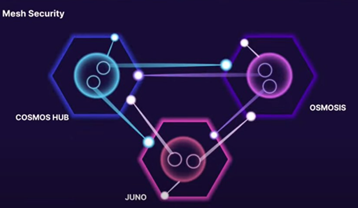
Figure 4. Mesh Security
(Source: Cosmoverse Conference)
2.2 Liquid Staking
The liquid staking module is similar to Lido: Users stake $ATOM in DeFi protocol and receive proof of stake that is exchangeable within the platform while also representing earnings for staking. Liquid staking of Lido sends tokens to the custody of nodes, while Cosmos Hub’s liquid staking revenue is diverse, including fees for cross-chain operations and interchain security fees, etc.
2.3 Value Capturer: Interchain Scheduler and Interchain Allocator
Interchain Scheduler and Interchain Allocator are the new features of Cosmos Hub in this upgrade. The Interchain Scheduler provides an open and transparent MEV marketplace for interchain transactions, and Cosmos Hub enforces fee collection for cross-chain activities through the Interchain Scheduler as a grip. The Interchain Allocator is the operator of the central revenue to drive the long-term development of the entire Cosmos ecosystem. It is an $ATOM-based platform controlled by multiple principals through token-staking, promoting multi-chain trust and coordination.
These two functions complement each other, and the most immediate effect is the enhancement of the value-capturing capability on $ATOM so that it becomes the collateral of choice in Cosmos. Cosmos Hub becomes a long-term holder of systematic assets, inviting valuable projects onto Cosmos.
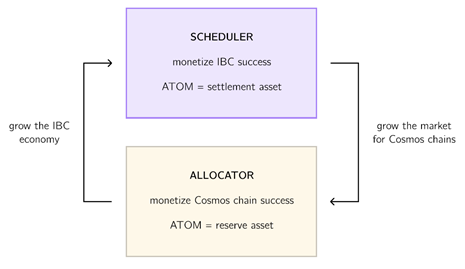
Figure 5. Relationship between interchain scheduler and allocator
(Source: Cosmos Hub 2.0)
(1) Interchain Scheduler
The interchain scheduler ensures the fairness and efficiency of cross-chain transactions by bringing the MEV marketplace on-chain. Moreover, it provides a fairer and more transparent system for returning revenue to its original protocol and token holders. The module is implemented by features of Tendermint's latest ABCI++ upgrade to separate transaction inclusion and ordering, with the power of ordering tokenized in the form of NFT to be auctioned or exchanged. Specifically:
Partial block space for cross-chain contract transactions is available when the consumer chain enables the Scheduler module.
The Scheduler issues NFTs representing a reservation for each future block space on the consumer chain afterwards. The NFTs are then auctioned periodically in batches, in which validators can all participate in a form that is not limited to Dutch auctions.
NFT can also be traded on the secondary market, which precedes the booking to be redeemed to the appropriate validator.
After the successful execution of the block, the Scheduler's share of the proceeds is sent back to the partner chain.
(2) Interchain Allocator
The interchain allocator is similar to an ecological governance system: the main function is to coordinate the economic development of the Cosmos ecosystem between staking users and new projects across chains. This enables the utility of $ATOM to grow along with the value of the entire ecosystem, accelerating new projects to be founded in Cosmos, adjusting incentives for projects, and safeguarding $ATOM to become the strongest cross-chain asset as reserve.
The allocator provides two rudimentary tools:
Covenant: The covenant system works by creating a tool that enables transactions between protocols. The right to use and the right to modify the parameters is obtained by staking tokens by each chain.
Rebalancer: A tool for third-party funding allocations.
There are still proposals that require manual judgment to be determined by DAO, analogous to the governance process, where voters acquire voting rights by staking $ATOM, which is proportional to the number of tokens for staking and the duration of staking. The details are as follows:
Voting Power = Atom Amount × Remaining Bond Duration
The fees or outputs obtained by the DAO will also be distributed to the participants, hence this new DAO could complete the tasks as the Allocator by Covenant and Rebalancer.
The Hub's Allocation DAO utilizes the Covenant system to access the original chain's protocols with other chains. Over time, the Hub may support multiple Allocation DAOs. Other chains may form their own Allocation DAOs, which will further simplify cross-protocol coordination.
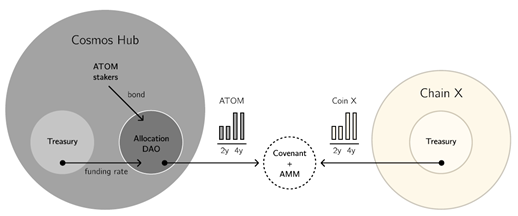
Figure 6. Governance of interchain allocators
(Source: Cosmos Hub 2.0)
The Allocator is somewhat similar to the governance mechanism of Curve, where the governance rights of the corresponding pool are obtained by holding veCurve. In this case, Cosmos Hub manages the cross-chain and incentivizes the ecosystem in a better manner by staking $ATOM in Covenant, while other application chains stake their own native tokens, retrieving a variety of rights and interests on the Allocator. In the future, the Allocator will take on various roles, including but not limited to providing liquidity and lending services to application chains.
3. The highly controversial ATOM 2.0
The Cosmos Hub whitepaper also includes $ATOM version 2.0. This redesign of $ATOM is more weighted on the issuance scheme. The current $ATOM issuance and inflation control is dynamically adjusted based on the staking rate of the network. $ATOM has an initial issuance of 200 million tokens: when the staking rate exceeds 66%, the issuance rate decreases, and vice versa. The annual inflation is confined to between 7% and 20% to balance the network security and liquidity of tokens. However, it also constrains the growth of capital and ignores the impact by cross-chain. To embrace the new features of Cosmos Hub, including liquid staking and interchain security, application scenarios of $ATOM are broadly expanded, so that the issuing scheme could be redesigned.
3.1 Change 1: Issuance of ATOM
The new issuance is divided into two phases: transition phase and steady state phase.
Transition Phase: The duration is 36 months. At the beginning of the transition phase, 10,000,000 $ATOMs will be issued each month. This issue decreases at a diminishing rate until 36 months after a stable issue is reached.
Steady State Phase: It continues indefinitely when the transition phase ends. Steady-state issue volume is 300,000 $ATOM per month.
The transition phase serves two purposes: (1) to give the consumer chain enough time to join Interchain Security to subsidize security spending; and (2) to fill Cosmos's treasury and lay a foundation for future community development.
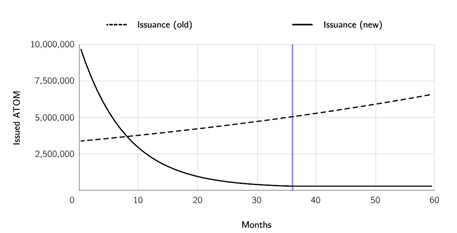
Figure 7. ATOM 2.0 issuance scheme
(Source: Cosmos Hub 2.0)
The current issuance for ATOM, according to Mintscan, has an annual inflation rate of 12.81%, with approximately 3.5 million new ATOMs issued each month. Yet the new ATOM 2.0 limits the number rather than the ratio with the following issuance formula:

The inflation is 10 million tokens in the first month, and decreases by 12% each subsequent month until it is fixed at 300,000 pieces per month after a period of 36 months. In the 36th month, the old inflation sees an increase of 5 million, while the new program is only 300,000. That is to say, in the first 9 months, the new program produces a total of 61 million ATOMs, which is higher than that of the old program at 32 million. The two intersect in about 20 months, and the total supply of ATOM will be identical. The new scenario can greatly cut inflation to a low of 0.1%. In the long run, the ATOM 2.0 can significantly reduce ATOM’s inflation. However, the new scheme sets a security trigger such that if the network staking rate falls below 66%, the new policy is suspended and previous program would be recovered. As a result, the security threshold casts a cloud of uncertainty over ATOM’s issuance.
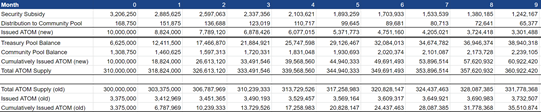
Figure 8. ATOM 2.0 Release Measurements
(Source: Cosmos Hub Forum)
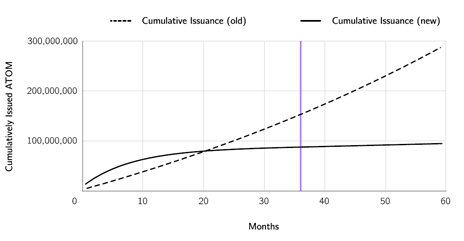
Figure 9. ATOM 2.0 issuance estimation
(Source: Cosmos Hub 2.0)
3.2 Change 2: Issuance Token Allocation
The issuance determines the market circulation. The current new issue of ATOM will be used exclusively for node rewards and community pools.
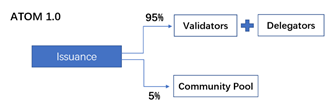
Figure 10. ATOM 1.0 allocation scheme
(Source: Huobi research)
In ATOM 2.0 distribution, in terms of the revenue stream for nodes, revenue received by validators and principals remains the same, but the subsidy is reduced by 10% per month until a full stop after 36 months. In addition to the rewards for providing security, validators and principals will continue to receive Interchain Security and cross-chain transaction fees. Cosmos officials expect this fee to exceed the original subsidy, so that validators and principals are eligible for higher earnings after 36 months. Most of the newly issued ATOMs will flow to the Cosmos treasury. Even though the issue volume is enormous in the first 9 months, no more than 10% of the Cosmos Hub treasury funds will be available during the transition phase which comprises a 21-day cycle. As such, the treasury strictly controls the free flow of ATOM.
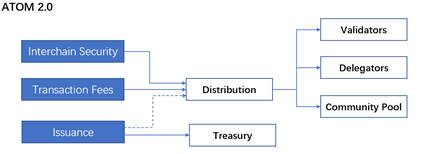
Figure 11. ATOM 2.0 distribution
(Source: Huobi research)
ATOM 2.0 depends heavily on whether the revenue of validators decrease after 36 months. Currently, transactions across chains via IBC are subject to fees, which will become the main source of revenue for validators as the Cosmos ecosystem develops.
4. Standardization and flexibility of governance
The governance stack is described in detail in Cosmos Hub 2.0. After redefining the functions of the Cosmos Hub, the most prominent way for the Cosmos Hub (as the largest holder of $ATOM) is to use governance to participate in the construction of interchain business and Dapp chains. Cosmos has three governance committees: Consensus Council, Interchain Security Council, and Allocation DAO. Cosmos needs an organizational language that can be shared by all ecosystems and a decentralized way to achieve governance. The governance stack will provide DAOs with a general system that can be used by any DAOs. This could become the governance infrastructure to define the power-duty relationships of various organizations. For example, the governance stack will establish frameworks such as mandate mechanism, committee, and incentive mechanism, and the specific norm would be filled according to different DAOs.
On the other hand, Cosmos defines a power hierarchy model, with $ATOM holders at the highest level, followed by the Cosmos Assembly and the Council, and finally arbitrary organizations and individuals. This layered system allows for better clarity of work processes and responsibilities. Although this approach makes governance more complex, it is where Cosmos Hub 2.0 can really play its role. Cosmos Hub will have a significant impact on the ecosystem, and needs to make major decisions such as how to use treasury funds and how to balance the interests of various Dapp chains.
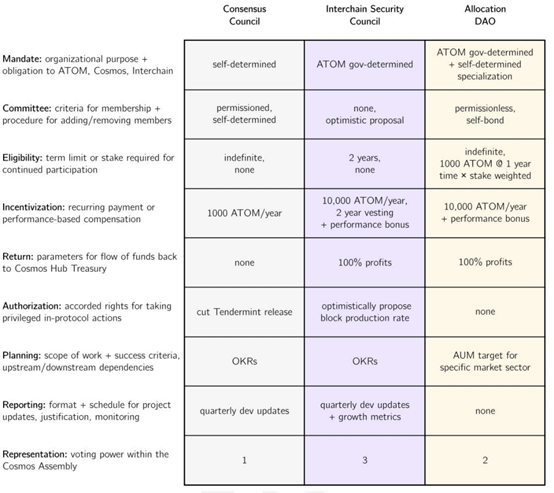
Figure 12. Comparison of different DAO governance models in Cosmos Hub (Source: Cosmos Hub 2.0 White Paper)
5. Discussions and Opportunities
Cosmos Hub is elevated to being the core of the network: either as new functional modules of the Hub or the distribution of ATOM 2.0, with each one based on the underlying logic of interchain. In general, the new version of the whitepaper can solve these two major challenges: (1) The overly fragmented status quo of the Cosmos ecosystem and (2) The poor value capture ability of ATOM tokens. However, according to available public analysis, many issues remain highly controversial.
ATOM's value capture capability is far from sufficient, and it is difficult to realize revenue merely by relying on Interchain Security and Scheduler in the early stage of program implementation. For one, it takes time to build new chains, and the more mature application chains already have their own validators. For another, once there is no support from application chains, the revenue relying on Interchain cannot make up for the 10% reduction in revenue for Cosmos Hub validators.
Intuitively, the first 9 months is entirely about printing money for the purpose of building a treasury. Meanwhile, how the Cosmos treasury will utilize the additional tokens to incentivize the ecosystem remains an open question. Although the program puts a lid on treasury overheads, the market circulation is unpredictable. It remains unclear whether each application chain is willing to hand over its own taxes to Cosmos Hub, and how much this will be.
Whether an Interchain Scheduler, as a value capturer, can convince application chains to voluntarily contribute block space to participate in MEV market auctions is another issue, for applications can be indifferent to development matters even without a MEV on-chain market. However, a fair and transparent MEV market is still appealing for some DeFi-based application chains, because it does not require complex privacy calculations to achieve anti-MEV as what Secret Network provides.
A feasible opportunity for average users is to get stable income through greater involvement in the liquid staking or governance process of Cosmos. In addition, except for the announcement at Cosmoverse where centralized stablecoin issuer Circle will issue native $USDC on Cosmos (and Polkadot via cross-chain), companies like Tether and Circle have not issued native stablecoins on the Cosmos network. $USDC of Osmosis is also from cross-chain by Axelar, making the $USDC/$OSMO pool the second largest trading pool with accumulated transaction fee of $1.2 million. Once the native $USDC is compatible with Cosmos, the $ATOM/$USDC trading pair will generate fee revenue or give rise to more lending agreements, broadening the application scenarios of $ATOM.
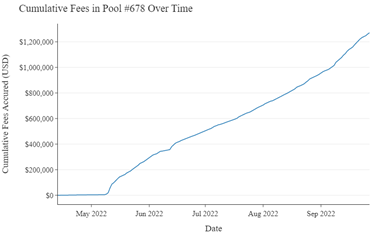
Figure 13. $USDC/$OSMO fees in Osmosis DEX
(Source: @Flowslikeosmo)
Cosmos's IBC and interchain security upgrades are lagging likely due to the dispersed locations of the development team. If the technical support fails to follow the pace, the token's ability to capture value will be greatly diminished. More details about ATOM 2.0 were not revealed in the whitepaper, such as how interchain security will be charged. Previously, Delphi Labs claimed that ongoing efforts will be invested into Cosmos in the future, and the V4 version of dYdX will also be deployed on Cosmos. Notably, the release of Cosmos Hub 2.0 is an icing on the cake; based on cross-chain interoperability, the Cosmos network will have a greater breadth and depth of applications in the future.
References
1. Cosmos Hub 2.0:
https://gateway.pinata.cloud/ipfs/QmWXkzM74FCiERdZ1WrU33cqdStUK9dz1A8oEvYcnBAHeo
2. Map of Zone:
https://mapofzones.com/zones?columnKey=ibcVolume&period=24h
3. Mintscan:https://hub.mintscan.io/ibc-network
4. Atomscan:https://atomscan.com/accounts
5. Staking & rewards:
https://www.stakingrewards.com/earn/cosmos/?page=1&sort=balance_DESC
6. Artemis:https://www.gokustats.xyz/dashboard
7. Coinmarketcap: https://coinmarketcap.com/view/cosmos-ecosystem/
About Huobi Research Institute
Huobi Blockchain Application Research Institute (referred to as "Huobi Research Institute") was established in April 2016. Since March 2018, it has been committed to comprehensively expanding the research and exploration of various fields of blockchain. As the research object, the research goal is to accelerate the research and development of blockchain technology, promote the application of the blockchain industry, and promote the ecological optimization of the blockchain industry. The main research content includes industry trends, technology paths, application innovations in the blockchain field, Model exploration, etc. Based on the principles of public welfare, rigor and innovation, Huobi Research Institute will carry out extensive and in-depth cooperation with governments, enterprises, universities and other institutions through various forms to build a research platform covering the complete industrial chain of the blockchain. Industry professionals provide a solid theoretical basis and trend judgments to promote the healthy and sustainable development of the entire blockchain industry.
Contact us:
Website: http://research.huobi.com
Email: research@huobi.com
Twitter https://twitter.com/Huobi_Research
Telegram: https://t.me/HuobiResearchOfficial
Medium: https://medium.com/huobi-research
Disclaimer
1. The author of this report and his organization do not have any relationship that affects the objectivity, independence, and fairness of the report with other third parties involved in this report.
2. The information and data cited in this report are from compliance channels. The Sources of the information and data are considered reliable by the author, and necessary verifications have been made for their authenticity, accuracy and completeness, but the author makes no guarantee for their authenticity, accuracy or completeness.
3. The content of the report is for reference only, and the facts and opinions in the report do not constitute business, investment and other related recommendations. The author does not assume any responsibility for the losses caused by the use of the contents of this report, unless clearly stipulated by laws and regulations. Readers should not only make business and investment decisions based on this report, nor should they lose their ability to make independent judgments based on this report.
4. The information, opinions and inferences contained in this report only reflect the judgments of the researchers on the date of finalizing this report. In the future, based on industry changes and data and information updates, there is the possibility of updates of opinions and judgments.
5. The copyright of this report is only owned by Huobi Blockchain Research Institute. If you need to quote the content of this report, please indicate the Source. If you need a large amount of references, please inform in advance (see "About Huobi Blockchain Research Institute" for contact information) and use it within the allowed scope. Under no circumstances shall this report be quoted, deleted or modified contrary to the original intent.