Despite Recent Bitcoin Rise, One Analyst Remains Cautious: 'I Haven't Seen What I Wanted Yet'

cryptonews.ruPublié le 2026-08-29Dernière mise à jour le 2026-08-29

Résumé

Despite Bitcoin's recent rally reigniting bullish sentiment, Alphractal founder Joao Wedson advises caution based on blockchain data analysis. He highlights the MVRV Z-Score indicator, used to measure investor behavior and market value cycles, suggesting Bitcoin's cycle low may not be in yet. Drawing parallels to the 2017-2018 cycle, Wedson notes that after its 2017 peak, Bitcoin experienced another sharp drop in November 2018. Similarly, in the current 2024-2025 period, the MVRV Z-Score has formed three peaks but has recently risen again alongside price. The key risk, according to Wedson, is that the indicator has not yet entered negative territory, historically associated with major cycle bottoms. He states that purely from on-chain data, there isn't enough evidence to confirm the recent low as the final bottom. If historical patterns repeat, Bitcoin could potentially fall to at least $53,000 or lower. Wedson clarifies this is data analysis, not financial advice, and emphasizes that on-chain metrics currently indicate downside risks remain, rather than conclusively signaling a market bottom.

Although Bitcoin's recent recovery on the cryptocurrency market has once again fueled bullish expectations, Alphractal founder João Wedson stated that blockchain data paints a more cautious picture. According to Wedson, the final cycle price low for Bitcoin may not yet have been reached, and if certain historical metrics repeat, the price of BTC could fall to $53,000 or even lower.

In his analysis, Wedson particularly highlighted the MVRV Z-Score indicator, used to measure investor behavior and the market's realized value. The analyst stated that on-chain metrics reflect investor behavior, arguing that this behavior is directly linked to periods of euphoria and fear in market cycles.

Wedson Draws Attention to Bitcoin's 2018 Crash.

Wedson compared the current market structure to the 2017-2018 cycle. According to the analyst, the MVRV Z-Score formed three significant peaks before Bitcoin reached its all-time high during the 2017 bull market.

Wedson noted that after Bitcoin peaked and then declined, the indicator formed a base roughly between 0.25 and 1.16, recalling that at that time, most of the market did not expect another sharp drop. However, in November 2018, Bitcoin experienced another steep decline, falling to approximately $3,180.

According to Wedson's data, in the 2024-2025 period, the MVRV Z-Score has reached three separate peaks. However, the analyst noted that the enthusiasm at these peaks has been more limited compared to 2017, as the market has become more complex than in previous cycles.

Wedson pointed out that after Bitcoin's recent drop from its peak, the MVRV Z-Score formed a base in an area similar to that observed in 2018, but recently this indicator has risen again, and Bitcoin's price has followed it.

"The MVRV Z-Score Has Not Yet Fallen into Negative Territory".

The key risk highlighted by the analyst is that the indicator has not yet reached negative territory, which in the past has been associated with major cyclical lows for Bitcoin.

Wedson stated that, based on the available data, he consistently asks himself the same question: if the MVRV Z-Score is meant to decline, will Bitcoin's price follow this indicator?

According to the Alphractal founder, when looking only at blockchain data, there are not enough signals to confidently assert that the current decline is Bitcoin's final low.

Wedson stated that to meet the conditions he is tracking, Bitcoin may need to fall to at least $53,000 or even lower.

The analyst specifically emphasized that this assessment is not financial advice, stating that it directly questions the data, not the current bullish market sentiment.

Wedson, recalling that in 2018 most market participants also did not expect another sharp downturn, stated that the key question is whether the current cycle will conclude similarly to previous ones.

In the analyst's view, at this stage, on-chain indicators suggest that the downside risks have not yet fully dissipated, rather than clearly indicating that the "bottom is in" for Bitcoin.

*This is not investment advice.

end-content
Cryptos en tendance

Questions liées

QWhat indicator does founder Joao Wedson of Alphractal primarily focus on to express caution about Bitcoin's price bottom?

AJoao Wedson primarily focuses on the MVRV Z-Score indicator, used to measure investor behavior and the realized value of the market.

QAccording to Wedson's comparison with the 2017-2018 cycle, what specific pattern in the MVRV Z-Score preceded Bitcoin's historical peak?

AAccording to Wedson, the MVRV Z-Score formed three significant peaks before Bitcoin reached its all-time high during the 2017 bull market.

QWhat is the main risk Wedson identifies regarding the current MVRV Z-Score reading?

AThe main risk Wedson identifies is that the MVRV Z-Score indicator has not yet entered negative territory, which in the past has been associated with major cyclical lows for Bitcoin.

QTo what price level does Wedson suggest Bitcoin might potentially fall based on his blockchain data analysis?

ABased on his blockchain data analysis, Wedson suggests Bitcoin might need to fall to at least $53,000 or even lower to meet the conditions he is tracking.

QWhat is Wedson's overall conclusion about whether the current market decline represents the final bottom for Bitcoin?

AWedson concludes that based solely on blockchain data, there are insufficient signals to confidently state that the current decline is the final bottom for Bitcoin, and downside risks are not yet fully eliminated.

Lectures associées

Le secret de Starlink : pourquoi la Chine, Amazon, l'Europe et la Russie perdent la bataille pour l'orbite basse

Le secret de la supériorité de Starlink ne réside pas seulement dans le nombre de ses satellites, mais dans la combinaison de quatre éléments clés : production de masse, fusées réutilisables, base d'abonnés payants et vitesse de renouvellement du réseau. Alors que ses concurrents comme la Chine, Amazon, l'Europe et la Russie développent leurs propres constellations, chacun ne maîtrise qu'une partie de cette équation. Fin août 2026, Starlink comptait environ 11 087 satellites opérationnels, loin devant OneWeb (654), les projets chinois Qianfan/Guowang (433), Amazon Leo (400), l'européen IRIS2 (348 planifiés) et le russe "Rassvet" (32). L'avantage de SpaceX est terrestre : son usine produit environ 70 satellites par semaine, ses fusées Falcon 9 sont réutilisables des dizaines de fois (réduisant drastiquement les coûts de lancement), et ses 12 millions d'abonnés financent un cycle vertueux. Aucun concurrent ne réunit ces trois piliers. La Chine, technologiquement la plus avancée, accumule des retards. Amazon a acheté des centaines de lancements auprès de tiers mais dépend de leur calendrier. L'Europe (IRIS2) et la Russie privilégient des réseaux souverains, plus petits et coûteux, pour leurs besoins de défense. La course est largement motivée par des enjeux militaires, les constellations devenant des infrastructures critiques. Même le Pentagone s'appuie sur Starlink. Cette dépendance pousse les États à développer leurs propres systèmes, même moins efficaces. En définitive, SpaceX a établi un standard industriel complet que les autres, contraints par des logiques de souveraineté, de budget ou de technologie, peinent à reproduire dans son intégralité.

cryptonews.ruIl y a 2 h

Le secret de Starlink : pourquoi la Chine, Amazon, l'Europe et la Russie perdent la bataille pour l'orbite basse

cryptonews.ruIl y a 2 h

Entretien avec le fondateur d'Epoch Ventures : Le grand transfert de capitaux a commencé, le cycle de quatre ans est terminé

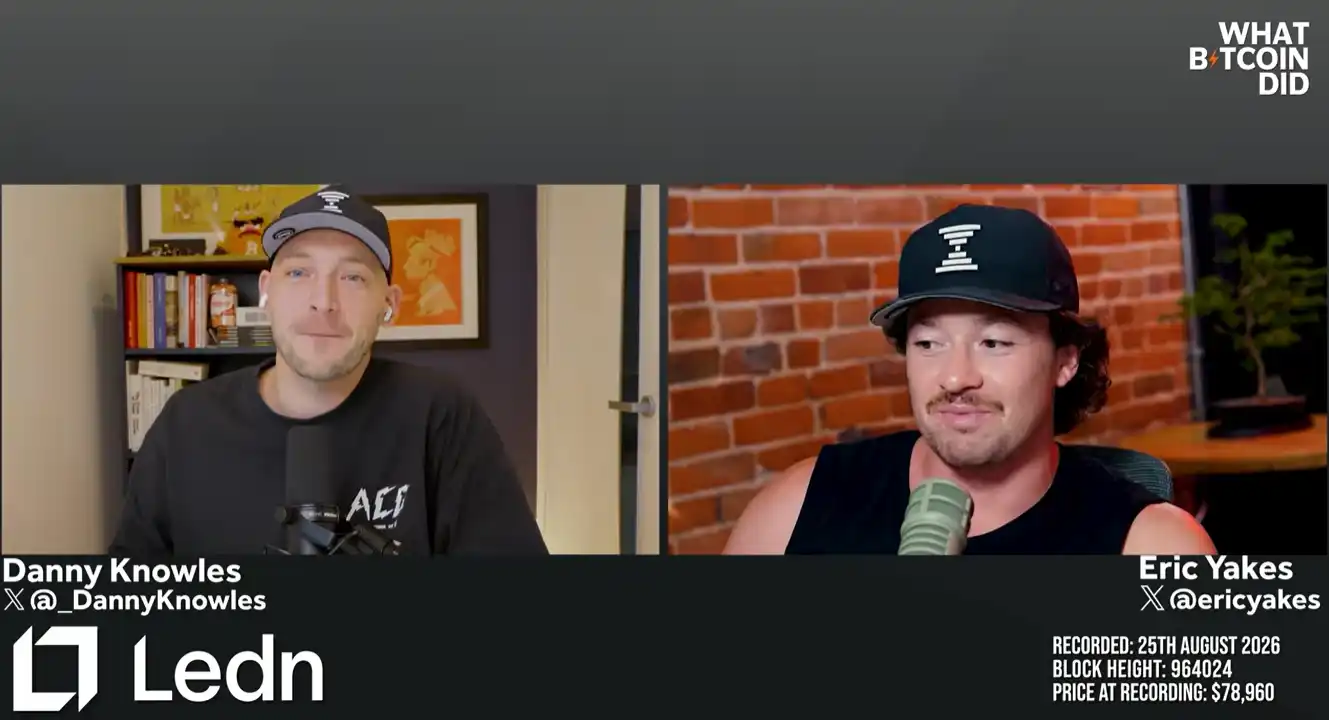
Source : Interview avec Eric Yakes, fondateur d'Epoch Ventures, dans « What Bitcoin Did ». **Points clés :** - **Fin du cycle de 4 ans :** La récente correction de ~50% du Bitcoin pourrait marquer la fin du schéma historique de baisses de 80%. La volatilité réduite et les flux institutionnels transforment le BTC en actif de couche contre la dévaluation monétaire, découplé des actifs risqués. - **Transition monétaire :** L'adoption du Bitcoin suivrait trois étapes (courbes en S) : réserve de valeur (phase actuelle), moyen d'échange, puis unité de compte. - **Rotation depuis l'or :** Le Bitcoin, plus efficace que l'or, attend une liquidité suffisante (capitalisation de 5 à 10 trillions de dollars) pour capter une partie significative du marché de l'or. - **Rôle des stablecoins :** Yakes décrit un scénario où le Trésor américain promeut les stablecoins pour financer la dette. En grandissant, ces stablecoins pourraient adopter le Bitcoin comme réserve principale, conduisant à une « hyperbitcoinisation ». - **Décentralisation préservée :** Malgré la custode institutionnelle, la facilité d'auto-custode (clés privées) empêche toute prise de contrôle du réseau, protégeant sa nature décentralisée. - **Investissement VC :** Epoch Ventures investit dans l'infrastructure, notamment les prêts garantis par Bitcoin, pour intégrer le BTC au système financier traditionnel. En résumé, le Bitcoin évoluerait vers un actif mature, moins volatil, piloté par la macroéconomie et l'intégration via les stablecoins et l'infrastructure financière.

marsbitIl y a 3 h

Entretien avec le fondateur d'Epoch Ventures : Le grand transfert de capitaux a commencé, le cycle de quatre ans est terminé

marsbitIl y a 3 h

Trading

Spot

Articles tendance

Comment acheter ONE

Bienvenue sur HTX.com ! Nous vous permettons d'acheter Harmony (ONE) de manière simple et pratique. Suivez notre guide étape par étape pour commencer votre parcours crypto.Étape 1 : Création de votre compte HTXUtilisez votre adresse e-mail ou votre numéro de téléphone pour ouvrir un compte sur HTX gratuitement. L'inscription se fait en toute simplicité et débloque toutes les fonctionnalités.Créer mon compteÉtape 2 : Choix du mode de paiement (rubrique Acheter des cryptosCarte de crédit/débit : utilisez votre carte Visa ou Mastercard pour acheter instantanément Harmony (ONE).Solde :utilisez les fonds du solde de votre compte HTX pour trader en toute simplicité.Prestataire tiers :pour accroître la commodité d'utilisation, nous avons ajouté des modes de paiement populaires tels que Google Pay et Apple Pay.P2P :tradez directement avec d'autres utilisateurs sur HTX.OTC (de gré à gré) : nous offrons des services personnalisés et des taux de change compétitifs aux traders.Étape 3 : stockage de vos Harmony (ONE)Après avoir acheté vos Harmony (ONE), stockez-les sur votre compte HTX. Vous pouvez également les envoyer ailleurs via un transfert sur la blockchain ou les utiliser pour trader d'autres cryptos.Étape 4 : tradez des Harmony (ONE)Tradez facilement Harmony (ONE) sur le marché Spot de HTX. Il vous suffit d'accéder à votre compte, de sélectionner la paire de trading, d'exécuter vos trades et de les suivre en temps réel. Nous offrons une expérience conviviale aux débutants comme aux traders chevronnés.

741 vues totalesPublié le 2024.12.12Mis à jour le 2026.06.02

Comment acheter ONE

Discussions

Bienvenue dans la Communauté HTX. Ici, vous pouvez vous tenir informé(e) des derniers développements de la plateforme et accéder à des analyses de marché professionnelles. Les opinions des utilisateurs sur le prix de ONE (ONE) sont présentées ci-dessous.

活动图片