547 Million OP Tokens Transferred from User Airdrop to Ecosystem Fund: DAO Voting Becoming Sham Democracy

marsbitPublié le 2026-08-21Dernière mise à jour le 2026-08-21

Résumé

An Optimism governance vote approved the controversial transfer of 546.9 million OP tokens (12.7% of total supply, ~24% of circulating supply) from the remaining "User Airdrop" allocation to the Foundation-controlled "Strategic Ecosystem Fund." The vote passed with a decisive 849,000 OP vote from "Test in Prod," a core development team fully funded by the Optimism Collective, cast just 17 minutes before the deadline. The Foundation argued that broad user airdrops are ineffective for the current institutional expansion phase and that the funds are needed as a flexible "war chest" to secure enterprise clients like Bitpanda and Dunamu. Critics, including L2BEAT and researcher Polynya, opposed the move. They cited the Foundation's overly broad mandate, a lack of clear link to token holder interests, insufficient assessment of past ecosystem fund expenditures (~686M OP spent), and the rewriting of the original distribution promise made to users. The incident highlights deeper governance concerns beyond low voter turnout. It raises questions about the independence of votes from entities financially dependent on the Foundation and the ethical limits of DAO governance—specifically, whether a majority vote can legitimately redefine foundational promises and minority expectations. The move signals a shift from community-focused airdrops to enterprise-driven strategy, eroding user trust amid OP's significant price decline.

Written by: Xiaobing

On the evening of August 19, a vote on Optimism's governance platform, Agora, had 16 minutes and 52 seconds remaining. On screen, the disapproval votes stood at 45.77%, and the proposal seemed destined for rejection.

The proposal's content was to reallocate 546.9 million OP tokens from the "User Airdrop" allocation to the "Strategic Ecosystem Fund" under the Foundation's jurisdiction. This amount represents 12.7% of the total token supply and nearly 24% of the circulating supply.

Then, a vote of 8.49 million OP tokens came crashing down. The approval rate instantly jumped to 61.84%, and the proposal passed.

This decisive vote was cast by Test in Prod. The team's introduction on Agora is clear: the Core Development Team of the Optimism Collective. In the 2025 Security Council nomination document, they wrote themselves: "fully funded by the Collective." In June of this year, they were just granted a new 12-month term on the Security Council.

A core team fully funded by Optimism cast the deciding vote in the final 17 minutes, transferring tokens worth approximately $49.7 million from users' pockets to the Foundation's account.

Whose Money, Whose Say?

The Foundation has its own logic. Optimism conducted five airdrop rounds from 2022 to 2024, distributing a total of 269.1 million OP tokens to users, but the effectiveness declined with each round. Both academic analysis and on-chain data indicate that the later airdrops had minimal impact on user retention. The Foundation's conclusion is: large-scale airdrops are a tool suitable for early user acquisition, not for the current stage of institutional expansion.

OP Enterprise is now the Foundation's strategic focus.

Bitpanda launched Vision Chain on Optimism, South Korea's largest exchange Dunamu signed a memorandum of understanding for GIWA Chain, and Ether.fi brought $220 million in TVL and over 70,000 active payment cards to OP Mainnet. The Foundation believes that to secure these enterprise-level clients, a flexible treasury of tokens is needed, rather than continuing to lock 547 million OP under the unused "airdrop" label.

Test in Prod defended their vote bluntly: corporate bids require confidentiality, competitive windows are fleeting, and Optimism needs this war chest.

The Opponents Saw Something Else

L2BEAT, an independent Ethereum Layer 2 research institution, voted against the proposal.

Their wording is worth reading line by line: the Foundation's mandate is overly broad, the connection between token deployment and OP holder interests is unclear, and the effectiveness of previous partner investments hasn't undergone formal evaluation. In a system that has already spent 686 million OP on ecosystem funds (including Partner, Seed, and Unallocated categories), adding another 547 million to a vaguely defined new fund, L2BEAT considered the evidence insufficient.

Polynya, an independent researcher who was long involved in Optimism governance and resigned from his representative position in 2025, returned specifically for this vote. His judgment was sharper: handing over 24% of the circulating supply based on a "vague hand-wavey promise," especially when the Foundation's past incentive spending results have been mixed at best, is irresponsible.

A community member named Luckyhooman.eth pointed out the most stinging fact: Approximately 686 million OP has already been invested under the ecosystem fund categories, more than 2.5 times the total user airdrop amount. Yet OP Mainnet has not become a mainstream public chain for daily user use. Taking the airdrop allocation from users rewrites the initial distribution promise before the user-side experiment has been fully tested.

The Real Problem Isn't Voter Turnout

The classic dilemma of on-chain governance is low voter turnout. But Optimism's issue this time is precisely the opposite: enough people participated, and the quorum was met. The proposal passed because a voter with a special status changed the outcome at the last minute.

This opens a deeper question. When a team's funding source, salary payments, and future contract renewals all depend on the Foundation's decisions, to what extent is that team's vote on the Foundation's budget proposal an independent judgment? In traditional corporate governance, this is called a related-party transaction, requiring at least the recusal of the interested party from voting. In the DAO world, there is currently no such rule.

An even more fundamental layer is: Can DAO governance voting rewrite the distribution promises made at the founding moment?

When Optimism launched the OP token in 2022, it explicitly stated in black and white that 19% of the total supply was allocated to user airdrops. This number was written into the tokenomics documentation, included by major data platforms, and held by countless users as a long-term expectation for participating in the Optimism ecosystem. Using a majority vote to rename the remaining airdrop allocation as a "Strategic Fund" at the Foundation's disposal might be completely legally compliant within DAO governance, which is designed to modify any parameter. But what it undermines is something softer: user trust in the project's promises.

The price of OP has fallen from around $4.85 in March 2024 to about $0.09 today, a drop of over 98%.

At this price, 546.9 million OP tokens are worth approximately $49.7 million, nearly a quarter of OP's market cap. For the Foundation, this is ammunition that can be immediately deployed in corporate bidding. For retail holders still holding OP, this is a signal that their once-anticipated airdrop share has been officially canceled.

Looking back, DAO governance is moving toward an ironic convergence point: it invented on-chain voting to replace the backroom decisions of a board, only to ultimately reproduce the most classic dilemmas of board governance—who watches the watchers, and whether a majority vote can legitimately redefine the rights of a minority.


Cryptos en tendance

Questions liées

QWhat was the specific action taken in the Optimism governance vote described in the article, and what was the immediate consequence?

AThe proposal was to reallocate 546.9 million OP tokens from the 'User Airdrop' allocation to the Foundation-controlled 'Strategic Ecosystem Fund'. With only about 17 minutes left in the voting, a single decisive vote of 8.49 million OP tokens from the core team 'Test in Prod' changed the outcome from failing to passing, securing the transfer of funds.

QWho is 'Test in Prod' and what potential conflict of interest is highlighted regarding their vote?

A'Test in Prod' is the core development team of the Optimism Collective. The article highlights a potential conflict of interest because the team is fully funded by the Collective/Foundation. This raises questions about the independence of their vote on a proposal that directly concerns the Foundation's budget and resource allocation.

QAccording to the Optimism Foundation's reasoning, why did they propose moving funds away from user airdrops and into a strategic fund?

AThe Foundation argued that the effectiveness of broad user airdrops for user retention had diminished in later rounds. Their current strategic focus is 'OP Enterprise,' targeting institutional clients. They stated that winning enterprise deals requires a flexible 'war chest' of tokens for confidential and time-sensitive negotiations, which the reallocated fund would provide.

QWhat were the main criticisms from opponents of the proposal, such as L2BEAT and Polynya?

AOpponents criticized the proposal on several grounds: the Foundation's mandate was too broad; there was a lack of clear connection between the token deployment and OP holder interests; the effectiveness of past partner fund deployments hadn't been formally assessed; and allocating a massive, vague new fund (24% of circulating supply) based on past mixed results was irresponsible. They also noted the original airdrop promise to users was being rewritten.

QWhat broader, fundamental issue about DAO governance does the article suggest this vote exposes?

AThe article suggests the vote exposes a fundamental tension in DAO governance: whether a majority vote can legitimately rewrite foundational promises made at a project's inception (like token distribution plans). It also highlights the ironic convergence where on-chain voting, meant to replace backroom board decisions, can recreate classic corporate governance dilemmas like conflicts of interest and the question of 'who guards the guardians.''

Lectures associées

Le Bitcoin dépasse brièvement 75 000 $ : les rachats forcés font avancer le mouvement, les ETF et la Stratégie déterminent le potentiel

L'annonce de Trump, lors d'une conférence à la Maison Blanche, poussant au progrès du *CLARITY Act*, a rapidement amélioré les perspectives du marché concernant la régulation des crypto-monnaies aux États-Unis. Combinée à un assouplissement des conditions macroéconomiques, cette évolution a déclenché une vague de rachats forcés (couverture des positions vendeuses), propulsant le prix du Bitcoin au-dessus de 75 000 USD. Toutefois, cette dynamique initiale, alimentée par les dérivés, a besoin de capitaux institutionnels stables pour se transformer en une tendance haussière durable. L'attention se porte désormais sur deux canaux clés : 1. **Les FNB américains de Bitcoin spot** : Après trois jours consécutifs d'entrées nettes importantes, atteignant 517 millions USD le 19 août, ils commencent à prendre le relais. La poursuite de flux substantiels est essentielle pour soutenir le cours. 2. **Le cycle de financement et d'achat de Strategy** : Avec le Bitcoin dépassant le prix d'acquisition moyen de Strategy (~75 385 USD), la pression sur son bilan s'allège. La revalorisation de son titre privilégié (STRC) vers sa valeur faciale de 100 USD est un indicateur à surveiller, car elle pourrait permettre à Strategy de relancer ses émissions pour financer de nouveaux achats de Bitcoin. La durabilité de la hausse dépendra de la capacité de ces deux canaux à fournir des flux de capitaux constants. Si les entrées dans les FNB se maintiennent et que Strategy relance son cycle d'achat, le marché pourrait connaître une reprise plus structurelle. Dans le cas contraire, une phase de consolidation est probable. Pour les investisseurs souhaitant participer à une reprise éventuelle tout en diversifiant les risques, des stratégies d'investissement thématiques (comme les indices MAG7.SSI et DEFI.ssi de SoSoValue) offrent une exposition équilibrée aux actifs majeurs du secteur.

marsbitIl y a 5 mins

Le Bitcoin dépasse brièvement 75 000 $ : les rachats forcés font avancer le mouvement, les ETF et la Stratégie déterminent le potentiel

marsbitIl y a 5 mins

Le président de la CFTC montre ses cartes : Prochaines étapes, marché crypto, marché de la puissance de calcul et marchés prédictifs

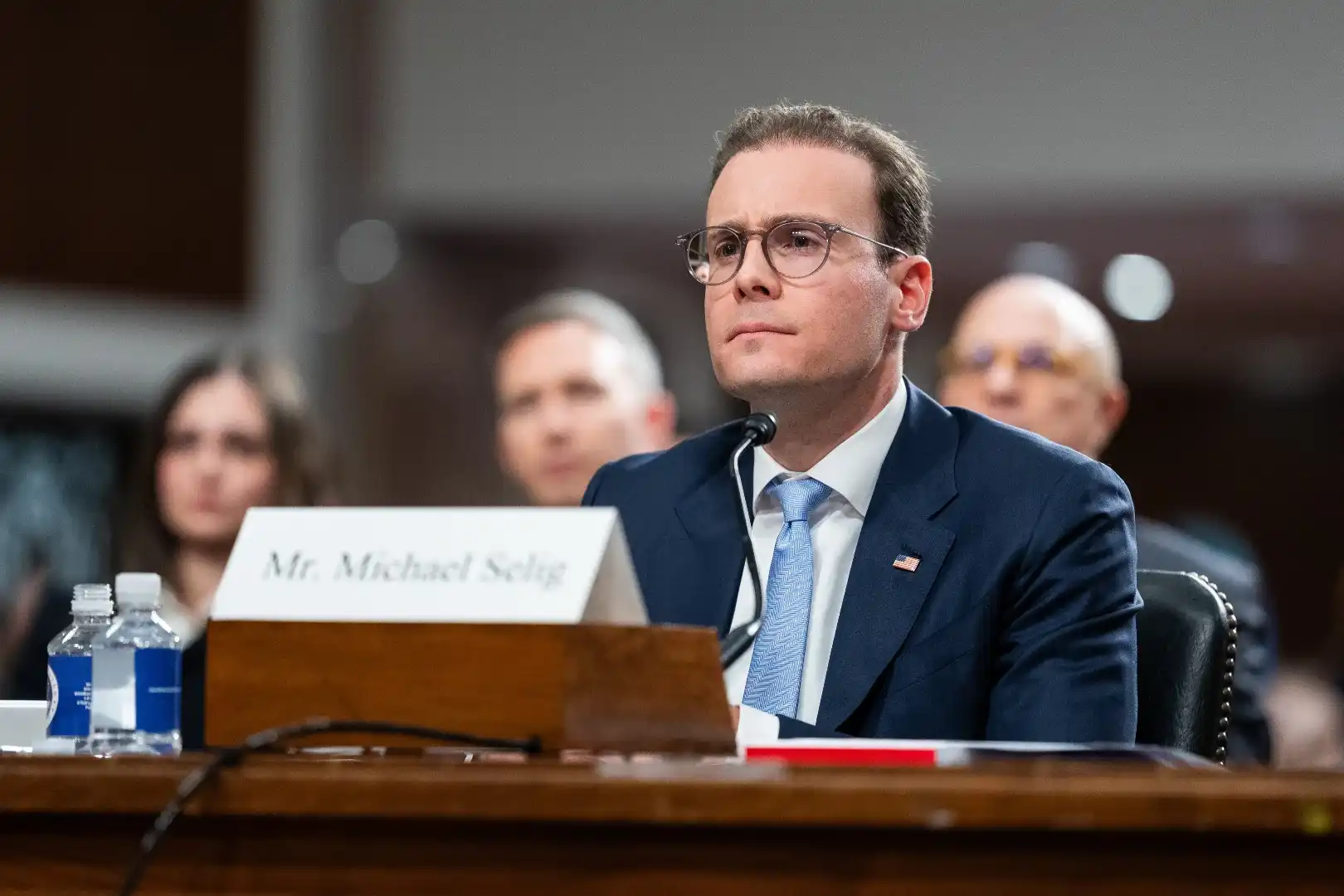
Rédaction : KarenZ, Foresight News Le président de la CFTC, Michael S. Selig, a dévoilé une « feuille de route pour la nouvelle frontière de la finance » lors de la première réunion du comité consultatif sur l'innovation. Cette feuille de route se concentre sur trois domaines principaux : 1. **Crypto-actifs** : Selig privilégie une législation du Congrès, mais si celle-ci stagne, la CFTC est prête à utiliser ses pouvoirs existants pour créer un cadre réglementaire. Cela pourrait permettre aux plateformes d'échange d'être désignées comme des « marchés de crypto-actifs » sous la surveillance de la CFTC. Les protocoles DeFi sont également dans le champ d'étude. 2. **Marchés de la puissance de calcul (AI)** : La CFTC vise à développer des marchés (au comptant, à terme) pour la puissance de calcul (Compute), traitée comme une nouvelle classe d'actifs, afin de permettre la découverte des prix et la couverture des risques pour les entreprises d'IA. 3. **Marchés de prédiction** : Au-delà du débat sur leur légalité, la CFTC travaille à établir des règles concrètes pour les contrats d'événements, concernant leur approbation, la déclaration des données, la protection des investisseurs et la prévention des manipulations. La réunion a été marquée par un vif débat sur les marchés de prédiction, illustrant les défis réglementaires. L'approche globale de la CFTC est de mettre en place des cadres clairs pour que l'innovation puisse se développer dans un environnement régulé, plutôt que d'attendre que les controverses se dissipent.

marsbitIl y a 1 h

Le président de la CFTC montre ses cartes : Prochaines étapes, marché crypto, marché de la puissance de calcul et marchés prédictifs

marsbitIl y a 1 h

Trading

Spot

Articles tendance

Comment acheter OP

Bienvenue sur HTX.com ! Nous vous permettons d'acheter Optimism (OP) de manière simple et pratique. Suivez notre guide étape par étape pour commencer votre parcours crypto.Étape 1 : Création de votre compte HTXUtilisez votre adresse e-mail ou votre numéro de téléphone pour ouvrir un compte sur HTX gratuitement. L'inscription se fait en toute simplicité et débloque toutes les fonctionnalités.Créer mon compteÉtape 2 : Choix du mode de paiement (rubrique Acheter des cryptosCarte de crédit/débit : utilisez votre carte Visa ou Mastercard pour acheter instantanément Optimism (OP).Solde :utilisez les fonds du solde de votre compte HTX pour trader en toute simplicité.Prestataire tiers :pour accroître la commodité d'utilisation, nous avons ajouté des modes de paiement populaires tels que Google Pay et Apple Pay.P2P :tradez directement avec d'autres utilisateurs sur HTX.OTC (de gré à gré) : nous offrons des services personnalisés et des taux de change compétitifs aux traders.Étape 3 : stockage de vos Optimism (OP)Après avoir acheté vos Optimism (OP), stockez-les sur votre compte HTX. Vous pouvez également les envoyer ailleurs via un transfert sur la blockchain ou les utiliser pour trader d'autres cryptos.Étape 4 : tradez des Optimism (OP)Tradez facilement Optimism (OP) sur le marché Spot de HTX. Il vous suffit d'accéder à votre compte, de sélectionner la paire de trading, d'exécuter vos trades et de les suivre en temps réel. Nous offrons une expérience conviviale aux débutants comme aux traders chevronnés.

896 vues totalesPublié le 2024.12.12Mis à jour le 2026.06.02

Comment acheter OP

Discussions

Bienvenue dans la Communauté HTX. Ici, vous pouvez vous tenir informé(e) des derniers développements de la plateforme et accéder à des analyses de marché professionnelles. Les opinions des utilisateurs sur le prix de OP (OP) sont présentées ci-dessous.

活动图片