Revealing the Flow of $11.2 Billion in Funding Over Six Months: The Most Valuable Asset in Crypto Is Shifting from Code to Licenses

marsbitPublié le 2026-08-17Dernière mise à jour le 2026-08-17

Résumé

The article reveals that in the first half of 2026, all $11.2 billion in disclosed crypto industry funding flowed exclusively to businesses requiring regulatory licenses to operate, signaling a major shift in institutional valuation. Top-funded sectors were payments/stablecoins ($3.7B), prediction markets ($2B), and exchanges/trading platforms ($1.7B). The core argument is that capital's focus has moved from technological innovation ("what code can do") to compliance capability ("possession of a license"), as licenses represent a slow, costly barrier to entry that code cannot easily replicate. This mirrors the evolution of traditional fintech. Notably, a split is emerging: while institutional capital floods licensed, centralized entities, retail user activity continues to thrive on permissionless DeFi protocols. The article concludes that within the institutional framework, the industry's most valuable asset is being redefined from code to regulatory approval.

Author: Xiao Bing

Dubai crypto lawyer Irina Heaver and her team NeosLegal did something simple yet powerful: they meticulously sorted through all publicly disclosed crypto industry funding deals in the first half of 2026, totaling 377 deals amounting to approximately $11.2 billion.

The conclusion is just one sentence: Every single funding deal with a disclosed amount flowed to businesses that require regulatory approval to operate.

The top three sectors were: Payments & Stablecoins at $3.7 billion, Prediction Markets at $2 billion, and Exchanges & Trading Platforms at $1.7 billion. These three areas share a common feature: legal operation in any major jurisdiction requires a license.

Institutional capital's valuation logic for the crypto industry has shifted from "what the code can do" to "do you have a license."

Who's Writing the Checks

First, let's look at who is paying.

Kalshi raised $1 billion in May, with investors including Sequoia, Morgan Stanley, Ark Invest, and a16z. Polymarket secured $600 million, led by Intercontinental Exchange (ICE), the parent company of the New York Stock Exchange. The prediction market sector alone saw 34 funding rounds within six months.

In the $3.7 billion Payments & Stablecoins sector, names like BlackRock, Goldman Sachs, and Gulf sovereign wealth funds appeared repeatedly.

Vineet Budki, Managing Partner at Sigma Capital, made a straightforward statement: Regulatory licenses have evolved from a compliance footnote to a core valuation metric.

Behind this judgment lies hard arithmetic. Obtaining an MiCA license or a Dubai VARA permit typically takes 18 to 24 months and costs millions of dollars. Code can be forked over a weekend; a license cannot. When venture capitalists evaluate two functionally similar projects, the one with the license naturally possesses a moat that competitors cannot quickly replicate.

The License is the New Moat

Looking at this phenomenon over a longer timeline.

In 2020-2021, the main theme of crypto funding was protocols and infrastructure. Public blockchains, DeFi protocols, and NFT platforms took most of the VC money. The investment logic was based on technological barriers and network effects; whoever had the highest TVL or the most active developer ecosystem was the most valuable.

In 2022-2023, the bear market washed out many purely narrative projects, and funding began tilting towards businesses with actual revenue. The proportion of funding for exchanges, wallets, and infrastructure companies increased.

Data from the first half of 2026 shows this trend has reached its logical conclusion: Capital is no longer paying for technological innovation itself, but for the "ability to operate technological innovation within a compliant framework." Simply put, code is a necessary condition, but a license is the sufficient condition.

This aligns highly with the evolution path of the traditional financial industry. Fintech companies raised funds on technical disruption in the early 2010s, and by the late 2010s, they raised funds based on licenses and compliance capabilities. Stripe is valued at hundreds of billions; its core moat is its ability to operate compliantly in over 40 countries, far exceeding the mere technical gap of its payment APIs.

The crypto industry is walking the same path, just faster.

Funding Flows and User Activity Are Diverging

But there is an important blind spot in this data: it only counted funding, not users.

On-chain data shows that in the first half of 2026, DeFi protocol TVL, DEX trading volume, and active address counts were all growing. Daily active users and trading volumes for permissionless protocols like Uniswap, Aave, and Jupiter have not shrunk just because VC money is no longer flowing to them. Retail users are still trading, lending, and providing liquidity on-chain.

This means what is happening is a more nuanced split, not the "death of permissionless protocols": Institutional capital is flowing into compliant, licensed centralized businesses, while retail user activity remains distributed across permissionless on-chain markets. Money and people are moving in two different directions.

This split is most evident in prediction markets. Both Kalshi and Polymarket operate in prediction markets, but Kalshi is a CFTC-registered exchange, while Polymarket has no US license. Kalshi secured $1 billion in funding and backing from Morgan Stanley; Polymarket secured $600 million and backing from ICE. Both are moving towards compliance, but their user bases and product experiences still have significant differences.

A Redefinition of "Value"

Heaver used an accurate formulation in an interview: Capital is no longer chasing permissionless, but rather regulated business.

The deeper meaning of this shift is that "what constitutes a valuable asset" in the crypto industry is being redefined. In 2021, the most valuable asset was a widely forked smart contract protocol. In 2026, the most valuable asset might be an MiCA electronic money license covering 27 EU countries, or an entity with a financial services permit from Abu Dhabi's ADGM.

Code is still important. But code solves the problem of "can it be done," while a license solves the problem of "is it allowed to be done." When $11.2 billion in institutional capital votes with its feet, telling you the latter is scarcer and more valuable, the industry's power center has already shifted.

For developers, this is not necessarily bad news. Permissionless protocols can run without VC money; they have token incentives, communities, and on-chain revenue. But for entrepreneurs, the 2026 funding reality is clear: If you want institutional money, get a license first.


Cryptos en tendance

Questions liées

QAccording to the article, what was the key finding from Irina Heaver's analysis of crypto industry funding in the first half of 2026?

AThe key finding was that every single funding deal with a disclosed amount went to a business that required a regulatory license to operate. The valuation logic of institutional capital has shifted from 'what the code can do' to 'whether you have a license.'

QWhat are the top three sectors that received funding according to the analysis, and what is their common characteristic?

AThe top three funded sectors are: 1) Payments & Stablecoins ($3.7B), 2) Prediction Markets ($2.0B), and 3) Exchanges & Trading Platforms ($1.7B). Their common characteristic is that legally operating in these fields in any major jurisdiction requires a regulatory license.

QHow does the article describe the evolution of crypto industry funding trends from 2020-2021 to 2026?

AFrom 2020-2021, funding focused on protocols and infrastructure, valuing technical barriers and network effects. In 2022-2023, it shifted towards businesses with real revenue. By 2026 H1, the trend reached a logical endpoint: capital is no longer funding technological innovation itself, but the 'ability to operate that innovation within a compliant framework.' The license has become the core valuation metric and a new moat.

QWhat 'split' or divergence does the article highlight based on the funding data and on-chain activity?

AThe article highlights a split between funding flows and user activity. Institutional capital is flowing towards compliant, licensed, centralized businesses. Meanwhile, retail user activity (TVL, DEX volume, active addresses) continues to grow on permissionless, on-chain protocols. Money and people are moving in two different directions.

QWhat is the article's conclusion regarding the most valuable asset in the crypto industry in 2026 compared to 2021?

AIn 2021, the most valuable asset was a widely forked smart contract protocol (code). In 2026, the most valuable asset is becoming a regulatory license, such as a MiCA e-money license covering the EU or a financial services permit from ADGM in Abu Dhabi. Code solves 'can it be done,' while a license solves 'is it allowed to be done,' with the latter now being seen as more scarce and valuable by institutional capital.

Lectures associées

L'impact des rachats de bons du Trésor ne dure-t-il que 24 heures ? Bessent : Nous avons beaucoup d'outils, on verra

Le secrétaire au Trésor américain, Besant, a répondu aux fluctuations du marché obligataire après l'annonce du doublement des rachats de bons du Trésor à long terme. Il a qualifié la volatilité de 24 heures de « simple bruit » et souligné que le Trésor disposait d'une « vaste boîte à outils » pour intervenir davantage si nécessaire, laissant entendre que les opérations de rachat pourraient dépasser 40 milliards de dollars par opération. Il a estimé que les rendements actuels ne reflètent pas les fondamentaux de l'économie américaine, pointant particulièrement la faible liquidité des obligations à 30 ans. Besant a également annoncé un nouveau plan d'assainissement budgétaire, qui devrait être dévoilé fin de semaine ou début de semaine prochaine, visant à réduire les coûts d'emprunt à long terme. Il a réaffirmé la politique de dollar fort, notant que la devise revenait à ses niveaux d'il y a deux mois. Concernant l'Iran, Besant a déclaré qu'une conférence de presse se tiendrait lundi pour détailler les actions américaines, privilégiant une pression économique « maximale » pour éviter un conflit militaire majeur. Il s'est dit surpris par la hausse des prix du pétrole jeudi, anticipant que les mesures américaines les feraient baisser. Enfin, il a évoqué l'impact des investissements en IA, rendant les entreprises moins sensibles aux coûts d'emprunt, et a exprimé son optimisme quant à une future croissance de la productivité.

marsbitIl y a 29 mins

L'impact des rachats de bons du Trésor ne dure-t-il que 24 heures ? Bessent : Nous avons beaucoup d'outils, on verra

marsbitIl y a 29 mins

Introduction d'Hyperliquid, appel à l'adoption d'un projet de loi : synthèse du discours clé de Trump

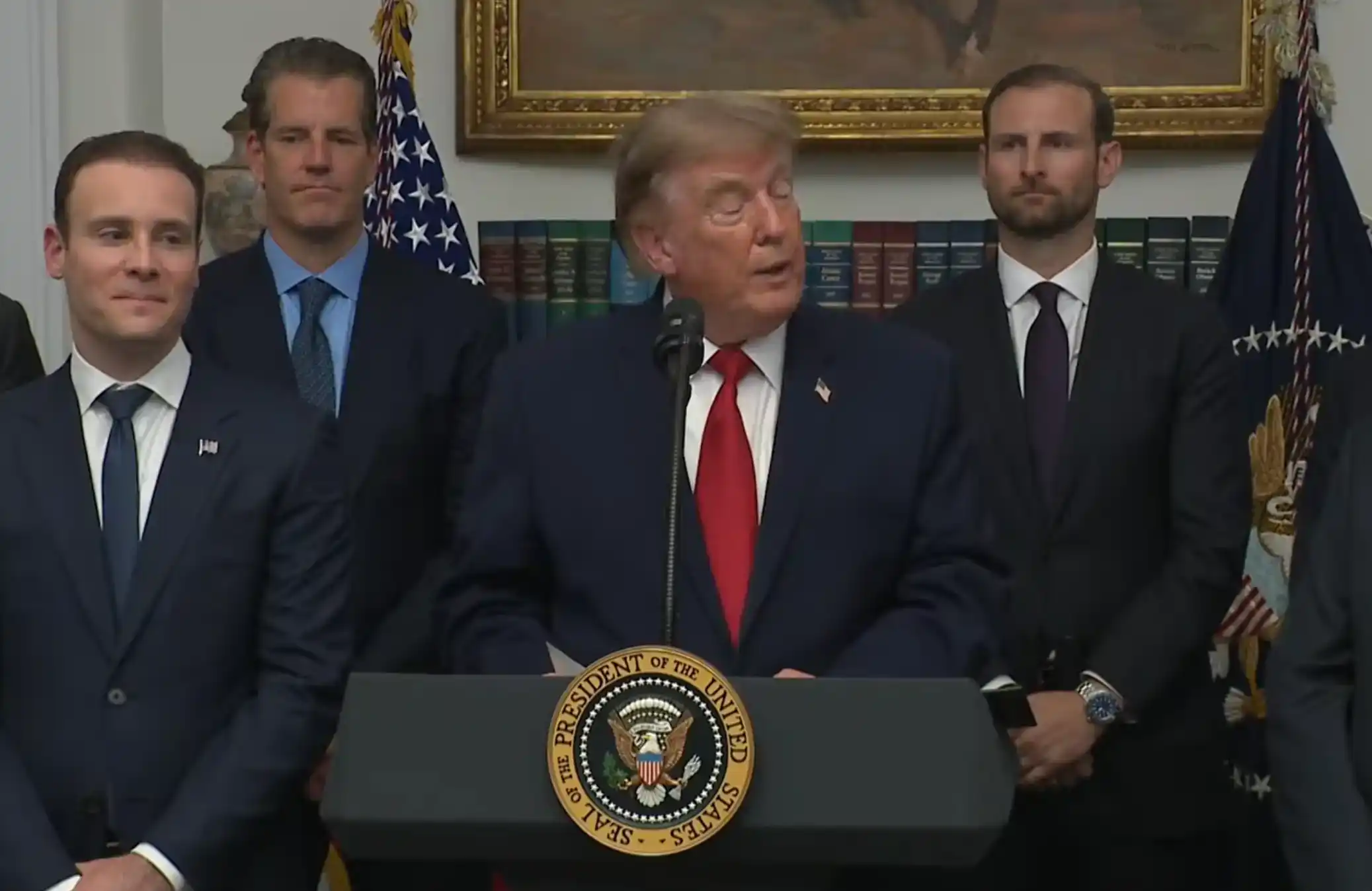
Le président américain Donald Trump a récemment organisé une table ronde à la Maison Blanche, rassemblant des dirigeants de la finance, de la cryptomonnaie, de la technologie et des régulateurs. L'objectif était de renforcer la compétitivité américaine dans la finance et l'IA, en mettant particulièrement l'accent sur l'industrie des cryptomonnaies. Lors de son intervention, Trump a évoqué deux projets de loi clés : le « GENIUS Act », déjà signé, qui favorise l'adoption des stablecoins adossés au dollar, et le « Clarity Act », en cours d'examen au Congrès, qui vise à clarifier la distinction juridique entre les « titres numériques » et les « matières premières numériques ». Il a appelé à une adoption rapide de ce dernier. Les régulateurs ont également présenté des avancées majeures. La CFTC a confirmé le lancement du premier contrat perpétuel bitcoin conforme aux États-Unis et travaille à l'introduction du protocole décentralisé Hyperliquid dans un cadre réglementaire. La SEC a proposé de nouvelles règles pour permettre aux startups de lever des fonds via des actifs numériques de manière légale. Interrogé sur les réserves de bitcoin du gouvernement, Trump s'est dit ouvert à leur expansion. La réunion a également abordé brièvement les politiques énergétiques pour soutenir le développement de l'IA. Ces annonces sont perçues comme très positives pour le secteur des cryptomonnaies.

marsbitIl y a 59 mins

Introduction d'Hyperliquid, appel à l'adoption d'un projet de loi : synthèse du discours clé de Trump

marsbitIl y a 59 mins

Le président de la CFTC : l'agence continuera à travailler sur la régulation des cryptomonnaies si la loi CLARITY n'est pas adoptée

Le président de la CFTC, Michael Selig, a annoncé que l'agence poursuivra ses travaux sur la régulation des cryptomonnaies, même si le projet de loi CLARITY n'est pas adopté par le Congrès. Lors d'un discours, il a déclaré que la CFTC donnerait du temps au Congrès pour voter, mais si un compromis bipartisan n'est pas trouvé, il ordonnerait à ses équipes de commencer rapidement à élaborer de nouvelles règles. Cela vise, selon lui, à aider le président Trump à tenir ses promesses dans ce domaine. Le processus législatif du CLARITY est actuellement en pause jusqu'en septembre, nécessitant 60 voix au Sénat pour adoption. Selig a déjà demandé à son personnel d'autoriser les entités à proposer des transactions sur crypto-actifs avec effet de levier et d'étudier des protections pour les développeurs. Ces déclarations font suite à une réunion à la Maison Blanche avec Trump, qui a appelé à l'adoption d'une version "juste" du CLARITY pour devancer la Chine. Cependant, certains démocrates cherchent à renforcer les clauses éthiques du projet de loi, notamment concernant les investissements cryptos de la famille Trump. Parallèlement, la SEC a également publié des propositions de règles pour les actifs numériques. Selig agit actuellement en tant que seul commissaire confirmé de la CFTC, lui donnant un rôle central dans l'établissement de l'agenda de l'agence. Le comité consultatif a également discuté de l'IA et des marchés de prédiction, sur lesquels la CFTC affirme avoir une juridiction exclusive.

cryptonews.ruIl y a 3 h

Le président de la CFTC : l'agence continuera à travailler sur la régulation des cryptomonnaies si la loi CLARITY n'est pas adoptée

cryptonews.ruIl y a 3 h

Trading

Spot

Articles tendance

Comment acheter FLOW

Bienvenue sur HTX.com ! Nous vous permettons d'acheter Flow (FLOW) de manière simple et pratique. Suivez notre guide étape par étape pour commencer votre parcours crypto.Étape 1 : Création de votre compte HTXUtilisez votre adresse e-mail ou votre numéro de téléphone pour ouvrir un compte sur HTX gratuitement. L'inscription se fait en toute simplicité et débloque toutes les fonctionnalités.Créer mon compteÉtape 2 : Choix du mode de paiement (rubrique Acheter des cryptosCarte de crédit/débit : utilisez votre carte Visa ou Mastercard pour acheter instantanément Flow (FLOW).Solde :utilisez les fonds du solde de votre compte HTX pour trader en toute simplicité.Prestataire tiers :pour accroître la commodité d'utilisation, nous avons ajouté des modes de paiement populaires tels que Google Pay et Apple Pay.P2P :tradez directement avec d'autres utilisateurs sur HTX.OTC (de gré à gré) : nous offrons des services personnalisés et des taux de change compétitifs aux traders.Étape 3 : stockage de vos Flow (FLOW)Après avoir acheté vos Flow (FLOW), stockez-les sur votre compte HTX. Vous pouvez également les envoyer ailleurs via un transfert sur la blockchain ou les utiliser pour trader d'autres cryptos.Étape 4 : tradez des Flow (FLOW)Tradez facilement Flow (FLOW) sur le marché Spot de HTX. Il vous suffit d'accéder à votre compte, de sélectionner la paire de trading, d'exécuter vos trades et de les suivre en temps réel. Nous offrons une expérience conviviale aux débutants comme aux traders chevronnés.

427 vues totalesPublié le 2024.12.10Mis à jour le 2026.06.02

Comment acheter FLOW

Discussions

Bienvenue dans la Communauté HTX. Ici, vous pouvez vous tenir informé(e) des derniers développements de la plateforme et accéder à des analyses de marché professionnelles. Les opinions des utilisateurs sur le prix de FLOW (FLOW) sont présentées ci-dessous.

活动图片