zcashd shuts down, Zcash enters Ironwood era: Is quantum-resistant privacy the future?

ambcryptoPublié le 2026-07-20Dernière mise à jour le 2026-07-20

Résumé

Zcash has completed its infrastructure transition by retiring the original zcashd software and fully adopting the Rust-based Zebra and Zakura node implementations. This shift, finalizing in July 2024, enhances network maintainability and prepares for the upcoming Ironwood era. Despite a previously disclosed vulnerability in the Orchard shielded pool, user confidence appears resilient. Shielded transaction volume grew 11.1% quarter-over-quarter, and the anonymity set expanded significantly, even as total shielded balances saw a moderate decline. The prompt containment of the Orchard flaw, which did not threaten total ZEC supply, demonstrated effective protocol safeguards. The incoming Ironwood upgrade aims to further strengthen long-term security through formal verification and quantum-resistant features, moving Zcash from reactive fixes to proactive, verifiable security assurances.

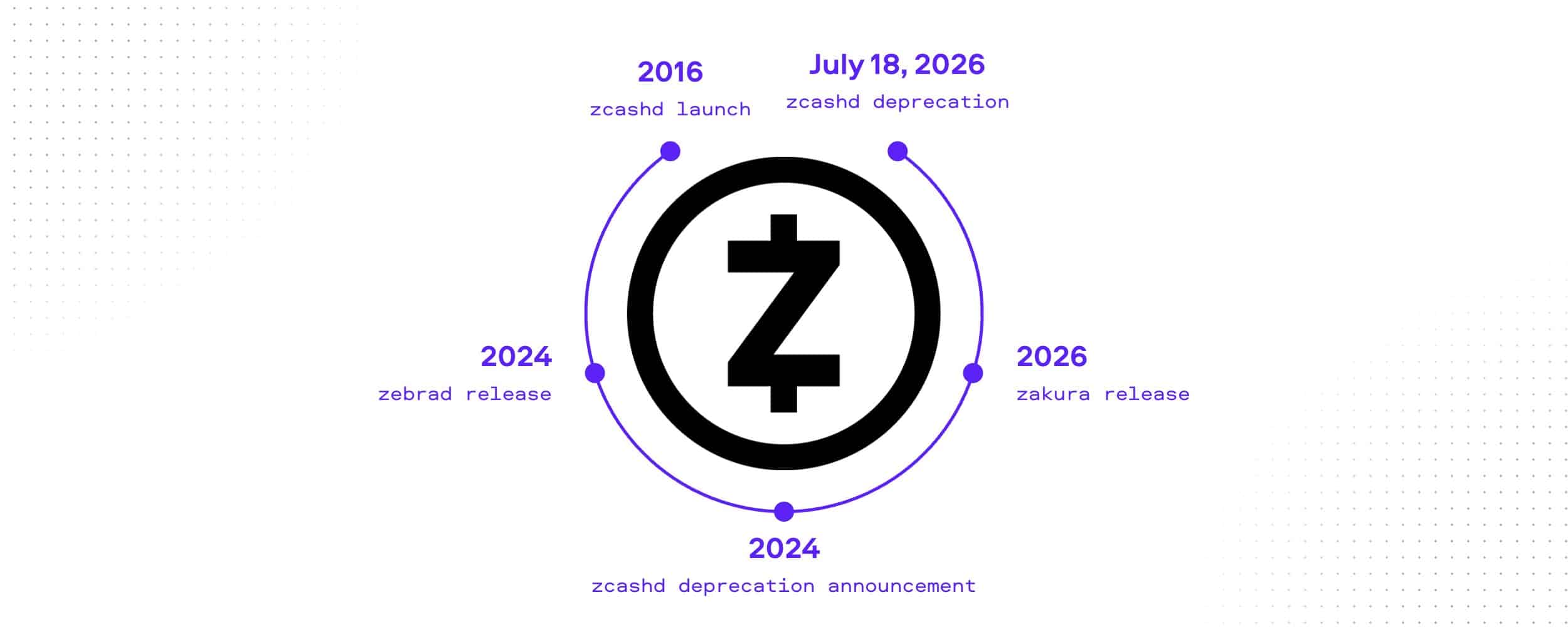
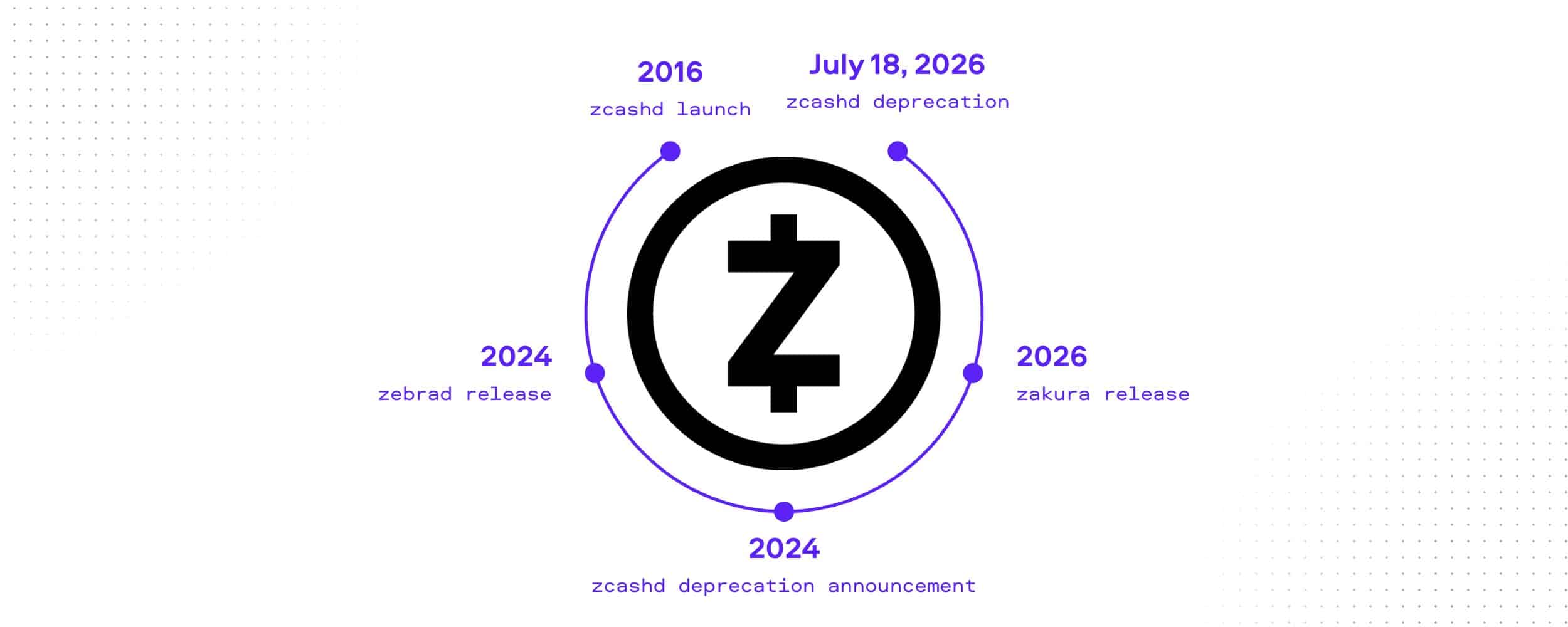
Zcash’s infrastructure has entered a new phase as the network completes its transition away from its original software implementation. That evolution took nearly a decade, beginning with zcashd’s 2016 launch before Zebra’s 2024 release introduced a Rust-based alternative.

After the 2024 deprecation notice, node operators had enough time to switch over before the planned retirement. On the 18th of July, zcashd reached end of support at block height 3417100.
Source: X

Meanwhile, Zakura completed the new node ecosystem. Rather than simply replacing legacy software, the transition strengthens maintainability, prepares the network for Ironwood, and reduces long-term operational risk.

Zcash’s adoption remains intact

Completing Zcash’s infrastructure transition did not remove the market’s biggest question. Instead, it shifted attention to whether users still trusted the network after the Orchard vulnerability. Early activity suggests that confidence largely held.

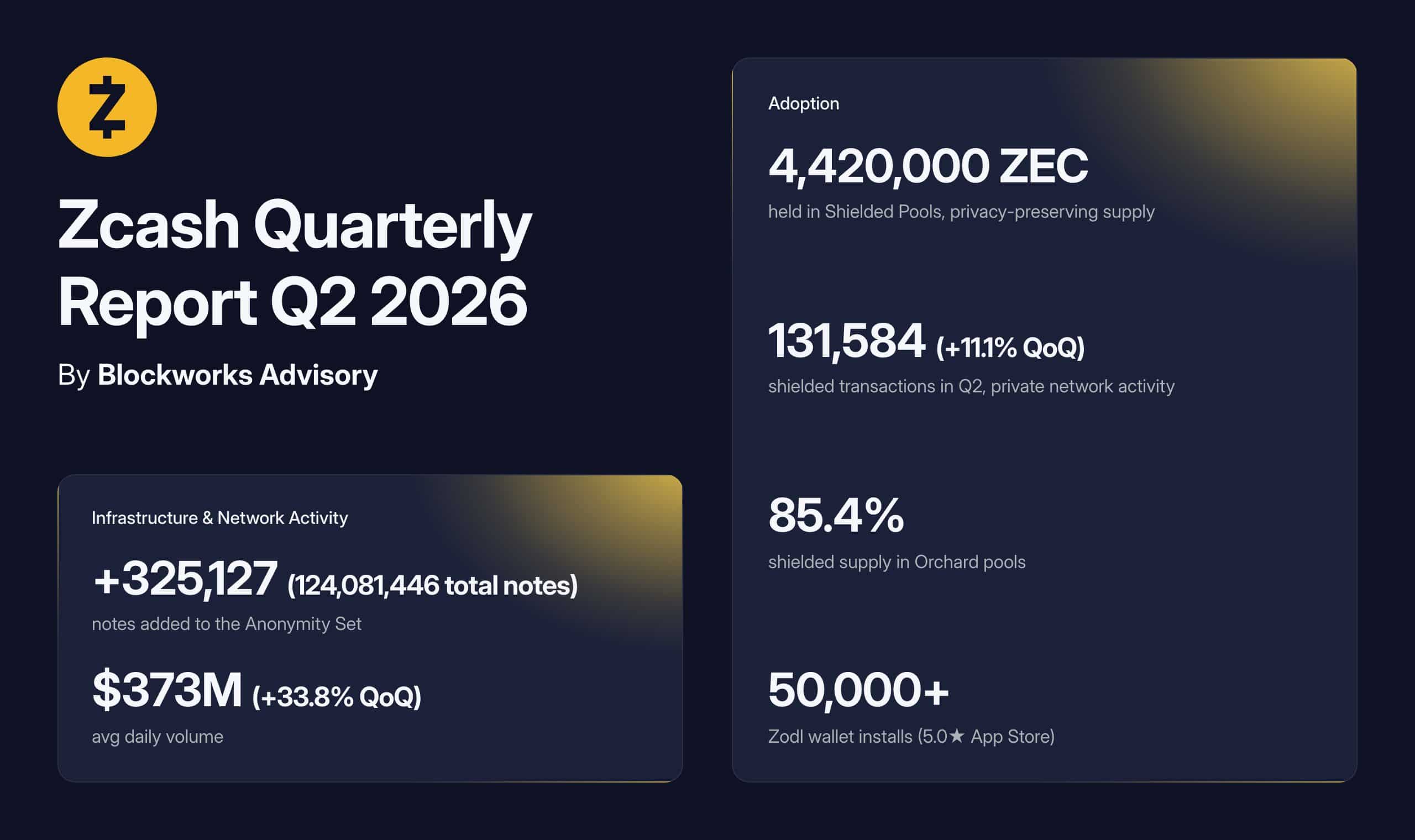
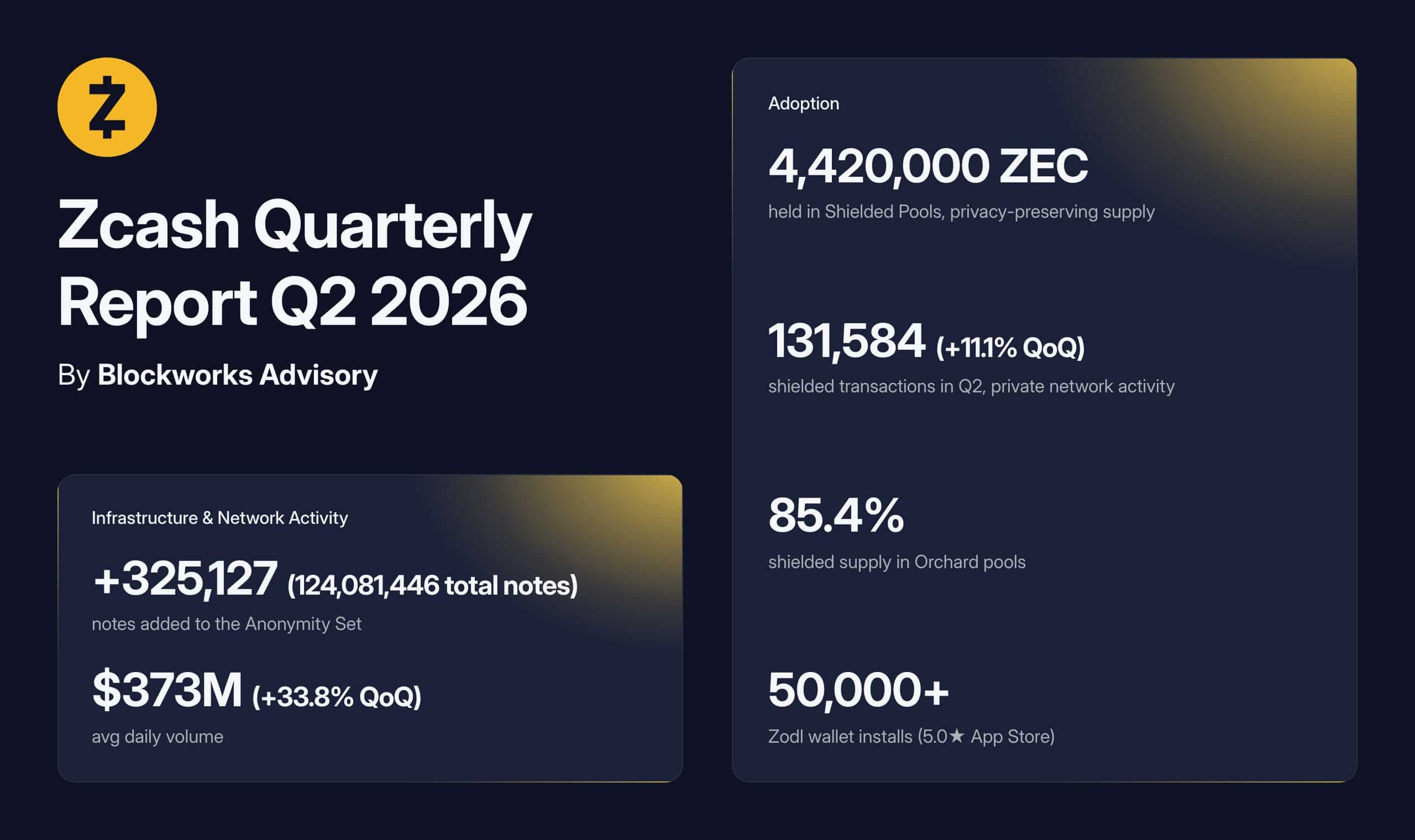
Although shielded balances declined 14% to 4.42 million ZEC, users continued relying on private transactions, which rose 11.1% QoQ to 131,584.
Source: Zcash on X

This trend became even more significant as the anonymity set for ZCash expanded by 325,127 units to 124.08 million.

This indicated an increase in participants using ZCash for privacy purposes. In addition, average daily trading volume increased by 33.8% QoQ to $373 million. This further reinforces that overall use of the network has been increasing.

Rather than reflecting weakening adoption, these trends point to cautious capital repositioning while confidence in Zcash’s privacy infrastructure remained intact.

Formal verification reinforces protocol integrity

Even resilient blockchain networks are ultimately judged by how they respond to critical security threats. Zcash faced such a test when researchers found a flaw in Orchard shielded pools that secured roughly 85% of shielded value.

But the flaw stayed contained because disclosure was coordinated, and developers were able to release an emergency fix within days. More importantly, this flaw allowed forgery inside Orchard rather than inflating the total supply of ZEC.

The turnstile mechanism prevented forged funds from leaving the pool other than legitimate deposits. Looking ahead, Ironwood strengthens this protection through formal verification and quantum recovery too.

Together these upgrades move Zcash from reactive fixes towards stronger assurances of long-term security and confidence within the ecosystem.


Final Summary

  • Zcash [ZEC] completed its migration to Zebra and Zakura, strengthening infrastructure while maintaining resilient network activity.
  • Zcash enters the Ironwood era with formal verification and quantum recovery, reinforcing long-term protocol security.


Cryptos en tendance

Questions liées

QWhat was the original software implementation of Zcash that has now been retired?

AThe original software implementation was zcashd, which was launched in 2016 and reached end of support on July 18th at block height 3417100.

QWhat are the two new software components mentioned that complete Zcash's node ecosystem?

AThe two new software components are Zebra, a Rust-based alternative released in 2024, and Zakura, which completed the new node ecosystem.

QDespite a 14% decline in shielded balances, what positive trends in network usage were observed?

APositive trends included an 11.1% quarterly increase in private transactions to 131,584, a significant expansion of the anonymity set by 325,127 units to 124.08 million, and a 33.8% QoQ increase in average daily trading volume to $373 million.

QWhat was the nature of the vulnerability found in the Orchard shielded pools, and how was it contained?

AThe vulnerability was a flaw that allowed forgery within the Orchard shielded pools. It was contained through coordinated disclosure, an emergency fix released within days, and the existing turnstile mechanism that prevented the forged funds from leaving the pool.

QWhat two key features does the upcoming Ironwood era introduce to strengthen Zcash's protocol?

AThe Ironwood era introduces formal verification and quantum recovery features to reinforce long-term protocol security and confidence.

Lectures associées

Gate Research Institute : La vague de « Wall Streetisation » des produits financiers cryptographiques, concurrence ou fusion ?

Le titre de l'article est : "Gate Institute : La vague de 'Wall Street-isation' des produits financiers cryptos, est-ce une compétition ou une fusion ?" Résumé en français (environ 1400 caractères) : Il y a dix-sept ans, Bitcoin fut créé avec une vision décentralisée et anti-establishment financier. Aujourd'hui, paradoxalement, son adoption massive passe souvent par des ETF émis par des géants comme BlackRock. Cet article analyse cette "Wall Street-isation" apparente des actifs cryptos : les institutions traditionnelles s'emparent-elles du pouvoir d'émission, de tarification, de garde et de distribution ? La réalité est plus nuancée. C'est une convergence à double sens. D'un côté, les plateformes cryptos comme Gate.io étendent leurs services aux actions traditionnelles (états-uniennes, hongkongaises, sud-coréennes), aux CFD et aux produits tokenisés, offrant un compte unifié. De l'autre, des courtiers traditionnels comme Robinhood intègrent les cryptomonnaies et explorent la tokenisation d'actions sur blockchain. Cette fusion vise à créer le "super-compte" financier de demain, où actions, cryptos, ETF et obligations tokenisées (RWA) coexistent dans une même interface, comblant les faiblesses de chaque écosystème. Les RWA, notamment les obligations d'État tokenisées, agissent comme une couche intermédiaire unificatrice. En conclusion, Wall Street n'a pas conquis la crypto, et la crypto n'a pas contourné Wall Street. Ils construisent ensemble une nouvelle forme de marché des capitaux, plus efficace et mondial, où l'idéal décentralisé persiste dans les protocoles, tandis qu'une expérience utilisateur unifiée émerge à l'interface.

marsbitIl y a 3 mins

Gate Research Institute : La vague de « Wall Streetisation » des produits financiers cryptographiques, concurrence ou fusion ?

marsbitIl y a 3 mins

S&P Dow Jones s'associe à Pantera pour lancer un indice crypto, le Bitcoin exclu car il ne « génère pas de revenus »

L'indice S&P Pantera Digital Asset Index, lancé par S&P Dow Jones Indices en partenariat avec Pantera Capital, exclut le Bitcoin ainsi que les memecoins. Le critère principal d'inclusion exige que les protocoles génèrent des revenus vérifiés sur plusieurs trimestres et redistribuent de la valeur à leurs détenteurs de jetons, s'inspirant ainsi des exigences de viabilité financière du S&P 500. Sur les 18 actifs numériques composant l'indice (liste complète non publique), les cinq principales pondérations sont Ethereum (ETH), BNB, Solana (SOL), Tron (TRX) et Hyperliquid (HYPE). Tous les protocoles sélectionnés génèrent collectivement un revenu annuel dépassant 30 milliards de dollars. Pantera justifie l'exclusion du Bitcoin en le qualifiant d'actif monétaire déjà accessible via des ETF dédiés, et souligne son absence de revenus de protocole. L'objectif est de fournir aux institutions un benchmark distinct pour les actifs numériques "utilitaires" générateurs de revenus. Bien que cet indice ne soit pour l'instant qu'un benchmark, des discussions sont en cours pour créer des produits d'investissement tels qu'un ETF. Ce lancement intervient dans un contexte où une majorité d'institutions expriment une préférence pour les produits d'investissement régulés afin d'accéder à la classe d'actifs numériques.

marsbitIl y a 8 mins

S&P Dow Jones s'associe à Pantera pour lancer un indice crypto, le Bitcoin exclu car il ne « génère pas de revenus »

marsbitIl y a 8 mins

Trading

Spot

Articles tendance

Comment acheter ERA

Bienvenue sur HTX.com ! Nous vous permettons d'acheter Caldera (ERA) de manière simple et pratique. Suivez notre guide étape par étape pour commencer votre parcours crypto.Étape 1 : Création de votre compte HTXUtilisez votre adresse e-mail ou votre numéro de téléphone pour ouvrir un compte sur HTX gratuitement. L'inscription se fait en toute simplicité et débloque toutes les fonctionnalités.Créer mon compteÉtape 2 : Choix du mode de paiement (rubrique Acheter des cryptosCarte de crédit/débit : utilisez votre carte Visa ou Mastercard pour acheter instantanément Caldera (ERA).Solde :utilisez les fonds du solde de votre compte HTX pour trader en toute simplicité.Prestataire tiers :pour accroître la commodité d'utilisation, nous avons ajouté des modes de paiement populaires tels que Google Pay et Apple Pay.P2P :tradez directement avec d'autres utilisateurs sur HTX.OTC (de gré à gré) : nous offrons des services personnalisés et des taux de change compétitifs aux traders.Étape 3 : stockage de vos Caldera (ERA)Après avoir acheté vos Caldera (ERA), stockez-les sur votre compte HTX. Vous pouvez également les envoyer ailleurs via un transfert sur la blockchain ou les utiliser pour trader d'autres cryptos.Étape 4 : tradez des Caldera (ERA)Tradez facilement Caldera (ERA) sur le marché Spot de HTX. Il vous suffit d'accéder à votre compte, de sélectionner la paire de trading, d'exécuter vos trades et de les suivre en temps réel. Nous offrons une expérience conviviale aux débutants comme aux traders chevronnés.

661 vues totalesPublié le 2025.07.17Mis à jour le 2026.06.02

Comment acheter ERA

Discussions

Bienvenue dans la Communauté HTX. Ici, vous pouvez vous tenir informé(e) des derniers développements de la plateforme et accéder à des analyses de marché professionnelles. Les opinions des utilisateurs sur le prix de ERA (ERA) sont présentées ci-dessous.

活动图片












