When the Largest BTC Buyer Becomes a Seller, Who's Buying After MicroStrategy Sells 3,588 Bitcoin?

marsbitPublié le 2026-07-08Dernière mise à jour le 2026-07-08

Résumé

MicroStrategy, once the largest corporate buyer of Bitcoin, sold 3,588 BTC for approximately $216 million to fund its preferred stock dividends, marking a significant shift from buyer to seller. This move occurred after its market-to-NAV premium vanished, breaking its "print stock to buy Bitcoin" financial model. A roundtable discussion featuring Austin Campbell, Ram Ahluwalia, and Chris Perkins analyzed the implications. They noted that MicroStrategy's dominance has become a narrative bottleneck for the broader crypto market, with some speculating that Bitcoin's price might only surge significantly after the company's influence wanes. The conversation expanded to examine the capital structure conflict between traditional equity and crypto tokens, arguing that most current tokens will fail as they don't fit neatly into existing debt/equity frameworks. A "stablecoin war" was identified as a major trend, with entities like Tether, Robinhood, and the OUSD alliance competing. Tether's decision to abandon the European MiCA market highlights strategic divergences. The panelists argued that bank-issued stablecoins could revolutionize global finance by allowing US banks to capture net interest margins from international transactions, potentially making JPMorgan the first trillion-dollar bank. They concluded that while capital is currently being siphoned by AI/semiconductors, markets will eventually refocus on fundamentals and cash flow, which could benefit cryptocurrencies with real...

Compiled & Translated by: Deep Tide TechFlow
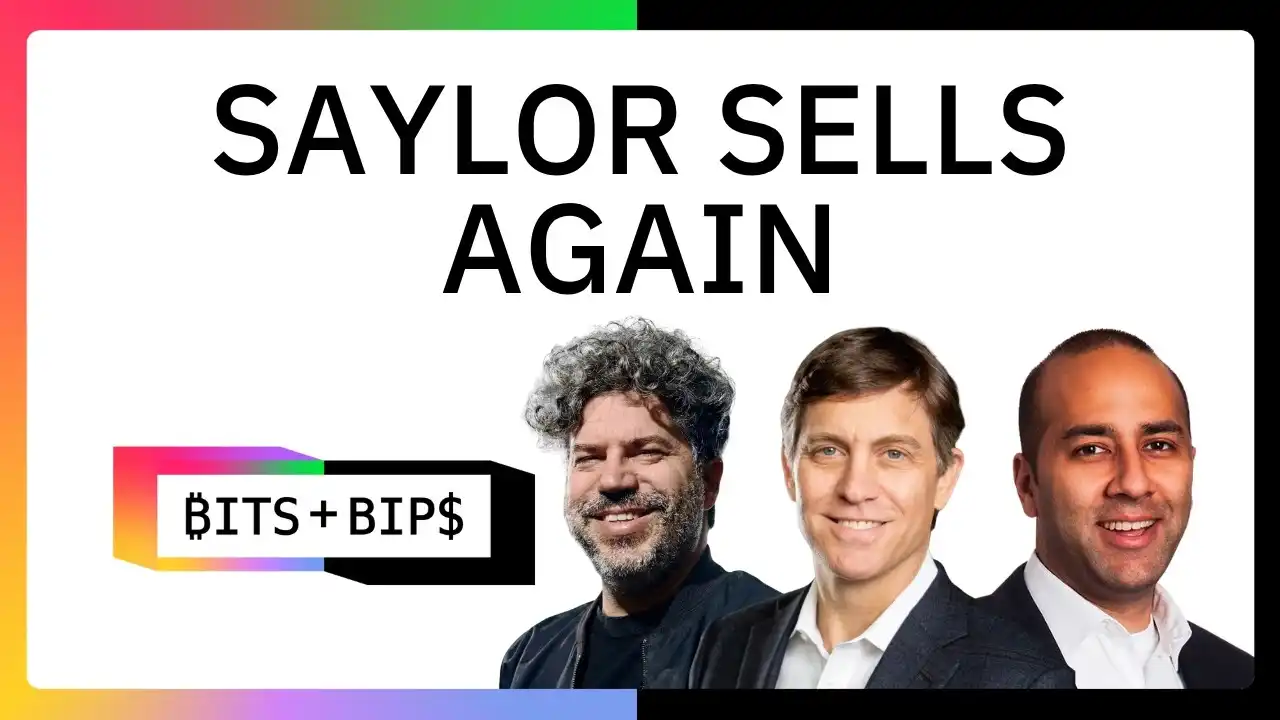
Hosts / Guests: Austin Campbell, Zero Knowledge Group; Ram Ahluwalia, Lumida Wealth CEO; Chris Perkins, Franklin Crypto
Podcast Source: Bits + Bips (Under Unchained)
Original Title: MicroStrategy Sells Bitcoin Again to Cover Dividends
Release Date: July 7, 2026

Key Takeaways

The background for this Bits + Bips roundtable is MicroStrategy's second Bitcoin sale within a month—3,588 BTC, cashed out for approximately $216 million to pay preferred stock dividends. The three resident guests (and co-hosts) Austin Campbell, Ram Ahluwalia, and Chris Perkins deconstruct this structural turning point from their professional perspectives: when the largest BTC buyer becomes a routine seller, the mNAV premium disappears, preferred stocks fall below par, and the "print stock to buy Bitcoin" cycle breaks, what cards does MicroStrategy have left?

Austin opens with a hedge fund friend's remark—"Saylor holds 5% of Bitcoin, maybe it will only truly surge after he blows up"—highlighting the crypto market's brutal logic: when someone becomes the protagonist, their collapse might be the catalyst. Ram, from a macro trader's view, analyzes the dilemma of two choices: selling BTC destroys the narrative, issuing new shares dilutes MSTR. He also mentions hearing Saylor speak twice in London, with Saylor vigorously defending the preferred dividend to rebuild confidence. Chris, from an investment banking background, points out that with mNAV gone, the foundation of financial engineering has crumbled.

But the discussion goes far beyond MicroStrategy. The three delve into the capital structure issue of tokens vs. equity—why there are no successful "token + equity coexistence" cases, the Pokémon card analogy, and the judgment that 99% of tokens will eventually go to zero. The stablecoin war is another major topic: Tether abandoning the European MiCA market, the "utility problem" of stablecoins (Can you buy a coffee with a stablecoin?), the governance black hole of the OUSD 140-member alliance, Robinhood entering government money markets. The latter half extends to the strategic significance of bank stablecoins—Scott Bessent's "Eurodollar market repatriation" thesis, JPMorgan possibly becoming the first trillion-dollar market cap bank, non-US bank dollar deposit businesses facing obsolescence—as well as a valuation breakdown of the Securitize IPO. Finally, the three touch on the capital siphoning effect of AI/semiconductors and the return to crypto market fundamentals.

Selected Highlights

On MicroStrategy Selling BTC and the "Three-Body Problem"

  • "A friend in global macro told me it's hard to see the next wave of institutional adoption from pensions, sovereign funds, central banks with Saylor holding 5% of Bitcoin there. His exact words: 'Maybe the best thing is for that guy to blow up, then this thing will really take off.'"
  • "Whenever someone becomes the protagonist in crypto, their demise is imminent. MicroStrategy has been the protagonist for a while."
  • "Crypto narrative is now stuck on this MicroStrategy thing. MicroStrategy is not crypto, crypto is not MicroStrategy, but we're all stuck here. It's like when Bloomberg only talked about PIGS (Portugal, Italy, Greece, Spain) every day; the market eventually moves on."
  • "His actions today speak clearly—he's protecting the dividend, hoping it brings back confidence."

On mNAV Disappearing and Broken Financial Engineering

  • "They have two paths: issue common stock diluting MSTR, or sell Bitcoin suffering narrative damage."
  • "When the mNAV premium disappears, the 'print stock to buy Bitcoin' cycle breaks. You can't issue at will anymore because the market no longer gives you a premium."
  • "BTC actually rose during the week of the sale—Josh Mandel and Pete Rizzo noted it. It acted like a buyback. But the bears will say: premium is dead, BTC hasn't really rallied, it's now a seller."

On Token vs. Equity

  • "We already have Delaware corporate law and centuries of capital structure. You can slice cash flows into different layers of debt, and what's left is called equity. There isn't a third thing called a 'token' that fits into this stack."
  • "If you have common equity, a token likely needs to function like preferred equity or debt to have separate meaning. If it's just another form of equity, you might as well tokenize your equity."
  • "The Pokémon card is a good analogy—the company issuing the cards and the cards themselves are two different things. You can tokenize the product, not necessarily the equity."
  • "Looking ahead ten years, 90% of today's top 500 tokens will be gone. I think it will be 99%."
  • "Druckenmiller said during the dot-com bubble: 'I've already learned that lesson, I don't need to learn it again.'"

On the Stablecoin War

  • "Stablecoins are the new net interest income. Everyone wants that interest. Tether makes so much money doing the most basic product—how do I do the same?"
  • "The biggest challenge for all stablecoins right now is utility. You can transfer, but what can you actually *do* with a stablecoin? Can you buy a coffee with it?"
  • "Tether's stance is clear: this is soccer not American football, they won't play by Europe's rules. BNP Paribas can't not do business in France, but Tether can just walk away from a market."
  • "OUSD is a 'plan to have a plan'. 140 members with completely different economic goals, details not filled in. The hardest part—governance—is skipped, push the tech out first."

On Bank Stablecoins and Market Landscape

  • "Stablecoins are essentially a repatriation of the Eurodollar market. If JPMorgan or Bank of America issues a stablecoin, they can earn NIM from Thai merchants or Chinese suppliers."
  • "JPMorgan could become the first trillion-dollar market cap bank. They're over $900 billion now, spending $13-16 billion annually on tech."
  • "The biggest losers might be non-US banks offering dollar deposit accounts. If I can just buy stablecoins, why go through a local bank with awful FX and fees?"
  • "Securitize currently trades more like a call option—you're betting on a 10% chance it's worth $18 billion and a 90% chance it's worthless or acquired cheaply."
  • "Last quarter, every S&P 500 sector underperformed the index except semiconductors. Capital is being massively siphoned by AI."

"Maybe After He Blows Up, This Thing Will Truly Take Off"

Austin Campbell: Before we dive in, I want to share a conversation. I was chatting with a friend in global macro, one of the best traders I know. I asked him about Bitcoin. He said it's hard to see the next wave of institutional adoption—pensions, sovereign funds, central banks—happening with Saylor holding 5% of Bitcoin and having such a large personal presence. His exact words: "Maybe the best thing is for that guy to blow up, then this thing will really take off, and then others will pile in." Whenever someone becomes the protagonist in crypto, their demise is imminent. MicroStrategy has been the protagonist for a while. I can't help but think, in a way, that makes them an obstacle to Bitcoin's rise—and that creates its own problems.

National Security, Export Controls, and the Crypto Industry

Austin Campbell: Before the main topic, I want to raise a broader issue. Governments are now trying to control crypto from a new angle—not by stopping code publication, but by controlling who can use it. They want to use export control laws to restrict access to something already published under the First Amendment. It's essentially picking winners and losers without applicable laws or due process.

National security matters, of course, but we can't just say "national security" and close our eyes to why. We can't tell people "use stablecoins, use crypto rails to build your financial life" and then cut it off one day for national security or export controls. The crypto industry isn't angry enough about this; this is our fight.

MicroStrategy Sells Again: 3,588 BTC, $216 Million

Austin Campbell: Onto the main topic. MicroStrategy sold 3,588 Bitcoin for about $216 million cash. This is the largest sale to date, following a smaller sale of 32 BTC to cover preferred stock dividends. The question is clear: after the MSTR premium evaporated, will selling Bitcoin to cover dividends become routine? Is MicroStrategy still an accumulator, or has it become a routine seller?

First, the facts. They broke their years-long no-sell streak, first selling 32, then 3,588 a month later. As of July 5, MicroStrategy holds 843,775 Bitcoin, $2.55 billion in USD reserves, cost basis $75,700 per coin—well above the current ~$60k trading price. MSTR broke below $1 for the first time on June 27, to 99 cents, later recovering. STRC fell to 74.57 at its lowest, back around 90 before we started. Dividend rate increased 50bps to 12%. New authorization framework allows sales of up to $1.25 billion in Bitcoin, plus an STRC buyback plan.

Chris, you're from banking; Ram, you do a lot of investing. Saylor has shifted to selling from the balance sheet rather than issuing more MSTR stock. What does that tell you?

Two Choices: Sell Bitcoin or Dilute Stock

Ram Ahluwalia: Two paths. Issue common stock—dilutes MSTR, stock falls. Or sell Bitcoin—destroys the narrative. Last week we mentioned a potential short squeeze in MSTR, and we saw it in the news. More constructively, STRC and STRF started moving towards par over the past few days. They need to push back to par. If they do, they can breathe; if not, it's a problem. I still view this as a trading asset, susceptible to violent short squeezes, possibly in the middle of one now. I also want to see the date they sold Bitcoin vs. the announcement date—if BTC held up or even rose during the sale, that's quite encouraging.

I was in London last week, first at a Goldman event—packed, severely oversold, institutional build undeniable. Then a Robinhood event, their DeFi stuff was impressive. Before that, I heard Saylor speak twice. On stage, he was very focused on defending and protecting the preferred dividend, trying to convince the audience of his commitment to Bitcoin. He's trying to navigate this three-body problem.

Austin Campbell: This also cuts to the bull/bear divergence. Bulls will say: mNAV back to 1.09, STRC recovering, BTC rising during the sale week—Josh Mandel and Pete Rizzo noted it, it acted like a buyback. Bears will say: premium is dead, BTC hasn't really rallied, it's now a seller. And Roland and Peter Schiff pointed this out. My question: even if preferred recovers a lot and Saylor can sit tight for a while, if BTC doesn't rise, are we back at square one a year from now?

Ram Ahluwalia: My guess is, last week fast-money traders bought the dip on volume collapse. That's fast money, not long-term holders. They'll likely sell for profit.

Chris Perkins: From a banking perspective, when the mNAV premium disappears, the "print stock to buy Bitcoin" cycle breaks. You can't issue at will because the market no longer gives you a premium. So you have to work the asset side. Selling Bitcoin works accounting-wise—cost $75,700, market price low $60k, book loss but cash in hand. The problem is the action itself tells the market: you no longer unconditionally believe your own thesis.

"Three-Body Problem": MicroStrategy-Bitcoin-Crypto Narrative Lock

Chris Perkins: Unfortunately, we're stuck. Crypto narrative is now stuck on this MicroStrategy thing. MicroStrategy is not crypto, crypto is not MicroStrategy, but we're all stuck here, feeling like we need to digest this before moving forward. It reminds me of opening Bloomberg before, only talking about PIGS—Portugal, Italy, Greece, Spain—every single day, and eventually the market moved on.

I'm ready for us to turn the page. What encourages me somewhat is BTC showing resilience today. There are also positive tail factors—like Trump saying he likes crypto the same day the Trump account launched. I look forward to us focusing less on this three-body problem and getting back to fundamentals and details of other projects. Crypto is Bitcoin, Bitcoin is crypto, so MicroStrategy is crypto—I want to break that equation.

Another related debate emerging: does value flow to tokens or equity? You see it in private and public markets. Some dismissively say "all value is in equity, the rest is nonsense." I think it's more nuanced.

Token vs. Equity: No Third Capital

Austin Campbell: I think both can work, but the hard part is having both—unless you carefully define their rights. We already have Delaware corporate law and centuries of capital structure. You can slice cash flows into different layers of debt, and what's left after employees and creditors is called equity. There isn't a third thing called a 'token' that fits into this stack. You can make a token act like equity or debt, but making it a new concept alongside debt and equity is difficult.

If you have common equity, a token likely needs to function like preferred equity or debt to have separate meaning. If it's just another form of equity, you might as well tokenize your equity. You can also tokenize products, services, commodities—the Pokémon card is a good analogy. The company issuing cards and the cards themselves are two different things; you can tokenize the product without tokenizing equity.

Ram Ahluwalia: It's case-specific. From a decentralized tech perspective, it might differ—you can pop up frontends everywhere, governance logic for equity and tokens can be separate. In some projects, value clearly flows to tokens, equity becomes a shell. VCs' approach is to invest in both—take tokens and equity, capture value wherever it ends up. But honestly, tokens and equity coexisting with stable value—I can't think of a clear success story.

Chris Perkins: Some ask: will this whole token experiment, in hindsight, be a product of the COVID $3 trillion stimulus and zero-interest-rate era? We created twenty thousand tokens, didn't know what they were, thought they were governance and economic rights, and then reverted to traditional capitalism?

I don't think so. You can't deny real utility emerging: stablecoins near ATH, perpetuals market innovating, prediction markets growing, RWA and tokenized equity landing. Goldman's event was packed, Robinhood built a DeFi app store—12 partners, more coming—backed by Lloyd's insurance, abstracting risk in the backend. The market is maturing.

Austin Campbell: Looking ahead ten years, 90% of today's top 500 tokens will be gone. Is that failure or success?

Ram Ahluwalia: If you invested money, it's failure. I think not 90%, but 99% will go to zero. The lesson hasn't changed. Druckenmiller said during the dot-com bubble he already knew the lesson, didn't need to learn it again. These tokens have no value capture, founding teams get liquidity too early, no incentive to stay and build.

Stablecoin War: Tether, Robinhood, OUSD

Austin Campbell: This set of dynamics—Circle being queried by securities regulators, Robinhood entering government money markets, Tether's moves, the OUSD alliance—what's your take?

Chris Perkins: I saw this coming. Institutional profit-seeking is endless. If you're an exchange, you make money several ways: data, trading fees, net interest income. Stablecoins are the new net interest income. Everyone looks at Tether saying, these guys make so much money doing the most basic product—how do I do the same?

But the biggest challenge is utility. You can transfer, but what can you actually *do* with a stablecoin? Can you buy a coffee with it? It's still "hot potato"—I want to swap my stablecoin for yours, you hold mine, I earn interest. The stablecoin war has begun, will get worse before better. Will see consolidation. Look back at the CLARITY Act; banks should push it over the line.

Austin Campbell: Stablecoins are often discussed as a single product, but they're entirely different. Robinhood tries to attract deposits and deploy to DeFi—an investment and retail product strategy. Europe is more a regulated payments strategy. Tether's response is direct—they'll make USAT (US Tether), interested in the US economy, but Europe? "No bid." Tether calls it soccer not American football, they won't play by Europe's rules. They completely exited a market. You see them being pushed off some exchanges, Revolut delisting them. Tether's response: as expected. BNP Paribas can't not do business in France, but Tether can.

OUSD is a "plan to have a plan." A 140-member alliance with completely different economic goals, details not filled in. You say issuers keep economic benefits, but how tracked? Who minted the token? On which platform? How handled in DeFi? If based on who minted, can I immediately build a trading team to redeem others' OUSD and issue my own? The hardest part—governance—is skipped, push the tech out first.

Coinbase is also in OUSD, but smartly not putting all eggs in Circle's basket. If this were a serious business alliance requiring OUSD as a primary product, Coinbase likely wouldn't join. So they have a foot in both camps.

Ram Ahluwalia: "Move fast and break things" is a winning formula in tech. Elon Musk blew up countless rockets to reach SpaceX today. But "move fast and break things" with other people's money? Isn't that criminal? OUSD launched like a torpedo, but some partners faced backlash before even boarding—that's the bad side of tech culture colliding with finance culture.

Bank Stablecoins: Repatriation of the Eurodollar Market

Austin Campbell: Will banks issue stablecoins? I think so. In an ideal world, banks keep deposits for domestic use—loans exist. Deposit rates might rise, but repo rates fall, net funding cost flat. But you'd also want stablecoins, because deposits and stablecoins do different things. Like stocks aren't bonds. A client has a deposit, wants to transfer to an international recipient outside the banking system—use a stablecoin, not a deposit.

Ironically—Bank of America could issue a stablecoin, with reserves being BofA deposits. Then you truly get the best of both worlds. If CLARITY doesn't limit proceeds, they'd be thankful.

Ram Ahluwalia: They'll rush in, and partner with clients who have distribution. Look at Zelle's success—Zelle gave big banks an edge. The stablecoin framework similarly advantages big banks over regional banks. Regional banks haven't made a competitive response yet.

More importantly, the point Scott Bessent made several times: Stablecoins are essentially a repatriation of the Eurodollar market. If JPMorgan or Bank of America issues a stablecoin, they can now earn NIM from Thai merchants or Chinese suppliers. Of the US big four—JPMorgan, Wells Fargo, Citi, Bank of America—only Citi has a real international distribution network. The other three don't earn from their clients' clients. Stablecoins change that.

Chris Perkins: Don't underestimate JPMorgan. Their e-commerce business is substantial, with distribution channels connecting to these platforms. They can do what Meta attempted with Diem and Libra—but with their own framework, bringing multiple banks onboard. If Democrats take the House, they'll have a friendly ear in Elizabeth Warren. JPMorgan could become the first trillion-dollar market cap bank. They're over $900 billion now, spending $13-16 billion annually on tech. They're sensitive to disruption—saw what fractional trading, zero-commission trading did to their margins.

Banks already have "stablecoins"—called deposits. People give you dollars, you keep most interest, occasionally give some back. But the issue is, bank deposits only work within their network. Stablecoins let JPMorgan earn from clients' clients globally, not just their own clients.

Non-US Banks: The Biggest Losers

Austin Campbell: ZUSD is already a registered code—they're working on a stablecoin. But I'll be more direct: The biggest losers from dollar stablecoins might be non-US banks offering dollar deposit accounts. If I can open a dollar account via a local bank—usually awful FX, high fees—and now I can just buy stablecoins, that business is obsolete. And it's no longer just for ultra-high-net-worth clients.

If we're naming losers, dollar stablecoins are good for US big four, losers are probably like UBS.

Chris Perkins: Any product where "you give me dollars, I give you dollars back, but I keep the interest forever" is a good product.

Securitize IPO: Trading Like a Call Option

Austin Campbell: Talk about Securitize just going public. Q1 revenue up 39% YoY, but lost $7 million. Market cap $1.8 billion. Your thoughts?

Chris Perkins: Securitize currently trades more like a call option. You're not saying "I think it's worth $1.8 billion now," you're saying "I think there's a 10% chance it's worth $18 billion in the future and a 90% chance it's worthless or acquired cheaply or dies." The high volatility is evidence.

Ram Ahluwalia: Looking at IPO trends, IPOs over $1 billion almost always have a 50% drawdown in the first year. If you want to own Securitize, the right move might be to put in a lowball bid and wait. Circle is also near lows, but has real moats. Meanwhile Ripple got a MiCA license—Luxembourg, with passporting—but short-term doesn't help XRP or RLUSD much.

Market Landscape: AI Siphoning and Return to Fundamentals

Ram Ahluwalia: Last quarter, every S&P 500 sector underperformed the index except semiconductors. Capital is being massively siphoned by AI. But the past two weeks you see quality stocks bouncing back—Progressive, Allstate, Berkshire Hathaway, S&P Global, Moody's. World-class businesses on sale.

Austin Campbell: That should be good for crypto. Back to fundamentals. Things with revenue are rising. BTC back to $64K, Hyperliquid at 71.35. Everything eventually returns to fundamentals and cash flow.


Cryptos en tendance

Questions liées

QWhat are the three main options MicroStrategy faces according to the podcast discussion, and what are the consequences of each?

AAccording to the discussion, MicroStrategy faces a two-part (or three-body problem) dilemma: 1) Issue more common stock (MSTR), which would dilute existing shareholders and cause the stock price to fall. 2) Sell Bitcoin from its balance sheet, which damages the core narrative that the company is a perpetual 'buyer' and holder of Bitcoin. The discussion also framed it as a 'three-body problem' where the fates of MicroStrategy, Bitcoin, and the broader crypto narrative are intertwined, creating a complex situation that the market is currently 'stuck' on.

QAccording to the panelists, what is the fundamental challenge with most crypto tokens in relation to traditional capital structures?

AThe panelists argue that there is no natural place for a 'token' as a third, distinct component within traditional capital structures defined by centuries of corporate law (like Delaware law). Capital stacks consist of debt (various levels) and equity (what's left after all obligations). A token can be designed to function *like* equity or debt (e.g., similar to preferred stock), but it cannot be a fundamentally new, parallel claim on cash flows. If it merely acts as another form of equity, it's simpler to just tokenize the existing equity. They suggest tokenizing products or services (like Pokémon cards) might be a more viable model than trying to insert tokens into corporate capital stacks.

QWhat is identified as the biggest challenge for stablecoins' widespread adoption, beyond their use for transfers?

AThe biggest challenge identified for stablecoins is **utility**. While they are excellent for transfers and settlements, the panelists question what they can actually be used for in everyday economic life. Specifically, Chris Perkins asks: 'Can you buy a cup of coffee with it?' The current environment is described as somewhat of a 'hot potato' game where entities try to get users to hold their stablecoin to earn interest, rather than solving real-world payment and purchase utility.

QHow do the panelists view the strategic implication of major US banks (like JPMorgan) issuing their own stablecoins?

AThe panelists see it as a major strategic opportunity for large US banks. They frame stablecoins as a 'repatriation of the Eurodollar market.' Banks like JPMorgan, which have vast domestic deposit bases, could issue stablecoins to capture the net interest margin (NIM) from transactions involving their clients' *clients* globally (e.g., a Thai merchant or Chinese supplier), business they currently cannot access directly. This would allow them to monetize a much broader network. They predict JPMorgan, in particular, could become the first trillion-dollar market cap bank by leveraging this and its existing technological investments.

QWhat is the panel's outlook for the vast majority of existing crypto tokens over the next decade?

AThe outlook is extremely pessimistic. Austin Campbell suggests 90% of the current top 500 tokens will disappear in the next ten years. Ram Ahluwalia goes further, stating he believes **99% will go to zero**. He compares the situation to the dot-com bubble, citing investor Stanley Druckenmiller's lesson that most ventures fail because they lack sustainable value capture mechanisms, and founders often take early liquidity, reducing their incentive to build long-term value.

Lectures associées

Les Transfers de Stablecoins Sans Frais de Gaz de BNB Chain Ciblent le Problème des Paiements Crypto au Quotidien

BNB Chain collabore avec des émetteurs de stablecoins pour mettre en place des transferts sans frais de gaz (gas), une tentative pratique pour supprimer l'une des petites frictions persistantes qui rendent les paiements en cryptomonnaies peu pratiques pour les utilisateurs quotidiens. Ces frais, même minimes, peuvent être déroutants pour les nouveaux utilisateurs qui doivent détenir le jeton natif pour déplacer un stablecoin, et rendre les petites transactions moins attractives que sur les applications fintech traditionnelles. Les stablecoins sont déjà utilisés pour le trading, les envois de fonds, les paiements ou les règlements transfrontaliers, mais l'expérience utilisateur blockchain reste souvent trop technique. Supprimer les frais de gaz rapproche l'usage des stablecoins de celui des applications de paiement courantes. Cette approche est aussi compétitive : les réseaux se disputent pour devenir le foyer principal des stablecoins. Alors qu'Ethereum a la profondeur, TRON le volume et Solana la vitesse, BNB Chain mise sur sa large base d'utilisateurs particuliers. Les transferts sans frais sont un moyen de maintenir cette base active. La question de la durabilité du modèle de subvention des frais reste posée. Pour être plus qu'une opération marketing et réellement changer les habitudes, le programme doit trouver un financement pérenne. Cette initiative montre que BNB Chain se concentre sur l'utilité pratique, comme les paiements courants par stablecoins, plutôt que seulement sur la finance décentralisée (DeFi). Réduire les frictions autour de ces paiements est l'une des rares améliorations que les utilisateurs ordinaires peuvent ressentir immédiatement.

bitcoinistIl y a 12 mins

Les Transfers de Stablecoins Sans Frais de Gaz de BNB Chain Ciblent le Problème des Paiements Crypto au Quotidien

bitcoinistIl y a 12 mins

Trading

Spot

Articles tendance

Qu'est ce que BITCOIN

Comprendre HarryPotterObamaSonic10Inu (ERC-20) et sa position dans l'espace crypto Ces dernières années, le marché des cryptomonnaies a connu une augmentation de la popularité des monnaies mèmes, suscitant l'intérêt non seulement des traders, mais aussi de ceux qui recherchent un engagement communautaire et une valeur divertissante. Parmi ces jetons uniques, HarryPotterObamaSonic10Inu (ERC-20) est un projet intrigant qui mêle des références culturelles à l'univers des cryptomonnaies. Cet article explore les aspects clés de HarryPotterObamaSonic10Inu, en examinant ses mécanismes, son ethos axé sur la communauté, et son engagement avec le paysage crypto plus large. Qu'est-ce que HarryPotterObamaSonic10Inu (ERC-20) ? Comme son nom l'indique, HarryPotterObamaSonic10Inu est une monnaie mème construite sur la blockchain Ethereum, classée selon la norme ERC-20. Contrairement aux cryptomonnaies traditionnelles qui peuvent mettre l'accent sur l'utilité pratique ou le potentiel d'investissement, ce jeton prospère grâce à sa valeur divertissante et à la force de sa communauté. Le projet vise à favoriser un environnement où des utilisateurs engagés peuvent se rassembler, partager des idées et participer à des activités inspirées par divers phénomènes culturels. Une caractéristique notable de HarryPotterObamaSonic10Inu est son absence de taxe sur les transactions. Cet élément attrayant vise à encourager le trading et l'implication de la communauté, sans frais supplémentaires pouvant décourager les petits traders. L'offre totale de la monnaie est fixée à un milliard de jetons, un chiffre qui marque son intention de maintenir une circulation substantielle au sein de la communauté. Créateur de HarryPotterObamaSonic10Inu (ERC-20) Les origines de HarryPotterObamaSonic10Inu sont quelque peu obscures ; les détails concernant le créateur restent inconnus. Le développement de ce jeton ne comporte pas d'équipe identifiable ou de plan explicite, ce qui n'est pas rare dans le secteur des monnaies mèmes. Au lieu de cela, le projet a émergé de manière organique, son progrès s'appuyant fortement sur l'enthousiasme et la participation de sa communauté. Investisseurs de HarryPotterObamaSonic10Inu (ERC-20) En ce qui concerne les investissements externes et le soutien, HarryPotterObamaSonic10Inu reste également ambigu. Le jeton ne mentionne aucune fondation d'investissement connue ou un soutien organisationnel significatif. Au lieu de cela, le cœur battant du projet est sa communauté de base, qui informe sa croissance et sa durabilité par des actions collectives et un engagement dans l'espace crypto. Comment fonctionne HarryPotterObamaSonic10Inu (ERC-20) ? En tant que monnaie mème, HarryPotterObamaSonic10Inu opère principalement en dehors des cadres traditionnels qui régissent souvent la valeur des actifs. Plusieurs aspects distinctifs définissent comment le projet fonctionne : Transactions sans taxe : Sans frais de taxe sur les transactions, les utilisateurs peuvent acheter et vendre librement le jeton sans se préoccuper de frais cachés. Engagement communautaire : Le projet prospère grâce à l'interaction communautaire, exploitant les plateformes de médias sociaux pour créer du bruit et faciliter l'implication. Les discussions, le partage de contenu et l'engagement sont des éléments cruciaux qui aident à étendre sa portée et à favoriser la loyauté parmi les supporters. Pas d'utilité pratique : Il est important de noter que HarryPotterObamaSonic10Inu n'offre pas d'utilité concrète au sein de l'écosystème financier. Au contraire, il est classé comme un jeton principalement pour des activités de divertissement et communautaires. Référence culturelle : Le jeton intègre habilement des éléments de la culture populaire pour susciter l'intérêt, s'adressant à la fois aux amateurs de mèmes et aux suiveurs de crypto. HarryPotterObamaSonic10Inu illustre comment les monnaies mèmes fonctionnent différemment des projets de cryptomonnaies plus traditionnels, entrant sur le marché en tant que constructions sociales innovantes plutôt qu'actifs utilitaires. Chronologie de HarryPotterObamaSonic10Inu (ERC-20) L'histoire de HarryPotterObamaSonic10Inu est jalonnée de plusieurs étapes notables : Création : Le jeton est né d'un mème viral, captivant l'imagination de nombreux passionnés de crypto. Les dates de création spécifiques ne sont pas disponibles, soulignant son ascension organique. Listing sur les échanges : HarryPotterObamaSonic10Inu a fait son apparition sur divers échanges, permettant un accès et un trading plus faciles par la communauté. Initiatives d'engagement communautaire : Activités en cours visant à améliorer l'interaction communautaire, y compris des concours, des campagnes sur les réseaux sociaux, et la génération de contenu par des fans et des défenseurs. Plans d'expansion futurs : La feuille de route du projet comprend le lancement d'une collection NFT, de marchandises, et d'un site eCommerce lié à ses thèmes culturels, engageant davantage la communauté et tentant d'ajouter plus de dimensions à son écosystème. Points clés concernant HarryPotterObamaSonic10Inu (ERC-20) Nature axée sur la communauté : Le projet privilégie l'apport collectif et la créativité, garantissant que l'implication des utilisateurs est au cœur de son développement. Classification de monnaie mème : Il représente l'apogée de la cryptomonnaie basée sur le divertissement, se distinguant des véhicules d'investissement traditionnels. Pas d'affiliation directe avec Bitcoin : Malgré la similitude dans le nom du ticker, HarryPotterObamaSonic10Inu est distinct et n'a aucun lien avec Bitcoin ou d'autres cryptomonnaies établies. Focus sur la collaboration : HarryPotterObamaSonic10Inu est conçu pour créer un espace de collaboration et de partage d'histoires parmi ses détenteurs, offrant une voie pour la créativité et le lien communautaire. Perspectives d'avenir : L'ambition de s'étendre au-delà de son concept initial vers des NFT et des marchandises dessine un chemin pour le projet afin de potentiellement entrer dans des avenues plus grand public au sein de la culture numérique. Alors que les monnaies mèmes continuent de captiver l'imagination de la communauté des cryptomonnaies, HarryPotterObamaSonic10Inu (ERC-20) se distingue par ses liens culturels et son approche centrée sur la communauté. Bien qu'il ne corresponde pas au modèle typique d'un jeton axé sur l'utilité, son essence réside dans la joie et la camaraderie cultivées parmi ses supporters, soulignant la nature en évolution des cryptomonnaies dans un âge de plus en plus numérique. À mesure que le projet continue de se développer, il sera important de surveiller comment les dynamiques communautaires influencent sa trajectoire dans le paysage toujours changeant de la technologie blockchain.

1.8k vues totalesPublié le 2024.04.01Mis à jour le 2024.12.03

Qu'est ce que BITCOIN

Comment acheter BTC

Bienvenue sur HTX.com ! Nous vous permettons d'acheter Bitcoin (BTC) de manière simple et pratique. Suivez notre guide étape par étape pour commencer votre parcours crypto.Étape 1 : Création de votre compte HTXUtilisez votre adresse e-mail ou votre numéro de téléphone pour ouvrir un compte sur HTX gratuitement. L'inscription se fait en toute simplicité et débloque toutes les fonctionnalités.Créer mon compteÉtape 2 : Choix du mode de paiement (rubrique Acheter des cryptosCarte de crédit/débit : utilisez votre carte Visa ou Mastercard pour acheter instantanément Bitcoin (BTC).Solde :utilisez les fonds du solde de votre compte HTX pour trader en toute simplicité.Prestataire tiers :pour accroître la commodité d'utilisation, nous avons ajouté des modes de paiement populaires tels que Google Pay et Apple Pay.P2P :tradez directement avec d'autres utilisateurs sur HTX.OTC (de gré à gré) : nous offrons des services personnalisés et des taux de change compétitifs aux traders.Étape 3 : stockage de vos Bitcoin (BTC)Après avoir acheté vos Bitcoin (BTC), stockez-les sur votre compte HTX. Vous pouvez également les envoyer ailleurs via un transfert sur la blockchain ou les utiliser pour trader d'autres cryptos.Étape 4 : tradez des Bitcoin (BTC)Tradez facilement Bitcoin (BTC) sur le marché Spot de HTX. Il vous suffit d'accéder à votre compte, de sélectionner la paire de trading, d'exécuter vos trades et de les suivre en temps réel. Nous offrons une expérience conviviale aux débutants comme aux traders chevronnés.

5.5k vues totalesPublié le 2024.12.12Mis à jour le 2026.06.02

Comment acheter BTC

Qu'est ce que $BITCOIN

OR DÉMATÉRIEL ($BITCOIN) : Une Analyse Complète Introduction à OR DÉMATÉRIEL ($BITCOIN) OR DÉMATÉRIEL ($BITCOIN) est un projet basé sur la blockchain opérant sur le réseau Solana, qui vise à combiner les caractéristiques des métaux précieux traditionnels avec l'innovation des technologies décentralisées. Bien qu'il partage un nom avec Bitcoin, souvent appelé “or numérique” en raison de sa perception en tant que réserve de valeur, OR DÉMATÉRIEL est un jeton distinct conçu pour créer un écosystème unique au sein du paysage Web3. Son objectif est de se positionner comme un actif numérique alternatif viable, bien que les spécificités concernant ses applications et fonctionnalités soient encore en développement. Qu'est-ce qu'OR DÉMATÉRIEL ($BITCOIN) ? OR DÉMATÉRIEL ($BITCOIN) est un jeton de cryptomonnaie explicitement conçu pour une utilisation sur la blockchain Solana. Contrairement à Bitcoin, qui joue un rôle de stockage de valeur largement reconnu, ce jeton semble se concentrer sur des applications et caractéristiques plus larges. Les aspects notables incluent : Infrastructure Blockchain : Le jeton est construit sur la blockchain Solana, connue pour sa capacité à gérer des transactions rapides et peu coûteuses. Dynamique de l'Offre : OR DÉMATÉRIEL a une offre maximale plafonnée à 100 quadrillions de jetons (100P $BITCOIN), bien que les détails concernant son offre en circulation soient actuellement non divulgués. Utilité : Bien que les fonctionnalités précises ne soient pas explicitement décrites, il y a des indications que le jeton pourrait être utilisé pour diverses applications, impliquant potentiellement des applications décentralisées (dApps) ou des stratégies de tokenisation d'actifs. Qui est le Créateur d'OR DÉMATÉRIEL ($BITCOIN) ? À l'heure actuelle, l'identité des créateurs et de l'équipe de développement derrière OR DÉMATÉRIEL ($BITCOIN) reste inconnue. Cette situation est typique parmi de nombreux projets innovants dans l'espace blockchain, en particulier ceux alignés avec la finance décentralisée et les phénomènes de meme coin. Bien qu'une telle anonymité puisse favoriser une culture axée sur la communauté, elle intensifie les préoccupations concernant la gouvernance et la responsabilité. Qui sont les Investisseurs d'OR DÉMATÉRIEL ($BITCOIN) ? Les informations disponibles indiquent qu'OR DÉMATÉRIEL ($BITCOIN) n'a pas de bailleurs de fonds institutionnels connus ou d'investissements en capital-risque notables. Le projet semble fonctionner sur un modèle peer-to-peer axé sur le soutien et l'adoption de la communauté plutôt que sur des voies de financement traditionnelles. Son activité et sa liquidité se situent principalement sur des échanges décentralisés (DEX), tels que PumpSwap, plutôt que sur des plateformes de trading centralisées établies, soulignant davantage son approche de base. Comment fonctionne OR DÉMATÉRIEL ($BITCOIN) Les mécanismes opérationnels d'OR DÉMATÉRIEL ($BITCOIN) peuvent être élaborés en fonction de sa conception blockchain et des attributs du réseau : Mécanisme de Consensus : En s'appuyant sur le mécanisme de preuve d'historique (PoH) unique de Solana combiné à un modèle de preuve d'enjeu (PoS), le projet assure une validation efficace des transactions contribuant à la haute performance du réseau. Tokenomics : Bien que des mécanismes déflationnistes spécifiques n'aient pas été largement détaillés, l'immense offre maximale de jetons implique qu'elle pourrait répondre à des microtransactions ou à des cas d'utilisation de niche qui restent à définir. Interopérabilité : Il existe un potentiel d'intégration avec l'écosystème plus large de Solana, y compris diverses plateformes de finance décentralisée (DeFi). Cependant, les détails concernant des intégrations spécifiques restent non spécifiés. Chronologie des Événements Clés Voici une chronologie qui met en évidence des jalons significatifs concernant OR DÉMATÉRIEL ($BITCOIN) : 2023 : Le déploiement initial du jeton a lieu sur la blockchain Solana, marqué par son adresse de contrat. 2024 : OR DÉMATÉRIEL gagne en visibilité en devenant disponible à la négociation sur des échanges décentralisés comme PumpSwap, permettant aux utilisateurs de l'échanger contre SOL. 2025 : Le projet connaît une activité de trading sporadique et un intérêt potentiel pour des engagements dirigés par la communauté, bien qu'aucun partenariat notable ou avancée technique n'ait été documenté jusqu'à présent. Analyse Critique Forces Scalabilité : L'infrastructure sous-jacente de Solana prend en charge des volumes de transactions élevés, ce qui pourrait améliorer l'utilité de $BITCOIN dans divers scénarios de transaction. Accessibilité : Le potentiel faible prix de négociation par jeton pourrait attirer les investisseurs de détail, facilitant une participation plus large grâce aux opportunités de propriété fractionnée. Risques Manque de Transparence : L'absence de bailleurs de fonds, de développeurs ou de processus d'audit connus publiquement peut susciter du scepticisme quant à la durabilité et à la fiabilité du projet. Volatilité du Marché : L'activité de trading dépend fortement du comportement spéculatif, ce qui peut entraîner une volatilité des prix significative et une incertitude pour les investisseurs. Conclusion OR DÉMATÉRIEL ($BITCOIN) émerge comme un projet intrigant mais ambigu au sein de l'écosystème Solana en rapide évolution. Bien qu'il tente de tirer parti du récit de “l'or numérique”, son éloignement du rôle établi de Bitcoin en tant que réserve de valeur souligne la nécessité d'une différenciation plus claire de son utilité prévue et de sa structure de gouvernance. L'acceptation et l'adoption futures dépendront probablement de la résolution de l'opacité actuelle et de la définition plus explicite de ses stratégies opérationnelles et économiques. Remarque : Ce rapport englobe des informations synthétisées disponibles jusqu'en octobre 2023, et des développements peuvent avoir eu lieu au-delà de la période de recherche.

129 vues totalesPublié le 2025.05.13Mis à jour le 2025.05.13

Qu'est ce que $BITCOIN

Discussions

Bienvenue dans la Communauté HTX. Ici, vous pouvez vous tenir informé(e) des derniers développements de la plateforme et accéder à des analyses de marché professionnelles. Les opinions des utilisateurs sur le prix de BTC (BTC) sont présentées ci-dessous.

活动图片