Investing $5 Billion: Cerebras Uses a 'Redemption Bond' to Enter Sam Altman's Hall of Gods

marsbitPublié le 2026-05-14Dernière mise à jour le 2026-05-14

Résumé

Cerebras Systems, the chipmaker known for its massive wafer-scale WSE-3 processor, is making a dramatic IPO push with a $48 billion valuation. This move follows a crucial deal with OpenAI, where Cerebras will provide 750 megawatts of computing power over three years. In exchange, OpenAI receives warrants for a 10% stake in Cerebras, valued at around $5 billion. This agreement, termed a "computing ransom note," secures Cerebras a place within Sam Altman's influential network while sacrificing a significant portion of its potential profits from the deal. The partnership has supercharged Cerebras's market prospects, granting it a premium valuation and positioning it as a core OpenAI partner. The article frames this as part of "Altman Economics," where OpenAI leverages its model sovereignty to extract concessions from hardware suppliers, reshaping the AI hardware landscape into a hierarchy of sovereigns and vassals.

On Wall Street's monitors, the flames of the digital oracle burn ever brighter.

This week, the chip industry's 'maverick', Cerebras Systems, charged towards an IPO with a valuation of $48 billion

This is the largest listing of 2026, a commercial ritual imbued with both sanctity and brutality.
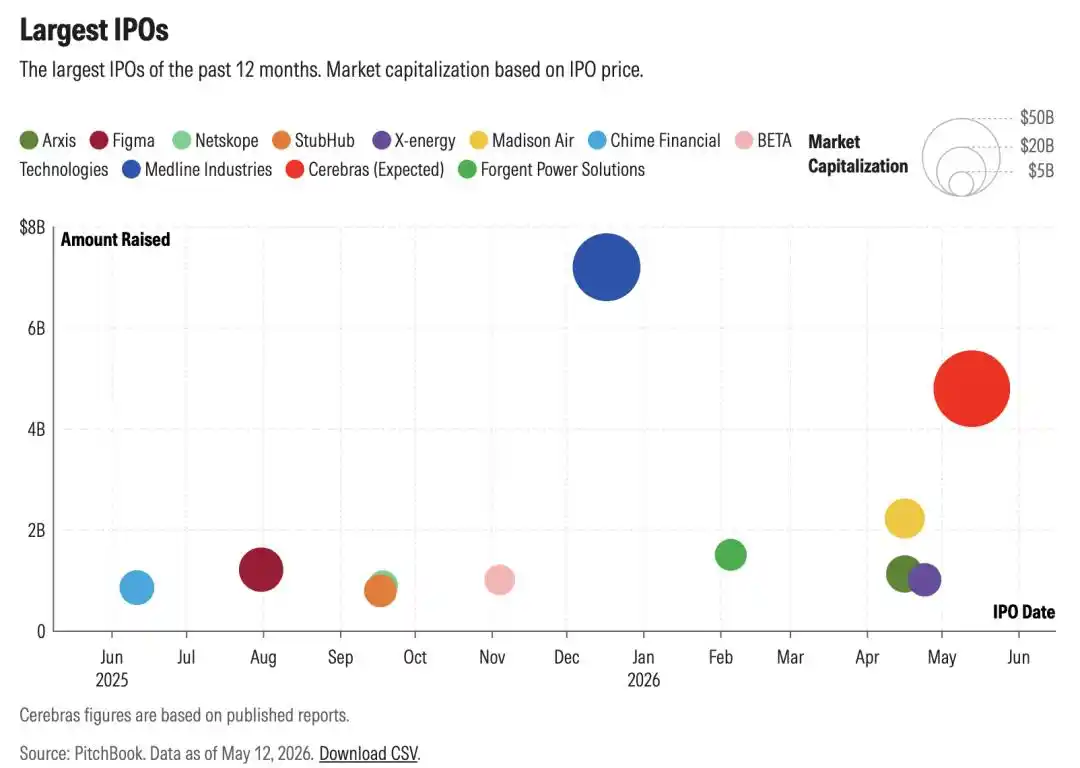
To squeeze into Sam Altman's 'Hall of Gods', Cerebras personally cut away 10% of its own 'flesh and blood'—stock warrants worth approximately $5 billion.

This is no longer a simple IPO. It is a tribute from underlying hardware to model sovereignty, paid in the twilight of an era.

And standing behind all this prosperity is the man known as the 'new lord of Silicon Valley'.

The Return of Brutalist Aesthetics

It Forged a 'Silicon-based Leviathan'

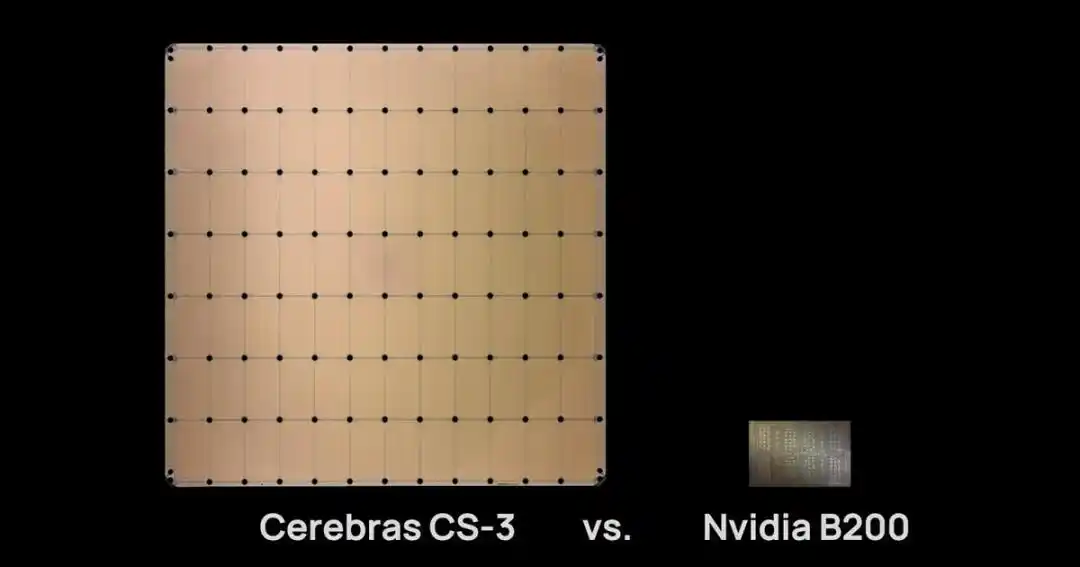
If Nvidia proudly calls its B200 chip an exquisite postage stamp, then Cerebras's flagship product, WSE-3, is a massive dinner plate.
For the past three decades, the semiconductor industry's creed has been 'miniaturization'—dancing on a pinhead, stacking transistors at the nanoscale.

But Cerebras took a counterintuitive path: Since memory bandwidth is the Achilles' heel of AI inference, why not just make the entire wafer into a single chip.

This 'silicon-based leviathan' is nearly half a square foot in size, featuring over 4 trillion transistors (19 times that of Nvidia's B200), 900,000 AI-optimized cores, and 125 petaflops of AI compute—making its total computing power 28 times that of the B200.

Its design is fundamentally about 'trading space for time': etching cores directly onto a single 12-inch wafer, flattening the 'memory wall' where data shuttles between the chip and external storage.

This brutalist aesthetic shows terrifying dominance in the 'Age of Inference':

When running top-tier models from OpenAI, Cognition, Meta, etc., it can achieve a throughput speed of up to 3000 tokens per second, outpacing traditional GPUs by 70 times.
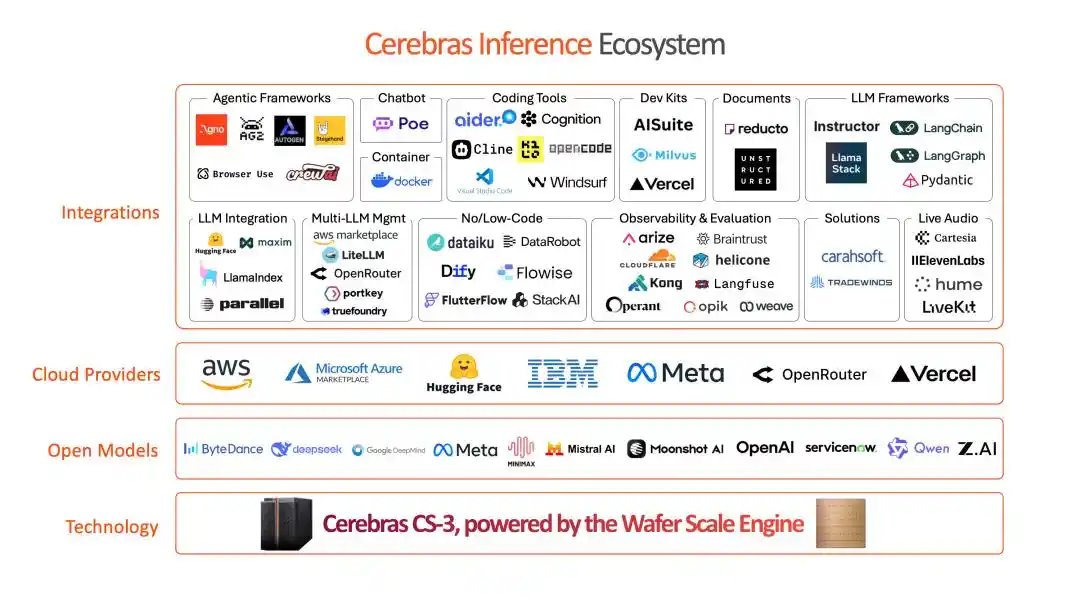
However, in 2026, the hardest technology, if it can't be converted into the fastest Tokens, is just expensive sand.

Eighteen months ago, Cerebras was a forlorn geek.

In 2025, its revenue was only $510 million, almost entirely from a single customer, the UAE's G42. It operated at a loss of $145.9 million, forcing the postponement of its IPO plans.
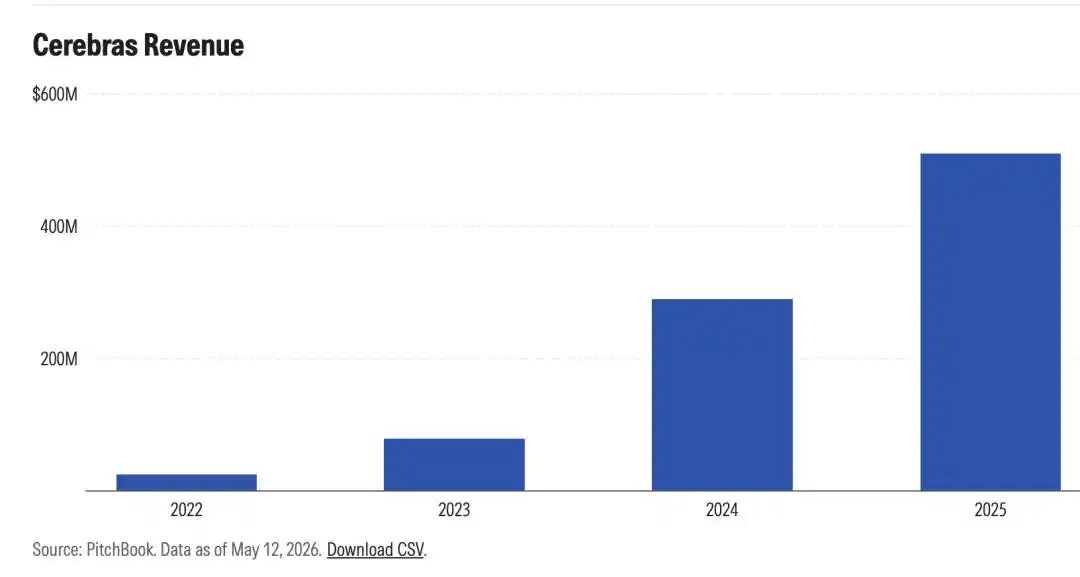
Despite possessing performance surpassing Nvidia's, its fate hung on the checkbook of a single client, like an orphan at constant risk of drowning.

Until it knocked on the door leading to Sam Altman's inner circle.

The $5 Billion 'Redemption Bond'

The Golden Ticket to the Future

In the world of AI, Moore's Law is giving way to the 'Law of the Circle'.

In exchange for survival and explosive growth, Cerebras signed an agreement that left outsiders dumbfounded: providing OpenAI with 750 megawatts of computing capacity over the next three years.

Calculated at current market prices (750 MW is roughly worth $9 billion annually), this deal could bring about $27 billion in revenue and $10 billion in gross profit.

For a company still in the red last year, this was a lifeline.

More tellingly, these 750 megawatts constitute just one-fortieth of the total computing power OpenAI believes it will need by 2030. This leftover order is enough to catapult Cerebras from a 'marginal player' to a market focal point.

But there is no free lunch, only expensive endorsements.

In exchange, Cerebras must gradually grant stock warrants to OpenAI. Upon exercise, OpenAI would hold 10% of Cerebras's shares—worth about $5 billion at the offering price midpoint of $155.

This means Cerebras generously offered up half the potential future profits from this mega-deal as a 'tribute' directly to OpenAI.

This is not an equal exchange. This is the AI era's 'computing power redemption bond'.

OpenAI is the 'lord' holding the power to allocate traffic and demand, while Cerebras is a heavily armored knight providing advanced tools of production—to enter the lord's domain, the knight must pay homage and share half his spoils.
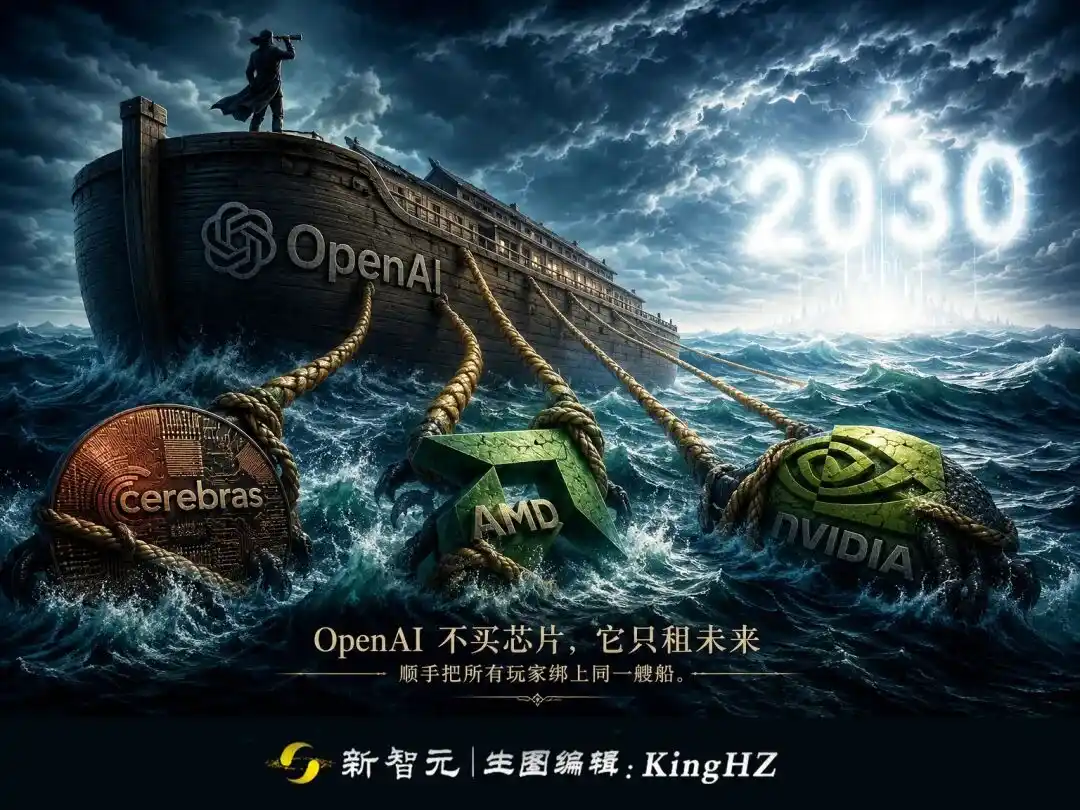
Once branded as OpenAI's core blood ally, Cerebras's price-to-sales (P/S) ratio instantly skyrocketed to 15 times, a level even Nvidia must respectfully acknowledge.

'Altmanomics'

He Is Cashing Out the Hardware Giants

Cerebras is not the only computing power enterprise bowing to Sam Altman.

Last October, AMD's stock doubled after reaching a similar agreement with OpenAI; earlier, Nvidia was rumored to have deepened its ties with OpenAI through a $30 billion financing round.

A clear map of power is emerging: OpenAI is evolving from a software company into a global 'tax authority' over the AI hardware landscape.

Sam Altman's true ambition is not merely to acquire data centers for training and running its models, but to quietly expand the group of companies and investors who have a 'vested interest in OpenAI's success.'

He is weaving a vast web of an 'interest community'.
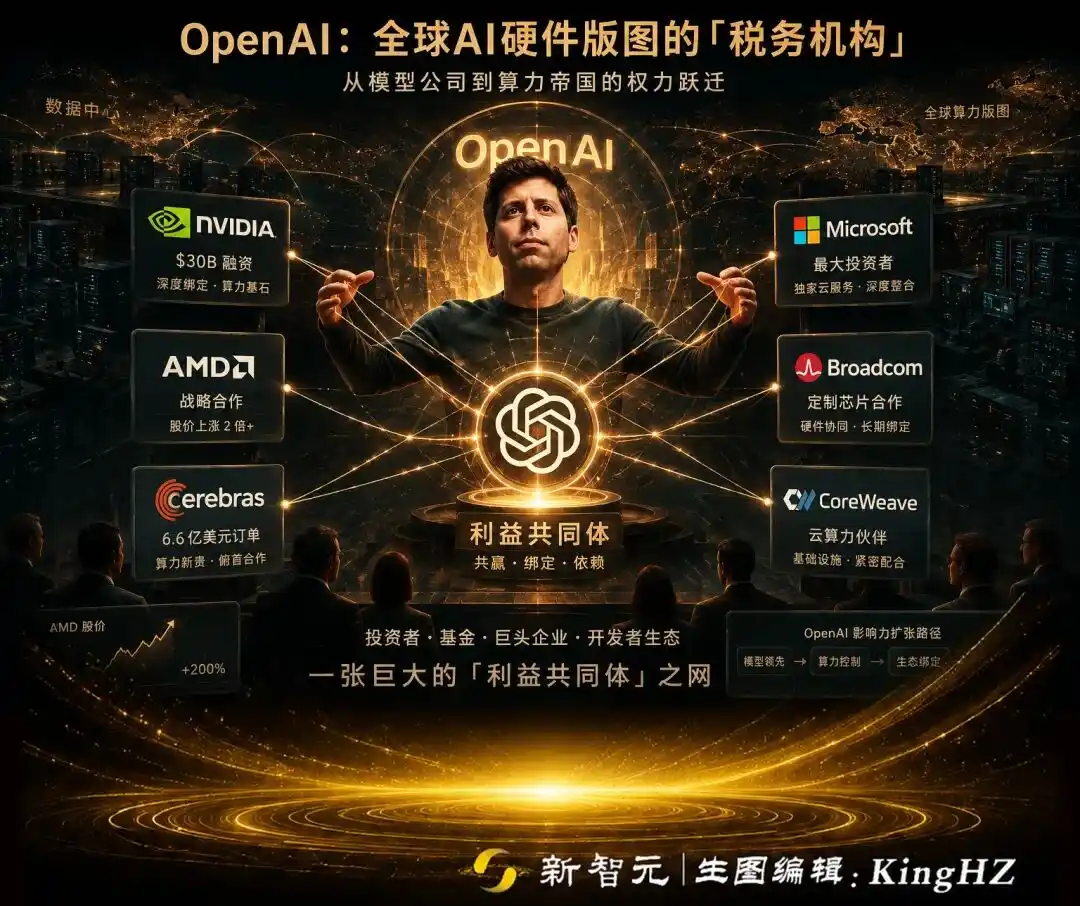
OpenAI doesn't buy chips; it only rents the future—and in the process, binds all players to the same ship.

For hardware vendors: Even with profits halved, obtaining the 'OpenAI certification' and a 15x P/S valuation is a worthwhile deal.

For Sam Altman: He not only secures the computational foundation for the next decade but also becomes a shareholder in all potential competitors.
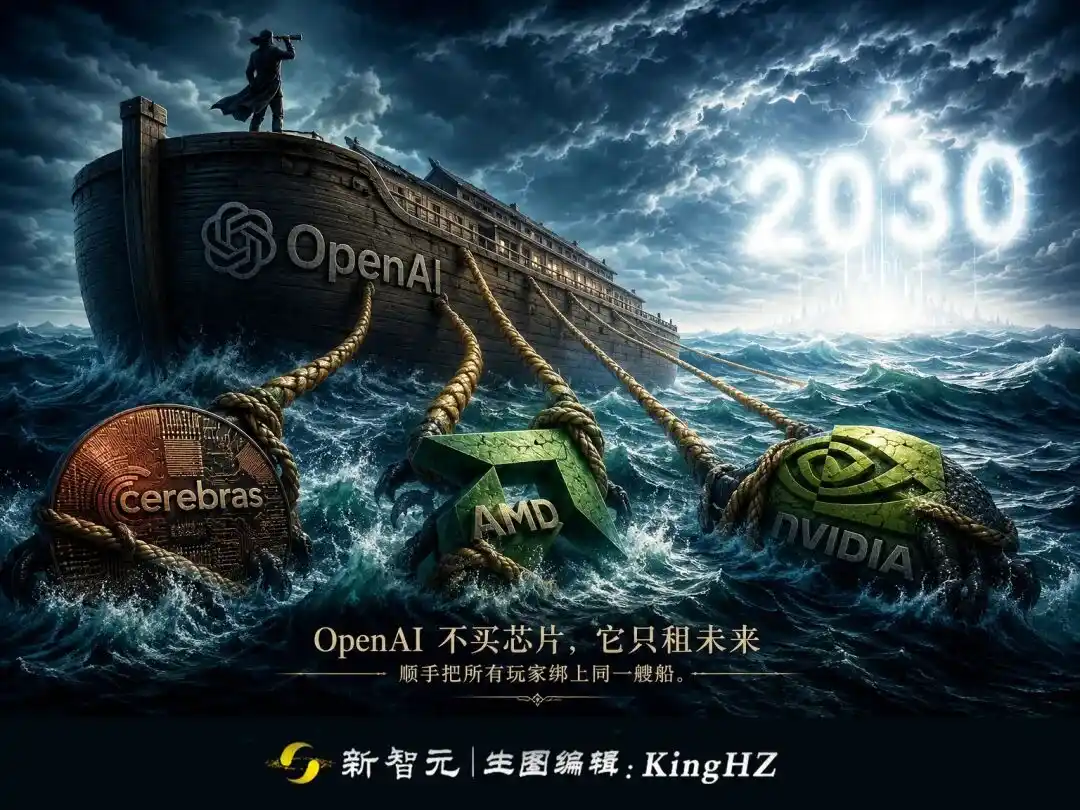
This is the essence of 'Altmanomics': In the second half of the AI race, whoever defines the demand for models holds the 'power to tax' the underlying supply chain.

Can $48 Billion Buy a Seat at the Power Table?

This Thursday, Cerebras's IPO received 20 times oversubscription. The pricing range was raised to $150-$160 per share, implying a valuation of $48 billion, coinciding with semiconductor stocks rising 53% cumulatively from their March lows.
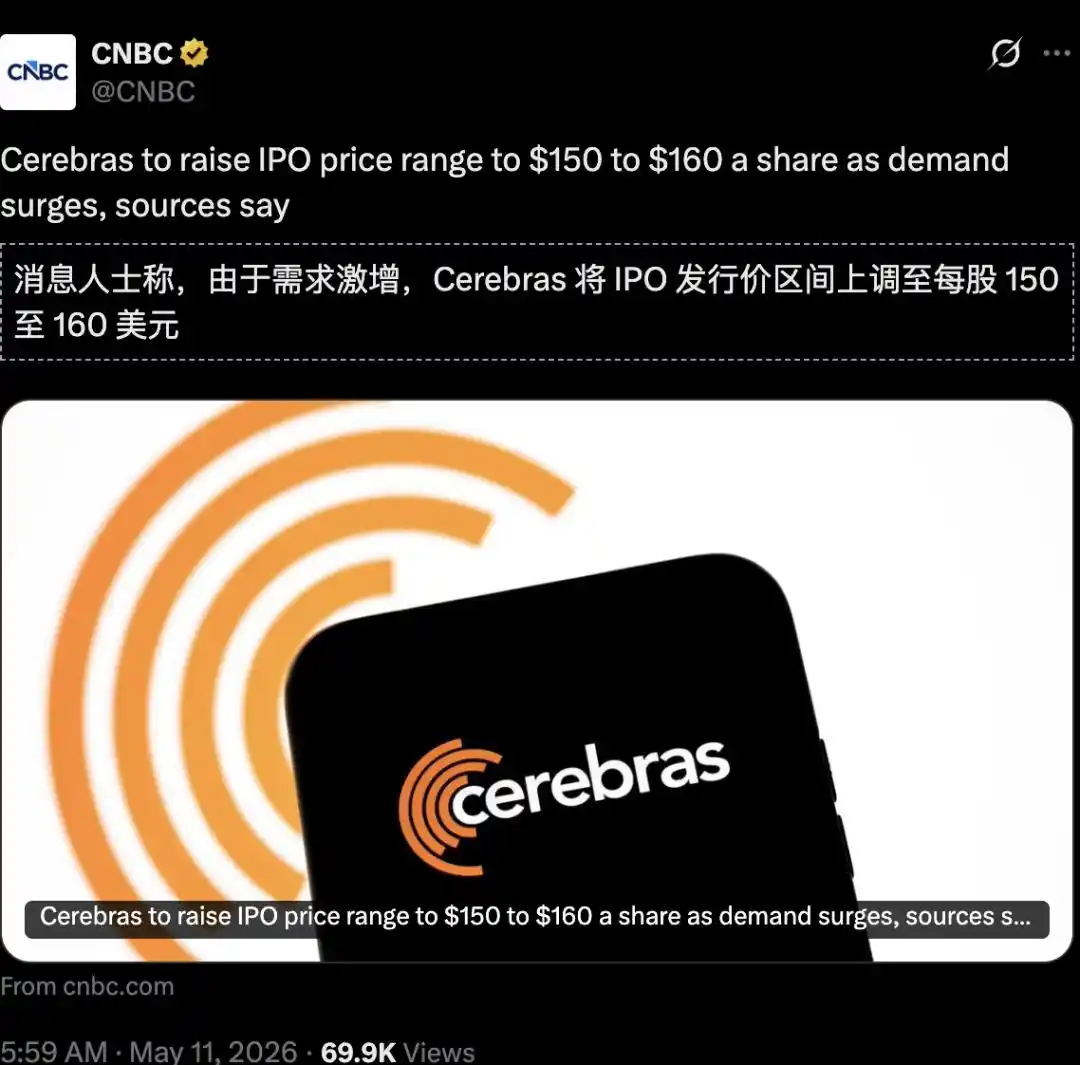
The capital market's frenzy is almost blind. They no longer care whether Cerebras lost $140 million last year or if its P/S ratio has already surpassed Nvidia's.

They are buying a kind of 'certainty'.

In the uncertain landscape of 2026, what identity tag is more certain than being a 'Core Partner of OpenAI'?

This is precisely the most intriguing aspect of this IPO. Cerebras's high valuation is essentially a market premium for the 'Altman endorsement'.

Conclusion: Sovereignty or Vassalage?

This 2026 listing marks the semiconductor industry's entry into a brutal era of stratification.

Future chip companies have only two paths:

Either, like Nvidia, rely on first-mover advantage to build their own ecological empire and become the rule-maker; or, like Cerebras, offer up half their soul in a high-stakes gamble for a ticket into the core circle.

If you cannot become a god, then become the most expensive offering.

This is not just a technological battle; it's a battle for sovereignty.

In every megawatt of electricity flows the 'tribute' from chipmakers to Silicon Valley's new overlord.

References:

https://x.com/FT/status/2054141078710768006

https://www.ft.com/content/3f77f8ad-16b8-4f97-ae55-0bd2e31122fa?syn-25a6b1a6=1

https://www.theinformation.com/newsletters/ai-agenda/startup-helping-openai-optimize-ai-cerebras-chips

https://www.morningstar.com/stocks/why-ai-chip-designer-cerebras-is-2026s-hottest-ipo-yet

This article is from the WeChat public account "Xin Zhi Yuan," author: Xin Zhi Yuan, editor: KingHZ


Cryptos en tendance

Questions liées

QWhat is the core technology and design philosophy behind Cerebras Systems' WSE-3 chip, and how does it differ from traditional chip designs?

ACerebras Systems' WSE-3 chip employs a radical design philosophy that contrasts with the traditional industry focus on miniaturization. Instead of shrinking components, it uses an entire 12-inch silicon wafer to create a single, massive chip. This 'brute-force' approach, described as 'trading space for time,' is aimed at eliminating the 'memory wall' bottleneck by providing immense on-chip memory bandwidth. It contains over 4 trillion transistors (19x more than NVIDIA's B200), 900,000 AI-optimized cores, and delivers 125 petaflops of AI computing power. Its key difference is its monolithic wafer-scale design versus the traditional multi-chiplet or discrete GPU designs, prioritizing high-speed data access for AI inference.

QWhat was the crucial strategic deal Cerebras made with OpenAI to enable its 2026 IPO, and what were the key terms?

AThe crucial deal was a multi-year agreement where Cerebras committed to supply 750 megawatts of computing capacity to OpenAI. In exchange for this massive, revenue-guaranteeing contract—valued at approximately $27 billion in revenue and $10 billion in gross profit over three years—Cerebras granted OpenAI warrants. Upon exercise, these warrants would give OpenAI a 10% equity stake in Cerebras, valued at around $5 billion based on the IPO's mid-range share price. This deal, framed as a 'ransom note' or 'tribute,' provided Cerebras with the financial credibility and market validation needed for a successful high-valuation IPO.

QHow does the article characterize the evolving power dynamic in the AI industry, particularly regarding OpenAI's role?

AThe article characterizes the power dynamic as a shift where OpenAI is evolving from a software company into a dominant 'tax authority' or 'feudal lord' over the global AI hardware landscape. By securing large, long-term compute capacity deals from hardware makers like Cerebras, AMD, and NVIDIA—often in exchange for equity or favorable terms—OpenAI is locking in its future compute foundation. More importantly, it is weaving a vast 'community of interest,' binding these suppliers to its success. This grants OpenAI 'taxation rights' over the hardware supply chain, as it defines model demand and controls access to the most lucrative market segments.

QWhat does the term 'Altmanomics' (Altman Economics) refer to in the context of this article?

AIn this article, 'Altmanomics' refers to the strategic and economic model pioneered by OpenAI's Sam Altman. Its essence is that in the later stages of the AI race, the entity that defines the demand for AI models gains the power to 'tax' the underlying hardware supply chain. Instead of merely purchasing chips, OpenAI 'rents the future' by making long-term capacity deals that often include equity stakes. This strategy allows OpenAI to secure its computational base at favorable rates while simultaneously making shareholders and partners out of potential hardware competitors, thereby consolidating its ecosystem power and ensuring alignment of interests.

QAccording to the article's conclusion, what two paths are available for semiconductor companies in the new AI era, as exemplified by NVIDIA and Cerebras?

AThe article concludes that semiconductor companies now face two distinct paths: 1) Become a rule-maker like NVIDIA, which uses first-mover advantage and ecosystem strength to establish its own empire and dictate distribution rules. 2) Become a vassal or 'high-value offering' like Cerebras, which trades a significant portion of its potential sovereignty and profits (through equity and deals) to a dominant AI platform (OpenAI) in exchange for a guaranteed, high-value ticket into the core industry circle. The choice is between maintaining sovereign control or becoming a strategically important, yet subordinate, partner to the new 'lords' of silicon.

Lectures associées

Venus Protocol Intègre des Actions Tokenisées comme Collatéral de Prêt sur BNB Chain

Venus Protocol intègre désormais des actions tokenisées comme garantie pour les prêts sur la BNB Chain, élargissant ainsi les cas d'utilisation des actifs du monde réel (RWA) dans le marché du crédit DeFi. **Points clés :** * Des actions tokenisées d'entreprises comme Apple, Tesla et Microsoft sont acceptées comme collatéral dans des pools de prêt isolés. * Ces actifs seraient adossés à 1:1 à des actions réelles détenues par des dépositaires régulés. * Les déposants peuvent emprunter des stablecoins ou du BNB contre ces garanties. Cette initiative permet aux détenteurs d'accéder à des liquidités sans vendre leurs positions sous-jacentes, rapprochant le crédit DeFi du financement sur marge traditionnel. Elle représente également une étape dans la compétition des blockchains pour attirer l'activité RWA. Cependant, ce collatéral introduit un profil de risque différent des actifs crypto-natifs, dépendant d'entités régulées hors-chaîne, de garde d'actifs et de processus de rachat. La gestion de l'évaluation des garanties, notamment avec des horaires de marché traditionnels, constitue un autre défi. Dans le contexte actuel du marché, cette intégration s'inscrit dans les tendances majeures que sont la tokenisation des actifs réels et la recherche d'une liquidité moins spéculative. Son succès dépendra de l'adoption réelle, de la fiabilité des custodians et des oracles de prix, ainsi que de la clarté des règles opérationnelles.

bitcoinistIl y a 2 h

Venus Protocol Intègre des Actions Tokenisées comme Collatéral de Prêt sur BNB Chain

bitcoinistIl y a 2 h

Le Triangle impossible est en réalité un faux problème

L'auteur conteste la pertinence du "trilemme" classique (décentralisation, scalabilité, sécurité) pour les blockchains. Il propose que les vrais freins à l'adoption massive sont la légitimité (environnement réglementaire) et le manque de confidentialité par défaut. La blockchain est définie comme un ordinateur partagé, lent et cher, dont la seule valeur unique est de fonctionner sans propriétaire ni permission. Seul l'argent natif (comme les stablecoins) est un actif adapté, car sa simple inscription au registre constitue sa valeur. Le marché actuel ne sert qu'une niche ("les gens assez aisés"). Les gros capitaux institutionnels restent à l'écart, principalement à cause des risques opérationnels et de deux défauts structurels : 1. **Légitimité** : L'absence de permission, essentielle, crée des zones grises réglementaires. Des progrès législatifs récents (ex: loi GENIUS) commencent à combler ce fossé. 2. **Transparence** : Celle-ci est présentée comme une vertu, mais constitue en réalité une taxe. Elle expose chaque transaction, position et paiement, permettant le MEV (extraction de valeur maximale) et décourageant toute entité sérieuse de révéler sa trésorerie au monde. L'auteur souligne l'ironie d'un système fondé sur la cryptographie qui ne protège pas la vie financière des utilisateurs. La solution réside dans une **confidentialité par défaut avec des preuves de conformité** (via des preuves à connaissance nulle - ZK). Cela permet de prouver un fait (solvabilité, respect des limites, KYC) sans révéler les données sous-jacentes, combinant ainsi protection individuelle et vérifiabilité pour les auditeurs et régulateurs. Cette évolution, purement améliorative, pourrait enfin attirer les milliers de milliards de capitaux institutionnels et faire de la blockchain l'infrastructure financière qu'elle était censée être.

marsbitIl y a 13 h

Le Triangle impossible est en réalité un faux problème

marsbitIl y a 13 h

L'impossible trilemme est un faux problème

L'industrie de la cryptographie a construit le système de cryptographie le plus puissant de l'histoire, mais son principal échec est l'absence de confidentialité financière par défaut. Chaque transaction, paiement et portefeuille est diffusé publiquement. La blockchain est essentiellement un ordinateur partagé, lent et coûteux, dont la seule valeur réside dans son absence de propriétaire unique et sa résistance à la censure. Pendant des années, le débat s'est concentré sur le "trilemme" (décentralisation, évolutivité, sécurité), qui est aujourd'hui largement résolu. Le vrai frein à l'adoption massive n'est pas là. La véritable contrainte est double : la légitimité juridique et le manque de confidentialité. Les fonds sont l'actif natif de la blockchain, mais les grands capitaux institutionnels restent à l'écart car l'environnement est perçu comme trop risqué et non conforme. La transparence totale de la chaîne n'est pas une vertu, mais une taxe. Elle expose les utilisateurs au MEV (Maximum Extractable Value), où les transactions sont espionnées et exploitées avant leur règlement, drainant des milliards de dollars de valeur. La plus grande ironie est que ce système, bâti sur la cryptographie, n'applique pas le chiffrement aux activités financières des utilisateurs, contrairement à la communication qui l'a adopté il y a des décennies. La solution n'est pas un anonymat total, mais une confidentialité prouvable et conforme. Les technologies cryptographiques modernes (comme les preuves à connaissance nulle) permettent de vérifier la solvabilité, la conformité KYC ou les limites de risque sans révéler les données sous-jacentes. Cela préserve les avantages de l'auditabilité tout en éliminant l'exposition permanente. En combinant un cadre réglementaire émergent (comme le GENIUS Act) et une confidentialité par défaut avec des mécanismes de divulgation vérifiable, la blockchain peut effectuer une mise à niveau pure. Elle cesse d'être un "tableur public coûteux" pour devenir une machine partagée qui confirme la véracité des transactions sans en divulguer le contenu. C'est le pont qui permettra aux capitaux institutionnels et à la finance traditionnelle de rejoindre la chaîne, débloquant ainsi les milliers de milliards de dollars qui attendent. Le système cryptographique le plus puissant apprend enfin à garder un secret, et cela change tout.

链捕手Il y a 13 h

L'impossible trilemme est un faux problème

链捕手Il y a 13 h

Trading

Spot
Futures

Articles tendance

Comment acheter GODS

Bienvenue sur HTX.com ! Nous vous permettons d'acheter Gods Unchained (GODS) de manière simple et pratique. Suivez notre guide étape par étape pour commencer votre parcours crypto.Étape 1 : Création de votre compte HTXUtilisez votre adresse e-mail ou votre numéro de téléphone pour ouvrir un compte sur HTX gratuitement. L'inscription se fait en toute simplicité et débloque toutes les fonctionnalités.Créer mon compteÉtape 2 : Choix du mode de paiement (rubrique Acheter des cryptosCarte de crédit/débit : utilisez votre carte Visa ou Mastercard pour acheter instantanément Gods Unchained (GODS).Solde :utilisez les fonds du solde de votre compte HTX pour trader en toute simplicité.Prestataire tiers :pour accroître la commodité d'utilisation, nous avons ajouté des modes de paiement populaires tels que Google Pay et Apple Pay.P2P :tradez directement avec d'autres utilisateurs sur HTX.OTC (de gré à gré) : nous offrons des services personnalisés et des taux de change compétitifs aux traders.Étape 3 : stockage de vos Gods Unchained (GODS)Après avoir acheté vos Gods Unchained (GODS), stockez-les sur votre compte HTX. Vous pouvez également les envoyer ailleurs via un transfert sur la blockchain ou les utiliser pour trader d'autres cryptos.Étape 4 : tradez des Gods Unchained (GODS)Tradez facilement Gods Unchained (GODS) sur le marché Spot de HTX. Il vous suffit d'accéder à votre compte, de sélectionner la paire de trading, d'exécuter vos trades et de les suivre en temps réel. Nous offrons une expérience conviviale aux débutants comme aux traders chevronnés.

211 vues totalesPublié le 2024.12.13Mis à jour le 2026.06.02

Comment acheter GODS

Discussions

Bienvenue dans la Communauté HTX. Ici, vous pouvez vous tenir informé(e) des derniers développements de la plateforme et accéder à des analyses de marché professionnelles. Les opinions des utilisateurs sur le prix de GODS (GODS) sont présentées ci-dessous.

活动图片