Crypto and AI Need Female Executives

比推Publié le 2026-01-21Dernière mise à jour le 2026-01-21

Résumé

The article "Crypto and AI Need Female Executives" highlights the rising prominence of women in leadership roles within the AI industry and draws parallels to their earlier influence in the crypto sector. It cites examples such as CZ Chen, COO of Manus (acquired by Meta), and MiniMax’s 31-year-old COO Yun Yeyi, who played a crucial role in the company’s IPO and commercial strategy. Globally, figures like Daniela Amodei of Anthropic, Lila Ibrahim of DeepMind, and Mira Murati of Thinking Machines Lab further illustrate this trend. The author notes that both crypto and AI are highly technical fields often led by founders strong in engineering but weaker in communication, marketing, and public relations—areas where female executives excel. Women like Binance’s He Yi and Matrixport’s Cynthia Wu previously helped bridge the gap between complex technology and mass adoption in crypto. The piece argues that the presence of women in operational and marketing roles signals an industry’s shift from pure technological development to commercialization and mainstream acceptance. As AI continues to attract top female talent, crypto—now lacking in narrative-building and user-friendly leadership—risks being left behind. The movement of talented female executives toward AI, the author concludes, is a marker of the industry’s growing maturity and commercial viability.

Author: Alice, Deep Tide TechFlow

Original Title: Crypto and AI Need Female Executives


Recently, an interesting phenomenon has been observed in the AI industry: more and more female executives are stepping into the spotlight.

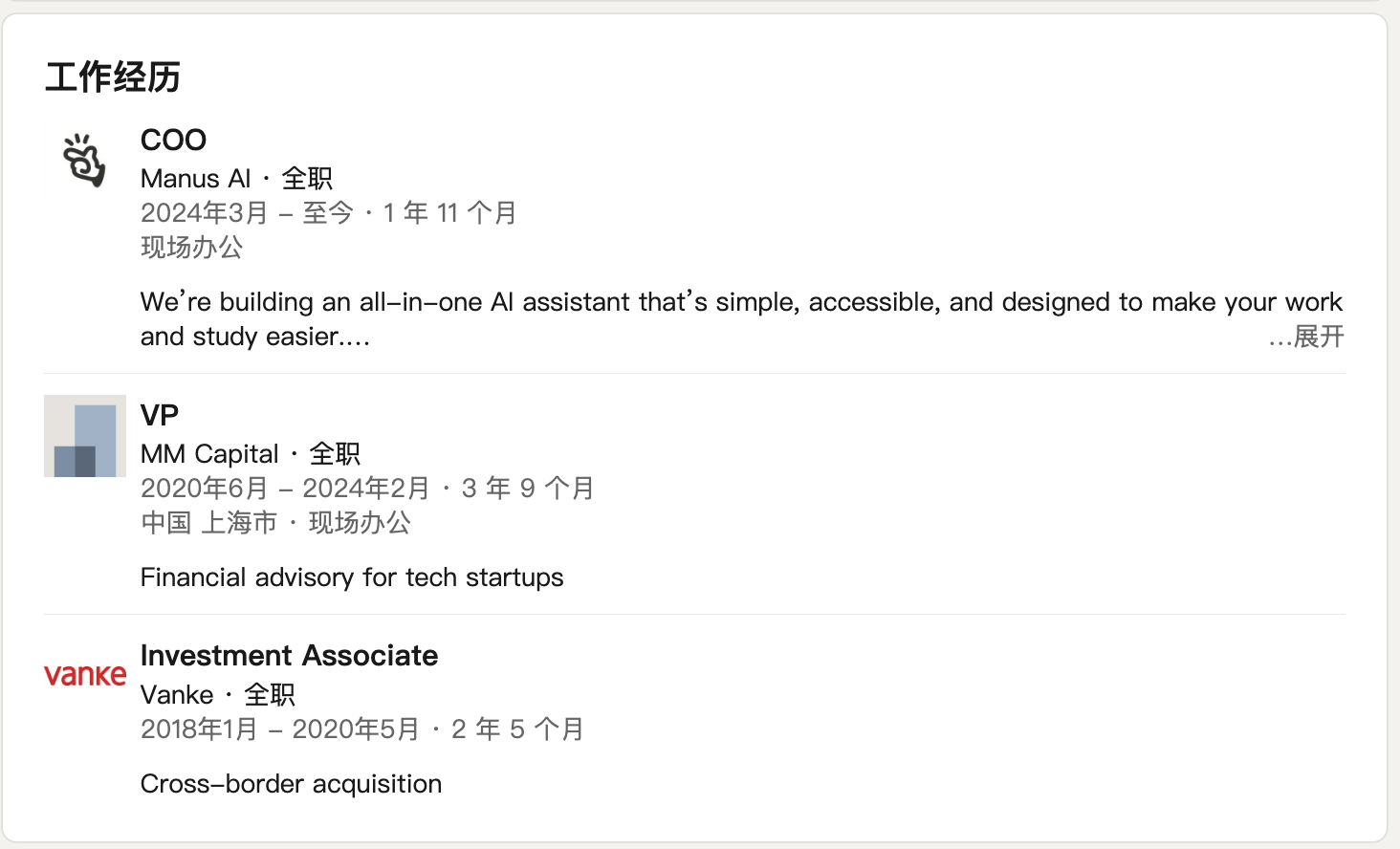
On December 30th, Meta announced it would acquire Manus for $2 billion, bringing 90s-born COO CZ Chen into the public eye. With an undergraduate degree from Shanghai University of Finance and Economics and a master's from Columbia University, she began her career in 2018, working at Vanke and FA institutions before making her final leap to Manus in 2024, achieving financial freedom.
On January 9th, at MiniMax's bell-ringing ceremony, standing alongside 36-year-old founder Yan Junjie was a 94-born woman, Yun Yeyi.
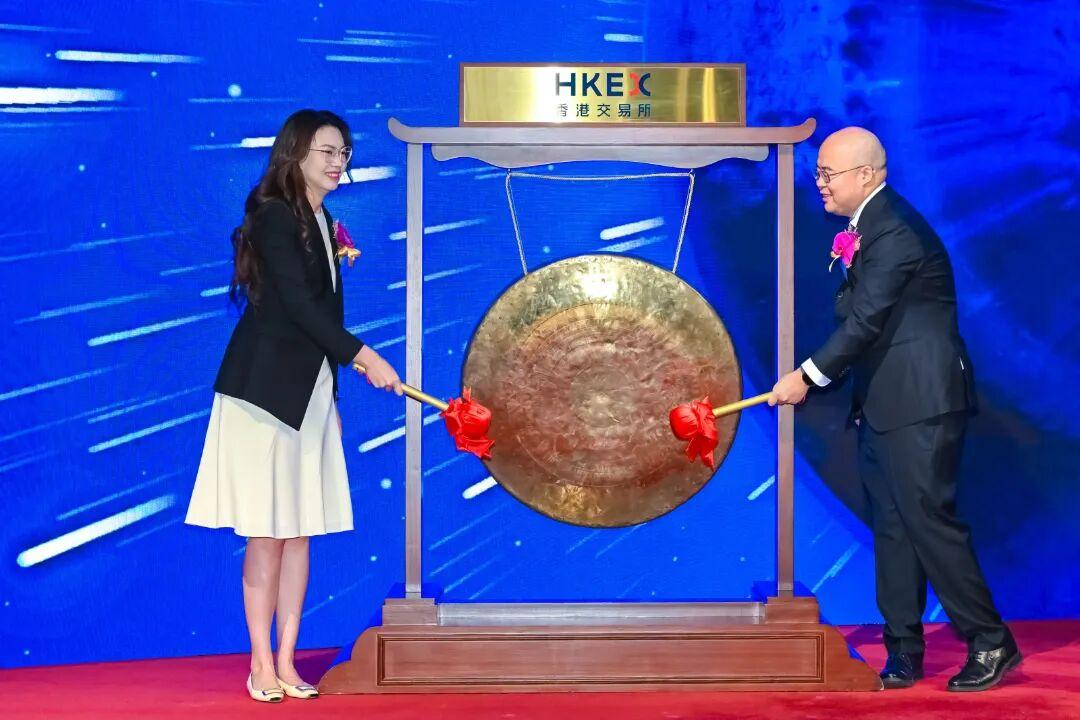
This 31-year-old COO now has a net worth of HKD 4.8 billion.

What is Yun Yeyi's background?

She studied electronic engineering at Johns Hopkins University, with minors in economics and mathematics. After graduating in 2017, she joined SenseTime, rising from financing manager to assistant to CEO Xu Li, and then to director of the new business department, witnessing SenseTime's journey from unicorn to Hong Kong listing.

In 2022, when Yan Junjie decided to leave SenseTime to found MiniMax, Yun Yeyi followed almost without hesitation.

Her value goes beyond just following.

MiniMax's prospectus shows that Yun Yeyi handles almost everything except technical R&D: products, commercialization, board matters, operations, management... Her annual salary is $1.479 million, more than all other executive directors combined, a figure that speaks for itself.

It's not just in China; globally, female influence in the AI circle is undeniable.

Daniela Amodei, with a background in English literature, worked at Stripe and OpenAI before co-founding Anthropic with her brother Dario in 2021. As president, she focuses on daily operations and commercialization, driving the marketization of Claude products.

Lila Ibrahim, former Intel executive, joined DeepMind in 2018 as its first COO, responsible for daily operations, partnerships, social impact, external affairs, and government relations.

Mira Murati, the Albanian-born former CTO of OpenAI, came to the U.S. on a scholarship at 16. From the Tesla Model X team to OpenAI, she eventually left to found Thinking Machines Lab, now valued at $9 billion...

This scene feels familiar.

From 2017 to 2021, the golden age of crypto was star-studded, with one bright spot being female CMOs and COOs.

The most well-known is undoubtedly Binance co-founder and CMO He Yi (now co-CEO). From Shanghai to Tokyo, then from Malta to Paris and Dubai, every strategic move involved her, helping the company become the world's largest cryptocurrency exchange.

Lisa Loud, from Apple engineer to PayPal's Canadian market head, jumped to BitMEX as CMO in 2017. BitMEX later became the world's largest crypto derivatives trading platform.

Cynthia Wu, COO of Matrixport, former vice president of product development at HKEX, brought traditional finance experience to crypto financial services, helping the company become one of Asia's largest digital asset service platforms.

......

Once, crypto was the world's asset focus, and the spotlight naturally fell on these female executives at the center stage.

But the tide receded, and the protagonists changed.

Now, AI is the focus of the spotlight, so we see Daniela Amodei on the Forbes rich list and Yun Yeyi radiant at MiniMax's listing ceremony.

Fundamentally, Crypto and AI are strikingly similar: "both cutting-edge and rustic."

Cutting-edge is reflected in the technology itself: blockchain reconstructs trust mechanisms, AI reconstructs productivity—both are underlying technologies that can change the world.

Rustic is reflected in the founder profile: mostly technical backgrounds, fluent in code but unfamiliar with marketing, especially government and public relations.

This is where female COOs/CMOs add value. They are the bridge between technical geniuses and the external world, capable of deep dialogue with technical teams and telling compelling stories to investors and users.

Daniela Amodei transformed AI safety philosophy into executable business strategies, helping Claude break through in the shadow of ChatGPT. Yun Yeyi brought MiniMax from the lab to the C-end market. He Yi long served as the chief customer officer, personally answering user questions and building trust.

When a product moves beyond the pure technical stage and increasingly targets the C-end, the advantages of female executives become more apparent.

After all, PR and products require not adversarial thinking but empathy.

From another perspective, capable female executives vote with their feet. They go where they can施展才华 and create value. If they start leaving an industry, it indicates the disappearance of commercial certainty.

The crypto industry's current problem is obvious: a lack of talent that can transform technology into products accepted by the masses. Mass adoption and positive externalities remain empty talk. Observing any emerging industry reveals this pattern: when female executives with technical understanding, business acumen, and narrative skills begin to rise, the industry truly shifts from technology-driven to commercialization and mass adoption.

Their emergence marks the true maturity of an industry.

The AI circle has already undergone this transition. Female executives like Daniela Amodei and Yun Yeyi are driving productization, bringing AI from lab algorithms into daily life and the business world.

As for the crypto industry, if it can't retain "elites who can speak human language," it deserves to remain stuck in the mud of PVP.

The flow of talent is the industry's weather vane.

Where they go, value is created; where they leave, bubbles often burst.


Original link:https://www.bitpush.news/articles/7604790

Cryptos en tendance

Questions liées

QWhat is the trend observed in the AI industry regarding female executives, as mentioned in the article?

AThe article notes an increasing trend of female executives taking prominent roles in the AI industry, such as COOs and CMOs, who are driving commercialization and productization of AI technologies.

QWho is Yun Yeyi, and what is her role at MiniMax?

AYun Yeyi is the 31-year-old COO of MiniMax, with a background in electronic engineering and economics from Johns Hopkins University. She handles almost all non-technical aspects of the company, including product, commercialization, board matters, operations, and management, with an annual salary of $1.479 million.

QHow does the article compare the roles of female executives in Crypto and AI industries?

AThe article highlights that both Crypto and AI industries benefit from female COOs and CMOs who act as bridges between technical teams and the external world. They excel in marketing, government relations, and storytelling, which are crucial for turning complex technologies into widely accepted products.

QWhat common characteristic do Crypto and AI share, according to the article?

ACrypto and AI are both described as 'cutting-edge yet rustic.' They are cutting-edge in terms of technology (blockchain redefining trust mechanisms and AI redefining productivity), but rustic in that founders are often technical experts who lack skills in marketing and external relations.

QWhat does the article suggest about the movement of talented female executives between industries?

AThe article suggests that the movement of talented female executives indicates where value is being created. Their presence signals industry maturity and successful commercialization, while their departure often points to fading commercial certainty and bubble bursts, as seen in Crypto's decline and AI's rise.

Lectures associées

Trois jours, deux légendes de perdues : le barrage de talents en IA de Google est-il en train de se fissurer ?

En l'espace de trois jours, Google a perdu deux figures légendaires de l'IA, signe d'un exode massif de ses talents vers des concurrents comme OpenAI et Anthropic. Noam Shazeer, co-auteur de l'architecture Transformer, a rejoint OpenAI, tandis que John Jumper, lauréat du Nobel et responsable d'AlphaFold, est parti chez Anthropic. Ce mouvement, renforcé par le recrutement d'Andrej Karpathy par Anthropic, révèle une tendance structurelle. La cause profonde est un désalignement des missions. Les priorités de Google restent centrées sur son activité publicitaire, contraignant la recherche. À l'inverse, OpenAI et Anthropic offrent une focalisation exclusive sur l'innovation et la sécurité de l'AGI. De plus, les perspectives d'introduction en bourse de ces startups promettent des gains financiers considérables via leurs actions, un avantage que Google, déjà géant établi, ne peut égaler. La fusion de Google Brain et DeepMind en 2023, censée unifier les forces, a en réalité accru les tensions entre recherche fondamentale et pression commerciale, créant un environnement moins attractif pour les scientifiques de haut vol. Cette restructuration du paysage des talents, potentiellement irréversible, représente une crise silencieuse pour Google. Son avantage en matière de données, de puissance de calcul et de publications académiques dépend ultimement des personnes capables de les exploiter, et celles-ci partent.

marsbitIl y a 21 mins

Trois jours, deux légendes de perdues : le barrage de talents en IA de Google est-il en train de se fissurer ?

marsbitIl y a 21 mins

Derrière les bulletins de notes de l'IA, se cache un concepteur de "sujets d'examen" chinois

Le domaine de l'IA suit de près les scores des grands modèles sur des benchmarks comme MMLU-Pro et MMMU, devenus des références pour évaluer les capacités de raisonnement et de compréhension multimodale. Derrière ces outils d'évaluation influents se trouve Wenhu Chen, professeur assistant à l'Université de Waterloo et fondateur du TIGERLab. Face aux limites des anciens benchmarks comme MMLU, où les modèles de pointe atteignaient des scores quasi parfaits, Chen a dirigé le développement de MMLU-Pro. Cette nouvelle base de données, plus difficile et stable avec des questions à choix multiples élargis, permet de mieux distinguer les véritables capacités de raisonnement des modèles. Dans le domaine multimodal, les benchmarks MMMU et MMMU-Pro, également créés par son équipe, évaluent rigoureusement la capacité des modèles à combiner informations visuelles complexes et connaissances disciplinaires pour résoudre des problèmes avancés. Cette expertise en évaluation découle des recherches de Chen sur la compréhension d'informations complexes et le raisonnement, renforcée par son expérience chez Google DeepMind sur Gemini. Aujourd'hui au Meta Super-Intelligence Lab, il continue ses travaux sur l'évaluation et l'entraînement de modèles multimodaux. Son parcours illustre le rôle crucial, bien que moins visible, des chercheurs dans la construction des fondations méthodologiques qui guident les progrès de l'IA.

marsbitIl y a 34 mins

Derrière les bulletins de notes de l'IA, se cache un concepteur de "sujets d'examen" chinois

marsbitIl y a 34 mins

Sélection hebdomadaire de la rédaction Weekly Editor's Picks (13-19 juin)

**Résumé éditorial hebdomadaire (13-19 juin)** Face à un flux d'information trop rapide, cette sélection hebdomadaire vise à mettre en lumière des analyses de fond. Les principaux thèmes abordés cette semaine sont : **Situation macroéconomique :** Après la réouverture du détroit d'Ormuz, les marchés ajustent leurs positions, passant du "choc du conflit" à la "restauration de l'offre", avec des implications sur le pétrole, les transports, l'énergie en Asie et les obligations. **Investissement & Entrepreneuriat :** Ray Dalio met en garde contre la concentration excessive sur les géants de l'IA dans les indices boursiers, prônant plutôt la diversification. Des analyses examinent le cycle du BTC, suggérant des signaux de bas de cycle, et le lancement en bourse de SpaceX, interrogeant sa valorisation et ses risques systémiques potentiels. La dépendance des échanges cryptos coréens aux actifs très spéculatifs ("shitcoins") est également pointée, en raison de régulations restrictives. **Web3 & IA :** Un risque systémique de type "crise des subprimes" est évoqué dans le secteur de l'IA, lié à des engagements financiers hors bilan. L'utilisation des modèles d'IA pour prédire les résultats de la Coupe du Monde est analysée. Un schéma décompose les coûts d'un abonnement à un assistant IA comme Claude. **Marchés de prédiction :** La concurrence s'intensifie, Robinhood développant sa propre plateforme (Rothera) pour capter ce marché, illustrant l'importance cruciale des canaux de distribution. **CeFi & DeFi :** Le mécanisme des contrats perpétuels sur actifs pré-IPO (comme SpaceX) est testé, révélant des défis techniques. Le décrochage ("dépeçage") du jeton STRC (lié à MicroStrategy) fait l'objet de deux analyses sur la confiance dans son modèle financier. Le nouvel ETF Bitcoin à rendement de BlackRock (BITA) est présenté comme une opportunité ou un piège selon les perspectives. **Ethereum & Scaling :** L'avantage concurrentiel principal d'Ethereum est identifié comme sa vaste base de développeurs et son écosystème, plutôt que sa vitesse. **Autres actualités marquantes :** Accord USA-Iran et impact sur les marchés, décision de la Fed, mesures restrictives d'Anthropic sur l'accès à ses modèles, acquisition de Cursor par SpaceX, et la montée spectaculaire de l'action "Liuliumei" à Hong Kong en raison de son ticker (06658.HK).

marsbitIl y a 41 mins

Sélection hebdomadaire de la rédaction Weekly Editor's Picks (13-19 juin)

marsbitIl y a 41 mins

Trading

Spot
Futures

Articles tendance

Comment acheter ALICE

Bienvenue sur HTX.com ! Nous vous permettons d'acheter My Neighbor Alice (ALICE) de manière simple et pratique. Suivez notre guide étape par étape pour commencer votre parcours crypto.Étape 1 : Création de votre compte HTXUtilisez votre adresse e-mail ou votre numéro de téléphone pour ouvrir un compte sur HTX gratuitement. L'inscription se fait en toute simplicité et débloque toutes les fonctionnalités.Créer mon compteÉtape 2 : Choix du mode de paiement (rubrique Acheter des cryptosCarte de crédit/débit : utilisez votre carte Visa ou Mastercard pour acheter instantanément My Neighbor Alice (ALICE).Solde :utilisez les fonds du solde de votre compte HTX pour trader en toute simplicité.Prestataire tiers :pour accroître la commodité d'utilisation, nous avons ajouté des modes de paiement populaires tels que Google Pay et Apple Pay.P2P :tradez directement avec d'autres utilisateurs sur HTX.OTC (de gré à gré) : nous offrons des services personnalisés et des taux de change compétitifs aux traders.Étape 3 : stockage de vos My Neighbor Alice (ALICE)Après avoir acheté vos My Neighbor Alice (ALICE), stockez-les sur votre compte HTX. Vous pouvez également les envoyer ailleurs via un transfert sur la blockchain ou les utiliser pour trader d'autres cryptos.Étape 4 : tradez des My Neighbor Alice (ALICE)Tradez facilement My Neighbor Alice (ALICE) sur le marché Spot de HTX. Il vous suffit d'accéder à votre compte, de sélectionner la paire de trading, d'exécuter vos trades et de les suivre en temps réel. Nous offrons une expérience conviviale aux débutants comme aux traders chevronnés.

184 vues totalesPublié le 2024.12.11Mis à jour le 2026.06.02

Comment acheter ALICE

Discussions

Bienvenue dans la Communauté HTX. Ici, vous pouvez vous tenir informé(e) des derniers développements de la plateforme et accéder à des analyses de marché professionnelles. Les opinions des utilisateurs sur le prix de ALICE (ALICE) sont présentées ci-dessous.

活动图片