2 Days, 20x: A Quick Look at the Automated Market Making Mechanism of the New Gem Snowball

深潮Publié le 2025-12-22Dernière mise à jour le 2025-12-22

Résumé

Snowball, a new meme token launched on pump.fun on December 18, gained significant traction in the English-speaking crypto community by introducing an automated market-making mechanism designed to create a self-sustaining "snowball effect." Unlike typical meme coins where creators take a fee (usually 0.5%-1%) from each transaction, Snowball redirects 100% of this fee to an on-chain bot. This bot uses accumulated funds to buy back tokens, add liquidity to the pool, and burn a small portion of tokens periodically. The goal is to create continuous buy pressure and improve trading depth, theoretically allowing the token to grow organically through increased trading activity. Within four days, Snowball reached a $10 million market cap with over 7,000 holders and relatively decentralized ownership. However, the mechanism relies heavily on sustained trading volume to fuel the buyback bot. In a cold market with low on-chain activity, this "flywheel" could reverse if new buyers diminish. While the structure reduces developer exit risk, it doesn’t eliminate other meme coin dangers like large holder dumps or narrative fatigue. Similar projects like FIREBALL are emerging, indicating interest in "mechanism-driven memes," but past examples like OlympusDAO and Safemoon show that mechanisms alone don’t guarantee long-term value. Snowball remains primarily a meme experiment—interesting, but high-risk.

The crypto market in December is as cold as the weather.

On-chain transactions have been dormant for a long time, and new narratives are hard to come by. Just look at the drama and gossip in the Chinese CT (Crypto Twitter) space these past few days, and you'll know hardly anyone is playing in this market anymore.

But the English-speaking community has been discussing something new.

A meme coin called Snowball launched on pump.fun on December 18th. In four days, its market cap surged to $10 million and is still hitting new highs; yet it's barely mentioned in Chinese circles.
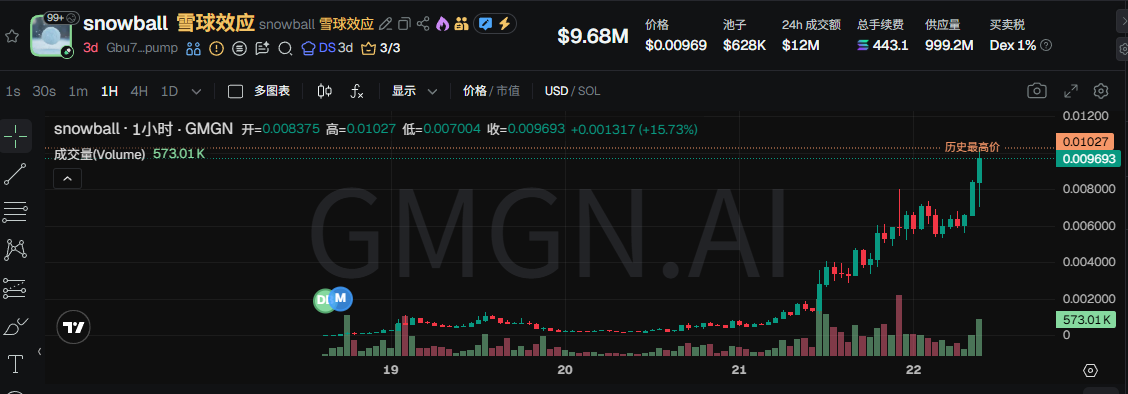
In the current environment, devoid of new narratives and where even memes are considered unplayable, this is one of the few things that catches the eye and shows some localized wealth effect.

And the name Snowball itself tells the story it wants to convey:

A mechanism that allows the token to "roll and grow larger by itself."

Turning Transaction Fees into Buy Pressure, Rolling the Snowball for Market Making

To understand what Snowball is doing, you first need to know how tokens on pump.fun typically make money.

On pump.fun, anyone can create a token in minutes. The token creator can set a "creator fee," essentially taking a cut of every transaction into their own wallet, usually between 0.5% and 1%.

This money could theoretically be used for community building or marketing, but in practice, most Devs choose to: accumulate enough and then run.

This is part of the typical life cycle of a shitcoin. Launch, pump, harvest fees, rug. Investors aren't betting on the token itself, but on the developer's conscience.

Snowball's approach is to not take this creator fee money.

To be precise, 100% of the creator fees do not go into anyone's wallet but are automatically transferred to an on-chain market-making bot.

This bot performs three actions at regular intervals:

First, it uses the accumulated funds to buy tokens on the market, creating buy-side support;

Second, it adds the bought tokens and the corresponding SOL to the liquidity pool, improving trading depth;

Third, it burns 0.1% of the tokens with each operation, creating deflation.
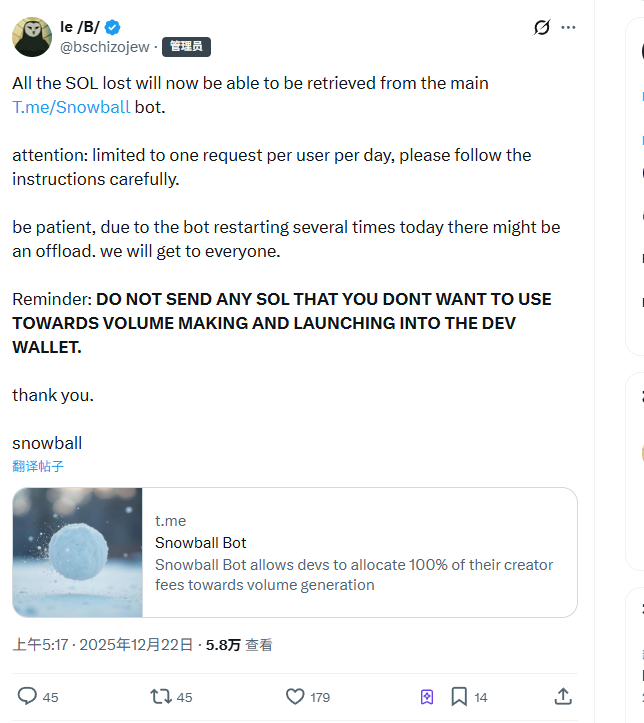
Additionally, the percentage taken as the creator fee is not fixed; it fluctuates between 0.05% and 0.95% based on market cap.

It takes a higher percentage when the market cap is low, allowing the bot to accumulate ammunition faster; it reduces the fee when the market cap is high, decreasing transaction friction.

In one sentence, the logic of this mechanism is: every time you trade, a portion of the money automatically becomes buy pressure and liquidity, instead of going into the developer's pocket.

Therefore, it's easy to understand this snowball effect:

Transactions generate fees → Fees become buy pressure → Buy pressure pushes the price up → Higher price attracts more transactions → More fees... theoretically, it can roll on its own.

On-Chain Data Situation

Now that we've covered the mechanism, let's look at the on-chain data.

Snowball launched on December 18th, so it's been four days now. Its market cap grew from zero to $10 million, with a 24-hour trading volume exceeding $11 million.

For a shitcoin on pump.fun, these results mean it's already one of the longer-lasting ones in the current environment.

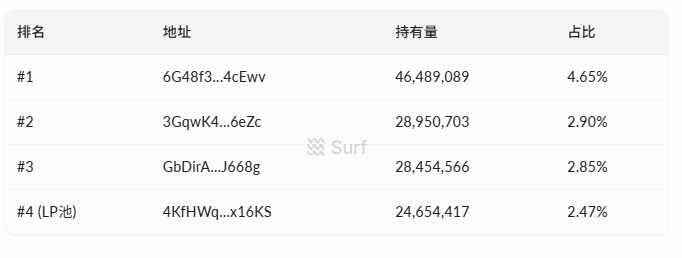
In terms of token distribution, there are currently 7,270 holder addresses. The top ten holders combined hold about 20% of the total supply, with the largest single holder holding 4.65%.
(Data source: surf.ai)

There's no address holding 20-30% of the supply; the distribution is relatively decentralized.

Regarding trading data, there have been over 58,000 cumulative transactions since launch, with 33,000 buys and 24,000 sells. The total buy volume is $4.4 million, and sell volume is $4.3 million, resulting in a net inflow of about $100,000. Buying and selling are basically balanced, with no one-sided selling pressure.

The liquidity pool holds about $380,000, half in tokens and half in SOL. For a market cap of this size, the depth isn't very thick, and large orders would still experience significant slippage.

Another notable point is that Bybit Alpha announced listing the token less than 96 hours after launch, which to some extent confirms the short-term hype.

Perpetual Motion Meets a Cold Market

Looking around, you can see the English community's discussion about Snowball mainly focuses on the mechanism itself. Supporters' logic is straightforward:

This is the first meme coin that locks 100% of the creator fees into the protocol; developers can't take the money and run, making it structurally safer than other shitcoins, at least.

The Dev is also playing into this narrative. The developer wallet, market-making bot wallet, and transaction logs are all public, emphasizing "verifiable on-chain."

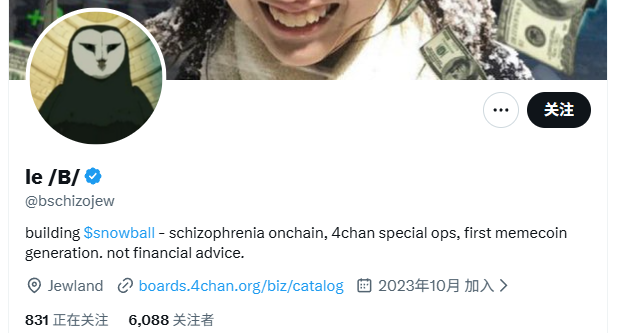
@bschizojew labels himself as "on-chain schizophrenia, 4chan special forces, first-generation meme coin veteran," radiating a self-deprecating degen vibe that really appeals to the crypto-native community.
But a safe mechanism and making money are two different things.

The snowball effect relies on the premise that there is sufficient trading volume to continuously generate fees to feed the bot for buybacks. More trades mean more ammunition for the bot, stronger buy pressure, higher prices, attracting more people to trade...

This is the ideal state for any meme coin's so-called buyback flywheel to spin up in a bull market.

The problem is, the flywheel needs external momentum to start.

What is the current crypto market environment? On-chain activity is sluggish, overall meme coin hype is down, and there's simply less capital willing to chase shitcoins. In this context, if new buy pressure doesn't keep up and trading volume shrinks, the fees the bot receives will become less and less, buyback strength weakens, price support falters, and trading willingness declines further.

The flywheel can spin forward, but it can also spin in reverse.

A more realistic problem is that the mechanism solves only one risk point—"developers taking money and running"—but meme coins face far more risks than that.

Whales dumping, insufficient liquidity, narratives going out of style—if any of these happen, 100% fee buybacks can only do so much.

Everyone is tired of being rugged. As one Chinese crypto brother aptly summarized:

Play if you want, but don't get in over your head.

More Than One Snowball Rolling

Snowball isn't the only project telling this automated market-making story.

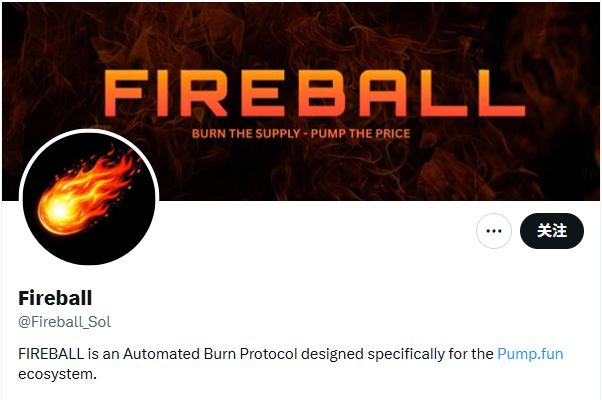
Within the pump.fun ecosystem, a token called FIREBALL is doing something similar: automatic buybacks and burns, packaged as a protocol other tokens can plug into. But its market cap is much smaller than Snowball's.
This shows the market is currently responsive to the direction of "mechanism-based meme coins."

The traditional玩法 (playbook) of shilling, pumping, and community hype is finding it harder to attract capital. Using mechanism design to tell a "structurally safe" story might be one of meme coins' latest tricks.

That said, artificially creating a specific mechanism isn't a new玩法 (play) either.

OlympusDAO's (3,3) in 2021 was the most classic case, packaging a staking mechanism with game theory, telling the story "if everyone holds, we all profit together." It reached a peak market cap of several billion dollars. The ending, as everyone knows, was a death spiral, dropping over 90%.

Even earlier, there was Safemoon's玩法 of "taxing every transaction and distributing it to holders," also a narrative of mechanism innovation, which ended with the SEC suing and the founders charged with fraud.

A mechanism can be a great narrative hook, capable of gathering capital and attention in the short term, but the mechanism itself does not create value.

When external capital stops flowing in, even the most精巧 (ingenious) flywheel will stop.

Finally, let's recap what this little gem is actually doing:

Turning the meme coin's creator fees into an "automated market-making bot." The mechanism itself isn't complicated, and the problem it solves is very clear: preventing developers from directly taking the money and running.

Developers not being able to rug doesn't mean you'll make money.

If after reading this you find the mechanism interesting and want to participate, remember one thing: it is first and foremost a meme coin, and only secondly an experiment with a new mechanism.


Cryptos en tendance

Questions liées

QWhat is the core mechanism that makes Snowball different from typical meme coins on pump.fun?

ASnowball's core mechanism is that 100% of the creator fees from each transaction are automatically sent to an on-chain market-making bot instead of going to the developer's wallet. This bot uses the accumulated funds to buy back tokens, add liquidity to the pool, and burn a small portion of tokens, creating a self-sustaining 'snowball effect' of buying pressure and liquidity growth.

QHow does the 'snowball effect' theoretically work in this token's economic model?

AThe 'snowball effect' works through a feedback loop: transactions generate fees → fees are used by the bot to buy tokens and add liquidity → buying pressure pushes the price higher → higher prices attract more traders and transactions → which generates more fees for the bot to continue the cycle.

QWhat are some of the risks or limitations of Snowball's automatic market-making mechanism?

AThe mechanism relies on sustained trading volume to generate fees for the bot. If new buyers dry up and trading volume decreases, the bot's buying power weakens, potentially leading to a downward spiral. It also doesn't protect against other risks like large holders dumping, liquidity issues, or narrative fatigue.

QHow does the creator fee percentage in Snowball adjust, and why?

AThe creator fee percentage in Snowball fluctuates between 0.05% and 0.95% based on market capitalization. It charges a higher percentage when the market cap is low to allow the bot to accumulate funds faster, and a lower percentage when the market cap is high to reduce transaction friction for traders.

QWhat precedent exists in crypto for 'mechanism-driven' tokens like Snowball, and what were their outcomes?

APrecedents include OlympusDAO's (3,3) staking mechanism, which collapsed after reaching a multi-billion dollar valuation, and Safemoon's transaction tax redistribution model, which ended with fraud charges from the SEC. These show that while mechanisms can drive short-term hype, they don't create inherent value and often fail when external capital stops flowing in.

Lectures associées

Dylan Patel : le fondateur de SemiAnalysis, loué par Jensen Huang, est un "apiculteur" et un "gogo" des forums

Dylan Patel, le fondateur de l'organisation de recherche indépendante SemiAnalysis, est une figure singulière dans le secteur technologique. Cet ancien apiculteur du Minnesota est avant tout un autodidacte passionné, ayant appris les subtilités des semi-conducteurs en échangeant anonymement sur des forums en ligne dès son plus jeune âge. En 2020, il a lancé son blog, SemiAnalysis, qui s'est rapidement transformé en une entreprise de référence, générant des revenus substantiels grâce à ses abonnements, ses modèles et ses services de conseil. Avec une équipe d'environ 60 personnes et un laboratoire de démontage de puces, SemiAnalysis produit des rapports techniques approfondis sur l'industrie des semi-conducteurs et de l'IA. L'influence de Patel est considérable. Son analyse critique du logiciel ROCm d'AMD a conduit à un échange direct de 90 minutes avec la PDG Lisa Su, qui a publiquement remercié ses « retours constructifs ». Le fondateur de Nvidia, Jensen Huang, a également cité et loué les travaux de SemiAnalysis lors d'événements majeurs. Ses rapports, axés sur les contraintes pratiques comme les chaînes d'approvisionnement, peuvent avoir un impact immédiat sur les marchés boursiers, comme ce fut le cas avec certains fabricants de mémoire. SemiAnalysis est désormais perçu comme un guide essentiel et indépendant pour les décisions d'investissement et les stratégies industrielles dans le domaine des semi-conducteurs et de l'IA.

marsbitIl y a 34 mins

Dylan Patel : le fondateur de SemiAnalysis, loué par Jensen Huang, est un "apiculteur" et un "gogo" des forums

marsbitIl y a 34 mins

Rapport Q1 d’Ethereum : Activité on-chain à un niveau record, l’actif tokenisé en tête de l’industrie

Rapport sur le premier trimestre 2026 : l'activité sur la chaîne d'Ethereum atteint un niveau record, les actifs tokenisés en tête de l'industrie. Le rapport met en évidence une divergence claire au T1 2026 : les mesures d'utilisation (utilisateurs actifs mensuels à 13,2 millions, transactions à 200,4 millions) ont atteint des sommets historiques, tandis que les valeurs monétaires (TVL à 316,2 Mds$, capitalisation boursière totale d'ETH à 290 Mds$) ont baissé. Cela résulte des bénéfices de l'élargissement de l'espace de stockage Blob, réduisant drastiquement les frais de transaction de base de 47,9% malgré une activité accrue. Ethereum domine largement le paysage des actifs tokenisés, avec une capitalisation totale de 2 034 Mds$. Il détient des parts de marché écrasantes dans les stablecoins (61,8% parmi 5 chaînes), les fonds tokenisés (73%) et les matières premières tokenisées (84%). Les indicateurs DeFi (prêts actifs, frais des applications) restent également leaders. La vision à long terme est que l'espace de bloc moins cher stimulera la demande, reproduisant le "paradoxe de Jevons". Le rapport compare cette phase à Internet en 1996, prédisant une adoption massive alors que les institutions financières traditionnelles (BlackRock, JPMorgan) accélèrent leurs déploiements sur Ethereum, attirées par sa liquidité, sa neutralité et son écosystème mature. L'objectif est de consolider la position d'Ethereum en tant que couche de règlement fondamentale pour la finance mondiale.

marsbitIl y a 37 mins

Rapport Q1 d’Ethereum : Activité on-chain à un niveau record, l’actif tokenisé en tête de l’industrie

marsbitIl y a 37 mins

Un indicateur CryptoQuant signale une accumulation par les baleines près du support des 64 000 $ pour le Bitcoin

Une analyse de CryptoQuant indique une hausse significative de la taille moyenne des ordres sur le marché spot du Bitcoin autour du niveau de support clé de 64 000 $. Cette métrique, calculée en divisant le volume échangé par le nombre de transactions, suggère une possible accumulation par les "baleines" (gros investisseurs) lors du repli des prix. Un tel signal, observé près d'une zone de support, peut indiquer que des acheteurs importants absorbent l'offre vendue plutôt que d'attendre une cassure haussière. Bien que cela ne garantisse pas un plancher de marché, cela constitue un indice à surveiller quant à la solidité de ce support. Il est important de noter que cette métrique doit être interprétée avec prudence. Une taille moyenne d'ordre élevée peut parfois refléter des mouvements internes aux plateformes d'échange et non uniquement un achat directionnel convaincu. Sa fiabilité est renforcée lorsqu'elle s'accompagne d'autres signaux, comme une stabilisation des prix ou une diminution de la pression vendeuse. En conclusion, ce signal de CryptoQuant apporte un élément nuance au contexte actuel, indiquant une possible accumulation par les grands capitaux malgré la correction. Cependant, cela ne constitue pas une garantie de renversement haussier. La suite de l'évolution du prix autour du niveau de 64 000 $, ainsi que les facteurs macroéconomiques et les flux des ETF, restent déterminants pour la tendance future.

bitcoinistIl y a 1 h

Un indicateur CryptoQuant signale une accumulation par les baleines près du support des 64 000 $ pour le Bitcoin

bitcoinistIl y a 1 h

Trading

Spot
Futures

Articles tendance

Comment acheter QUICK

Bienvenue sur HTX.com ! Nous vous permettons d'acheter Quickswap (QUICK) de manière simple et pratique. Suivez notre guide étape par étape pour commencer votre parcours crypto.Étape 1 : Création de votre compte HTXUtilisez votre adresse e-mail ou votre numéro de téléphone pour ouvrir un compte sur HTX gratuitement. L'inscription se fait en toute simplicité et débloque toutes les fonctionnalités.Créer mon compteÉtape 2 : Choix du mode de paiement (rubrique Acheter des cryptosCarte de crédit/débit : utilisez votre carte Visa ou Mastercard pour acheter instantanément Quickswap (QUICK).Solde :utilisez les fonds du solde de votre compte HTX pour trader en toute simplicité.Prestataire tiers :pour accroître la commodité d'utilisation, nous avons ajouté des modes de paiement populaires tels que Google Pay et Apple Pay.P2P :tradez directement avec d'autres utilisateurs sur HTX.OTC (de gré à gré) : nous offrons des services personnalisés et des taux de change compétitifs aux traders.Étape 3 : stockage de vos Quickswap (QUICK)Après avoir acheté vos Quickswap (QUICK), stockez-les sur votre compte HTX. Vous pouvez également les envoyer ailleurs via un transfert sur la blockchain ou les utiliser pour trader d'autres cryptos.Étape 4 : tradez des Quickswap (QUICK)Tradez facilement Quickswap (QUICK) sur le marché Spot de HTX. Il vous suffit d'accéder à votre compte, de sélectionner la paire de trading, d'exécuter vos trades et de les suivre en temps réel. Nous offrons une expérience conviviale aux débutants comme aux traders chevronnés.

188 vues totalesPublié le 2024.12.11Mis à jour le 2026.06.02

Comment acheter QUICK

Discussions

Bienvenue dans la Communauté HTX. Ici, vous pouvez vous tenir informé(e) des derniers développements de la plateforme et accéder à des analyses de marché professionnelles. Les opinions des utilisateurs sur le prix de QUICK (QUICK) sont présentées ci-dessous.

活动图片