Gemini Picks 3 Best Crypto Presales to Weather the Market Crash

bitcoinistPublié le 2025-09-23Dernière mise à jour le 2025-09-23

Résumé

Crypto markets are on shaky ground right now, with the latest pullback stirring fresh talk of a wider crash. The...

Trusted Editorial content, reviewed by leading industry experts and seasoned editors. Ad Disclosure

Crypto markets are on shaky ground right now, with the latest pullback stirring fresh talk of a wider crash.

The Fear & Greed Index sits at 40, a level that screams caution but also hints at plenty of room for upside if sentiment flips. Historically, these oversold zones often lay the groundwork for the next big leg up.

Crypto Fear and Greed Index.
Source: CoinMarketCap

Macro factors add fuel to the debate. The Fed is expected to deliver more rate cuts, a shift that usually lifts risk assets. Q4 has also earned a reputation for fireworks in past crypto cycles, and big players like VanEck are still targeting $BTC at 180K in 2025.

That kind of projection keeps long-term conviction alive, even while short-term volatility shakes weak hands out.

The best crypto presales, meanwhile, offer a different kind of shelter in stormy markets. Unlike listed tokens that swing with every headline, presale prices only move upward – and in set stages. That incremental growth makes them attractive in downturns.

Gemini has spotlighted three it believes can thrive: Bitcoin Hyper ($HYPER), Snorter Token ($SNORT), and Nexchain ($NEX). Here’s why they’re drawing attention.

1. Bitcoin Hyper ($HYPER) – Bitcoin’s Layer-2 Solution To Unleash Its Potential

Bitcoin remains the market’s anchor, but it still moves like a dinosaur when it comes to usability. High fees and slow block times make $BTC great for holding – but clunky for anything else. That gap is exactly what Bitcoin Hyper ($HYPER) will aim to close.

Integrating Solana’s Virtual Machine (SVM), Bitcoin Hyper will create a Layer-2 environment for Bitcoin – not a sidechain, but a parallel execution layer that inherits Bitcoin’s security while running at Solana speed.
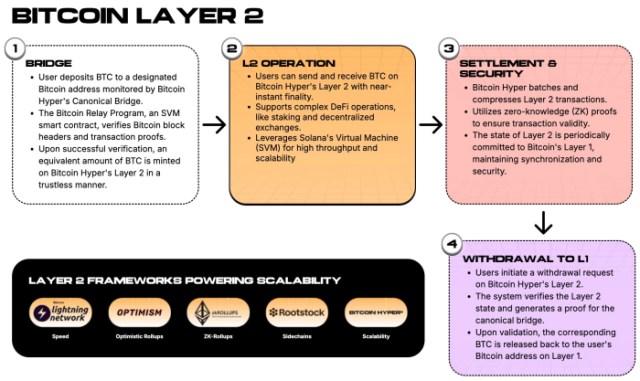
Bitcoin Hyper ($HYPER) Layer-2 for powering $BTC scalability.

The process is straightforward: bridge $BTC in, mint in on Hyper’s Layer-2, use it instantly for trading, staking, and DeFi, then bridge back out when needed. Transactions settle back to the Bitcoin Layer-1 via zero-knowledge proofs, keeping the system trustless and synced.

The upgrade unlocks use cases long out of reach for Bitcoin: the best meme coins, dApps, and cross-chain DeFi. Sub-second transactions and near-zero fees mean $BTC can finally power culture as well as capital.

Investors are already paying attention: the presale has pulled in $17.7M, with $HYPER priced at $0.012965 and staking yields of up to 65% APY. Check out our guide on how to buy Bitcoin Hyper before you head to the presale.

If ETFs and institutional inflows push $BTC higher, Gemini says Bitcoin Hyper stands to capture the upside as Bitcoin’s long-awaited execution layer.

Visit the Bitcoin Hyper presale website today.

2. Snorter Token ($SNORT) – Telegram Bot Meets Meme Utility

Telegram trading bots have gone from niche tools to a full-blown sector on Solana, with names like BONKBot and Trojan Bot pulling in serious volume.

The bot market itself is currently valued at $47.43B, and forecast to surge to $200B+ by 2035, fueled by retail traders looking for faster, cheaper ways to snipe new launches.

Snorter Token ($SNORT) plans to carve out a spot by merging meme coin branding with powerful bot utility. Built to run natively inside Telegram, Snorter aims to make the chat app a one-stop trading suite.

You’ll be able to swap, snipe, set stop-losses, copy top wallets, and track your portfolio in real time – all without leaving Telegram.
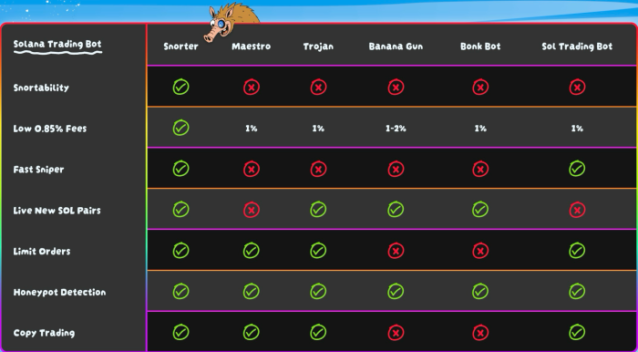
Snorter Bot ($SNORT) vs other top trading bots.Speed and cost are its main weapons. Sub-second swaps fire through Solana’s custom RPC infrastructure, while $SNORT holders can cut trading fees to just 0.85%, cheaper than rival bots (1.5%).

Security also plays a big part in this trading bot. Closed beta tests showed an 85% success rate in flagging rug pulls and honey pots.

So far, Snorter’s presale has raised $4M+. Tokens are sat at $0.1053 with 116% APY staking available, and just 27 days remain before the presale ends. Discover how to buy Snorter Token in our step-by-step guide.

By blending Solana meme coin culture with trading infrastructure, Gemini claims $SNORT is positioning itself for both hype and utility.

Ready to jump in? Join the Snorter Token presale today.

3. Nexchain ($NEX) – AI-Built Layer-1 With Daily Rewards

AI has become one of crypto’s fastest-growing verticals, with VanEck forecasting crypto AI revenues to reach a base case of $10.2B by 2030. Nexchain ($NEX) is leaning into that narrative by building the first blockchain designed entirely by AI.

The chain runs on a hybrid consensus model that merges Proof-of-Stake with AI-driven algorithms, giving it both speed and adaptability. Benchmarks show throughput at 400K transactions per second, with average fees of just $0.001. And unlike older chains, Nexchain’s infrastructure is engineered to be eco-friendly from day one.

The real-world use cases of NexchainUtility spans the full Web3 stack: smart contracts, staking, payments for AI services, and cross-chain interoperability. But the standout feature is tokenomics. $NEX holders earn a daily share of 10% of all gas fees collected across the network, creating a built-in revenue stream that rewards long-term holding.

So far, the presale has raised $10.4M+. At a current price of $0.108, early buyers are looking at a 278% spread against the $0.30 listing price.

For investors chasing the AI wave while securing real yield, Nexchain offers a unique blend of hype and fundamentals. Gemini points to how that mix has made $NEX a presale to watch closely this year.

Want to discover more? Take a look at the Nexchain ($NEX) whitepaper.

Recap: We asked, and Gemini answered. If you’re on the hunt for the best crypto presales to weather the market crash, take a look at Bitcoin Hyper ($HYPER), Snorter Token ($SNORT), and Nexchain ($NEX).

As always, this article is not financial advice. Crypto and presales carry inherent risks. Please do your own research and never invest more than you can afford to lose.

Authored by Aidan Weeks, Bitcoinist – https://bitcoinist.com/gemini-best-crypto-presales

Editorial Process for bitcoinist is centered on delivering thoroughly researched, accurate, and unbiased content. We uphold strict sourcing standards, and each page undergoes diligent review by our team of top technology experts and seasoned editors. This process ensures the integrity, relevance, and value of our content for our readers.

Aidan Weeks, a Master's graduate in Mechanical Engineering, has thrived as a content writer for over four years. Specializing in crypto, tech, engineering, AI, and B2B sectors, Aidan adeptly crafts web copy, blog posts, buying guides, manuals, product pages, and more, making complex concepts accessible and engaging. His transition from academia to full-time writing reflects his passion for bridging technical expertise with clear, informative content. Since joining Bitcoinist, Aidan has written extensively about DeFi, dApps, AI, and meme coins, solidifying his grasp on emerging blockchain technologies. An early adopter, he began investing in Solana in 2020, further deepening his insights into crypto markets and innovation. Today, he combines hands-on experience with a sharp editorial instinct to help readers cut through hype, spot real trends, and make sense of a fast-moving space.

Lectures associées

Le Bitcoin et les altcoins montent, mais un analyste prévient : ces niveaux pourraient déclencher de fortes fluctuations

Alors que le prix du Bitcoin continue de monter, les positions à effet de levier sur le marché mettent en lumière des niveaux de liquidation potentiels. L'analyste Joao Wedson d'Alphractal a identifié deux zones critiques en analysant les positions ouvertes sur les 30 derniers jours : 61 000 et 57 000 dollars. De nombreuses positions ont été ouvertes lorsque le Bitcoin évoluait entre 65 000 et 68 000 dollars, rendant le niveau des 61 000 dollars particulièrement vulnérable. Si le prix atteint ce seuil, une pression importante pourrait s'exercer sur ces positions à effet de levier. Le niveau des 57 000 dollars constitue une zone de liquidation encore plus forte, car une part significative des positions à risque à ce niveau a été ouverte lorsque le Bitcoin se négociait entre 63 000 et 66 000 dollars. Wedson souligne que ces niveaux sont cruciaux non seulement pour les liquidations, mais aussi en raison des ordres de stop-loss placés par les investisseurs autour de 61 000 et 57 000 dollars. En cas de chute brutale, le déclenchement de ces ordres pourrait amplifier la pression vendeuse. À l'inverse, des zones de liquidation potentielle existent également sur une tendance haussière. L'analyste note qu'une part importante des actifs pourrait être liquidée dans la fourchette de 85 000 à 86 000 dollars, mais la plupart de ces positions sont ouvertes depuis plus d'un mois.

cryptonews.ruIl y a 23 mins

Le Bitcoin et les altcoins montent, mais un analyste prévient : ces niveaux pourraient déclencher de fortes fluctuations

cryptonews.ruIl y a 23 mins

Rétrospective sur le piratage de Coldcard : Le code source visible n'est pas synonyme de sécurité

L'affaire du vol de portefeuilles matériels Coldcard, entraînant la perte de plus de 150 millions de dollars en Bitcoin, a relancé le débat sur la sécurité du code open source. L'article souligne que la simple disponibilité du code source ("source available") ne garantit pas sa sécurité. Une distinction cruciale est faite entre les logiciels libres/open source (FOSS/FLOSS), qui offrent les quatre libertés fondamentales, et le code simplement lisible, qui peut restreindre l'usage commercial et donc les incitations à un audit approfondi. Le cas Coldcard illustre ce problème : son firmware, sous licence MIT avec restrictions, n'a pas bénéficié d'un examen significatif de la communauté pendant des années, laissant passer une faille critique. Cela démontre que la sécurité dans l'open source repose non sur la transparence passive, mais sur l'existence d'incitations économiques et de compétences pour réaliser des audits continus. Des projets comme Bitcoin Core montrent le modèle fonctionnel, avec un développement et une révision collégiale entièrement publics. L'article analyse aussi l'économie de l'open source : la plupart des utilisateurs s'appuient sur l'hypothèse que "quelqu'un d'autre vérifie", ce qui peut mener à une tragédie des biens communs si les incitations sont mal alignées. Enfin, l'émergence de l'IA modifie la donne. D'un côté, des outils comme le Bitcoin Red Team prouvent que l'IA peut accélérer massivement la détection de vulnérabilités. De l'autre, le flux de code généré par l'IA accable les mainteneurs de projets. Dans ce nouveau paysage, seuls les logiciels faisant l'objet d'audits rigoureux et continus, qu'ils soient open source ou privés, pourront résister à la pression accrue des attaques financières et technologiques.

marsbitIl y a 1 h

Rétrospective sur le piratage de Coldcard : Le code source visible n'est pas synonyme de sécurité

marsbitIl y a 1 h

Les ETF spot sur le Bitcoin et l'Ethereum attirent 2,6 milliards de dollars en une semaine : un record depuis octobre 2025

Les ETF spot américains sur Bitcoin et Ethereum ont attiré 2,6 milliards de dollars d'afflux net de capitaux en une semaine, un record depuis octobre 2025. Les ETF Bitcoin ont reçu 1,9 milliard de dollars, tandis que les fonds Ethereum ont attiré 697,2 millions de dollars, des chiffres records pour l'année 2026. Ce résultat marque un renversement notable par rapport à la semaine précédente, qui avait enregistré un retrait de 392 millions de dollars. L'activité de trading des ETF Bitcoin a plus que triplé, atteignant 22,1 milliards de dollars, et leurs actifs sous gestion ont augmenté de 25,4% pour atteindre 96,1 milliards de dollars. Les achats se sont concentrés les 19 et 20 août, avec le fonds IBIT de BlackRock captant à lui seul 503 millions de dollars sur 606,3 millions d'afflux en une journée. Les ETF sur Ethereum ont également connu leur meilleure semaine depuis octobre 2025, avec un volume de trading en hausse de 259,4% à 6,9 milliards de dollars et des actifs sous gestion en progression de 35,9% à 14,3 milliards de dollars. Cependant, malgré cette semaine exceptionnelle, les catégories Bitcoin et Ethereum affichent toujours des retraits nets depuis le début de l'année 2026, respectivement de 2,9 milliards et 191,8 millions de dollars. L'analyse souligne que la forte concentration des flux vers un seul fonds, comme l'IBIT, peut constituer à la fois un signe de confiance et une vulnérabilité structurelle, capable d'inverser rapidement la tendance en cas de changement de sentiment.

cryptonews.ruIl y a 1 h

Les ETF spot sur le Bitcoin et l'Ethereum attirent 2,6 milliards de dollars en une semaine : un record depuis octobre 2025

cryptonews.ruIl y a 1 h

Trading

Spot
活动图片