Crypto analyst Bitcoin Sensus has revealed a technical pattern that is playing out for the Dogecoin price. Based on this pattern, the analyst suggested that the foremost meme coin could soon witness a surge to this crucial level.
Wyckoff Accumulation Schematic Points To Bullish Reversal
In an X post, Bitcoin Sensus stated that a Wyckoff Accumulation Schematic is playing out for Dogecoin on a four-hour timeframe. He explained that this is a healthy bottom formation for DOGE to be able to sustain a healthy uptrend in the coming months. His accompanying chart showed that the foremost meme coin could rally to as high as $0.24 in the short term.
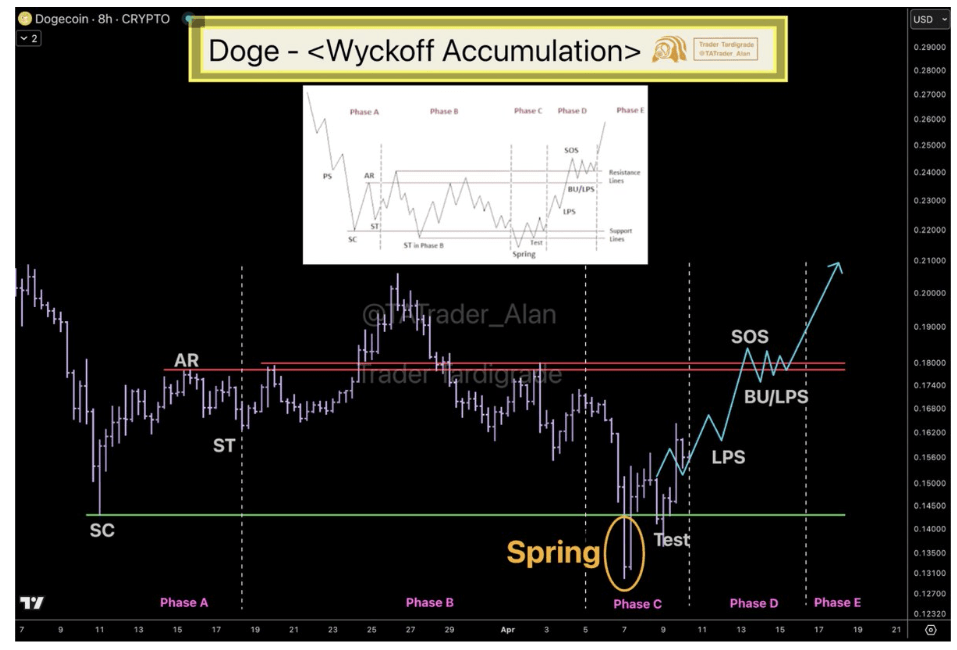
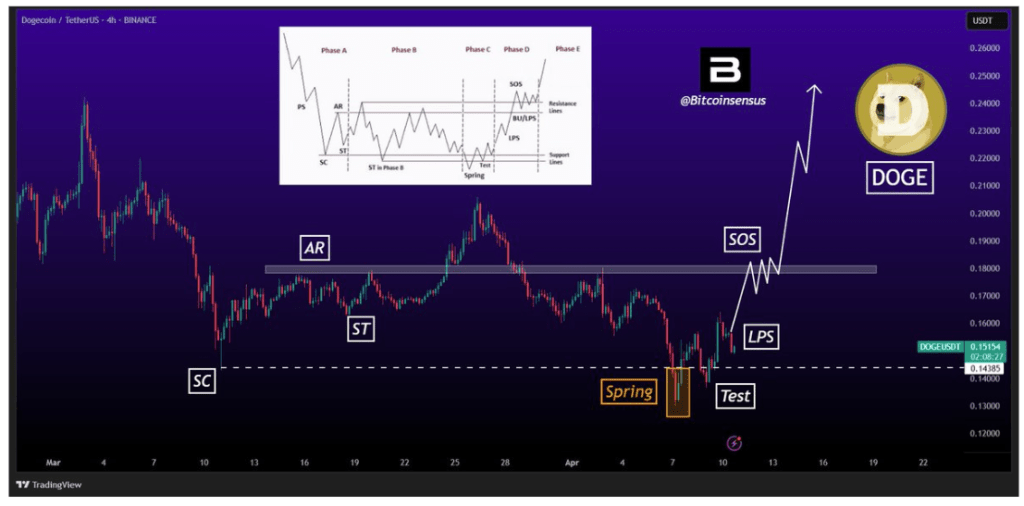 The chart also showed that the crash to $0.14 was likely the bottom for Dogecoin. Crypto analyst Trader Tardigrade also alluded to the Wyckoff Accumulation pattern, suggesting that the bottom was in for DOGE. He stated that this pattern is playing out as predicted, noting that a perfect test was completed. The analyst added that Dogecoin will find LBS soon, and the next will be SOS and BU, which will lead to phase E. His chart showed that the meme coin will break above $0.21 on phase E.
 In another X post, Trader Tardigrade again suggested that Dogecoin has found its bottom. He stated that the foremost meme coin has successfully reclaimed its previous breakdown, marking the first time since the downtrend began in January 2025. The analyst remarked that this price action suggests that DOGE is gaining strength and may have already reached its bottom.
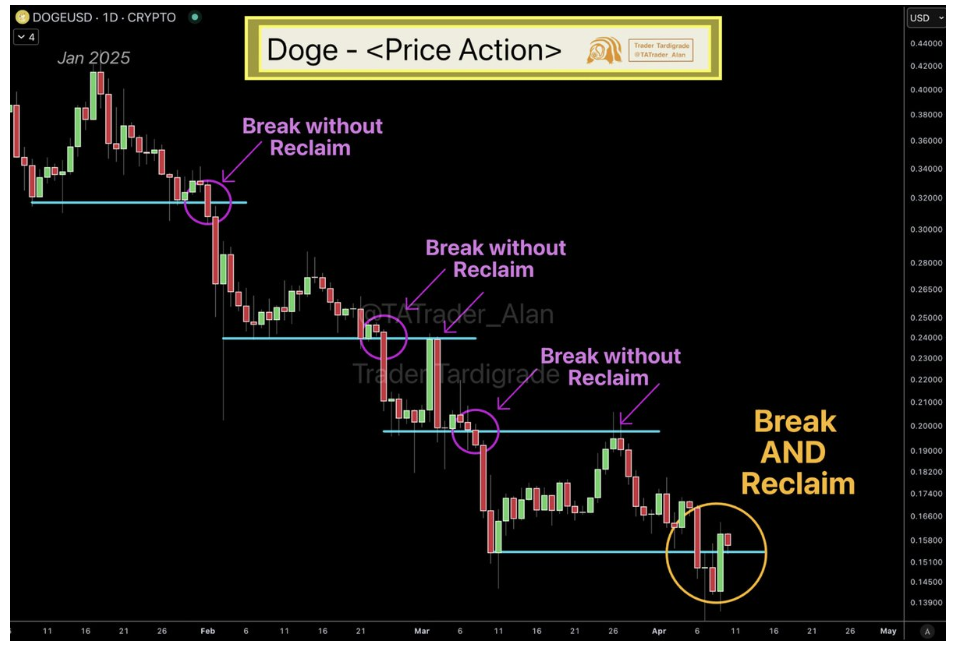 With Dogecoin finding its bottom, the meme coin could soon break above the psychological $0.2 level, paving the way for a rally to new highs. The Bitcoin price is also rebounding, which could spark this surge for DOGE if BTC maintains its bullish momentum.
Dogecoin Chart Is ‘Beautiful’
Crypto analyst Master Kenobi asserted that Dogecoin’s chart is a “beautiful” thing. He remarked that events seem to be orchestrated long before they unfold, hinting at a bullish reversal for the foremost meme coin. His accompanying chart also showed that DOGE was looking to rebound and could rally to the much-anticipated $1 price level if it touches the upper boundary of an ascending channel.

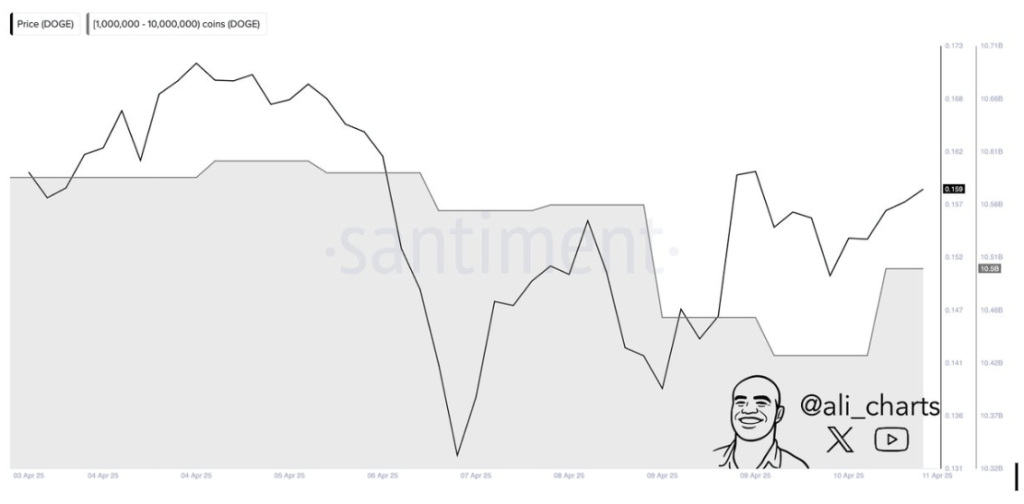
Ahead of this Dogecoin price rebound, DOGE whales are actively accumulating, which is a positive for the foremost meme coin. Crypto analyst Ali Martinez revealed that these whales have bought over 80 million DOGE in the last 24 hours. Whale accumulations like these are known to usually precede a price reversal, suggesting that the meme coin could soon rally.
At the time of writing, the Dogecoin price is trading at around $0.16, up over 3% in the last 24 hours, according to data from CoinMarketCap.
Featured image from Business Insider, chart from TradingView

Related Posts