Artículos Relacionados con Supply Chain

El Centro de Noticias de HTX ofrece los artículos más recientes y un análisis profundo sobre "Supply Chain", cubriendo tendencias del mercado, actualizaciones de proyectos, desarrollos tecnológicos y políticas regulatorias en la industria de cripto.


Mass Production Timelines Shift Collectively, Is Glass Substrate Facing Its First Major Test?

The article discusses the shift in the glass substrate industry from initial announcements to practical delivery and reliability testing. In mid-to-late 2026, key developments include Intel and Lens Technology advancing AI-era glass substrate packaging cooperation, Avaco launching a TGV pilot line in South Korea, and reports that Samsung Electro-Mechanics is facing delays, potentially pushing mass production beyond 2028. The core challenge has moved from material comparisons to rigorous customer reliability certifications, focusing on thermal cycling, humidity resistance, and stable electrical performance post-processing. Samsung Electro-Mechanics' reported delay, linked to client sample reliability bottlenecks, reflects a broader industry trend where timelines are being adjusted. Other players like SKC/Absolics, LG Innotek, and DNP are also targeting initial supply systems or pilot lines between 2027-2028, with mainstream adoption potentially post-2030. The delays highlight that the current hurdle is supply-side technical maturity—particularly achieving stable yields and passing client certifications—rather than a lack of demand driven by AI and HPC. The collaboration between Intel and Lens Technology focuses on establishing design and verification standards. Meanwhile, Japanese firms like Shinko Electric and DNP are progressing with multi-layer wiring and stress control. Chinese panel makers, led by BOE, are rapidly entering with automated pilot lines and customer testing. On the material side, companies like Corning are exploring glass substrates for co-packaged optics (CPO), potentially offering an earlier application path than core substrates. Ultimately, the central barrier is TGV (Through Glass Via) yield, currently around 60-70%, lower than organic substrates, with higher costs due to glass brittleness and process complexity. The industry's current phase represents its first major test in transitioning from lab R&D to volume manufacturing, with success hinging on overcoming these yield and certification challenges.

marsbitAyer 06:51

Mass Production Timelines Shift Collectively, Is Glass Substrate Facing Its First Major Test?

marsbitAyer 06:51

Semiconductor Industry Sees a New Wave of Price Hikes, with STMicroelectronics, Maxscend and Others Increasing Prices Intensively

The semiconductor industry is experiencing a new wave of price increases driven by supply-demand dynamics and rising costs. Throughout August, multiple international and domestic semiconductor companies have issued price adjustment notices to clients, with a focus on analog and RF chips. Key companies adjusting prices include STMicroelectronics, which is implementing its third price hike in 2026 effective August 23, citing sustained demand pressure and rising costs across the supply chain. Analog Devices, Inc. (ADI) has also announced a second price increase for 2026, effective September 13, due to "unprecedented" demand growth and escalating manufacturing costs. In China, RF chip leader Zhuosheng Microelectronics issued a price adjustment notice for its full RF product line, effective September 1, its first hike this year, attributing it to rising raw material and foundry costs. Additionally, Chinese MCU manufacturer Nations Technologies announced a 10-20% price increase for some products from October 1. This new round of price hikes has shifted its focus to mature process nodes (e.g., analog, RF, power, MCUs), partly due to AI computing demand consuming 8-inch wafer capacity. This contrasts with the first half of 2026, when the surge was led by AI memory chips like HBM and server DRAM. Analysts note that the long lead time for expanding analog/power semiconductor capacity (18-24 months) may sustain price resilience in the short term. However, downstream manufacturers' cost tolerance and fluctuating global demand could become constraints, potentially limiting further significant price increases. Companies have linked the hikes to ensuring future supply stability by funding capacity expansion.

marsbit08/21 14:28

Semiconductor Industry Sees a New Wave of Price Hikes, with STMicroelectronics, Maxscend and Others Increasing Prices Intensively

marsbit08/21 14:28

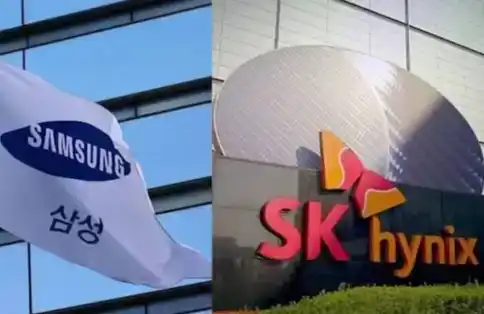
Bernstein Analysis: Samsung's HBM4 Accelerates Volume, Q3 Revenue May Overtake SK Hynix

South Korea’s July memory export data, serving as an early indicator for HBM business in Q3, shows overall HBM demand remains robust. While total exports to Taiwan and Malaysia declined 32% month-on-month from June’s peak—largely due to seasonality—they were still up 13% compared to April and rose 64% year-on-year. However, a divergence emerged between Samsung and SK Hynix. Samsung’s exports from Chungcheongnam-do (a proxy for its HBM shipments) surged, reaching $2.2 billion in July, up 122% from April. Based on regression analysis, Bernstein estimates Samsung’s Q3 HBM revenue could hit around $12 billion, roughly 30% above its prior forecast, driven by a rapid ramp in higher-value HBM4. The unit value of Samsung’s exports has doubled since April, signaling a shift toward HBM4, which carries a significantly higher price. In contrast, exports linked to SK Hynix from Chungcheongbuk-do and Icheon fell 28% month-on-month and 27% versus April. Bernstein’s base model suggests SK Hynix’s Q3 HBM revenue could drop to about $5.6 billion, though this could rebound to $12 billion if shipments concentrate later in the quarter as historically seen. The weakness may relate to potential delays in HBM4 shipments for Nvidia’s Rubin platform. Notably, HBM pricing is decoupling from general DRAM, with HBM4 mix driving average selling prices rather than broad-based hikes. Exports to Malaysia also surged, possibly linked to Intel’s EMIB packaging facilities, though the exact drivers remain unclear. While July data reinforces Samsung’s accelerating momentum in HBM4, it is insufficient to confirm a full-year market share reversal. Key factors to watch are Samsung’s August-September export performance, whether SK Hynix recovers lost ground, and upcoming 2027 HBM contract pricing negotiations.

marsbit08/21 09:25

Bernstein Analysis: Samsung's HBM4 Accelerates Volume, Q3 Revenue May Overtake SK Hynix

marsbit08/21 09:25

The New Rules of the AI Race: Nvidia Shifts from Chips to Energy Resources and Construction Sites

Nvidia is providing a $105 billion financial guarantee for the construction of OpenAI's data center campus in Ohio, signaling a strategic shift in the AI industry from competing on chips to battling for physical infrastructure and energy resources. The guarantee, detailed in an SEC filing, acts as insurance against tenant default rather than direct construction funding. OpenAI must repay any sums drawn. Nvidia will also invest $1.5 billion in SB Energy for the project's power component. The planned campus has a capacity of 4.25 GW, with OpenAI's current commitments to Nvidia reaching 12 GW. This move underscores that leading AI development now requires securing space, power, and financial backing for massive, long-term projects. Tech giants are taking on roles akin to developers and financial institutions. Concurrently, AI firms are diversifying suppliers: OpenAI and Anthropic have signed major deals with AMD for GPU deployments. Nvidia is also scaling its financial model through partnerships with investment firms to mobilize over $500 billion in external capital. The paradigm in AI is shifting from hardware supremacy to building comprehensive ecosystems. Future industry growth will depend on balancing innovation with real-world infrastructure capabilities, turning abstract computations into tangible industrial projects. An AI analysis notes the deal's resemblance to vendor financing schemes from the telecom bubble of the late 1990s and questions the long-term viability of gas-dependent energy infrastructure for AI, should market growth slow.

cryptonews.ru08/21 09:16

The New Rules of the AI Race: Nvidia Shifts from Chips to Energy Resources and Construction Sites

cryptonews.ru08/21 09:16

BofA Research Report Analysis: Marvell Takes TPU Peripherals, Broadcom Holds Core Value of $250 Billion

Bank of America's report analyzes the impact of Google's new custom chip agreement with Marvell on the TPU supply chain. While Marvell secured a deal for "XPU-attach" chips (like AI inference accelerators and memory controllers), corresponding to a potential $120B in cumulative purchases, BofA argues the core high-value components remain with Broadcom. Broadcom retains design and supply for the core ASIC, advanced packaging, HBM integration, high-speed SerDes, and network switching/physical layer connectivity. These form the highest Bill-of-Materials (BOM) value in TPU systems. BofA estimates Google's 5-year capex could reach $1.5-$2T, with TPU systems representing 25-30% ($400B-$600B TAM). Within this, Broadcom is projected to hold a 55-60% value share ($250B-$350B), Marvell 10-20% ($50B-$100B), and MediaTek 20-30% in lower-value, cost-optimized chips. The report emphasizes Broadcom's entrenched position through long-term agreements locked until CY31, increasing silicon content per TPU generation, and high unit value creating a competitive barrier. It sets a $530 price target for Broadcom (30x CY27 P/E), viewing current valuation as attractive given growth certainty from AI and locked leadership. Downsides include semiconductor cycles, customer concentration, and debt. In conclusion, while competition reshapes the supply chain for peripheral chips, the core high-value structure and Broadcom's dominance in compute silicon remain intact.

marsbit08/20 07:01

BofA Research Report Analysis: Marvell Takes TPU Peripherals, Broadcom Holds Core Value of $250 Billion

marsbit08/20 07:01

China Pinches the Vital Point of CPO

The article "China Grips the Achilles' Heel of CPO" details how China holds a strategic position in the global indium phosphide (InP) supply chain, a critical material for high-speed optical modules and CPO (Co-Packaged Optics) technology used in AI data centers. China controls over 70% of global indium reserves and produces more than half of the world's primary indium, primarily as a by-product of zinc/tin smelting. It further refines 70-80% of the globe's refined indium. This upstream dominance is compounded by the fact that key InP wafer producer AXT operates its primary production through its Chinese subsidiary, Beijing Tongmei. Adding to this leverage are China's export controls, first on InP products and later extending to high-purity indium (6N+ grade). These restrictions have created supply bottlenecks and uncertainty, straining foreign manufacturers like Japan's Sumitomo and Dowa, who rely heavily on Chinese materials. The resulting shortage has led to intense demand, with industry figures like Lumentum's CEO warning of severe constraints and companies like Coherent seeking direct assurances from China. This situation benefits Chinese InP supply chain companies. Firms like Yunnan Chihong Zinc & Germanium (a leading domestic InP wafer producer) and Zhuzhou Keneng (high-purity indium) report surging domestic revenues and orders. They are also making progress in high-end product validation and capacity expansion. However, challenges remain, including lengthy customer qualification cycles and a significant capacity gap compared to foreign leaders. The article frames the current AI-driven demand surge as a pivotal moment for China's InP industry. It references a historical lesson where China, despite controlling indium resources, once ceded value-add and pricing power to Japanese processors. The current scenario is seen as an opportunity to leverage upstream resource control to develop advanced manufacturing capabilities and secure greater influence in the global semiconductor materials market.

marsbit08/19 23:06

China Pinches the Vital Point of CPO

marsbit08/19 23:06

Why Didn't Oil Prices Stabilize Above $100 as Traffic Through the Strait of Hormuz Plunged Again?

Despite a significant drop in daily oil tanker traffic through the critical Strait of Hormuz in August, Brent crude oil prices have failed to stabilize above $100 per barrel, instead hovering around $90. This contrasts with traditional market logic, where a threat to a chokepoint handling roughly 20 million barrels per day (27% of global seaborne oil) should trigger a sustained supply risk premium. The article explains that the market is pricing in increased transit costs rather than an imminent, complete supply cutoff. Investors currently believe multiple buffers can absorb the shock: strategic and commercial inventories, the potential for coordinated stock releases, available OPEC+ spare capacity, and alternative export routes from the Gulf. Furthermore, workarounds like ship-to-ship transfers outside the Strait and route adjustments by buyers and shippers add resilience, though at a higher cost for insurance, financing, and longer voyages. The underlying U.S.-Iran tensions frame this reassessment as a problem of cost allocation across the supply chain. The price action suggests traders are awaiting clearer signals—such as a military escalation, sustained Iranian attacks, or stricter enforcement of secondary sanctions on buyers—before pricing in a worst-case, long-term disruption scenario. In the longer term, the episode is accelerating investments to reduce dependency on the Strait, such as expanded storage and pipeline infrastructure, which will embed higher costs into the energy system. While Brent may remain range-bound for now, the real-time impact of the Hormuz risk is likely appearing first in freight rates, insurance premiums, and regional product spreads like diesel crack margins. The stability of current prices depends on how much longer these existing buffers can effectively absorb the mounting transit costs and logistical friction.

marsbit08/19 10:41

Why Didn't Oil Prices Stabilize Above $100 as Traffic Through the Strait of Hormuz Plunged Again?

marsbit08/19 10:41

Overnight Global Shock: Why Did AI Stocks Plunge Across the Board?

Overnight, U.S. AI-related stocks fell sharply, with the Nasdaq down 1.33% and the Philadelphia Semiconductor Index plunging nearly 5%. Panic spread globally, dragging down Asia-Pacific markets. Key negative drivers included: 1. **Geopolitical Tension & Macro Pressure:** Escalating U.S.-Iran tensions pushed oil prices higher, fueling inflation fears and expectations of prolonged high interest rates. Rising bond yields pressured high-valuation, capital-intensive AI stocks, especially as soaring AI infrastructure financing costs became evident. 2. **AI Commercialization Concerns:** OpenAI's Q2 results showed slowing revenue growth and widening losses, dampening market optimism about near-term AI application profitability. This shifted investor focus from pure capital expenditure narratives to actual commercial returns. 3. **Supply Chain Uncertainty:** U.S.-South Korea semiconductor investment disputes intensified. Market fears that Korean memory giants (Samsung, SK Hynix) face a dilemma—either divert capital to costly U.S. production or risk trade barriers—disrupted the critical HBM memory sector, amplifying sell-offs via leveraged ETFs. While long-term AI demand remains, the market is now scrutinizing real profitability, financing costs, and supply chain stability rather than paying premiums for unchecked growth stories. For markets like China's A-shares, the impact is primarily sentiment-driven, requiring distinction between short-term panic and fundamental deterioration.

marsbit08/19 03:46

Overnight Global Shock: Why Did AI Stocks Plunge Across the Board?

marsbit08/19 03:46

Domestic RF Filters, Finally Starting to Compete?

China's domestic filter industry, particularly in the challenging BAW (Bulk Acoustic Wave) segment, has reached a significant inflection point, moving from solving the "availability" problem to entering a phase of commercial competition and scale. The market is attractive, with the global mobile terminal RF filter market projected to reach $9.2 billion in 2025, and BAW filters showing strong growth. However, the sector is historically dominated by giants like Broadcom and Qorvo, protected by deep patent walls, as evidenced by lawsuits that have bankrupted competitors like Akoustis. Previously, high-frequency BAW filter production in China was nearly zero. Now, domestic players like Nous Micro, Wuhan Memsensing, Hansky, and others are forming a genuine industrial cluster, achieving mass production and shipping hundreds of millions of chips to clients. Different business models are emerging, including IDM and fab-lite approaches through partnerships with foundries like Sai Microelectronics and Runxin Sensing. A key signal of this new competitive phase is a patent lawsuit filed by Nous Micro against Wuhan Memsensing in June 2025, alleging infringement of a core BAW resonator patent. This conflict, rather than mere internal friction, underscores that the industry now has substantial products and market stakes to contest. The challenge is no longer just technical breakthrough but transforming technological leads into sustainable commercial success through superior patents, product performance, cost control, and customer acquisition. Chinese companies are finally positioned to compete for a share of this lucrative market long held by foreign leaders.

marsbit08/18 10:11

Domestic RF Filters, Finally Starting to Compete?

marsbit08/18 10:11

活动图片