Artículos Relacionados con Securities

El Centro de Noticias de HTX ofrece los artículos más recientes y un análisis profundo sobre "Securities", cubriendo tendencias del mercado, actualizaciones de proyectos, desarrollos tecnológicos y políticas regulatorias en la industria de cripto.

Japan's $2.7 Billion Securities Assets Go On-Chain: Why Is Traditional Finance Collectively Betting on Avalanche?

Japan's largest securities token platform Progmat, initially incubated by Mitsubishi UFJ Trust and Banking (MUFG), has completed a major migration, moving over 452 billion yen (approximately $27 billion) in tokenized assets from a Corda-based private blockchain to a dedicated Avalanche Layer 1 network. This move signifies a strategic shift for Japan's financial infrastructure, as the platform transitions from a closed, permissioned system to an open, EVM-compatible architecture. The migration reportedly tripled asset transfer speeds, reduced finality to under two seconds, and enables future multi-chain connectivity while maintaining operational continuity for supported financial institutions. The choice of Avalanche reflects a broader trend where traditional finance is increasingly opting for solutions that balance the control and compliance of private chains with the innovation and interoperability of public blockchain ecosystems. Progmat's Avalanche-based network allows for custom validation nodes and governance while gaining access to the extensive EVM developer tooling and applications. Beyond the platform upgrade, Japan is advancing its Real World Asset (RWA) strategy by establishing a working group focused on the tokenization of Japanese government bonds and exploring 24/7 trading and real-time settlement. This migration demonstrates blockchain's evolving role from a niche technology for crypto assets to a potential foundational layer for next-generation global financial markets, placing Japan at the forefront of institutional RWA adoption and infrastructure competition.

marsbitHace 13 hora(s)

Japan's $2.7 Billion Securities Assets Go On-Chain: Why Is Traditional Finance Collectively Betting on Avalanche?

marsbitHace 13 hora(s)

Aave V4 to Move Wall Street Securities Financing On-Chain: Composability Layer Transforms from Risk Point to Backbone

Aave V4 aims to bring Wall Street securities financing on-chain, targeting the massive traditional markets for repo, securities lending, and margin financing. It proposes three core products: securities-backed loans, atomic repo settlements, and securities lending. This shifts the narrative from "RWA as collateral" to building foundational "on-chain securities finance infrastructure." The key innovation lies in its third-layer approach: composability. V4 doesn't alter underlying asset credit but systematically connects all on-chain assets to leverage and liquidation mechanisms, making composability the system's backbone instead of just a risk point. Aave's dominant market share and its relatively prudent engineering for its Horizon institutional RWA lending market support this ambition. However, a critical design choice introduces a new risk dimension. The "centralized liquidity Hub + multiple Spoke" architecture and Horizon's shared liquidity pools prioritize capital efficiency by allowing new assets instant access to deep liquidity. The trade-off is the loss of risk isolation: a problem with one collateral type in a stress period can draw from the same stablecoin pool backing all others, spreading risk across the entire market. This risk is not theoretical, as demonstrated by a 2026 incident where compromised collateral from a bridge attack created bad debt on Aave. As the system scales—with Horizon targeting over $1B—it remains untested in a genuine credit or liquidity crisis. The first significant bad debt or forced liquidation in RWA markets will likely be triggered by a price/net asset value dislocation of a tokenized asset during stress, not by an underlying default. The implications are clear: institutions providing collateral must account for potential NAV-price gaps; liquidity providers must understand they are exposed to all collateral in a shared pool; and protocols must explicitly choose between risk isolation and capital efficiency. The market still focuses primarily on credit risk, while tokenization continues to concentrate new risks in the liquidity and composability layers.

marsbit07/03 06:03

Aave V4 to Move Wall Street Securities Financing On-Chain: Composability Layer Transforms from Risk Point to Backbone

marsbit07/03 06:03

South Korean Institutions' Crypto Race: Dual Explosion of Stablecoins and RWA

**Summary: South Korea's Institutional Crypto Race: Stablecoins and RWA Take Off** South Korea is undergoing a structural shift in its crypto ecosystem, moving beyond its historical role as a major retail trading hub. Major financial institutions and internet platforms are now building institutional-grade blockchain infrastructure, with stablecoins and Real-World Asset (RWA) tokenization as the primary drivers. The push for a regulated Korean won stablecoin market is a major policy and corporate focus. This is driven partly by an estimated $115 billion outflow into dollar stablecoins like USDC, threatening the domestic financial system. Banks (e.g., KB Financial, Hana), payment giants (e.g., Shinhan Card, BC Card), and internet super-apps (KakaoPay, NAVER Pay) are all conducting pilots. The goal is to anchor future digital finance to the Korean won and local regulations. In RWA, South Korea is advancing rapidly within regulatory sandboxes, focusing on unique domestic assets beyond typical global templates like US Treasuries. Projects involve tokenizing ships (with Hyundai Heavy Industries), defense supply chain assets, and K-pop intellectual property, alongside more conventional assets. A legal framework is set for 2027, and platforms like NXT are preparing for regulated trading. Key opportunities for crypto-native projects lie in providing the underlying technology these traditional institutions lack: global distribution channels for tokenized assets, cross-chain liquidity solutions, and enabling infrastructure tools (e.g., for asset packaging and management). Partnerships, such as Solana with Shinhan Card or LayerZero with the Korea Gold Exchange, exemplify this proactive approach. Crucially, user access is being shaped by consumer platforms. NAVER's planned acquisition of Upbit's operator Dunamu and Kakao's development of a unified wallet aim to seamlessly integrate crypto with everyday payments for tens of millions of users. The race is now about which protocols and projects will become the foundational standards as regulation solidifies and institutional adoption accelerates.

Foresight News06/26 08:03

South Korean Institutions' Crypto Race: Dual Explosion of Stablecoins and RWA

Foresight News06/26 08:03

From Parallel Finance to Mainstream Finance: The On-Chain Securities Era Ushers in a Historic Window

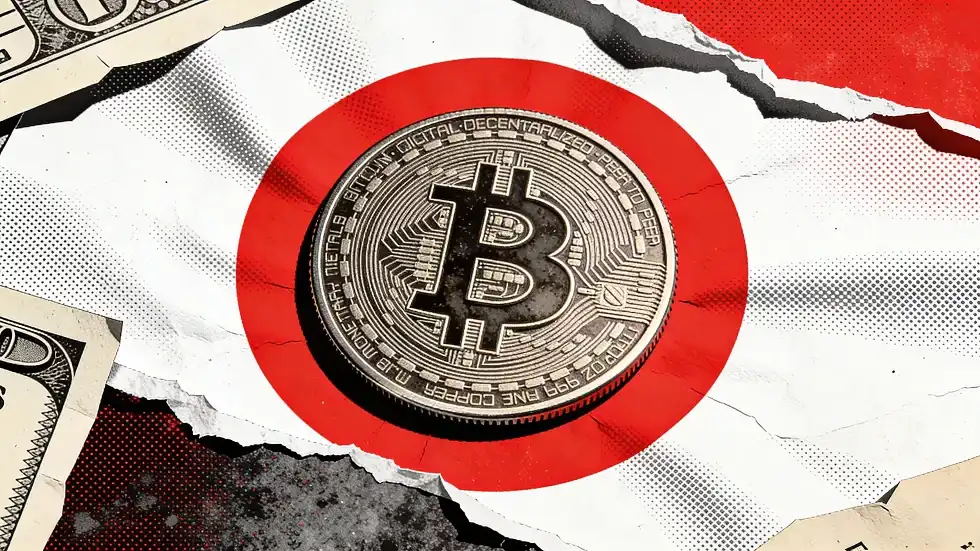
From Parallel Finance to Mainstream: The Dawn of On-Chain Securities For over a decade, the crypto industry has operated as a parallel financial system with its own currencies, markets, and assets—from Bitcoin and ICOs to DeFi, NFTs, and memecoins. Despite building a robust internal ecosystem, a wall has separated it from the traditional financial world. That barrier is now crumbling. The industry's first act was one of internal evolution: ICOs streamlined fundraising, DeFi recreated financial services on-chain, and layer-2 networks competed for scalability—all within the crypto bubble. While innovative, this cycle remained closed, with capital and users circulating internally, leading to volatile boom-bust cycles. Even Bitcoin ETFs, while attracting Wall Street capital, merely provided a channel to buy crypto assets without bridging the systems. The next, larger narrative is Real-World Assets (RWA) moving on-chain. This involves tokenizing stocks, bonds, funds, and future cash flows. Blockchain can compress the complex traditional processes of trading, settlement, clearing, and custody into a seamless, automated network operating in seconds. This shift is creating a new financial gateway: the native crypto securities broker. This entity will combine functions of an exchange, broker, bank, and custodian into a unified global financial operating system. Consequently, the next major battleground won't be the "public chain wars" focused on speed and cost, but the competition to build the financial infrastructure capable of hosting high-quality, liquid real-world assets. Access to global equities, index funds, or stakes in companies like SpaceX could erase the boundary between crypto and traditional finance, unlocking a market orders of magnitude larger than crypto's current valuation. In summary, after years of creating a separate financial world, crypto's next decade will be defined by its integration into the existing global financial system, marking the true beginning of its largest growth story.

marsbit06/01 07:22
From Parallel Finance to Mainstream Finance: The On-Chain Securities Era Ushers in a Historic Window

marsbit06/01 07:22

After Futu Securities Was Banned, Will Buying Stocks On-Chain Be a New Solution?

After Chinese regulators announced crackdowns on cross-border securities platforms like Futu Securities, some investors are exploring whether blockchain-based stock trading could offer an alternative. However, this article argues that "on-chain stocks" are not a legal loophole for mainland Chinese investors to bypass securities, foreign exchange, and cryptocurrency regulations. Instead, it represents an infrastructure experiment in tokenizing traditional assets like U.S. stocks and ETFs for a global audience. The appeal of on-chain stocks lies in offering a more seamless, 24/7 trading experience using crypto wallets and stablecoins, particularly for non-U.S. investors and crypto natives. Projects typically issue tokens that track the price of underlying assets, but these are often financial instruments or structured products, not direct equity ownership conferring voting rights. For investors, key risks include unclear legal rights, redemption mechanisms, regional access restrictions, and the misalignment between on-chain token trading hours and the actual stock market. Using stablecoins to purchase these tokens does not legitimize otherwise restricted capital outflows for Chinese residents. For entrepreneurs, the opportunity lies not in creating new retail channels to circumvent regulations, but in building B2B infrastructure—such as compliance, custody, identity verification, and reporting tools—for licensed institutions exploring asset tokenization. In conclusion, while on-chain stocks represent a significant trend in bridging traditional finance with blockchain, they are not a regulatory workaround. Their long-term viability depends on robust compliance, clear legal structures, and serving legitimate global demand, rather than facilitating unauthorized cross-border investment.

marsbit05/26 01:47

After Futu Securities Was Banned, Will Buying Stocks On-Chain Be a New Solution?

marsbit05/26 01:47

Eight Departments Launch Severe Crackdown on Cross-Border Securities Firms, How to Interpret This?

China's top financial regulators, including the CSRC and seven other ministries, have launched a sweeping crackdown on unlicensed cross-border securities operations. The core action involves a joint enforcement plan and the issuance of administrative penalties against major offshore internet brokers like Futu and Tiger Brokers for conducting unauthorized securities business in mainland China without a domestic license. The primary legal basis is China's requirement for securities businesses to operate with proper, locally issued licenses. The crackdown aims to eliminate a major regulatory gray area, plugging channels that allowed massive, unmonitored capital outflows which posed risks to financial stability, currency controls, and foreign exchange reserves. It also seeks to protect mainland investors who previously lacked legal recourse when dealing with offshore platforms and to secure sensitive financial data. The immediate impact is severe for the targeted brokers, including a complete ban on new mainland business, forced liquidation of existing mainland client positions over two years, and the confiscation of illegal profits estimated in the billions. Their U.S.-listed shares plummeted in response. Market analysts warn that the forced sell-off of an estimated 250-280 billion RMB in assets, concentrated in U.S. tech stocks, Chinese ADRs, and Hong Kong equities, could create sustained selling pressure on these markets over the next two years, potentially lowering valuations. For mainland investors, legal cross-border investment channels will become extremely constrained. The high asset threshold for the Stock Connect program and the severe shortage of QDII fund quotas—leading to chronic high premiums on popular U.S.-focused ETFs—mean retail access to overseas markets like the U.S. will be sharply limited. Conversely, some of the returning capital may flow into domestic A-share sectors like AI, semiconductors, and advanced manufacturing. However, this could further inflate valuations in these already elevated sectors. In conclusion, regulators frame this move not as closing off cross-border investment, but as a necessary step to enforce compliance, manage systemic risk, and steer investors toward regulated, protected channels like QDII and Stock Connect for the long-term health of the financial system.

链捕手05/22 13:55

Eight Departments Launch Severe Crackdown on Cross-Border Securities Firms, How to Interpret This?

链捕手05/22 13:55

活动图片