Interest Rate Hike Option Back on the Table, CPI Release Imminent: What Variables Are Markets Focusing On?

marsbitPublicado a 2026-07-14Actualizado a 2026-07-14

Resumen

The possibility of interest rate hikes is back on the table ahead of the June CPI release. Fed Governor Christopher Waller stated that if upcoming core inflation data remains hot, the FOMC should consider tightening monetary policy soon. His comments, directly linking potential action to the CPI report, caused market expectations for a July rate hike to rise from around 35% to over 40%. This CPI report is critical not for dictating a single meeting's outcome, but for testing the credibility of disinflation. A higher-than-expected core CPI reading would challenge the Fed's ability to remain patient, potentially shifting internal discussions toward more tightening. Conversely, cooler data would allow markets to view Waller's remarks as a warning rather than a policy shift signal. The repricing of rate expectations pressures risk assets like tech stocks and cryptocurrencies (BTC, ETH) by pushing up the discount rate for future cash flows and strengthening the US dollar. The key variable to watch post-CPI is whether the implied probability of a July hike stabilizes above 50%, which would signify a shift from pricing a tail risk to a baseline scenario. The most significant market stress would come from a combination of hot CPI data, a sustained rise in hike probabilities above 50%, and similar hawkish signals from other Fed officials, forcing a broad repricing of the "hiking cycle is over" trade.

Federal Reserve Governor Christopher Waller stated in a speech to the New York Association for Business Economics on July 13th that if this week's core inflation data comes in hot again, the FOMC would need to consider tightening monetary policy in the near term.

According to Reuters, Waller's remarks came one day before the release of the June CPI. The U.S. Bureau of Labor Statistics schedule shows the June CPI is set for release at 8:30 AM ET on July 14th. For risk assets, this data has become a test of the policy path: will the Fed continue to wait for inflation to decline, or will it put interest rate hikes back on the discussion table.

Markets have already adjusted expectations in advance. Rate futures data shows the implied probability of a 25 basis point hike at the July meeting rose from around 35% the previous day to over 40% at one point. The intraday volatility of the dollar, U.S. Treasury yields, and risk assets has also begun to reprice around this line.

This does not mean the Fed has decided to hike. The change is that a risk originally placed in a corner by the market has resurfaced: if core inflation remains stubborn, the "end of hiking cycle" trade can no longer be taken as the default answer.

Waller Provided Clearer Trigger Conditions

What made markets nervous this time wasn't just Waller's hawkish tone, but his direct linking of "near-term tightening" to this week's core inflation reading. It gave the market a trigger condition: if the data remains hot, the boundary of internal Fed discussions might shift towards a tighter stance.

Core inflation refers to price changes excluding food and energy, better reflecting pressures related to services, rents, and wage costs. General investors can understand it as the internal inflationary inertia of the U.S. economy, aside from temporary oil price fluctuations.

Waller's background context was that core PCE year-on-year rose from around 3.0% near the end of 2025 to 3.4% in May 2026. For a central bank with a long-term inflation target of 2%, this is enough to make policy discussions lean towards tightening.

However, he wasn't one-sidedly betting on a hike. He also mentioned that the Fed cannot "fight the last war." In the Reuters article's context, this phrase also carries another meaning: it cannot react too early this time just because it waited too long during the last inflation cycle.

What the market needs to judge is not how hawkish Waller is personally, but whether his conditional statement will be validated by the data. If core inflation turns hot again, this warning could transform from a personal caution into a trigger for repricing.

CPI Tests the Fed's Patience

The importance of the June CPI lies not in it solely determining a single meeting's outcome, but in what it tells the market about whether the decline in core inflation remains credible.

If the core CPI month-on-month reading is higher than expected, the market will tend to believe that the rise in core PCE in the first half of the year is not short-term noise, nor just due to energy or other temporary disturbances. In that case, the Fed's difficulty in maintaining a pause would increase.

If the core CPI cools significantly, Waller's remarks are more likely to be interpreted as a data-dependent warning rather than a signal of a policy shift. The probability of a hike may fall back, and risk assets could gain short-term breathing room.

This is also the divergence between market consensus and Waller. The mainstream pricing still leans towards the view that one speech and one data point are insufficient to confirm a restart of the hiking cycle, and the policy path remains one of maintaining restrictive rates, waiting for inflation to fall, before discussing room for cuts.

Investors should not simplify this CPI into "higher data leads to a drop, lower data leads to a rise." It tests whether the Fed can continue to maintain its patience. Data supporting patience leads risk assets to trade on the repair of rate cut expectations; data consuming patience leads the market to trade on the rising tail risk of a hike.

Pressure on Risk Assets Comes from Rising Rate Anchor

BTC, ETH, and the Nasdaq are sensitive to such signals because they all depend on future liquidity and discount rates. Higher interest rates lower the present value of future cash flows or future narratives, and money is also more inclined to stay in dollar and short-term rate assets.

The implied probabilities from rate futures can be seen as traders' real-time bets on the Fed's next move. After Waller's speech, the probability of a July hike briefly rose to around 45%, indicating that the market doesn't fully believe in an immediate hike but no longer dares to ignore the possibility.

Such repricing typically transmits through three channels. Rising U.S. Treasury yields increase the risk-free rate for pricing global assets; a stronger dollar suppresses dollar-denominated risk assets; and internal deleveraging may occur within risk assets, especially crypto assets.

What BTC needs to worry about is not Waller himself, but whether the interest rate anchor is shifting higher again. If the market shifts from "rate cuts are just a matter of timing" to "there could be one more hike," Bitcoin faces a retraction of its macro pricing assumptions.

But this cannot be simply written as BTC will inevitably fall. The crypto market is also influenced by ETF fund flows, on-chain leverage, stablecoin liquidity, and risk appetite. Waller's speech provides a source of macro pressure, not a single price conclusion.

A Hike Probability Crossing the 50% Mark Would Change the Impact Level

The most crucial variable to watch in this market move is whether the probability of a hike continues to be revised upwards after the CPI release, especially if it can stably cross the 50% threshold. If the probability only rises from the 30%s to the 40%s, the market is pricing in "risk being seen again."

If the hike probability further crosses above 50%, the trading logic would shift from tail risk to a contest over the baseline scenario. Then the market discussion wouldn't be "whether there will be an unexpected hike," but "whether we need to rewrite a hike back into the main path."

Another variable is whether other FOMC officials follow Waller's lead. If only Waller emphasizes the possibility of a hike, the market is more likely to view it as a personal warning; if more officials use similar language, it suggests the focus of policy discussions may already be shifting towards a tighter direction.

For investors, the most dangerous combination is not a single hot CPI report itself, but the simultaneous occurrence of hot CPI data, upward revisions to hike probability, and more officials joining in. That would force a repricing of the crowded "hiking cycle is over" trade.

Before the data truly provides an answer, what Waller changed remains the probability, not the conclusion. If the CPI cools, this warning may only be a short-term disturbance; if the CPI continues to run hot, the market must acknowledge that the Fed's rate hike option has not been completely taken off the table.

Preguntas relacionadas

QAccording to the article, what specific economic data release is the market highly focused on, and what could it trigger according to Fed Governor Waller?

AThe market is highly focused on the upcoming release of the June CPI (Consumer Price Index) data. According to Fed Governor Waller, if the core inflation data (which excludes food and energy) comes in hot again, it could trigger a discussion within the FOMC to consider tightening monetary policy in the near term, meaning putting interest rate hikes back on the table.

QWhy are risk assets like BTC, ETH, and the Nasdaq sensitive to signals from Fed officials about potential rate hikes?

ARisk assets like BTC, ETH, and the Nasdaq are sensitive to such signals because their valuations are heavily dependent on future liquidity and discount rates. Higher interest rates increase the discount rate, lowering the present value of future cash flows or future narratives. They also make holding dollars and short-term interest-bearing assets more attractive, potentially drawing capital away from risk assets.

QWhat key threshold does the article mention for the Fed's rate hike probability that would significantly change the market's trading logic?

AThe article mentions that if the implied probability of a rate hike (as seen in interest rate futures) crosses above 50%, it would significantly change the market's trading logic. Instead of pricing in a 'tail risk' (an unlikely but possible event), the market would shift to a debate over whether a hike should become the 'baseline scenario' for the Fed's next move.

QWhat does the article suggest is the 'most dangerous combination' of events for investors who are betting that the rate-hike cycle is over?

AThe article suggests the most dangerous combination for such investors would be the simultaneous occurrence of three events: 1) A hot CPI report, 2) A subsequent upward revision in the market's implied probability of a Fed rate hike, and 3) More FOMC officials echoing Waller's hawkish stance. This combination would force a broad repricing of the crowded 'rate-hike cycle is over' trade.

QWhat is the core message regarding how the market should interpret the upcoming CPI data, beyond a simple 'high CPI = market down, low CPI = market up' reaction?

AThe core message is that the upcoming CPI data is a test of the Fed's patience. It will inform the market whether the recent disinflation trend in core prices is still credible. If the data supports the Fed's ability to remain patient, risk assets could trade on a recovery of rate-cut expectations. If the data erodes that patience, the market will begin pricing in a higher 'tail risk' of another rate hike.

Lecturas Relacionadas

How to Regulate Single-Stock Leveraged ETFs? On Thursday, the Entire Market Is Watching This Korean Government Meeting

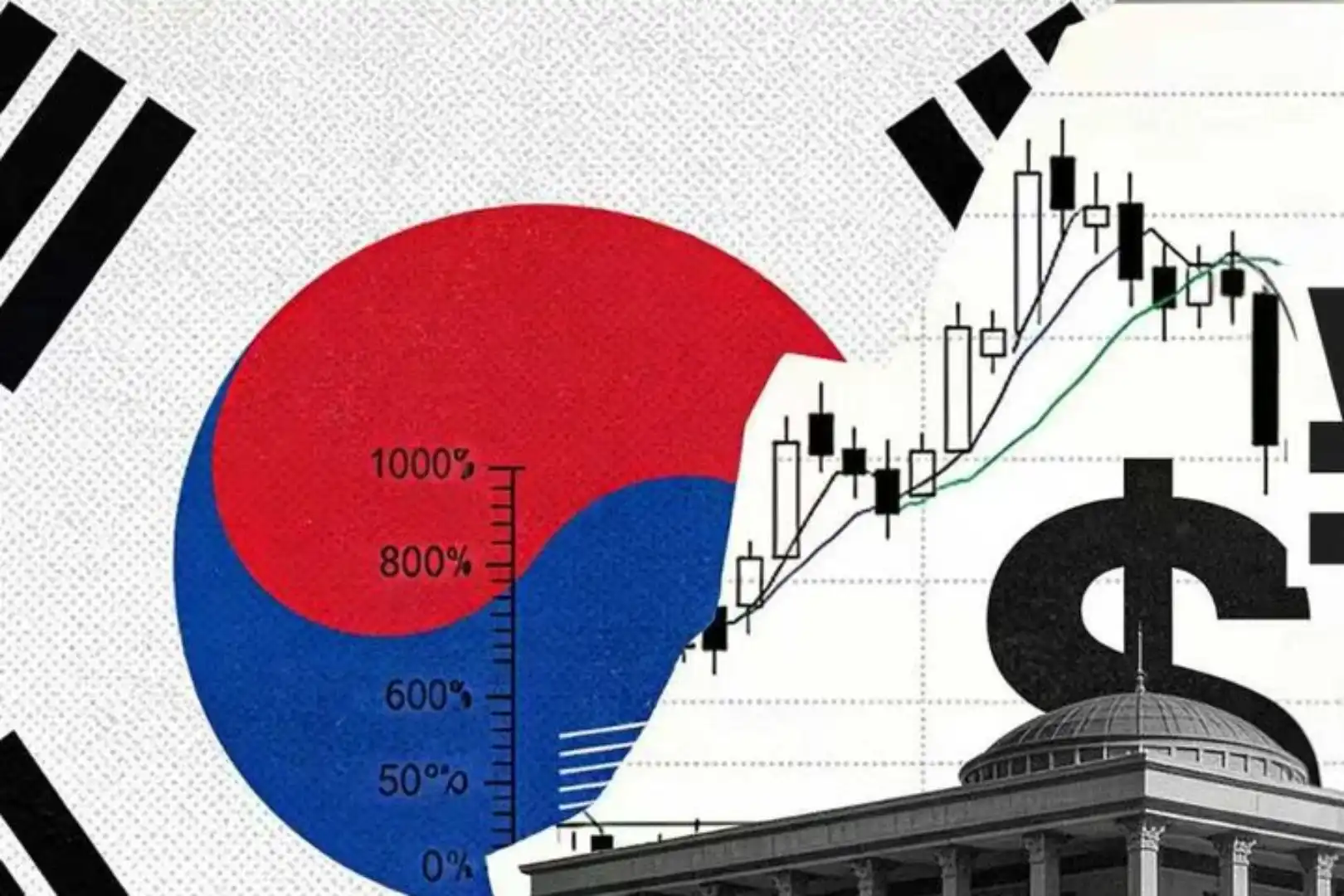
The highest-level economic coordination body in South Korea, the "F4" comprising the Ministry of Economy and Finance, the Financial Services Commission, the Bank of Korea, and the Financial Supervisory Service, will hold an emergency meeting on Thursday to discuss regulatory measures for single-stock leveraged ETFs. These products, launched just six weeks ago, have been widely blamed for exacerbating market volatility. The KOSPI's 8% plunge on Monday triggered the year's seventh trading halt, intensifying scrutiny. Regulators have expressed rare public regret over approving the products. FSS Governor Lee Bok-hyun stated he "regretted not doing everything possible to prevent" their introduction and acknowledged structural problems, citing massive retail investments and legal complications from a rushed rollout. Possible countermeasures under discussion include raising margin requirements, imposing daily price limits, and adjusting leverage caps. However, officials admit these may be temporary fixes. Data confirms the amplified volatility. Since the ETFs' launch, days with KOSPI moves exceeding 3% have nearly doubled. Trading halts have reached record levels, surpassing the 2008 financial crisis peak. The products allow 2x leveraged bets on giants like Samsung Electronics and SK Hynix. Their daily rebalancing to match returns is seen as mechanically fueling market swings. The outcome of Thursday's F4 meeting is highly anticipated, with expectations leaning towards stricter controls on leverage, investor access, or other structural constraints to curb the products' market impact.

marsbitHace 1 min(s)

How to Regulate Single-Stock Leveraged ETFs? On Thursday, the Entire Market Is Watching This Korean Government Meeting

marsbitHace 1 min(s)

AI Overhauled Terence Tao's 30-Year-Old Website, Uncovering Two Bugs Hidden for Over Two Decades in the Process

AI Revamps Terence Tao's 30-Year-Old Website, Unearthing Two 20-Year-Old Bugs in His Code Terence Tao, a renowned mathematician, has enlisted an AI agent to overhaul his personal academic website, which was built in 1997 with a static HTML, manually-maintained "Web 1.0" architecture. In just one day, the agent migrated 560 papers and preprints, 374 travel logs, 68 courses, 19 books, and 29 old math applets to a new system on GitHub Pages. The new site is structured around YAML files as the "single source of truth," with static HTML pages automatically generated from this data—a fundamental shift from maintaining individual documents to managing a centralized database. During the migration, the AI uncovered inconsistencies, outdated entries, and broken links that had accumulated over nearly three decades of manual updates. It also successfully ported a set of small educational Java 1.0 applets to JavaScript. Notably, while reviewing this translation, Tao found only one new bug introduced by the AI. Conversely, the AI identified two subtle bugs in his original Java code that he was previously unaware of. Tao emphasizes the project highlights AI's potential for automating tedious "digital housekeeping"—routine tasks like data migration and website maintenance that are costly and error-prone when done manually. He also revived a 27-year-old stalled project: a special relativity visualizer or "Minkowskian Inkscape." With AI assistance, a working alpha version was built in two hours. While AI still requires human oversight for critical work, Tao argues that for such structured, non-core tasks, "AI + human review" can result in lower error rates and drastically lower correction costs compared to purely manual maintenance over decades.

marsbitHace 2 min(s)

AI Overhauled Terence Tao's 30-Year-Old Website, Uncovering Two Bugs Hidden for Over Two Decades in the Process

marsbitHace 2 min(s)

ZORA Plunges 95%, Coinbase Finally Admits Creator Coins Failed

On July 13th, Coinbase CEO Brian Armstrong publicly declared the failure of Base network's year-long "content coins" strategy. Initially launched in 2025 via the Zora platform and integrated into Coinbase's wallet as a core feature, the model aimed to turn every social media post into a tradeable token. Each post or creator account would generate 1 billion ERC-20 tokens, with creators receiving an initial allocation. The concept briefly propelled Base to become the largest L2 by new token issuance. However, the model proved unsustainable. These tokens, explicitly not granting ownership or revenue shares, primarily functioned as speculative assets dependent on new buyers. While activity surged in mid-2025—with millions of tokens minted and billions in trading volume—it failed to build lasting user engagement or value. High-profile token launches, including one by Base's official account, experienced extreme volatility, often crashing shortly after spikes. The supporting infrastructure token, ZORA, plummeted approximately 95% from its August 2025 peak, losing nearly $520 million in market capitalization. Armstrong acknowledged the misstep, stating "it didn't work" and that Base had shifted focus earlier in the year toward its core competencies of trading and stablecoin payments. This pivot follows internal criticism that the content coin experiment consumed excessive resources, harmed other Base projects, and ultimately resulted in significant financial losses for participating users.

Foresight NewsHace 18 min(s)

ZORA Plunges 95%, Coinbase Finally Admits Creator Coins Failed

Foresight NewsHace 18 min(s)

Trading

Spot
活动图片