Author: Climber, CryptoPulse Labs
Recently, Japan's largest securities token platform, Progmat, officially completed its migration to the Avalanche Layer1, with securities token assets valued at over 452 billion yen (approximately $2.7 billion) all successfully moved on-chain.
This is more than just a routine technical upgrade; it represents a significant iteration in Japan's financial infrastructure. As traditional financial institutions begin migrating their core business to more open, high-performance blockchain networks, it signifies that securities tokenization is entering a new stage of development.
I. Behind the Major Migration: Japan's Securities Token Market Enters a New Phase
Progmat is not an ordinary blockchain company; it is one of the most important pieces of infrastructure in Japan's securities token market. Initially incubated by Mitsubishi UFJ Trust Bank (MUFG), it began operating independently in 2023.
It has already gained support from major Japanese financial institutions such as Mizuho Bank, the Tokyo Stock Exchange, and SBI. It holds a 53% share of Japan's securities token market, accounts for 64.6% of the total issuance volume of securities tokens, and covers various asset classes including real estate and corporate bonds. Essentially, most of Japan's securities token assets operate on this system.

The most noteworthy aspect of this migration is that Progmat abandoned its previous permissioned blockchain built on Corda 5 and instead adopted an Avalanche custom Layer1 as its new underlying architecture.
In recent years, Corda has been a widely adopted consortium chain solution by the global banking industry, offering advantages such as strong privacy protection, comprehensive permission management, and ease of meeting regulatory requirements. Consequently, many financial institutions chose it as their preferred option for blockchain pilots.
However, as the scale of securities tokens continues to expand, the limitations of such consortium chains have become increasingly apparent. A closed ecosystem means assets struggle to interconnect with other blockchains, developing new applications requires significant repeated investment, and it's difficult to share in the continuous innovation stemming from the entire Web3 ecosystem.
Therefore, Progmat's migration is not just a replacement of the underlying system but represents an adjustment in its technical roadmap.
After migrating all smart contracts to an EVM environment, the platform maintains its original business logic unchanged. However, asset rights transfer speed has increased by 3 to 5 times, transaction finality time is shortened to within 2 seconds, and the future capability to support more blockchain network integrations has been established, enabling a truly multi-chain architecture.
More importantly, the entire migration process did not disrupt the normal operations of any financial institutions, further proving that blockchain infrastructure is now capable of supporting large-scale financial business.
II. Why is Avalanche Becoming the New Foundation for Financial Institutions?
For a long time, financial institutions have grappled with a core question regarding blockchain: should they opt for a completely closed consortium chain or an open public chain ecosystem? The greatest advantage of consortium chains lies in their controllable nodes, data privacy, and high security, making them favored by banks and securities firms.
But with the development of the blockchain industry, it has become increasingly clear that the real driving force behind innovation comes more from open ecosystems. Whether it's smart contracts, stablecoins, DeFi, or RWA applications, almost all significant innovations first emerged within the EVM ecosystem, not on closed consortium chains.

The custom Layer1 solutions launched by Avalanche in recent years provide financial institutions with a new option that balances openness and compliance.
On one hand, each institution can have its own independent network, customizing validator nodes, gas mechanisms, and permission management to meet regulatory requirements for KYC, data isolation, and business compliance.
On the other hand, it remains compatible with the EVM ecosystem, enabling interconnection with a vast number of mature development tools, smart contracts, and applications globally.
This means financial institutions can retain the security and controllability demanded by traditional finance while enjoying the innovation capabilities and network effects brought by an open ecosystem.
Globally, this is increasingly becoming the direction for large financial institutions. Compared to building isolated, closed consortium chains in the past, more institutions now aim to construct a new generation of interconnected financial networks.
Because what will hold real value in the future is not an isolated blockchain but open infrastructure capable of connecting banks, securities firms, exchanges, asset management institutions, and more financial products.
Progmat's migration, in essence, reflects this global trend of financial digitization.
III. RWA Competition Intensifies: Japan Pioneers the Move Towards a Financial Infrastructure Era
If this migration merely completed the upgrade of a securities token platform, then the new plans announced by Progmat reveal Japan's broader strategic ambitions.
In May this year, Progmat, in collaboration with banks, securities companies, and asset management institutions, established a working group focused on Japanese government bond tokenization and on-chain repo (repurchase agreements). The goal is to explore new models such as putting Japanese government bonds on-chain, enabling 7×24 hour trading, and achieving T+0 real-time settlement.
This signifies that Japan has begun experimenting with moving its most core financial assets onto blockchain networks.
Government bonds are considered the most fundamental assets in modern financial markets. They are not just investment products but are widely used in bank liquidity management, collateral financing, and repo transactions. If government bonds can be tokenized in the future, the operational efficiency of the entire capital market could undergo significant changes.
Traditional bond markets are constrained by trading hours, whereas on-chain assets can enable round-the-clock trading; traditional securities settlement typically requires a specific settlement cycle, while on-chain smart contracts can achieve real-time delivery, significantly reducing capital occupation and transaction risk.
Simultaneously, processes like asset issuance, registration, custody, and clearing can be automated through smart contracts, reducing a substantial amount of manual operations and improving the efficiency of the entire financial system.
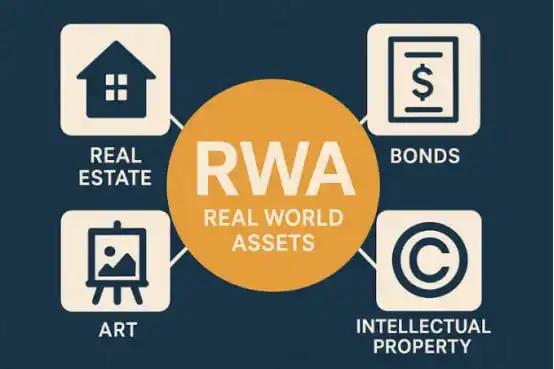
In fact, securities tokenization is just the first step in RWA development. In the future, real estate, fund shares, corporate bonds, private equity, and even more real-world assets could potentially be issued, traded, and managed using unified on-chain infrastructure.
In recent years, major international financial institutions including BlackRock, JPMorgan Chase, and Goldman Sachs have been actively advancing related initiatives. Globally, more countries are beginning to improve their regulatory frameworks for tokenized assets.
By taking the lead in upgrading its securities token platform and exploring government bond tokenization, Japan likely aims to secure a leading position in the future global RWA competition.
Conclusion
Progmat's migration of $2.7 billion in assets may seem like just a technical upgrade, but in reality, it reflects a fundamental shift in traditional finance's perception of blockchain's role. Blockchain is evolving from serving crypto assets to becoming the new financial infrastructure for carrying real-world assets like securities and bonds.
As more financial institutions enter the RWA arena, the future focus of industry competition will no longer be about who has the higher-performing public chain, but about who can truly become the underlying infrastructure for the next generation of global financial markets. The step Japan has taken may just be the beginning of the comprehensive on-chain transformation of global finance.