# Memecoins Related Articles

HTX News Center provides the latest articles and in-depth analysis on "Memecoins", covering market trends, project updates, tech developments, and regulatory policies in the crypto industry.

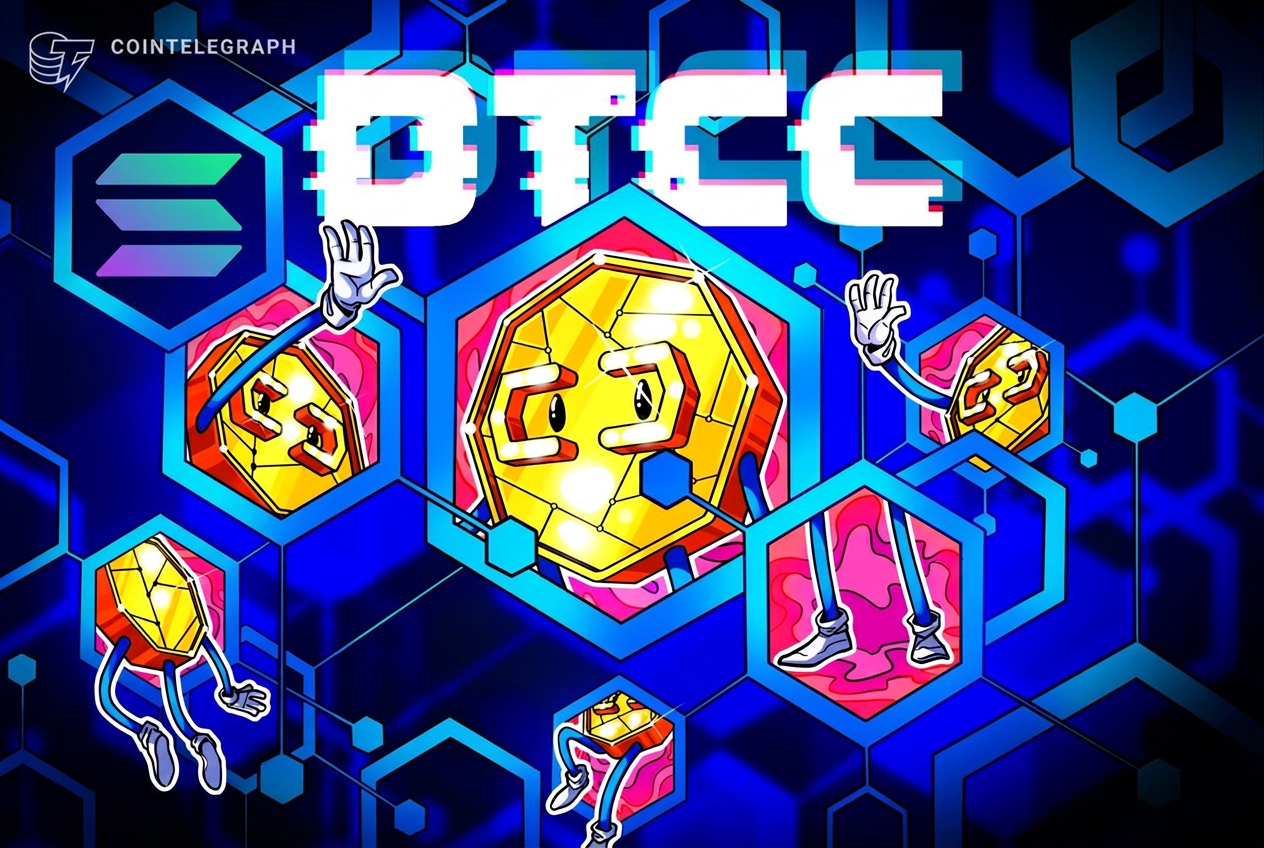
DTCC Plans Solana Expansion as Wallet Rules Limit Access

DTCC plans to connect its tokenization service to Solana in the second half of 2027, allowing certain securities held by its DTC subsidiary to be converted into digital tokens on the network. Analysts say the move could attract more traditional financial institutions to Solana, which is known for fast transactions and low fees and had about $4.94 billion in total value locked as of Nov. 12. However, the impact may be limited by US regulatory rules. Alex Lin of Reforge noted that Solana's experience handling memecoin trading served as a public stress test, giving the network credibility to handle retail-scale volume reliably. Still, under a December 2025 SEC no-action letter, DTC participants must register wallets to hold tokenized securities, and tokens can only be transferred between registered wallets. Lin said the near-term impact is overstated because the tokens remain in a walled garden, inaccessible to permissionless retail and DeFi liquidity until regulators allow these assets to function as true onchain collateral. DTCC launched its tokenization service on the Canton Network and its private Besu network on Oct. 28, with 20 DTC participants signed on, though it has not said whether any plan to use Solana. Kha Nguyen of Birdeye said Solana has already seen growing demand for tokenized stocks, with trading volume reaching around $4.9 billion in H1 2026 and over 1 million accounts holding tokenized stocks by late September. However, broader Solana activity has slowed, with transactions down nearly 40%, DEX volume down 34.4%, and fees down 39%, while tokenized RWA value rose almost 7% to $4.76 billion. Nguyen said DTCC's integration would need banks, brokers, and issuers to actively issue, trade, and settle on Solana, with enough liquidity for large trades. He stressed that assets must be active rather than idle—traded around the clock, used as collateral, and earning yield. Lin agreed that long-term impact depends on where assets are used for secondary trading and collateral activity, not where they are issued.

cointelegraph11/13 04:15
DTCC Plans Solana Expansion as Wallet Rules Limit Access

cointelegraph11/13 04:15

Peter Brandt Compared Monero's Chart to Silver Before a Rally: Are Privacy Coins Back in Hype?

Renowned trader Peter Brandt noted that Monero's ($XMR) chart structure resembles silver before its rally to $125, though he excluded the January 2026 OOL movement from this comparison. According to Santiment, Monero's futures open interest (OI) reached $198 million by October 20, below the September 5 peak of $208.8 million. In coin terms, OI stood at about 329,000 XMR versus roughly 402,000 XMR on September 2. Between October 15 and 20, OI grew approximately 22% while the price rose above $600. Santiment also noted a shift in the funding rate: its seven-day average peaked at about 2.7 times its own average between September 28 and October 4, then declined to roughly 0.9 times the average from October 14 to 20. This suggests more restrained conditions than in early October, with OI recovering amid a below-average funding rate. Santiment highlighted growth in privacy coins like Zcash and M, as well as memecoins like PEPE, linking privacy coin interest to Monero's privacy updates and upcoming Zcash network improvements, and memecoin recovery to a speculative rebound after recent sell-offs. However, Santiment stressed this is selective capital rotation rather than a broad market recovery, as most major altcoins remain relatively passive. While risk appetite persists, capital is concentrating in specific segments, and until growth spreads more widely, individual asset strength should not be taken as confirmation of a full altcoin recovery. Previously, Peter Brandt predicted Bitcoin would reach $250,000 by 2029.

cryptonews.ru10/22 00:43

Peter Brandt Compared Monero's Chart to Silver Before a Rally: Are Privacy Coins Back in Hype?

cryptonews.ru10/22 00:43

Meme Coins Peak in 17.2 Days on Average: Ephemeral Fervor and the Great Capital Migration

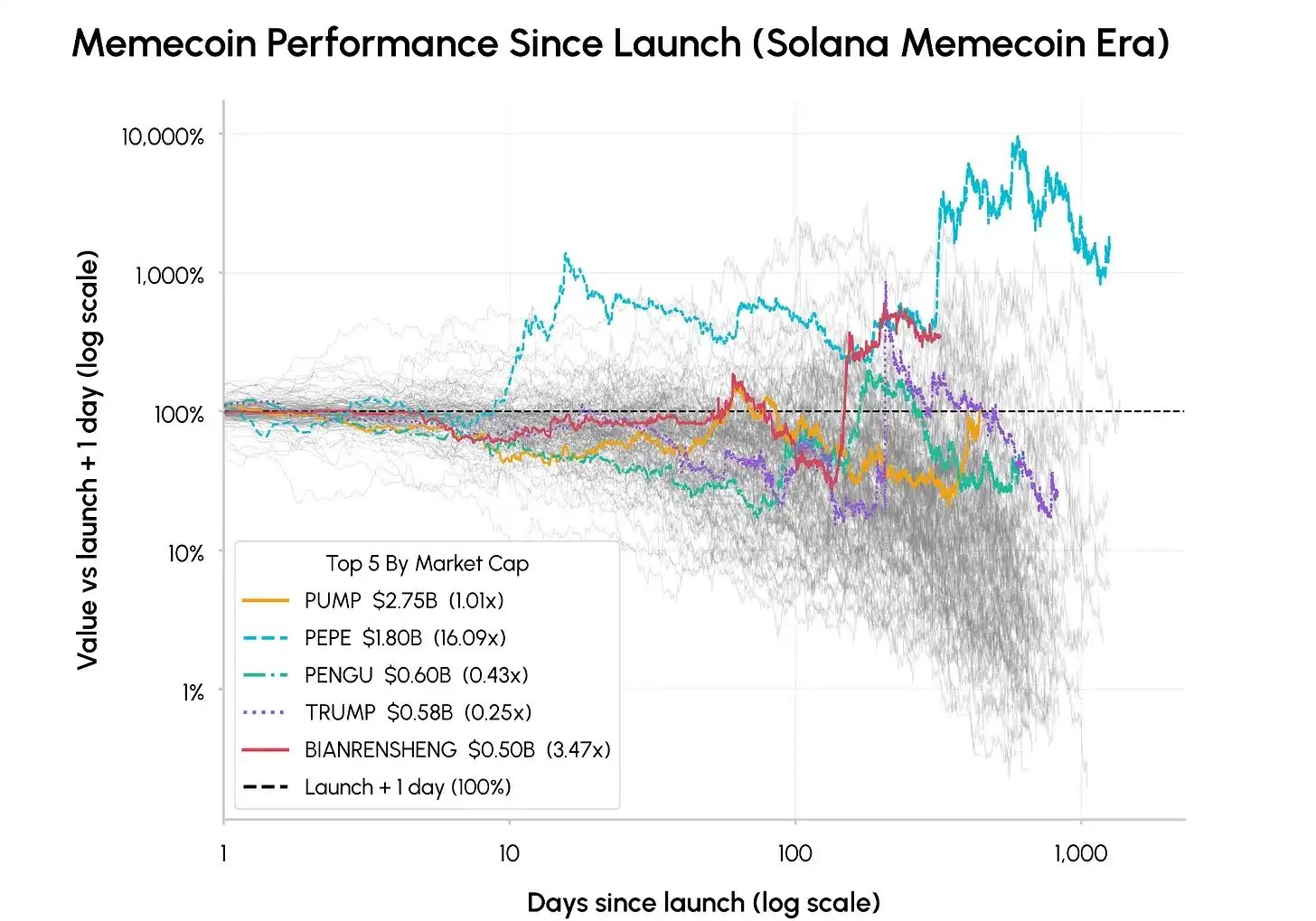
Meme Coins' Average Peak: 17.2 Days - A Fleeting Frenzy and a Capital Exodus A Bloomberg analysis reveals the stark reality behind meme coin mania: extreme short-term speculation. On average, a new meme coin reaches its all-time high (ATH) a mere 17.2 days after its first trade. Alarmingly, 25% of projects peak within just 38.4 hours. The subsequent decline is brutal, with the median time to drop 95% from the peak and enter dormancy being 370 days. Only about 3% ever break their previous ATH again. This drastic compression of the speculative lifecycle is driven by zero-barrier token creation on platforms like Pump.fun and automated trading tools like sniper bots, which enable instant deployment and rapid pump-and-dump schemes. The market is saturated, diluting liquidity and forcing a predatory, player-versus-player environment where early holders quickly exit with minimal gains. As the odds of success in traditional meme coins diminish, speculative capital is migrating. Decentralized prediction markets like Polymarket, offering transparent, event-driven betting, are attracting significant liquidity. Concurrently, AI agent tokens are drawing funds with their combination of high volatility and long-term narrative tied to artificial intelligence. This capital shift marks a move away from simplistic "greater fool" assets toward platforms with clearer mechanisms or dynamic technological themes.

marsbit10/16 10:31

Meme Coins Peak in 17.2 Days on Average: Ephemeral Fervor and the Great Capital Migration

marsbit10/16 10:31

Meme Coins Lead Gains in Crypto: Privacy Tokens Double, Meme Coins Fierce Competition, Who Is Secretly Burning Money on Buybacks?

Summary: This market analysis highlights key trends in the current altcoin rally, noting a significant shift from speculative meme coin investments towards protocols with tangible utility and revenue generation. The report identifies a resurgence in privacy-focused cryptocurrencies like Zcash (ZEC), which has seen a 218% year-to-date return, driven by increased adoption of its shielded transactions and pool features. Meanwhile, the meme coin sector shows divergence. While platforms like Pump.fun gain traction, the median return for meme coins is negative (-27%), with some projects employing complex, novel distribution mechanisms tied to tokenized stocks. A central theme is the growing investor focus on protocols that generate real revenue. Examples include Aave, projected to earn ~$47M annually from Ethereum lending, and Uniswap, which now captures a portion of trading fees. This revenue is increasingly used for token buybacks and burns to return value to holders. Since its buyback announcement, Uniswap has destroyed over $12M worth of UNI tokens, a practice supported by recent SEC guidance. Protocols like Hyperliquid also engage in multi-faceted buyback programs funded by various revenue streams. The conclusion is that the current altcoin cycle is more concentrated and quality-driven. Capital is flowing towards protocols with strong thematic exposure, sustainable business models, and clear value-accrual mechanisms like share repurchases, moving beyond pure narrative speculation.

marsbit09/30 16:02

Meme Coins Lead Gains in Crypto: Privacy Tokens Double, Meme Coins Fierce Competition, Who Is Secretly Burning Money on Buybacks?

marsbit09/30 16:02

活动图片