Meme Season Arrives on Robinhood Chain, but 'Scythes' Are Also Entering the Field

Foresight NewsPublicado a 2026-07-14Actualizado a 2026-07-14

Resumen

A meme coin season has arrived on Robinhood Chain, but it is accompanied by a surge in scammers and fraudulent schemes. Two major incidents highlight the risks: first, compromised X accounts of SpaceX's SpaceXAI and Starlink were used to promote the meme token SCATMAN, leading to a rapid pump-and-dump where developers drained the liquidity pool, causing the token's value to crash. Second, a hacker gained control of a Robinhood founder's wallet and used it to buy a meme token, sparking a frenzy of copycat trading that artificially inflated the price before it collapsed. These events exploit the current hype on Robinhood Chain, which has seen significant activity and trading volume driven primarily by meme coins, despite its stated long-term focus on real-world assets (RWAs). The incidents reveal vulnerabilities in both platform security—such as inadequate protection for high-profile social media accounts and controversial chain-level address freezes—and investor behavior, where the lure of quick profits often overrides due diligence. The article cautions investors to verify token contracts, check liquidity pool locks, and maintain skepticism toward "official" endorsements to avoid becoming exit liquidity for such schemes.


Author: Nicky, Foresight News


The hype around Robinhood Chain has lasted over a week. However, behind the surge of new Meme coins, 'dark hunters' on the chain are also targeting this wave of popularity.


In the early hours of July 13th, the X platform accounts of SpaceXAI and Starlink, two products from the recently listed SpaceX, were compromised. They once forwarded a post promoting the Robinhood Chain network Meme token SCATMAN. The original account promoting this Meme, Sam Catman, even carried the affiliated gold checkmark verification for SpaceXAI.
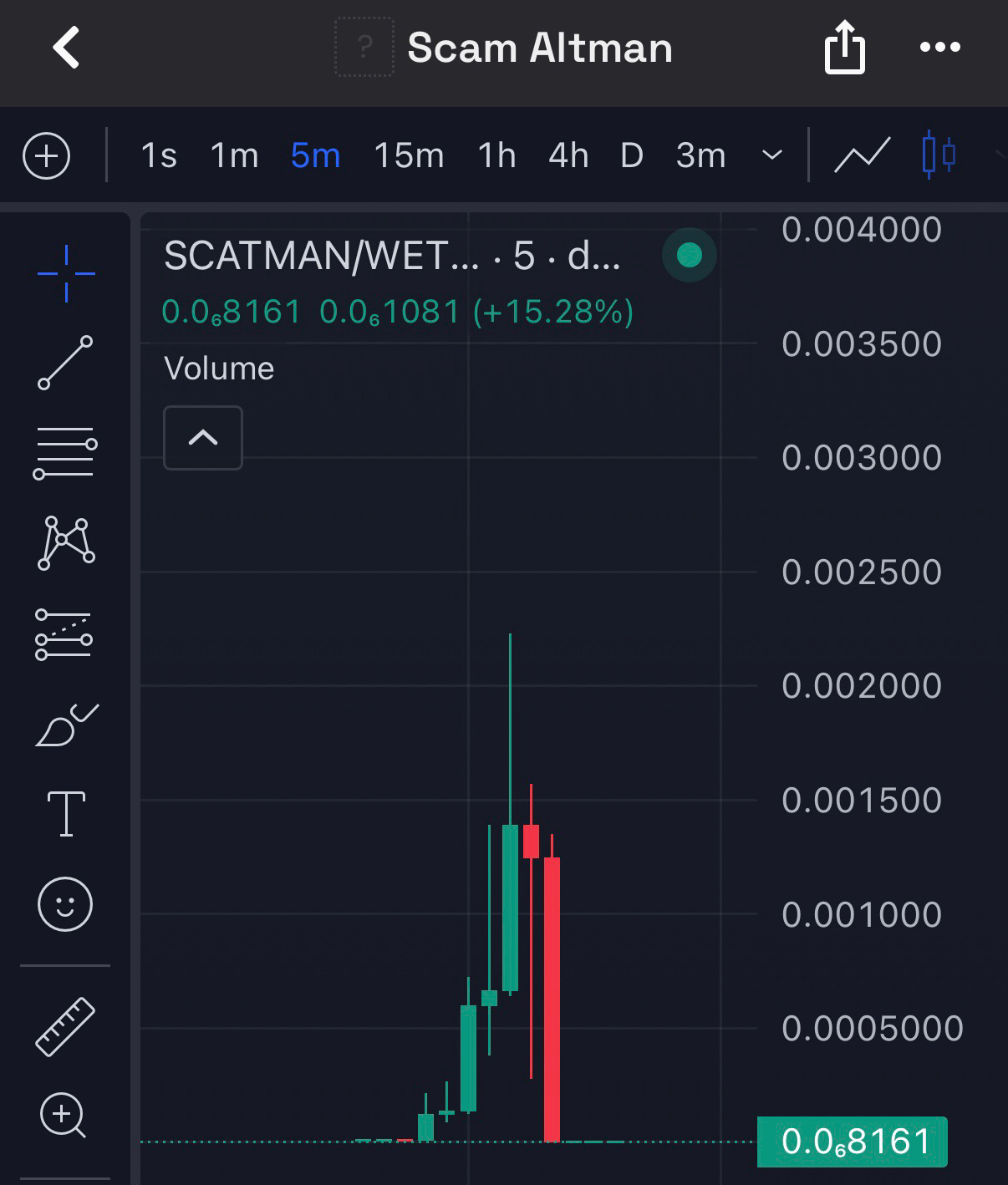


After the repost, the token's market capitalization was quickly pushed to around $2 million. At this point, the deployer immediately withdrew the liquidity pool, causing the Meme's price to plummet almost to zero. Currently, the related post has been deleted, and the original account Sam Catman that posted the Meme token has been suspended on X. As of now, SpaceXAI, Starlink, and X have not publicly responded to this incident.


It is worth noting that SCATMAN was not created through any token launch platform on Robinhood Chain. The contract was deployed by the developers themselves with initial liquidity injected, belonging to a typical self-deployed token scam. The attacker used the compromised accounts to attract traders and immediately executed a liquidity withdrawal.


According to on-chain monitoring platform Lookonchain's tracking, the hacker minted 10 trillion SCATMAN tokens after compromising the account and completed the sell-off through two associated wallets. One wallet exchanged the tokens for 59 ETH, worth approximately $108,000; the other wallet sold part of the tokens for 14.7 ETH, worth about $27,000.


It is reported that the origin of the SCATMAN token name is not without reason. The recent public feud between X platform owner Elon Musk and OpenAI CEO Sam Altman provided a high-traffic backdrop for the account compromise.
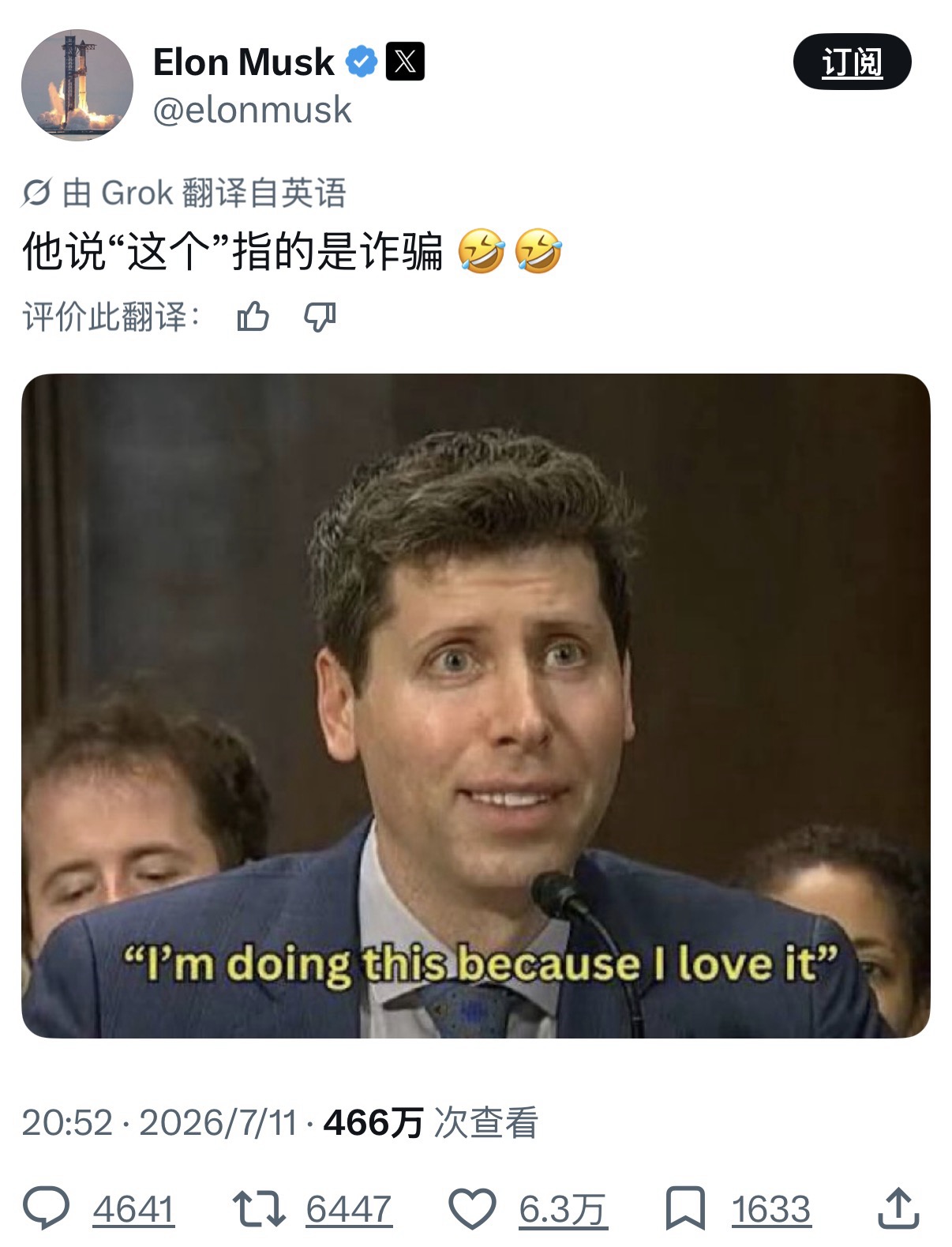


After Apple filed a trade secret theft lawsuit against OpenAI on July 10th, Musk continuously criticized Altman as a 'liar' on X, while Altman retaliated by mocking Musk for promoting space data centers. The massive number of controversial posts generated extremely high attention, making Musk-related accounts like SpaceXAI and Starlink high-value targets for attacks.


The attacker leveraged this wave of public opinion heat to compromise the accounts and used them to promote the SCATMAN token.


The incident of a SpaceX-owned platform being compromised to promote a Meme is not an isolated case; even Robinhood's founder fell victim.


Robinhood co-founder and CEO Vlad Tenev accidentally leaked 8 wallet seed phrase words during a livestream, and the remaining 4 words were reportedly guessed at random by a hacker. On July 12th, after gaining control of the address, the hacker used it to buy the Robinhood chain Meme token $1, triggering a wave of followers from many investors.


Since the transaction records showed the 'founder's address' buying, it prompted thousands of investors to follow suit. The token's market capitalization rapidly surged from around $500,000 to $14 million in a short time, with trading volume reaching approximately $20 million within two hours, before the price sharply corrected to around the $1 million market cap level.


Subsequently, Robinhood Chain's RPC node froze the involved address. Any transactions sent from this address could not be packaged by the node, preventing funds from being transferred or traded further. This handling method also sparked controversy. Some community members argued that Robinhood Chain, positioned as an Arbitrum-based Ethereum Layer 2 network, freezing addresses at the node level deviated from the decentralized nature of blockchain networks.


These two consecutive incidents, both in method, point to exploiting high-profile accounts or individuals to create short-term hype for on-chain tokens, then cashing out after retail investors enter the market.


Starting from July 8th, the Robinhood Chain Meme token CASHCAT began its rally, with intraday gains once exceeding 1000%, reaching a peak market cap of $220 million on July 11th. According to DefiLlama data, the chain's current Total Value Locked (TVL) is approximately $151 million, with a 24-hour decentralized exchange trading volume of $875 million and fee revenue of about $100,000.


On July 8th, Robinhood co-founder and CEO Vlad Tenev posted on X that Robinhood is building the Robinhood Chain focused on real-world assets (RWA), but the network is also 'great for meme coins.' This statement further fueled speculative enthusiasm.


Although Robinhood Chain positions itself with RWA as its long-term focus, currently its main traffic still comes from Meme token trading. Against this backdrop, the chain quickly became an ideal 'soil' for fraudsters to operate.


From the compromise of the official SpaceXAI account to the exploitation of the leaked founder's wallet, two major incidents within two days reflect how the popularity of Robinhood Chain is attracting a large number of fraudsters. They leverage celebrity influence, the halo of official accounts, and investors' tendency to chase trends to quickly generate short-term hype, then cash out rapidly after retail investors enter. This also highlights the shortcomings in Robinhood Chain's early-stage rapid development, particularly in terms of ecosystem infrastructure and user protection mechanisms.


Simultaneously, the X platform, as a crucial medium for information dissemination, showed明显不足 (obvious inadequacies - note: original Chinese phrase retained but translation contextually implied) in security protection capabilities for high-value accounts. This allowed the two official accounts of SpaceXAI and Starlink, with millions of followers, to become channels for distributing scam information, directly converting the platform's immense traffic and user trust into amplifiers for fraud. The platform also did not issue any official response after this incident.


For ordinary investors, before chasing trends, verifying token contract addresses, confirming liquidity pool lock status, and maintaining vigilance towards narratives of 'official endorsement' remain the most basic lines of defense to avoid becoming exit liquidity.

Criptos en tendencia

Preguntas relacionadas

QWhat were the two major incidents related to scams on Robinhood Chain mentioned in the article?

AThe first incident involved the hacking of SpaceX's SpaceXAI and Starlink X accounts to promote the meme token SCATMAN, leading to a rug pull. The second incident involved a hacker gaining control of Robinhood co-founder Vlad Tenev's wallet after a seed phrase leak, using it to buy the meme token $1 and pump its price.

QHow did the attack on the SpaceX-related X accounts contribute to the SCATMAN token scam?

AThe attacker compromised the high-follower SpaceXAI and Starlink X accounts to post promotional content for the SCATMAN token. This misuse of trusted, high-visibility accounts created a surge of interest and buying activity, allowing the deployer to quickly drain the liquidity pool and abandon the token.

QWhat controversial action did Robinhood Chain take in response to the hacked founder's wallet incident?

ARobinhood Chain's RPC nodes froze the compromised wallet address, preventing any transactions from being processed. This action sparked debate within the community, as it was seen as a centralized intervention that contradicts the decentralized principles of a blockchain network.

QWhat does the article suggest is the main source of current activity and traffic on Robinhood Chain?

AAlthough positioned for Real World Assets (RWA), the article states that the primary traffic and activity on Robinhood Chain currently comes from meme token trading, which has attracted both legitimate interest and fraudulent actors.

QWhat basic precautions does the article recommend for investors to avoid scams in meme token frenzies?

AThe article advises investors to verify a token's contract address, confirm the lock status of its liquidity pool, and maintain a healthy skepticism towards narratives of 'official endorsement' before chasing a trending meme token.

Lecturas Relacionadas

Tensions in the Strait of Hormuz Escalate, Bitcoin Plunges to $61,700 Amid Safe-Haven Selling

Bitcoin fell sharply to around $61,700 on Monday, July 13th, as geopolitical tensions in the Strait of Hormuz triggered a broad shift toward risk-off sentiment across global markets. The decline of roughly 4% mirrored weaker performances in major U.S. stock indices. Market analysts attributed the sell-off to a confluence of factors stemming from the heightened U.S.-Iran tensions. These tensions reignited inflation concerns, reduced expectations for near-term Federal Reserve rate cuts, and prompted investors to reduce exposure to risk assets like Bitcoin. Additional pressure came from slowed institutional ETF inflows, Bitcoin's failure to breach a key resistance level, and a wave of liquidations for leveraged long positions. Despite the drop, analysts largely viewed the move as a typical macro-driven correction within a healthy long-term cycle. They emphasized that Bitcoin's underlying growth trajectory remains intact. The sell-off was seen more as a liquidation event targeting over-leveraged longs rather than a structural loss of confidence. Attention now turns to the upcoming U.S. Consumer Price Index (CPI) report. A higher-than-expected inflation reading could further delay Fed rate cuts, making safer assets like bonds more attractive and continuing to pressure volatile assets like Bitcoin. The consensus is that the current volatility reflects short-term macro and geopolitical shocks, not a fundamental breakdown in Bitcoin's long-term proposition.

Foresight NewsHace 32 min(s)

Tensions in the Strait of Hormuz Escalate, Bitcoin Plunges to $61,700 Amid Safe-Haven Selling

Foresight NewsHace 32 min(s)

BitMart Research Institute Weekly Highlights: Rising Rate Hike Expectations, Crypto Market Stabilizes Amid Fluctuations

BitMart Research Weekly Market Review: Rate Hike Expectations Rise, Crypto Market Stabilizes Macro & Traditional Markets: U.S. stocks weakened with tech and semiconductors leading losses (Nasdaq down 1.55%, Philly Semi Index down 4.78%), while Apple bucked the trend. Brent oil surged 9.3% after Middle East ceasefire破裂, but gold fell 1% as美元 strengthened. The Fed's June FOMC纪要 was hawkish, shifting market expectations toward potential rate hikes, pushing the 10-year Treasury yield to 4.56%. Crypto Market Overview: BTC saw a slight 0.2% weekly gain, trading between ~$61.3K and $64.7K and settling near $64K. ETH outperformed, rising 1.2%. Market fear eased slightly but remained in "Fear" territory. Altcoin performance was mixed, with gains concentrated in large-cap assets. Key Developments: U.S. spot Bitcoin ETFs ended an 8-week outflow streak with a $197.4M net inflow, aiding price stabilization. On-chain, stablecoin growth was minimal. Robinhood Chain's TVL surpassed $132M within two weeks, largely driven by institutional stablecoin deposits. MicroStrategy executed its first major BTC sale (3,588 BTC for $216M) to fund dividends, while maintaining a large BTC reserve. Institutional infrastructure advanced with Swift's blockchain pilot for tokenized deposits and growing Asia-Pacific stablecoin initiatives. *This is market analysis, not investment advice. Cryptocurrency investment is high-risk; assess your risk tolerance and implement strict risk management.*

marsbitHace 1 hora(s)

BitMart Research Institute Weekly Highlights: Rising Rate Hike Expectations, Crypto Market Stabilizes Amid Fluctuations

marsbitHace 1 hora(s)

Trading

Spot

Artículos destacados

Qué es MEME 2.0

Memecoin 2.0: El Ascenso de $MEME 2.0 en el Mundo de las Criptomonedas Introducción En el panorama siempre cambiante de las criptomonedas, ha surgido un nuevo contendiente. Memecoin 2.0, simbolizada como $MEME 2.0, lleva el concepto de las monedas meme a un emocionante nuevo nivel. Como un subproducto del Memecoin original, este proyecto ha capturado la atención de la comunidad cripto al cambiar el enfoque de los incentivos financieros típicos a una experiencia comprometida y entretenida. Operando en la blockchain de Ethereum, Memecoin 2.0 redefine audazmente la participación de la comunidad en la esfera cripto. ¿Qué es Memecoin 2.0, $MEME 2.0? En su núcleo, Memecoin 2.0 es un proyecto de criptomoneda que prioriza el espíritu comunitario y la diversión asociada con la cultura meme. A diferencia de las criptomonedas convencionales, que se concentran en casos de uso prácticos y beneficios tangibles, Memecoin 2.0 se distingue al abrazar el lado más liviano de la moneda digital. El proyecto existe sin promesas de utilidad, un mapa estructurado o retornos financieros, enfocándose en cambio en fomentar una comunidad vibrante centrada en memes y en el disfrute compartido. Al hacerlo, aprovecha la creciente tendencia de la cultura meme en el espacio en línea, convirtiéndose en un jugador único en el mundo de los activos digitales. Creador de Memecoin 2.0, $MEME 2.0 A pesar de la extensa investigación sobre los orígenes de Memecoin 2.0, la identidad explícita de su creador sigue siendo desconocida. Esta anonimidad no es inusual en la comunidad cripto, donde muchos proyectos son liderados por individuos o grupos que prefieren permanecer en las sombras. La falta de información disponible públicamente sobre el creador podría verse como un movimiento estratégico, poniendo el foco en la participación comunitaria en lugar de la notoriedad individual dentro del espacio. Inversores de Memecoin 2.0, $MEME 2.0 La información sobre los inversores o el respaldo financiero de Memecoin 2.0 es escasa. Esta ausencia de detalles puede sugerir que el proyecto es autofinanciado o que su enfoque en la comunidad en lugar de las estructuras de inversión tradicionales ha atraído a un tipo diferente de apoyo. Dado que el mundo de las monedas meme generalmente involucra una participación más de base en lugar de inversión institucional, este enfoque está alineado con la ética de los proyectos impulsados por la comunidad. ¿Cómo Funciona Memecoin 2.0, $MEME 2.0? Memecoin 2.0 opera completamente en la blockchain de Ethereum, capitalizando sus robustas características de seguridad y escalabilidad. Al aprovechar las fortalezas de Ethereum, Memecoin 2.0 puede ofrecer un entorno seguro para las interacciones de los usuarios, asegurando que las transacciones sean tanto eficientes como rentables. Uno de los atributos únicos de Memecoin 2.0 radica en su estructura impulsada por la comunidad. El valor y la popularidad del token $MEME 2.0 derivan de la participación activa de sus usuarios, en vez de de una utilidad inherente. Este diseño refuerza el enfoque del proyecto en el aspecto de entretenimiento de las criptomonedas, lo que implica que la risa y la participación comunitaria son las verdaderas monedas que impulsan su éxito. Además, el proyecto encaja dentro del ecosistema más amplio de las monedas meme, donde el valor de cada moneda meme oscila basado en la cultura, tendencias y la participación de la comunidad, en lugar de principios económicos tradicionales. Cronología de Memecoin 2.0, $MEME 2.0 Para entender mejor la evolución y los hitos de Memecoin 2.0, aquí hay una cronología que destaca eventos significativos en su historia: 2024: Se reconoce la creación de Memecoin 2.0 como una ramificación del Memecoin original, estableciéndose dentro del contexto próspero de las monedas meme mientras opera en la blockchain de Ethereum. 13 de julio de 2024: Memecoin 2.0 se posiciona oficialmente como una moneda meme centrada en la comunidad en la red de Ethereum, enfatizando su enfoque centrado en el entretenimiento que invita a los usuarios a participar y crecer. Puntos Clave Sobre Memecoin 2.0, $MEME 2.0 Varios rasgos críticos definen a Memecoin 2.0: Enfoque Centrado en la Comunidad: La misión principal de Memecoin 2.0 es crear una experiencia comunitaria divertida y atractiva, capitalizando en el disfrute colectivo derivado de la cultura memética. Construido sobre Ethereum: Operar en la blockchain de Ethereum proporciona al proyecto una infraestructura esencial que garantiza seguridad y escalabilidad. Falta de Utilidad o Hoja de Ruta: En un notable desvío de las criptomonedas tradicionales, Memecoin 2.0 no promete características utilitarias ni retornos financieros, reafirmando su compromiso con la participación comunitaria y el compromiso social. Enfoque en la Cultura Memética: Al abrazar los aspectos humorísticos y culturales del fenómeno meme, Memecoin 2.0 proporciona una plataforma para que los usuarios interactúen con cripto tanto fuera de línea como en línea. Contexto Adicional: La Importancia de las Monedas Meme Las monedas meme han surgido como una clase distinta de criptomonedas, a menudo impulsadas por el humor y un enfoque desenfadado para el comercio. Estas monedas generalmente carecen de una utilidad significativa o hojas de ruta de desarrollo, atrayendo a los usuarios con la promesa de diversión, interacción comunitaria y relevancia cultural. En el panorama del ecosistema cripto más amplio, las monedas meme reviven la importancia de la participación comunitaria, revirtiendo enfoques únicamente motivados por el lucro. Proyectos como Memecoin 2.0 inauguran una era donde el entretenimiento puede armonizar con las aspiraciones financieras, convirtiendo la blockchain en un parque de diversiones para la creatividad y la interacción social. Conclusión Memecoin 2.0, o $MEME 2.0, encarna una nueva ola de criptomonedas que prioriza la participación comunitaria sobre estructuras financieras rígidas. Con un enfoque en el humor y la interacción social, capitaliza sobre la fascinación que rodea la cultura meme. Al operar en la blockchain de Ethereum, Memecoin 2.0 aprovecha las capacidades de la tecnología mientras se mantiene firme en su compromiso con el valor de entretenimiento de la moneda digital. A medida que el espacio alrededor de las criptomonedas continúa evolucionando, Memecoin 2.0 sirve como un testimonio de la noción de que el futuro de los activos digitales podría depender, en gran medida, de experiencias compartidas, risas y sólidas conexiones comunitarias. En el mundo impredecible de las criptomonedas, quizás la alegría pueda ser tan valiosa como la ganancia financiera tradicional.

123 Vistas totalesPublicado en 2024.04.04Actualizado en 2024.12.03

Qué es MEME 2.0

Cómo comprar MEME

¡Bienvenido a HTX.com! Hemos hecho que comprar Memeland (MEME) sea simple y conveniente. Sigue nuestra guía paso a paso para iniciar tu viaje de criptos.Paso 1: crea tu cuenta HTXUtiliza tu correo electrónico o número de teléfono para registrarte y obtener una cuenta gratuita en HTX. Experimenta un proceso de registro sin complicaciones y desbloquea todas las funciones.Obtener mi cuentaPaso 2: ve a Comprar cripto y elige tu método de pagoTarjeta de crédito/débito: usa tu Visa o Mastercard para comprar Memeland (MEME) al instante.Saldo: utiliza fondos del saldo de tu cuenta HTX para tradear sin problemas.Terceros: hemos agregado métodos de pago populares como Google Pay y Apple Pay para mejorar la comodidad.P2P: tradear directamente con otros usuarios en HTX.Over-the-Counter (OTC): ofrecemos servicios personalizados y tipos de cambio competitivos para los traders.Paso 3: guarda tu Memeland (MEME)Después de comprar tu Memeland (MEME), guárdalo en tu cuenta HTX. Alternativamente, puedes enviarlo a otro lugar mediante transferencia blockchain o utilizarlo para tradear otras criptomonedas.Paso 4: tradear Memeland (MEME)Tradear fácilmente con Memeland (MEME) en HTX's mercado spot. Simplemente accede a tu cuenta, selecciona tu par de trading, ejecuta tus trades y monitorea en tiempo real. Ofrecemos una experiencia fácil de usar tanto para principiantes como para traders experimentados.

249 Vistas totalesPublicado en 2024.12.12Actualizado en 2026.06.02

Cómo comprar MEME

Discusiones

Bienvenido a la comunidad de HTX. Aquí puedes mantenerte informado sobre los últimos desarrollos de la plataforma y acceder a análisis profesionales del mercado. A continuación se presentan las opiniones de los usuarios sobre el precio de MEME (MEME).

活动图片