XRP Analyst Breaks Down Your Earnings If Deposited For Yield

bitcoinistPublicado a 2026-05-02Actualizado a 2026-05-02

Crypto analyst Iso Ledger has warned XRP investors and holders to take a closer look before depositing funds into earnXRP, a new yield product tied to Upshift and the Flare Network. While others discuss the possibility of earning steady passive income through this new system, Iso Ledger shows more caution. In a recent breakdown, the analyst explained what happens when a holder deposits their XRP, focusing on fees, expected returns, and the risks involved.

EarnXRP Shows Slow Returns And High Fees

In an X post on April 29, Iso Ledger explained that while earnXRP may look attractive and profitable at first, the yield system is riddled with issues that delay actual returns and introduce high costs for XRP holders. The analyst showed that before any yield is earned, users already lose a portion of their XRP through multiple fees built into the process.

To show this, Iso Ledger broke down each step that occurs and the exact costs involved when holders deposit 1,000 XRP. He noted that the process starts by converting XRP into FXRP, a wrapped version on the Flare Network. He stated that just minting XRP to FXRP takes a small fee cut of about 0.5-1%.

After that, users have to deposit their 1,000 XRP into the Upshift vault, which takes another fee, leaving them with only 993 FXRP. On top of that, there is a network and service fee of about 1.149875 XRP. Moreover, when it’s time to exit, users also face a redemption fee of about 0.5%. Altogether, the total round-trip cost comes to about 13 XRP on a 1,000 XRP deposit.

Iso Ledger compared this cost to the expected yield for earnXRP. While the vault claims to target returns as high as 10%, he noted that a more realistic estimate placed profits at only 4% a year. This would mean users gain only about 40 XRP annually on a 1,000 XRP deposit. Based on this, the analyst said it would take holders roughly four months just to recover the initial fees before they see any real profit.

Iso Ledger also noted that increasing the deposit size does not change this result. Whether a user deposits 1,000 or 10,000 XRP, the percentage fees stay the same. He also added that the break-even timeline remains unchanged, and larger deposits still face the same delay before users turn any profit.

Risks Tied To EarnXRP Smart Contracts And System Structure

Beyond fees and potential returns, Iso Ledger highlighted several risks tied to EarnXRP. He explained that the system runs on smart contracts, which can sometimes have bugs or be targeted by hackers and bad actors. He also pointed to the risk of impermanent loss, where changes in market conditions can cause the value of a user’s funds to drop while they are locked in the system.

Iso Ledger also noted that EarnXRP carries trade risks when users borrow and deploy assets across markets. If the price gap between those markets gets smaller, returns can drop. To top it off, withdrawals on EarnXRP can take up to 72 hours, meaning users may not be able to access their funds quickly enough.

He raised another concern, noting that because FXRP is a wrapped asset, it depends on a bridge system. Iso Ledger claimed this dependency adds another layer of risk for XRP holders, as bridges have been known weak points in crypto systems. This concern echoes past incidents like the Kelp DAO exploit, where over $290 million worth of restaked Ether was stolen after a hacker exploited weaknesses in the rsETH bridge used by the protocol.

Furthermore, Iso Ledger added that after publicly auditing Upshift one week ago and sending five questions, only one response was made so far, “on it,” showing a lack of clear communication and transparency. He said he would rather wait for XLS-66d, an upcoming upgrade that could offer similar yield options directly on the XRP Ledger without needing wrapped assets or bridges.


XRP trading at $1.38 on the 1D chart | Source: XRPUSDT on Tradingview.com

Lecturas Relacionadas

Elon Musk construye Terafab: la fábrica de chips más grande del mundo para IA, robots y centros de datos espaciales

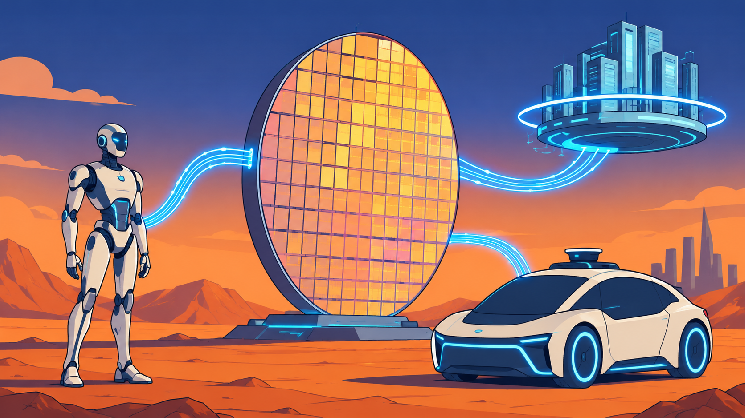
SpaceX y Tesla han lanzado el proyecto Terafab para construir una megafábrica de semiconductores en Texas, con una superficie superior a 9,3 millones de m². La primera fase requiere una inversión de 16.800 millones de dólares y busca una producción anual de más de 1 teravatio de capacidad computacional para los robots Optimus, los vehículos autónomos Cybercab y los centros de datos orbitales. El gobernador de Texas, Greg Abbott, confirmó el inicio del proyecto, que creará 3.000 empleos y recibirá una subvención de 30 millones de dólares. Elon Musk destacó la importancia estratégica de integrar el diseño, la producción de memoria y el empaquetado avanzado en un solo lugar. En la red social X, Musk describió el complejo futuro como "el edificio más grande y valioso de la Tierra". Intel es el socio tecnológico clave, utilizando su proceso de 14A para diversificar las cadenas de suministro y reducir la dependencia de TSMC. El proyecto se enmarca en iniciativas como Pax Silica, una coalición internacional liderada por Estados Unidos para asegurar cadenas de suministro críticas. Desde un análisis de datos, el éxito de Terafab dependerá de factores como la disponibilidad de mano de obra, el suministro energético y la estabilidad de la alianza con Intel. Proyectos anteriores de esta escala, como la fábrica de Intel en Ohio, han sufrido retrasos significativos. Si Terafab logra evitar estos obstáculos, podría alterar el equilibrio en la producción global de chips y fortalecer la posición de EE.UU. en la competencia tecnológica.

cryptonews.ruHace 1 hora(s)

Elon Musk construye Terafab: la fábrica de chips más grande del mundo para IA, robots y centros de datos espaciales

cryptonews.ruHace 1 hora(s)

Elon Musk construye Terafab: la mayor fábrica de chips para IA, robots y centros de datos espaciales

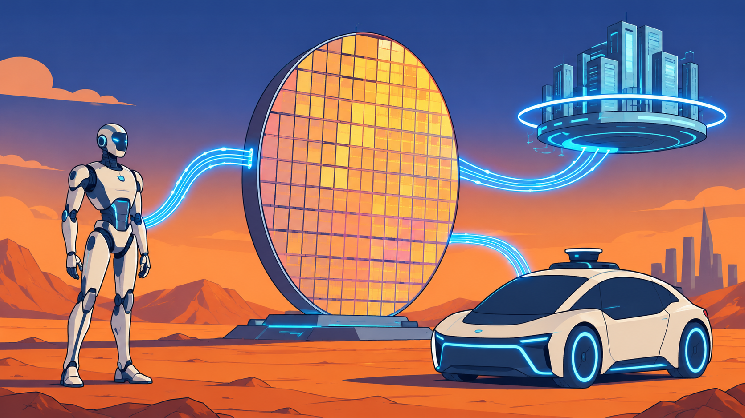
SpaceX y Tesla han lanzado el proyecto Terafab para construir una gigantesca planta de semiconductores en el condado de Grimes, Texas. El complejo, que abarcará más de 9,3 millones de m², integrará la producción de chips lógicos, memoria, empaquetado y pruebas. La primera fase requiere una inversión de 16.800 millones de dólares y tiene como objetivo a largo plazo producir hardware de computación con una potencia superior a 1 teravatio anual para los robots Optimus, los vehículos autónomos Cybercab y los centros de datos orbitales. El gobernador de Texas, Greg Abbott, confirmó el inicio del proyecto el 6 de agosto de 2026, destacando la creación de 3.000 empleos y una subvención de 30 millones de dólares. Elon Musk describió el futuro complejo como "el edificio más grande y valioso de la Tierra". Se espera que el 25% de la producción se destine a la robótica de Tesla y el 75% a los sistemas de IA espacial de SpaceX. Intel será el socio tecnológico clave, utilizando su proceso de 14A. Esta colaboración busca diversificar la cadena de suministro, actualmente dominada por TSMC, y reforzar la iniciativa estadounidense Pax Silica para crear una cadena de suministro de semiconductores segura. Desde un análisis de datos, la escala de Terafab invita a comparaciones con otros megaproyectos de semiconductores en EE.UU., que a menudo sufren retrasos. El éxito de Terafab dependerá de factores como la disponibilidad de mano de obra, energía y la estabilidad de la alianza con Intel, y su resultado real no se conocerá hasta finales de esta década.

cryptonews.ruHace 1 hora(s)

Elon Musk construye Terafab: la mayor fábrica de chips para IA, robots y centros de datos espaciales

cryptonews.ruHace 1 hora(s)

Trading

Spot
活动图片