The Second Half of Macro Influencer Fu Peng's Career

marsbitPublicado a 2026-04-21Actualizado a 2026-04-21

Resumen

Fu Peng, a prominent Chinese macroeconomist and former chief economist of Northeast Securities, has joined Hong Kong-based digital asset management firm Bitfire Group (formerly New Huo Group) as its chief economist. This move, announced in April 2026, triggered an 11% surge in Bitfire's stock price. Fu, known for his accessible macroeconomic commentary and large social media following, will focus on integrating digital assets into global asset allocation frameworks, particularly combining FICC (fixed income, currencies, and commodities) with cryptocurrencies for institutional clients. His career includes roles at Lehman Brothers and Solomon International, with significant influence gained through public communication. However, in late 2024, Fu faced temporary social media bans after a controversial private speech at HSBC on China's economic challenges, though he denied regulatory sanctions. He later left Northeast Securities citing health reasons. Bitfire, a licensed virtual asset manager serving high-net-worth clients, seeks to build trust and attract traditional capital through Fu’s expertise and credibility. The partnership represents a strategic shift for both: Fu enters the crypto sector after a traditional finance peak, while Bitfire aims to leverage his macro framework for institutional adoption. Outcomes remain uncertain regarding capital inflows and compatibility within corporate structure.

Author: BitalkNews

On the morning of April 20, 2026, the stock price of New Huo Group suddenly surged, rising more than 11% during the session.

What triggered this market movement was a piece of news that simultaneously ignited the financial and crypto circles: Fu Peng, former chief economist of Northeast Securities, officially joined New Huo Group as chief economist.

The news was first disclosed by Tencent News' "First Line," and New Huo Group subsequently confirmed it. Fu Peng himself also stated to the media: "It is mainly about combining FICC and C businesses."

Among them, FICC refers to fixed income, foreign exchange, and commodities, while C refers to cryptocurrency. His main work after joining will be to incorporate digital assets into the global asset allocation framework, providing macro research and asset allocation support for New Huo's institutional clients.

This is the first time he has reappeared in the public eye with an official position nearly a year after leaving Northeast Securities. For him, this is not just a change of employer but more like a restart of his career narrative.

The first half reached the pinnacle in the traditional financial system but was interrupted by controversy and illness; the second half is chosen in Hong Kong, in the crypto track, at the intersection where traditional finance and digital assets are slowly merging.

The Path of an Atypical Chief

In 2004, Fu Peng joined Lehman Brothers and later served as the head of global macro hedge strategy design at Solomon International Investment Group, responsible for currency, commodity, and major asset linkage analysis, for nearly four years.

He returned to China at the end of 2008 and worked at institutions such as Shandong High-Tech Investment, CIFCO, Galaxy Futures, Galaxy Securities, and Essence Securities.

In February 2020, he joined Northeast Securities as chief economist. His approach in this role differed from most of his peers: he made self-media his main battlefield.

He often used analogies and metaphors to explain economic logic, with a performance-style flair. His Weibo account, "Fu Peng's Financial World," has accumulated over 4 million followers, while his Douyin (TikTok) followers have reached 1.485 million. On Xiaohongshu and Bilibili, he has 355,000 and 773,000 followers, respectively.

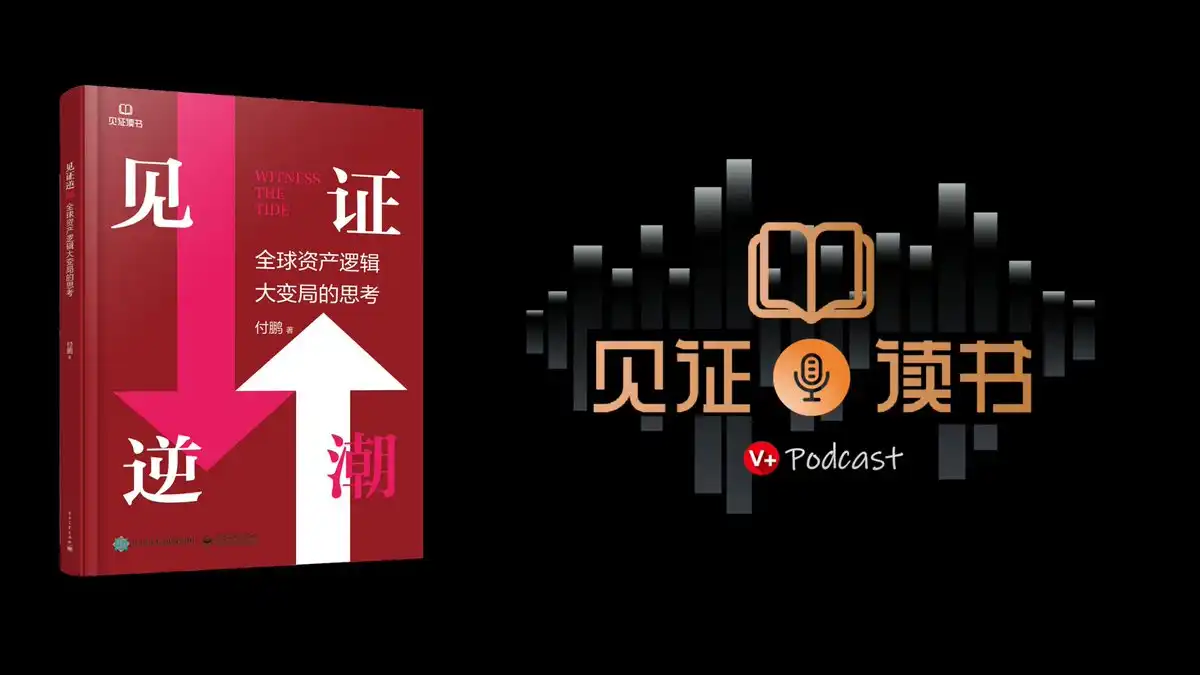
In 2024, he published "Witnessing the Countercurrent," using a three-layer framework of "politics/distribution—macro—assets" to explain changes in global asset logic after 2016.

This approach gave him high recognition in the financial circle, making him an analyst who could present complex macro logic in an accessible way to ordinary investors.

The Consequences of a Speech

In late November 2024, Fu Peng was invited to give a year-end speech at an internal HSBC Private Wealth Planning event in Shanghai. The content covered China's declining demand, shrinking middle-class income,加剧的消费分化, and his judgment that current stimulus policies could not replicate the effects of the 2008 measures.

The recording and transcript were widely circulated online, removed from multiple platforms, and his WeChat and short video accounts were banned for nearly half a year.

Rumors emerged that he was canceled due to regulatory talks. Fu Peng publicly responded, directly criticizing HSBC, sharing chat records, and stating, "A lawyer's letter is already on the way, waiting for your apology."
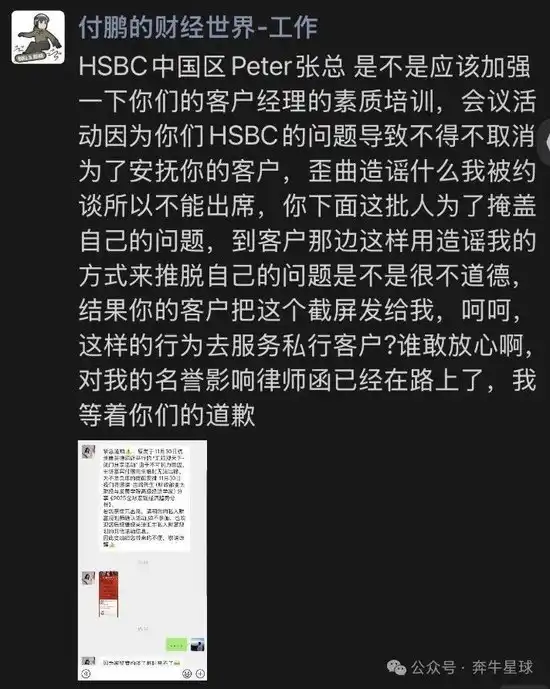
Northeast Securities also stated: There has been no recent regulatory discussion. HSBC responded that it was "looking into the relevant situation." After that, the matter quietly faded from public discussion, with no further progress, eventually ending without resolution.

During the account ban, Fu Peng's channels for public expression were significantly reduced.

On April 30, 2025, he officially resigned from Northeast Securities, explaining externally: He had just undergone two major surgeries and needed to rest for more than half a year.

Predictive Ability and Boundaries

Among Fu Peng's fan base, there are many stories about his accurate predictions, covering the 2008 financial crisis, the recovery of the Japanese stock market, and the turning point of China's real estate cycle. Since 2016, he has consistently emphasized de-globalization and changes in interest rate trends, with parts of his framework later validated to some extent.

However, his prediction record is not consistent. There have been clear deviations in short-term exchange rates and specific policy windows, with some judgments criticized as overly pessimistic or significantly inaccurate due to policy interventions. He himself admits that macro research focuses on structural variables, not next quarter's data. This is both a methodological explanation and a preventive clarification for short-term inaccuracies.

What he provides is a framework for interpreting the world, not a stable, reproducible prediction tool. Describing him as a prophet who gets everything right is a misinterpretation.
One of his major advantages is his ability to express complex macro logic in an accessible manner while maintaining relatively independent judgment. This allows his influence to reach a broader audience, and this characteristic is precisely what New Huo Group needs most.

Why Choose New Huo

Theoretically, Fu Peng had more than one option for his comeback. Traditional securities firms would welcome him back, and the role of chief economist is familiar to him, but he chose New Huo.

The space in traditional finance is narrowing. For someone who spoke so bluntly in the HSBC speech, returning to the system would mean something he likely understands better than anyone.

His skill set was never limited to traditional assets; FICC has always been his forte. After institutionalization, the connection between crypto assets and macro logic has become increasingly evident. Interest rate cycles, dollar liquidity, geopolitical risk premiums—these variables affect both traditional and digital assets.

There is also a more practical factor: a comeback requires a suitable stage.

New Huo Group is licensed in Hong Kong, listed on the Hong Kong stock exchange, and operates within a compliance framework. At the same time, its size and stage provide enough flexibility to allow a strong-minded individual to build a new research system. This is a completely different situation from playing a fixed role in a mature large institution.

Why New Huo Needs Him

New Huo Group currently positions itself as a digital asset management institution for high-net-worth clients. It holds Hong Kong SFC Type 1, 4, and 9 licenses and a TCSP trust license, making it one of the较早实现全牌照虚拟资产管理的机构 in Hong Kong.

In 2025, Weng Xiaoqi became CEO, launched the Bitfire Premium service, acquired a majority stake in the Japanese licensed exchange BitTrade, exited the retail market, and focused on family offices, listed companies, and institutional clients. At the end of March 2026, the company was renamed New Huo Group Holdings Limited, with the English name Bitfire Group.

Financially, total revenue for the 2025 fiscal year was HKD 8.661 billion, a year-on-year increase of over 450%, but growth was mainly driven by low-margin crypto OTC trading volume. The company整体依然亏损. Management has designated 2026 as the year for profitability, with significant pressure.

The compliance framework is in place, and growth numbers are impressive, but what New Huo truly lacks at this stage is not流量, but trust.

The clients it serves—family office partners, financial executives of listed companies, private investors with substantial wealth—do not lack information or data. What they lack is a narrative framework that can make them comfortable with digital assets and a professional image from the traditional financial world.

Weng Xiaoqi stated this logic quite bluntly: "Fu Peng's profound global macro research capabilities and precise market liquidity insights will become the company's top strategic brain... helping clients accurately grasp certainty in the era of 'FICC+C.'"

Fu Peng's background in international investment banking and hedge funds, his independent public persona, and his million-level influence constitute a recognizable professional signal for traditional wealthy individuals evaluating whether to allocate more funds to digital assets.

This is a transaction where both sides get what they need.

A Beginning Without a Conclusion

On one side is a person who emerged from the traditional financial system, experienced highs, controversies, and a forced interruption, now seeking a space to continue expressing and contributing. On the other side is a company striving to transition from a trading platform to an institutional service provider, attempting to establish a language more easily understood by traditional capital.

Can the appeal of macro narratives translate into real institutional capital inflows? How long can Fu Peng's independent style last within the framework of a listed company?

Will the trust of traditional wealthy clients in digital assets ultimately be built on framework认同, or will it still require further regulatory developments? These questions will take time to answer.


Preguntas relacionadas

QWhat is the immediate market reaction to Fu Peng joining Xinhua Group, and what was the stock performance?

AXinhua Group's stock price surged by over 11% during the morning session on April 20, 2026, following the announcement of Fu Peng's appointment as Chief Economist.

QWhat are Fu Peng's main responsibilities at Xinhua Group, particularly regarding FICC and C?

AFu Peng's primary role is to integrate digital assets into the global asset allocation framework, providing macro research and asset allocation support for institutional clients, with FICC referring to fixed income, currencies, and commodities, and C referring to cryptocurrencies.

QWhy did Fu Peng leave his previous position at Northeast Securities, and what was the public reason given?

AFu Peng left Northeast Securities in April 2025, with the public explanation being that he needed to recuperate for over six months after undergoing two major surgeries.

QWhat incident led to Fu Peng's social media accounts being suspended, and how did he respond?

AHis accounts were suspended after a speech at a HSBC private wealth event in late 2024, where he discussed sensitive economic issues. He publicly criticized HSBC, threatened legal action, and shared chat records demanding an apology.

QWhy does Xinhua Group need someone like Fu Peng, and what does his appointment signify for their business strategy?

AXinhua Group needs Fu Peng to build trust with high-net-worth and institutional clients by providing a credible macro narrative for digital assets, leveraging his traditional finance background and public influence to attract traditional capital into the crypto space.

Lecturas Relacionadas

Pagar la tarjeta U para obtener membresía de Claude, ¿cómo calcular la cuenta de la tarjeta Plasma U?

**Resumen: Plasma U Card - ¿Vale la pena el cálculo entre beneficios y bloqueo de XPL?** Plasma ha lanzado tres niveles de tarjetas U (Lite, Core, Platinum) que funcionan como tarjetas de débito Visa para gastar stablecoins. La clave está en los beneficios y los requisitos de bloqueo del token nativo XPL. * **Niveles y Beneficios:** * **Lite:** Entrada gratuita, 2% de cashback base. Para probar sin riesgo. * **Core:** Cuota anual de 120 USD o **bloquear 10,000 XPL por 12 meses**. Ofrece 3% cashback base, 5% en gastos de IA (hasta 500 USD/mes), y suscripción a ChatGPT Go. * **Platinum:** Exclusivo para **bloquear 100,000 XPL por 12 meses**. Incluye 4% cashback base, 10% en IA, suscripciones a Claude Pro y ChatGPT Plus, hasta 600 USD de reembolso en vuelos y otros beneficios de viaje. * **Análisis de Rentabilidad:** * **Core:** Para cubrir la cuota de 120 USD solo con el 1% extra de cashback base (vs. Lite), se necesitarían ~12,000 USD en gastos anuales. La opción de bloqueo implica asumir la volatilidad del precio de XPL y la pérdida de liquidez. * **Platinum:** El bloqueo de 100,000 XPL (unos 8,800 USD actualmente) conlleva un riesgo significativo. Los elevados beneficios (ej. 7,500 USD en cashback base) requieren un gasto anual enorme (~187,500 USD) para materializarse por completo. Es para usuarios ya fuertemente invertidos en XPL o con gastos muy altos en IA y viajes. * **Impacto en XPL y Riesgos:** * Las tarjetas crean una nueva utilidad para XPL, vinculándolo a beneficios cotidianos y reduciendo temporalmente la circulación. * Sin embargo, el programa difícilmente podrá absorber por sí solo las grandes cantidades de tokens que se liberarán del equipo e inversores en el futuro. * **Riesgos importantes:** La recompensa en cashback se paga en XPL, lo que puede generar presión de venta. Los términos y condiciones permiten a Plasma modificar tasas, límites y requisitos. Los cálculos de "valor anual" son estimativos y no están garantizados. **Conclusión:** Las tarjetas U son una puerta interesante que conecta las criptomonedas con el gasto diario. Lite es una buena opción para probar. Core puede valer la pena para usuarios habituales de herramientas de IA. Platinum es principalmente atractiva para "whales" de XPL. Para la mayoría, el bloqueo de XPL implica un riesgo que los beneficios en cashback y suscripciones no necesariamente compensan, dependiendo críticamente de los hábitos de gasto reales y de la evolución del precio del token.

Foresight NewsHace 3 min(s)

Pagar la tarjeta U para obtener membresía de Claude, ¿cómo calcular la cuenta de la tarjeta Plasma U?

Foresight NewsHace 3 min(s)

Tendencias en la Bolsa de EE.UU. (16 de junio): SpaceX sube un 42% en dos días, nuevo presidente de la Fed asume hoy

Resumen de mercados estadounidenses (16 de junio): SpaceX sube un 42% en dos días, nuevo presidente de la Fed asume hoy. Los mercados reaccionaron con fuerza el lunes al anuncio de un acuerdo preliminar entre EE.UU. e Irán para reabrir el estrecho de Ormuz. La noticia, que promete reducir tensiones geopolíticas y la presión inflacionaria, desencadenó una rotación de capitales hacia activos de riesgo. Los principales índices subieron, liderados por el Nasdaq (+3.07%) gracias a un repunte en acciones tecnológicas y de chips, como Micron (+9.2%). La percepción de menor riesgo impulsó a SpaceX, cuya acción subió fuertemente tras conocerse grandes compras institucionales. Por el contrario, el sector energético cayó por el desplome del precio del petróleo (-5%), y las acciones defensivas (sanidad, telecomunicaciones) también perdieron terreno. El índice VIX cayó un 8.37%, reflejando un alivio en el nerviosismo. La atención se centra ahora en dos reuniones de bancos centrales esta semana: se espera que el Banco de Japón suba los tipos el martes, mientras que la reunión de la Fed presidida por Jerome Powell se espera que mantenga los tipos sin cambios. La clave será su lenguaje sobre la inflación persistente y las perspectivas de recortes futuros. A pesar del optimismo del lunes, el mercado se enfrenta a una semana comprimida con eventos clave que podrían revaluar rápidamente el reciente repunte, especialmente en sectores sensibles como los semiconductores.

marsbitHace 22 min(s)

Tendencias en la Bolsa de EE.UU. (16 de junio): SpaceX sube un 42% en dos días, nuevo presidente de la Fed asume hoy

marsbitHace 22 min(s)

El segundo gran viaje de Xiaohongshu: esta vez hacia la IA

En 2013, el crecimiento de los viajes de chinos al extranjero creó una necesidad de consejos de compras. Xiaohongshu (小红书) nació para llenar este vacío, convirtiéndose en una plataforma donde usuarios comparten experiencias auténticas de consumo y vida cotidiana. Para 2024, registraba cerca de 600 millones de búsquedas diarias, basadas en la confianza en testimonios personales ("lo he probado"). La llegación de la IA supuso un reto existencial. Al ofrecer respuestas inmediatas, la IA amenazaba con acortar la paciencia del usuario y convertir el valioso contenido de la plataforma en simple alimento para modelos ajenos. Consciente del riesgo, Xiaohongshu inició su propia travesía hacia la IA. Sus movimientos se intensificaron en 2026: creó el departamento de IA "Dots", lanzó "RED Skill" (que convierte experiencias en herramientas reutilizables) y adquirió el motor de búsqueda "Diandian". Su estrategia no es competir en modelos genéricos, sino aprender a procesar, descomponer y recombinar la experiencia humana dispersa en sus notas para ofrecer consejos prácticos. La plataforma también se expande aguas arriba, invirtiendo en startups de hardware de IA y capital de riesgo, buscando detectar necesidades antes de que se conviertan en términos de búsqueda. Paralelamente, afina su monetización con un modelo de atribución (AIPS) y una licencia de pago, aspirando a cerrar la transacción dentro de su ecosistema. El mayor desafío es equilibrar la innovación con la autenticidad. Xiaohongshu ha implementado políticas estrictas contra el contenido generado por IA que falsifica experiencias de vida, protegiendo así la base de su confianza: los testimonios reales de personas reales. En esencia, Xiaohongshu se esfuerza por ser un traductor: convierte la experiencia humana en estructuras que la máquina puede procesar, herramientas que los usuarios pueden emplear y, finalmente, negocios. Su verdadero "foso defensivo" no es solo su tecnología, sino preservar la voz humana que dice "lo he probado" en un mundo cada vez más automatizado. Mientras se prepara para su OPV, su destino depende de mantener ese frágil equilibrio.

marsbitHace 51 min(s)

El segundo gran viaje de Xiaohongshu: esta vez hacia la IA

marsbitHace 51 min(s)

CEO de SharpLink: ¿Cómo interpretar que los desarrolladores de Ethereum acaban de superar el millón?

El CEO de SharpLink reflexiona sobre el hito de que los desarrolladores de Ethereum hayan superado el millón, según datos de Electric Capital. Tras visitar comunidades en Asia, destaca la vitalidad y ambición de los constructores globales. La cifra representa el mayor grupo de talento técnico en torno a una red blockchain abierta y sin permisos, con unos 232.000 manteniéndose activos en el último año. El autor argumenta que la ventaja clave de Ethereum no es la velocidad, sino su capacidad para atraer a los mejores constructores a largo plazo. Esto se debe a una combinación de factores institucionales, culturales, económicos y de ecosistema acumulados durante una década. Los desarrolladores están abordando problemas complejos como la escalabilidad del protocolo central, la privacidad, la resistencia cuántica y los sistemas de agentes inteligentes. Se mencionan avances como la actualización Glamsterdam (prevista para 2026) para mejorar la capacidad de la Capa 1, la "componibilidad sincrónica" para unificar los Rollups, y los preparativos avanzados de Ethereum para la era post-cuántica. La ventaja de Ethereum se consolida mediante efectos de red más profundos que la liquidez: la componibilidad, los estándares compartidos como el EVM y Solidity, y la confianza institucional. Tres fuerzas clave refuerzan su liderazgo: la neutralidad creíble (con más de 900.000 validadores), la modularidad (con Rollups como Base o Arbitrum) y una cultura que atrae a investigadores de primer nivel. El autor, con experiencia previa en BlackRock, concluye que Ethereum se ha establecido como la capa de coordinación confiable para las finanzas nativas de internet, atrayendo a las instituciones más grandes del mundo. Su interacción con la comunidad en Seúl y Hong Kong le reafirma en la solidez de esta ventaja competitiva.

marsbitHace 1 hora(s)

CEO de SharpLink: ¿Cómo interpretar que los desarrolladores de Ethereum acaban de superar el millón?

marsbitHace 1 hora(s)

Trading

Spot
Futuros
活动图片