The Most "Resilient" DEX! A Comprehensive Data Analysis of Hyperliquid

比推Publicado a 2026-01-23Actualizado a 2026-01-23

Resumen

Hyperliquid, a decentralized exchange (DEX) and emerging L1 ecosystem focused on perpetual futures, has demonstrated strong resilience during market downturns. Over the past year, it generated $915M in cumulative fees, with 97% coming from perpetual trading. Despite a 16% decline in Q4 revenue, it significantly outperformed many Solana-based applications which saw steeper drops (e.g., Raydium -79%, Jito -76%). The platform has accumulated over $8.54B in token buybacks, representing 93.3% of fees, providing consistent buy-side support for its HYPE token. However, monthly team token unlocks currently exceed buybacks by 4x. With nearly $100B in open interest, Hyperliquid holds a substantial share of the perpetuals market, more than double its top four decentralized competitors combined. Its HyperEVM L1, though smaller, is growing with $890M in total revenue and over $674M in stablecoin supply. Key strengths include a superior product with a user experience rivaling CEXs, a fair token distribution (31% airdropped), strong tokenomics, and technical expertise. It is positioned as critical infrastructure for perpetual trading, especially for macro assets and real-world assets (RWAs). Regulatory uncertainty remains a primary risk.

Author: Michael Nadeau

Source: The DeFi Report

Compiled and Organized: BitpushNews


We believe perpetual futures represent a significant innovation that will ultimately lead the evolution of derivatives market structure—transitioning from fragmented, expiring contracts to continuous, funding rate-driven markets.

This model is exceptionally well-suited for trading macro assets (such as forex and interest rates, one of the world's largest markets), as traders in these markets seek exposure rather than actual ownership. We also anticipate that real-world assets (RWAs) will first come on-chain in the form of perpetual futures, as this structure avoids many of the frictions associated with tokenization, custody, transfer agents, and corporate actions.

Hyperliquid, a perpetual futures decentralized exchange (DEX) and emerging L1 ecosystem, is built from first principles to bring these advantages on-chain.

This report will analyze the latest performance of Hyperliquid, including the progress of building the HyperEVM Layer 1 blockchain. (The views expressed are the author's personal opinions and should not be considered investment advice.)

Let's begin.

Perpetual DEX Financial Data

Fee Revenue
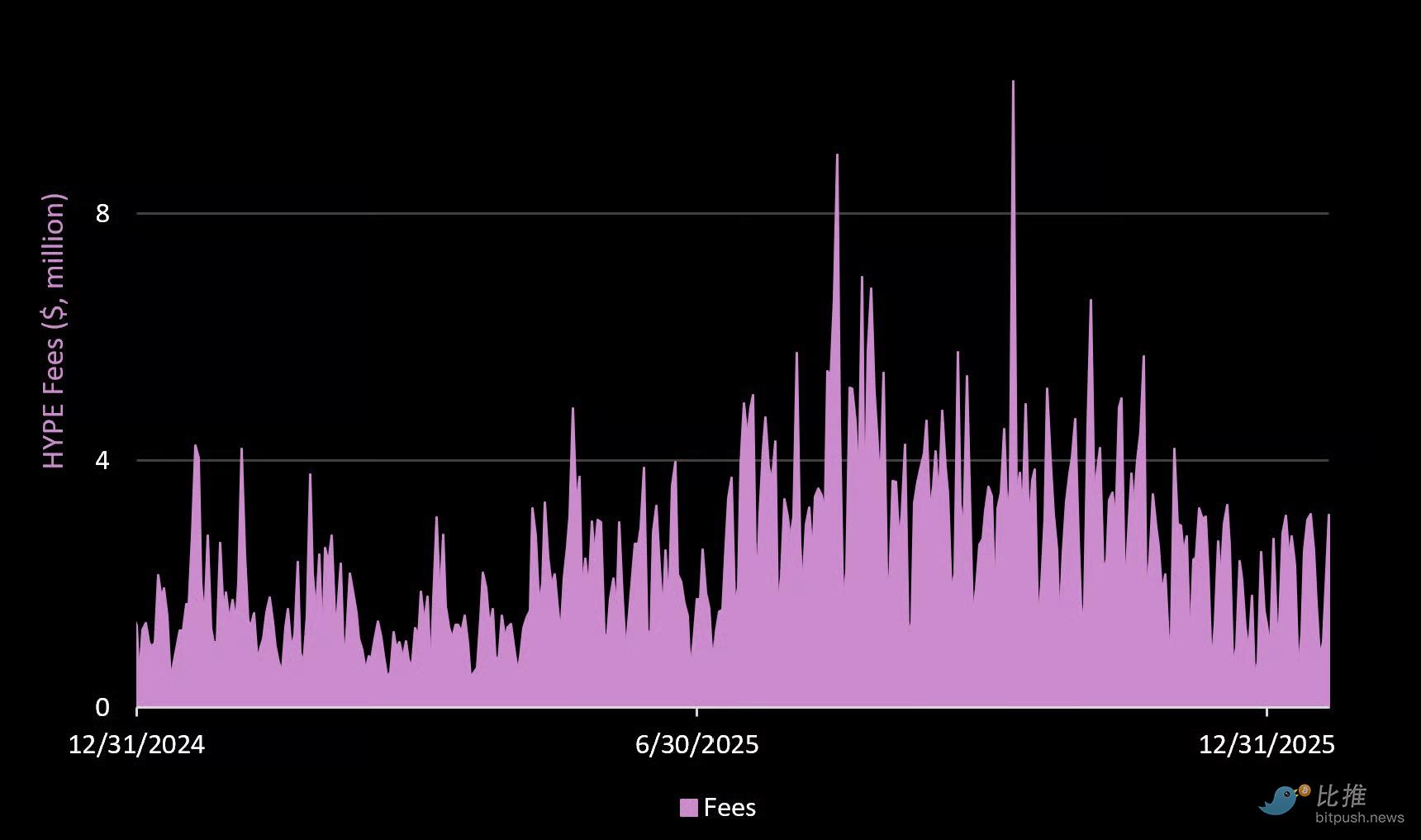
- 365-Day Cumulative Fees: $915 million

- 90-Day Cumulative Fees: $230 million

- 30-Day Cumulative Fees: $57 million

Perpetual trading contributes about 97% of the fees, while spot trading accounts for only 3%.

Key Points

Hyperliquid's perpetual DEX fee revenue has declined, but the drop is much smaller than what we've seen on Solana and its top applications.

For example, in Q4, Hyperliquid generated $270 million in fee revenue (down 16% from Q3). During the same period, Solana's REV fell by 60%. How did the top applications on Solana perform during the same period?

- Raydium: down 79%

- Jito: down 76%

- Axiom: down 61%

- Jupiter: down 37%

- Pump.Fun: down 19%

In an environment of rising risk aversion and a cliff-like drop in market interest in cryptocurrencies, Hyperliquid's performance has been quite resilient relative to other top blockchains and applications. This is unique, especially for a "high-flying" application experiencing its first bear market.

Buyback Activity
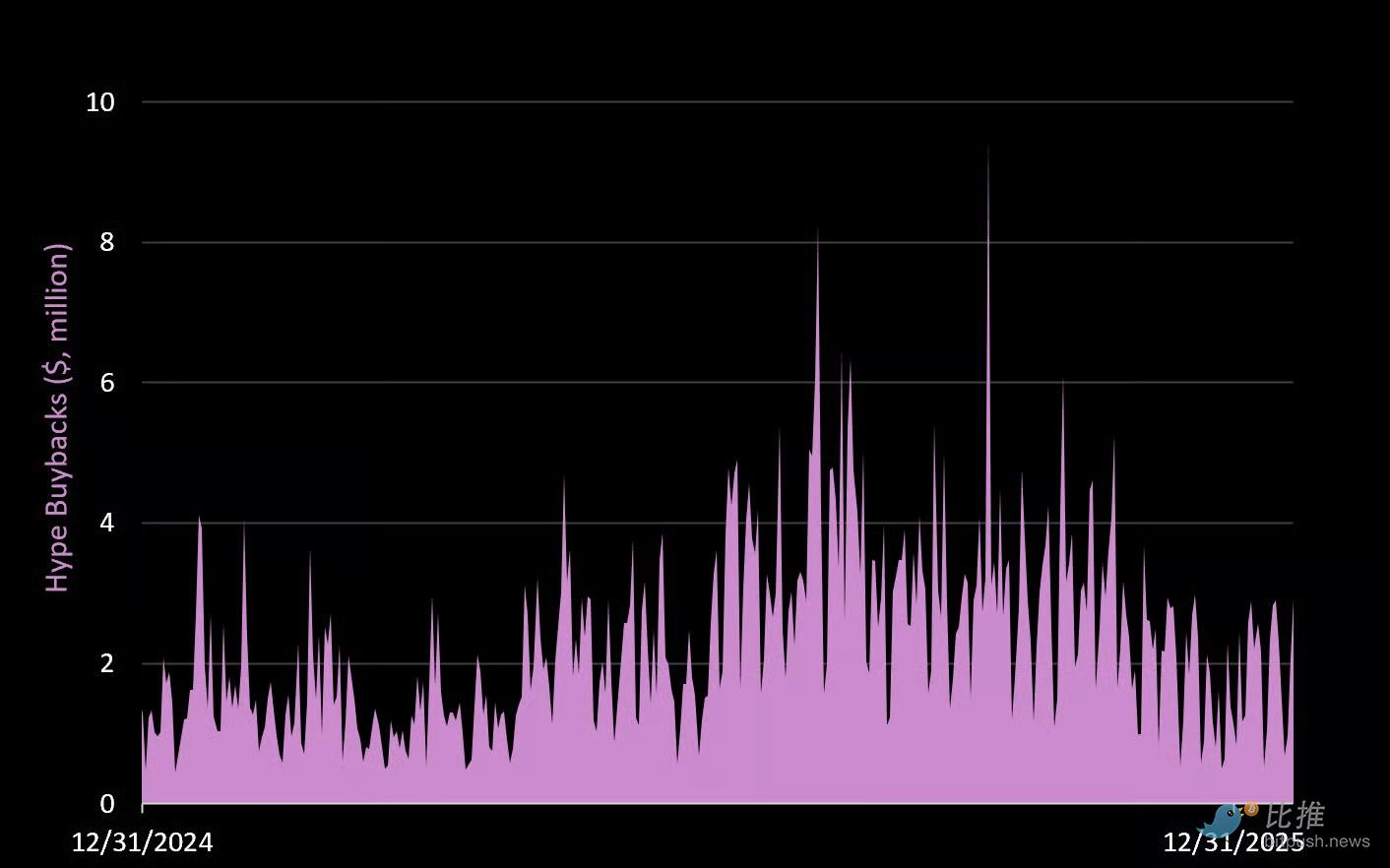
Over the past year, Hyperliquid has used 93.3% of its fees for HYPE token buybacks, totaling $854 million (an average of $2.3 million per day).

Key Points

If Hyperliquid can maintain its user base during the bear market, the stable buying pressure on the token may help offset any increased selling pressure, meaning its "cycle low" could be shallower than what we typically see in new projects during their first bear market.

More details on the tokenomics and team unlocks will be covered later in the report.

Perpetual DEX Fundamentals

Open Interest
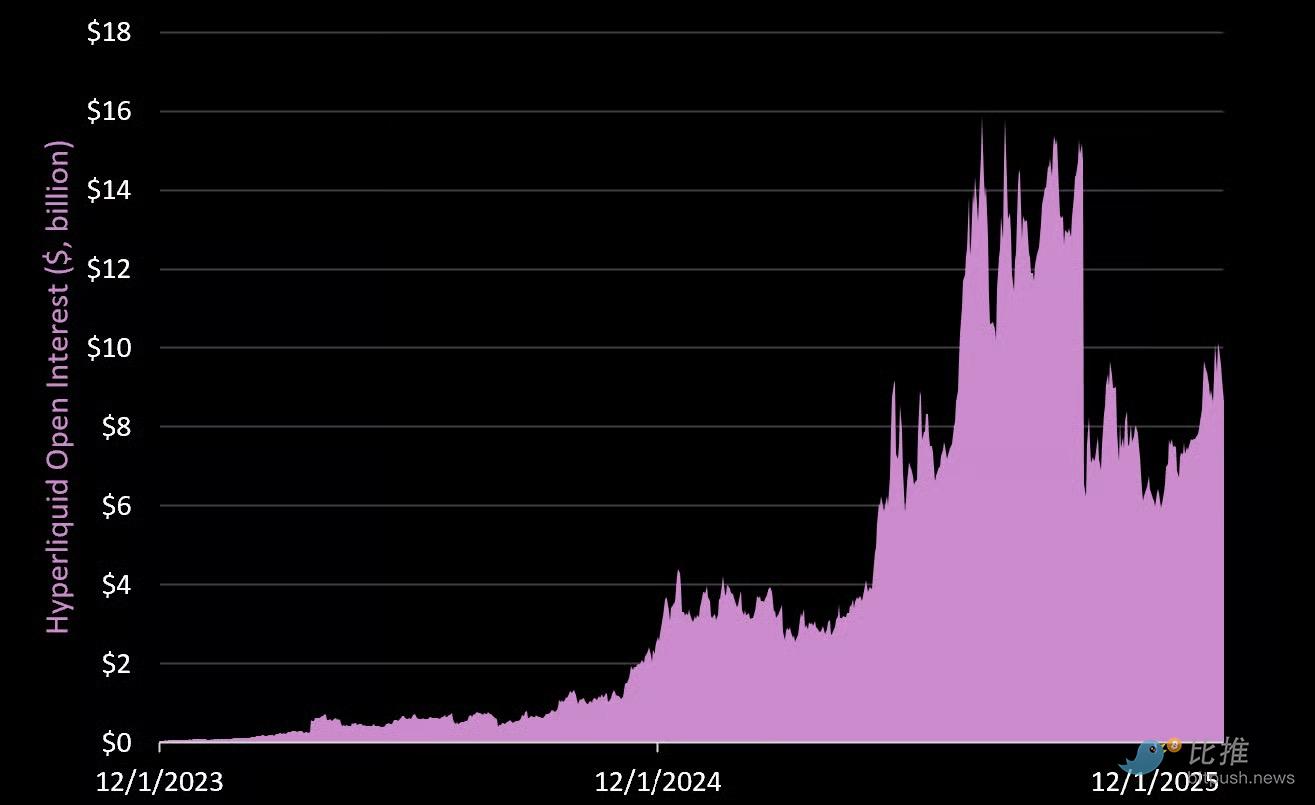
Hyperliquid's open interest is currently just under $10 billion, down from its peak of $15.8 billion last August.

The largest centralized perpetual exchange, Binance, currently has an open interest of $29 billion, having peaked at $44.5 billion in early October last year.

Compared to its decentralized competitors:

- Aster Open Interest = $2.5 billion

- Lighter Open Interest = $1.2 billion

- Drift Open Interest = $247 million

- Jupiter Open Interest = $181 million

Key Points

In just over a year, Hyperliquid has captured a significant share of the centralized perpetual exchange market (equivalent to 34% of Binance's open interest and 54% of CME's crypto futures open interest).

Simultaneously, its open interest is more than double the combined total of its top four decentralized competitors.

Active Addresses
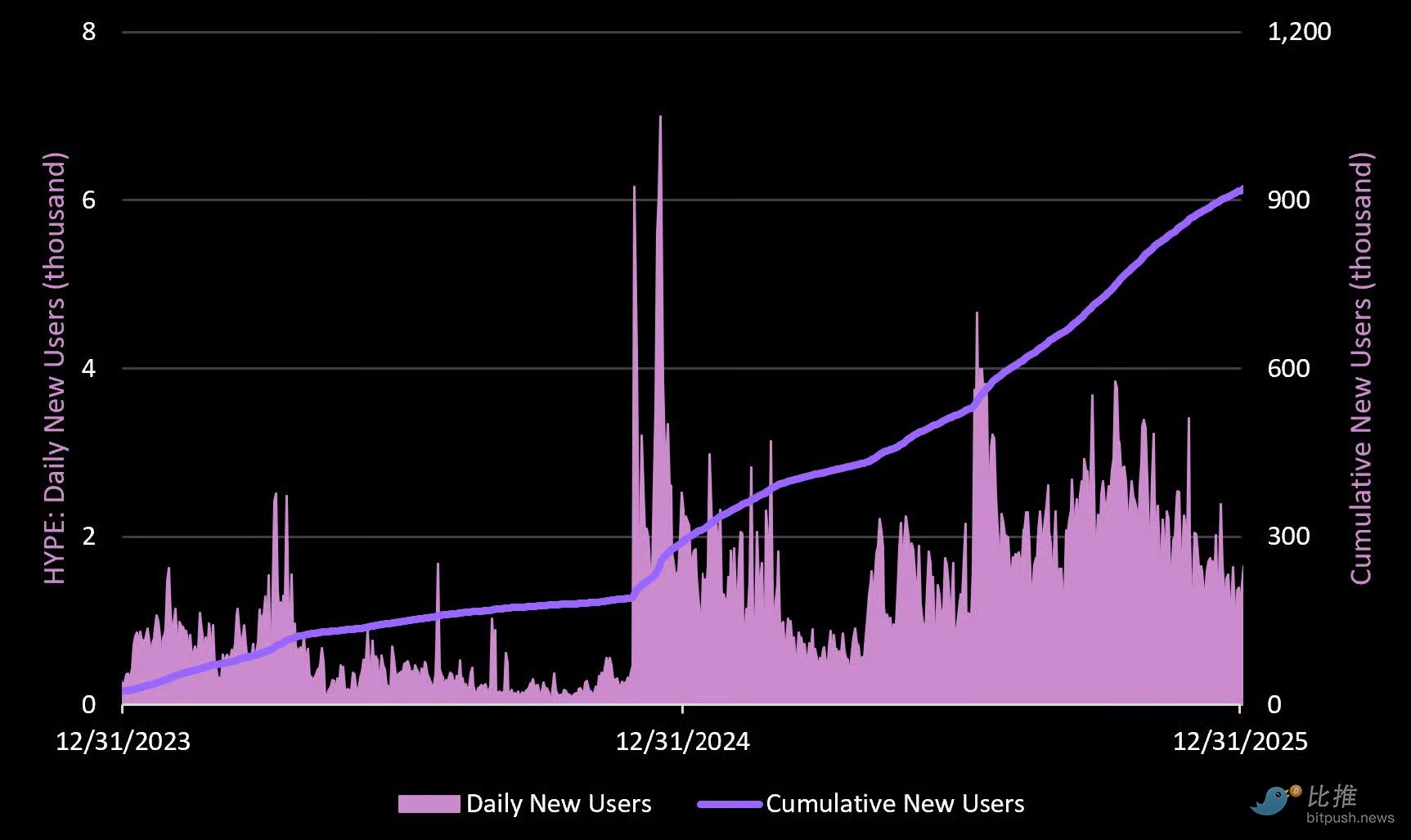
At its peak, the Hyperliquid Perpetual DEX added approximately 2,600 new users daily. Over the past 30 days, that number has dropped to about 1,600 new users per day (a 38% decline).

The number of new addresses might seem low, but this aligns with our understanding of unit economics in the crypto trading market. A small subset of highly active traders tends to contribute the majority of revenue. The key is to observe how this holds up during a bear market.

Perpetual Trading Volume
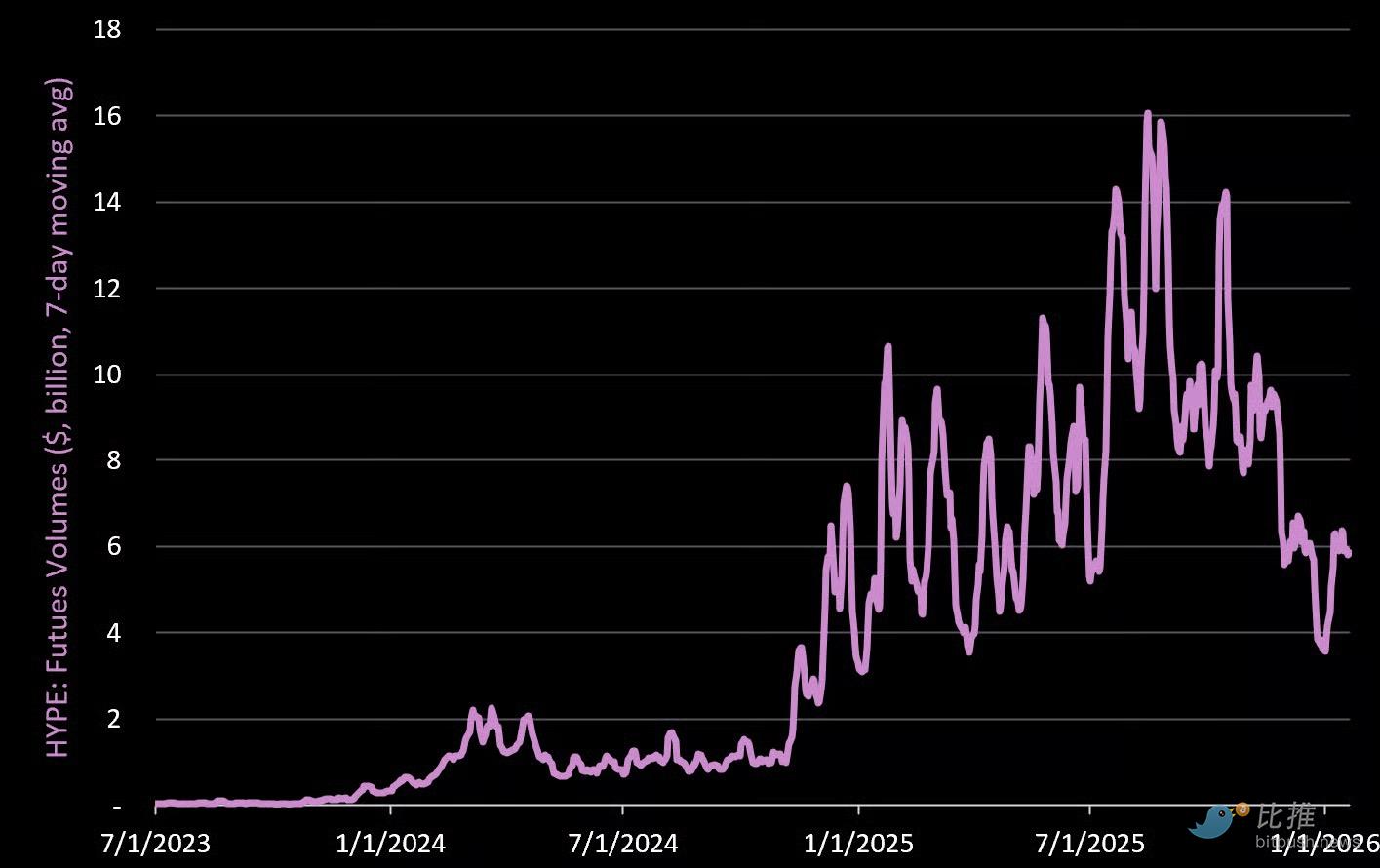
Over the past 30 days, Hyperliquid's average daily futures trading volume was $5.2 billion—down 47% from its peak of approximately $9.8 billion per day.

Interestingly, real-world assets (RWAs) currently drive the third-highest trading volume, behind only BTC and Layer 1 tokens.

Key Points

The decline in futures trading volume (relative to fee revenue) is greater, suggesting that liquidation fees may have filled part of the gap. For reference, the DEX processed over $90 billion in liquidations on October 10th last year, generating over $10 million in fees (almost double the revenue of Hyperliquid's second most profitable day).

Spot Trading Volume
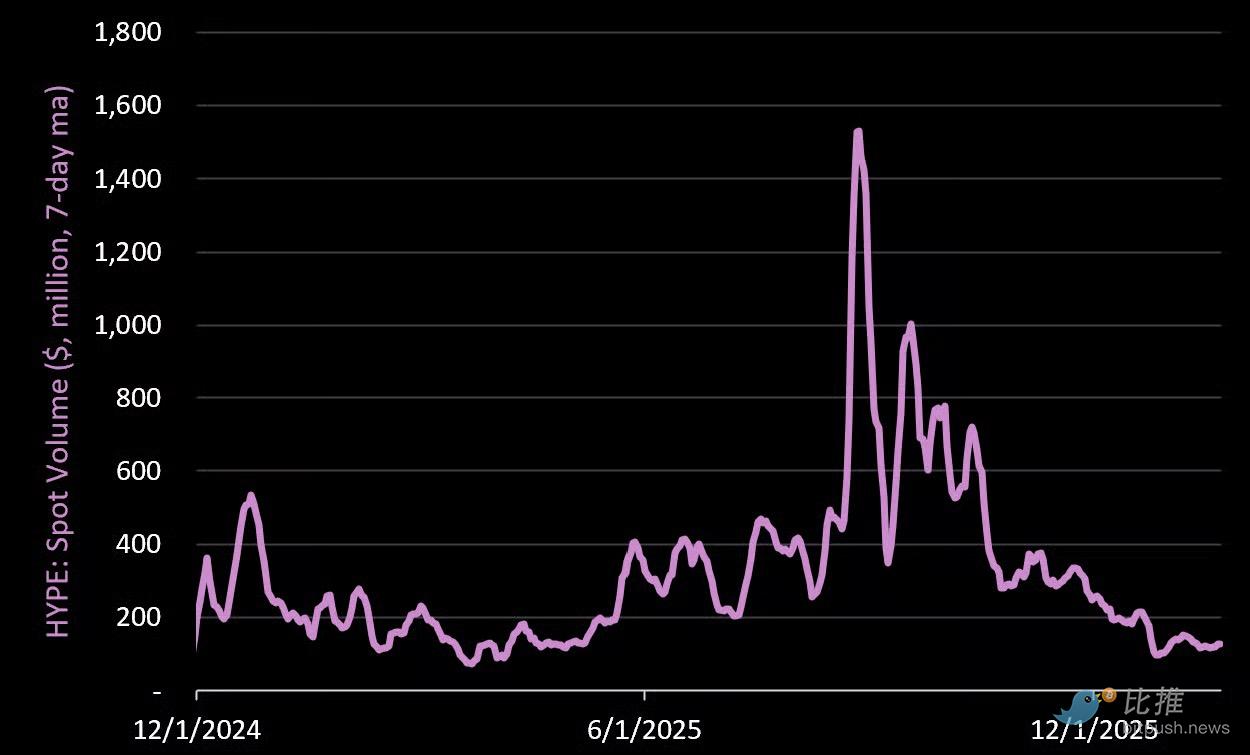
At its peak, Hyperliquid's daily trading volume was approximately $820 million. Over the past 30 days, its average daily spot trading volume has been $127 million (an 84% decline).

Over the past 365 days, spot trading volume has accounted for about 3% of Hyperliquid's total fees.

Cross-Chain Bridged Value
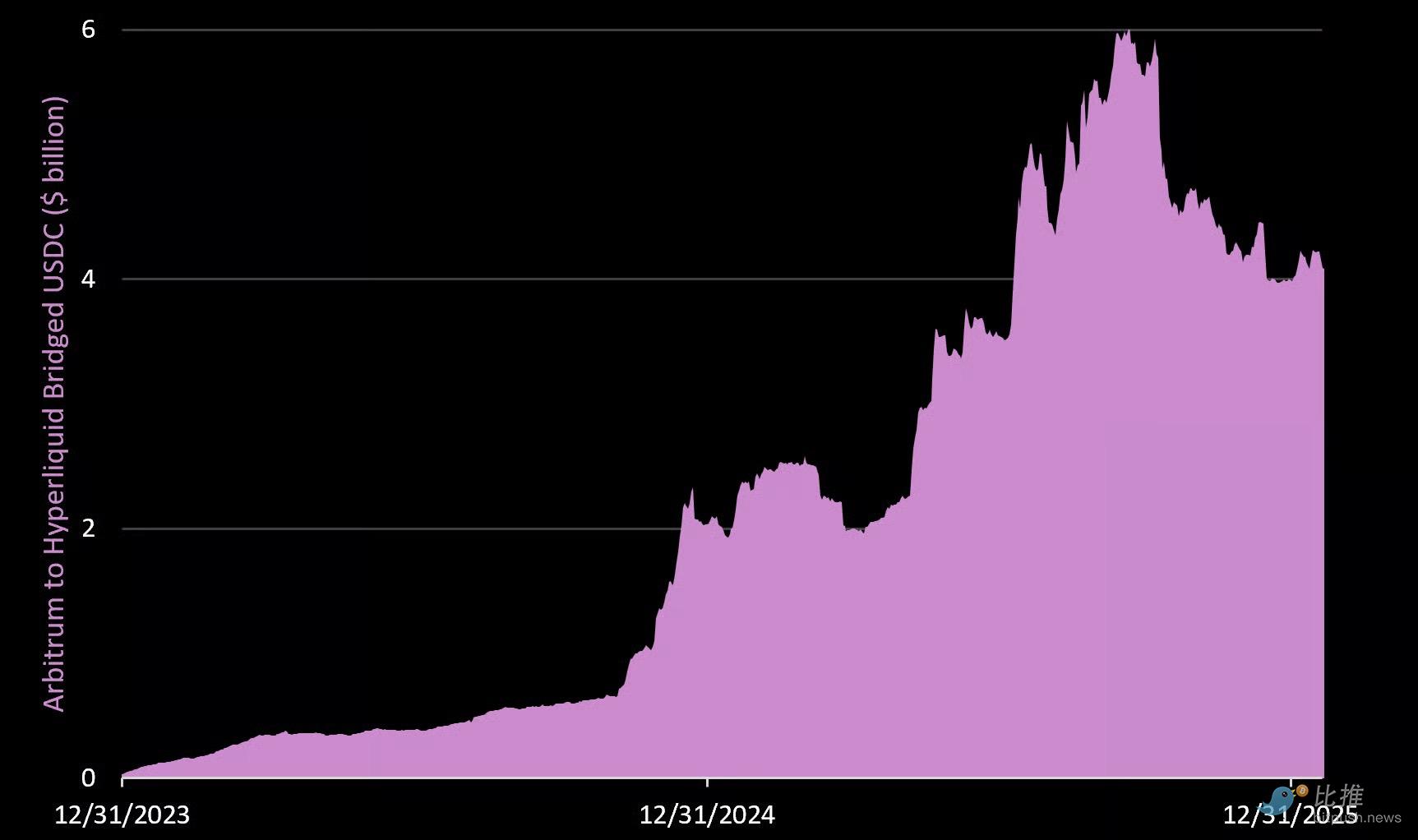
There is currently over $4.1 billion in value locked on the Hyperliquid DEX. This is down from a peak of $6 billion last September.

For reference, Solana's TVL is currently $8.7 billion.

Since launch, a cumulative $318 billion in value has been deposited for trading, with $314 billion withdrawn.

HyperEVM Fundamentals

Hyperliquid is unique in that it started as a perpetual DEX, but it is also a Layer 1 blockchain. In this section, we provide an update on the nascent but growing HyperEVM.

REV (Revenue)
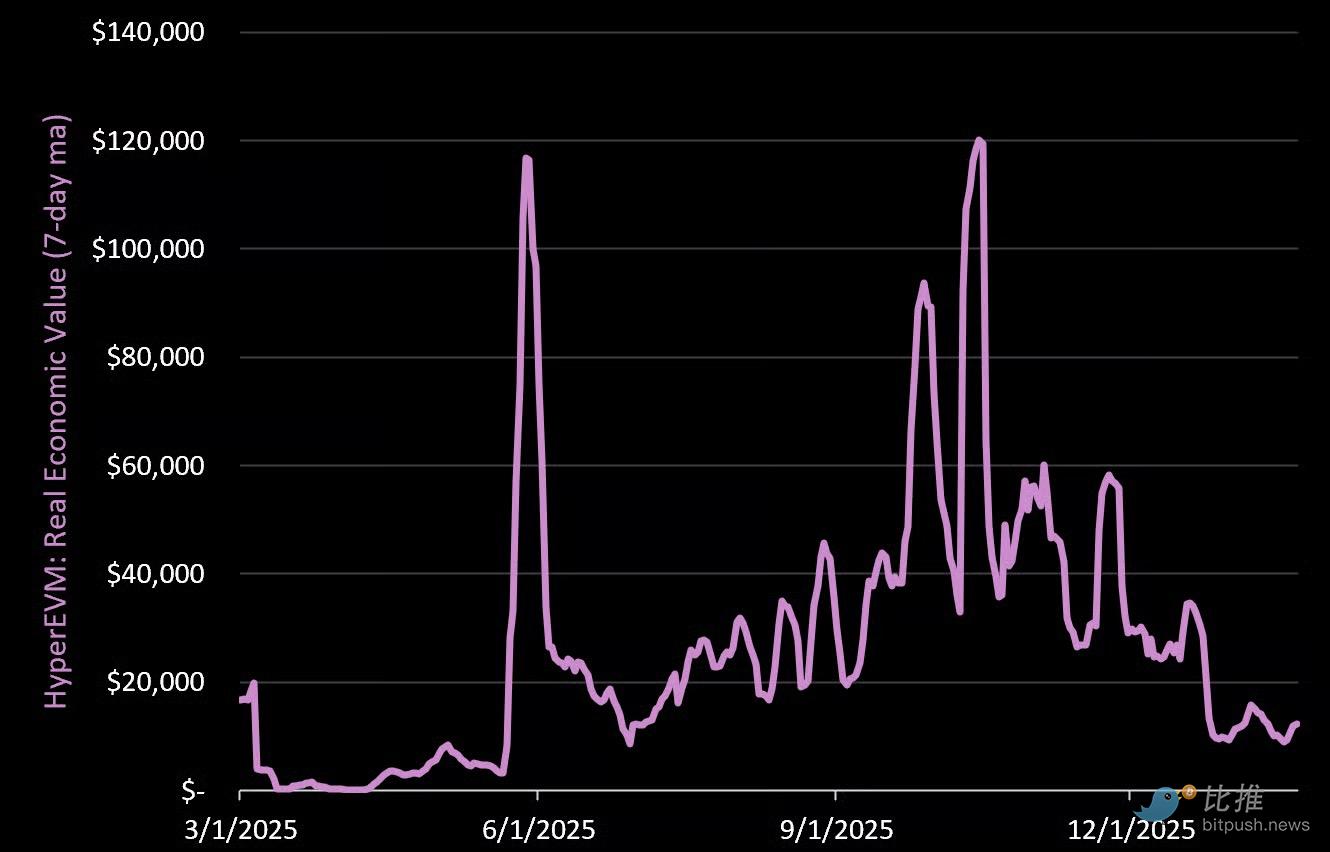
Since its launch (last February), HyperEVM has generated $8.9 million in REV. Over the past 30 days, its average daily REV was only $11.7K, down from a peak of $66K/day. On October 10th last year, the protocol generated $450K in fees.

In terms of TVL, the Hyperliquid L1 currently secures just under $12 billion in value. Of this, the liquid staking protocol Kinetiq has over $500 million; the lending protocol Morpho has over $300 million; and the lending protocol HyperLend has over $240 million.

Active Addresses
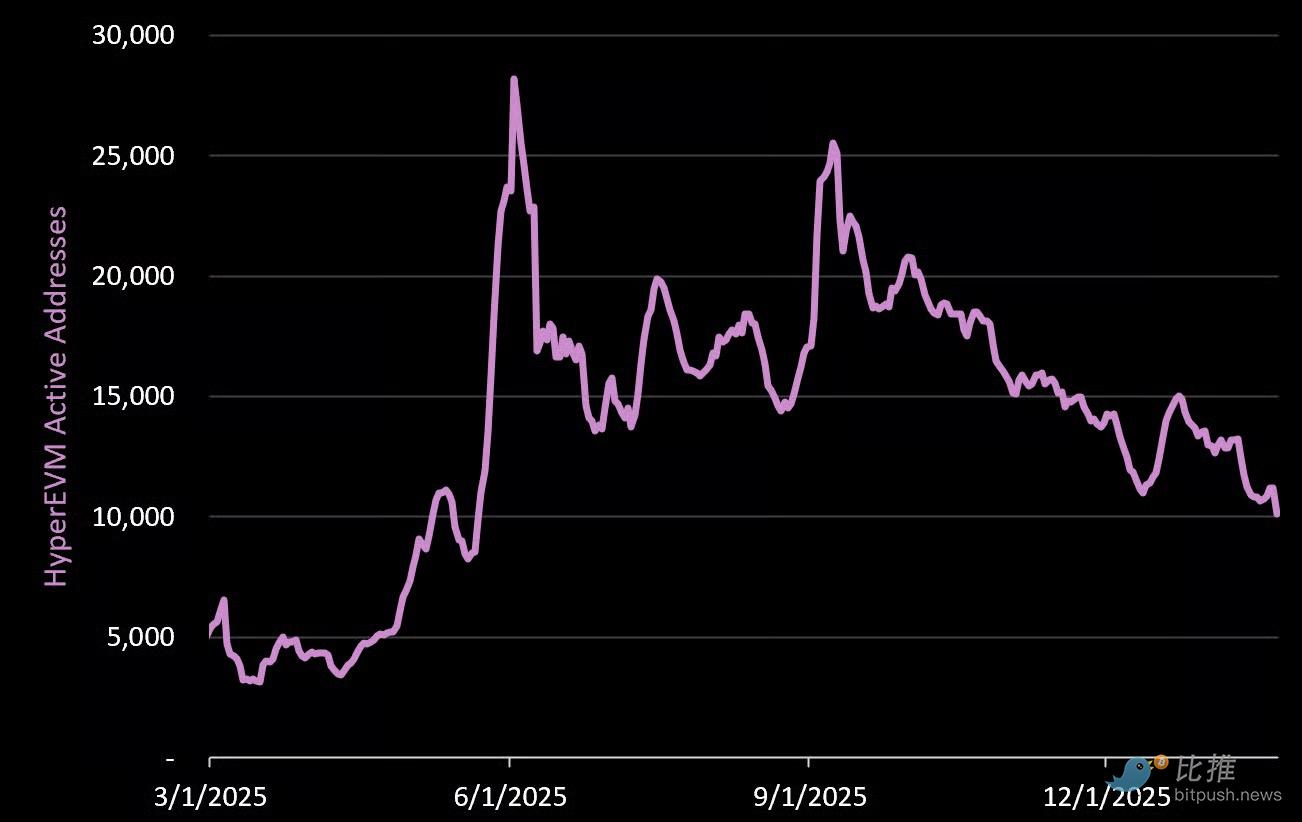
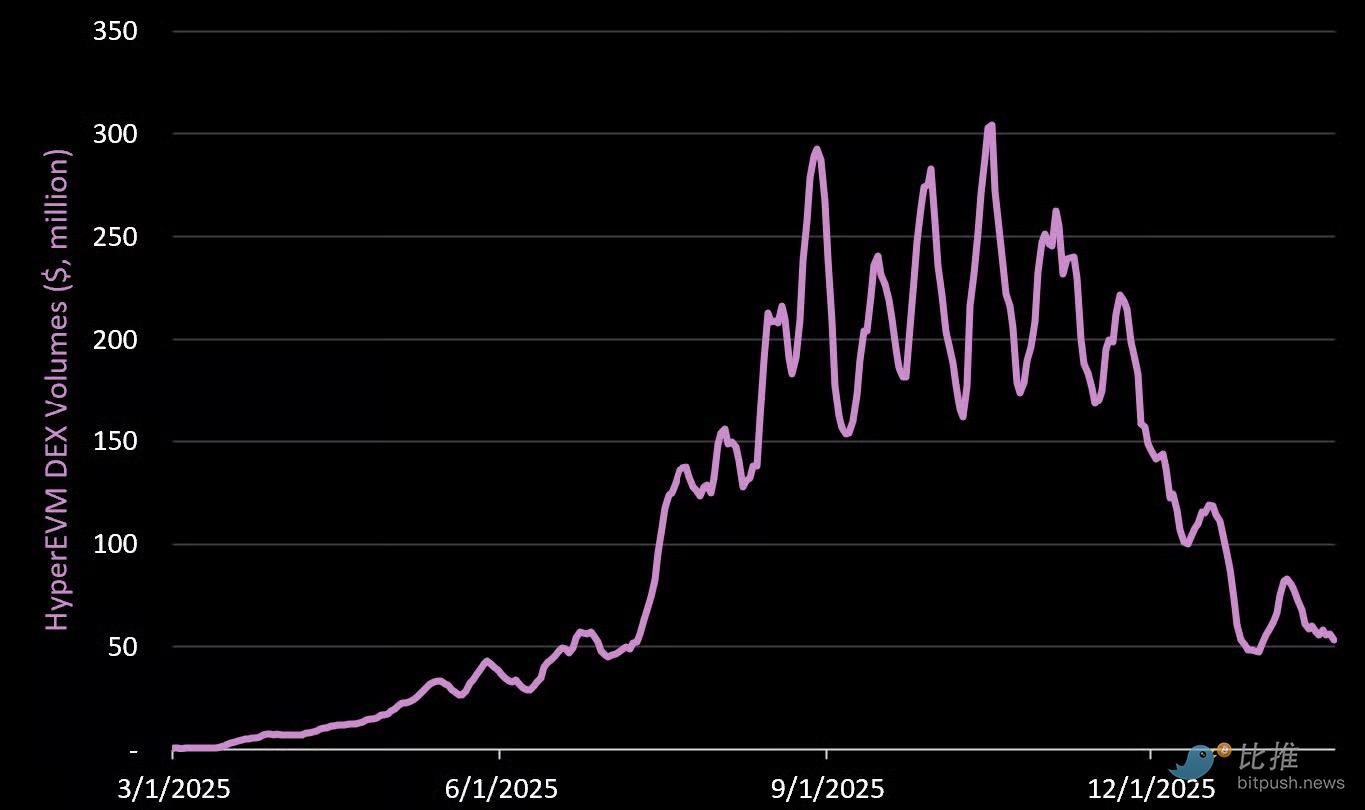
Over the past 30 days, the L1 has averaged about 12,000 unique active addresses daily. This is down from the peak of around 20,000/day in September/October last year.

DEX Trading Volume

In terms of DEX trading volume, the L1's average daily volume over the past 30 days was $62 million—negligible compared to Ethereum and Solana.

Stablecoin Supply

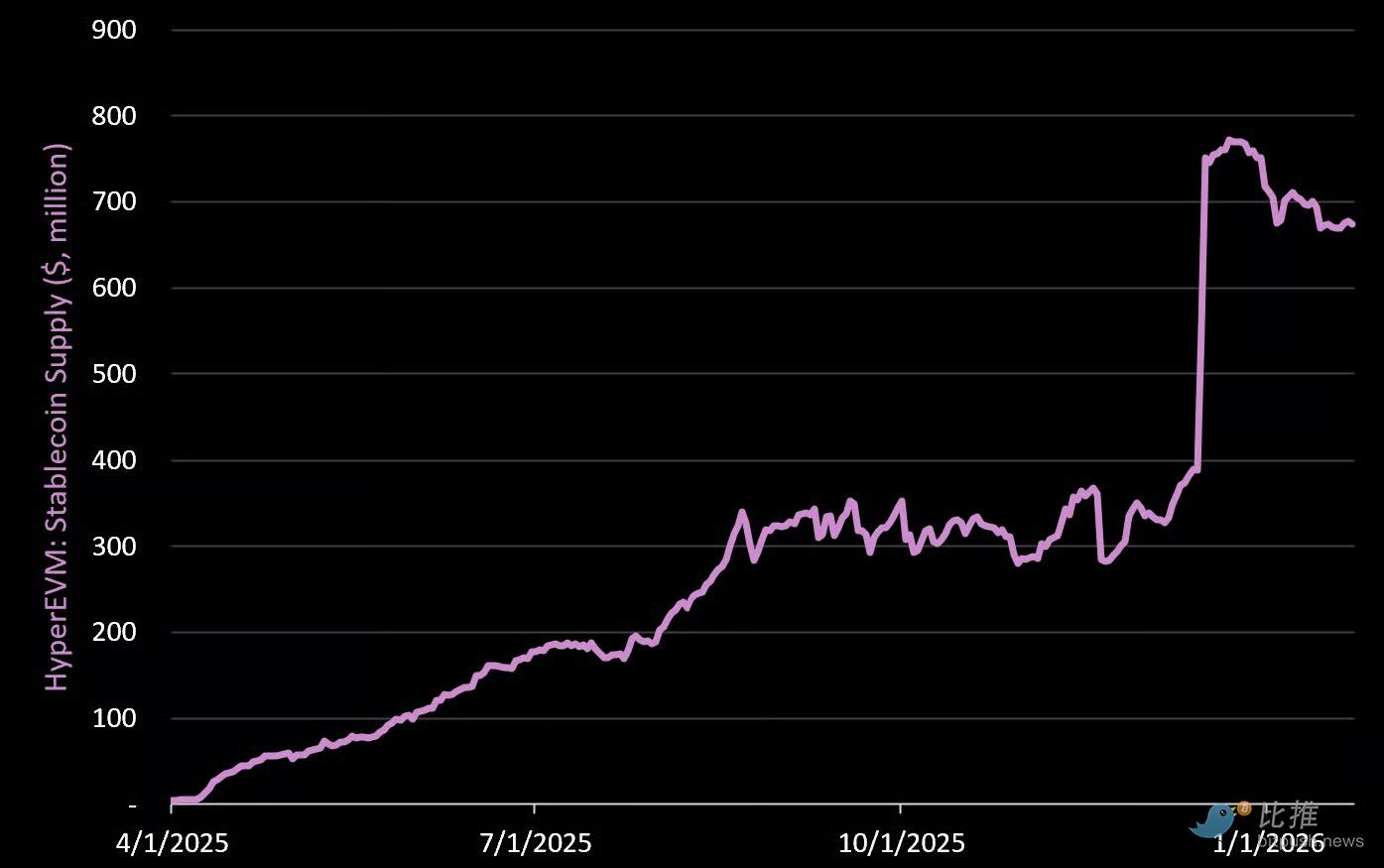
As of January 21, 2026, there are over $674 million in stablecoins on the Hyperliquid L1. Recent growth can be attributed to Circle (USDC) deploying on Hyperliquid and capturing 50% market share. Tether accounts for 21% of stablecoins on Hyperliquid, Paxos for 12%, and Ethena for 11%.

Tokenomics

This section covers the HYPE token—which represents an interest in the Hyperliquid Perpetual DEX and L1.

- Max Supply: 1,000,000,000

- Circulating Supply: 395,494,480

- Core Contributors: 22.3M

- Hyper Foundation: 60M

- Genesis Airdrop Allocation: 310M

- HIP-2: 120K

- Community: 3M

Token Allocation

- Genesis Airdrop: 31%

- Future Releases & Community Rewards: 38.88%

- Core Contributors: 23.8% (Began unlocking in November 2025, continuing until November 2027)

- Hyper Foundation Budget: 6%

- Community Grants: 0.3%

- HIP-2 (Hyperliquidity): 0.012%

Token Unlocks

Team tokens began unlocking last November. From now until November 2027, the protocol releases 9,916,666 HYPE tokens to the team monthly (valued at $213 million per month at the current HYPE price).

Hyperliquid has no venture capital backing, so there are no investor unlocks.

Buybacks

Over the past 30 days, the average daily buyback amount was $1.7 million (79,000 HYPE per day). At this rate, approximately 2.3 million HYPE are removed from circulation monthly, or 28 million HYPE annually.

Key Points

Hyperliquid's buyback program provides solid buying support for the token, but the monthly team unlock is currently more than 4 times the buyback amount. Of course, if user activity declines, buybacks will correspondingly decrease.

More analysis on "buyback yield" is below.

Relative Performance
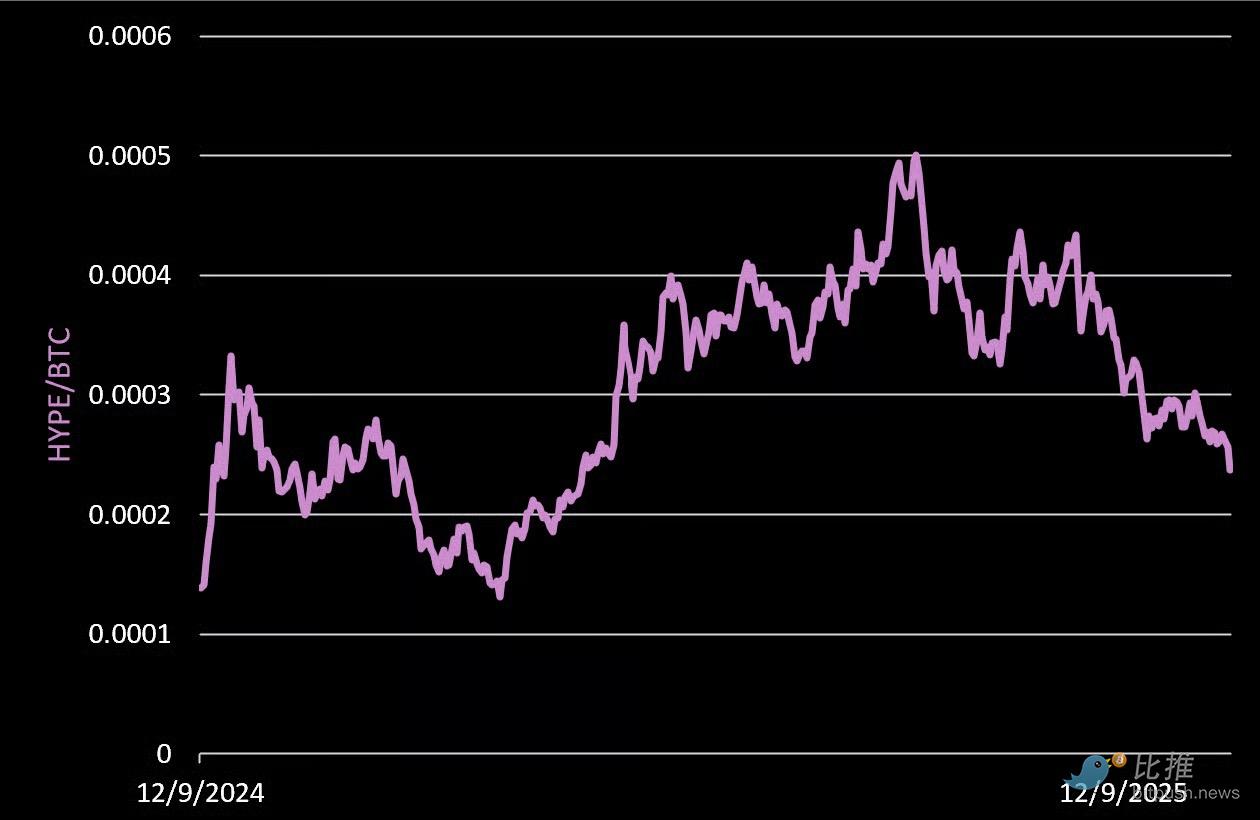
Since launch, HYPE is up 71% against BTC. From last April to September, it outperformed BTC by 278%.

However, since its peak last September, HYPE has underperformed BTC by 52%.

For reference, during the same period, ETH is down 21% against BTC, and SOL is down 47% against BTC.

Valuation Analysis

HYPE's current fully diluted valuation is $20.5 billion. Its 365-day fee revenue is $915 million. This implies a fully diluted Price-to-Sales (P/S) ratio of 22.4x (down from 66x in August).

In terms of the circulating market cap P/S ratio, it is 7.1x (down from 21.9x in August). This is now below the levels we typically see for high-growth tech/fintech companies (8-16x).

Buyback Yield

This analysis differs from traditional tech/fintech companies due to Hyperliquid's buyback mechanism—because the revenue it earns is not hoarded by a company (with fiduciary duty to investors) but is used to buy back HYPE tokens.

- 365-Day Total Buybacks = $854 million.

- Circulating Market Cap = $6.5 billion.

- Current implied "Buyback Yield" is 13.1%.

This means Hyperliquid has bought back tokens equivalent to 13% of its market cap over the past 365 days.

However, this does not account for new token issuance/unlocks—currently, its monthly unlock is over 4 times the buyback amount.

Conclusion

We believe perpetual futures are likely to become the mainstream abstraction for user trading of macro financial assets, particularly forex and interest rates. Furthermore, listing and trading RWA derivatives is much easier than trading tokenized stocks/bonds themselves (tokenized assets require custody, transfer agents, corporate actions, dividends, etc.—perpetuals avoid all of this).

The key current risk is regulation, and whether Hyperliquid/decentralized solutions will be included in US crypto market structure legislation. Our view is that Hyperliquid itself might not be directly regulated, but its consumer-facing interfaces will be.

Nonetheless, Hyperliquid is succeeding. We believe there are five main reasons:

1. An excellent product with a user experience comparable to CEXs, while allowing users to self-custody.

2. The best narrative since BTC and ETH: 31% of tokens airdropped to early users, creating massive wealth effects and a loyal community.

3. Excellent tokenomics, highly aligned with the interests of users and token holders.

4. A technically strong and focused founding team.

5. Early integration with mainstream wallets like Phantom and applications like Axiom. Today, Hyperliquid is increasingly becoming the default "perpetual trading" infrastructure for the entire crypto space, allowing users to trade through friendly front-end interfaces while utilizing Hyperliquid's liquidity on the backend.


Twitter:https://twitter.com/BitpushNewsCN

Bitpush TG Discussion Group:https://t.me/BitPushCommunity

Bitpush TG Subscription: https://t.me/bitpush

Original link:https://www.bitpush.news/articles/7605636

Preguntas relacionadas

QWhat is Hyperliquid's 365-day cumulative fee revenue and how does it compare to its competitors?

AHyperliquid's 365-day cumulative fee revenue is $915 million. It has been more resilient than its peers, declining only 16% in Q4, while competitors on Solana like Raydium, Jito, Axiom, and Jupiter saw declines of 79%, 76%, 61%, and 37% respectively.

QHow much of its fee revenue does Hyperliquid use for HYPE token buybacks, and what is the significance of this?

AHyperliquid uses 93.3% of its fee revenue for HYPE token buybacks, totaling $854 million over the past year. This provides consistent buy-side support for the token, which could help create a shallower cycle low during a bear market by offsetting some selling pressure.

QWhat is Hyperliquid's current Open Interest (OI) and how does it compare to centralized and decentralized exchanges?

AHyperliquid's Open Interest is just under $10 billion. This represents a significant share of the centralized perpetual market, equivalent to 34% of Binance's OI and 54% of CME's crypto futures OI. It is also more than double the combined OI of its top four decentralized competitors (ApeX, Lighter, Drift, Jupiter).

QWhat is the current implied 'buyback yield' for the HYPE token and what is a key factor affecting it?

AThe current implied 'buyback yield' for HYPE is 13.1%, meaning Hyperliquid bought back tokens equivalent to 13% of its market cap over the last 365 days. A key factor affecting this is that monthly team token unlocks are currently more than 4 times the amount of monthly buybacks.

QAccording to the report, what are the five main reasons for Hyperliquid's success?

AThe five main reasons for Hyperliquid's success are: 1. An excellent product with a CEX-like user experience that allows for self-custody. 2. A powerful narrative and a large airdrop (31% of tokens) creating wealth effect and community loyalty. 3. A strong token economic model that aligns user and token holder interests. 4. A technically strong and focused founding team. 5. Early integration with major wallets and apps, positioning it as the default 'perpetuals trading' infrastructure in crypto.

Lecturas Relacionadas

¿En qué están apostando los jóvenes inversores cuando el consenso se acelera?

En el ámbito de las inversiones tecnológicas, los inversores más jóvenes están adaptando sus estrategias al rápido cambio de paradigma. Con avances simultáneos en IA, robótica, aeroespacial y computación cuántica, el modelo tradicional de inversión ya no es suficiente. Ahora, comprender el lenguaje técnico y evaluar rutas tecnológicas aún inmaduras antes de que se forme un consenso es crucial. La inversión se está desplazando de la simple especulación con conceptos hacia la identificación de caminos reales de adopción industrial. Se destacan cuatro tendencias principales: Primero, la IA está abandonando las pantallas para integrarse en el mundo físico, impulsando áreas como la inteligencia encarnada, los robots humanoides y los dispositivos inteligentes de borde. El desafío ya no es solo una demostración técnica, sino la capacidad de entrega fiable y rentable a gran escala, como se ve en sectores como la entrega autónoma. Segundo, el enfoque en los modelos de lenguaje grandes (LLM) está cambiando. Más allá de buscar el próximo avance arquitectónico, el foco está en las empresas que pueden integrar estas capacidades en flujos de trabajo reales para crear un "volante de inercia de inteligencia": un ciclo virtuoso donde el uso genera datos que mejoran el modelo, lo que atrae a más usuarios y refuerza su ventaja. La creación de valor sostenible y profundo en la cadena de valor de la IA es clave. Tercero, frente al posible cuello de botella en datos de alta calidad para entrenar LLMs, surgen nuevas direcciones como los modelos de base científica. Estos modelos, entrenados con datos científicos rigurosos y capaces de generar conocimiento o simulaciones, podrían ser la próxima frontera para expandir las capacidades de la IA más allá de los datos disponibles en Internet. Finalmente, en áreas de tecnología profunda como el espacio comercial, la computación cuántica o la energía avanzada, se requiere un "capital paciente". Estos campos tienen ciclos de validación más largos y mayor incertidumbre técnica, pero son fundamentales para la infraestructura futura. La inversión aquí implica apostar por la capacidad de ingeniería, la resiliencia del equipo y la demanda a largo plazo, aceptando horizontes de retorno más extensos. En resumen, los jóvenes inversores están navegando un panorama donde el éxito depende de una comprensión técnica profunda, la identificación temprana de tendencias industriales genuinas y la voluntad de realizar apuestas a largo plazo en tecnologías transformadoras, tanto en el mundo digital como en el físico.

marsbitHace 19 min(s)

¿En qué están apostando los jóvenes inversores cuando el consenso se acelera?

marsbitHace 19 min(s)

¿Liberar 100 millones de dólares de liquidez? La nueva política de Pump.fun prueba la táctica de 'pump' de 5 minutos

**Pump.fun lanza el modo BOOST: una "tracción" de 5 minutos para memecoins en lanzamiento** El 21 de julio, la plataforma de lanzamiento de memecoins Pump.fun implementó el modo BOOST como su nuevo mecanismo estándar para nuevos tokens. El objetivo es abordar un problema persistente: aproximadamente el 20% de la liquidez se bloqueaba permanentemente y quedaba inutilizable ("liquidez muerta") cada vez que un token migraba de su curva de bonos a un pool de liquidez, lo que la plataforma estima en más de $100 millones en pérdidas anuales. El funcionamiento de BOOST es directo: en lugar de bloquear ese 20% de fondos (unos 17,6 SOL o 2516 USDC) en el pool de liquidez, la plataforma los utiliza para comprar el propio token durante los 5 minutos posteriores a su migración, utilizando un sistema de precio promedio ponderado en el tiempo (TWAP). Todos los tokens comprados son inmediatamente quemados, creando presión de compra a corto plazo y reduciendo la oferta circulante de forma permanente. La medida no añade liquidez nueva, sino que redirige la que antes se desperdiciaba. Su lógica subyacente es clara: mejorar la experiencia de los traders que buscan un "bombeo" inmediato tras el lanzamiento, con la esperanza de aumentar la retención de usuarios y el volumen de negociación sostenido en la plataforma. Esto, a su vez, podría impulsar los ingresos del protocolo de forma más orgánica. Sin embargo, surgen dudas. Algunos actores del mercado temen que esta presión de compra artificial pueda facilitar el lanzamiento de tokens de baja calidad y crear una ilusión fugaz de éxito. Advierten que, una vez finalizada la compra programada a los 5 minutos, los tokens podrían enfrentarse a caídas bruscas si encuentran fuertes órdenes de venta, intercambiando un riesgo de colapso posterior por un breve espectáculo inicial.

Foresight NewsHace 30 min(s)

¿Liberar 100 millones de dólares de liquidez? La nueva política de Pump.fun prueba la táctica de 'pump' de 5 minutos

Foresight NewsHace 30 min(s)

Acciones A malheridas injustamente: Resiliencia, expectativas y confianza

En julio, las acciones tecnológicas globales se debilitaron repentinamente, afectando a mercados como Corea del Sur, Estados Unidos y Japón, lo que también presionó a los sectores tecnológicos de A-shares, con caídas consecutivas en el índice STAR 50 y el índice ChiNext. Sin embargo, este ajuste refleja principalmente la transmisión de riesgos externos, como la reducción del apalancamiento en las acciones coreanas, y no un cambio en los fundamentos. El mercado tecnológico chino es más diversificado que el de Corea del Sur, con narrativas duales: la cadena de suministro global de IA y la sustitución de importaciones en infraestructura de computación nacional. Los datos de ganancias en sectores clave como módulos ópticos y cables de fibra óptica siguen siendo sólidos, respaldando la lógica subyacente de la industria. Ante la volatilidad, el "equipo nacional" (fondos estatales) ha intervenido activamente, con anuncios de inversiones y recompras por cientos de miles de millones de yuanes por parte de empresas estatales, aseguradoras y casas de bolsa. Esto estabiliza la liquidez y las expectativas del mercado, enviando una señal de soporte político. Históricamente, estas intervenciones han coincidido con niveles de piso en el mercado. Más allá de la tecnología, otros sectores claves muestran fortaleza interna. El consumo se beneficia de una inflación al alza (IPC estable por encima del 1%) y signos de recuperación en sectores como el licor, con mejoras en inventarios. Los ciclos, liderados por el aluminio, tienen perspectivas de aumento de precios debido al equilibrio ajustado entre oferta y demanda global, altas ganancias y bajas valoraciones. Los activos financieros, como la banca, ofrecen dividendos estables. En resumen, la corrección tecnológica es un evento impulsado por factores externos. Con la acción estabilizadora del "equipo nacional" y la resiliencia de múltiples sectores (consumo, ciclos, finanzas), que cuentan con fundamentos sólidos y potencial de recuperación, se espera que el mercado de A-shares recupere su estabilidad.

marsbitHace 1 hora(s)

Acciones A malheridas injustamente: Resiliencia, expectativas y confianza

marsbitHace 1 hora(s)

Trading

Spot
活动图片