MetaMask Co-founder Departs, Leaving Behind a Little Fox Packaged in an IPO Prospectus

marsbitPublicado a 2026-04-23Actualizado a 2026-04-23

Resumen

MetaMask co-founder Dan Finlay has left Consensys after a decade, citing burnout and a desire to spend more time with family. MetaMask, launched in 2016, is one of the most recognizable crypto wallets with over 100 million installs and 30 million monthly active users. Despite its dominant position, the wallet faces growing competition from newer entrants like Phantom, which has expanded beyond Solana and reportedly generates more than double MetaMask’s annual revenue. The timing of Finlay’s departure coincides with Consensys’s plans for an IPO, advised by J.P. Morgan and Goldman Sachs. The company, last valued at $7 billion in 2022, has undergone multiple rounds of layoffs amid slowing growth and internal challenges. Employee reviews on Glassdoor point to low morale and management issues. MetaMask’s delayed expansion into chains like Solana and the long-promised but unreleased $MASK token have also drawn criticism. While the wallet remains the default option for many Ethereum dApps, its product-market fit is weakening as new users increasingly choose alternatives. Consensys appears to be prioritizing monetizing MetaMask’s strong brand recognition through a public listing while its market position is still valuable. Finlay’s quiet exit reflects both personal fatigue and broader shifts in the competitive landscape of crypto wallets.

Author: Curry, Deep Tide TechFlow

The person who built this little fox doesn't want to build anymore.

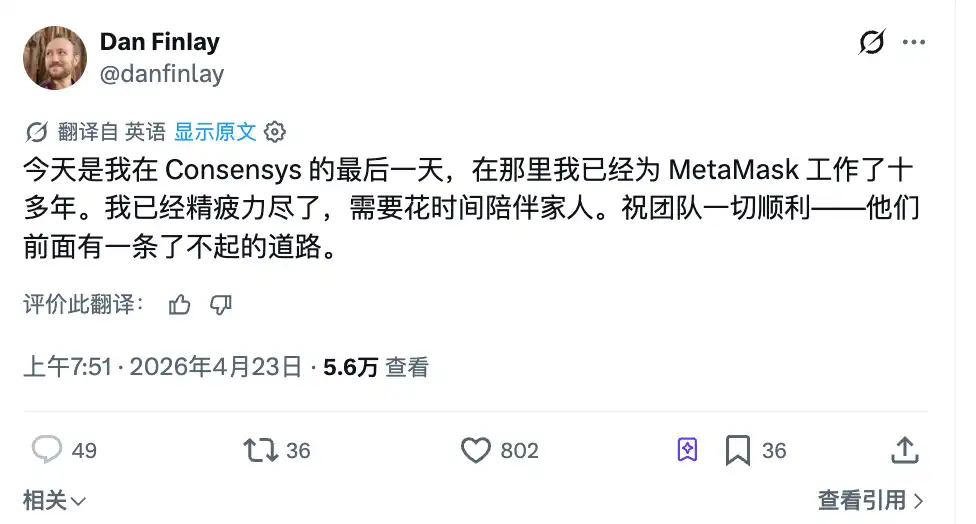
On April 23, MetaMask co-founder Dan Finlay officially announced his departure from Consensys, ending a decade-long development career. The reason given was professional burnout and a desire to spend more time with family.

MetaMask is perhaps the most recognizable product application in the crypto world. That little orange fox logo is known to almost everyone who has ever installed a crypto wallet. In 2016, Finlay and another co-founder, Aaron Davis, created this browser plugin within Consensys, allowing ordinary people to interact with Ethereum without running a full node.
Over the past ten years, according to statistics from multiple third-party platforms, it has achieved over 100 million global installs, with approximately 30 million monthly active users. Its swap function has cumulatively generated over $325 million in fee revenue.

A look at public information reveals that Finlay has hardly given any interviews in the past decade. Previously a coder at Apple, he is fundamentally an engineer at heart, not someone who builds a public persona.

When such a person says they are tired, they usually mean it. It's just that the timing of his departure is hard not to overthink.

Just a few months ago, Consensys hired J.P. Morgan and Goldman Sachs as IPO advisors, with a target to go public as soon as this year, according to an Axios report.

The company's last funding round was in 2022, when it was valued at $7 billion. It has since undergone at least two rounds of layoffs. And the $MASK token, promised since 2021, still hasn't materialized after five years.

Issuing a token doesn't seem that necessary for a wallet. More frighteningly, it seems like the little fox isn't that necessary for everyone either.

The Default, But Not the Preferred Choice

In the past, the first step in many dApp development documents was "Please install MetaMask first." It was the default wallet for the industry, like the blue IE browser on your Windows desktop ten years ago.

The problem is, the default and the preferred choice have long ceased to be the same thing.

Phantom started out only as a Solana wallet, later expanding to Ethereum and Bitcoin. In January 2025, it raised a $150 million Series C, valuing the company at $3 billion.

According to estimates by whales.market based on on-chain data, Phantom's annualized revenue is approximately $108 million;相比之下 MetaMask's is about $46 million. More than double the difference, and Phantom is five years younger than MetaMask.

Phantom started on Solana in 2021, catching the entire process of the Solana ecosystem's recovery and explosion. According to Helius statistics, Solana's DEX trading volume surpassed Ethereum's in 2024, and on-chain application revenue reached $2.39 billion in 2025, a 46% year-on-year increase. 725 million new wallets conducted their first Solana transaction in 2025. Phantom was waiting at the door when these users came in.
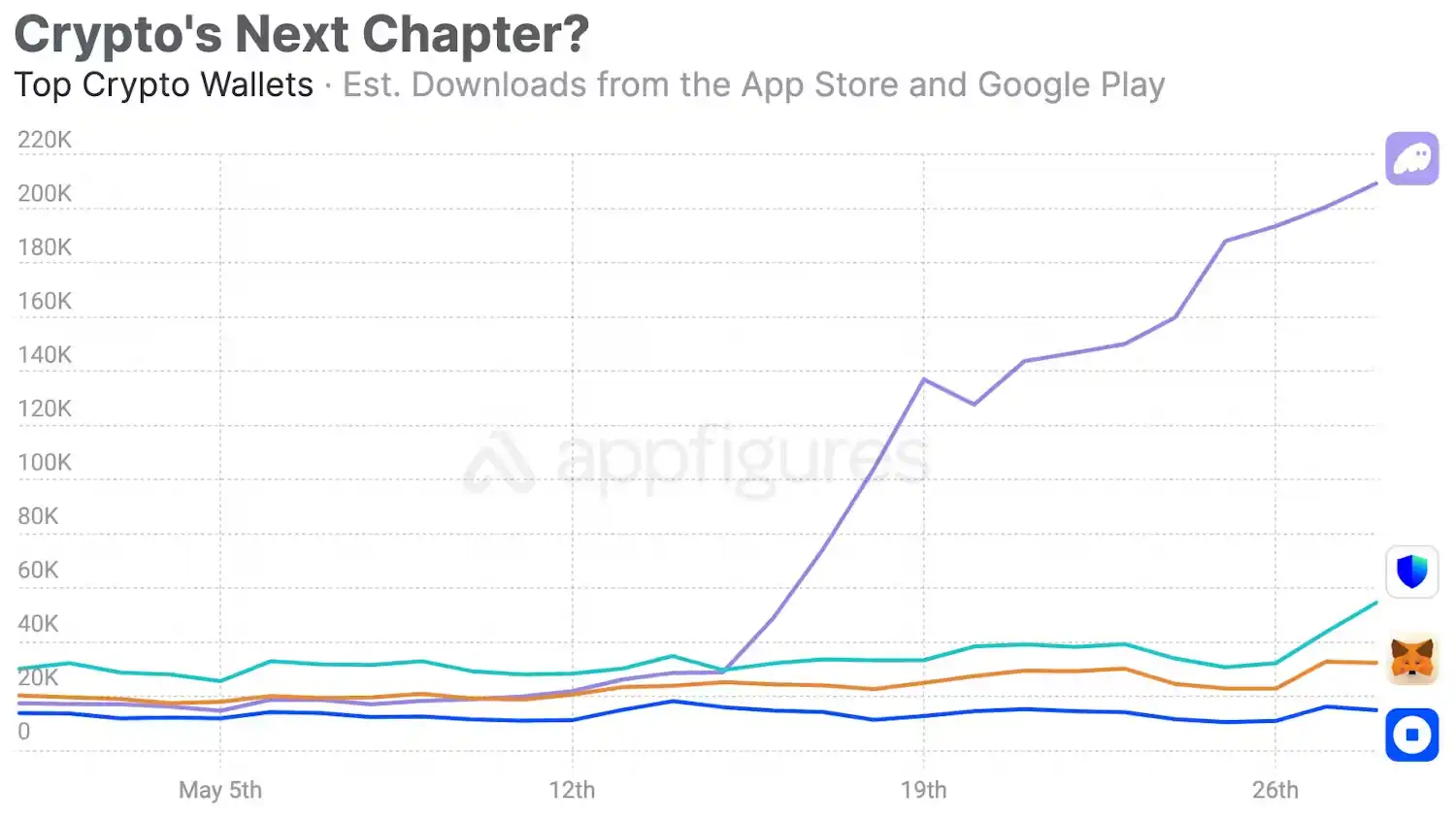
And MetaMask? It only launched native Solana support in May 2025. Before that, users who wanted to access Solana through MetaMask had to install a third-party plugin called Snaps, an experience akin to installing a Chrome kernel on the IE browser...

In these five years, Solana went from a chain that nearly died due to the FTX crash to, at one point, the chain with the largest trading volume. Phantom's valuation rose accordingly, securing a $150 million Series C funding round in early 2025 with a $3 billion valuation.

The author believes MetaMask's slowness wasn't due to technical inability, but also an issue of identity. MetaMask is Ethereum's favored child; its parent company Consensys was founded by Ethereum co-founder Joe Lubin.

Supporting Solana was an expansion for Phantom, but a betrayal for MetaMask. By the time the Ethereum ecosystem's growth indeed slowed down and cross-chain became necessary, the window of opportunity had long passed.

Of course, MetaMask's compatibility within the Ethereum ecosystem is still the strongest. Almost all dApps on EVM chains test it as the default option. The 30 million monthly active users are real.

But this stickiness doesn't come from product strength; it comes from switching costs. And switching costs can only prevent old users from leaving, not stop new users from going elsewhere.

A person who started playing on-chain in 2025 is probably not being recommended MetaMask by their friends when they go to install a wallet.

The Little Fox Up for Sale

The product is falling behind, people are leaving, but Consensys is pursuing an IPO.

According to an Axios report in October 2025, Consensys hired J.P. Morgan and Goldman Sachs as IPO advisors, targeting a public listing as soon as this year. If successful, this would be the first company deeply tied to Ethereum core infrastructure to list on the US stock market.

But in the same year it hired the investment banks, Consensys underwent at least two rounds of layoffs.

In October 2024, it cut 20% of its staff, about 160 people, with CEO Joe Lubin citing macroeconomic pressures and regulatory uncertainty. Another round occurred mid-2025, this time justified as "driving profitability."

On the well-known job review community Glassdoor, employee reviews are uglier than the layoffs themselves.

Someone wrote that the company lays off people at least twice a year, always cutting frontline contributors, never management. Another said that after sharing their promotion aspirations with their superior, their name appeared on the next layoff list.

It's unclear how much of these reviews are emotion and how much is fact. But a company conducting significant layoffs while employee morale hits rock bottom, all while sprinting towards an IPO, is itself a signal.

Then there's the story of the MASK token.

In 2021, Lubin tweeted "Wen $MASK?", causing a stir in the community. In 2022, he further explained plans for a token and DAO to promote "progressive decentralization." In May 2025, Finlay was interviewed by The Block and asked when the token would come; his answer became maybe.

For users, the MASK token is a carrot, dangled to keep using, interacting, and contributing on-chain data to MetaMask. For Consensys, the token is a card not yet played before the IPO.

Issuing it too early dilutes the valuation narrative; issuing it too late loses community support. Now the co-founder has left, the token hasn't been issued, but the IPO is coming.

MetaMask's product competitiveness is declining, a trend difficult to reverse in the short term. But MetaMask's brand recognition remains; that little orange fox is still the world's most recognizable crypto logo.

Brand value and product value decay at different rates; brand decays slower.

For crypto companies, an IPO often sells not the product, but the brand plus the narrative. "Ethereum infrastructure," "Web3 gateway," "World's largest self-custody wallet"... These labels still work well on pitch decks, even years later. Lubin himself is an Ethereum co-founder, an identity that carries its own halo effect in front of traditional investors.

So Consensys's choice is to package MetaMask into a public company shell while the brand is still valuable, while the regulatory window is still open, while Wall Street still has enthusiasm for crypto infrastructure, and let the public market set the price.

Silence is Not Golden

The reaction to co-founder Finlay's departure was muted in Crypto Twitter (CT). No long farewell posts went viral, no laments about "the end of an era," most people didn't even care about the news.

The comings and goings of Metamask's co-founder generated less buzz than some KOL complaining about shrunken conference swag in Hong Kong.

This in itself says something.

MetaMask is a rare case in the crypto industry. It possesses one of the industry's largest brands, but its founders have almost no personal brand.

In an industry where the founder is often the biggest marketing resource, MetaMask's two founders chose to remain invisible. The product spoke for them, until the product could no longer speak effectively.

The author believes MetaMask's story is essentially one about being the "default."

In the technology industry, becoming the default option is the most powerful competitive advantage, and the most dangerous sedative. When you are the default, user growth happens without you to do anything.

But this growth masks the fact that the product itself is aging. By the time you notice users leaving, the exodus has often been ongoing for a long time.

IE was the default browser, lost to Chrome. Nokia was the default phone, lost to iPhone.

Windows Media Player was the default media player, lost to everyone. These products lost while their market share was still high, brand recognition still strong, but new users were no longer choosing them.

MetaMask is now in this position. The existing user base remains, the brand is still loud, but the growth has gone elsewhere. Consensys's IPO plan is, ultimately, about monetizing the existing user base.

When brand value exceeds product value, selling is indeed the rational choice.
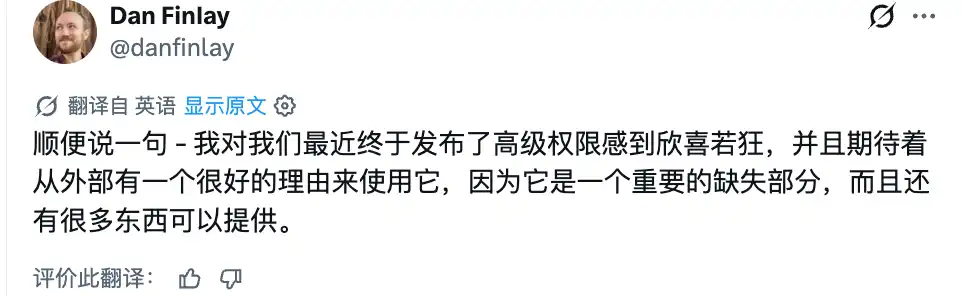
On the day Finlay left, MetaMask just launched a new feature called ERC-7715 for advanced permissions. He said he looked forward to experiencing it as a regular user in the future.

A product's creator becoming its ordinary user is probably the most朴实 (simple/unadorned) and quietest farewell in the crypto industry.

But for MetaMask, how many ordinary users will still click on that little fox every day next year? Are you still using it?


Preguntas relacionadas

QWhy did Dan Finlay, the co-founder of MetaMask, leave Consensys?

ADan Finlay left Consensys due to professional burnout and a desire to spend more time with his family.

QHow does MetaMask's revenue compare to its competitor Phantom's revenue?

AAccording to data from whales.market, Phantom's annualized revenue is approximately $108 million, while MetaMask's is about $46 million, making Phantom's revenue more than double that of MetaMask.

QWhat is the significance of the timing of Finlay's departure in relation to Consensys's corporate plans?

AFinlay's departure coincides with Consensys's plans for an IPO, as the company has reportedly hired J.P. Morgan and Goldman Sachs as advisors with the goal of going public as soon as this year.

QWhy was MetaMask slow to support the Solana blockchain, and what was the consequence?

AMetaMask was slow to support Solana due to its identity as an Ethereum-native product and its close ties to the Ethereum ecosystem. This delay allowed competitors like Phantom, which launched on Solana first, to capture a significant share of the new user growth on that chain.

QWhat does the article suggest is the primary motivation behind Consensys's push for an IPO?

AThe article suggests that Consensys is pursuing an IPO to monetize MetaMask's strong brand recognition and narrative value while it is still high, even though the product's competitive edge and user growth are declining.

Lecturas Relacionadas

¿En qué están apostando los jóvenes inversores cuando el consenso se acelera?

En el ámbito de las inversiones tecnológicas, los inversores más jóvenes están adaptando sus estrategias al rápido cambio de paradigma. Con avances simultáneos en IA, robótica, aeroespacial y computación cuántica, el modelo tradicional de inversión ya no es suficiente. Ahora, comprender el lenguaje técnico y evaluar rutas tecnológicas aún inmaduras antes de que se forme un consenso es crucial. La inversión se está desplazando de la simple especulación con conceptos hacia la identificación de caminos reales de adopción industrial. Se destacan cuatro tendencias principales: Primero, la IA está abandonando las pantallas para integrarse en el mundo físico, impulsando áreas como la inteligencia encarnada, los robots humanoides y los dispositivos inteligentes de borde. El desafío ya no es solo una demostración técnica, sino la capacidad de entrega fiable y rentable a gran escala, como se ve en sectores como la entrega autónoma. Segundo, el enfoque en los modelos de lenguaje grandes (LLM) está cambiando. Más allá de buscar el próximo avance arquitectónico, el foco está en las empresas que pueden integrar estas capacidades en flujos de trabajo reales para crear un "volante de inercia de inteligencia": un ciclo virtuoso donde el uso genera datos que mejoran el modelo, lo que atrae a más usuarios y refuerza su ventaja. La creación de valor sostenible y profundo en la cadena de valor de la IA es clave. Tercero, frente al posible cuello de botella en datos de alta calidad para entrenar LLMs, surgen nuevas direcciones como los modelos de base científica. Estos modelos, entrenados con datos científicos rigurosos y capaces de generar conocimiento o simulaciones, podrían ser la próxima frontera para expandir las capacidades de la IA más allá de los datos disponibles en Internet. Finalmente, en áreas de tecnología profunda como el espacio comercial, la computación cuántica o la energía avanzada, se requiere un "capital paciente". Estos campos tienen ciclos de validación más largos y mayor incertidumbre técnica, pero son fundamentales para la infraestructura futura. La inversión aquí implica apostar por la capacidad de ingeniería, la resiliencia del equipo y la demanda a largo plazo, aceptando horizontes de retorno más extensos. En resumen, los jóvenes inversores están navegando un panorama donde el éxito depende de una comprensión técnica profunda, la identificación temprana de tendencias industriales genuinas y la voluntad de realizar apuestas a largo plazo en tecnologías transformadoras, tanto en el mundo digital como en el físico.

marsbitHace 6 min(s)

¿En qué están apostando los jóvenes inversores cuando el consenso se acelera?

marsbitHace 6 min(s)

¿Liberar 100 millones de dólares de liquidez? La nueva política de Pump.fun prueba la táctica de 'pump' de 5 minutos

**Pump.fun lanza el modo BOOST: una "tracción" de 5 minutos para memecoins en lanzamiento** El 21 de julio, la plataforma de lanzamiento de memecoins Pump.fun implementó el modo BOOST como su nuevo mecanismo estándar para nuevos tokens. El objetivo es abordar un problema persistente: aproximadamente el 20% de la liquidez se bloqueaba permanentemente y quedaba inutilizable ("liquidez muerta") cada vez que un token migraba de su curva de bonos a un pool de liquidez, lo que la plataforma estima en más de $100 millones en pérdidas anuales. El funcionamiento de BOOST es directo: en lugar de bloquear ese 20% de fondos (unos 17,6 SOL o 2516 USDC) en el pool de liquidez, la plataforma los utiliza para comprar el propio token durante los 5 minutos posteriores a su migración, utilizando un sistema de precio promedio ponderado en el tiempo (TWAP). Todos los tokens comprados son inmediatamente quemados, creando presión de compra a corto plazo y reduciendo la oferta circulante de forma permanente. La medida no añade liquidez nueva, sino que redirige la que antes se desperdiciaba. Su lógica subyacente es clara: mejorar la experiencia de los traders que buscan un "bombeo" inmediato tras el lanzamiento, con la esperanza de aumentar la retención de usuarios y el volumen de negociación sostenido en la plataforma. Esto, a su vez, podría impulsar los ingresos del protocolo de forma más orgánica. Sin embargo, surgen dudas. Algunos actores del mercado temen que esta presión de compra artificial pueda facilitar el lanzamiento de tokens de baja calidad y crear una ilusión fugaz de éxito. Advierten que, una vez finalizada la compra programada a los 5 minutos, los tokens podrían enfrentarse a caídas bruscas si encuentran fuertes órdenes de venta, intercambiando un riesgo de colapso posterior por un breve espectáculo inicial.

Foresight NewsHace 17 min(s)

¿Liberar 100 millones de dólares de liquidez? La nueva política de Pump.fun prueba la táctica de 'pump' de 5 minutos

Foresight NewsHace 17 min(s)

Acciones A malheridas injustamente: Resiliencia, expectativas y confianza

En julio, las acciones tecnológicas globales se debilitaron repentinamente, afectando a mercados como Corea del Sur, Estados Unidos y Japón, lo que también presionó a los sectores tecnológicos de A-shares, con caídas consecutivas en el índice STAR 50 y el índice ChiNext. Sin embargo, este ajuste refleja principalmente la transmisión de riesgos externos, como la reducción del apalancamiento en las acciones coreanas, y no un cambio en los fundamentos. El mercado tecnológico chino es más diversificado que el de Corea del Sur, con narrativas duales: la cadena de suministro global de IA y la sustitución de importaciones en infraestructura de computación nacional. Los datos de ganancias en sectores clave como módulos ópticos y cables de fibra óptica siguen siendo sólidos, respaldando la lógica subyacente de la industria. Ante la volatilidad, el "equipo nacional" (fondos estatales) ha intervenido activamente, con anuncios de inversiones y recompras por cientos de miles de millones de yuanes por parte de empresas estatales, aseguradoras y casas de bolsa. Esto estabiliza la liquidez y las expectativas del mercado, enviando una señal de soporte político. Históricamente, estas intervenciones han coincidido con niveles de piso en el mercado. Más allá de la tecnología, otros sectores claves muestran fortaleza interna. El consumo se beneficia de una inflación al alza (IPC estable por encima del 1%) y signos de recuperación en sectores como el licor, con mejoras en inventarios. Los ciclos, liderados por el aluminio, tienen perspectivas de aumento de precios debido al equilibrio ajustado entre oferta y demanda global, altas ganancias y bajas valoraciones. Los activos financieros, como la banca, ofrecen dividendos estables. En resumen, la corrección tecnológica es un evento impulsado por factores externos. Con la acción estabilizadora del "equipo nacional" y la resiliencia de múltiples sectores (consumo, ciclos, finanzas), que cuentan con fundamentos sólidos y potencial de recuperación, se espera que el mercado de A-shares recupere su estabilidad.

marsbitHace 1 hora(s)

Acciones A malheridas injustamente: Resiliencia, expectativas y confianza

marsbitHace 1 hora(s)

Trading

Spot
活动图片




