In Just 70 Days, Polymarket Easily Rakes in Tens of Millions in Fees

Odaily星球日报Publicado a 2026-03-16Actualizado a 2026-03-16

Resumen

Polymarket, a prediction market platform, has generated over $11.2 million in fees in just 70 days since introducing transaction fees on January 6. Initially applied only to "15-minute crypto up/down" markets, the fee structure charges more when odds are near 50% (up to 1.56%) and less when they approach 0% or 100%. By March 6, fees were expanded to all crypto-related markets, which now drive most of the revenue. Weekly fee income has shown consistent growth, reaching $1.84 million in a recent week. If current trading volume and structure continue, Polymarket’s annualized revenue is estimated at $58.4 million under a conservative model. A more aggressive projection—assuming fees are applied to all markets—could yield up to $360 million per year. The platform has also distributed $13.41 million in liquidity provider incentives, which March revenue is on track to cover entirely. Polymarket’s revenue potential hinges on two factors: continued growth in trading volume and further expansion of fee-based markets. The platform has effectively proven the profitability of the prediction market model, positioning it as a highly efficient revenue generator in the crypto ecosystem.

Original | Odaily Planet Daily (@OdailyChina)

Author | Azuma (@azuma_eth)

On January 6th of this year, Polymarket officially ended its "zero-fee" model, beginning a trial implementation of transaction fees starting with the "15-minute cryptocurrency up/down" markets. The specific fee rate varies with the market's real-time odds — the closer the odds are to 0% or 100%, the lower the fee; conversely, the closer the odds are to 50%, the higher the fee, up to a maximum of 1.56%.

Later, on January 28th, about three weeks after the fees were introduced, we published an article titled "Data Estimates Show Polymarket Could Easily Exceed $100 Million in Annual Revenue, Assuming...". The article provided a static estimate based on Polymarket's trading volume and activity structure at the time: in the most conservative scenario, if the scope of fee-charging markets remained unchanged, Polymarket was projected to generate approximately $38 million in annual income; in the most aggressive scenario, if Polymarket extended fees to all markets, it was projected to earn $418 million in annual fee revenue.

When we last estimated Polymarket's revenue, we were hampered by an overly short observation period and too few calculable samples. Now, nearly two months later, we have used richer data to re-estimate Polymarket's revenue expectations. The results show that the so-called "conservative" estimate was indeed too conservative, and the "aggressive" expectation isn't too exaggerated.

Changes in Revenue Data

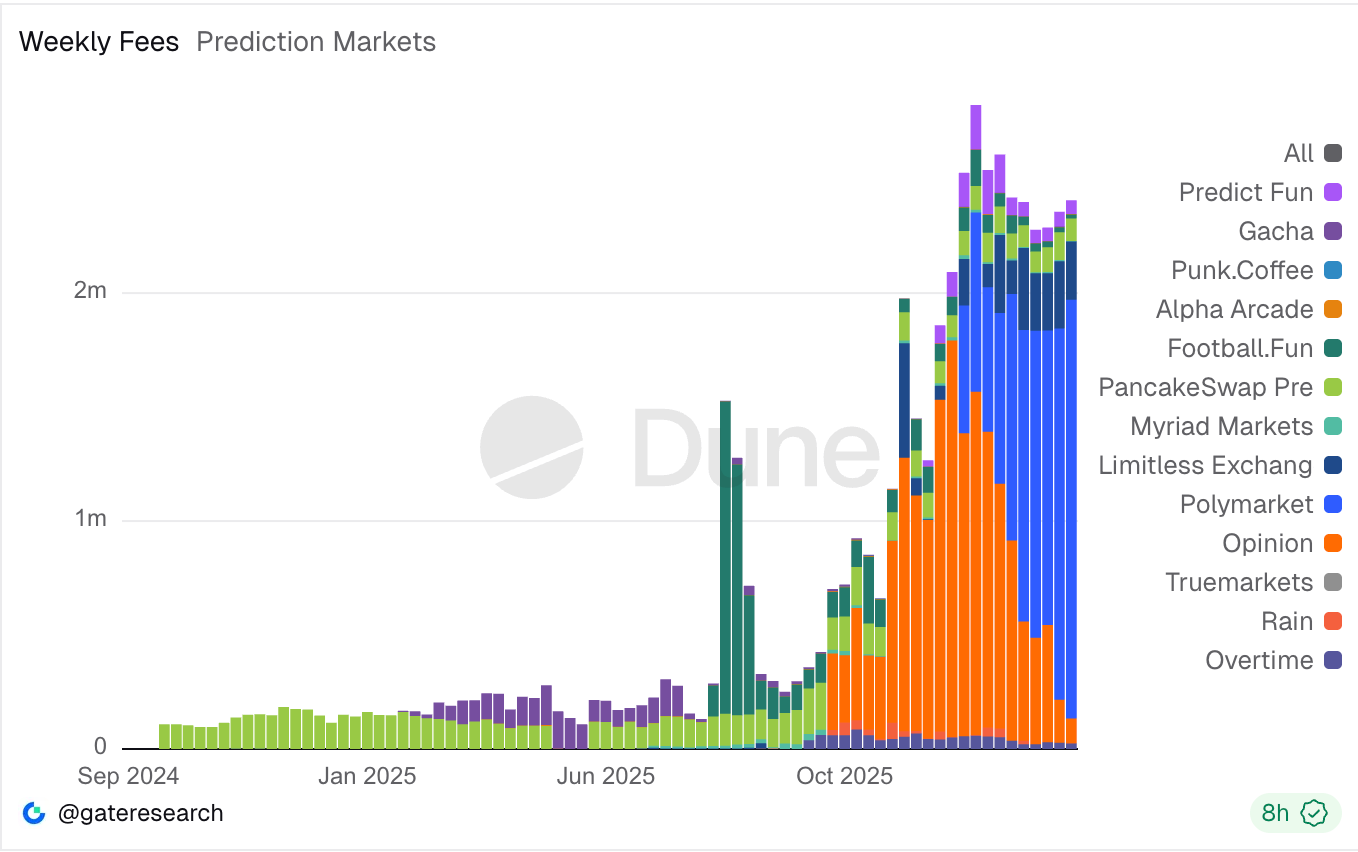
According to data compiled by Gate Research on Dune, since transaction fees were introduced on January 6th, Polymarket has accumulated over $11.2 million in fee revenue.

Using the most conservative method for another static estimate, assuming the trading volume and activity structure of the relevant markets remain unchanged, Polymarket is projected to generate approximately $58.4 million in annual revenue.
However, this estimation method does not accurately reflect Polymarket's revenue-generating capability.

The reason is that Polymarket's revenue data is clearly in a growth trend — over the past 10 weeks, the platform's weekly fee revenue has been $560,000, $786,000, $633,000, $749,000, $1.08 million, $1.28 million, $1.35 million, $1.29 million, $1.63 million, $1.84 million... showing almost weekly significant growth.

Reasons for Revenue Growth

There are two reasons for the growth in Polymarket's fee revenue. First, Polymarket has expanded the scope of fee-charging markets; second, Polymarket's overall trading volume and the trading volume in fee-charging markets have been growing continuously.

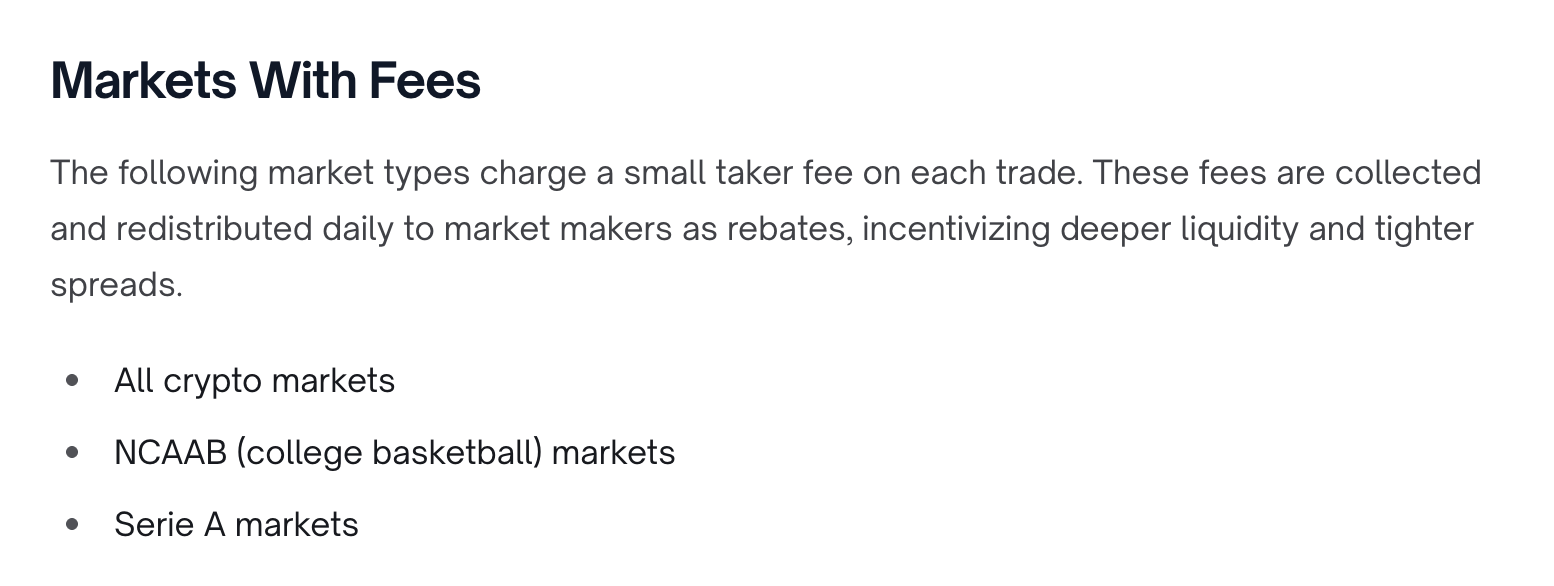
Regarding the scope of fee-charging markets, Polymarket extended the fee mechanism to all cryptocurrency-related markets on March 6th. Additionally, even earlier, it had begun trialing fee collection in sports markets like NCAA and Serie A. However, the former (cryptocurrency-related markets) currently remains the primary source of fee revenue.
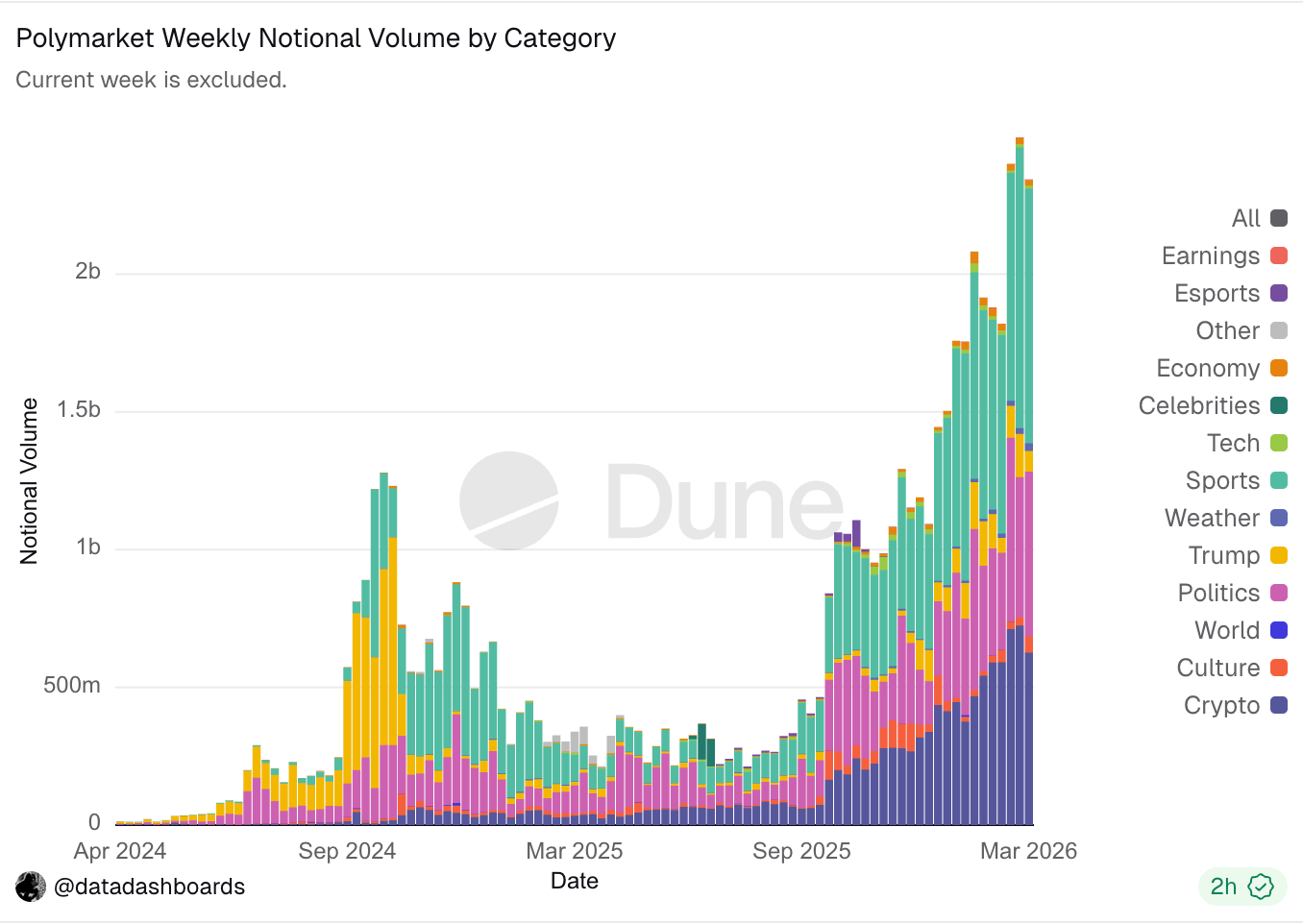
Regarding trading volume, the data dashboard compiled by Data Dashboards on Dune shows that Polymarket's weekly overall trading volume and cryptocurrency market volume (the bottom purple bars) have been growing steadily.
Future Revenue Projections

When we last projected Polymarket's revenue, we had to manually extract the trading volume proportion of "15-minute cryptocurrency up/down" related markets within all cryptocurrency-related markets. But now, since Polymarket extended fees to all cryptocurrency-related markets on March 6th, this estimation is much more straightforward. As for NCAA and Serie A, perhaps because the former hasn't entered the "March Madness" official tournament yet, and the latter has relatively low cultural attention in the US, the trading volume scale of these markets is significantly smaller compared to cryptocurrencies, so they are temporarily ignored here.

Taking data from the only full week after March 6th (March 9th-15th), the trading volume of cryptocurrency-related events accounted for 26.7% of the platform's total trading volume that week. In the same week, Polymarket's fee revenue was approximately $1.84 million. Based on this ratio for a static projection, under the current trading volume level and structure, if Polymarket introduces a similar fee model across all markets, it is projected to bring in $360 million in annual revenue for the platform.

The Money Printer is Already Running

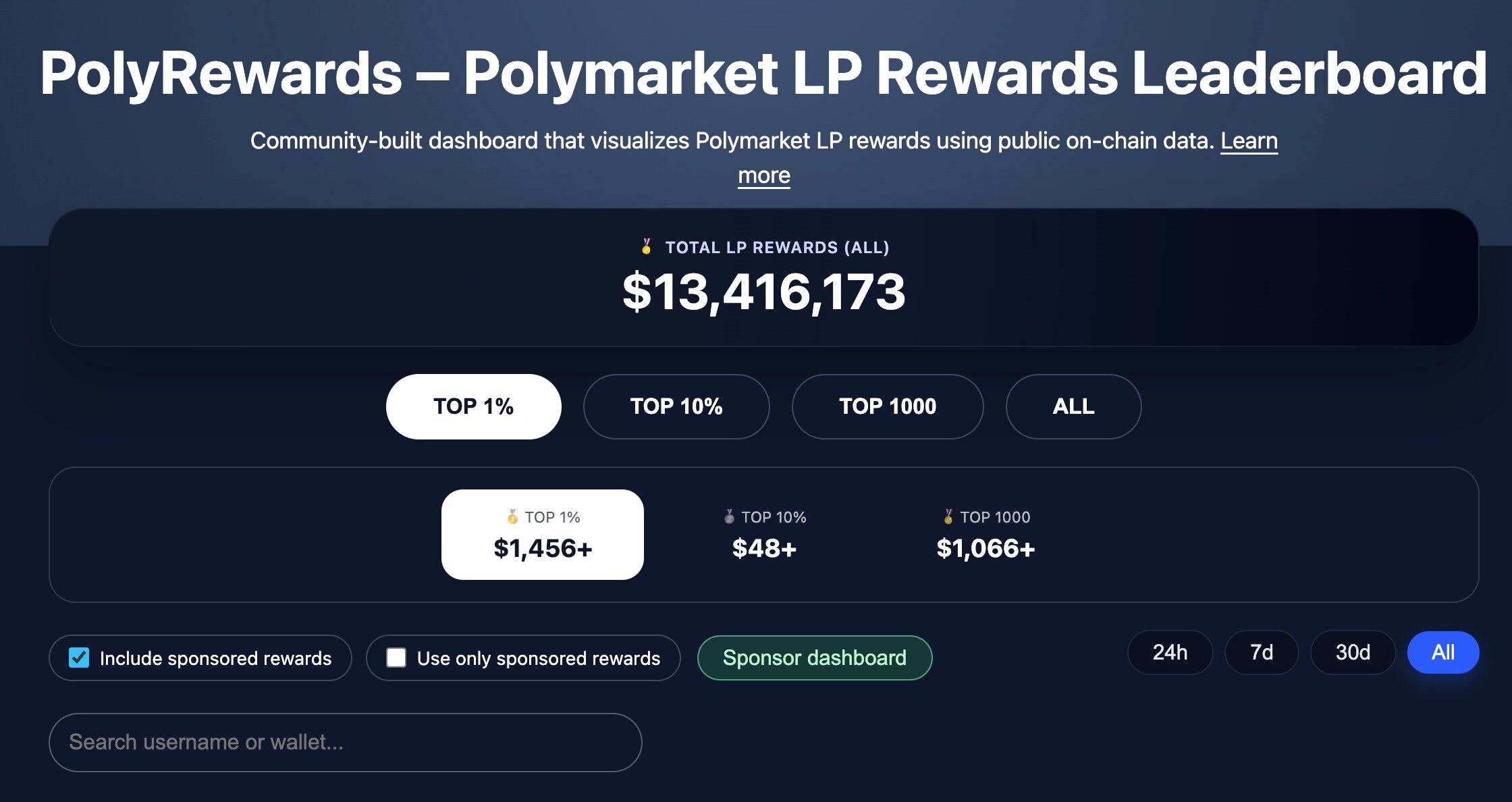
It is worth mentioning that, as a key measure for Polymarket to expand liquidity, the platform has so far distributed a total of $13.41 million in subsidies to liquidity providers (LPs). In contrast, if the data for the remainder of March can continue the performance of the first half, the fee revenue generated by Polymarket within this month alone could cover the total expenditure on liquidity subsidies.
Polymarket has largely proven the revenue-generating capability of this new form of prediction markets. Future revenue growth will mainly depend on two variables — how much more trading volume can grow, and whether fees can be further extended to more markets.

If these two variables continue to trend upwards, prediction markets might become the simplest and most direct "money printer" in the cryptocurrency industry.


Preguntas relacionadas

QWhen did Polymarket start charging transaction fees, and what was the initial market targeted?

APolymarket started charging transaction fees on January 6, beginning with the '15-minute cryptocurrency up/down' markets.

QHow much fee revenue has Polymarket accumulated since it began charging fees?

APolymarket has accumulated over $11.2 million in fee revenue since it started charging transaction fees.

QWhat are the two main reasons for the growth in Polymarket's fee revenue?

AThe two main reasons are the expansion of fee-charging markets to include all crypto-related markets and the continuous growth in overall trading volume, particularly in cryptocurrency markets.

QWhat is the estimated annual revenue for Polymarket if fees are extended to all markets, according to the latest data?

AIf fees are extended to all markets, the estimated annual revenue for Polymarket is approximately $360 million, based on current trading volume and structure.

QHow does Polymarket's fee revenue compare to the subsidies it has provided to liquidity providers (LPs)?

APolymarket has provided a total of $13.41 million in subsidies to LPs. If the revenue trend from the first half of March continues, the fee income for the month alone could cover the total subsidies paid to LPs so far.

Lecturas Relacionadas

Oficina de Inteligencia TechFlow: Compañía vinculada a Trump transfiere 12 millones de dólares en activos antes de su visita a China; el prototipo de "El Gran Corto" advierte nuevamente sobre burbuja bursátil en EE.UU.

Resumen de las noticias principales: Inteligencia Artificial (IA) y Ciberseguridad: Mozilla y OpenAI despliegan herramientas de IA para revisión de código y seguridad. Hackers han utilizado con éxito IA para descubrir y explotar vulneraciones de día cero, señalando una nueva era en la ciberguerra. Contenido generado por ChatGPT aparece en libros de texto, generando debate académico. Un tribunal estadounidense dictamina que el escaneo masivo de libros por Anthropic para entrenar IA es "uso legítimo". Cripto y Web3: Bancos estadounidenses presionan contra una ley de criptomonedas, pero la Casa Blanca se niega a retroceder. BlackRock elige Ethereum para fondos tokenizados. Se informa de una transferencia de 12 millones de dólares en cripto vinculada a Trump antes de una visita a China. Un NFT famoso de Jack Dorsey se desploma un 99.9% en valor. Semiconductores y Empresas Tecnológicas: Un aficionado logra ejecutar un modelo de IA masivo con hardware inusual (Intel Optane). TSMC aumenta su inversión en Estados Unidos. GitLab recorta personal y abandona sus valores culturales previos. La UE propone prohibir a gigantes tecnológicos estadounidenses manejar datos gubernamentales sensibles. Mercados y Macroeconomía: Michael Burry, de "The Big Short", advierte nuevamente sobre una posible burbuja en el mercado de valores. El petróleo supera los 100 dólares tras tensiones con Irán. Un popular tren de alta velocidad en China anuncia aumentos de tarifas significativos. Línea general: La IA se está convirtiendo en infraestructura fundamental, ejerciendo presión sobre el orden establecido en finanzas, seguridad y gobernanza de datos, mientras los mercados muestran signos de tensión y los actores tradicionales resisten los cambios.

marsbitHace 46 min(s)

Oficina de Inteligencia TechFlow: Compañía vinculada a Trump transfiere 12 millones de dólares en activos antes de su visita a China; el prototipo de "El Gran Corto" advierte nuevamente sobre burbuja bursátil en EE.UU.

marsbitHace 46 min(s)

Arthur Hayes: Ignora la guerra y la inflación, la burbuja de la IA es la mayor oportunidad

En su último artículo "The Butterfly Touch", Arthur Hayes, cofundador de BitMEX, argumenta que la liquidez en dólares y yuanes seguirá aumentando, beneficiando a Bitcoin y las criptomonedas. Identifica la burbuja de la IA como la mayor oportunidad actual, impulsada por un gasto de capital (CAPEX) sin precedentes en Estados Unidos y China, financiado mediante la creación de dinero y préstamos. La competencia por la supremacía en IA y el "efecto Reina Roja" alimentarán esta expansión continua. Hayes predice que esta tendencia continuará hasta que un evento importante, como una OPI masiva de IA o un cambio político tras las elecciones estadounidenses de 2028, haga reconsiderar el valor de estas inversiones. Mientras tanto, la liquidez fomentará los mercados. Respecto a los conflictos geopolíticos, como una posible guerra entre EE.UU. e Irán, Hayes señala que obligará a muchas naciones a priorizar infraestructura física y bienes básicos sobre activos financieros en dólares. Para evitar una liquidación masiva que dañe los mercados estadounidenses, las autoridades probablemente relajarán las condiciones financieras, imprimiendo más dinero. Concluye que este entorno de mayor liquidez, junto con el gasto en IA y las presiones inflacionarias de la guerra, es muy favorable para Bitcoin, cuyo precio podría dispararse. También recomienda explorar altcoins como $NEAR, anticipando una fuerte apreciación. Su mensaje central es mantenerse invertido durante este ciclo alcista.

marsbitHace 1 hora(s)

Arthur Hayes: Ignora la guerra y la inflación, la burbuja de la IA es la mayor oportunidad

marsbitHace 1 hora(s)

Trading

Spot
Futuros
活动图片




