How Dirty Money Funded an AI Unicorn: The 'Altruistic' Gambit of a Crypto Fraudster

比推Publicado a 2026-03-19Actualizado a 2026-03-19

Resumen

Sam Bankman-Fried (SBF), the convicted crypto fraudster behind the collapse of FTX, made a $500 million investment in AI company Anthropic in April 2022 through his hedge fund Alameda Research. The investment, which came from misappropriated customer funds, secured an 8% stake in Anthropic. At the time, Anthropic was a relatively unknown AI safety startup embedded within the Effective Altruism (EA) movement, a philosophy both SBF and Anthropic's founders were part of. The EA community, which prioritizes maximizing positive impact, often through high-risk means, connected the key players. Despite recognizing "red flags," Anthropic accepted the investment for its strategic value but granted SBF no voting rights or board seat. Following FTX's collapse in November 2022, SBF was sentenced to 25 years in prison. His Anthropic shares were seized and sold by FTX's bankruptcy estate for $1.34 billion to repay creditors. Had the estate held the shares, they would be worth over $30 billion today, given Anthropic's recent valuation of $380 billion. The story highlights the deep ties between Anthropic's founding, its early funding, and the EA movement, though the company has since distanced itself from the EA label post-SBF. It underscores the ethical compromises in pursuit of "effective" outcomes and remains a stark chapter in both crypto fraud and AI venture history.

Author: Deep Tide TechFlow

Original Title: From 500 Million to 30 Billion: How Crypto Madman SBF Bet on the Most Valuable Company of the AI Era?


Anthropic is now one of the most important AI companies on the planet, perhaps even the most important.

Its Claude large language model is deployed at the Pentagon, U.S. intelligence agencies, and national labs, used by the U.S. military for intelligence analysis and target selection in military strikes against Iran.

Its annualized revenue skyrocketed from zero to $14 billion in less than three years. In February 2026, Anthropic completed its Series G funding round of $30 billion, reaching a post-money valuation exceeding $380 billion. Amazon, Google, Nvidia, Microsoft—tech giants are lining up to pour money in.

Over the past few weeks, it has been engaged in a globally watched standoff with the Pentagon over the weaponization of AI.

And in the early funding history of this company, one name remains a topic of fascination: Sam Bankman-Fried.

In April 2022, ChatGPT didn't exist, and the AI sector was far from today's frenzy. SBF, through his controlled hedge fund Alameda Research, poured $500 million into Anthropic's Series B round, swallowing 86% of the entire round and securing about 8% of the company. Seven months later, the FTX empire collapsed, SBF became the protagonist of the largest fraud case in cryptocurrency history, sentenced to 25 years in prison. That $500 million was FTX customer deposits.

But if SBF hadn't been caught, if that money had been legitimate, at today's $380 billion valuation, that 8% stake would theoretically be worth over $30 billion. Turning $500 million into $30 billion, a return of over 60 times, would rank among the top absolute profits in the entire history of venture capital.

A crypto fraudster serving time in federal prison almost pulled off the wildest bet in AI investment history.

How did SBF find Anthropic back in 2022? Why did he dare to bet $500 million all at once? And why did Anthropic accept this money?

The answer lies within a circle called "Effective Altruism."

A Shared House, A Movement, A Check

In mid-2010s San Francisco, a group of people lived in the same type of shared houses, attended the same type of gatherings, read the same type of papers, and believed in the same philosophy.

This philosophy was called Effective Altruism (EA). Its core proposition is simple: charity shouldn't be based on feeling, but on calculation. Every dollar should flow towards what mathematically "maximizes good outcomes." In an important branch of EA, the number one existential risk to humanity is not nuclear war, not plague, but runaway artificial intelligence.

Dario Amodei was immersed in this circle.

He was the 43rd signatory of the Giving What We Can Pledge, committing to donate at least 10% of his income. He had been a fan of GiveWell as early as 2007 or 2008.

He lived in the same shared building with two others: one was Holden Karnofsky, co-founder of GiveWell and Open Philanthropy, one of the most influential fund allocators in the EA movement; the other was Paul Christiano, a core researcher in AI alignment. At the time, both Dario and Paul served as technical advisors to Open Philanthropy.

Later, Karnofsky married Dario's sister, Daniela. After getting engaged, the couple once lived with Dario. In January 2025, Karnofsky quietly joined Anthropic as a "technical staff member" responsible for safety strategy. When a Fortune reporter discovered this, Anthropic hadn't even announced the appointment publicly.

This was an intimate social network.

Anthropic's early employee Amanda Askell was the ex-wife of William MacAskill, one of the founders of the EA movement. She was the 67th signatory of GWWC, and her doctoral thesis focused on a core issue in EA philosophy: how to handle infinities in ethics.

Anthropic's most important governance body, the "Long-Term Benefit Trust," which theoretically holds significant control over the company, has four members, three of whom come directly from the EA system: former GiveWell Managing Director Neil Buddy Shah, Center for Effective Altruism CEO Zach Robinson, and Evidence Action CEO Kanika Bahl (Evidence Action is a long-time GiveWell grantee).

The three largest funders in the history of the EA movement were all early investors in Anthropic: Facebook co-founder Dustin Moskovitz, Skype co-founder Jaan Tallinn, and Sam Bankman-Fried.

This is the real path through which SBF found Anthropic. It wasn't some genius investment insight or超前判断 of the AI赛道. It was an internal circulation of funds within a circle: EA money flowing to EA projects, solving problems defined by EA.

SBF subscribed to a more radical branch of EA, "earning to give." He quit his job at Jane Street on Wall Street to dive into cryptocurrency, publicly stating his purpose was not personal wealth but "altruism"—to first earn as much money as possible, then direct that money towards causes that would create the greatest positive impact. Anthropic's mission, "to develop powerful AI safely," was almost the standard EA prescription for the AI existential risk.

In May 2021, Jaan Tallinn led Anthropic's Series A round of $124 million, with Moskovitz participating. In April 2022, SBF took the baton to lead the Series B round, writing a check for $500 million in one go, accounting for 86% of the total $580 million raised. Other participants in the same round included Caroline Ellison, Nishad Singh, and James McClave from Jane Street.

This list of co-investors is telling in itself. Caroline Ellison was the CEO of Alameda, Nishad Singh was the Engineering Director of FTX, and Jane Street was SBF's former employer.

This $580 million Series B round effectively came almost entirely from the pool of funds controlled by SBF and his immediate circle.

Red Flags and Compromise

Dario Amodei is not stupid.

He later recalled in an in-depth interview that SBF at the time seemed like someone "bullish on AI and concerned about safety," which aligned with Anthropic's direction. But then Dario said a key phrase: he had detected "enough red flags."

So he made a decision: take the money, but isolate it in the governance structure. SBF received non-voting shares and was excluded from the board. Dario later评价 SBF's behavior as "much, much, much more extreme and worse than I imagined," piling on three "much mores."

This decision proved极其聪明 in hindsight. But it also leaves a尖锐的问题: if the danger signals were numerous enough to require governance isolation, why take the money at all?

One could argue the AI funding environment in early 2022 was far less heated than today. Anthropic needed large sums to build computing power. An investor willing to put up $500 million in one go, regardless of his "red flags," was hard to find.

But there's a more subtle reason: in the operating logic of the EA circle, the "cleanliness" of funding sources was never a top priority. What mattered was the "effectiveness" of the funds—could they help you do more? SBF's entire wealth narrative was built on this foundation: making money was the means, doing good was the end, so the methods of making money could be less scrupulous, as long as the ultimate "good" produced was large enough.

This logic was pushed to a criminal extreme by SBF, but at the moment he invested in Anthropic, it appeared merely as a radical yet not illegal philosophical choice.

After the Collapse: A Dark Comedy

The subsequent story is known to everyone in crypto.

In November 2022, CoinDesk exposed Alameda's balance sheet, Changpeng Zhao announced the sale of FTT, a bank run engulfed FTX, and the empire collapsed within nine days. SBF was arrested, extradited, tried, and sentenced to 25 years in March 2024. That 8% stake in Anthropic, along with all other assets, was frozen in the bankruptcy liquidation process.

There's a sidelined episode from the trial worth mentioning.

SBF's defense lawyers tried to use the Anthropic investment as evidence of "foresight"—"Look, he wasn't just squandering money; he made an investment decision whose valuation multiplied several times over."

Prosecutor Damian Williams's response was firm: whether these investments were profitable was completely irrelevant to the fraud charges. You stole someone else's money to invest; it's still theft even if you profit. The judge sided with the prosecution, and Anthropic's name was excluded from the trial.

The prosecution added another blow: Wasn't FTX itself the best counterexample? Valued at $18 billion in 2021, $32 billion in 2022, and worth nothing today.

Then came the liquidation auction.

March 2024, the first round at an $884 million valuation.

The largest buyer was the Abu Dhabi sovereign fund Mubadala, investing $500 million—exactly the amount SBF had originally invested. The second largest buyer was Jane Street, the former employer of SBF and Caroline Ellison. Jane Street's head of quantitative research, Craig Falls, even personally put in $20 million. SBF's first job after graduating from MIT was as a trader at Jane Street; now his old employer was buying back shares acquired with stolen money by its former employee.

Two rounds recovered a total of $1.34 billion. This money flowed into the FTX creditor compensation pool, becoming an important source for victims to recover their deposits.

What if the liquidation team hadn't sold?

In February 2026, Anthropic completed its Series G funding of $30 billion, reaching a post-money valuation of $380 billion. Without considering dilution, that 8% stake theoretically went from $1.34 billion to $30 billion. The liquidation team, of course, did not choose this path; their duty was to liquidate quickly to repay creditors. But this数字差距, $1.34 billion vs. a potential over $30 billion, is key to understanding why this story is still discussed.

It is the single biggest regret in the entire FTX bankruptcy case.

EA's Collective Amnesia

Anthropic's current scale and influence need no elaboration, but an interesting phenomenon is: this company is systematically distancing itself from the EA movement.

Its seven co-founders have all pledged to donate 80% of their personal wealth. At the current valuation, the donation pledges of these seven founders alone are worth approximately $38 billion. Nearly 30 Anthropic employees signed up for an EA conference in San Francisco, more than twice the combined number from OpenAI, Google DeepMind, xAI, and Meta's Superintelligence Lab.

But Daniela Amodei said in a Wired interview: "I'm not an expert in effective altruism. I don't identify with that term. My impression is that it's a bit of an outdated term." This is someone whose husband is one of the most influential fund allocators in the EA movement and just joined her company.

This stance of "taking EA money, employing EA people, living in EA shared houses, but not admitting to being EA" became understandable after the SBF case. FTX's collapse sent the EA movement's reputation into a trough. Anthropic needs distance from this label, just as any smart company would distance itself from negative brand associations.

But the facts remain: Anthropic's founding logic comes from the core EA discourse on AI existential risk; its early funding came almost entirely from the EA network; its governance structure is held by people from the EA system.

Parallel Universe in Prison

Sam Bankman-Fried is now in federal prison. Earliest release in 2049. He will be 57 years old then.

During his time in prison, the AI company he invested in using stolen funds has reached a valuation exceeding $380 billion, is engaged in a world-watched博弈 with the Pentagon over AI weaponization, and its founders have become regulars in The New York Times and on Capitol Hill. Had it been legal, that $500 million bet could have made SBF one of the highest-returning venture investors of this era.

SBF's "earning to give" and Anthropic's "developing AI safely" share the same underlying operating system: for a sufficiently large good outcome, unusual means and risks can be tolerated.

SBF pushed this logic past the boundary of crime. Anthropic operates on the safe side of that line, but its core proposition—"we must build the most powerful AI ourselves to ensure its safety"—is itself a grand,近乎自证的赌注.

They grew from the same soil.

In that soil, Dario and SBF once attended the same gatherings, believed in the same philosophy, and lived on different nodes of the same social network. One走向了 a $380 billion AI empire, the other walked into federal prison.

And the $500 million check that connected them remains the most诡异 page in Anthropic's history.


Twitter:https://twitter.com/BitpushNewsCN

Bitpush TG Group:https://t.me/BitPushCommunity

Bitpush TG Channel: https://t.me/bitpush

Original link:https://www.bitpush.news/articles/7621282

Preguntas relacionadas

QHow did Sam Bankman-Fried (SBF) come to invest in Anthropic, and what was the connection?

ASBF invested in Anthropic through his connection with the Effective Altruism (EA) movement. Both SBF and Anthropic's founders were part of the EA social network, which believes in maximizing positive impact through calculated philanthropy. SBF's investment aligned with EA's focus on AI as an existential risk, and he provided $500 million in Anthropic's Series B round in April 2022, taking about 8% equity.

QWhat was the outcome of SBF's $500 million investment in Anthropic after FTX collapsed?

AAfter FTX's collapse in November 2022, SBF's investment in Anthropic was frozen as part of the bankruptcy proceedings. The shares were eventually sold in auctions, raising $1.34 billion for FTX's creditor repayment pool. If the shares had been held until Anthropic's valuation reached $380 billion in 2026, the 8% stake could have been worth over $30 billion theoretically, but the liquidation team sold them early to repay victims.

QWhy did Anthropic accept SBF's investment despite 'red flags' about his funds?

AAnthropic accepted SBF's $500 million investment due to the significant funding needs for AI development in 2022, when the AI sector was less hot. Additionally, within the EA circle, the 'effectiveness' of funds (their potential to maximize positive impact) was prioritized over the 'cleanliness' of their source. SBF's wealth narrative of 'earning to give' aligned with EA goals, making the investment appealing despite risks.

QHow is Anthropic distancing itself from the Effective Altruism (EA) movement post-SBF scandal?

AAnthropic is systematically distancing itself from the EA movement to avoid association with the negative reputation from SBF's scandal. For example, Daniela Amodei, a key figure at Anthropic, publicly stated she is not an expert in EA and does not identify with the term, calling it 'outdated.' This is despite Anthropic's origins, funding, and governance being deeply rooted in the EA network.

QWhat role did the 'Effective Altruism' philosophy play in both SBF's actions and Anthropic's mission?

AThe Effective Altruism philosophy, which emphasizes maximizing positive impact through rational calculation, influenced both SBF and Anthropic. SBF adopted EA's 'earning to give' approach, aiming to amass wealth (through questionable means) to donate to high-impact causes. Anthropic's mission to 'safely develop powerful AI' addresses EA's defined existential risk of AI. Both shared the logic that large-scale 'good' could justify unusual means, though SBF crossed into criminality.

Lecturas Relacionadas

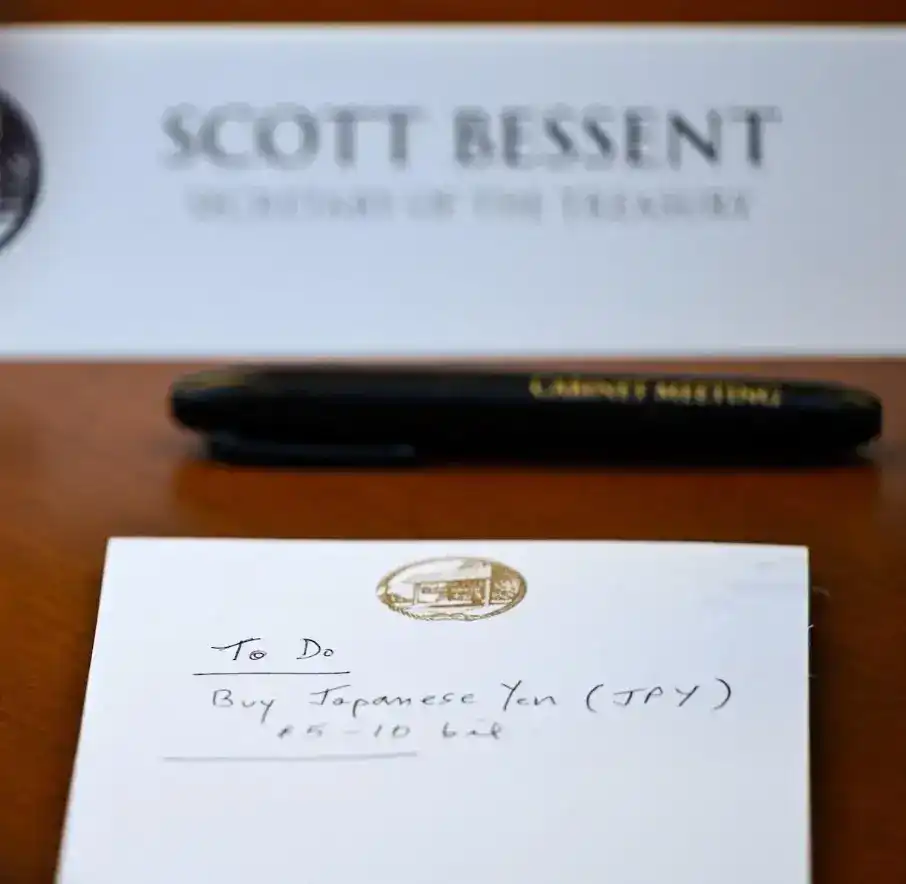
El "hecho de mercado ignorado": Intervención conjunta de EE.UU., Japón y Corea del Sur, la "inusual" participación del Departamento del Tesoro de EE.UU., ¿Bessant intervino discretamente para "salvar el mercado"?

**EE.UU., Japón y Corea del Sur lanzan una rara intervención coordinada en divisas para estabilizar los mercados aliados clave** En una acción conjunta poco frecuente, los gobiernos de Estados Unidos, Japón y Corea del Sur realizaron la mayor intervención coordinada en divisas en casi tres décadas. El objetivo fue contrarrestar la presión depreciatoria sobre el yen japonés y el won surcoreano, considerándose una medida para estabilizar los mercados financieros de estos aliados y prevenir la propagación de riesgos. Japón y Corea del Sur intervinieron vendiendo dólares para apoyar sus monedas. De manera destacada, el Tesoro de EE.UU. participó directamente en el apoyo al yen vendiendo euros y comprando yenes a través de los bancos Goldman Sachs y Morgan Stanley, la primera acción de este tipo en 30 años. Esta intervención, precedida por "consultas de tipos" del Banco de la Reserva Federal de Nueva York, empujó al yen y al won significativamente más altos desde sus mínimos recientes. Analistas sugieren que la acción va más allá de estabilizar los tipos de cambio. Estados Unidos busca proteger la estabilidad de los mercados de activos en Japón y Corea del Sur, actores cruciales en la cadena de suministro global de semiconductores e IA, para evitar que las tensiones financieras afecten a estas industrias estratégicas y al propio mercado estadounidense. La medida se interpreta como una operación para contener la volatilidad del mercado en una fase clave para la inversión en IA.

marsbitHace 4 min(s)

El "hecho de mercado ignorado": Intervención conjunta de EE.UU., Japón y Corea del Sur, la "inusual" participación del Departamento del Tesoro de EE.UU., ¿Bessant intervino discretamente para "salvar el mercado"?

marsbitHace 4 min(s)

¿La Fed subirá las tasas en septiembre? ¿Cómo soportarán la presión las criptomonedas y las acciones de EE.UU.?

En la última semana, las apuestas del mercado sobre una subida de tipos de la Reserva Federal en septiembre han aumentado drásticamente de menos del 50% a más del 80%, según datos de CME FedWatch. Este cambio refleja una creciente preocupación inflacionaria impulsada por el repunte en los precios del petróleo, vinculado a las tensiones geopolíticas en el Estrecho de Ormuz. La última reunión de la Fed mostró una división interna, con tres miembros votando a favor de una subida inmediata de 25 puntos básicos. Aunque los economistas aún prevén ciclos de bajadas para 2027, el mercado está reaccionando a los datos recientes. El próximo punto clave será el informe de IPC de julio, que determinará si la presión inflacionaria persiste y consolidará la probabilidad de una subida en septiembre. Para los criptoactivos como Bitcoin, una mayor expectativa de subidas de tipos supone presión, ya que aumenta el coste de oportunidad de mantener activos que no generan rendimiento. Históricamente, Bitcoin ha mostrado una alta sensibilidad a estos ciclos. Sin embargo, el impacto real puede ser limitado si el mercado interpreta la acción como el final del ciclo de endurecimiento monetario. En el mercado bursátil, las acciones vinculadas a las criptomonedas (como Coinbase o MicroStrategy) y las tecnológicas en general podrían experimentar una mayor volatilidad. Una subida de tipos aumenta las tasas de descuento en los modelos de valoración, presionando especialmente a las acciones de crecimiento. Esta expectativa coincide con una temporada de resultados en la que los gigantes tecnológicos están siendo evaluados por su capacidad para convertir grandes gastos de capital en IA en flujos de ingresos tangibles, un escrutinio que se intensificaría con unos costes de financiación más altos. En resumen, la probabilidad de una subida de tipos en septiembre es ahora significativa. Los inversores deberán monitorear de cerca la evolución de los precios del petróleo, los próximos datos de inflación y las declaraciones de los funcionarios de la Fed para calibrar el escenario final y su impacto en los activos de riesgo.

Odaily星球日报Hace 4 min(s)

¿La Fed subirá las tasas en septiembre? ¿Cómo soportarán la presión las criptomonedas y las acciones de EE.UU.?

Odaily星球日报Hace 4 min(s)

Intervención conjunta de Estados Unidos y Japón: ¿El inicio del nuevo "Acuerdo Plaza" y del sistema de Bretton Woods 2.0 y el fin de la era del carry trade del yen?

**Intervención conjunta de EE.UU. y Japón: ¿El fin de la era del carry trade en yen?** EE.UU. y Japón han llevado a cabo una intervención cambiaria conjunta para apoyar al yen, lo que ha desencadenado una fuerte revalorización de la moneda. El Secretario del Tesoro de EE.UU., Yellen, y el Presidente Trump han confirmado la participación estadounidense, con Yellen señalando la voluntad de seguir interviniendo para corregir la "grave infravaloración" del yen. La acción coordinada, que incluye compras directas y orientación a los bancos, hizo que el yen se fortaleciera hasta 157,40 frente al dólar. Los analistas señalan que esta medida va más allá de la gestión de tipos de cambio y podría marcar un punto de inflexión en el *carry trade* global basado en el yen barato, una práctica que ha definido los flujos de capital durante décadas. Si Japón necesita vender reservas de divisas, incluidos bonos del Tesoro de EE.UU., para defender su moneda, podría provocar una reevaluación al alza de los rendimientos de la deuda estadounidense a largo plazo. La presión sobre los bonos a largo plazo no se atribuye principalmente al riesgo de inflación, sino a factores estructurales: la posible liquidación de reservas japonesas y el cambio de rol de las grandes tecnológicas, que ahora emiten deuda masivamente para financiar inversiones en IA e infraestructura, pasando de ser proveedoras a demandantes netas de ahorro. Algunos observadores interpretan esta intervención como el posible inicio de una nueva coordinación internacional, un "Acuerdo Plaza" moderno o el comienzo de un "Bretton Woods 2.0", que reflejaría un reequilibrio de la economía global y el fin del orden financiero basado en el financiamiento barato en yenes.

marsbitHace 42 min(s)

Intervención conjunta de Estados Unidos y Japón: ¿El inicio del nuevo "Acuerdo Plaza" y del sistema de Bretton Woods 2.0 y el fin de la era del carry trade del yen?

marsbitHace 42 min(s)

¿Qué tan alta es la posibilidad de que TradeXYZ abandone Hyperliquid y siga su propio camino?

Con la expansión continua de TradeXYZ y su dominio de más del 90% del mercado HIP-3 de Hyperliquid, ha surgido un debate en la comunidad sobre la posibilidad de que TradeXYZ se independice y construya su propia plataforma. Los usuarios discuten principalmente si la plataforma buscaría capturar una mayor parte de las tarifas de transacción, ya que actualmente comparte los ingresos 50/50 con Hyperliquid, habiendo generado casi 5000 millones de dólares en volumen pero con ingresos limitados. Aunque la independencia podría ofrecer a TradeXYZ más control y beneficios, existen limitaciones significativas. Hyperliquid proporciona un rendimiento técnico superior y es un canal crucial de distribución y adquisición de usuarios. Además, existe una relación de confianza entre los fundadores de ambos proyectos. Una separación podría resultar en una situación perjudicial para ambos: Hyperliquid perdería su principal motor de crecimiento narrativo y TradeXYZ enfrentaría desafíos técnicos, la pérdida de usuarios y daños reputacionales. Por lo tanto, aunque TradeXYZ tiene un fuerte poder de negociación, es poco probable que abandone Hyperliquid en el corto plazo. La estrategia más sensata sería negociar mejores términos de colaboración mientras se mantiene la integración actual, evitando una competencia directa que beneficiaría a otros actores del mercado RWA.

marsbitHace 53 min(s)

¿Qué tan alta es la posibilidad de que TradeXYZ abandone Hyperliquid y siga su propio camino?

marsbitHace 53 min(s)

"Teletubbies" robots hacen limpieza a domicilio, 200 yuanes/hora, pura inteligencia *artificial*

La compañía de robótica Tau Robotics, con sede en San Francisco, ha presentado su nuevo servicio de limpieza doméstica utilizando robots humanoides teleoperados. Bautizados cariñosamente como "Teletubbies" por su antena similar a un router Wi-Fi en la cabeza, estos robots, llamados Chelsea, Elon y Tony, realizan tareas como limpiar cocinas, baños, recoger basura y trapear pisos. La gran revelación, y decepción para algunos, es que las demostraciones mostradas son operadas por control remoto en tiempo real ("inteligencia artificial 100% humana"). La empresa defiende este enfoque como una solución práctica para cerrar la brecha tecnológica actual, permitiendo la recolección de datos del mundo real para eventualmente desarrollar autonomía completa, similar al "modo sombra" en los coches autónomos. El servicio, disponible por invitación en el área de la Bahía de San Francisco, cuesta 30 dólares (unos 200 yuanes) por hora, un precio competitivo frente a los servicios de limpieza humana en EE.UU. El artículo analiza los desafíos de introducir robots humanoides en hogares, comparando el enfoque estadounidense con el chino, que prioriza entornos industriales más controlados. Se argumenta que la forma humanoide facilita la teleoperación intuitiva y podría ofrecer un valor emocional único, aunque su necesidad funcional frente a robots con ruedas sigue siendo objeto de debate.

marsbitHace 1 hora(s)

"Teletubbies" robots hacen limpieza a domicilio, 200 yuanes/hora, pura inteligencia *artificial*

marsbitHace 1 hora(s)

Trading

Spot
活动图片