Going All-In on Arc: Circle Is Making a High-Stakes Gamble It Can't Afford to Lose

比推Publicado a 2026-01-09Actualizado a 2026-01-09

Resumen

Circle, the issuer of USDC, is launching its own Layer 1 blockchain called Arc to address challenges in the stablecoin industry, particularly as interest rate cuts threaten its revenue model. Arc is designed for enterprise cross-border payments using stablecoins, offering sub-second finality, configurable privacy options, and transaction fees paid in USDC to avoid crypto volatility. It aims to reduce reliance on interest income and expand distribution channels. Despite partnerships with major firms like BlackRock and Visa, Arc faces competition from Tether and Stripe's Tempo, as well as challenges in attracting liquidity and regulatory scrutiny over privacy features. Circle's established reputation and payment network provide a competitive advantage, but the success of Arc is critical amid a shifting economic landscape.

Author: Prathik Desai

Original Title: Circle Draws an Arc, Can it address the rate-cut problem?

Compiled and Edited by: BitpushNews


The year is 2026. When we make video calls with people around the world, the delay is at most a second or two, with marginal costs close to zero. However, when it comes to transferring funds between institutions, countries, or systems, we still face deadlines, exorbitant fees, and reliance on settlement windows that close on weekends.
Cryptocurrency promised to solve this problem with stablecoins, which have been around for over a decade. Yet, despite the significant, quantifiable savings stablecoins can bring, businesses and commercial institutions have not fully embraced them for fund transfers.

We have discussed this issue before, and how the inherent privacy concerns in public blockchains become a barrier here. We also listed privacy infrastructure as the number one cryptocurrency theme to watch in 2026.

Stablecoin issuer Circle has seized this opportunity with its Layer 1 blockchain, Arc, to address the industry's demand for privacy and stablecoin infrastructure.

In this in-depth analysis, I will explain why Circle is building an L1 blockchain now, what its biggest challenges are, and how this move could change the stablecoin ecosystem.

The story begins......

Why Launch an L1 Blockchain Now?

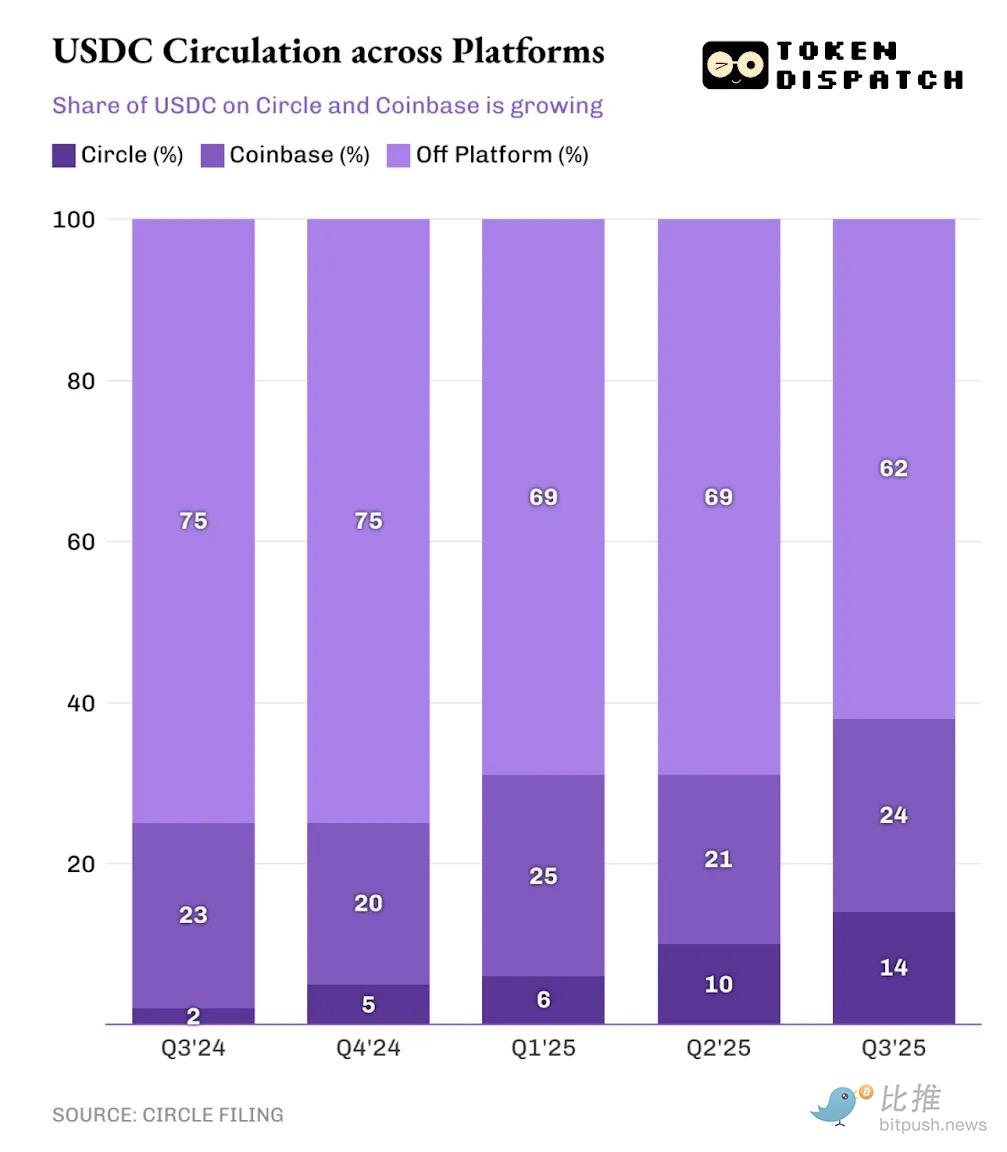
Currently, the stablecoin issuance business is entirely driven by interest income and heavily reliant on distribution channels. This has become clearer since the company went public last June, through the public reports of the USDC issuer.
I mentioned last year:

> In the third quarter, although the circulation of USDC increased by more than 100% year-over-year, reserve income only grew by 66%, reaching $711 million. The rest was offset by the Federal Reserve's interest rate cuts. The average yield dropped by 96 basis points, resulting in a $122 million reduction in Circle's reserve income.

> For every $1 of reserve income Circle earned in Q3, it spent over 60 cents on distribution and transaction costs, including wallet integrations, exchange listings, incentive programs, and revenue sharing.
The U.S. Federal Reserve has begun cutting interest rates. In December 2025, it lowered the effective rate by 25 basis points to 3.50%–3.75%. The central bank also announced the cessation of quantitative tightening effective December 1st.

Recently, the U.S. economy has also been signaling to policymakers that it's time to soften their stance in response to disappointing data.

The U.S. Institute for Supply Management's Manufacturing Purchasing Managers' Index (PMI) for December 2025 was 47.9 (a reading below 50 indicates contraction), marking the 10th consecutive month of contraction. The December employment report will be released later today, but data from the past few months has been lackluster.

When you put all this together, it explains why Circle is desperately pivoting to a new business model.

The issuer wants to reduce its reliance on falling short-to-mid-term interest rates while building a second engine that can rely on broader, more diversified distribution.

The Arc Transformation

Arc is the transformation Circle is betting on.

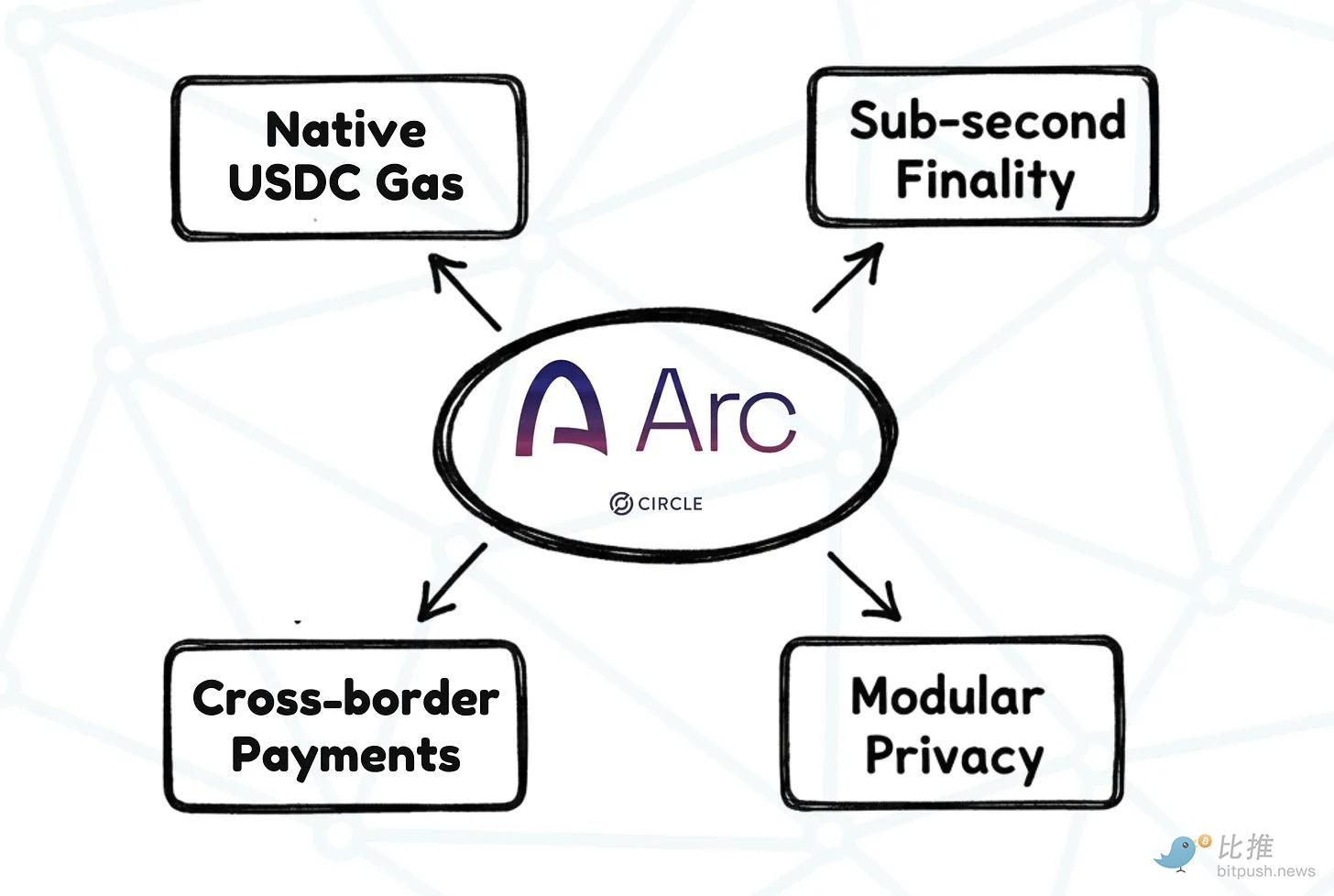
Circle built Arc as an open Layer 1 blockchain designed for cross-border enterprise payments via stablecoins. It also aims to provide sub-second finality (transaction confirmation speed) and configurable privacy options, masking enterprises' confidential payment data through opt-in privacy features.

By transitioning from a stablecoin issuer to a stablecoin settlement stack operator, Circle aims to build its business model around moving money the way enterprises care about.

In its testnet phase, Circle's Arc has already established partnerships with over 100 companies, including traditional finance and tech giants like BlackRock, Amazon Web Services, HSBC, Standard Chartered, and Visa.

Although Arc is still in the testnet phase and will face a series of challenges before it succeeds (which I will discuss later), I find this move interesting given its timing and the problem it aims to solve.

First, it charges Gas fees (network transaction fees) natively in its own token. Arc is designed to charge low, predictable, and USD-denominated transaction fees in USDC. This eliminates the need for corporate treasury departments to hold ETH, SOL, or any other cryptocurrency just to pay transaction fees.

Second, Arc offers sub-second finality and a 24/7 settlement window. CFOs don't care about shaving off milliseconds like traders do, but they will lose sleep if a payment doesn't settle after they hit "send" because it's the weekend or due to a cross-border intermediary chain.

Third, and perhaps most importantly, is the configurable privacy Arc offers. By explicitly providing opt-in privacy features, it bridges the gap between the built-in transparency of public blockchains and enterprises' need to ensure the confidentiality of sensitive information, such as B2B supplier invoices, fund transfers, and payroll settlements.

The most interesting part is that all these features do not require stakeholders to buy into cryptocurrency ideology. Instead, Arc removes the crypto traits enterprises dislike, such as absolute transparency, fee volatility, and uncertain settlement, enabling blockchain usage in mainstream commerce.

But couldn't Circle build these features on an existing chain? Why build its own blockchain?

Circle has always been "renting the venue." On someone else's chain, Circle would be forced to inherit their fee token, compete with other players for network resources and face congestion, follow their governance rules, and be subject to their network downtime risks. It would also lose an entire revenue stream by not being able to collect fees in USDC. Circle already pays distribution costs to expand USDC's reach on other platforms. By launching its own chain, it hopes to "own the venue" and earn "rent" by offering "space" to everyone using its infrastructure.

However, this is not a race that will be easily won. Circle has no shortage of competitors watching closely.

On the issuer side, Tether remains the biggest threat, with the highest liquidity globally. It has also launched the regulation-friendly stablecoin USAT to strengthen its presence in the U.S. market.

Beyond issuers, players like Stripe pose a threat, building something similar to what Circle is doing with Arc.

In September 2025, Stripe and Paradigm announced Tempo, a payment-first blockchain built around stablecoins. Tempo's architecture allows paying Gas fees with any stablecoin and similarly aims for sub-second finality.

Besides external threats, many things could go wrong with Arc itself.

It might face cold-start difficulties in attracting liquidity and developers. Enterprises won't choose Circle's Arc just because it looks best on paper. Many are already using traditional payment platforms like PayPal and would prefer platforms that already have counterparties and integration services.

Arc's "configurable privacy" will be a contentious topic. The opt-in feature gives enterprises what they want, but it will also draw regulatory scrutiny. Arc must prove to the market that privacy here means "commercial confidentiality with auditability," not just a blind spot that could create new vulnerabilities.

Despite these hurdles, I am optimistic about Circle's opportunity for two reasons.

First is its distribution channels and reputation. Circle doesn't need to prove to the market that USDC is a real dollar token. It's already embedded in countless exchanges, wallets, fintech processes, and increasingly in institutional pipelines. Now a public company, Circle's initiatives look different from any other crypto company. Its public reputation lends credibility to its launches. It also forces Circle to build Arc in a way that can be explained clearly to the compliance and finance teams in boardrooms.

Second is the Circle payment network. Combined with Arc, it can build a network of institutions and payment channels executing real-world transactions within a compliance framework.

Arc could still fail. But does it have any other choice? With the rate-cut era officially here and more cuts likely in the new year, this is the only logical move for an issuer facing intense competition.


Twitter:https://twitter.com/BitpushNewsCN

Bitpush TG Discussion Group:https://t.me/BitPushCommunity

Bitpush TG Subscription: https://t.me/bitpush

Original article link:https://www.bitpush.news/articles/7601422

Preguntas relacionadas

QWhy is Circle launching its own Layer 1 blockchain called Arc?

ACircle is launching Arc to reduce its reliance on interest rate-driven revenue from stablecoin issuance and to create a new business model focused on enterprise-grade cross-border payments with features like sub-second finality, configurable privacy, and USDC-denominated gas fees.

QWhat are the main challenges that Circle's Arc blockchain might face?

AArc may face challenges including attracting liquidity and developers, competing with established players like Tether and Stripe, overcoming enterprise reliance on traditional payment platforms, and addressing regulatory scrutiny over its configurable privacy features.

QHow does Arc aim to address enterprise concerns about using blockchain for payments?

AArc addresses enterprise concerns by offering sub-second finality for 24/7 settlement, USDC-denominated fees to avoid crypto volatility, and configurable privacy options to protect sensitive business data while maintaining auditability.

QWhat competitive threats does Circle face with the launch of Arc?

ACircle faces competition from Tether, which dominates stablecoin liquidity and has launched a regulatory-friendly USDT variant, as well as from Stripe's Tempo blockchain, which also focuses on stablecoin payments with fast finality and flexible gas fees.

QWhy is Circle's shift to a blockchain model considered urgent?

AThe shift is urgent because the Federal Reserve has begun cutting interest rates, which directly reduces Circle's revenue from USDC reserves, forcing the company to diversify its business model and reduce dependency on rate-sensitive income.

Lecturas Relacionadas

¿Qué tan difícil es hacer un chip? Un error en una operación de división le costó 475 millones de dólares.

El desarrollo de chips es un proceso extremadamente complejo y costoso. Un pequeño error en una unidad de división de coma flotante en un chip Intel Pentium provocó un gasto de 475 millones de dólares en su retirada global en los años 90. Esto ilustra la dificultad central: un chip debe funcionar correctamente desde el primer intento, a diferencia del software que puede parchearse posteriormente. Según estudios, solo el 24% de los proyectos de chips tienen éxito en el primer "tape-out" (fabricación). Más del 70% del ciclo de diseño se dedica a la verificación, un proceso crucial para detectar errores. Verificar exhaustivamente un núcleo de CPU con las tecnologías actuales más avanzadas podría llevar miles de años, lo que es inviable. El campo de la verificación de chips se enfrenta a un "triángulo de imposibilidad" entre alto rendimiento, buena capacidad de depuración y bajo coste. A pesar de ser un trabajo arduo y menos glamuroso que áreas como la IA, es fundamental. El autor, investigador y divulgador, lidera un equipo que desarrolla la plataforma ágil de verificación ENCORE, basada en FPGAs, para mejorar la eficiencia. También realiza divulgación científica para hacer esta compleja tecnología más accesible, argumentando que vale la pena perseverar en tareas difíciles y a largo plazo como la investigación en verificación y la divulgación técnica.

marsbitHace 15 min(s)

¿Qué tan difícil es hacer un chip? Un error en una operación de división le costó 475 millones de dólares.

marsbitHace 15 min(s)

¿Claude fuerza a "registrarse con reconocimiento facial"? ¿A partir de julio no se podrá usar sin entregar el DNI?

Anthropic, la empresa detrás de la IA Claude, ha notificado a sus usuarios una importante actualización de su política de privacidad, que entrará en vigor el 8 de julio. El cambio principal es la posibilidad de que se requiera a los usuarios verificar su edad o identidad para reforzar la seguridad. Esta verificación se realizaría a través del servicio de un tercero, Persona, e implicaría subir un documento de identidad oficial con fotografía (como pasaporte o carnet de conducir) y una fotografía en tiempo real para comparación. La actualización, dirigida a cuentas de consumo individual (gratuitas, Pro y Max), explica que esta medida es parte de los esfuerzos para garantizar la seguridad y fiabilidad del servicio, especialmente a medida que Claude adquiere más capacidades de "agente". Estas capacidades permiten a la IA realizar tareas de varios pasos e integrarse con aplicaciones de terceros (como Google Drive o Slack), lo que significa que los datos de los usuarios pueden fluir fuera de los servidores de Anthropic. La compañía afirma que los datos de verificación no se utilizarán para entrenar sus modelos, no se almacenarán en sus servidores y que su uso será para escenarios específicos de seguridad y cumplimiento. Sin embargo, este anuncio ha generado preocupación entre los usuarios sobre una mayor recopilación de datos personales y un posible fin de la era de relativo anonimato en el uso de asistentes de IA avanzados. Algunos lo interpretan como una respuesta a incidentes anteriores, como la suspensión de cuentas por uso indebido, y como el comienzo de una etapa de mayor trazabilidad y responsabilidad a medida que los agentes de IA se vuelven más autónomos y potentes.

链捕手Hace 27 min(s)

¿Claude fuerza a "registrarse con reconocimiento facial"? ¿A partir de julio no se podrá usar sin entregar el DNI?

链捕手Hace 27 min(s)

La blockchain finalmente comienza a navegar hacia el canal principal después de 18 años

El veterano fondo de capital de riesgo cripto Variant ha recaudado un nuevo fondo de 222 millones de dólares, ampliando su tema de inversión de "propiedad digital" a "autonomía". Esto señala un cambio estratégico: la tecnología blockchain ya no se ve como un sector de inversión aislado, sino como una capa tecnológica fundamental que se integrará en áreas principales como la IA, las finanzas, las redes sociales y la robótica. Ante la reducción del efecto riqueza en el mercado cripto y la creciente competencia por la atención y el capital de la IA, los fondos cripto como Paradigm, Haun Ventures y YZi Labs están ampliando sus horizontes de inversión más allá del ecosistema blockchain. La tesis emergente es que la verdadera aplicación a gran escala de la criptografía podría llegar a través de los agentes de IA y la economía robótica, donde las capacidades de blockchain (pagos globales, contratos inteligentes, identidad en cadena) pueden servir como infraestructura financiera crítica para transacciones autónomas entre máquinas. Un caso ilustrativo es la inversión de Tether en NEURA Robotics, que planea integrar carteras autogestionadas en sus robots, permitiendo micro-pagos y transacciones automatizadas. Esto representa un cambio clave: la criptografía no necesita ser la aplicación frontal, sino la "vía" subyacente para la actividad económica automatizada. Sin embargo, la convergencia IA-Cripto no es una fórmula mágica. Los proyectos valiosos deben demostrar que la tecnología blockchain es esencial, no solo un añadido. El futuro del sector puede depender de su capacidad para satisfacer la nueva demanda real generada por la autonomía de las máquinas y los agentes de IA, más que de buscar un crecimiento especulativo.

marsbitHace 34 min(s)

La blockchain finalmente comienza a navegar hacia el canal principal después de 18 años

marsbitHace 34 min(s)

La cadena de bloques tardó 18 años en comenzar a navegar hacia el canal principal

El veterano fondo de capital riesgo cripto Variant anunció este mes una nueva ronda de financiación de 222 millones de dólares, ampliando su enfoque de "propiedad digital" hacia la "autonomía". Esto señala un cambio estratégico: la tecnología blockchain está dejando de ser un nicho de inversión aislado para integrarse como una capa tecnológica fundamental en áreas como la IA, las finanzas, las redes sociales o la robótica. Este movimiento refleja una respuesta realista al impacto de la IA: en lugar de competir por la narrativa, blockchain busca posicionarse como la infraestructura financiera y de verificación subyacente en el mundo de la IA. Fondos como Paradigm, Haun Ventures o YZi Labs también están ampliando sus horizontes más allá del ámbito puramente cripto. El artículo argumenta que la aplicación masiva de blockchain podría llegar a través de los agentes de IA (AI Agents). Para operar de forma autónoma, estos agentes necesitarán carteras digitales, redes de pago globales y sistemas de identidad y reputación portables, capacidades que la tecnología blockchain ha estado desarrollando. Un ejemplo es la inversión de Tether en NEURA Robotics, que planea integrar herramientas de cartera cripto en sus robots para permitir micropagos y transacciones automatizadas. Sin embargo, la fusión IA-Crypto no es una fórmula mágica. Debe demostrar un valor real: la tecnología blockchain debe ser esencial o mejorar significativamente la aplicación. Los proyectos meramente especulativos no resolverán los problemas de adopción. La conclusión es clara: la industria cripto necesita integrarse en las grandes corrientes tecnológicas como la IA para encontrar una demanda real y sostenible, más allá de los ciclos especulativos. Su futuro podría depender de convertirse en la "capa de asentamiento" para la economía automatizada.

链捕手Hace 40 min(s)

La cadena de bloques tardó 18 años en comenzar a navegar hacia el canal principal

链捕手Hace 40 min(s)

Trading

Spot
Futuros

Artículos destacados

Cómo comprar ARC

¡Bienvenido a HTX.com! Hemos hecho que comprar AI Rig Complex (ARC) sea simple y conveniente. Sigue nuestra guía paso a paso para iniciar tu viaje de criptos.Paso 1: crea tu cuenta HTXUtiliza tu correo electrónico o número de teléfono para registrarte y obtener una cuenta gratuita en HTX. Experimenta un proceso de registro sin complicaciones y desbloquea todas las funciones.Obtener mi cuentaPaso 2: ve a Comprar cripto y elige tu método de pagoTarjeta de crédito/débito: usa tu Visa o Mastercard para comprar AI Rig Complex (ARC) al instante.Saldo: utiliza fondos del saldo de tu cuenta HTX para tradear sin problemas.Terceros: hemos agregado métodos de pago populares como Google Pay y Apple Pay para mejorar la comodidad.P2P: tradear directamente con otros usuarios en HTX.Over-the-Counter (OTC): ofrecemos servicios personalizados y tipos de cambio competitivos para los traders.Paso 3: guarda tu AI Rig Complex (ARC)Después de comprar tu AI Rig Complex (ARC), guárdalo en tu cuenta HTX. Alternativamente, puedes enviarlo a otro lugar mediante transferencia blockchain o utilizarlo para tradear otras criptomonedas.Paso 4: tradear AI Rig Complex (ARC)Tradear fácilmente con AI Rig Complex (ARC) en HTX's mercado spot. Simplemente accede a tu cuenta, selecciona tu par de trading, ejecuta tus trades y monitorea en tiempo real. Ofrecemos una experiencia fácil de usar tanto para principiantes como para traders experimentados.

362 Vistas totalesPublicado en 2025.01.09Actualizado en 2026.06.02

Cómo comprar ARC

Discusiones

Bienvenido a la comunidad de HTX. Aquí puedes mantenerte informado sobre los últimos desarrollos de la plataforma y acceder a análisis profesionales del mercado. A continuación se presentan las opiniones de los usuarios sobre el precio de ARC (ARC).

活动图片