From Content Creation to Business Operations: Five Pitfall Avoidance Guides for Crypto KOLs

比推Publicado a 2025-12-11Actualizado a 2025-12-11

Resumen

"The article 'From Content Creation to Business Operations: Five Pitfall Avoidance Guides for Crypto KOLs' outlines key mistakes crypto influencers make and how to overcome them. The first error is treating content creation as a hobby rather than a business, emphasizing the need to shift from chasing engagement to building a sustainable monetization strategy. The second pitfall is lacking a clear niche; the author advises focusing on a specific, profitable area that combines personal passion, expertise, and market demand. The third mistake is using low-quality branding materials, which can undermine credibility. Instead, creators should use professional visuals and clear bios to enhance their perceived value. The fourth error is creating content without a monetization funnel, leading to high visibility but low income. The solution is to build a structured ecosystem that converts followers into customers. Finally, the fifth pitfall is stagnating after choosing a niche. Continuous learning and staying updated with industry trends are crucial to maintaining authority and growth. The article stresses that avoiding these traps can help crypto KOLs transform their content into a long-term, profitable business."

Author: Leon Abboud

Compiled by: Deep Tide TechFlow

Original title: Gaining Followers but Not Money? 5 Growth Traps Crypto KOLs Must Avoid


My journey as a content creator began 8 years ago. Along the way, I have made almost every possible mistake in trying to grow and monetize my brand. Here are the 5 most critical mistakes to be wary of, hoping to help you avoid these costly lessons.

Mistake 1: Treating the Brand as a Hobby, Not a Business

Most creators remain in financial difficulty for a long time because they position themselves as "creators." When you see yourself only as a creator, you focus on optimizing clicks, likes, views, and various metrics thrown at you by algorithms.

Top personal brand creators see themselves as a business. You are a company, just a one-person company, and that company is named after you.

Once you make this mindset shift, everything changes. The creator's mindset is: "What content should I post tomorrow?" The business mindset is: "What process can turn strangers into customers?"

You stop asking "how to get more engagement" and start asking the key questions that truly drive growth:

  • What am I selling?

  • Who is my target customer?

  • What user experience path have I designed?

  • How do I publish content to make users more willing to approach me and eventually purchase?

This shift in thinking can turn scattered content into a long-term money-making machine.

Creators who pursue exposure will eventually fall into the "engagement treadmill"—an endless cycle. You can only keep running until you are eventually exhausted. Escape this trap, or it will consume you.

Mistake 2: No Clear Niche

If you try to speak to everyone, you will eventually find that you resonate with no one.

It's like standing on a chair in a train station and shouting, "Hey, everyone, pay attention!" No one will turn around. But if you shout a specific name, like "Mike," the person with that name will immediately turn to look at you.

This is what a good niche can do for you—it can precisely attract specific people in your target area.

A strong niche needs to have the following traits: profitability, appeal, and sufficient content creation material.

Many people are unsure of what their niche is and don't know how to find it. For me, I like to ask myself this question:

"What is something I am naturally passionate about, willing to go all out to be the best in the world at, and that people are willing to pay for?"

The intersection of these three elements is your niche. It must be something you are truly interested in and passionate about; something you are willing to invest time, energy, and effort into mastering; and something people are willing to pay for.

For example, real-world assets (RWAs), stablecoins, prediction markets, etc., are all good niches. There are many people in these fields who want to understand industry trends and use this knowledge to enhance personal growth or career development.

This is the definition of an excellent niche.

A simple self-test question: "Can I create a long-running newsletter around this niche?" If the answer is yes, then your niche is viable. If the answer is no, you may have just chosen a direction you "feel" is right, not a real niche.

Most creators fail because they want everyone to like them. They pursue as many views and exposure as possible. But in reality, successful brands are not built on popularity but on clear positioning.

Mistake 3: Using Cheap Branding Materials That Lower Account Image

People browse thousands of personal homepages every day, and you have less than half a second to convey value.

If your avatar is blurry, outdated, AI-generated, or from some "dead" NFT project (like one you minted in 2021), you will immediately lose appeal and status.

Remember, your status is not fixed; it can quickly decline because of these details.

Your personal homepage is not a decoration but your "storefront sign." It should enhance your sense of value, not drag it down.

A clear avatar, a clear banner image, and a clear bio—these are all essential. If you don't want to use your own photo, choose a community or identity that truly reflects your values and comes with it a sense of status.

There are now hundreds of active NFT communities offering high-quality profile pictures (PFPs) at various price points. You don't need to own a CryptoPunk to appear wealthy or professional. You need materials that enhance your brand image, not content that lowers your sense of value.

Also, don't use hashtags in your bio, and avoid overly broad terms. Your bio should clearly state three things: who you are, what you do, and why people should respect you, that's it.

Mistake 4: Creating Content Without Building a Monetization Funnel

This is a mistake I made for a long time in my creator career. I created content purely for the sake of creation, never developing a strategy for monetizing the content.

What was the result? I accumulated hundreds of thousands of followers, but when I tried to monetize, I found the income was minimal. The reason is simple—from the beginning, I did not build the right ecosystem for my content.

It's like building a house. You need to lay a solid foundation first to build a tall and stable structure. For any business, this "foundation" is monetization capability.

Most creators publish content without any backend structure. They rely on the virality of the content, hoping that one day a sponsor will fall from the sky and save everything. But this is not building a business; it's gambling on an uncertain "lottery game."

A real brand needs a clear "funnel structure":

  • Top-of-funnel traffic content;

  • A "lead magnet" to attract potential customers;

  • Mid-funnel paid products;

  • High-end core products;

  • And long-term assets that generate sustained income.

With such a structure, every piece of content you create will have a clear purpose and meaning.

Without these, you may gain followers but not make money. And in this industry, this is the worst combination. You may become "famous but poor," eventually burning out from feeling like all your efforts are in vain.

Mistake 5: Stopping Learning and Growing After Choosing a Niche

Choosing your niche is just the starting point. To become the top expert and best creator in your field, you must always stay at the forefront of industry development.

Your field is developing at lightning speed, with constant changes. There are always new hotspots, new announcements, and new trending topics emerging.

You need to become the "go-to expert" in this field, and the way to achieve this is through continuous learning. This means you need to constantly absorb content, read relevant books, listen to podcasts, etc.

My personal habit is to read one marketing book per month, which keeps me at the forefront of marketing knowledge. You need to become the "encyclopedia" of the industry.

People will follow the smartest people in the industry, not those who fall behind the times. Users enjoy reading in-depth content and gaining knowledge from it.

The speed at which you learn and document determines the speed at which you grow.

Once you stop learning about your field, you also stop growing along with it.


Twitter:https://twitter.com/BitpushNewsCN

Bitpush TG Discussion Group:https://t.me/BitPushCommunity

Bitpush TG Subscription: https://t.me/bitpush

Original link:https://www.bitpush.news/articles/7595010

Preguntas relacionadas

QWhat is the first major error that crypto KOLs should avoid according to the article?

AThe first major error is treating your brand as a hobby rather than a business. Creators who view themselves merely as 'creators' focus on metrics like clicks and likes, while successful creators see themselves as a business and focus on converting strangers into customers.

QWhy is having a clear niche important for a crypto content creator?

AA clear niche is important because if you try to appeal to everyone, you end up resonating with no one. A strong niche helps attract a specific target audience, has monetization potential, is personally engaging, and provides ample content creation opportunities.

QHow can poor branding materials negatively impact a crypto KOL's image?

APoor branding materials, such as blurry or outdated profile pictures, AI-generated images, or irrelevant NFT PFPs, can instantly diminish your appeal and perceived status. Your profile acts as your storefront and should enhance your value, not detract from it.

QWhat is the consequence of creating content without a monetization funnel?

ACreating content without a monetization funnel can lead to having a large following but little income. Without a structured funnel (e.g., top-of-funnel content, lead magnets, paid products), creators rely on viral luck rather than building a sustainable business, often resulting in being 'famous but poor.'

QWhy must crypto KOLs continue learning and growing after choosing their niche?

ACrypto KOLs must continue learning because the industry evolves rapidly. Staying at the forefront of your niche by consuming relevant content, reading books, and listening to podcasts helps you remain the go-to expert, attract followers seeking knowledge, and grow alongside your field.

Lecturas Relacionadas

¿Con qué puede contrarrestar la "división en forma de K" esta gran provincia central que fue superada?

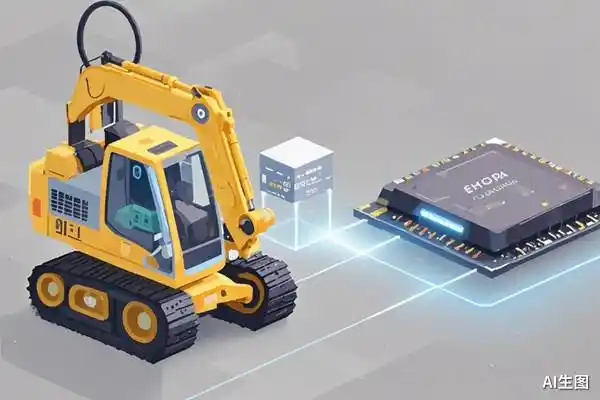
La clasificación de las principales provincias económicas chinas en el primer semestre trajo un cambio significativo: Anhui superó a Hunan, ingresando al top 10 nacional con un crecimiento del PIB del 5,6%, mientras que Hunan creció solo un 2,7%. El punto clave es la "divergencia en K" en el dinamismo industrial. Anhui impulsa su crecimiento mediante la innovación tecnológica y la fabricación de alta gama, con la industria y las exportaciones apoyándose mutuamente. En contraste, Hunan se ve frenada por el ajuste de sus industrias tradicionales, y sus industrias emergentes aún no compensan esta desaceleración, agravando los dolores de la transición. La brecha industrial es evidente: el valor agregado industrial de Anhui creció un 12,4%, impulsado por la alta tecnología (44,6%), mientras que el de Hunan fue del 2,6%, dependiendo principalmente de sectores tradicionales. Como respuesta, los líderes de Hunan han iniciado inspecciones intensivas. Una se centró en tres grandes empresas de maquinaria de construcción en Changsha, subrayando la necesidad de modernizar la industria tradicional e integrar la inteligencia artificial. Otra exploró industrias futuras como la inteligencia corpórea y la tecnología cuántica. Los expertos señalan que Hunan debe evitar una estrategia de "romper primero, construir después". Debe consolidar su pilar tradicional, la maquinaria de construcción, mientras acelera el desarrollo y la escalabilidad de las industrias de alta tecnología para lograr un equilibrio. La provincia posee una sólida base en I+D (intensidad del 2,57%, 9º a nivel nacional), pero enfrenta el desafío de convertir la investigación en ventaja industrial competitiva, un área donde Anhui y Hubei han tenido más éxito. El camino para Hunan implica una "escalada simultánea en dos vías": la transformación inteligente de su industria establecida y el cultivo decidido de nuevos motores de crecimiento en sectores futuros, aprovechando mejor sus recursos de innovación.

marsbitHace 32 min(s)

¿Con qué puede contrarrestar la "división en forma de K" esta gran provincia central que fue superada?

marsbitHace 32 min(s)

El mercado de cifrado se enfría, ¿cómo convierte Neutrl las acciones tokenizadas en un nuevo "campo minero de ingresos"?

Los mercados cripto se enfrían, pero Neutrl explora una nueva vía de rendimiento a través de acciones tokenizadas y participaciones pre-IPO. El protocolo de dólar sintético aplica una estrategia delta-neutral: compra acciones con descuento en mercados privados (ej. un 15% de descuento por un bloqueo de 6 meses) y simultáneamente las cubre vendiendo contratos perpetuos de la misma acción. Esto neutraliza el riesgo direccional. La ganancia proviene de dos fuentes estructurales: el descuento inicial de compra y la tasa de financiación positiva (funding rate) pagada a las posiciones cortas en los perpetuos. En un ejemplo, estos componentes generarían alrededor de 20.5 puntos porcentuales de retorno en seis meses, independientemente del precio de la acción. Este flujo de rendimiento es clave porque no está correlacionado con el ciclo cripto. Mientras los retornos de las stablecoins sintéticas nativas se comprimen en mercados bajistas, la oferta de acciones bloqueadas sigue su propio calendario (IPO, desbloqueos de empleados). El crecimiento de los perpetuos de acciones (volumen diario de 55B USD) permite por primera vez cubrir estas posiciones de forma líquida. El universo de oportunidades es amplio y el marco se puede extender a otros activos tokenizados (materias primas, tasas) a medida que desarrollen mercados de derivados líquidos.

marsbitHace 38 min(s)

El mercado de cifrado se enfría, ¿cómo convierte Neutrl las acciones tokenizadas en un nuevo "campo minero de ingresos"?

marsbitHace 38 min(s)

6 meses, 4 rondas de financiación: el profesor de la Universidad del Lago Oeste se vuelve viral

La empresa de inteligencia corporeizada Cerebro Universal Xihu Robot ha completado su financiación Serie A, sumando ya cuatro rondas en seis meses por un total de 5.000 millones de RMB. La inversión proviene de un consorcio de capital estatal, industrial y de riesgo. Los fondos se destinarán al I+D de un gran modelo unificado para robots humanoides y a una base de formación de talento en IA corporeizada. Fundada en 2024 como un spin-off de la Universidad Xihu, la compañía cuenta con un equipo fundador líder, incluidos los profesores Wang Donglin y Zhang Yue. Su estrategia se basa en la autosuficiencia total en tres pilares: cerebro general, "subcerebro" de cuerpo completo y hardware humanoide. En 2026, lanzaron su robot humanoide Xihu o1, cerrando el ciclo tecnológico completo. Su tecnología clave incluye el sistema GAE (Avatar General), un modelo de movimiento que permite teleoperación de baja latencia y generalización de acciones sin programación, y una arquitectura de doble preentrenamiento cerebro/subcerebro para una mejor percepción, razonamiento y control motor. Esto les permite abordar tareas complejas en múltiples pasos. La compañía ha establecido colaboraciones con empresas como Alibaba e Intel, ha obtenido pedidos por casi 100 millones de RMB y ha firmado un acuerdo con el gobierno de Longyou para crear una base de entrenamiento en escenarios reales. El objetivo es escalar la comercialización en campos como inspección industrial, rescate y montaje remoto. La última ronda de financiación acelerará el desarrollo del gran modelo unificado y el sistema GAE.

marsbitHace 39 min(s)

6 meses, 4 rondas de financiación: el profesor de la Universidad del Lago Oeste se vuelve viral

marsbitHace 39 min(s)

La volatilidad cae a niveles históricamente bajos, ¿cuándo terminará la "consolidación estival" de Bitcoin?

El bitcóin está atrapado en una típica fase lateral de verano, con su precio fluctuando entre 62.000 y 66.000 dólares durante semanas. La volatilidad implícita ha caído a mínimos históricos, y la liquidez es escasa. Los analistas coinciden en que el catalizador para romper esta inercia no vendrá del interior del mercado cripto, sino de factores macroeconómicos y regulatorios. Se señalan tres eventos clave: los datos de IPC de EE.UU. de esta semana, que podrían aliviar o aumentar las presiones inflacionistas; las futuras señales de política de la Reserva Federal; y el avance de la Ley Clarity, que proporcionaría un marco regulatorio más claro para los activos digitales. Mientras tanto, la demanda institucional, evidenciada por las fuertes entradas recientes en los ETF de bitcóin (especialmente el IBIT de BlackRock), está proporcionando un soporte crucial al precio. Sin embargo, esta compra se ve contrarrestada por las ventas de mineros y otros actores. Los operadores mantienen coberturas en el mercado de derivados, reflejando una actitud cautelosa. La perspectiva general es de espera: se anticipa que la consolidación continúe hasta que alguno de estos factores macro impulse una dirección clara, probablemente a partir de septiembre. A largo plazo, factores como una posible flexibilización de la liquidez global y la adopción institucional siguen siendo constructivos para el bitcóin.

marsbitHace 42 min(s)

La volatilidad cae a niveles históricamente bajos, ¿cuándo terminará la "consolidación estival" de Bitcoin?

marsbitHace 42 min(s)

Trading

Spot
活动图片