BlackRock vs. Strategy: Who Will Win the Bitcoin Accumulation Battle?

marsbitPublicado a 2026-03-20Actualizado a 2026-03-20

Resumen

BlackRock and Strategy (formerly MicroStrategy) are engaged in an unprecedented race to accumulate Bitcoin. As of March 16, 2026, BlackRock’s iShares Bitcoin Trust (IBIT) holds 784,062 BTC, while Strategy holds 761,068 BTC—a gap of 22,994 coins that could close within days given Strategy’s aggressive purchasing pace. BlackRock accumulates Bitcoin indirectly through its IBIT ETF, where investor inflows drive purchases. In contrast, Strategy actively raises capital via debt, equity, and preferred stock offerings to buy and hold Bitcoin directly, with no intention of selling. This competition highlights two distinct models: BlackRock offers a regulated, low-complexity vehicle for institutional exposure, while Strategy employs leverage and corporate strategy for accelerated accumulation. Both are rapidly reducing Bitcoin’s available supply, intensifying market scarcity. Strategy faces higher risks, including significant debt and sensitivity to Bitcoin’s declines, whereas BlackRock’s model is more resilient to sentiment shifts. The outcome symbolizes broader institutional adoption, fueled by regulatory clarity and new accounting rules. Ultimately, both entities reinforce Bitcoin’s growing legitimacy and supply squeeze, impacting all market participants.

Author: Jawad Hussain

Compiled by: Plain Language Blockchain
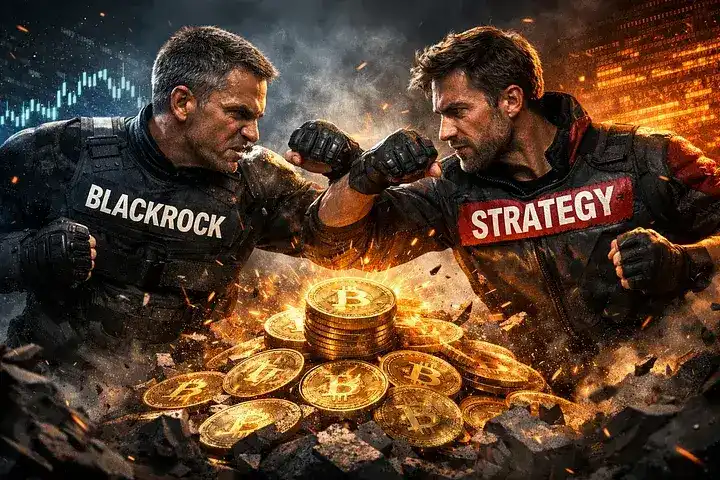
The world's largest asset manager and a 37-year-old software company that has pivoted its entire balance sheet to digital assets are locked in an unprecedented race to accumulate Bitcoin on a massive scale in the crypto market.

As of March 16, 2026, BlackRock's iShares Bitcoin Trust (IBIT) held 784,062 Bitcoin. Meanwhile, Strategy (formerly MicroStrategy) held 761,068 Bitcoin.

The gap between them is approximately 22,994 coins. At Strategy's current purchasing rate, this gap could disappear within days.

This is more than just a footnote in digital asset history. It is one of the most influential financial stories of 2026.

Two entities with different structures, motivations, and risk profiles are competing for the same finite asset. Bitcoin has a fixed supply cap of 21 million coins.

Every coin purchased by these institutions is one coin no longer available for sale. The race between BlackRock and Strategy is accelerating the supply squeeze long predicted by Bitcoin traders.

BlackRock vs. Strategy: Who Will Win the Bitcoin Accumulation War?

Here, we will break down how each participant accumulates Bitcoin, what drives their purchasing speed, the risks for both sides, and what the outcome of this race means for off-exchange investors. Whether you hold IBIT shares, MSTR stock, Bitcoin directly, or none of the above, this race directly impacts the market you participate in.

Two Entities, Two Completely Different Models

Both BlackRock and Strategy hold massive amounts of Bitcoin. But their reasons for holding, the mechanisms, and the associated obligations are completely different.

How BlackRock Accumulates Bitcoin

BlackRock does not buy Bitcoin for itself. The company launched the iShares Bitcoin Trust (ticker: IBIT) on Nasdaq in January 2024, providing investors with a regulated instrument to gain Bitcoin exposure by directly holding the asset. When investors buy IBIT shares, Authorized Participants (large financial institutions) buy Bitcoin on the open market and deliver it to the fund. When investors sell IBIT, the process occurs: the fund sells Bitcoin back into the market.

This means BlackRock's Bitcoin holdings are a function of investor demand. IBIT's holdings grow when institutional and retail buyers want Bitcoin exposure purely through traditional accounts. When sentiment turns bearish and investors redeem, the holdings shrink. BlackRock has no strategic mandate to accumulate Bitcoin; it is a custodian. The Bitcoin it holds economically belongs to IBIT shareholders, not BlackRock itself.

According to SoSoValue data, since its launch, IBIT has attracted cumulative net inflows of $63.21 billion. In the week of March 9 to March 13 alone, IBIT garnered net inflows of $600.1 million, accounting for 78% of the net Bitcoin inflows into ETFs that week. The fund has maintained positive inflows every day since March 9, momentum highlighting the institutional demand driving BlackRock's Bitcoin accumulation.

How Strategy Accumulates Bitcoin

Strategy's model is the complete opposite. The company does not wait for investor funds; it proactively raises capital specifically for buying Bitcoin. This capital primarily comes from three sources: convertible notes (debt instruments convertible into MSTR common stock); at-the-market (ATM) equity offerings (selling new shares directly to the market); and preferred stock instruments, recently the STRC Preferred Shares with an 11.5% annual yield, sold to investors who provide funds directly for Bitcoin purchases in exchange for monthly payments.

Once Strategy secures cash, it purchases Bitcoin through institutional trading desks (primarily Coinbase Prime), storing the coins in secure cold wallets. The company does not trade these coins or hedge. There is a simple directive: buy and hold. This means Strategy's Bitcoin holdings only move in one direction. Unlike IBIT, which can shrink due to redemptions, Strategy's Bitcoin inventory grows with every capital raise, regardless of market conditions.

According to Michael Saylor, in the first week of March 2026, Strategy acquired 40,332 Bitcoin, increasing its holdings by 3.0%. As of mid-March 2026, the company had accumulated 88,568 Bitcoin year-to-date, a 3.4% increase. These numbers reflect an accumulation speed never before attempted by a public company.

The Current Numbers: A Race That Could Conclude in Days

The current gap is the smallest since BlackRock briefly surpassed Strategy's holdings in July 2025. As of March 16, 2026, BlackRock held 784,062, Strategy held 761,068, a gap of 22,994.

At Strategy's recent weekly purchase rate of 22,337 coins, the company could almost erase the entire gap in one week. At its daily rate of approximately 2,881 coins, it would take about 7 to 8 days to surpass BlackRock's current holdings *if IBIT inflows completely stopped*. This last condition is key: IBIT is not standing still; the fund takes in money daily, meaning the target is constantly moving upward as Strategy closes the gap.

The race became a true nail-biter in mid-March because MSTR's purchase speed coincided precisely with a weekly slowdown in BlackRock's growth. This contraction narrowed the gap faster than most analysts expected. Bitcoin Magazine reported on March 17 that MSTR's stock price was approaching $1,500, suggesting market participants are watching the race and betting on Strategy's thesis.

The more core issue is not just who crosses the holding threshold first, but the impact these two entities' continuous purchasing has on the available supply in the open market. According to Checkonchain data, by the end of February 2026, U.S. spot ETFs held a combined reserve of 1.29 million Bitcoin. Adding Strategy's 761,000, these institutional vehicles have absorbed over 2 million Bitcoin. Exchange inventories are declining. The supply shock driving long-term price appreciation is not a theoretical future event; it is happening.

The Financial Architecture Behind Each Model

BlackRock's Structural Advantages

BlackRock operates the world's most liquid Bitcoin investment product. According to its own disclosures, IBIT is the highest-volume Bitcoin exchange-traded product since issuance. The fund manages over $55 billion in Bitcoin assets, offers daily liquidity to investors, and charges a 0.25% annual management fee. It leverages the credibility of a company managing over $14 trillion in assets.

For institutional investors, IBIT eliminates the operational complexity of Bitcoin custody. Bitcoin is held by Coinbase Custody Trust Company, a qualified custodian regulated under New York banking law. Investors access it through existing accounts, without managing wallets, private keys, or operational processes. This simplicity is invaluable for the pension funds, sovereign wealth funds, and family offices driving IBIT's inflows.

BlackRock also benefits from a structural isolation that Strategy lacks. Since IBIT's holdings are tied to investor demand rather than the company's balance sheet, a collapse in investor sentiment triggers redemptions, not bankruptcy. BlackRock the company does not face solvency risk from a Bitcoin price crash. Its IBIT fee income would shrink, but its own financial health is isolated from the assets it holds on behalf of others.

Strategy's Structural Advantages

Strategy's advantage over BlackRock is its ability to act without waiting for market permission. IBIT's purchases depend on the sentiment of millions of investors, while Strategy can buy whenever it successfully raises capital.

VanEck research highlighted Strategy's debt structure as its "silent engine." By early 2026, the company held significant zero-coupon convertible notes issued at near-zero interest rates. These instruments gave Strategy access to nearly a billion dollars at virtually zero cost, all used to buy Bitcoin. The company also noted that IBIT shareholders pay a 0.25% annual fee, making MSTR a cheaper vehicle for leveraged exposure than paying ongoing ETF fees.

Strategy's model also benefits from what analysts call the mNAV premium. When its market capitalization exceeds the market value of its Bitcoin holdings, the premium allows the company to raise equity capital at a price that supplements the Bitcoin value, meaning each new share issued adds more Bitcoin value than it dilutes. This flywheel can accelerate accumulation rapidly when the premium is high and sentiment is bullish. The company leveraged this dynamic to raise $25.3 billion in 2025, almost entirely for Bitcoin purchases.
Risks Borne by Each Party

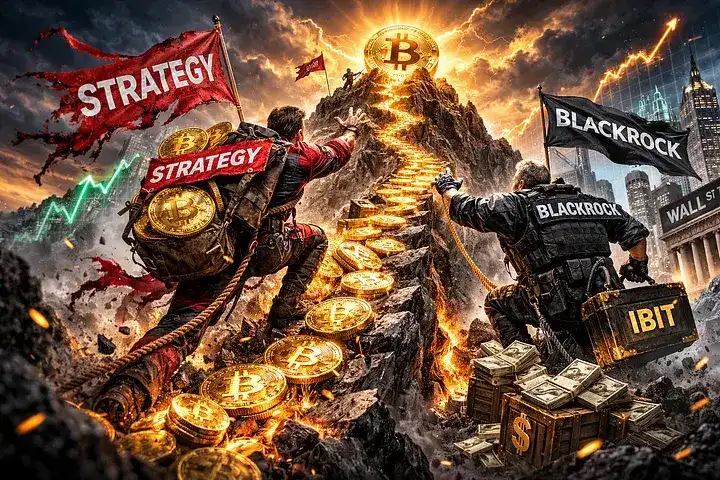
Strategy's Risks

Strategy's risks are real and well-documented. The company carries total debt exceeding $8.2 billion, and preferred stock obligations add significant annual cash requirements. The STRC Preferred Shares alone carry an 11.5% annualized yield. Although the company has built a relief reserve covering approximately 23 months, this reserve is not infinite, and the burden increases with each new issuance.

mNAV compression is the most visible near-term risk indicator. Strategy's market-to-net-asset-value (mNAV) ratio peaked at 3.4x in 2024 and had compressed to 1.20x by mid-March 2026. This compression is critical because the premium is key to its value-accretive equity financing. When the premium trends towards 1.0x or below, its "raise funds to buy coins" flywheel fails.

Furthermore, Strategy's strategic breakeven point warrants attention. According to research, if the Bitcoin price falls and sustains below approximately $40,000, its ability to credit or refinance debt would be challenged; if it falls below approximately $20,000, the risk of forced asset sales gradually increases. Strategy's rating is designated as "non-investment grade (junk)" by major agencies, meaning its borrowing costs are higher and it lacks access to investment-grade institutional capital.

IBIT's Risks

BlackRock's risks are smaller in absolute terms but not non-existent. IBIT's inflows are driven by market sentiment, and sentiment can reverse. During the downturn in early 2026, IBIT recorded outflow weeks.

IBIT's structural risk comes from competitive pressure from other Bitcoin ETFs. Fidelity's FBTC, Grayscale's GBTC, and new entrants are all vying for the same capital. If a competitor offers lower fees or more attractive features, IBIT could lose market share. Additionally, while highly unlikely, a regulatory reversal would impact IBIT, a regulated product, more severely than a direct holder like Strategy.

Implications for Bitcoin Market Structure

The race between BlackRock and Strategy is more than a story about two companies; it is altering the structural dynamics of the Bitcoin market.

Both entities are removing Bitcoin from circulation. Coins purchased by Strategy and stored in cold wallets are permanently off the market barring a corporate collapse. Bitcoin absorbed by IBIT is also typically held long-term in custody. Currently, U.S. spot ETFs plus Strategy control approximately 2 million Bitcoin, nearly 10% of the total supply.

Bernstein analysts described Strategy as the "central bank and lender of last resort for Bitcoin." This is not an exaggeration; it provides a foundation of institutional confidence that prevents disorderly market crashes. BlackRock's IBIT plays a different role: it is the gateway and on-ramp, converting institutional interest into actual demand.

The Investor's Choice: IBIT, MSTR, or Direct Holding?

Reasons to Choose IBIT

IBIT suits investors who want Bitcoin exposure but wish to avoid operational complexity, corporate risk, or leverage volatility. It provides a 1:1 relationship with the Bitcoin price (minus the 0.25% fee) and can be held in retirement accounts, brokerage portfolios.

Reasons to Choose MSTR

MSTR is for investors seeking leveraged exposure and willing to accept additional corporate risk for potentially higher returns. When Bitcoin rallies sharply, MSTR has historically significantly outperformed IBIT due to the leverage embedded in its capital structure. But note, in a sustained bear market, MSTR's risk factors amplify losses.

Reasons to Hold Bitcoin Directly

Direct holding eliminates annual fees and corporate risk, giving investors complete sovereignty. For investors seeking pure, unleveraged exposure and who are comfortable with self-custody, this remains the structurally cleanest option.

What Happens After Strategy Surpasses BlackRock?

When Strategy's holdings surpass BlackRock's, it will be a significant symbolic milestone. It will be the first time a corporate treasury holds more Bitcoin than the world's largest institutionalized ETF product. Based on current trends, this could happen within the next few weeks.

But this event, while publicly notable, changes no fundamental dynamics. The race does not end. More importantly, in less than three years, the scale of institutional commitment to Bitcoin has become one of the fastest institutionalizations of any asset class in finance.

The Bigger Picture: Corporate Adoption Beyond

Beyond this, the corporate Bitcoin treasury model is spreading. Japanese investment firm Metaplanet held over 10,000 coins in early 2026; Tesla holds approximately 11,509; Block holds about 8,883; SpaceX holds about 8,285.

New FASB fair value accounting rules effective in 2025 removed the biggest financial hurdle for corporate Bitcoin holdings, allowing companies to reflect fair value gains quarterly. Furthermore, the U.S. political environment is strongly supportive, with the SEC officially classifying Bitcoin as a digital commodity on March 17, providing clear regulatory guidance.

Conclusion: Two Models, One Asset, One Direction

The core of the race between BlackRock and Strategy is two different answers to the same investment thesis: Bitcoin's supply is fixed, demand is growing, and the best time to accumulate is before the next cycle peaks.

BlackRock answers through distribution: it built a democratized product for millions to participate.

Strategy answers through conviction: it leverages every financial tool to keep buying, without waiting for market sentiment.

Who holds more on any given day is less important than the collective long-term impact these two entities are having on the market structure. This force is massive, accelerating, and shows no signs of abating.


Preguntas relacionadas

QWhat are the key differences between BlackRock's and Strategy's models for accumulating Bitcoin?

ABlackRock's iShares Bitcoin Trust (IBIT) acts as a custodian, accumulating Bitcoin based on investor demand through its ETF, with holdings potentially decreasing due to redemptions. Strategy (formerly MicroStrategy) actively raises capital through debt and equity to purchase and hold Bitcoin indefinitely, with its holdings only increasing and never being sold or hedged.

QAs of March 16, 2026, what was the gap in Bitcoin holdings between BlackRock and Strategy, and how quickly could it close?

AAs of March 16, 2026, BlackRock held 784,062 BTC and Strategy held 761,068 BTC, a gap of 22,994 coins. At Strategy's then-current weekly purchase rate of approximately 22,337 BTC, it could close the gap in just over a week, assuming IBIT's inflows stopped.

QWhat are the primary financial risks associated with Strategy's Bitcoin accumulation strategy?

AStrategy's primary risks include its significant debt burden of over $8.2 billion, high annual cash requirements from preferred stock obligations (e.g., an 11.5% annual yield on STRC preferred shares), the potential failure of its funding 'flywheel' if its market-to-NAV premium compresses to 1.0x or below, and the risk of forced asset sales if Bitcoin's price falls significantly below $40,000.

QHow does the article describe the broader impact of BlackRock's and Strategy's accumulation on the Bitcoin market?

AThe article states that both entities are removing Bitcoin from circulation, accelerating a long-predicted supply squeeze. Combined, U.S. spot ETFs and Strategy control approximately 2 million BTC, nearly 10% of the total supply, significantly impacting market structure and reducing available liquidity.

QWhat was a key regulatory and accounting development in 2025 that supported corporate Bitcoin adoption?

AA key development was the生效 (effective) FASB fair value accounting rules, which allowed companies to mark their Bitcoin holdings to market value each quarter, eliminating a major financial reporting obstacle for corporate treasuries holding Bitcoin.

Lecturas Relacionadas

Apuestas por las noticias, los expertos leen las reglas: La verdadera brecha cognitiva de perder dinero en Polymarket

Resumen: En Polymarket, los "cabezas de tren" (usuarios expertos) tienen ventaja porque leen las reglas como abogados, no solo predicen eventos. Un ejemplo clave: en 2026, un mercado preguntaba "¿Quién será el líder de Venezuela a finales de 2026?". Muchos apostaron por Delcy Rodríguez, asumiendo que gobernaba, pero las reglas especificaban que "oficialmente ocupa el cargo" se refería al presidente formalmente nombrado y jurado. Aunque Maduro estaba en prisión, seguía siendo el presidente oficial según la ONU y las reglas aclaraban que "la autorización temporal para ejercer poderes presidenciales no equivale a una transferencia del cargo". Polymarket tiene un mecanismo de resolución de disputas de cinco pasos: 1) Cualquiera puede proponer un resultado con un depósito de 750 USDC; 2) Ventana de 2 horas para disputas (con otro depósito de 750 USDC); 3) Discusión de hasta 48 horas en Discord; 4) Votación de 48 horas por holders de UMA, con umbrales de participación y consenso; 5) Liquidación automática. A diferencia de un tribunal tradicional, donde jueces y partes están separados, en Polymarket los votantes (holders de UMA) pueden tener intereses en los mercados, creando conflictos. Esto debilita la discusión (efecto rebaño, cambios de postura) y hace que los resultados sean opacos (sin explicaciones, sin precedentes claros). La clave para ganar no es solo predecir eventos, sino entender la brecha entre la realidad y las reglas escritas.

marsbitHace 1 hora(s)

Apuestas por las noticias, los expertos leen las reglas: La verdadera brecha cognitiva de perder dinero en Polymarket

marsbitHace 1 hora(s)

Trading

Spot
Futuros

Artículos destacados

Qué es BITCOIN

Comprendiendo HarryPotterObamaSonic10Inu (ERC-20) y Su Posición en el Espacio Cripto En los últimos años, el mercado de criptomonedas ha sido testigo de un aumento en la popularidad de las monedas meme, capturando el interés no solo de los traders, sino también de aquellos que buscan participación comunitaria y valor de entretenimiento. Entre estos tokens únicos se encuentra HarryPotterObamaSonic10Inu (ERC-20), un proyecto intrigante que fusiona referencias culturales en el tejido de las criptomonedas. Este artículo ahonda en los aspectos clave de HarryPotterObamaSonic10Inu, explorando sus mecanismos, su ética impulsada por la comunidad y su compromiso con el panorama cripto más amplio. ¿Qué es HarryPotterObamaSonic10Inu (ERC-20)? Como su nombre indica, HarryPotterObamaSonic10Inu es una moneda meme construida sobre la blockchain de Ethereum, clasificada bajo el estándar ERC-20. A diferencia de las criptomonedas tradicionales que pueden enfatizar la utilidad práctica o el potencial de inversión, este token prospera en el valor de entretenimiento y la fuerza de su comunidad. El proyecto tiene como objetivo fomentar un entorno donde los usuarios comprometidos puedan reunirse, compartir ideas y participar en actividades inspiradas por diversos fenómenos culturales. Una característica notable de HarryPotterObamaSonic10Inu es su cero impuesto sobre las transacciones. Este elemento atractivo busca incentivar el comercio y la participación comunitaria, sin cargos adicionales que puedan disuadir a los traders de pequeña escala. El suministro total de la moneda se establece en mil millones de tokens, cifra que marca su intención de mantener una circulación sustancial dentro de la comunidad. Creador de HarryPotterObamaSonic10Inu (ERC-20) Los orígenes de HarryPotterObamaSonic10Inu están algo envueltos en misterio; los detalles sobre el creador siguen siendo desconocidos. El desarrollo de este token carece de un equipo identificable o un plan explícito, lo cual no es raro dentro del sector de las monedas meme. En su lugar, el proyecto ha surgido de forma orgánica, con su progreso fuertemente dependiente del entusiasmo y la participación de su comunidad. Inversores de HarryPotterObamaSonic10Inu (ERC-20) En cuanto a inversiones externas y respaldo, HarryPotterObamaSonic10Inu también se mantiene ambiguo. El token no enumera ninguna fundación de inversión conocida o apoyo organizacional significativo. Más bien, la savia del proyecto es su comunidad de base, que informa su crecimiento y sostenibilidad a través de la acción colectiva y la participación en el espacio cripto. ¿Cómo Funciona HarryPotterObamaSonic10Inu (ERC-20)? Como una moneda meme, HarryPotterObamaSonic10Inu opera principalmente fuera de los marcos tradicionales que a menudo rigen el valor de los activos. Hay varios aspectos distintivos que definen cómo funciona el proyecto: Transacciones Sin Impuestos: Sin comisiones fiscales en las transacciones, los usuarios pueden comprar y vender el token libremente sin preocuparse por costos ocultos. Compromiso de la Comunidad: El proyecto prospera en la interacción comunitaria, aprovechando plataformas de redes sociales para crear expectación y facilitar la participación. Las discusiones, el intercambio de contenido y el compromiso son elementos cruciales que ayudan a expandir su alcance y fomentar la lealtad entre los seguidores. Sin Utilidad Práctica: Cabe señalar que HarryPotterObamaSonic10Inu no ofrece una utilidad concreta dentro del ecosistema financiero. Más bien, se clasifica como un token principalmente para actividades de entretenimiento y comunitarias. Referencia Cultural: El token incorpora hábilmente elementos de la cultura popular para atraer interés, conectando con entusiastas de los memes y seguidores de criptomonedas por igual. HarryPotterObamaSonic10Inu ejemplifica cómo las monedas meme operan de manera diferente a los proyectos de criptomonedas más tradicionales, ingresando al mercado como constructos sociales innovadores en lugar de activos utilitarios. Cronología de HarryPotterObamaSonic10Inu (ERC-20) La historia de HarryPotterObamaSonic10Inu se caracteriza por varios hitos notables: Creación: El token surgió de un meme viral, capturando la imaginación de muchos entusiastas de las criptomonedas. No se disponen de fechas específicas de creación, lo que subraya su ascenso orgánico. Listado en Exchanges: HarryPotterObamaSonic10Inu ha logrado estar presente en varios exchanges, facilitando el acceso y el comercio por parte de la comunidad. Iniciativas de Compromiso Comunitario: Actividades en curso destinadas a mejorar la interacción comunitaria, incluidos concursos, campañas en redes sociales y generación de contenido por parte de fans y defensores. Planes de Expansión Futura: La hoja de ruta del proyecto incluye el lanzamiento de una colección de NFT, mercancía y un sitio de comercio electrónico relacionado con sus temas culturales, involucrando aún más a la comunidad e intentando añadir más dimensiones a su ecosistema. Puntos Clave Sobre HarryPotterObamaSonic10Inu (ERC-20) Naturaleza Impulsada por la Comunidad: El proyecto prioriza la aportación y creatividad colectiva, asegurando que la participación de los usuarios esté en el centro de su desarrollo. Clasificación como Moneda Meme: Representa la epítome de la criptomoneda basada en el entretenimiento, diferenciándose de los vehículos de inversión tradicionales. Sin Afiliación Directa con Bitcoin: A pesar de la similitud en el nombre del ticker, HarryPotterObamaSonic10Inu es distinto y no mantiene ninguna relación con Bitcoin u otras criptomonedas establecidas. Enfoque en la Colaboración: HarryPotterObamaSonic10Inu está diseñado para crear un espacio para la colaboración y el intercambio de historias entre sus poseedores, proporcionando una vía para la creatividad y la unión comunitaria. Perspectivas Futuras: La ambición de expandirse más allá de su premisa inicial en NFTs y mercancía delinean un camino para que el proyecto potencialmente ingrese en avenidas más convencionales dentro de la cultura digital. A medida que las monedas meme continúan capturando la imaginación de la comunidad de criptomonedas, HarryPotterObamaSonic10Inu (ERC-20) destaca por sus lazos culturales y su enfoque centrado en la comunidad. Aunque puede no encajar en el molde típico de un token impulsado por la utilidad, su esencia radica en la alegría y la camaradería fomentadas entre sus simpatizantes, destacando la naturaleza evolutiva de las criptomonedas en una era cada vez más digital. A medida que el proyecto sigue desarrollándose, será importante observar cómo las dinámicas comunitarias influyen en su trayectoria en el panorama en constante cambio de la tecnología blockchain.

1.9k Vistas totalesPublicado en 2024.04.01Actualizado en 2024.12.03

Qué es BITCOIN

Cómo comprar BTC

¡Bienvenido a HTX.com! Hemos hecho que comprar Bitcoin (BTC) sea simple y conveniente. Sigue nuestra guía paso a paso para iniciar tu viaje de criptos.Paso 1: crea tu cuenta HTXUtiliza tu correo electrónico o número de teléfono para registrarte y obtener una cuenta gratuita en HTX. Experimenta un proceso de registro sin complicaciones y desbloquea todas las funciones.Obtener mi cuentaPaso 2: ve a Comprar cripto y elige tu método de pagoTarjeta de crédito/débito: usa tu Visa o Mastercard para comprar Bitcoin (BTC) al instante.Saldo: utiliza fondos del saldo de tu cuenta HTX para tradear sin problemas.Terceros: hemos agregado métodos de pago populares como Google Pay y Apple Pay para mejorar la comodidad.P2P: tradear directamente con otros usuarios en HTX.Over-the-Counter (OTC): ofrecemos servicios personalizados y tipos de cambio competitivos para los traders.Paso 3: guarda tu Bitcoin (BTC)Después de comprar tu Bitcoin (BTC), guárdalo en tu cuenta HTX. Alternativamente, puedes enviarlo a otro lugar mediante transferencia blockchain o utilizarlo para tradear otras criptomonedas.Paso 4: tradear Bitcoin (BTC)Tradear fácilmente con Bitcoin (BTC) en HTX's mercado spot. Simplemente accede a tu cuenta, selecciona tu par de trading, ejecuta tus trades y monitorea en tiempo real. Ofrecemos una experiencia fácil de usar tanto para principiantes como para traders experimentados.

6.1k Vistas totalesPublicado en 2024.12.12Actualizado en 2025.03.21

Cómo comprar BTC

Qué es $BITCOIN

ORO DIGITAL ($BITCOIN): Un Análisis Exhaustivo Introducción al ORO DIGITAL ($BITCOIN) ORO DIGITAL ($BITCOIN) es un proyecto basado en blockchain que opera en la red Solana, cuyo objetivo es combinar las características de los metales preciosos tradicionales con la innovación de las tecnologías descentralizadas. Aunque comparte un nombre con Bitcoin, a menudo denominado “oro digital” debido a su percepción como un almacén de valor, ORO DIGITAL es un token separado diseñado para crear un ecosistema único dentro del paisaje Web3. Su meta es posicionarse como un activo digital alternativo viable, aunque los detalles sobre sus aplicaciones y funcionalidades aún están en desarrollo. ¿Qué es ORO DIGITAL ($BITCOIN)? ORO DIGITAL ($BITCOIN) es un token de criptomoneda diseñado explícitamente para su uso en la blockchain de Solana. A diferencia de Bitcoin, que proporciona un papel de almacenamiento de valor ampliamente reconocido, este token parece centrarse en aplicaciones y características más amplias. Aspectos notables incluyen: Infraestructura Blockchain: El token está construido sobre la blockchain de Solana, conocida por su capacidad para manejar transacciones de alta velocidad y bajo costo. Dinámicas de Suministro: ORO DIGITAL tiene un suministro máximo limitado a 100 cuatrillones de tokens (100P $BITCOIN), aunque los detalles sobre su suministro circulante no se han divulgado actualmente. Utilidad: Aunque las funcionalidades precisas no están delineadas explícitamente, hay indicios de que el token podría ser utilizado para diversas aplicaciones, potencialmente involucrando aplicaciones descentralizadas (dApps) o estrategias de tokenización de activos. ¿Quién es el Creador de ORO DIGITAL ($BITCOIN)? En la actualidad, la identidad de los creadores y el equipo de desarrollo detrás de ORO DIGITAL ($BITCOIN) sigue siendo desconocida. Esta situación es típica entre muchos proyectos innovadores dentro del espacio blockchain, particularmente aquellos alineados con las finanzas descentralizadas y los fenómenos de monedas meme. Si bien tal anonimato puede fomentar una cultura impulsada por la comunidad, intensifica las preocupaciones sobre la gobernanza y la responsabilidad. ¿Quiénes son los Inversores de ORO DIGITAL ($BITCOIN)? La información disponible indica que ORO DIGITAL ($BITCOIN) no tiene patrocinadores institucionales conocidos ni inversiones destacadas de capital de riesgo. El proyecto parece operar bajo un modelo de peer-to-peer centrado en el apoyo y la adopción de la comunidad en lugar de rutas de financiación tradicionales. Su actividad y liquidez se sitúan principalmente en intercambios descentralizados (DEX), como PumpSwap, en lugar de plataformas de trading centralizadas establecidas, lo que resalta aún más su enfoque de base. Cómo Funciona ORO DIGITAL ($BITCOIN) Los mecanismos operativos de ORO DIGITAL ($BITCOIN) se pueden elaborar en función de su diseño blockchain y atributos de red: Mecanismo de Consenso: Al aprovechar el único mecanismo de prueba de historia (PoH) de Solana combinado con un modelo de prueba de participación (PoS), el proyecto asegura una validación eficiente de transacciones que contribuye al alto rendimiento de la red. Tokenómica: Aunque los mecanismos deflacionarios específicos no se han detallado extensamente, el vasto suministro máximo de tokens implica que podría atender microtransacciones o casos de uso nicho que aún están por definirse. Interoperabilidad: Existe el potencial de integración con el ecosistema más amplio de Solana, incluyendo varias plataformas de finanzas descentralizadas (DeFi). Sin embargo, los detalles sobre integraciones específicas siguen sin especificarse. Cronología de Eventos Clave Aquí hay una cronología que destaca hitos significativos relacionados con ORO DIGITAL ($BITCOIN): 2023: El despliegue inicial del token ocurre en la blockchain de Solana, marcado por su dirección de contrato. 2024: ORO DIGITAL gana visibilidad al estar disponible para el comercio en intercambios descentralizados como PumpSwap, permitiendo a los usuarios comerciar contra SOL. 2025: El proyecto presencia actividad de comercio esporádica y un posible interés en compromisos liderados por la comunidad, aunque no se han documentado asociaciones notables o avances técnicos hasta la fecha. Análisis Crítico Fortalezas Escalabilidad: La infraestructura subyacente de Solana soporta altos volúmenes de transacciones, lo que podría mejorar la utilidad de $BITCOIN en varios escenarios de transacción. Accesibilidad: El potencial bajo precio de negociación por token podría atraer a inversores minoristas, facilitando una participación más amplia debido a oportunidades de propiedad fraccionada. Riesgos Falta de Transparencia: La ausencia de patrocinadores, desarrolladores o un proceso de auditoría públicamente conocidos puede generar escepticismo sobre la sostenibilidad y confiabilidad del proyecto. Volatilidad del Mercado: La actividad comercial depende en gran medida del comportamiento especulativo, lo que puede resultar en una volatilidad de precios significativa e incertidumbre para los inversores. Conclusión ORO DIGITAL ($BITCOIN) surge como un proyecto intrigante pero ambiguo dentro del ecosistema de Solana en rápida evolución. Si bien intenta aprovechar la narrativa del “oro digital”, su alejamiento del papel establecido de Bitcoin como almacén de valor subraya la necesidad de una diferenciación más clara de su utilidad y estructura de gobernanza previstas. La futura aceptación y adopción dependerán probablemente de abordar la actual opacidad y definir sus estrategias operativas y económicas de manera más explícita. Nota: Este informe abarca información sintetizada disponible hasta octubre de 2023, y pueden haber ocurrido desarrollos más allá del período de investigación.

75 Vistas totalesPublicado en 2025.05.13Actualizado en 2025.05.13

Qué es $BITCOIN

Discusiones

Bienvenido a la comunidad de HTX. Aquí puedes mantenerte informado sobre los últimos desarrollos de la plataforma y acceder a análisis profesionales del mercado. A continuación se presentan las opiniones de los usuarios sobre el precio de BTC (BTC).

活动图片