Before Soaring to a $1.5 Trillion IPO, Musk Almost Lost Everything

深潮Publicado a 2025-12-19Actualizado a 2025-12-19

Resumen

Elon Musk's SpaceX is on the verge of a historic $150 billion IPO in 2026, targeting a $1.5 trillion valuation, which would make it one of the largest public offerings ever. This marks a dramatic turnaround from its near-collapse in 2008. Founded in 2002, SpaceX faced immense skepticism and multiple failures. Its first three Falcon 1 rockets exploded, nearly bankrupting the company and coinciding with Musk's personal crises during the financial crash. The fourth launch in September 2008 succeeded, saving the company and securing a crucial $1.6 billion NASA contract. SpaceX’s breakthrough came from challenging aerospace norms. It pioneered reusable rockets, first landing a Falcon 9 booster in 2015, drastically cutting costs. For its Mars-bound Starship, Musk applied first principles, opting for cheap stainless steel over expensive carbon fiber, simplifying manufacturing and reducing expenses. The key to its $800 billion pre-IPO valuation is Starlink. With over 7.65 million subscribers and projected 2026 revenues of $22-24 billion, it provides stable cash flow, transforming SpaceX from a launch provider into a global telecom giant. Musk, initially opposed to IPO distractions, now seeks capital for Mars colonization. The IPO’s $30 billion raise will fund ambitious plans, including uncrewed Mars landings by 2027 and a self-sustaining city on Mars within 20 years. For Musk, wealth is a means to make humanity a multi-planetary species.

Author: Xiaobing | Deep Tide TechFlow

In the winter of 2025, the sea breeze in Boca Chica, Texas, remained salty, damp, and fierce, yet the air on Wall Street was unusually restless.

On December 13th, a piece of news shot to the top of financial headlines like a Falcon Heavy rocket: SpaceX's latest internal stock sale has locked the company's valuation at $800 billion.

A memo revealed that SpaceX is actively preparing for an IPO in 2026, planning to raise over $30 billion. Musk hopes the company's overall valuation can reach $1.5 trillion. If successful, this would place SpaceX's market capitalization close to the record level set by Saudi Aramco during its 2019 listing.

For Musk, this is an incredibly surreal moment.

As the world's richest person, his personal wealth is set to break historical records once more with the ascent of SpaceX's "super rocket," making him the first trillionaire in human history.

Rewind the clock 23 years, and no one would have believed this outcome. Back then, in the eyes of giants like Boeing and Lockheed Martin, SpaceX was just a "manufacturing underdog" that could be crushed at any moment.

More accurately, it resembled a disaster that refused to end.

When a Man Decides to Build Rockets

2001, Elon Musk was 30 years old.

He had just cashed out from PayPal, holding over a hundred million dollars in cash, standing at a typical Silicon Valley "point of life freedom." He could have become an investor, an evangelist like a16z founder Marc Andreessen after selling his company, or even done nothing at all.

But Musk chose the most unimaginable path.

He wanted to build rockets and go to Mars.

For this dream, he took two friends to Russia, attempting to purchase refurbished Dnepr launch vehicles as transport for the Mars Oasis plan.

The outcome was humiliating.

During talks with the Lavochkin design bureau, a chief Russian designer spat at Musk, believing this American upstart knew nothing about aerospace technology. Ultimately, they offered an exorbitant price and hinted he should "get lost if he couldn't afford it." The team returned empty-handed.

On the flight back, his companions were dejected, but Musk tapped away on his computer. Moments later, he turned around and displayed a spreadsheet: "Hey, I think we can build it ourselves."

That year, China had just launched Shenzhou-2. Spaceflight was seen as a "miracle" achievable only by national power, a game for superpowers. A private company wanting to build rockets was as laughable as an elementary school student claiming to build a nuclear reactor in their backyard.

This was SpaceX's "zero to one."

Growth is Constant Failure

In February 2002, at 1310 East Grand Avenue, a 75,000-square-foot old warehouse in the El Segundo suburbs of Los Angeles, SpaceX was officially founded.

Musk took $100 million from his PayPal proceeds as seed money, setting the company's vision as the "Southwest Airlines of the space industry," providing low-cost, highly reliable space transportation services.

But reality soon dealt this idealist a heavy blow. Building rockets was not only difficult but also outrageously expensive.

An old saying in the aerospace industry goes: "You can't even wake Boeing up for less than a billion dollars."

Musk's $100 million seed money seemed a drop in the bucket in this industry. More严峻的是, SpaceX faced a market tightly controlled by century-old establishments like Boeing and Lockheed Martin. These giants were not only technologically strong but also had deep government networks.

They were accustomed to monopoly, accustomed to hefty government contracts. Their attitude towards SpaceX, the intruder, was singular: watch the comedy.

2006, SpaceX's first rocket, "Falcon 1," stood on the launch pad.

It was both a tribute to DARPA's Falcon program and an homage to the Millennium Falcon from Star Wars. It was small, even a bit shabby, like a half-finished product.

Unsurprisingly, 25 seconds after liftoff, the rocket exploded.

2007, second launch. Flew for a few minutes before失控坠毁 (losing control and crashing).

Mockery poured in. Someone commented snidely: "Does he think rockets are like code? Can you patch them?"

August 2008, the third failure was the most devastating. The first and second stages collided, the刚刚点燃的希望 (newly ignited hope) instantly turned into碎片 (debris) over the Pacific.

The atmosphere changed completely. Engineers began losing sleep, suppliers demanded cash, the media was no longer polite. Most致命的是 (fatally), the money was almost gone.

2008 was the darkest year of Musk's life.

The financial crisis swept the globe, Tesla was on the brink of bankruptcy, his wife of ten years left him... SpaceX had funds for only one last launch. If the fourth attempt failed, SpaceX would dissolve, and Musk would be left with nothing.

Just then, the sharpest blow came.

Musk's childhood idols, "first man on the moon" Neil Armstrong and "last man on the moon" Gene Cernan, publicly stated they had no faith in his rocket plans. Armstrong直言 (stated bluntly), "You don't understand what you don't know."

Recalling this period later, Musk's eyes welled up on camera. He didn't cry when rockets blew up, he didn't cry when the company was near bankruptcy, but提到偶像的嘲讽时 (when mentioning his idols' ridicule), he cried.
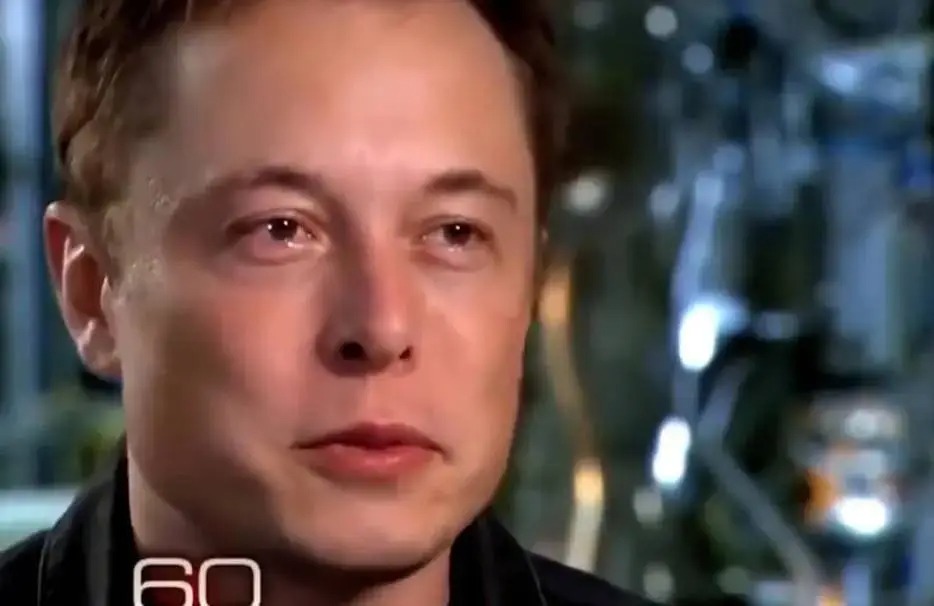
Musk told the host: "These people were heroes to me. It was really tough. I really wish they could come and see how hard my work is."

Subtitles then appeared: Sometimes, the very people you look up to, let you down.

Survival Against All Odds

Before the fourth launch, no one talked about the Mars plan anymore.

The entire company was shrouded in a悲壮的沉默 (tragic silence). Everyone knew this Falcon 1 was cobbled together with the last few coins. If it failed, the company was doomed.

On launch day, there were no grand declarations, no passionate speeches. Just a group of people standing in the control room, silently staring at the screens.

September 28, 2008, the rocket ascended, a fire dragon lighting up the night sky.

This time, the rocket didn't explode, but the control room remained dead silent until 9 minutes later, when the engine shut down as planned, and its payload entered the预定轨道 (intended orbit).

"Success!"

Thunderous applause and cheers erupted in the control center. Musk raised his arms high, his brother Kimball beside him began to cry.

Falcon 1 made history. SpaceX became the world's first privately-funded commercial company to successfully launch a rocket into orbit.

This success not only saved SpaceX but also won the company a long-term "life extension pill."

On December 22nd, Musk's phone rang, drawing a close to his disastrous 2008.

NASA's space operations chief, William Gerstenmaier, brought good news: SpaceX had been awarded a $1.6 billion contract for 12 round-trip transports between the space station and Earth.

"I love NASA," Musk blurted out, later changing his computer login password to "ilovenasa".

Having walked the edge of death, SpaceX survived.

Jim Cantrell, an early participant in SpaceX's rocket development and the friend who had lent Musk his university rocket textbooks, recalled the successful Falcon 1 launch with deep emotion:

"Elon Musk's success is not because he has great vision, not because he is exceptionally smart, nor because he works tirelessly—although all these are true—but the most critical element of his success is that the word 'failure' is not in his dictionary. Failure is never within his realm of thought."

Making the Rocket Fly Back

If the story ended here, it would just be an inspiring legend.

But the truly terrifying part of SpaceX was just beginning.

Musk insisted on a goal that seemed irrational: The rocket must be reusable.

Almost all internal experts opposed it. Not because it was technically impossible, but because it was commercially too radical, akin to "no one recycles disposable paper cups."

But Musk persisted.

He believed that if airplanes were thrown away after one flight, no one could afford to fly. If rockets couldn't be reused, spaceflight would forever remain a game for the few.

This was Musk's underlying logic, first principles thinking.

Going back to the story's beginning, why did Musk, with a programmer background, dare to personally venture into rocket building?

In 2001, after翻阅无数专业书籍 (poring over countless professional books), Musk used an Excel spreadsheet to详细拆解 (detail and breakdown) the various costs of building a rocket. The analysis showed that rocket manufacturing costs were artificially inflated dozens of times by traditional aerospace giants.

These cash-flush giants were accustomed to the comfort zone of "cost-plus" pricing. A single screw cost hundreds of dollars. Musk would ask: "How much does the raw material, aluminum and titanium, sell for on the London Metal Exchange? Why does it cost a thousand times more as a finished part?"

If costs were artificially inflated, they could definitely be artificially reduced.

Guided by first principles, SpaceX embarked on a path with almost no retreat.

Launch repeatedly, analyze after explosions, continue blowing up after analysis, repeatedly attempt recovery.

All质疑 (doubts) ceased abruptly on that winter night.

December 21, 2015, a day destined to be recorded in the history of human spaceflight.

The Falcon 9 rocket, carrying 11 satellites, launched from Cape Canaveral Air Force Station. Ten minutes later, a miracle occurred. The first-stage booster successfully returned to the launch site, landing vertically on the Florida landing pad like something out of a sci-fi movie.

At that moment, the old rules of the aerospace industry were彻底粉碎 (shattered completely).

The era of cheap spaceflight was ushered in by this former "underdog" company.

Building Starship with Stainless Steel

If recovering rockets was SpaceX's challenge to physics, then building Starship with stainless steel was Musk's "dimensional reduction" on engineering.

In the early development of "Starship," aimed at colonizing Mars, SpaceX also fell into the myth of "high-tech materials." The industry consensus was that to fly to Mars, the rocket had to be light enough, thus requiring expensive, complex carbon fiber composites.

To this end, SpaceX invested heavily, creating huge carbon fiber winding molds. However, slow progress and high costs alerted Musk. He returned to first principles and did the math:

Carbon fiber cost $135 per kilogram and was extremely difficult to process; whereas 304 stainless steel, the material used for kitchen pots and pans, cost only $3 per kilogram.

"But stainless steel is too heavy!"

Facing engineers'质疑 (doubts), Musk pointed out an overlooked physical truth: melting point.

Carbon fiber had poor heat resistance and required heavy, expensive heat shields. Stainless steel had a melting point高达 (as high as) 1400 degrees Celsius, and its strength actually increased under the ultra-cold temperatures of liquid oxygen. Factoring in the weight of the thermal protection system, a rocket built with "clumsy" stainless steel had a total system weight comparable to carbon fiber, but the cost was reduced by 40 times!

This decision彻底摆脱 (completely freed) SpaceX from the shackles of precision manufacturing and aerospace materials. They didn't need clean rooms; they could weld rockets under a tent in the wasteland of Texas like building a water tower. If it blew up, no heartache, just sweep up the碎片 (debris) and weld again tomorrow.

This first-principles thinking permeates SpaceX's entire development history. From questioning "Why can't rockets be reused?" to "Why must space materials be expensive?", Musk always starts from the most basic physical laws, challenging the industry's existing assumptions.

"Using cabbage-price materials for top-tier engineering" is SpaceX's core competency.

Starlink is the Real Game-Changer

Technological breakthroughs brought a狂飙 (meteoric rise) in valuation.

From $1.3 billion in 2012, to $400 billion in July 2024, to the current $800 billion, SpaceX's valuation truly "rode a rocket."

But what truly supports this sky-high valuation is not the rockets, but Starlink.

Before Starlink, SpaceX, for ordinary people, was just that spectacular sight in the news, occasionally exploding, occasionally landing.

Starlink changed everything.

This low-earth orbit constellation composed of thousands of satellites is becoming the world's largest internet service provider. It has turned "spaceflight" from a spectacle into an infrastructure like water and electricity.

Whether on a cruise ship in the middle of the Pacific Ocean or in war-torn ruins, as long as there is a pizza-box-sized receiver,信号 (signal) pours down from几百公里外的近地轨道 (hundreds of kilometers away in low Earth orbit).

It has not only changed the global communications landscape but also become a super money-printing machine, providing SpaceX with a continuous cash flow.

As of November 2025, Starlink's global active subscribers have reached 7.65 million, with actual coverage users exceeding 24.5 million. North America contributes 43% of subscriptions, while emerging markets like Korea and Southeast Asia contribute 40% of new users.

This is also why Wall Street dares to assign SpaceX an astronomical valuation—not because of how frequently rockets launch, but because of the recurring revenue from Starlink.

Financial data shows SpaceX's projected revenue for 2025 is $15 billion, expected to surge to $22-24 billion in 2026, with over 80% of revenue coming from the Starlink business.

This means SpaceX has completed a华丽转身 (glorious transformation). It is no longer just a航天承包商 (aerospace contractor) dependent on contracts but has evolved into a global telecom giant with a moat of monopoly-level proportions.

The Eve of the IPO

If SpaceX successfully goes public and raises $30 billion as desired, it will surpass the record $29 billion raised by Saudi Aramco in 2019, becoming the largest IPO in history.

According to some investment bank predictions, SpaceX's final IPO valuation might even冲击 (challenge) $1.5 trillion, potentially rivaling the $1.7 trillion上市纪录 (listing record) set by Saudi Aramco in 2019, directly entering the ranks of the world's top 20 listed companies by market cap.

Behind this string of astronomical numbers, the first to沸腾 (get excited) are the employees at the Boca Chica and Hawthorne factories.

In the recent internal stock sale, the price of $420 per share意味着 (means) that those engineers who once slept on the factory floor with Musk and endured countless "production hells" will涌现出 (emerge as) a large number of millionaires and even billionaires.

But for Musk, the IPO is绝非 (absolutely not) a traditional "cash-out exit" but an expensive "refueling."

Previously, Musk had always opposed going public.

At a SpaceX all-hands meeting in 2022, Musk poured cold water on employees' hopes for an上市 (IPO): "Going public is absolutely an invitation to pain, and stock prices only distract people."

Three years later, what changed Musk's mind?

No matter how grand the ambition, it needs capital support.

According to Musk's timeline, within two years, the first Starship will conduct an unmanned Mars landing test; within four years, human footprints will be imprinted on the red soil of Mars. His ultimate vision—establishing a self-sustaining city on Mars within 20 years through the shuttling of 1000 Starships—will still require消耗 (consume) funds that are an astronomical figure.

He has stated in multiple interviews that the sole purpose of accumulating wealth is to make humanity a "multi-planetary species." From this perspective, the tens of billions raised from the IPO could be considered the "interstellar toll" Musk collects from Earthlings.

We are full of anticipation. The largest IPO in human history will not ultimately turn into yachts or mansions; they will all be transformed into fuel, steel, and oxygen, paving that long road to Mars.

Preguntas relacionadas

QWhat was the valuation of SpaceX in its latest internal stock sale, and what is its target IPO valuation?

ASpaceX's latest internal stock sale valued the company at $800 billion, and Elon Musk aims for a $1.5 trillion valuation in its upcoming IPO.

QHow did SpaceX achieve its first major success in 2008, and what was the immediate impact?

ASpaceX's fourth Falcon 1 launch succeeded on September 28, 2008, making it the first privately-funded company to reach orbit. This led to a $1.6 billion NASA contract for cargo transport to the International Space Station.

QWhat is the core business driving SpaceX's revenue and high valuation today?

AStarlink, SpaceX's satellite internet constellation, generates over 80% of the company's revenue, with 2026 projected revenues of $22-24 billion, making it a global telecom giant.

QWhy did Elon Musk initially oppose taking SpaceX public, and what changed his mind?

AMusk opposed IPO because he believed public markets bring 'pain' and distract from long-term goals. He changed his mind to fund the expensive vision of colonizing Mars, requiring massive capital for Starship development and missions.

QHow did SpaceX's approach to rocket manufacturing challenge aerospace industry norms?

ASpaceX used first-principles thinking to switch from expensive carbon fiber to cheap stainless steel for Starship, reducing costs 40-fold while maintaining performance, and enabling rapid, iterative testing in simple environments.

Lecturas Relacionadas

El cierre de Claude Mythos me hizo ver el verdadero costo de alquilar inteligencia artificial

Claude Mythos fue cerrado esta semana, lo que reveló un riesgo fatal que muchos fundadores pasan por alto: cuando tu capacidad central depende completamente de una plataforma ajena, tu destino no está en tus manos. Este evento ha hecho que muchos se pregunten: ¿qué partes de mi negocio están simplemente "alquiladas"? En los últimos años, el debate sobre los modelos de IA de código abierto se centraba en el coste. Ahora está claro que el coste nunca fue el problema principal. El tema más profundo es el control. ¿Quién posee la inteligencia de la que depende tu producto? Alquilar inteligencia, como usar APIs de modelos líderes, es excelente al principio, pero tiene limitaciones. El "propietario" puede cambiar las reglas, aumentar el "alquiler" o, como en el caso de Mythos, decidir cerrarlo. Cuando tu capacidad central depende de una plataforma que no controlas, quedas expuesto a decisiones ajenas. La lección no es dejar de usar modelos líderes. Son una infraestructura increíble. Pero la infraestructura y la propiedad son cosas distintas. Poseer tu inteligencia significa comenzar con un modelo de código abierto sólido y darle forma en torno a lo que hace única a tu empresa: tus datos, tus flujos de trabajo, tu conocimiento especializado. Con el tiempo, el modelo se vuelve menos genérico y más un reflejo del trabajo único de tu compañía. Ahí es donde se crea el valor duradero. Un conclusión optimista es que el futuro de la IA no depende de un solo modelo ganador. No hay una única frontera. La hay para los modelos líderes, para los modelos adaptados con conocimiento corporativo, para los modelos especializados en problemas concretos. Lo más interesante no es que un modelo se vuelva más listo, sino que la inteligencia sea cada vez más personalizable. Las empresas que ganarán no serán necesariamente las que tengan el modelo más grande, sino las que conviertan la inteligencia en un activo único y propio.

marsbitHace 27 min(s)

El cierre de Claude Mythos me hizo ver el verdadero costo de alquilar inteligencia artificial

marsbitHace 27 min(s)

Pagar la tarjeta U para obtener membresía de Claude, ¿cómo calcular la cuenta de la tarjeta Plasma U?

**Resumen: Plasma U Card - ¿Vale la pena el cálculo entre beneficios y bloqueo de XPL?** Plasma ha lanzado tres niveles de tarjetas U (Lite, Core, Platinum) que funcionan como tarjetas de débito Visa para gastar stablecoins. La clave está en los beneficios y los requisitos de bloqueo del token nativo XPL. * **Niveles y Beneficios:** * **Lite:** Entrada gratuita, 2% de cashback base. Para probar sin riesgo. * **Core:** Cuota anual de 120 USD o **bloquear 10,000 XPL por 12 meses**. Ofrece 3% cashback base, 5% en gastos de IA (hasta 500 USD/mes), y suscripción a ChatGPT Go. * **Platinum:** Exclusivo para **bloquear 100,000 XPL por 12 meses**. Incluye 4% cashback base, 10% en IA, suscripciones a Claude Pro y ChatGPT Plus, hasta 600 USD de reembolso en vuelos y otros beneficios de viaje. * **Análisis de Rentabilidad:** * **Core:** Para cubrir la cuota de 120 USD solo con el 1% extra de cashback base (vs. Lite), se necesitarían ~12,000 USD en gastos anuales. La opción de bloqueo implica asumir la volatilidad del precio de XPL y la pérdida de liquidez. * **Platinum:** El bloqueo de 100,000 XPL (unos 8,800 USD actualmente) conlleva un riesgo significativo. Los elevados beneficios (ej. 7,500 USD en cashback base) requieren un gasto anual enorme (~187,500 USD) para materializarse por completo. Es para usuarios ya fuertemente invertidos en XPL o con gastos muy altos en IA y viajes. * **Impacto en XPL y Riesgos:** * Las tarjetas crean una nueva utilidad para XPL, vinculándolo a beneficios cotidianos y reduciendo temporalmente la circulación. * Sin embargo, el programa difícilmente podrá absorber por sí solo las grandes cantidades de tokens que se liberarán del equipo e inversores en el futuro. * **Riesgos importantes:** La recompensa en cashback se paga en XPL, lo que puede generar presión de venta. Los términos y condiciones permiten a Plasma modificar tasas, límites y requisitos. Los cálculos de "valor anual" son estimativos y no están garantizados. **Conclusión:** Las tarjetas U son una puerta interesante que conecta las criptomonedas con el gasto diario. Lite es una buena opción para probar. Core puede valer la pena para usuarios habituales de herramientas de IA. Platinum es principalmente atractiva para "whales" de XPL. Para la mayoría, el bloqueo de XPL implica un riesgo que los beneficios en cashback y suscripciones no necesariamente compensan, dependiendo críticamente de los hábitos de gasto reales y de la evolución del precio del token.

Foresight NewsHace 31 min(s)

Pagar la tarjeta U para obtener membresía de Claude, ¿cómo calcular la cuenta de la tarjeta Plasma U?

Foresight NewsHace 31 min(s)

Tendencias en la Bolsa de EE.UU. (16 de junio): SpaceX sube un 42% en dos días, nuevo presidente de la Fed asume hoy

Resumen de mercados estadounidenses (16 de junio): SpaceX sube un 42% en dos días, nuevo presidente de la Fed asume hoy. Los mercados reaccionaron con fuerza el lunes al anuncio de un acuerdo preliminar entre EE.UU. e Irán para reabrir el estrecho de Ormuz. La noticia, que promete reducir tensiones geopolíticas y la presión inflacionaria, desencadenó una rotación de capitales hacia activos de riesgo. Los principales índices subieron, liderados por el Nasdaq (+3.07%) gracias a un repunte en acciones tecnológicas y de chips, como Micron (+9.2%). La percepción de menor riesgo impulsó a SpaceX, cuya acción subió fuertemente tras conocerse grandes compras institucionales. Por el contrario, el sector energético cayó por el desplome del precio del petróleo (-5%), y las acciones defensivas (sanidad, telecomunicaciones) también perdieron terreno. El índice VIX cayó un 8.37%, reflejando un alivio en el nerviosismo. La atención se centra ahora en dos reuniones de bancos centrales esta semana: se espera que el Banco de Japón suba los tipos el martes, mientras que la reunión de la Fed presidida por Jerome Powell se espera que mantenga los tipos sin cambios. La clave será su lenguaje sobre la inflación persistente y las perspectivas de recortes futuros. A pesar del optimismo del lunes, el mercado se enfrenta a una semana comprimida con eventos clave que podrían revaluar rápidamente el reciente repunte, especialmente en sectores sensibles como los semiconductores.

marsbitHace 50 min(s)

Tendencias en la Bolsa de EE.UU. (16 de junio): SpaceX sube un 42% en dos días, nuevo presidente de la Fed asume hoy

marsbitHace 50 min(s)

Trading

Spot
Futuros

Artículos destacados

Qué es ATWO

I. Introducción al ProyectoArena Two es una plataforma interactiva descentralizada que permite a los aficionados desempeñar un papel activo y tokenizado en los resultados de eventos en tiempo real. A diferencia de los modelos de transmisión tradicionales que reducen a los aficionados a espectadores pasivos, Arena Two aprovecha la tecnología blockchain para permitir que los aficionados voten directamente en tiempo real e influyan en los resultados en el campo.II. Información del TokenNombre del token: ATWO (Arena Two)III. Enlaces RelacionadosSitio web: https://arenatwo.com/Exploradores: https://basescan.org/token/0x499D35eBE6cEe9B2Ac35Fd003fcBbeeB9CFc7B32Twitter: https://x.com/arenatwoXNota: La introducción al proyecto proviene de los materiales publicados o proporcionados por el equipo oficial del proyecto, que es solo para referencia y no constituye asesoramiento de inversión. HTX no se hace responsable de ninguna pérdida directa o indirecta resultante.

219 Vistas totalesPublicado en 2026.05.18Actualizado en 2026.06.02

Qué es ATWO

Cómo comprar ATWO

¡Bienvenido a HTX.com! Hemos hecho que comprar Arena Two (ATWO) sea simple y conveniente. Sigue nuestra guía paso a paso para iniciar tu viaje de criptos.Paso 1: crea tu cuenta HTXUtiliza tu correo electrónico o número de teléfono para registrarte y obtener una cuenta gratuita en HTX. Experimenta un proceso de registro sin complicaciones y desbloquea todas las funciones.Obtener mi cuentaPaso 2: ve a Comprar cripto y elige tu método de pagoTarjeta de crédito/débito: usa tu Visa o Mastercard para comprar Arena Two (ATWO) al instante.Saldo: utiliza fondos del saldo de tu cuenta HTX para tradear sin problemas.Terceros: hemos agregado métodos de pago populares como Google Pay y Apple Pay para mejorar la comodidad.P2P: tradear directamente con otros usuarios en HTX.Over-the-Counter (OTC): ofrecemos servicios personalizados y tipos de cambio competitivos para los traders.Paso 3: guarda tu Arena Two (ATWO)Después de comprar tu Arena Two (ATWO), guárdalo en tu cuenta HTX. Alternativamente, puedes enviarlo a otro lugar mediante transferencia blockchain o utilizarlo para tradear otras criptomonedas.Paso 4: tradear Arena Two (ATWO)Tradear fácilmente con Arena Two (ATWO) en HTX's mercado spot. Simplemente accede a tu cuenta, selecciona tu par de trading, ejecuta tus trades y monitorea en tiempo real. Ofrecemos una experiencia fácil de usar tanto para principiantes como para traders experimentados.

214 Vistas totalesPublicado en 2026.05.18Actualizado en 2026.06.02

Cómo comprar ATWO

Qué es ZEST

I. Introducción al Proyecto1. ¿Qué es Zest Protocol?Zest Protocol es un protocolo de préstamos nativo de Bitcoin construido sobre Stacks Layer 2 que permite a los usuarios obtener rendimiento con BTC o pedir prestados activos colateralizando BTC. Los contratos inteligentes del protocolo están escritos en el lenguaje Clarity, operan completamente en la cadena y son de código abierto, con un diseño inspirado en Aave v3. Zest es actualmente el mayor protocolo DeFi en Stacks, con más de 800 BTC depositados y un TVL máximo que supera los 100 millones de dólares. En mayo de 2026, el protocolo introdujo además los Bitcoin Collateral Vaults, ampliando las capacidades de préstamo de Stacks a la red principal de Bitcoin. Esto permite a los usuarios pedir prestados stablecoins sin mover BTC fuera de la red de Bitcoin, habilitando préstamos con custodia propia.2. ¿Cómo funciona Zest Protocol?Zest Protocol consta de dos mercados. El mercado de Stacks está construido sobre Aave v3, permitiendo a los usuarios depositar activos como sBTC, STX y USDC para obtener rendimiento o tomar préstamos sobrecolateralizados. El LTV máximo por defecto es del 50% (70% para sBTC). El mercado de Bitcoin opera a través de los recién lanzados Bitcoin Collateral Vaults. Los usuarios piden prestados stablecoins bloqueando BTC en bóvedas de custodia propia en la cadena de Bitcoin. El colateral permanece en la red principal de Bitcoin durante todo el proceso, y los usuarios mantienen la custodia a menos que la posición sea liquidada.3. ¿Quién fundó Zest Protocol?Tycho Onnasch (Co-Fundador): Graduado de la Universidad de Oxford. Involucrado en investigación y subvenciones para la Stacks Open Internet Foundation. Ex Gerente en Trust Machines y Fundador de Deedmob. Perfil de LinkedIn: https://www.linkedin.com/in/tychokoonnasch/.Fernando Foy (Co-Fundador): Anteriormente trabajó en consultoría de TI en Objectif Emploi. Perfil de LinkedIn: https://www.linkedin.com/in/fernando-foy/.Emil E. (Co-Fundador): Posee un máster en Física de la Universidad de Warwick. Ex Socio de Ingeniería en Trust Machines, Desarrollador Full-Stack para proyectos Web3 y Científico de Datos en HSBC. Perfil de LinkedIn: https://www.linkedin.com/in/emil-e-49771a145/.Detalles de financiación: En mayo de 2024, Zest Protocol anunció la finalización de una ronda de financiación inicial de 3.5 millones de dólares liderada por Tim Draper, con participación de Binance Labs, Flow Traders, Trust Machines y otros.4. Tokenómica de $ZEST$ZEST es el token nativo de Zest Protocol con un suministro total fijo de 1 mil millones de tokens y sin mecanismo inflacionario.Comunidad (27.83%): Utilizado para airdrops e incentivos a usuarios;Desarrollo del Ecosistema (24.82%): Utilizado para liquidez, asociaciones, marketing, listados en exchanges, etc.;Inversores (22.35%): Apoyo a las partes inversoras que respaldaron el desarrollo temprano de Zest Protocol;Equipo (25%): Asignado a los contribuyentes principales.Calendario de adquisición: Los tokens del equipo y de los inversores están sujetos a un período de bloqueo de 1 año seguido de 3 años de desbloqueo lineal.5. Cronología de Hitos Clave2022: Zest Protocol es oficialmente fundado.Marzo de 2024: Se completa la auditoría de seguridad y se lanza el mercado de préstamos de Stacks en la red principal.En febrero de 2026, se lanza el Mercado Stacks V2, introduciendo Grupos de Riesgo.En mayo de 2026, se introdujeron los Bitcoin Collateral Vaults, y ahora hay un prototipo operativo en la red principal disponible. Esto permite a los usuarios utilizar BTC de custodia propia en el L1 de Bitcoin como colateral para pedir prestados stablecoins en cadenas EVM, finalizando el puenteo, el wrapping y la custodia de terceros. Este lanzamiento se divide en dos fases. Fase 1: Utiliza transacciones pre-firmadas para restringir el movimiento de BTC; Fase 2: Utiliza BitVM para verificación. II. Información del TokenNombre del token: ZEST (Zest Protocol)III. Enlaces RelacionadosSitio web: https://www.zestprotocol.com/Exploradores: https://bscscan.com/token/0x5506599c722389a60580b5213ea1da60d64754a1Twitter: https://twitter.com/ZestProtocolNota: La introducción del proyecto proviene de los materiales publicados o proporcionados por el equipo oficial del proyecto, que es solo para referencia y no constituye asesoramiento de inversión. HTX no se hace responsable de ninguna pérdida directa o indirecta resultante.

230 Vistas totalesPublicado en 2026.05.19Actualizado en 2026.06.02

Qué es ZEST

Discusiones

Bienvenido a la comunidad de HTX. Aquí puedes mantenerte informado sobre los últimos desarrollos de la plataforma y acceder a análisis profesionales del mercado. A continuación se presentan las opiniones de los usuarios sobre el precio de A (A).

活动图片