Balancing Compliance and Innovation: A Study of France's Crypto Asset Taxation and Regulatory System

marsbitPublicado a 2026-01-19Actualizado a 2026-01-19

Resumen

This research examines France's evolving regulatory and tax framework for crypto assets, balancing compliance and innovation. As a key EU member, France has developed a system aligned with EU directives while retaining national characteristics. Key developments include the 2019 PACTE Law, which established the legal status of crypto assets, and the transition from the DASP (Digital Asset Service Provider) regime to the EU's MiCAR (Markets in Crypto-Assets Regulation) framework by December 2024. Additionally, the implementation of DAC8 and CARF will enable automatic exchange of crypto transaction information from 2026, ending anonymity for tax purposes. France employs a categorized taxation approach: occasional investors face a flat 30% tax rate, while professional investors are subject to progressive income tax rates (0%–45%). Different rules apply to miners, DeFi participants, NFT traders, exchanges, and institutional investors based on their activities. For instance, mining rewards are taxed as non-commercial profits (BNC), and crypto-to-crypto trades are not taxable events for individuals until converted to fiat. The regulatory landscape involves the AMF (financial markets authority) and ACRP (prudential supervision), with stricter capital and operational requirements under MiCAR. The upcoming DAC8/CARF framework will mandate CASPs to collect and report user data from 2026, enhancing tax transparency. However, areas like DeFi and NFT taxation remain uncertain and lack cl...

Author: FinTax

1 Introduction

Against the backdrop of the rapidly evolving global digital asset market, France, as a core member of the European Union, has initially established a crypto asset regulatory and taxation system that aligns with the EU's unified framework while retaining its own tax characteristics. From the enactment of the Action Plan for Business Growth and Transformation Law (PACTE Law) in 2019 to the full implementation of the EU's Markets in Crypto-Assets Regulation (MiCAR) in December 2024, France's institutional framework has evolved from pioneering national-level exploration to unified EU-wide standards. Concurrently, the advancement of the EU's Eighth Directive on Administrative Cooperation (DAC8) and the OECD's Crypto-Asset Reporting Framework (CARF) signals the dawn of the era of tax transparency for crypto assets. In this article, we梳理 (sort out) the existing French regulatory architecture, tax policies, and their convergence path with international standards.

2 Overview of France's Crypto Asset Regulatory and Tax Landscape

France's governance of crypto assets is characterized by regulation first and categorized taxation. On the regulatory front, France took the lead within the EU by establishing a registration system for Digital Asset Service Providers (DASPs), achieving compliant management of crypto service institutions. From December 30, 2024, the DASP framework officially transitions to the Crypto-Asset Service Provider (CASP) framework to comply with the EU's MiCAR requirements. This transition marks a shift in French crypto regulation from a voluntary registration system to a mandatory licensing system, imposing stricter capital, governance, and risk management requirements on service providers, custodians, and others.

On the tax front, the French General Tax Directorate (DGFiP) categorizes participants based on the nature and frequency of their transactions, applying different tax calculation logics and rates. Occasional investors are subject to a flat tax rate of 30%, while professional investors are subject to a progressive tax rate of 0%-45%. Furthermore, different participants such as crypto mining enterprises, DeFi participants, NFT traders, and exchanges are subject to different tax regimes like Non-Commercial Profits (BNC) and Corporate Income Tax, reflecting their differing economic substance. This refined categorized taxation system acknowledges the diversity of crypto activities and provides relatively transparent tax expectations for different participants.

In the evolution of France's crypto tax system, the 2019 PACTE Law established the legal status of crypto assets. In 2023, the tax regime for professional investors was shifted from Industrial and Commercial Profits (BIC) to the Non-Commercial Profits framework. With the implementation of the DAC8/CARF framework, 2026 will be the first year for the automatic cross-border exchange of crypto transaction information, potentially ending the era of tax avoidance through the anonymity of crypto assets. A series of institutional changes reflect France's continuous adjustments in balancing innovation support and tax compliance. The table below outlines key timelines in French crypto asset regulation and taxation:
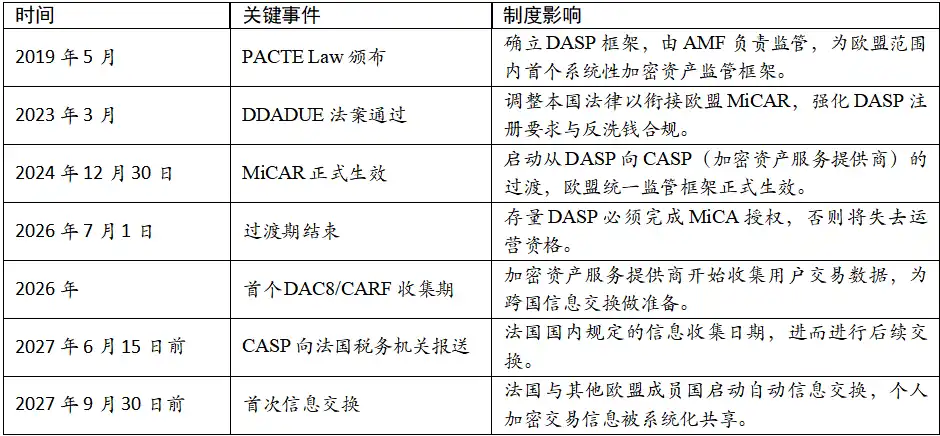
Table 1: Timeline of French Crypto Asset Regulation and Taxation

3 Current Regulatory System: The Institutional Leap from DASP to CASP

3.1 Core Regulatory Bodies and Division of Labor

Crypto asset regulation in France is carried out collaboratively by two main authorities: the Financial Markets Authority (AMF) and the Prudential Supervision and Resolution Authority (ACPR). The AMF is the core regulatory entity, responsible for the registration and authorization of digital asset service providers and the approval of Initial Coin Offerings (ICOs). Its regulatory focus is on market access, information disclosure, and investor protection. The ACPR, on the other hand, focuses on anti-money laundering (AML) and countering the financing of terrorism (CFT) compliance reviews, ensuring crypto asset transactions are not used for illegal purposes.

3.2 Legal Framework and Alignment with MiCAR

Before MiCAR came into effect, the French crypto market was primarily regulated under the PACTE Law. This law defined crypto assets as digital assets and required institutions providing services like custody and fiat currency exchange in France to register with the AMF. With the formal implementation of MiCAR on December 30, 2024, France is currently in a critical transition period from the DASP framework to the EU's unified CASP framework.

According to France's DDADUE law, DASP institutions registered with the AMF before December 30, 2024, can benefit from a transition period lasting until July 1, 2026, at the latest. During this period, these institutions can continue to operate within France, but if they need an EU passport to operate across the entire EU, they must apply for and obtain MiCA authorization in advance. CASPs under MiCAR must meet stricter capital requirements, governance standards, risk management, and customer protection measures.

3.3 International Cooperation Framework: DAC8/CARF and Tax Transparency

To further enhance the transparency of the crypto asset market, France is implementing the EU's DAC8 and the OECD's CARF. According to current plans, CASPs will need to start collecting user transaction data from 2026 and submit their first annual report to the French tax authorities by June 15, 2027.

This means that from 2027 onwards, an automatic information exchange mechanism will be activated between France and other EU member states, systematically sharing individuals' cross-border crypto transaction information with the respective tax authorities. This shift marks the end of anonymity for crypto asset transactions conducted through centralized platforms, moving tax compliance from reliance on taxpayer self-declaration to systematic reporting by CASPs and cross-border information sharing.

4 Crypto Asset Tax System: Categorized Taxation and Declaration Logic

4.1 Taxation Principles and Triggering Conditions

For individuals, France taxes crypto assets based on the principle that a taxable event is triggered only upon conversion into fiat currency or use for purchasing goods or services. That is, tax obligations arise only when crypto assets are sold for fiat currency or used to buy goods or services. Swaps between crypto assets (Crypto-to-Crypto) do not create an immediate tax obligation under the current system, a policy that greatly promotes the activity of the on-chain ecosystem.

For institutional investors and companies, France taxes crypto assets following the realization principle of corporate accounting standards. Crypto-to-Crypto transactions typically require recognizing profits and losses based on fair value changes, potentially creating immediate tax obligations even without conversion to fiat. This treatment is consistent with the accounting standards for traditional financial assets, requiring companies to value their held crypto assets at the end of each accounting period and include unrealized capital gains or losses in their current taxable income. Furthermore, capital losses for institutional investors can be carried forward to offset the company's total profits in future years, providing greater tax planning space for businesses.

4.2 Participant Classification and Tax Rate Structure

French tax law categorizes participants based on their nature and activity characteristics, with each category subject to different tax calculation rules. The following discusses occasional investors, professional investors and professional traders, crypto mining enterprises and pool operators, DeFi participants and liquidity providers, NFT traders, crypto exchanges and custodians, and institutional investors and fund managers.

4.2.1 Occasional Investors

Occasional investors are individual investors with low trading frequency, small scale, and non-professional nature. The French tax authorities use qualitative rather than quantitative criteria for determination, typically considering comprehensive factors such as: the complexity of transactions, tools used, transaction frequency, transaction scale, and its proportion in the taxpayer's total income.

Occasional investors are subject to the Flat-Rate Withholding Tax (PFU, Prélèvement Forfaitaire Unique). The rate is 30%, which includes 12.8% income tax and 17.2% social security contributions. Additionally, the portion of the annual sales total below €305 is exempt from tax. Losses generated from crypto trading within the same year can offset gains from the same year. Occasional investors calculate capital gains using the global cost proportion method (Portfolio Method). The specific formula is:

Net Capital Gain = Sale Price - (Total Acquisition Cost × Sale Price) / (Total Asset Market Value on Transaction Date)

This method allows taxpayers to consider the cost basis of the entire portfolio when calculating gains, rather than calculating transaction by transaction, which greatly simplifies the declaration process in practice. Meanwhile, occasional investors can choose to forgo the flat tax rate and instead be taxed according to the progressive income tax rate (0%-45%) plus 17.2% social security contributions. This option provides potential tax optimization space for low- and middle-income taxpayers.

4.2.2 Professional Investors and Professional Traders

Professional investors are individuals or entities with high trading frequency, large transaction size, crypto asset income constituting a high proportion of total income, use of professional equipment, and commercial characteristics. From January 1, 2023, the tax regime for professional investors has been shifted from Industrial and Commercial Profits (BIC) to the Non-Commercial Profits (BNC) framework.

Professional investors are subject to progressive income tax rates (0%-45%) plus 17.2% social security contributions. This means the tax burden increases with total income, reaching a maximum income tax rate of 45%. The taxable income for professional investors is the net capital gain, i.e., total gains minus total losses. Unlike occasional investors, professional investors can deduct losses within the same tax year, but losses cannot be carried forward to subsequent years.
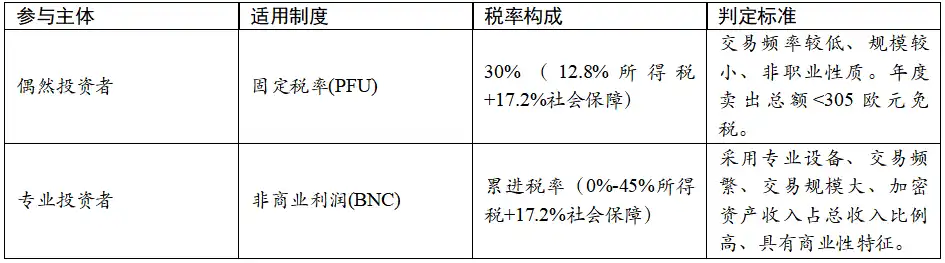
Table 2: Comparison of Occasional and Professional Investors

The distinction between professional and occasional is based on qualitative criteria, not quantitative standards. The French tax authorities typically consider comprehensive factors such as the complexity of transactions, tools used, transaction frequency, transaction scale, and its proportion in the taxpayer's total income.

4.2.3 Crypto Mining Enterprises and Mining Pool Operators

Mining income for crypto mining enterprises is treated under Non-Commercial Profits (BNC) rules and must be included in annual total income at the market value at the time of receipt. According to DGFiP guidance issued in August 2019, mining income does not create Value Added Tax (VAT) obligations.

Mining income is recognized as income at the market price of the crypto asset on the day it is received by the miner. For example, if a miner receives 1 Bitcoin on a certain day, the market price of Bitcoin on that day should be used as taxable income. Mining enterprises can deduct costs directly related to mining activities, including but not limited to electricity costs, hardware equipment depreciation, maintenance costs, cooling system operating costs, etc. The deduction of these costs follows general business expense deduction principles.

According to DGFiP guidance, mining activity is not considered a VAT-taxable transaction in the absence of providing personalized services for a specific beneficiary. Therefore, miners are not required to pay VAT on the digital asset rewards received, nor can they claim VAT deduction rights. The tax treatment for individuals or entities participating in mining pools is the same as for independent miners, i.e., taxed under BNC rules. Mining pool operators, as intermediaries, need to provide participants with detailed records of profit distribution for accurate declaration.
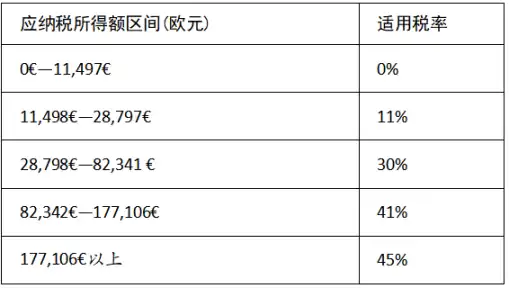
Table 3: 2026 French BNC Net Income Progressive Tax Rate Table

4.2.4 Crypto Exchanges and Custodians

Crypto exchanges and custodians are subject to strict regulation in France. From December 30, 2024, these institutions need to transition from the DASP framework to the CASP framework to comply with the EU's MiCAR requirements.

As commercial entities, the income of crypto exchanges and custodians (including transaction fees, custody fees, interest, etc.) should be taxed according to French corporate income tax rules. The standard corporate income tax rate is 25% (since 2022). According to EU and French VAT rules, the exchange of crypto assets is generally considered a financial service and may be exempt from VAT. However, certain ancillary services (such as consulting, custody, etc.) may be subject to VAT.

CASPs need to meet stricter capital requirements, governance standards, risk management, and customer protection measures. However, we anticipate that these compliance costs may be deductible as business expenses.

4.2.5 Institutional Investors and Fund Managers

Capital gains from crypto asset transactions by institutional investors should be taxed according to French corporate income tax rules. Companies or funds registered in France must include gains generated from crypto asset transactions in their annual profits. Gains are treated as ordinary business income, with a standard tax rate of 25%. Depending on the specific structure of the fund (e.g., UCITS, AIF, etc.), the tax treatment may differ. Certain types of funds may enjoy special tax treatments; for institutions under specific accounting standards, a "Mark-to-Market" system may also apply, requiring the valuation and taxation of unrealized gains at the end of each accounting year.

Unlike the 30% flat tax (PFU) applicable to individual investors, France offers a preferential tax rate of 15% for the first €42,500 of profits for small and medium-sized enterprises (SMEs) with turnover below a certain threshold (usually €7,630,000) that meet the conditions, with the excess portion taxed at 25%.
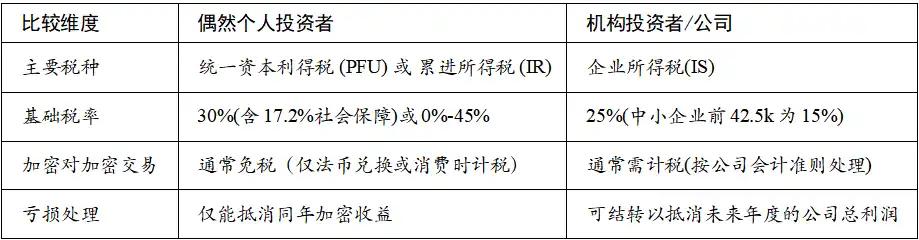
Table 4: Comparison of Individual and Institutional Investors

Simultaneously, institutional investors engaging in cross-border crypto transactions need to consider the relevant countries' tax treaties and information exchange obligations under the CARF/DAC8 framework (see section 3.3 for details).

4.2.6 DeFi and NFT: Tax Categories Not Yet Clarified in French Tax Law

DeFi participants include all participants who earn returns by locking crypto assets in smart contracts, such as stakers, yield farming participants, and lending platform users. The legal characterization of Staking and Yield Farming is not yet clear in French tax law, lacking specific legal provisions or tax guidance. Based on existing tax guidance, since staking and yield farming contribute to the maintenance of the blockchain system, their returns might be taxed under BNC rules, requiring recognition at market value upon receipt, but this interpretation still needs further confirmation.

Until legally clarified, DeFi participants should keep detailed transaction records, including staking time, return amount, market price on the return date, etc., and consult professional tax advisors when filing.

There is significant uncertainty regarding the tax characterization of NFTs in France, lacking specific legal provisions or tax guidance. Depending on the specific legal characterization of the NFT, the tax rate could vary greatly: If characterized as a digital asset (like cryptocurrency), it would be subject to the 30% flat tax or progressive rates (0%-45%) depending on the participant category; If characterized as a work of art, it would be subject to a very favorable fixed rate of only 6.5% on the gross sales price. This simplified, very preferential rate in France is a special regime for specific movable property like artworks, aimed at encouraging art transactions.

Given the uncertainty of characterization, NFT traders should keep detailed transaction records, including purchase price, sale price, transaction date, specific characteristics of the NFT, etc., and consult professional tax advisors when filing tax returns to determine the most reasonable characterization scheme.

5 Summary and Outlook

France's institutional development in the crypto asset field reflects an approach that balances regulation and incentives. Through the implementation of MiCAR and the advancement of DAC8/CARF, France is transforming its pioneering regulatory advantage into a competitive edge within the EU. However, this process also marks the end of the era of anonymity in crypto asset trading, as the entire market gradually moves towards openness and transparency. To adapt to regulatory changes, individual investors and institutions have different response paths:

Individual investors should establish a well-maintained transaction ledger, using professional tax software to record each transaction. Beyond the €305 tax-free allowance, they should ensure accurate declaration to avoid compliance risks arising from undeclared foreign accounts. They should also monitor the progress of DAC8/CARF to understand the impact of automatic information exchange starting in 2027 in advance.

Crypto service institutions should accelerate the transition from DASP to CASP, focusing on strengthening internal AML/CFT audit processes to meet the stricter capital and operational requirements under MiCAR. Simultaneously, they should establish robust data collection and reporting systems in preparation for DAC8/CARF data collection starting in 2026. Furthermore, both institutions and individuals should consistently monitor policymakers' stance on the legal characterization of DeFi and NFTs, coordination with other EU member states, and the consistency and effectiveness of DAC8/CARF implementation.

Preguntas relacionadas

QWhat are the key differences between the DASP and CASP regulatory frameworks for crypto asset service providers in France?

AThe DASP (Digital Asset Service Provider) framework was France's national registration system under the PACTE Law, which was voluntary and focused on market entry and investor protection. The CASP (Crypto Asset Service Provider) framework, mandated by the EU's MiCAR regulation, is a compulsory licensing system with stricter requirements. Key differences include: DASP was a registration system, while CASP is an authorization/licensing system; CASP imposes more rigorous capital, governance, risk management, and client protection requirements; and CASP providers must obtain MiCAR to operate across the EU (passporting), whereas DASP registration was only for France.

QHow does the French tax system classify individual crypto investors, and what are the tax implications for each category?

AFrench tax law classifies individual crypto investors into two main categories based on activity nature and frequency. 'Occasional Investors' engage in infrequent, non-professional trading and are subject to a flat tax rate of 30% (PFU), comprising 12.8% income tax and 17.2% social contributions. They benefit from a €305 annual exemption and can use the portfolio method for cost basis calculation. 'Professional Investors' are high-frequency, large-scale traders and are taxed under the non-commercial profits (BNC) regime at progressive income tax rates (0%-45%) plus 17.2% social contributions. Their classification is based on qualitative factors like transaction complexity, frequency, and proportion of total income.

QWhat significant change in international tax transparency for crypto assets is expected to begin in 2026 according to the article?

ABeginning in 2026, the international tax transparency era for crypto assets will commence with the implementation of the EU's DAC8 directive and the OECD's Crypto Asset Reporting Framework (CARF). From this date, Crypto Asset Service Providers (CASPs) in France will be required to start systematically collecting user transaction data. The first annual reports based on this data must be submitted to the French tax authorities by June 15, 2027. This will initiate an automatic exchange of information mechanism between France and other EU member states, effectively ending the anonymity of cross-border crypto transactions conducted on centralized platforms.

QHow are crypto mining activities taxed for individuals and businesses in France?

AIncome from crypto mining for both individuals and businesses is treated as non-commercial profits (BNC) under French tax law. The mining reward is taxed as income at its fair market value on the day it is received by the miner. Miners can deduct directly related operational costs, such as electricity, hardware depreciation, and maintenance, from this income. Importantly, according to a 2019 DGFiP guidance, mining activity is not subject to Value Added Tax (VAT) as it is not considered a supply of personalized services to a specific beneficiary.

QWhat is the current state of tax regulation for DeFi activities and NFT transactions in France?

AThe tax treatment of DeFi activities (like staking and liquidity mining) and NFT transactions remains largely uncertain and unclarified in French tax law. There is a lack of specific legal provisions or official tax guidance for these areas. For DeFi, rewards from staking and yield farming could potentially be taxed as non-commercial profits (BNC), but this interpretation awaits confirmation. For NFTs, the applicable tax rate depends entirely on their legal qualification, which is unclear. If classified similarly to cryptocurrencies, standard income tax rates apply; if classified as artwork, they could benefit from a preferential fixed tax rate of 6.5%. Participants in these areas are advised to maintain detailed records and seek professional tax advice.

Lecturas Relacionadas

Bajando las expectativas para el próximo ciclo alcista de BTC

**Resumen del artículo: "Bajar las expectativas para el próximo ciclo alcista de BTC" por Alex Xu** El autor, que tenía a Bitcoin como su mayor activo, ha reducido progresivamente su exposición durante el actual ciclo alcista: eliminó el apalancamiento a 70k y redujo su posición de un 100% a un 30% entre 100k-120k. Recientemente, vendió más a 78k-79k, argumentando una revisión a la baja de las expectativas para el próximo máximo alcista. Las razones principales son: 1. **Narrativa de adopción agotada:** El impulso de adopción masiva (de minorista a institucional vía ETFs) parece agotado. El siguiente paso, la adopción por bancos centrales o fondos soberanos importantes, se ve muy difícil a corto plazo. 2. **Coste de oportunidad:** El autor ha identificado otras oportunidades de inversión en empresas atractivas. 3. **Contracción del ecosistema crypto:** La mayoría de modelos de negocio Web3 (SocialFi, GameFi, DePIN) no han funcionado. Solo DeFi genera valor, pero se contrae por la falta de activos nativos de calidad, lo que reduce la base de usuarios y holders de BTC. 4. **Problemas del mayor comprador:** MicroStrategy, el mayor tenedor corporativo, enfrenta un coste de financiación creciente (11.5% para su préstamo perpetuo), lo que podría ralentizar su ritmo de compra y ejercer presión vendedora. 5. **Competencia del oro tokenizado:** El oro tokenizado ha cerrado la brecha en portabilidad y divisibilidad, erosionando la ventaja competitiva de BTC como "oro digital". 6. **Problema de seguridad:** La reducción de la recompensa por minado (halving) amenaza la seguridad de la red, ya que las nuevas fuentes de ingresos por fees (como las inscripciones) no han podido dar solución. Conclusión: El autor mantiene una posición significativa en BTC y espera que suba, pero es menos optimista sobre su potencial alcista. Vender en la reciente subida fue una decisión táctica. Si sus razones para ser bajista se invalidan, estaría abierto a recomprar, aceptando si se equivoca y el precio sube.

marsbitHace 15 hora(s)

Bajando las expectativas para el próximo ciclo alcista de BTC

marsbitHace 15 hora(s)

Trading

Spot
Futuros

Artículos destacados

Qué es $S$

Entendiendo SPERO: Una Visión General Completa Introducción a SPERO A medida que el panorama de la innovación sigue evolucionando, la aparición de tecnologías web3 y proyectos de criptomonedas juega un papel fundamental en la configuración del futuro digital. Un proyecto que ha llamado la atención en este campo dinámico es SPERO, denotado como SPERO,$$s$. Este artículo tiene como objetivo recopilar y presentar información detallada sobre SPERO, para ayudar a entusiastas e inversores a comprender sus fundamentos, objetivos e innovaciones dentro de los dominios web3 y cripto. ¿Qué es SPERO,$$s$? SPERO,$$s$ es un proyecto único dentro del espacio cripto que busca aprovechar los principios de descentralización y tecnología blockchain para crear un ecosistema que promueva la participación, la utilidad y la inclusión financiera. El proyecto está diseñado para facilitar interacciones entre pares de nuevas maneras, proporcionando a los usuarios soluciones y servicios financieros innovadores. En su esencia, SPERO,$$s$ tiene como objetivo empoderar a los individuos al proporcionar herramientas y plataformas que mejoren la experiencia del usuario en el espacio de las criptomonedas. Esto incluye habilitar métodos de transacción más flexibles, fomentar iniciativas impulsadas por la comunidad y crear caminos para oportunidades financieras a través de aplicaciones descentralizadas (dApps). La visión subyacente de SPERO,$$s$ gira en torno a la inclusividad, buscando cerrar brechas dentro de las finanzas tradicionales mientras aprovecha los beneficios de la tecnología blockchain. ¿Quién es el Creador de SPERO,$$s$? La identidad del creador de SPERO,$$s$ sigue siendo algo oscura, ya que hay recursos públicos limitados que proporcionan información de fondo detallada sobre su(s) fundador(es). Esta falta de transparencia puede derivarse del compromiso del proyecto con la descentralización, una ética que muchos proyectos web3 comparten, priorizando las contribuciones colectivas sobre el reconocimiento individual. Al centrar las discusiones en torno a la comunidad y sus objetivos colectivos, SPERO,$$s$ encarna la esencia del empoderamiento sin señalar a individuos específicos. Como tal, entender la ética y la misión de SPERO es más importante que identificar a un creador singular. ¿Quiénes son los Inversores de SPERO,$$s$? SPERO,$$s$ cuenta con el apoyo de una diversa gama de inversores que van desde capitalistas de riesgo hasta inversores ángeles dedicados a fomentar la innovación en el sector cripto. El enfoque de estos inversores generalmente se alinea con la misión de SPERO, priorizando proyectos que prometen avances tecnológicos sociales, inclusividad financiera y gobernanza descentralizada. Estas fundaciones de inversores suelen estar interesadas en proyectos que no solo ofrecen productos innovadores, sino que también contribuyen positivamente a la comunidad blockchain y sus ecosistemas. El respaldo de estos inversores refuerza a SPERO,$$s$ como un contendiente notable en el rápidamente evolutivo dominio de los proyectos cripto. ¿Cómo Funciona SPERO,$$s$? SPERO,$$s$ emplea un marco multifacético que lo distingue de los proyectos de criptomonedas convencionales. Aquí hay algunas de las características clave que subrayan su singularidad e innovación: Gobernanza Descentralizada: SPERO,$$s$ integra modelos de gobernanza descentralizada, empoderando a los usuarios para participar activamente en los procesos de toma de decisiones sobre el futuro del proyecto. Este enfoque fomenta un sentido de propiedad y responsabilidad entre los miembros de la comunidad. Utilidad del Token: SPERO,$$s$ utiliza su propio token de criptomoneda, diseñado para servir a diversas funciones dentro del ecosistema. Estos tokens permiten transacciones, recompensas y la facilitación de servicios ofrecidos en la plataforma, mejorando la participación y utilidad general. Arquitectura en Capas: La arquitectura técnica de SPERO,$$s$ soporta la modularidad y escalabilidad, permitiendo la integración fluida de características y aplicaciones adicionales a medida que el proyecto evoluciona. Esta adaptabilidad es fundamental para mantener la relevancia en el siempre cambiante paisaje cripto. Participación de la Comunidad: El proyecto enfatiza iniciativas impulsadas por la comunidad, empleando mecanismos que incentivan la colaboración y la retroalimentación. Al nutrir una comunidad sólida, SPERO,$$s$ puede abordar mejor las necesidades de los usuarios y adaptarse a las tendencias del mercado. Enfoque en la Inclusión: Al ofrecer tarifas de transacción bajas y interfaces amigables para el usuario, SPERO,$$s$ busca atraer a una base de usuarios diversa, incluyendo a individuos que anteriormente pueden no haber participado en el espacio cripto. Este compromiso con la inclusión se alinea con su misión general de empoderamiento a través de la accesibilidad. Cronología de SPERO,$$s$ Entender la historia de un proyecto proporciona información crucial sobre su trayectoria de desarrollo y hitos. A continuación, se presenta una cronología sugerida que mapea eventos significativos en la evolución de SPERO,$$s$: Fase de Conceptualización e Ideación: Las ideas iniciales que forman la base de SPERO,$$s$ fueron concebidas, alineándose estrechamente con los principios de descentralización y enfoque comunitario dentro de la industria blockchain. Lanzamiento del Whitepaper del Proyecto: Tras la fase conceptual, se publicó un whitepaper completo que detalla la visión, objetivos e infraestructura tecnológica de SPERO,$$s$ para generar interés y retroalimentación de la comunidad. Construcción de Comunidad y Primeras Interacciones: Se realizaron esfuerzos de divulgación activa para construir una comunidad de primeros adoptantes e inversores potenciales, facilitando discusiones en torno a los objetivos del proyecto y obteniendo apoyo. Evento de Generación de Tokens: SPERO,$$s$ llevó a cabo un evento de generación de tokens (TGE) para distribuir sus tokens nativos a los primeros seguidores y establecer liquidez inicial dentro del ecosistema. Lanzamiento de la dApp Inicial: La primera aplicación descentralizada (dApp) asociada con SPERO,$$s$ se puso en marcha, permitiendo a los usuarios interactuar con las funcionalidades centrales de la plataforma. Desarrollo Continuo y Alianzas: Actualizaciones y mejoras continuas en las ofertas del proyecto, incluyendo alianzas estratégicas con otros actores en el espacio blockchain, han moldeado a SPERO,$$s$ en un jugador competitivo y en evolución en el mercado cripto. Conclusión SPERO,$$s$ se erige como un testimonio del potencial de web3 y las criptomonedas para revolucionar los sistemas financieros y empoderar a los individuos. Con un compromiso con la gobernanza descentralizada, la participación comunitaria y funcionalidades diseñadas de manera innovadora, allana el camino hacia un paisaje financiero más inclusivo. Como con cualquier inversión en el rápidamente evolutivo espacio cripto, se anima a los potenciales inversores y usuarios a investigar a fondo y participar de manera reflexiva con los desarrollos en curso dentro de SPERO,$$s$. El proyecto muestra el espíritu innovador de la industria cripto, invitando a una exploración más profunda de sus innumerables posibilidades. Aunque el viaje de SPERO,$$s$ aún se está desarrollando, sus principios fundamentales pueden, de hecho, influir en el futuro de cómo interactuamos con la tecnología, las finanzas y entre nosotros en ecosistemas digitales interconectados.

74 Vistas totalesPublicado en 2024.12.17Actualizado en 2024.12.17

Qué es $S$

Qué es AGENT S

Agent S: El Futuro de la Interacción Autónoma en Web3 Introducción En el paisaje en constante evolución de Web3 y las criptomonedas, las innovaciones están redefiniendo continuamente cómo los individuos interactúan con las plataformas digitales. Uno de estos proyectos pioneros, Agent S, promete revolucionar la interacción humano-computadora a través de su marco agente abierto. Al allanar el camino para interacciones autónomas, Agent S tiene como objetivo simplificar tareas complejas, ofreciendo aplicaciones transformadoras en inteligencia artificial (IA). Esta exploración detallada se adentrará en las complejidades del proyecto, sus características únicas y las implicaciones para el dominio de las criptomonedas. ¿Qué es Agent S? Agent S se presenta como un marco agente abierto revolucionario, diseñado específicamente para abordar tres desafíos fundamentales en la automatización de tareas informáticas: Adquisición de Conocimiento Específico del Dominio: El marco aprende de manera inteligente a partir de diversas fuentes de conocimiento externas y experiencias internas. Este enfoque dual le permite construir un rico repositorio de conocimiento específico del dominio, mejorando su rendimiento en la ejecución de tareas. Planificación a Largo Plazo de Tareas: Agent S emplea planificación jerárquica aumentada por la experiencia, un enfoque estratégico que facilita la descomposición y ejecución eficiente de tareas intrincadas. Esta característica mejora significativamente su capacidad para gestionar múltiples subtareas de manera eficiente y efectiva. Manejo de Interfaces Dinámicas y No Uniformes: El proyecto introduce la Interfaz Agente-Computadora (ACI), una solución innovadora que mejora la interacción entre agentes y usuarios. Utilizando Modelos de Lenguaje Multimodal Grandes (MLLMs), Agent S puede navegar y manipular diversas interfaces gráficas de usuario sin problemas. A través de estas características pioneras, Agent S proporciona un marco robusto que aborda las complejidades involucradas en la automatización de la interacción humana con las máquinas, preparando el terreno para innumerables aplicaciones en IA y más allá. ¿Quién es el Creador de Agent S? Aunque el concepto de Agent S es fundamentalmente innovador, la información específica sobre su creador sigue siendo elusiva. El creador es actualmente desconocido, lo que resalta ya sea la etapa incipiente del proyecto o la elección estratégica de mantener a los miembros fundadores en el anonimato. Independientemente de la anonimidad, el enfoque sigue siendo las capacidades y el potencial del marco. ¿Quiénes son los Inversores de Agent S? Dado que Agent S es relativamente nuevo en el ecosistema criptográfico, la información detallada sobre sus inversores y patrocinadores financieros no está documentada explícitamente. La falta de información disponible públicamente sobre las bases de inversión u organizaciones que apoyan el proyecto plantea preguntas sobre su estructura de financiamiento y hoja de ruta de desarrollo. Comprender el respaldo es crucial para evaluar la sostenibilidad del proyecto y su posible impacto en el mercado. ¿Cómo Funciona Agent S? En el núcleo de Agent S se encuentra tecnología de vanguardia que le permite funcionar de manera efectiva en diversos entornos. Su modelo operativo se basa en varias características clave: Interacción Humano-Computadora: El marco ofrece planificación avanzada de IA, esforzándose por hacer que las interacciones con las computadoras sean más intuitivas. Al imitar el comportamiento humano en la ejecución de tareas, promete elevar las experiencias de los usuarios. Memoria Narrativa: Empleada para aprovechar experiencias de alto nivel, Agent S utiliza memoria narrativa para hacer un seguimiento de las historias de tareas, mejorando así sus procesos de toma de decisiones. Memoria Episódica: Esta característica proporciona a los usuarios orientación paso a paso, permitiendo que el marco ofrezca apoyo contextual a medida que se desarrollan las tareas. Soporte para OpenACI: Con la capacidad de funcionar localmente, Agent S permite a los usuarios mantener el control sobre sus interacciones y flujos de trabajo, alineándose con la ética descentralizada de Web3. Fácil Integración con APIs Externas: Su versatilidad y compatibilidad con diversas plataformas de IA aseguran que Agent S pueda integrarse sin problemas en ecosistemas tecnológicos existentes, convirtiéndolo en una opción atractiva para desarrolladores y organizaciones. Estas funcionalidades contribuyen colectivamente a la posición única de Agent S dentro del espacio cripto, ya que automatiza tareas complejas y de múltiples pasos con una intervención humana mínima. A medida que el proyecto evoluciona, sus aplicaciones potenciales en Web3 podrían redefinir cómo se desarrollan las interacciones digitales. Cronología de Agent S El desarrollo y los hitos de Agent S pueden encapsularse en una cronología que destaca sus eventos significativos: 27 de septiembre de 2024: Se lanzó el concepto de Agent S en un documento de investigación integral titulado “Un Marco Agente Abierto que Utiliza Computadoras como un Humano”, mostrando las bases del proyecto. 10 de octubre de 2024: El documento de investigación se hizo disponible públicamente en arXiv, ofreciendo una exploración en profundidad del marco y su evaluación de rendimiento basada en el benchmark OSWorld. 12 de octubre de 2024: Se publicó una presentación en video, proporcionando una visión visual de las capacidades y características de Agent S, involucrando aún más a posibles usuarios e inversores. Estos hitos en la cronología no solo ilustran el progreso de Agent S, sino que también indican su compromiso con la transparencia y el compromiso comunitario. Puntos Clave Sobre Agent S A medida que el marco Agent S continúa evolucionando, varios atributos clave destacan, subrayando su naturaleza innovadora y potencial: Marco Innovador: Diseñado para proporcionar un uso intuitivo de las computadoras similar a la interacción humana, Agent S aporta un enfoque novedoso a la automatización de tareas. Interacción Autónoma: La capacidad de interactuar de manera autónoma con las computadoras a través de GUI significa un avance hacia soluciones informáticas más inteligentes y eficientes. Automatización de Tareas Complejas: Con su metodología robusta, puede automatizar tareas complejas y de múltiples pasos, haciendo que los procesos sean más rápidos y menos propensos a errores. Mejora Continua: Los mecanismos de aprendizaje permiten a Agent S mejorar a partir de experiencias pasadas, mejorando continuamente su rendimiento y eficacia. Versatilidad: Su adaptabilidad en diferentes entornos operativos como OSWorld y WindowsAgentArena asegura que pueda servir a una amplia gama de aplicaciones. A medida que Agent S se posiciona en el paisaje de Web3 y criptomonedas, su potencial para mejorar las capacidades de interacción y automatizar procesos significa un avance significativo en las tecnologías de IA. A través de su marco innovador, Agent S ejemplifica el futuro de las interacciones digitales, prometiendo una experiencia más fluida y eficiente para los usuarios en diversas industrias. Conclusión Agent S representa un audaz avance en la unión de la IA y Web3, con la capacidad de redefinir cómo interactuamos con la tecnología. Aunque aún se encuentra en sus primeras etapas, las posibilidades para su aplicación son vastas y atractivas. A través de su marco integral que aborda desafíos críticos, Agent S tiene como objetivo llevar las interacciones autónomas al primer plano de la experiencia digital. A medida que nos adentramos más en los reinos de las criptomonedas y la descentralización, proyectos como Agent S sin duda desempeñarán un papel crucial en la configuración del futuro de la tecnología y la colaboración humano-computadora.

693 Vistas totalesPublicado en 2025.01.14Actualizado en 2025.01.14

Qué es AGENT S

Cómo comprar S

¡Bienvenido a HTX.com! Hemos hecho que comprar Sonic (S) sea simple y conveniente. Sigue nuestra guía paso a paso para iniciar tu viaje de criptos.Paso 1: crea tu cuenta HTXUtiliza tu correo electrónico o número de teléfono para registrarte y obtener una cuenta gratuita en HTX. Experimenta un proceso de registro sin complicaciones y desbloquea todas las funciones.Obtener mi cuentaPaso 2: ve a Comprar cripto y elige tu método de pagoTarjeta de crédito/débito: usa tu Visa o Mastercard para comprar Sonic (S) al instante.Saldo: utiliza fondos del saldo de tu cuenta HTX para tradear sin problemas.Terceros: hemos agregado métodos de pago populares como Google Pay y Apple Pay para mejorar la comodidad.P2P: tradear directamente con otros usuarios en HTX.Over-the-Counter (OTC): ofrecemos servicios personalizados y tipos de cambio competitivos para los traders.Paso 3: guarda tu Sonic (S)Después de comprar tu Sonic (S), guárdalo en tu cuenta HTX. Alternativamente, puedes enviarlo a otro lugar mediante transferencia blockchain o utilizarlo para tradear otras criptomonedas.Paso 4: tradear Sonic (S)Tradear fácilmente con Sonic (S) en HTX's mercado spot. Simplemente accede a tu cuenta, selecciona tu par de trading, ejecuta tus trades y monitorea en tiempo real. Ofrecemos una experiencia fácil de usar tanto para principiantes como para traders experimentados.

1.2k Vistas totalesPublicado en 2025.01.15Actualizado en 2025.03.21

Cómo comprar S

Discusiones

Bienvenido a la comunidad de HTX. Aquí puedes mantenerte informado sobre los últimos desarrollos de la plataforma y acceder a análisis profesionales del mercado. A continuación se presentan las opiniones de los usuarios sobre el precio de S (S).

活动图片