Arthur Hayes explains why Bitcoin has likely bottomed out

Arthur HayesPublicado a 2022-12-10Actualizado a 2022-12-10

Resumen

In a recent Medium blog post, Arthur Hayes claims that Bitcoin, the flagship cryptocurrency, has likely bottomed out.

The question at hand is whether the current price for Bitcoin is at the “bottom”. Bitcoin is the purest and most battle-tested form of crypto money — and while it may not fall the most, its role as crypto’s reserve asset will ensure that it’s Bitcoin that leads us out of the shadow of darkness. Therefore, we must focus on Bitcoin’s price action to divine whether this market’s bottom has occurred or not.

There are three cohorts that were forced to puke their Bitcoin into the righteous hands of the true believers: the centralised lending and trading firms, Bitcoin mining operations, and ordinary speculators. In every case, misuse of leverage — whether it was in their business operating model or they used it to finance their trades — was the cause of the liquidations. With short-term US Treasury yields moving from 0% in Q3 2021 to 5% at present, everyone has suffered bigly for their uber-bullish convictions.

After walking through how leverage destroyed each cohort’s position as rates rose, I will then explain why I think they have no more Bitcoin left to sell — And why, therefore, at the margin, we likely already hit the lows of this cycle during the recent FTX / Alameda catastrophe.

In the final section of this essay, I will then lay out the way in which I plan to trade this possible bottom. To that end, I recently participated in a webinar with my macro daddy Felix Zulauf. At the end of the broadcast, he said something that hit home. He said that investors and traders need to be concerned with recognising the tops and bottoms, but that most focus on the noise in the middle, and that calling a bottom is usually a fool’s errand. Since I’m embarking on that very fool’s errand, I intend to try to call it in a way that protects my portfolio, with the maximum amount of cushion to be wrong on the level and/or timing.

With that in mind, let’s dive in.

Bankruptcy Order of Operations

Most of us are probably not as gifted as Caroline Ellison, so we had to learn maths the hard way. Do you remember PEMDAS? It’s the acronym that describes the order of operations when solving equations:

P — Parentheses

E — Exponents

M — Multiplication

D — Division

A — Addition

S — Subtraction

The fact that I still remember this acronym many decades after first learning it speaks to its sticking power.

But equations aren’t the only thing with a static order of operations — bankruptcies (and the contagion that follows) occur in a very specific order, too. Let me start by explaining what that order looks like, and why it occurs in that sequence.

Before I do, though, I want to acknowledge that no one wants or intends to go bankrupt. So, I apologise in advance if I come across as insensitive to the strife of those who lost money because of Sam “I mislabeled my bank accounts” Bankman-Fried (SBF). But, this scammer just keeps opening his mouth and saying dumb shit that he needs to be called out for — so the rest of this essay will be peppered with references to our “right kind of white” boy and the sad melodrama he is responsible for. Now, let’s get back to it.

Centralised lending firms (CEL) usually go bankrupt because they either lent money to entities that can’t pay them back, or they have duration mismatches in their lending books. Duration mismatches occur because the lenders receive deposits that can be recalled by their depositors on a short time frame, but they make loans using those deposits on a longer time frame. If the depositors want their money back or demand a higher rate of interest due to changing market conditions, then the CEL — absent an injection from some white knight firm — becomes insolvent and bankruptcy quickly follows.

Before a CEL becomes insolvent or goes bankrupt, they will attempt to raise funds to ameliorate the situation. The first thing they will do is call all loans that they can. This mainly affects anyone who borrowed money from them with a short time horizon.

Imagine you are a trading firm that borrowed money from Celsius — but within a week, Celsius asks for those funds back, and you have to oblige. As a trading firm, getting recalled in a bull market is no biggie. There are plenty of other CELs who will lend you funds so that you don’t have to liquidate your existing positions. But when the bull market fades and there’s a market-wide credit crunch, all CELs typically recall their loans at around the same time. With no one to turn to for additional credit, trading firms are forced to liquidate their positions to meet capital calls. They will liquidate their most liquid assets first (i.e., Bitcoin and ETH), and hopefully their portfolio doesn’t contain too many illiquid shitcoins like Serum, MAPS, and Oxygen (*cough* Alameda and 3AC *cough*).

After a CEL recalls all the short-term loans that it can, it will begin liquidating the collateral that underpins its loans (assuming it actually asked for any — looking at you, Voyager). In the crypto markets, the biggest collateralised lending category prior to the recent implosions was loans secured by Bitcoin and Bitcoin mining machines. So once things start to go south, CELs start by selling Bitcoin, as it’s the asset most used to collaterlise loans AND it’s the most liquid cryptocurrency. They also turn to the mining firms that they have lent to and ask them to pony up either Bitcoin, or their mining rigs — but if those CELs don’t operate a data centre with cheap electricity, the mining rigs are about as useful as SBF’s accounting skills.

So while the credit crunch is ongoing, we see large physical sales of Bitcoin hitting the centralised and decentralised exchanges from both a) CELs trying to avoid bankruptcy by selling the Bitcoin they have received as collateral, and b) trading firms who have seen their loans recalled and must liquidate their positions. This is why the price of Bitcoin swoons BEFORE CELs go bankrupt. That’s the big move. The second move down — if there is one — is driven by the fear that occurs when firms which were once thought to be unshakable suddenly start posturing as zombies that are on the cusp of liquidating their assets. This tends to be a smaller move, as any firms at risk of bankruptcy are already busy liquidating Bitcoin so that they can survive the crash.

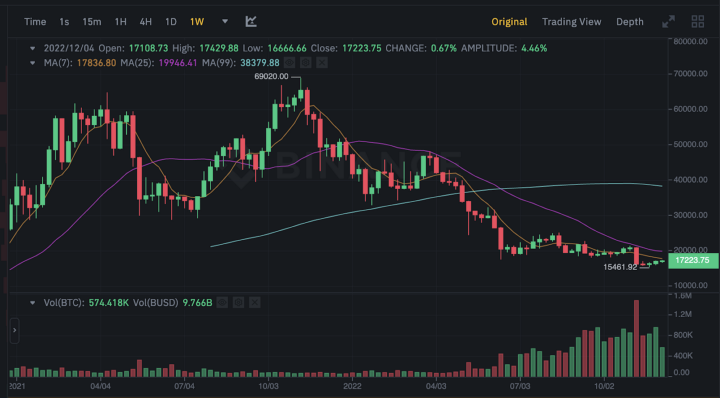
The above chart of Binance’s BTC/BUSD trading volume illustrates that volumes spiked during the two credit crashes of 2022. It is in this span of time that all these once storied firms bit the dust.

To summarise, as CELs transition from solvency, to insolvency, to bankruptcy, these other ecosystem players are affected:

1. Trading firms who borrowed short-term money from CELs and saw their loans recalled.

2. Bitcoin mining firms who borrowed what was typically fiat collateralised by either Bitcoin on their balance sheet, future Bitcoin to be mined, and/or Bitcoin mining rigs.

The two largest muppet crypto trading firms, Alameda and 3AC, both grew to such a gargantuan size because of cheap borrowed money. In the case of Alameda, the polite way to put it is that they “borrowed” it from FTX customers — although others might call it theft. In the case of 3AC, they hoodwinked gullible and desperate CELs to lend them funds with little-to-no collateral. In both cases, the lenders believed these and other trading firms were engaged in super-duper-smart arbitrage trades that rendered these firms immune to the vicissitudes of the markets. However, we know now these firms were just a bunch of degen, long-only punters in meth mode. The only difference between them and the masses was that they had billions of dollars to play with.

When these two firms got into trouble, what did we see? We saw large transfers of the most liquid cryptos — Bitcoin (WBTC in DeFi) and Ether (WETH in DeFi) — to centralised and decentralised exchanges that were then sold. This happened during the big move down. When the dust settled and neither firm could boost the asset side of their balance sheet higher than the liability side, their remaining assets consisted almost purely of the most illiquid shitcoins. Looking through the bankruptcy filings of centralisd lenders and trading firms, it is not entirely obvious what crypto assets remain. The filings lump everything together. So I can’t demonstratively prove that all Bitcoin held by these failed institutions was sold during the multiple crashes, but it does look as if they tried their best to liquidate the most liquid crypto collateral they could right before they went under.

The CELs and all large trading firms already sold most of their Bitcoin. All that is left now are illiquid shitcoins, private stakes in crypto companies, and locked pre-sale tokens. It’s irrelevant to the progression of the crypto bear market how a bankruptcy court eventually deals with these assets. I have comfort that these entities have little to no additional Bitcoin to sell. Next, let’s look at the Bitcoin miners.

Bitcoin Mining Firms

Electricity is priced and sold in fiat, and it is the key input to any Bitcoin mining business. Therefore, if a mining firm wants to expand, they either need to borrow fiat or sell Bitcoin on their balance sheet for fiat in order to pay their electricity bills. Most miners want to avoid selling Bitcoin at all costs, and therefore take out fiat loans collateralised by either Bitcoin on their balance sheets, yet-to-be-produced Bitcoin, or Bitcoin mining rigs.

As Bitcoin’s price rises, lenders feel emboldened to lend more and more fiat to mining firms. The miners are profitable and have hard assets to lend against. However, the ongoing quality of the loans is directly connected to Bitcoin’s price level. If the Bitcoin price falls quickly, then the loans will breach minimum margin levels before the mining firms can earn enough income to service the loans. And if that happens, the lenders will step in and liquidate the miner’s collateral (as I described in the previous section).

We anecdotally know this happened because the massive downturn in asset prices, particularly in the crypto bear market, have — along with rising energy prices — squeezed miners across the industry. Iris Energy is facing a default claim from creditors on $103M of equipment loans. September saw the first Chapter 11 bankruptcy from a major player, Compute North, with other big firms including Argo Blockchain (ARBK) seemingly teetering on the edge of solvency.

But, let’s look at some charts to examine how these waves of crypto credit crunches affected the miners and what they did in response.

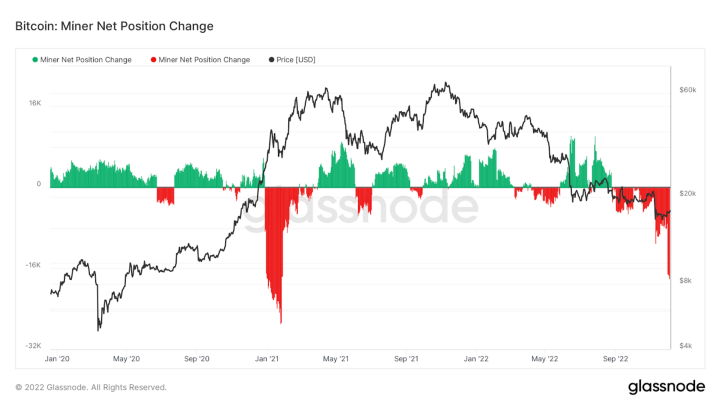
Glassnode publishes an excellent chart which shows the net 30-day change in Bitcoin held by miners.

As we can see, miners have been net selling a large amount of Bitcoin since the first credit crunch in the summer. They must do this in an attempt to stay current on their big fiat debt loads. And if they don’t have debt, they still need to pay electricity bills — and since the price of Bitcoin is so low, they have to sell even more of it to keep the facility operational.

While we don’t — and never will — know if we have hit the maximum amount of net selling, at least we can see that the mining firms are behaving as we would expect given the circumstances.

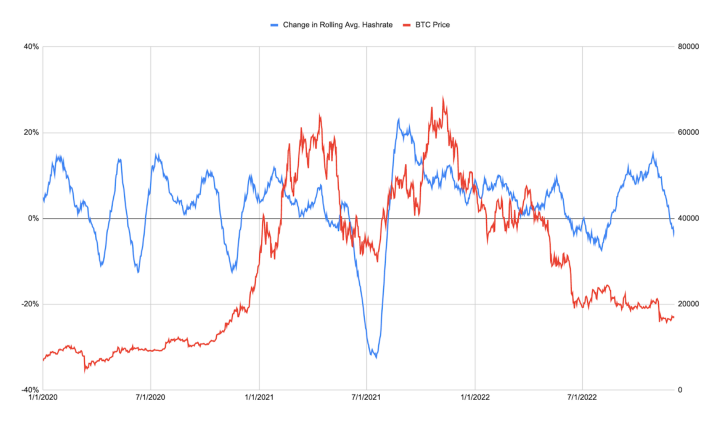
Some miners didn’t make it, or they had to downsize their operations. That is evident in the change in hashrate. I took the hashrate and first computed a rolling 30-day average. I then took that rolling average and looked at the 30-day change. I did this because the hashrate is quite volatile, and it needed some smoothing.

In general, the hashrate has trended higher over time. But, there are periods where the 30-day growth is negative. The hashrate declined right after the summer meltdown, and then most recently plunged due to the FTX / Alameda fallout. Again, this confirms our theory that miners will downsize operations when there is no more credit available to fund their electricity bills.

We also know that some high-cost miners had to cease operations because they defaulted on their loans. Any lender who took mining machines as collateral will likely find it difficult to make use of them, since they aren’t already in the business of operating data centres. And since they can’t use them, the lenders must then sell these machines in the secondary market, and that process takes time. This also contributes to the hashrate falling for a period of time.

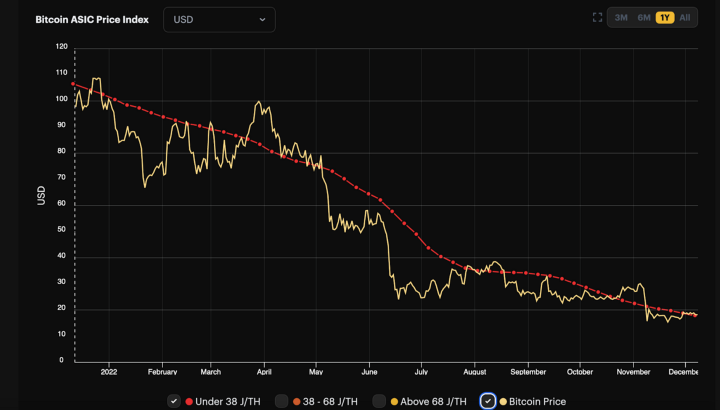
This is a chart of the price of a Bitmain S19 or other comparable mining machine with under 38 Joules (J) / Terahash (TH) efficiency. As we can see, the collateral value of an S19 has plummeted alongside the price of Bitcoin. Imagine you lent USD against these rigs. The miners you lent to tried to sell Bitcoin to provide more fiat to service your loan, but in the end couldn’t do so because marginal profitability declined. The miners then defaulted on their loans and handed over their machines — which are worth almost 80% less now than when the loan was undertaken — as repayment. We can guess that the most feverish point of loan origination was near the top of the market. Muppet lenders always buy the top and sell the bottom … every single fucking time!

Now that CELs have collections of mining rigs that they can’t easily sell and can’t operate, they can try to sell them and recover some funds — but it’s going to be single digit cents on the dollar, given that new machines are trading 80% off from a year ago. They can’t operate a mining farm because they lack a data centre with cheap electricity. And that’s why the hashrate just disappears — because of an inability to turn the machines back on.

Going forward, if we believe that most — if not all — mining loans have been extinguished, and there is no new capital to be lent to miners, then we can expect miners to sell most — if not all — of the block reward they receive.

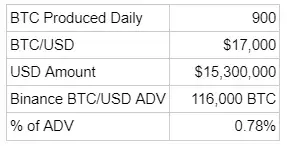
As the table above shows, if miners sold all the Bitcoin they produced each day, it would barely impact the markets at all. Therefore, we can ignore this ongoing selling pressure, as it is easily absorbed by the markets.

I believe that the forced selling of Bitcoin by CELs and miners is over. If you had to sell, you would have already done so. There is no reason why you would hold on if you had an urgent need for fiat to remain a going concern. Given that almost every major CEL has either ceased withdrawals (pointing to insolvency at best) or gone bankrupt, there are no more miner loans or collateral to be liquidated.

Small Scale Speculators

These punters are your run-of-the mill traders. While many of these individuals and firms definitely imploded, the failure of these entities would not be expected to send massive negative reverberations through the ecosystem. That being said, their behaviour can still help us form a guess as to where the bottom is.

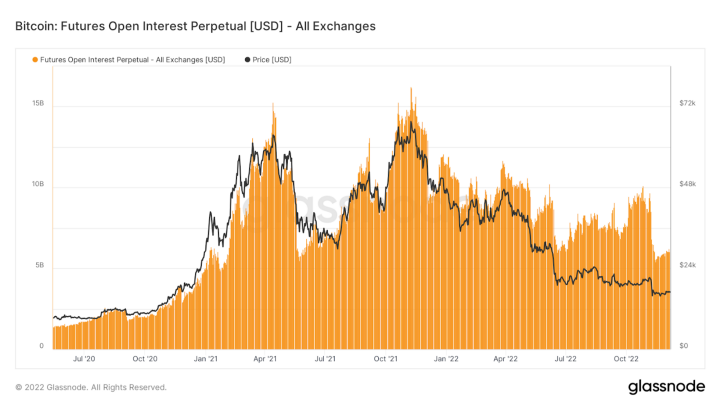
The Bitcoin / USD perpetual swap (invented by BitMEX) is the most traded of any crypto instrument. The number of open long and short contracts — called the open interest (OI) — tells us how speculative the market is. The more speculative it is, the more leverage is being used. And as we know, when the price changes directions quickly, it leads to large amounts of liquidations. In this case, the all-time high in OI coincided with the all-time high of Bitcoin. And as the market fell, longs at the margin got liquidated or closed their losing positions, which resulted in OI falling, too.

Taking a look at the sum of OI across all major crypto derivatives centralised exchanges, we can see that the OI local low also coincided with the sub $16,000 stab of Bitcoin on Monday November 14th. Now, the OI is back to levels not seen since early 2021.

The timing and magnitude of the reduction of the OI leads me to believe that most of the over-leveraged long positions have been extinguished. What remains are traders using derivatives as a hedge, and those using very low leverage. This gives us a bedrock to move higher.

Could the OI fall further as we enter the sideways, non-volatile part of the bear market? Absolutely. But the OI’s rate of change will slow, which means chaotic trading periods featuring large amounts of liquidations (particularly on the long side) are not likely to occur.

Timing Re-entry

What I Don’t Know

I don’t know if $15,900 was this cycle’s bottom. But, I do have confidence that it was due to the cessation of forced selling brought on by a credit contraction.

I don’t know when or if the US Federal Reserve will start printing money again. However, I believe the US Treasury market will become dysfunctional at some point in 2023 due to the Fed’s tightening monetary policies. At that point, I expect the Fed will turn the printer bank on, and then boom shaka-laka — Bitcoin and all other risk assets will spike higher.

What I Do Know

Everything is cyclical. What goes down, will go up again.

I like earning close to 5% by investing in US Treasury bills with durations shorter than 12 months. And therefore, I want to be earning a yield while I wait for the crypto bull market to return.

What to Do?

My ideal crypto asset must have beta to Bitcoin, and to a lesser extent, Ether. These are the reserve assets of crypto. If they are rising, my asset should rise by at least the same amount — this is called crypto beta. This asset must produce revenue that I can claim as a token holder. And this yield must be much greater than the 5% I can earn buying 6- or 12-month treasury bills.

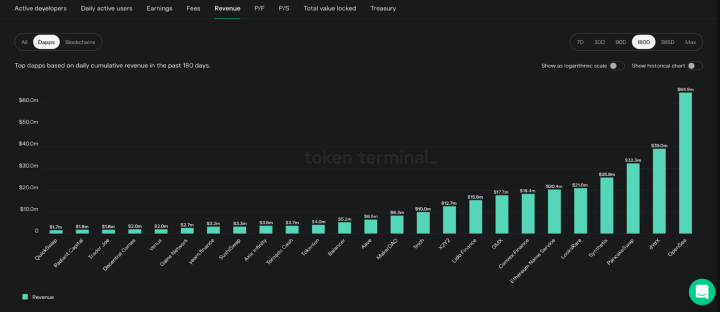
I have a few super-powered assets such as GMX and LOOKS in my portfolio. This is not the essay where I go into why I will be opportunistically selling my T-bills and purchasing these during the upcoming months of the hopefully sideways bear market. But if you want to start down the path towards finding the right asset to both participate in the upside and earn income while you wait for the return of the bull market, pull up a site like Token Terminal and look at which protocols generate actual revenue. It is then up to you to investigate which protocols have appealing tokenomics. Some may earn a lot of revenue, but it is very hard for a token holder to extract their share of that revenue to their own wallet. Some protocols pay out a majority of revenue continuously, directly to token holders.

The best part about some of these projects is that all things DeFi got shellacked during the two downward waves of the 2022 crypto credit crunch. Investors threw out good projects along with the bad as they rushed to raise fiat to repay loans. As a result, many of these projects trade at a truely bombed out price to fees (P/F) ratio.

If I can earn 5% in treasuries, then I should at least earn 4x of that — i.e., 20% — when purchasing one of these tokens. A 20% per annum yield means I should only invest in projects with a P/F ratio of 5x or lower. Everyone will have a different hurdle rate, but that is mine.

I could purchase Bitcoin and or Ether, but neither of these cryptos pays me enough yield. And if I’m not getting sufficient yield, I’m hoping that the price appreciation in fiat terms will be stupendous when the market turns. While I do believe that will occur, if there are cheaply priced protocols where I get the return profile of Bitcoin and Ether plus yield from the actual usage of the service, happy days!

Investing at what you think is the bottom is certainly risky. You are out there all alone, spreading the good word of Satoshi against the sweet siren song of the TradFi devil and their harpies. But be not afraid, intrepid and righteous warrior, for to the faithful the spoils of war shall accrue.


Criptos en tendencia

Lecturas Relacionadas

Diálogo con Jason Huang, fundador de NDV: Desinflando la burbuja de la IA y el mito de MicroStrategy, buscando la baza definitiva del mercado cripto

En el último episodio del podcast Wushuo, Jason Huang, fundador de NDV, analizó la reciente caída de Bitcoin. Considera que la primera parte de la corrección se debió a la presión de venta típica del ciclo de cuatro años de BTC, mientras que la fase reciente se ha visto exacerbada por el ajuste de Wall Street, la contracción de liquidez y las presiones financieras de MicroStrategy. Jason opina que el mercado aún no ha tocado fondo y que un verdadero mínimo bajista requiere un evento catalizador de gran magnitud, similar a la quiebra de FTX, que genere desesperanza generalizada. Respecto a MicroStrategy, Jason señala que su modelo de financiamiento (endeudarse para comprar Bitcoin) funciona en ciclos alcistas pero se convierte en un círculo vicioso en caídas. La venta simbólica de 32 BTC revela problemas de liquidez y desencadenó una venta anticipada por parte del mercado, temiendo una presión de venta mayor por sus más de 800,000 BTC. Su fondo ha obtenido alrededor de un 20% de rendimiento este año, superando a Bitcoin. Además de activos cripto, han operado con materias primas como petróleo, oro y plata. Jason evita acciones de IA por falta de ventaja competitiva y ve burbujas en sectores como los semiconductores y la posible salida a bolsa de SpaceX. A largo plazo, sigue siendo optimista sobre las stablecoins, considerándolas la innovación más útil y clara del espacio cripto con mucho espacio para crecer. Para Bitcoin, anticipa más volatilidad a la baja (quizás por debajo de $48,000) antes de un rebote significativo, pero cree que el fondo real llegará con un evento de pánico que limpie el mercado. Por el contrario, se muestra muy pesimista respecto al futuro de Ethereum.

marsbitHace 16 min(s)

Diálogo con Jason Huang, fundador de NDV: Desinflando la burbuja de la IA y el mito de MicroStrategy, buscando la baza definitiva del mercado cripto

marsbitHace 16 min(s)

Diálogo con Jason Huang, fundador de NDV: Pinchando la burbuja de la IA y el mito de MicroStrategy, buscando la última carta del mercado cripto

Resumen: En una entrevista con Jason Huang, fundador de NDV, se analiza la reciente caída de Bitcoin. Huang atribuye la primera etapa a la presión de venta cíclica de 4 años y la etapa actual a factores como el retroceso de las acciones estadounidenses, la contracción de liquidez y la presión de deuda de MicroStrategy (MSTR). Señala que la venta inicial de solo 32 BTC por parte de MSTR generó una "carrera por vender" en el mercado, debido al temor a una mayor presión de venta futura de sus más de 80,000 BTC. Para Huang, el mercado aún no ha tocado fondo; un verdadero fondo bajista generalmente requiere un evento catalizador importante, similar a la quiebra de FTX, que genere desesperanza generalizada. Su fondo ha obtenido aproximadamente un 20% de rendimiento este año, superando a Bitcoin. Ha evitado acciones de IA por falta de ventaja en el trading, y en su lugar ha operado con productos básicos como petróleo, oro y plata, viendo potencial en la narrativa inflacionaria. A largo plazo, mantiene una visión positiva sobre las stablecoins, considerándolas una de las innovaciones más útiles y claras del espacio cripto con amplio espacio para una mayor adopción. Sin embargo, es pesimista sobre Ethereum a corto plazo. Concluye que el verdadero fondo llegará cuando el pánico se haya agotado por completo y nadie quiera discutir el mercado.

链捕手Hace 21 min(s)

Diálogo con Jason Huang, fundador de NDV: Pinchando la burbuja de la IA y el mito de MicroStrategy, buscando la última carta del mercado cripto

链捕手Hace 21 min(s)

Tendencia del Mercado de EE.UU. (24 de junio): La fuerte caída del mercado coreano sacude los chips globales, Micron cae más del 10%, la certeza del suministro a largo plazo sufre una 'dura prueba'

**Resumen: Caída del mercado de chips global tras rumores sobre la producción de HBM en Corea del Sur** El lunes, el índice KOSPI de Corea del Sur se desplomó un 10%, con SK Hynix y Samsung cayendo más del 12%. Esto se debió a los rumores de que SK Hynix podría ralentizar la expansión de la producción de HBM4. Esta conmoción se extendió inmediatamente a la cadena de chips estadounidense: Micron Technology cayó un 13,18%, Sandisk un 13,64% y Marvell un 8%. El índice de semiconductores de Filadelfia (SOX) cerró con una caída del 7,87%, y el Nasdaq cayó un 2,21%. La presión vendedora no se dirigió a la demanda de IA en sí, sino a una reevaluación del excesivo optimismo sobre la capacidad de los chips de memoria. El rumor sobre SK Hynix desencadenó una lógica crítica: si la oferta de HBM muestra señales de debilidad, la certeza del ciclo de infraestructura de IA disminuye. Micron, anteriormente considerada una garantía sólida para la infraestructura de IA, ahora está siendo valorada más como un producto cíclico. El informe de resultados de Micron y los datos de inflación PCE de EE.UU. del jueves serán puntos de inflex clave. El mercado no solo busca datos del trimestre, sino certidumbre sobre el suministro a largo plazo. Esta certeza ha disminuido significativamente. La divergencia entre el leve descenso del Dow Jones y la fuerte caída del Nasdaq sugiere que el sector de la IA está perdiendo su papel dominante en el mercado. El ciclo de la IA está pasando de la euforia a una valoración más racional, planteando la pregunta crucial de si la demanda puede igualar las expectativas de oferta que habían impulsado los precios.

marsbitHace 36 min(s)

Tendencia del Mercado de EE.UU. (24 de junio): La fuerte caída del mercado coreano sacude los chips globales, Micron cae más del 10%, la certeza del suministro a largo plazo sufre una 'dura prueba'

marsbitHace 36 min(s)

En la era de la IA, ¿qué tipo de KOL y comunidades no serán completamente reemplazados?

En la era de la IA, ¿qué tipo de KOL y comunidades no serán reemplazados? El inversor BitWu comparte perspectivas clave en una entrevista. Tras el declive de GameFi en 2021, la pregunta central es si los juegos aún tienen oportunidades y cómo el AI podría cambiar las reglas. BitWu, definiéndose como un inversor de largo plazo, destaca que permanece en Crypto por ser un reflejo de los cambios más rápidos del mundo y de la naturaleza humana. Tras varios ciclos, su mayor aprendizaje ha sido priorizar la supervivencia sobre la riqueza rápida, verificar la solidez de los proyectos más allá de las narrativas y construir su propio sistema de inversión. Para los nuevos, advierte sobre el error de confundir la suerte del bull market con habilidad propia, la falta de gestión de carteras y la subestimación del riesgo. La habilidad más crucial a desarrollar es la identificación de riesgos. Comparando con 2021, señala que Crypto está pasando de un mercado especulativo a una infraestructura financiera global, haciendo que ganar dinero sea más difícil para el inversor promedio. Sus focos para los próximos años son: stablecoins (por su utilidad real), RWA (para conectar finanzas tradicionales) y la intersección de AI y Crypto. Esta última podría transformar a Crypto de un activo especulativo a un "riél financiero" para agentes de IA. Respecto a la IA y los KOL, aquellos que solo recopilan información serán reemplazados por la IA. Los KOL valiosos son los que aportan juicio, experiencia, estilo y crédito personal acumulado tras vivir los ciclos de mercado. Sobre Web3 Gaming, analiza que muchos proyectos anteriores fracasaron al priorizar el "Play-to-Earn" sobre la diversión real del juego. Para el futuro, la clave está en juegos que sean genuinamente divertidos, con equipos experimentados y capacidades a largo plazo, potenciados por IA, elementos sociales y UGC (Contenido Generado por Usuarios). Finalmente, sobre las comunidades, predice que serán más importantes, pero se dividirán. Las comunidades superficiales motivadas por airdrops desaparecerán. Las comunidades valiosas del futuro se basarán en la confianza, un objetivo común y conexiones humanas más profundas y duraderas, posiblemente fortalecidas por interacciones offline.

marsbitHace 54 min(s)

En la era de la IA, ¿qué tipo de KOL y comunidades no serán completamente reemplazados?

marsbitHace 54 min(s)

Las acciones preferentes no son la mecha de la quiebra empresarial, las reservas en dólares de MicroStrategy pueden pagar dividendos e intereses hasta febrero de 2027

Los bonos preferentes no son un detonante de la quiebra empresarial. Las reservas en dólares de MicroStrategy pueden cubrir los dividendos de las acciones preferentes hasta febrero de 2027. Los bonos preferentes son un instrumento de financiación especial con estatus legal de capital, pero con fuertes atributos económicos de deuda. En MicroStrategy, estas acciones preferentes, sin cláusulas de reembolso o pago rígidas, no se contabilizan como deuda tradicional. Por lo tanto, no ejercen presión para reembolsar el principal, los dividendos no son obligatorios y su suspensión no constituye un incumplimiento que lleve a la quiebra. Si MicroStrategy carece temporalmente de fondos para pagar los dividendos preferentes, estos pueden acumularse o suspenderse. Posteriormente, cuando el precio de Bitcoin se recupere, la empresa podría emitir más acciones ordinarias (MSTR) para obtener capital y pagar los dividendos atrasados. El verdadero riesgo de crisis para MicroStrategy reside en sus bonos convertibles. El vencimiento más temprano es el 16 de septiembre de 2027. Si no se cumplen las condiciones de conversión para entonces, MicroStrategy podría verse obligada a vender Bitcoin, desencadenando un efecto dominó negativo. En tal escenario, los dividendos de las acciones preferentes agravarían la situación. Recientemente, MicroStrategy recaudó 335.5 millones de dólares mediante la emisión de acciones ordinarias MSTR, aumentando sus reservas en dólares a 1.400 millones. Estas reservas son suficientes para cubrir todos los dividendos de las acciones preferentes hasta febrero de 2027 y aproximadamente la mitad de marzo de 2027. En las últimas cuatro semanas, la empresa no ha emitido nuevas acciones preferentes, lo que no aumenta sus obligaciones futuras de dividendos.

marsbitHace 1 hora(s)

Las acciones preferentes no son la mecha de la quiebra empresarial, las reservas en dólares de MicroStrategy pueden pagar dividendos e intereses hasta febrero de 2027

marsbitHace 1 hora(s)

Trading

Spot
Futuros

Artículos destacados

Qué es BITCOIN

Comprendiendo HarryPotterObamaSonic10Inu (ERC-20) y Su Posición en el Espacio Cripto En los últimos años, el mercado de criptomonedas ha sido testigo de un aumento en la popularidad de las monedas meme, capturando el interés no solo de los traders, sino también de aquellos que buscan participación comunitaria y valor de entretenimiento. Entre estos tokens únicos se encuentra HarryPotterObamaSonic10Inu (ERC-20), un proyecto intrigante que fusiona referencias culturales en el tejido de las criptomonedas. Este artículo ahonda en los aspectos clave de HarryPotterObamaSonic10Inu, explorando sus mecanismos, su ética impulsada por la comunidad y su compromiso con el panorama cripto más amplio. ¿Qué es HarryPotterObamaSonic10Inu (ERC-20)? Como su nombre indica, HarryPotterObamaSonic10Inu es una moneda meme construida sobre la blockchain de Ethereum, clasificada bajo el estándar ERC-20. A diferencia de las criptomonedas tradicionales que pueden enfatizar la utilidad práctica o el potencial de inversión, este token prospera en el valor de entretenimiento y la fuerza de su comunidad. El proyecto tiene como objetivo fomentar un entorno donde los usuarios comprometidos puedan reunirse, compartir ideas y participar en actividades inspiradas por diversos fenómenos culturales. Una característica notable de HarryPotterObamaSonic10Inu es su cero impuesto sobre las transacciones. Este elemento atractivo busca incentivar el comercio y la participación comunitaria, sin cargos adicionales que puedan disuadir a los traders de pequeña escala. El suministro total de la moneda se establece en mil millones de tokens, cifra que marca su intención de mantener una circulación sustancial dentro de la comunidad. Creador de HarryPotterObamaSonic10Inu (ERC-20) Los orígenes de HarryPotterObamaSonic10Inu están algo envueltos en misterio; los detalles sobre el creador siguen siendo desconocidos. El desarrollo de este token carece de un equipo identificable o un plan explícito, lo cual no es raro dentro del sector de las monedas meme. En su lugar, el proyecto ha surgido de forma orgánica, con su progreso fuertemente dependiente del entusiasmo y la participación de su comunidad. Inversores de HarryPotterObamaSonic10Inu (ERC-20) En cuanto a inversiones externas y respaldo, HarryPotterObamaSonic10Inu también se mantiene ambiguo. El token no enumera ninguna fundación de inversión conocida o apoyo organizacional significativo. Más bien, la savia del proyecto es su comunidad de base, que informa su crecimiento y sostenibilidad a través de la acción colectiva y la participación en el espacio cripto. ¿Cómo Funciona HarryPotterObamaSonic10Inu (ERC-20)? Como una moneda meme, HarryPotterObamaSonic10Inu opera principalmente fuera de los marcos tradicionales que a menudo rigen el valor de los activos. Hay varios aspectos distintivos que definen cómo funciona el proyecto: Transacciones Sin Impuestos: Sin comisiones fiscales en las transacciones, los usuarios pueden comprar y vender el token libremente sin preocuparse por costos ocultos. Compromiso de la Comunidad: El proyecto prospera en la interacción comunitaria, aprovechando plataformas de redes sociales para crear expectación y facilitar la participación. Las discusiones, el intercambio de contenido y el compromiso son elementos cruciales que ayudan a expandir su alcance y fomentar la lealtad entre los seguidores. Sin Utilidad Práctica: Cabe señalar que HarryPotterObamaSonic10Inu no ofrece una utilidad concreta dentro del ecosistema financiero. Más bien, se clasifica como un token principalmente para actividades de entretenimiento y comunitarias. Referencia Cultural: El token incorpora hábilmente elementos de la cultura popular para atraer interés, conectando con entusiastas de los memes y seguidores de criptomonedas por igual. HarryPotterObamaSonic10Inu ejemplifica cómo las monedas meme operan de manera diferente a los proyectos de criptomonedas más tradicionales, ingresando al mercado como constructos sociales innovadores en lugar de activos utilitarios. Cronología de HarryPotterObamaSonic10Inu (ERC-20) La historia de HarryPotterObamaSonic10Inu se caracteriza por varios hitos notables: Creación: El token surgió de un meme viral, capturando la imaginación de muchos entusiastas de las criptomonedas. No se disponen de fechas específicas de creación, lo que subraya su ascenso orgánico. Listado en Exchanges: HarryPotterObamaSonic10Inu ha logrado estar presente en varios exchanges, facilitando el acceso y el comercio por parte de la comunidad. Iniciativas de Compromiso Comunitario: Actividades en curso destinadas a mejorar la interacción comunitaria, incluidos concursos, campañas en redes sociales y generación de contenido por parte de fans y defensores. Planes de Expansión Futura: La hoja de ruta del proyecto incluye el lanzamiento de una colección de NFT, mercancía y un sitio de comercio electrónico relacionado con sus temas culturales, involucrando aún más a la comunidad e intentando añadir más dimensiones a su ecosistema. Puntos Clave Sobre HarryPotterObamaSonic10Inu (ERC-20) Naturaleza Impulsada por la Comunidad: El proyecto prioriza la aportación y creatividad colectiva, asegurando que la participación de los usuarios esté en el centro de su desarrollo. Clasificación como Moneda Meme: Representa la epítome de la criptomoneda basada en el entretenimiento, diferenciándose de los vehículos de inversión tradicionales. Sin Afiliación Directa con Bitcoin: A pesar de la similitud en el nombre del ticker, HarryPotterObamaSonic10Inu es distinto y no mantiene ninguna relación con Bitcoin u otras criptomonedas establecidas. Enfoque en la Colaboración: HarryPotterObamaSonic10Inu está diseñado para crear un espacio para la colaboración y el intercambio de historias entre sus poseedores, proporcionando una vía para la creatividad y la unión comunitaria. Perspectivas Futuras: La ambición de expandirse más allá de su premisa inicial en NFTs y mercancía delinean un camino para que el proyecto potencialmente ingrese en avenidas más convencionales dentro de la cultura digital. A medida que las monedas meme continúan capturando la imaginación de la comunidad de criptomonedas, HarryPotterObamaSonic10Inu (ERC-20) destaca por sus lazos culturales y su enfoque centrado en la comunidad. Aunque puede no encajar en el molde típico de un token impulsado por la utilidad, su esencia radica en la alegría y la camaradería fomentadas entre sus simpatizantes, destacando la naturaleza evolutiva de las criptomonedas en una era cada vez más digital. A medida que el proyecto sigue desarrollándose, será importante observar cómo las dinámicas comunitarias influyen en su trayectoria en el panorama en constante cambio de la tecnología blockchain.

2.3k Vistas totalesPublicado en 2024.04.01Actualizado en 2024.12.03

Qué es BITCOIN

Cómo comprar BTC

¡Bienvenido a HTX.com! Hemos hecho que comprar Bitcoin (BTC) sea simple y conveniente. Sigue nuestra guía paso a paso para iniciar tu viaje de criptos.Paso 1: crea tu cuenta HTXUtiliza tu correo electrónico o número de teléfono para registrarte y obtener una cuenta gratuita en HTX. Experimenta un proceso de registro sin complicaciones y desbloquea todas las funciones.Obtener mi cuentaPaso 2: ve a Comprar cripto y elige tu método de pagoTarjeta de crédito/débito: usa tu Visa o Mastercard para comprar Bitcoin (BTC) al instante.Saldo: utiliza fondos del saldo de tu cuenta HTX para tradear sin problemas.Terceros: hemos agregado métodos de pago populares como Google Pay y Apple Pay para mejorar la comodidad.P2P: tradear directamente con otros usuarios en HTX.Over-the-Counter (OTC): ofrecemos servicios personalizados y tipos de cambio competitivos para los traders.Paso 3: guarda tu Bitcoin (BTC)Después de comprar tu Bitcoin (BTC), guárdalo en tu cuenta HTX. Alternativamente, puedes enviarlo a otro lugar mediante transferencia blockchain o utilizarlo para tradear otras criptomonedas.Paso 4: tradear Bitcoin (BTC)Tradear fácilmente con Bitcoin (BTC) en HTX's mercado spot. Simplemente accede a tu cuenta, selecciona tu par de trading, ejecuta tus trades y monitorea en tiempo real. Ofrecemos una experiencia fácil de usar tanto para principiantes como para traders experimentados.

6.6k Vistas totalesPublicado en 2024.12.12Actualizado en 2026.06.02

Cómo comprar BTC

Qué es $BITCOIN

ORO DIGITAL ($BITCOIN): Un Análisis Exhaustivo Introducción al ORO DIGITAL ($BITCOIN) ORO DIGITAL ($BITCOIN) es un proyecto basado en blockchain que opera en la red Solana, cuyo objetivo es combinar las características de los metales preciosos tradicionales con la innovación de las tecnologías descentralizadas. Aunque comparte un nombre con Bitcoin, a menudo denominado “oro digital” debido a su percepción como un almacén de valor, ORO DIGITAL es un token separado diseñado para crear un ecosistema único dentro del paisaje Web3. Su meta es posicionarse como un activo digital alternativo viable, aunque los detalles sobre sus aplicaciones y funcionalidades aún están en desarrollo. ¿Qué es ORO DIGITAL ($BITCOIN)? ORO DIGITAL ($BITCOIN) es un token de criptomoneda diseñado explícitamente para su uso en la blockchain de Solana. A diferencia de Bitcoin, que proporciona un papel de almacenamiento de valor ampliamente reconocido, este token parece centrarse en aplicaciones y características más amplias. Aspectos notables incluyen: Infraestructura Blockchain: El token está construido sobre la blockchain de Solana, conocida por su capacidad para manejar transacciones de alta velocidad y bajo costo. Dinámicas de Suministro: ORO DIGITAL tiene un suministro máximo limitado a 100 cuatrillones de tokens (100P $BITCOIN), aunque los detalles sobre su suministro circulante no se han divulgado actualmente. Utilidad: Aunque las funcionalidades precisas no están delineadas explícitamente, hay indicios de que el token podría ser utilizado para diversas aplicaciones, potencialmente involucrando aplicaciones descentralizadas (dApps) o estrategias de tokenización de activos. ¿Quién es el Creador de ORO DIGITAL ($BITCOIN)? En la actualidad, la identidad de los creadores y el equipo de desarrollo detrás de ORO DIGITAL ($BITCOIN) sigue siendo desconocida. Esta situación es típica entre muchos proyectos innovadores dentro del espacio blockchain, particularmente aquellos alineados con las finanzas descentralizadas y los fenómenos de monedas meme. Si bien tal anonimato puede fomentar una cultura impulsada por la comunidad, intensifica las preocupaciones sobre la gobernanza y la responsabilidad. ¿Quiénes son los Inversores de ORO DIGITAL ($BITCOIN)? La información disponible indica que ORO DIGITAL ($BITCOIN) no tiene patrocinadores institucionales conocidos ni inversiones destacadas de capital de riesgo. El proyecto parece operar bajo un modelo de peer-to-peer centrado en el apoyo y la adopción de la comunidad en lugar de rutas de financiación tradicionales. Su actividad y liquidez se sitúan principalmente en intercambios descentralizados (DEX), como PumpSwap, en lugar de plataformas de trading centralizadas establecidas, lo que resalta aún más su enfoque de base. Cómo Funciona ORO DIGITAL ($BITCOIN) Los mecanismos operativos de ORO DIGITAL ($BITCOIN) se pueden elaborar en función de su diseño blockchain y atributos de red: Mecanismo de Consenso: Al aprovechar el único mecanismo de prueba de historia (PoH) de Solana combinado con un modelo de prueba de participación (PoS), el proyecto asegura una validación eficiente de transacciones que contribuye al alto rendimiento de la red. Tokenómica: Aunque los mecanismos deflacionarios específicos no se han detallado extensamente, el vasto suministro máximo de tokens implica que podría atender microtransacciones o casos de uso nicho que aún están por definirse. Interoperabilidad: Existe el potencial de integración con el ecosistema más amplio de Solana, incluyendo varias plataformas de finanzas descentralizadas (DeFi). Sin embargo, los detalles sobre integraciones específicas siguen sin especificarse. Cronología de Eventos Clave Aquí hay una cronología que destaca hitos significativos relacionados con ORO DIGITAL ($BITCOIN): 2023: El despliegue inicial del token ocurre en la blockchain de Solana, marcado por su dirección de contrato. 2024: ORO DIGITAL gana visibilidad al estar disponible para el comercio en intercambios descentralizados como PumpSwap, permitiendo a los usuarios comerciar contra SOL. 2025: El proyecto presencia actividad de comercio esporádica y un posible interés en compromisos liderados por la comunidad, aunque no se han documentado asociaciones notables o avances técnicos hasta la fecha. Análisis Crítico Fortalezas Escalabilidad: La infraestructura subyacente de Solana soporta altos volúmenes de transacciones, lo que podría mejorar la utilidad de $BITCOIN en varios escenarios de transacción. Accesibilidad: El potencial bajo precio de negociación por token podría atraer a inversores minoristas, facilitando una participación más amplia debido a oportunidades de propiedad fraccionada. Riesgos Falta de Transparencia: La ausencia de patrocinadores, desarrolladores o un proceso de auditoría públicamente conocidos puede generar escepticismo sobre la sostenibilidad y confiabilidad del proyecto. Volatilidad del Mercado: La actividad comercial depende en gran medida del comportamiento especulativo, lo que puede resultar en una volatilidad de precios significativa e incertidumbre para los inversores. Conclusión ORO DIGITAL ($BITCOIN) surge como un proyecto intrigante pero ambiguo dentro del ecosistema de Solana en rápida evolución. Si bien intenta aprovechar la narrativa del “oro digital”, su alejamiento del papel establecido de Bitcoin como almacén de valor subraya la necesidad de una diferenciación más clara de su utilidad y estructura de gobernanza previstas. La futura aceptación y adopción dependerán probablemente de abordar la actual opacidad y definir sus estrategias operativas y económicas de manera más explícita. Nota: Este informe abarca información sintetizada disponible hasta octubre de 2023, y pueden haber ocurrido desarrollos más allá del período de investigación.

99 Vistas totalesPublicado en 2025.05.13Actualizado en 2025.05.13

Qué es $BITCOIN

Discusiones

Bienvenido a la comunidad de HTX. Aquí puedes mantenerte informado sobre los últimos desarrollos de la plataforma y acceder a análisis profesionales del mercado. A continuación se presentan las opiniones de los usuarios sobre el precio de BTC (BTC).

活动图片