In less than a week, the cryptocurrency billionaire Sam Bankman-Fried went from industry leader to industry villain, lost most of his fortune, saw his $32 billion company plunge into bankruptcy and became the target of investigations by the Securities and Exchange Commission and the Justice Department.
But in a wide-ranging interview on Sunday that stretched past midnight, he sounded surprisingly calm. “You would’ve thought that I’d be getting no sleep right now, and instead I’m getting some,” he said. “It could be worse.”
The empire built by Mr. Bankman-Fried, who was once compared to titans of finance like John Pierpont Morgan and Warren Buffett, collapsed last week after a run on deposits left his crypto exchange, FTX, with an $8 billion shortfall, forcing the firm to file for bankruptcy. The damage has rippled across the industry, destabilizing other crypto companies and sowing widespread distrust of the technology.
Besides some Twitter posts, messages to employees and occasional texts to reporters, Mr. Bankman-Fried, 30, has said little publicly over the last week. In the interview on Sunday, he voiced numerous regrets over the collapse of FTX.
But he would offer only limited details about the central questions swirling around him: whether FTX improperly used billions of dollars of customer funds to prop up a trading firm that he also founded, Alameda Research. The Justice Department and the S.E.C. are examining that relationship.
Alameda had accumulated a large “margin position” on FTX, essentially meaning it had borrowed funds from the exchange, Mr. Bankman-Fried said. “It was substantially larger than I had thought it was,” he said. “And in fact the downside risk was very significant.” He said the size of the position was in the billions of dollars but declined to provide further details.
Mr. Bankman-Fried did, however, agree with critics in the crypto community who said he had expanded his business interests too quickly across a wide swath of the industry. He said his other commitments had led him to miss signs that FTX was running into trouble.
“Had I been a bit more concentrated on what I was doing, I would have been able to be more thorough,” he said. “That would have allowed me to catch what was going on on the risk side.”
Mr. Bankman-Fried, who is based in the Bahamas, declined to comment on his current location, citing safety concerns. Lawyers for FTX and Mr. Bankman-Fried did not respond to requests for comment.
Mr. Bankman-Fried’s fall has stunned the crypto world. But in recent months, warning signs had emerged that his business empire was in peril and that his ambitions exceeded his grasp, according to interviews with nine of his colleagues and business partners, as well as internal messages obtained by The New York Times.
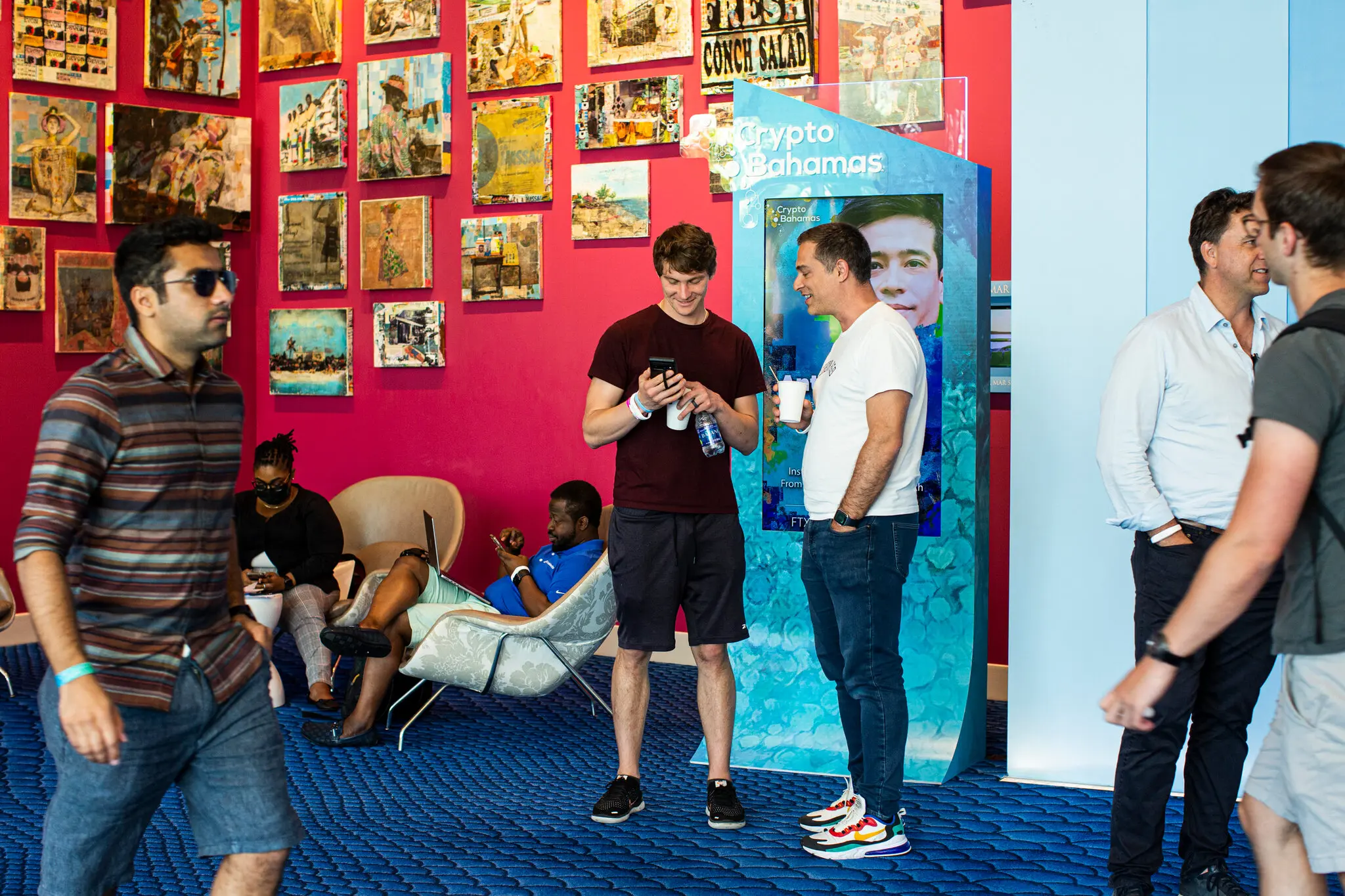
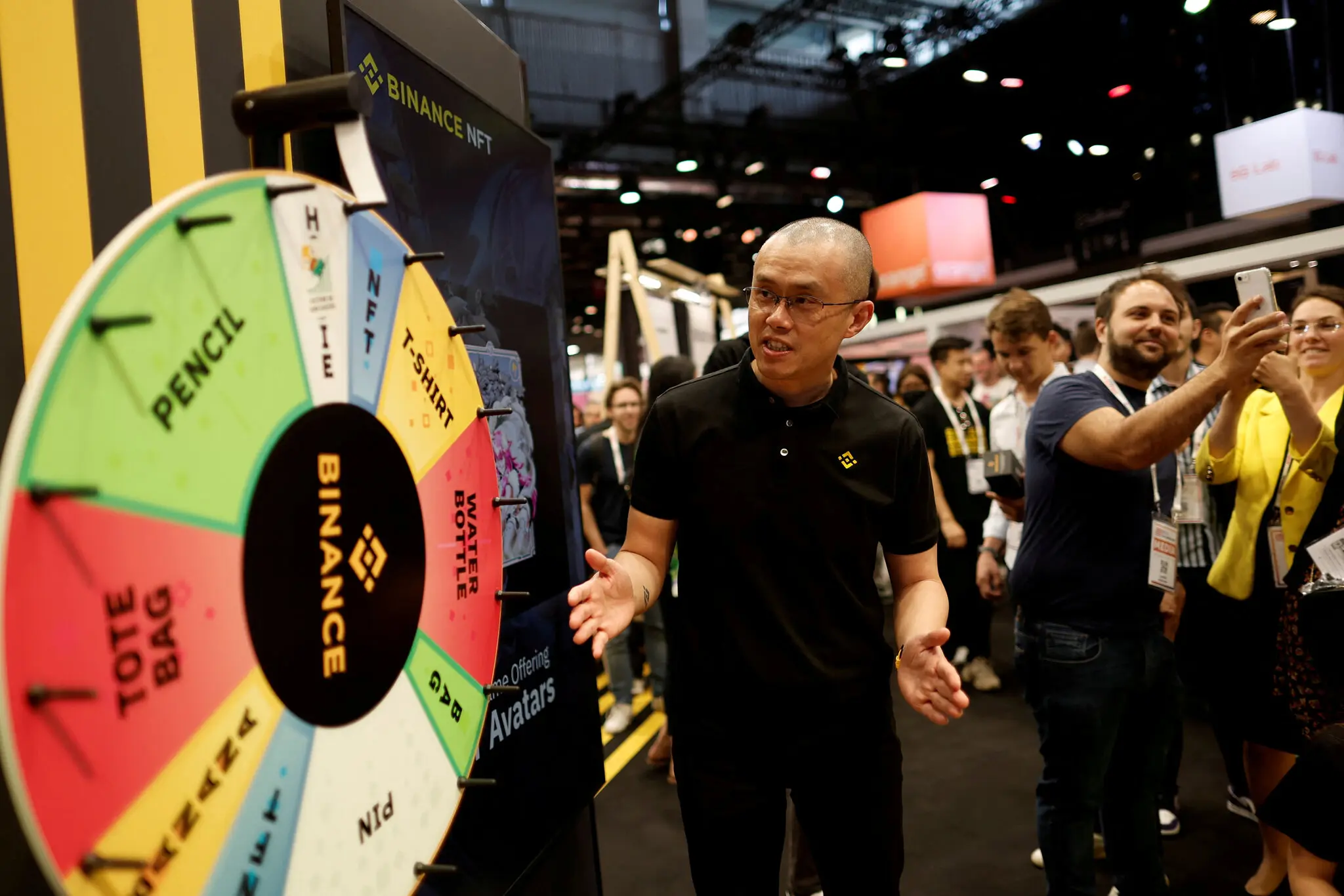
As he embarked on a buying spree this year, investing in beleaguered crypto companies, he wasn’t sharing information with key staff. When he was told that he was overextended and was encouraged to hire more employees, he resisted the suggestions. And in Washington, he was pushing an ambitious regulatory agenda while speaking critically about Changpeng Zhao, the chief executive of the rival exchange Binance, who eventually mobilized his extensive Twitter following to set off the run on FTX.
Despite the billions that venture capital firms put into the company, FTX had none of those outside investors on its board. In the Bahamas, Mr. Bankman-Fried led a sometimes cloistered existence, surrounded by a small coterie of colleagues, some of whom were in romantic relationships with other FTX employees, according to four people familiar with the matter. He and his top lieutenants lived together in a penthouse in Albany, a 600-acre oceanside resort on the island of New Providence in the Bahamas.
Asked whether he was overly dependent on that small group, Mr. Bankman-Fried said his circle of close colleagues numbered about 15. “Realistically speaking, I don’t think anyone can maintain close contact and close communication with more than 15 people,” he said.
The relationship between Alameda and FTX was the root of Mr. Bankman-Fried’s downfall. He founded the trading firm in 2017 and rented offices in Berkeley, Calif., not far from where he had grown up as the son of Stanford Law professors. Soon the company made millions of dollars exploiting inefficiencies in the Bitcoin market.
In 2019, Mr. Bankman-Fried relocated the company to Hong Kong, a friendlier regulatory environment. He moved with a small band of traders — including Caroline Ellison, a former trader at the financial firm Jane Street — and went on to start FTX, a marketplace for crypto investors to buy, sell and store digital assets.
FTX and Alameda were closely linked. Alameda traded heavily on the FTX platform, meaning it sometimes benefited when FTX’s other customers lost money, a dynamic that critics called a conflict of interest. In the past, Mr. Bankman-Fried has defended the arrangement, saying Alameda provided crucial liquidity — injections of capital that enabled others customers to complete transactions on the exchange.
Alameda was run by Ms. Ellison, but Mr. Bankman-Fried was also involved, contributing to the decision-making on big trades, a person familiar with the company’s inner workings said. At times, there did not appear to be much of a firewall between the businesses. Alameda was supposed to operate out of a separate office, but a guest who visited FTX’s complex in recent months said Ms. Ellison had been sitting within view of computers displaying the exchange’s trading data.
In addition to Mr. Bankman-Fried and Ms. Ellison, the circle of executives running the crypto operation in the Bahamas included Nishad Singh, FTX’s director of engineering; Gary Wang, the exchange’s chief technology officer; and Ramnik Arora, the head of product.
Mr. Bankman-Fried moved FTX to the Bahamas in 2021, drawn by a regulatory setup that allowed him to offer risky trading options that weren’t legal in the United States. On the exchange, investors could borrow money to make big bets on the future value of cryptocurrencies.
He lived in a five-bedroom penthouse in the Albany resort’s Orchid building, with Ms. Ellison, Mr. Singh, Mr. Wang and six others. Mr. Bankman-Fried and Ms. Ellison were at times romantically involved, two people said.
Mr. Bankman-Fried said he and Ms. Ellison were no longer in a romantic relationship but declined to comment further. Ms. Ellison did not respond to a request for comment. Many details of the relationships among FTX’s leadership team were previously reported in the crypto publication CoinDesk.
Mr. Bankman-Fried’s circle of colleagues was bound by a commitment to effective altruism, a charitable movement that urges adherents to give away their wealth in efficient and logical ways. For co-workers outside the clique, it was sometimes difficult to get time speaking with Mr. Bankman Fried, a person familiar with the matter said. And Mr. Bankman-Fried made it a point of pride that FTX had only about a 300-person staff, much smaller than its top rivals, Binance and Coinbase.
Even as he kept hiring down, Mr. Bankman-Fried built an ambitious philanthropic operation, invested in dozens of other crypto companies, bought stock in the trading firm Robinhood, donated to political campaigns, gave media interviews and offered Elon Musk billions of dollars to help finance the mogul’s Twitter takeover.
Mr. Bankman-Fried said he wished “we’d bitten off a lot less.”
“The venture stuff was probably not really worth it given the attention that it took,” he said, referring to his investments in other companies.
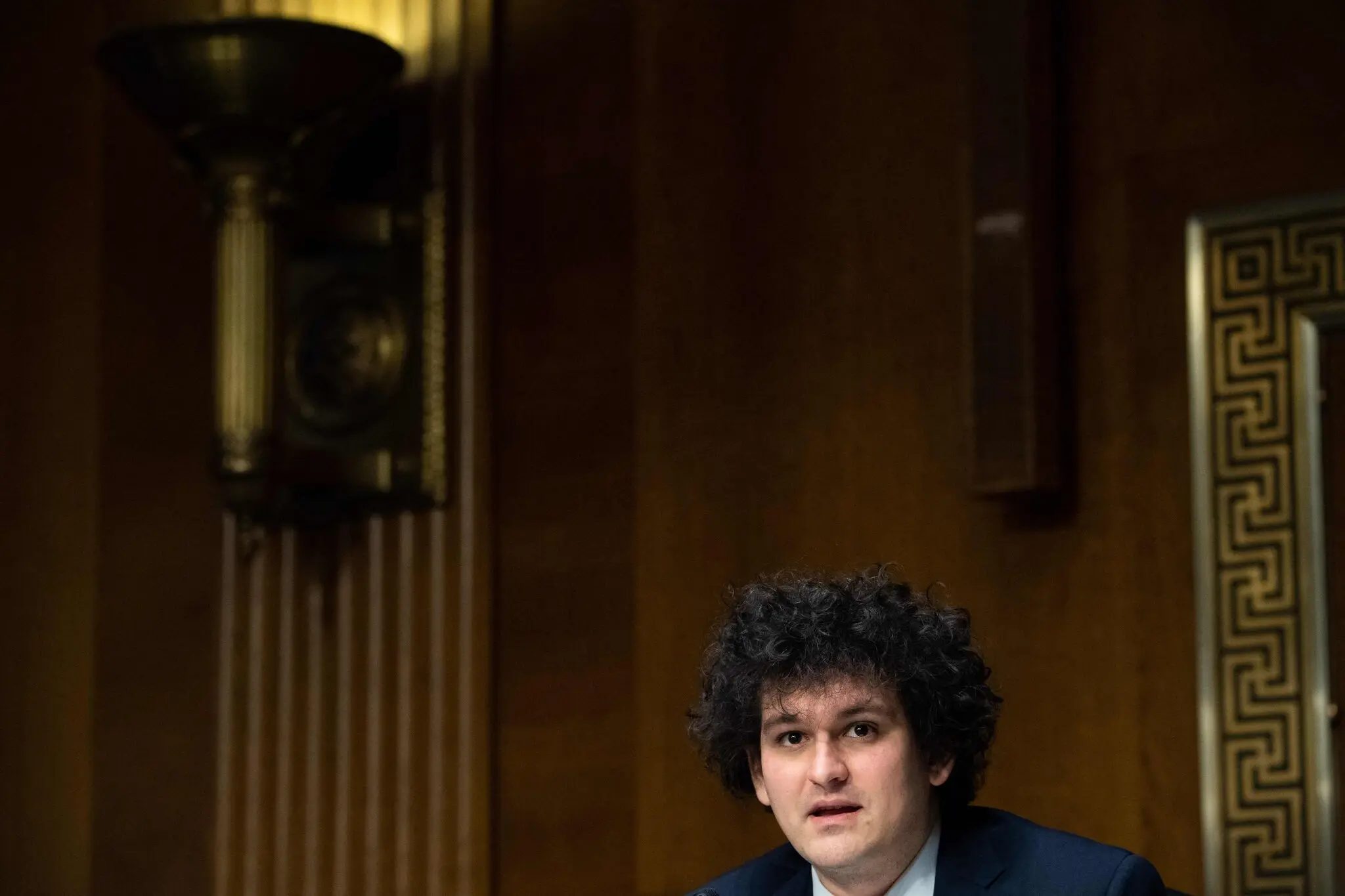
Perhaps Mr. Bankman-Fried’s most ambitious aim was to shape crypto regulation in Washington, where he testified to Congress and met with regulators. He also used his growing influence in the capital to criticize his biggest rival, Mr. Zhao, in private meetings, people familiar with the matter said.
Attacking Mr. Zhao “was not a good strategic move on my part,” Mr. Bankman-Fried said on Sunday. “I was pretty frustrated at a lot of what I saw happening, but I should’ve understood that it was not a good decision of me to express that.”
A former investor in FTX, Mr. Zhao still owned a large amount of FTT, a cryptocurrency that FTX invented to facilitate trading on its platform. On Nov. 6, Mr. Zhao announced on Twitter that he was selling the FTT, spooking customers who rushed to withdraw their FTX deposits.
“We won’t pretend to make love after divorce,” Mr. Zhao wrote on Twitter. “We won’t support people who lobby against other industry players behind their backs.”
When FTX collapsed, Mr. Zhao initially agreed to buy the exchange in what would have amounted to a bailout. But soon the deal fell through, after Binance found problems in the company’s financials. In a Signal group chat that included Mr. Bankman-Fried and other FTX representatives, Mr. Zhao posted a curt note, according to two people familiar with the matter. “Sam, I’m sorry,” he wrote, “but we won’t be able to continue this deal. Way too many issues. CZ.”
Mr. Bankman-Fried scrambled to line up new financing. “I shouldn’t throw stones in a glass house, so I’ll hold back a bit,” he said in a message to employees obtained by The Times. “Except to say: probably they never really planned to go through with the deal.”
Meanwhile, at a meeting with Alameda employees on Wednesday, Ms. Ellison explained what had caused the collapse, according to a person familiar with the matter. Her voice shaking, she apologized, saying she had let the group down. Over recent months, she said, Alameda had taken out loans and used the money to make venture capital investments, among other expenditures.
Around the time the crypto market crashed this spring, Ms. Ellison explained, lenders moved to recall those loans, the person familiar with the meeting said. But the funds that Alameda had spent were no longer easily available, so the company used FTX customer funds to make the payments. Besides her and Mr. Bankman-Fried, she said, two other people knew about the arrangement: Mr. Singh and Mr. Wang.
The meeting was previously reported by The Wall Street Journal. Mr. Singh did not respond to a request for comment, and Mr. Wang could not be reached. According to a person familiar with FTX’s finances, the exchange lent as much as $10 billion to Alameda.
As FTX has crumbled, Mr. Bankman-Fried has been “working constructively with regulators, bankruptcy officials and the company to try to do what’s best for consumers,” he said on Sunday.
His management of FTX is now the subject of an inquiry by federal prosecutors in New York, who have begun contacting possible witnesses, according to a person familiar with the matter. Others associated with FTX have started reaching out to lawyers for potential representation, said several people briefed on the matter. FTX is being represented in the investigations and the bankruptcy by the law firm Sullivan & Cromwell, while lawyers from Paul Weiss are representing Mr. Bankman-Fried.
In the interview, Mr. Bankman-Fried declined to discuss the prospect of prison time.
“People can say all the mean things they want about me online,” he said. “In the end, what’s going to matter to me is what I’ve done and what I can do.”
He has also found other ways to occupy his time in recent days, playing the video game Storybook Brawl, though less than he usually does, he said. “It helps me unwind a bit,” he said. “It clears my mind.”
Shortly before the interview, Mr. Bankman-Fried had posted a cryptic tweet: the word “What.” Then he had tweeted the letter H. Asked to explain, Mr. Bankman-Fried said he planned to post the letter A and then the letter P. “It’s going to be more than one word,” he said. “I’m making it up as I go.”
So he was planning a series of cryptic tweets? “Something like that.”
But why? “I don’t know,” he said. “I’m improvising. I think it’s time.”