ENS Has Quietly Completed a 'Self-Revolution'

marsbitPublicado a 2026-08-12Actualizado a 2026-08-12

Resumen

On August 11th, the ENS DAO officially voted into effect the "Next Era of ENS DAO" proposal. This move by the crucial Ethereum domain name protocol establishes a legal entity, the ENS Foundation, to represent it in the real world—a long-missing piece after nearly a decade of operation. The proposal, initially introduced in June, sparked significant community debate. Critics feared it amounted to the DAO dissolving itself and handing over its treasury. The final version, however, represents a compromise, carefully balancing control. The DAO retains governance over its substantial ENS token holdings and its operational wallet. A $65 million endowment is delegated to the Foundation's Board but protected by a 9-day timelock and a Security Council veto. The DAO also holds ultimate power to appoint and remove Board members. The Foundation's role is to handle tasks the DAO is ill-suited for, such as legal representation, trademark enforcement, and engagement with traditional internet governance bodies like ICANN. This allows ENS Labs, the core development company, to focus on engineering, like the upcoming ENSv2. The five-member Foundation Board includes independent directors with provisions to manage conflicts of interest, particularly regarding funding to ENS Labs. This governance restructuring aims to create a clearer separation of duties: the DAO safeguards protocol neutrality, the Foundation handles real-world operations and diplomacy, and ENS Labs focuses on development. I...

Original author: Eric, Foresight News

At 8:00 PM Beijing time on August 11th, the ENS DAO formally voted to pass and execute the "Next Era of ENS DAO" proposal. After nearly a decade of operation, this most important domain name protocol on Ethereum has finally filled in a long-missing piece of the puzzle: a legal entity capable of representing it in the real world.

The story begins in June of this year. On June 19th, ENS Foundation Director Katherine Wu published a proposal on the governance forum, with the core idea being to delegate the DAO's daily operations, grant management, and long-term treasury strategy to a tangible, operational ENS Foundation.

This idea immediately ignited a firestorm within the community. Rotki founder Lefteris Karapetsas bluntly stated on X that this proposal essentially equated to the DAO dissolving itself and handing over a treasury worth nearly $500 million to the Foundation, even criticizing founder Nick Johnson for delegating half of his voting power to himself. An L2BEAT researcher, in anger, even started building an alternative domain name solution with no owner and no possibility of being rugged. At the peak of the debate, proposal author Katherine Wu posted a lengthy clarification but closed the comments section, which only attracted more skepticism.

The community's concerns were not unfounded. When that wave of DAOs was established in 2021, they all believed token-weighted governance could solve everything. However, after several years, problems such as voter fatigue, lack of accountability for grant recipients, and high coordination costs have plagued ENS just the same. Nick Johnson's response was frank: he stated that the DAO almost solely cared about how to spend the money in the treasury, and the low delegation rate precisely illustrated how difficult it is to maintain DAO security using token voting. In other words, this wasn't a question of whether to be decentralized, but rather what form of governance, like a DAO, is actually suitable for what tasks.

The final passed version showed significant concessions compared to the initial draft in June, which is precisely what makes this proposal worth examining in detail.

First, the approximately 54.6 million ENS tokens held by the DAO, representing 54.6% of the total supply, remain untouched, continuing to be controlled by token holders through on-chain mechanisms. The sole exception is a one-time transfer of 1 million ENS tokens, designated specifically for future employee compensation at the Foundation, which cannot participate in voting, be delegated, or lent/staked until they are vested.

Second, the operational wallet containing approximately $16 million in Ethereum and stablecoins also stays put, remaining under DAO control. The initial idea to also delegate the operational wallet to the Foundation was scrapped.

Third, although the roughly $65 million endowment fund is placed under the management of the Foundation's Board of Directors, every transaction is subject to a 9-day timelock, during which the Security Council can directly veto any unauthorized transaction. Before publishing its first annual budget, the Foundation can withdraw a maximum of $500,000 from the endowment fund for setup costs. Thereafter, annual expenditures are capped by the published budget and are subject to annual audits and quarterly grant reports.

In essence, the final solution splits the "keys to the treasury" into several parts: the Foundation holds one, the timelock holds one, the Security Council holds one, and DAO token holders always retain the master key, including the power to appoint and remove Directors. The removal process is also clearly defined: submitting a petition requires supporting evidence, the Board has a response window, there is a 30-day period between petition and vote, and impeached Directors can publicly present a written defense.

So what exactly will the Foundation do? The answer: things the DAO cannot do, and ENS Labs should not do.

ENS operates on-chain, but the rules of the domain name world are formulated in the meeting rooms of traditional institutions like ICANN, IETF, and W3C. A DAO lacks legal personhood; it cannot sign agreements, hire full-time employees, push for formal recognition of the ".ens" top-level domain at ICANN, nor initiate trademark enforcement against phishing websites impersonating ENS. Over the years, this work was either left undone or shouldered incidentally by ENS Labs, which is essentially an engineering company in Singapore, never intended to be the protocol's institutional representative.

The new Foundation's Board will have five seats. The Executive Director is Alexander Urbelis, who is also the General Counsel and Chief Information Security Officer at ENS Labs and previously served as CISO for the NFL. The Founder seat belongs to Nick Johnson. The three independent directors are: Kartik Talwar, Partner at A.Capital and co-founder of ETHGlobal; Brett Sun, co-founder of Prelude; and Anthony Leutenegger, CEO of Aragon. Independent directors receive an annual compensation of 40,000 USDC, which, if declined, is donated to a non-profit project of their designation. Conflict of interest clauses are detailed; decisions involving grants to ENS Labs require majority approval from independent directors, with the Founder seat automatically recusing itself from such votes.

For ENS Labs, this is also a form of unbinding. It can refocus its energy on product and engineering, concentrating on advancing ENSv2. In February this year, Labs made a rather decisive move by abandoning the plan to build its own L2 network, Namechain, and instead deploying ENSv2 directly on the Ethereum mainnet, citing Ethereum's own scaling having reduced registration gas costs by about 99%.

With the governance structure clarified, the true trinity of protocol, foundation, and development company, each fulfilling its distinct role, can finally take shape.

The impact of this proposal clearly extends beyond ENS. Over the past few years, the Web3 industry has witnessed numerous failures in DAO governance—either endless deliberation without decisions or domination by whales and professional governance players. The answer provided by ENS is to acknowledge the boundaries of token voting, letting it return to what it does best—guarding the protocol's neutrality—while delegating operations to a professional entity with budget constraints, audits, and a removal mechanism. The number of votes may decrease, but the weight of each vote will be heavier.

Of course, skepticism will not vanish. Handing administrative control of $65 million to a five-person board is, in essence, trading some design complexity for execution efficiency. The timelock and Security Council are technical fuses, but the real test lies in the first budget, the first grants, and the first appearance at an ICANN meeting after the inaugural board takes office. ENS aims to prove that critical internet infrastructure can be both credibly neutral and have someone to represent it at real-world negotiation tables. The outcome of this experiment will serve as a reference point for the entire DAO industry in the coming years.

Criptos en tendencia

Preguntas relacionadas

QWhat was the core proposal that sparked controversy in the ENS DAO community in June, and what was the primary concern raised against it?

AThe core proposal, introduced by ENS Foundation board member Katherine Wu, was to hand over the DAO's daily operations, grant management, and long-term funding strategy to a formalized ENS Foundation entity. The primary concern raised, notably by Rotki founder Lefteris Karapetsas, was that this essentially meant the DAO was dissolving itself and ceding control of its nearly $500 million treasury to the foundation, raising fears of centralization and misappropriation.

QHow does the final, approved version of the ENS DAO proposal address concerns about treasury control compared to the initial draft?

AThe final version makes significant concessions on treasury control. The DAO retains full control over its 54.6 million ENS tokens (54.6% of supply) on-chain. The operational wallet holding ~$16M in crypto also stays under DAO control, unlike the initial draft. A ~$65M endowment fund is managed by the Foundation board but with a 9-day timelock on all transactions, during which a Security Council can veto any unauthorized moves. Spending from the endowment is also capped and subject to annual budgets, audits, and quarterly reporting.

QAccording to the article, what specific real-world tasks is the new ENS Foundation designed to handle that the DAO and ENS Labs could not effectively do?

AThe ENS Foundation is designed to handle legal and institutional tasks requiring a formal legal entity. This includes engaging with traditional bodies like ICANN, IETF, and W3C to push for official recognition of the '.ens' top-level domain, enforcing trademark rights against phishing sites impersonating ENS, signing agreements, and hiring full-time staff for such advocacy and operational roles.

QWhat is the composition of the new ENS Foundation's board of directors, and what measures are in place to manage potential conflicts of interest?

AThe board has five seats: Executive Director Alexander Urbelis, Founder Nick Johnson, and three independent directors (Kartik Talwar, Brett Sun, Anthony Leutenegger). To manage conflicts of interest, decisions involving grants to ENS Labs require majority approval from the independent directors, with the founder's seat automatically recusing itself from such votes.

QBeyond ENS itself, what broader significance does the article attribute to the passing of this governance proposal for the Web3/DAO industry?

AThe article suggests the proposal's broader significance is providing a potential model for addressing common DAO governance failures like inefficiency and capture by whales. ENS's answer is to acknowledge the limits of pure token voting for operations, reserving it for safeguarding protocol neutrality, while delegating execution to a professional, accountable entity with checks and balances (budgets, audits, removal mechanisms). The outcome of this experiment could serve as a reference point for the entire DAO industry in the coming years.
Lecturas Relacionadas

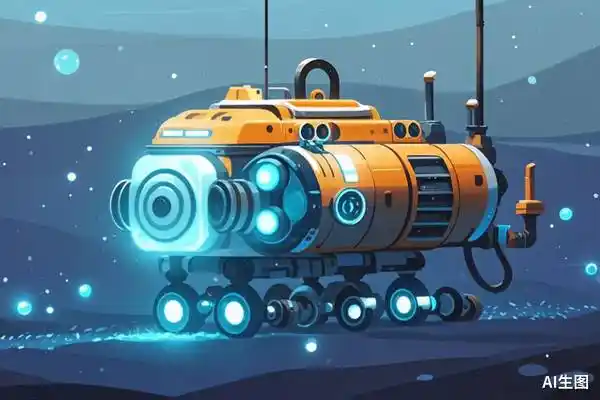
Estalla el auge de los robots de aguas profundas, la ronda Serie A más sólida nace

Un fondo récord de inversión de más de 500 millones de yuanes marca un hito para la robótica de aguas profundas. Deep Sea Zhiren (Deep Sea Homo Sapiens) anunció la finalización de su ronda de financiación Serie A, respaldada por un impresionante consorcio que incluye a destacados fondos de capital de riesgo como GGV Capital, Dachen Capital, Green Pine Capital Partners, y capital de inversión estatal de China Investment Corporation y CETC Investment. El fondo de energía de TotalEnergies gestionado por Cathay Capital también participó, marcando un significativo respaldo industrial. La compañía, fundada por el veterano Ma Yiming, se ha centrado en el desarrollo de robots submarinos de grado industrial (ROV) capaces de operar a profundidades de hasta 6,000 metros. Su cartera de productos incluye modelos como "Taurus" (1,000 m), "Phoenix" (3,000 m) y "Singularity" (6,000 m). Un logro clave fue la obtención de pedidos del grupo de telecomunicaciones de los Emiratos Árabes Unidos para el robot "Phoenix 600", superando a competidores europeos y logrando un avance en las exportaciones comerciales chinas. Más allá del hardware, la visión de la compañía es la inteligencia artificial encarnada en el océano. Su proyecto Deep Matrix y el modelo de decisión SEAagent buscan crear clusters de robots autónomos residentes en el lecho marino, lo que podría revolucionar la industria al reducir drásticamente la dependencia de costosos buques nodriza y operadores humanos. Este enfoque aborda los desafíos centrales del desarrollo en aguas profundas: altos costos operativos, restricciones de comunicación y complejidad logística. Con el "desarrollo de aguas profundas" siendo destacado como un área estratégica en los planes nacionales de China, el éxito de Deep Sea Zhiren representa un paso significativo hacia la autosuficiencia tecnológica y una mayor participación en la economía oceánica global, un mercado valorado en billones. Su trayectoria demuestra el potencial de la innovación china original para redefinir los paradigmas de exploración y explotación de los océanos.

marsbitHace 18 min(s)

Estalla el auge de los robots de aguas profundas, la ronda Serie A más sólida nace

marsbitHace 18 min(s)

1confirmation: 5 sectores de consumo en cripto que merecen una segunda oportunidad

1confirmation destaca cinco áreas del ecosistema cripto que, pese a fracasos pasados, podrían generar aplicaciones exitosas para consumidores si se reconsideran con nuevas perspectivas: 1. **Activos Nativos de Internet**: Más allá de los memecoins o la tokenización de activos reales (RWA), existe una oportunidad para crear activos completamente nuevos y nativos del mundo digital que capturen momentos culturales o atención en línea de forma significativa. 2. **X-to-Earn**: El concepto de ganar criptomonedas realizando actividades (como en STEPN o Axie Infinity) no es inherentemente erróneo. El problema fue la emisión insostenible de tokens. La clave futura está en qué se gana exactamente y por qué los usuarios querrían conservarlo. 3. **Metaverso**: La idea no era equivocada en creer que la gente pasaría tiempo en mundos digitales, sino en asumir que estos debían replicar fielmente la realidad. La próxima gran experiencia social en línea podría tener una forma completamente distinta. 4. **DAO**: Las DAO no han alcanzado su potencial inicial, a menudo enfocándose demasiado en una gobernanza compleja. La lección de iniciativas como ConstitutionDAO es el poder simple de reunir fondos de una comunidad en línea para un objetivo concreto común (comprar, financiar, salvar algo). 5. **"La Persona como Mercado"**: La idea de crear mercados alrededor de individuos (creadores, personalidades) ha visto muchos fracasos (Friend.tech, BitClout). El reto no es si existe interés, sino encontrar un modelo que no convierta a la persona misma en el producto transado, alineándose mejor con sus intereses. La próxima aplicación cripto masiva probablemente provendrá de reevaluar una de estas ideas antiguas, ahora que la infraestructura y el contexto son más maduros.

marsbitHace 22 min(s)

1confirmation: 5 sectores de consumo en cripto que merecen una segunda oportunidad

marsbitHace 22 min(s)

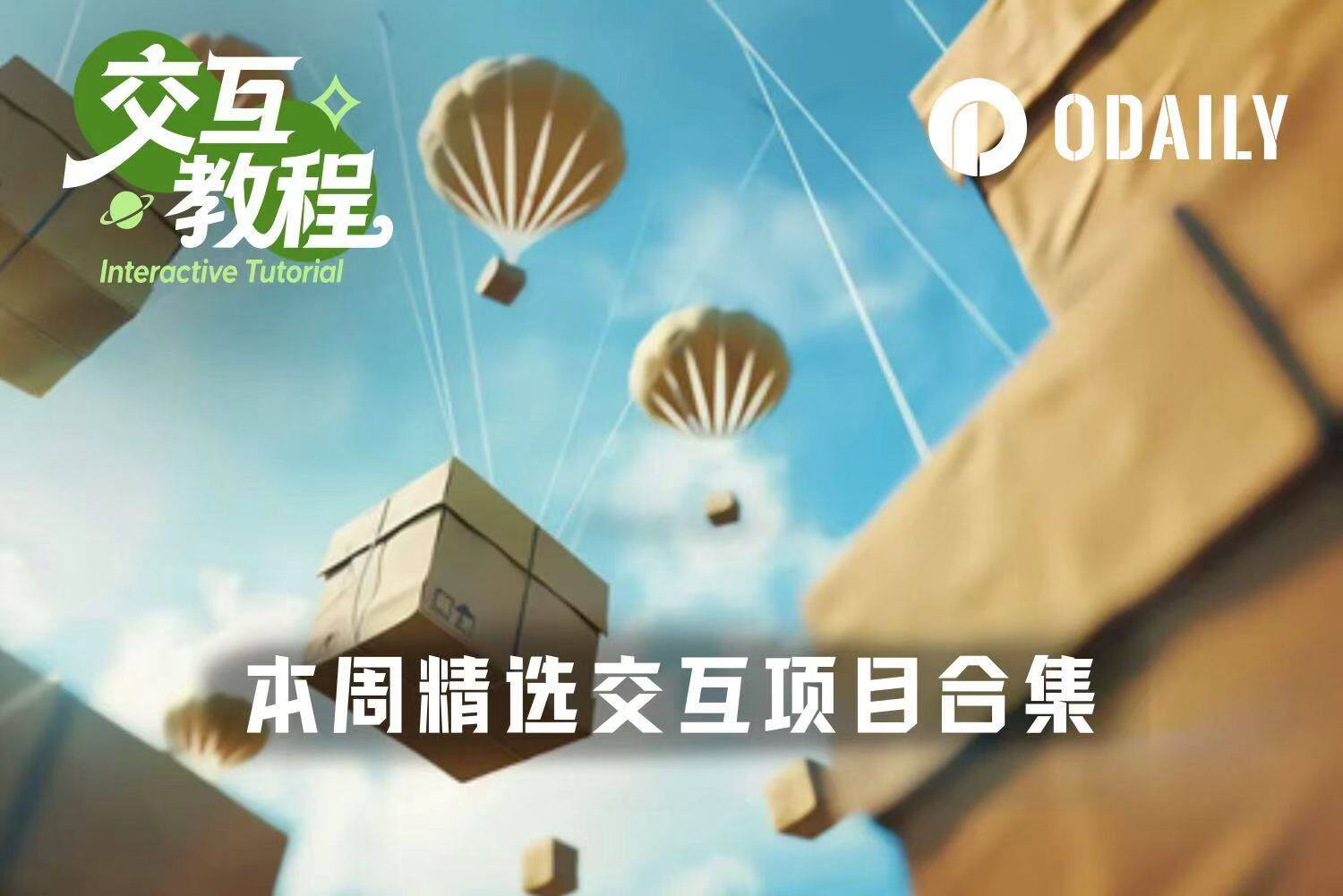
Compilado de Interacciones Populares | predict.fun lanza evento especial Dota 2; Aplicación para la lista blanca temprana de Soar (13 de agosto)

**Resumen de Interacciones Populares (13 de agosto)** **predict.fun: Mercado de Predicciones en BNB Chain** El mercado de predicciones predict.fun, fundado por dingaling, ha lanzado un evento especial para The International de Dota 2. Los usuarios pueden predecir resultados en partidas específicas del torneo, con un premio total de 100,000 USDT y 5 millones de puntos PP. La actividad incluye fases de grupos y finales, recompensando a los mejores 1000 en el ranking. Para participar, regístrate en el sitio web, selecciona "DOTA TI", elige un equipo y bloquea un mínimo de 20 participaciones en mercados disponibles antes de cada partida. **CheomaYield: Protocolo de Rendimiento para Stablecoins** CheomaYield es el primer protocolo de este tipo en la testnet de GIWA Chain (L2 de Upbit). Ofrece un modelo de tokenómico fijo para CHEOMA (100 millones), con un 30% asignado a airdrops. Los usuarios pueden interactuar en la testnet obteniendo faucet de GIWA, reclamando USDC de prueba en la plataforma y realizando operaciones para acumular puntos. **Soar: Plataforma de Trading Pre-IPO** Soar permite a usuarios tomar posiciones largas o cortas sobre valoraciones de empresas privadas líderes (como OpenAI, SpaceX) antes de su OPV. Actualmente, se puede solicitar acceso anticipado a la lista de espera ("Join waitlist") registrando una dirección de correo electrónico en su sitio web.

Odaily星球日报Hace 25 min(s)

Compilado de Interacciones Populares | predict.fun lanza evento especial Dota 2; Aplicación para la lista blanca temprana de Soar (13 de agosto)

Odaily星球日报Hace 25 min(s)

Trading

Spot

Artículos destacados

Cómo comprar ENS

¡Bienvenido a HTX.com! Hemos hecho que comprar Ethereum Name Service (ENS) sea simple y conveniente. Sigue nuestra guía paso a paso para iniciar tu viaje de criptos.Paso 1: crea tu cuenta HTXUtiliza tu correo electrónico o número de teléfono para registrarte y obtener una cuenta gratuita en HTX. Experimenta un proceso de registro sin complicaciones y desbloquea todas las funciones.Obtener mi cuentaPaso 2: ve a Comprar cripto y elige tu método de pagoTarjeta de crédito/débito: usa tu Visa o Mastercard para comprar Ethereum Name Service (ENS) al instante.Saldo: utiliza fondos del saldo de tu cuenta HTX para tradear sin problemas.Terceros: hemos agregado métodos de pago populares como Google Pay y Apple Pay para mejorar la comodidad.P2P: tradear directamente con otros usuarios en HTX.Over-the-Counter (OTC): ofrecemos servicios personalizados y tipos de cambio competitivos para los traders.Paso 3: guarda tu Ethereum Name Service (ENS)Después de comprar tu Ethereum Name Service (ENS), guárdalo en tu cuenta HTX. Alternativamente, puedes enviarlo a otro lugar mediante transferencia blockchain o utilizarlo para tradear otras criptomonedas.Paso 4: tradear Ethereum Name Service (ENS)Tradear fácilmente con Ethereum Name Service (ENS) en HTX's mercado spot. Simplemente accede a tu cuenta, selecciona tu par de trading, ejecuta tus trades y monitorea en tiempo real. Ofrecemos una experiencia fácil de usar tanto para principiantes como para traders experimentados.

284 Vistas totalesPublicado en 2024.12.10Actualizado en 2026.06.02

Cómo comprar ENS

Discusiones

Bienvenido a la comunidad de HTX. Aquí puedes mantenerte informado sobre los últimos desarrollos de la plataforma y acceder a análisis profesionales del mercado. A continuación se presentan las opiniones de los usuarios sobre el precio de ENS (ENS).

活动图片