«Latam Insights»: Tokenized Cows in Brazil, the Reality of Remittances in El Salvador, and a Cryptocurrency Bill in Argentina

cryptonews.ruPublicado a 2026-07-27Actualizado a 2026-07-27

Resumen

In Brazil, a farm in Paraná secured a $100,000 loan using 10 tokenized cows as collateral, monitored via decentralized tech, allowing for higher valuations due to reduced lender risk. In El Salvador, crypto remittances accounted for only 0.7% ($35.4M) of the $5B+ received in H1 2026, though volume grew 39% year-over-year, with traditional channels dominating. Meanwhile, Argentina's new deregulation bill aims to integrate crypto and blockchain into capital markets by allowing investment funds to hold digital assets and permitting the tokenization of securities, potentially unlocking billions in demand.

The Engendro Velho farm, located in the state of Paraná (Brazil), received a loan of nearly $20,000 using a herd of 10 cows as collateral, with decentralized technology used to digitize information about each cow.

The farmer received a financial agricultural bond (CPR-F) worth nearly $100,000 from BMP, a direct lending company, and the collateral assets (each cow) were transferred to Target FIDC – a fintech company that registered the transaction using data about each animal.

While such deals are not new, tokenization and monitoring of cows allow farmers to negotiate better terms, as lenders can check the herd's condition at any time, reducing the risks associated with such a loan.

Humberto Brenner, director of Target FIDC, emphasized that because of this factor, the price of a cow can reach a level 2.5 times higher than the price that would be set in similar agreements without monitoring. “Monitoring eliminates this uncertainty,” he stated.

5 Years After Bitcoin Law Adoption, Cryptocurrency Accounts for Only 0.7% of El Salvador's $5 Billion Remittance Market

Data released by the Central Bank of El Salvador showed that in the first half of 2026, only $35.4 million of the total external remittances to the country were sent through digital currency channels. This figure represents less than 1% of all funds sent to the country in 2026, the total of which exceeded $5 billion.

For comparison, the share of cash remittances, delivered in person when senders travel from another country to El Salvador to visit their relatives, grew to 3.8%. However, cryptocurrency remittance figures are significantly higher than in the first half of 2025, when their volume was $25.4 million, representing a growth of 39.1%.

The total volume of remittances during this period also grew from $4.84 billion to $5.06 billion, corresponding to an increase of $219.2 million (4.5%). Money transfer companies and banks are the preferred channels for Salvadorans sending money home, accounting for over 84% of the volume of funds coming from abroad.

Argentina Proposes Deregulation Bill to Modernize Capital Markets with Crypto and Blockchain

A preliminary deregulation bill, prepared by Minister of Deregulation Federico Sturzenegger, proposes significant changes aimed at incorporating digital assets and decentralized technologies into national financial markets, with the goal of opening new opportunities for investors interested in these assets.

Primarily, the bill proposes to allow investment funds to invest in digital assets if it aligns with the fund's investment policy. Preliminary estimates suggest this would create billions in demand for digital assets.

“Today, cryptoassets are investment assets; allowing funds to invest in them is a good thing, of course, provided they comply with regulatory requirements that the CNV must approve. It is not about just anyone going out to buy Bitcoin, and it's not about any cryptoasset whatsoever,” a source who wished to remain anonymous told Clarin.

Furthermore, the document allows for the tokenization of all negotiable securities, including the issuance, custody, transfer, and sale of these assets using decentralized technologies.

end-content

Criptos en tendencia

Preguntas relacionadas

QHow did the Brazilian farm Engendro Velho use decentralized technology to secure a loan, and what was the impact on the value of their collateral?

AThe farm used decentralized technology to tokenize and monitor a herd of 10 cows, which were used as collateral for a loan. This real-time monitoring allowed creditors to verify the herd's condition, reducing risk. Consequently, the monitored cows could be valued at up to 2.5 times the price they would have in similar agreements without monitoring.

QAccording to the Central Bank of El Salvador, what percentage of the $5 billion remittance market did cryptocurrency represent in the first half of 2026, and how does this compare to cash remittances delivered in person?

AIn the first half of 2026, cryptocurrency represented only 0.7% (or $35.4 million) of El Salvador's $5 billion remittance market. In comparison, cash remittances delivered in person by visitors accounted for 3.8% of the market.

QWhat is one of the key proposals in Argentina's draft deregulation bill regarding investment funds and digital assets?

AOne key proposal is to allow investment funds to invest in digital assets, provided it aligns with the fund's investment policy and complies with regulations to be approved by the CNV (National Securities Commission). This is expected to generate billions in demand for digital assets.

QWhat does Argentina's preliminary deregulation bill propose regarding the tokenization of securities?

AThe bill proposes to allow the tokenization of all negotiable securities, including their issuance, custody, transfer, and sale using decentralized technologies.

QDespite the low overall percentage, how did the volume of cryptocurrency remittances to El Salvador change from the first half of 2025 to the first half of 2026?

AThe volume of cryptocurrency remittances grew by 39.1%, increasing from $25.4 million in the first half of 2025 to $35.4 million in the first half of 2026.

Lecturas Relacionadas

3% de cashback, 6% de interés anual y una tarjeta de débito: Elon Musk lanza X Money en EE.UU.

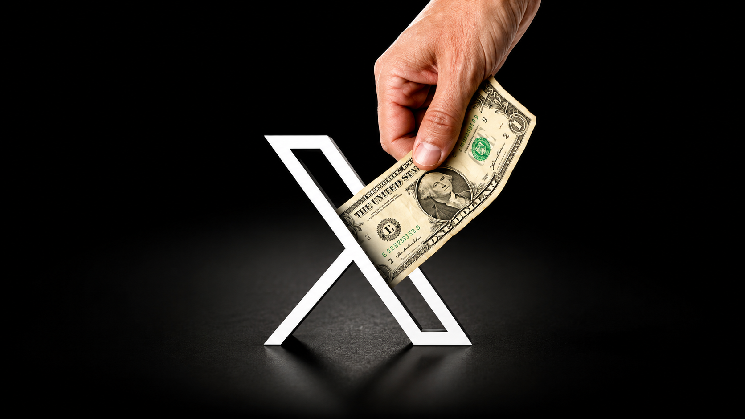
La red social X (anteriormente Twitter) anunció el 27 de julio de 2026 el lanzamiento de su servicio financiero integrado, X Money. De momento, solo está disponible para suscriptores Premium y Premium+ en Estados Unidos. Los residentes estadounidenses mayores de 18 años con cuenta verificada pueden registrarse. Los fondos se custodian en Cross River Bank, con seguro FDIC estándar de hasta $250,000, pudiendo extenderse hasta $10 millones mediante el programa Cash Sweep. El producto central es la tarjeta de débito X Card (virtual o física de metal), que funciona con la red Visa. Sus funciones incluyen: transferencias instantáneas y gratuitas entre usuarios de X, cashback del 3% en la mayoría de compras, retiros de efectivo sin comisión en cajeros a nivel mundial, sin comisiones por operaciones en el extranjero, y compatibilidad con Apple Pay y Google Pay. El servicio también ofrece hasta un 6.00% de interés anual (APY) sobre el saldo. Los usuarios Premium+ lo obtienen directamente, mientras que los de Premium deben cumplir condiciones como depósito directo de nómina. Además, permite recibir el salario hasta dos días antes y realizar transferencias bancarias o pagar facturas. En cuanto a seguridad, utiliza claves de acceso (biometría o PIN) en lugar de contraseñas, permite configurar límites de transacción e incluye la política de responsabilidad cero de Visa. El lanzamiento siguió a una fase beta limitada a finales de junio de 2026. Este movimiento busca transformar X de una red social pura a una plataforma digital que integra comunicación y operaciones financieras cotidianas.

cryptonews.ruHace 9 min(s)

3% de cashback, 6% de interés anual y una tarjeta de débito: Elon Musk lanza X Money en EE.UU.

cryptonews.ruHace 9 min(s)

Se evaporan posiciones largas de Bitcoin por valor de 134 millones de dólares al caer el precio por debajo de 63,000 dólares antes de la crucial reunión de la Fed

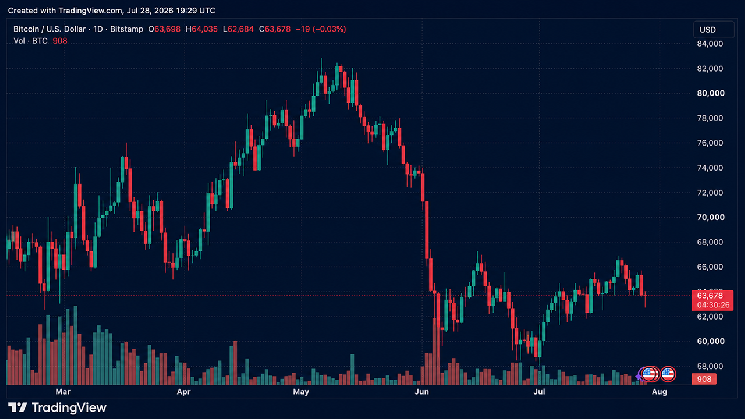
Tras un día de movimiento lateral, el precio del bitcoin se desplomó bruscamente el martes, cayendo brevemente por debajo de los 63 000 dólares en preparación para una semana crucial. La criptomoneda tocó un mínimo intradía de 62 684 dólares antes de recuperarse parcialmente, cotizando cerca de los 63 660 dólares con una pérdida diaria del 2%. Esta caída provocó la liquidación de posiciones largas apalancadas en bitcoin por valor de 134 millones de dólares, elevando el total de liquidaciones relacionadas con BTC a más de 156 millones. Aunque bitcoin sigue en camino de cerrar julio con ganancias, los expertos señalan que la última semana del mes, llena de eventos clave, podría determinar su trayectoria para gran parte del segundo semestre del año. Los factores decisivos incluyen la reunión del Comité Federal de Mercado Abierto (FOMC), los datos del índice de precios de consumo personal (PCE) básico y los resultados de gigantes tecnológicos como Apple y Amazon. Mike McClasky, experto de TX y ex ejecutivo de Fidelity, destacó que la conferencia de prensa del presidente de la Fed, Kevin Warsh, ofrecerá pistas cruciales sobre la inflación y la posible relajación de la política monetaria. Un escenario favorable, con un PCE básico en descenso y un crecimiento del PIB acorde a las expectativas, podría permitir a la Fed mantener las tasas y reactivar la narrativa desinflacionaria, impulsando a bitcoin hacia el rango de 68 000-70 000 dólares en agosto. Por el contrario, datos más fuertes de lo esperado o un tono "halcón" de la Fed, junto con resultados empresariales decepcionantes, podrían hacer que bitcoin vuelva a probar el soporte de 58 000-60 000 dólares.

cryptonews.ruHace 29 min(s)

Se evaporan posiciones largas de Bitcoin por valor de 134 millones de dólares al caer el precio por debajo de 63,000 dólares antes de la crucial reunión de la Fed

cryptonews.ruHace 29 min(s)

Trading

Spot

Artículos destacados

Cómo comprar BILL

¡Bienvenido a HTX.com! Hemos hecho que comprar Billions Network (BILL) sea simple y conveniente. Sigue nuestra guía paso a paso para iniciar tu viaje de criptos.Paso 1: crea tu cuenta HTXUtiliza tu correo electrónico o número de teléfono para registrarte y obtener una cuenta gratuita en HTX. Experimenta un proceso de registro sin complicaciones y desbloquea todas las funciones.Obtener mi cuentaPaso 2: ve a Comprar cripto y elige tu método de pagoTarjeta de crédito/débito: usa tu Visa o Mastercard para comprar Billions Network (BILL) al instante.Saldo: utiliza fondos del saldo de tu cuenta HTX para tradear sin problemas.Terceros: hemos agregado métodos de pago populares como Google Pay y Apple Pay para mejorar la comodidad.P2P: tradear directamente con otros usuarios en HTX.Over-the-Counter (OTC): ofrecemos servicios personalizados y tipos de cambio competitivos para los traders.Paso 3: guarda tu Billions Network (BILL)Después de comprar tu Billions Network (BILL), guárdalo en tu cuenta HTX. Alternativamente, puedes enviarlo a otro lugar mediante transferencia blockchain o utilizarlo para tradear otras criptomonedas.Paso 4: tradear Billions Network (BILL)Tradear fácilmente con Billions Network (BILL) en HTX's mercado spot. Simplemente accede a tu cuenta, selecciona tu par de trading, ejecuta tus trades y monitorea en tiempo real. Ofrecemos una experiencia fácil de usar tanto para principiantes como para traders experimentados.

569 Vistas totalesPublicado en 2026.05.07Actualizado en 2026.06.02

Cómo comprar BILL

Discusiones

Bienvenido a la comunidad de HTX. Aquí puedes mantenerte informado sobre los últimos desarrollos de la plataforma y acceder a análisis profesionales del mercado. A continuación se presentan las opiniones de los usuarios sobre el precio de BILL (BILL).

活动图片