The Arrival of 'Tokenpocalypse': When Costs Outweigh Productivity Gains, Who Pays the Bill?

marsbitPublicado a 2026-06-10Actualizado a 2026-06-10

Resumen

The article discusses the emergence of the term "Tokenpocalypse" (Token Doomsday), triggered by Microsoft's shift to a token-based pricing model for GitHub Copilot on June 1st. This change introduces significant cost multipliers between different AI models, with some premium models becoming up to 60 times more expensive per token. As leading AI companies like Anthropic and OpenAI prepare for IPOs, increasing profit pressures may lead more vendors to raise prices. This creates a dilemma for enterprises. Companies that once encouraged or mandated high AI token usage to boost productivity now face budget overruns under the new pricing. The lack of granular per-employee token limits means a single developer could exhaust a company's monthly budget. This forces a paradoxical situation where employees are criticized for both using too little and too much AI. The piece cites Uber as a case study, where AI budget depletion led to rapid implementation of usage caps. It highlights the growing disconnect between AI utility and cost, noting that even initial pricing for services like ChatGPT Plus was somewhat arbitrary. The industry now grapples with balancing AI's productivity gains against its escalating expenses. Ultimately, the article suggests the focus is shifting from fears of "AI replacing jobs" to the reality of "AI consuming budgets." The mental overhead and operational hours spent managing token costs are beginning to undermine the very productivity benefits AI promises. Th...

A new term has recently sparked widespread discussion: "Tokenpocalypse."

The trigger was Microsoft's pricing restructuring for GitHub Copilot. Starting June 1st, Copilot has fully transitioned to a token-based billing model. The token cost multipliers differ drastically between various models, with some models costing 60 times more per token than others.

And the advanced models widely regarded by users as "truly effective" are precisely the ones experiencing the most severe price hikes.

As leading AI companies like Anthropic and OpenAI prepare for IPOs, AI firms will face increasingly intense profitability pressures, which may compel more vendors to follow suit with price increases.

The cost of using AI is an inevitable issue for enterprises expanding productivity. The recent "tokenmaxxing" trend, driven by competition over employee token usage, is approaching its end as Tokenpocalypse looms.

"The entire tokenmaxxxing craze, from rise to peak to disdain, lasted just six months."

The Corporate Dilemma

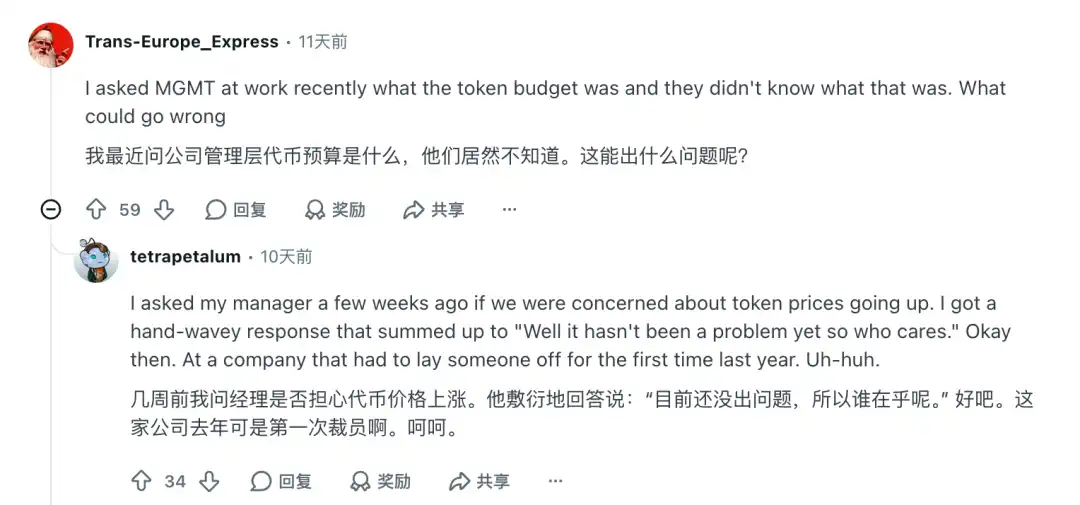
A developer from a large corporation described an absurd predicament: the company had long mandated employee use of AI tools, and using too few tokens would result in a meeting. But with the new pricing, using too many tokens now also leads to a meeting.
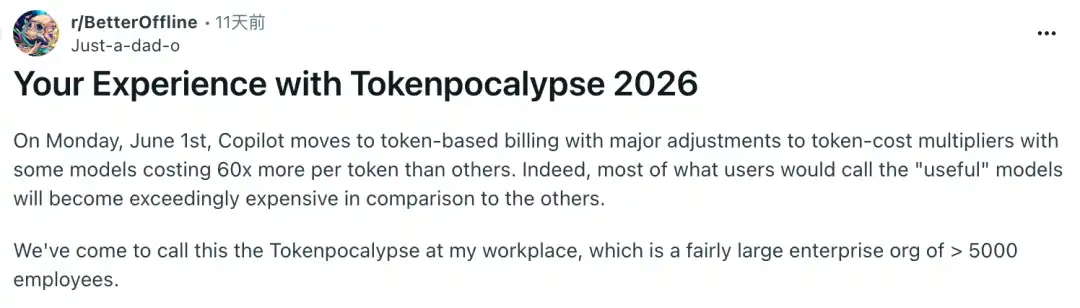
More critically, the Copilot team has yet to launch an "employee-level token quota" feature. This means that under the new billing model, a single employee could potentially exhaust the company's entire monthly token budget in one day.

"My job is no longer about using software to solve business problems," the developer wrote. "My job has become solving the token usage problem."

The comments section offers even more gems. One user summarized it: "Company policy became: 'Use AI for everything, but be careful not to use too much, because if the LLM consumes too many tokens you'll be deactivated, and then you'll be criticized for not using AI for the rest of the month.'"

A company's excessive focus on AI productivity can also be a double-edged sword.

An information director from a major law firm even "boasted" at an AI seminar: after their AI system crashed, the lawyers were essentially at a standstill, as they could no longer work without AI.

"A person trained for years in a specialized field freely admits they can't work without an AI chatbox? I'd be so ashamed I'd start re-evaluating my entire career."

The Uber Overspend Incident: An Industry Microcosm

Most AI models now have usage packages, but the issue of budget control becomes more severe as tokens increasingly trend towards pay-as-you-go pricing.
Uber completed a full arc in just one and a half months: first discovering that "the AI budget was burning much faster than anticipated," then urgently implementing usage caps and employee restrictions.
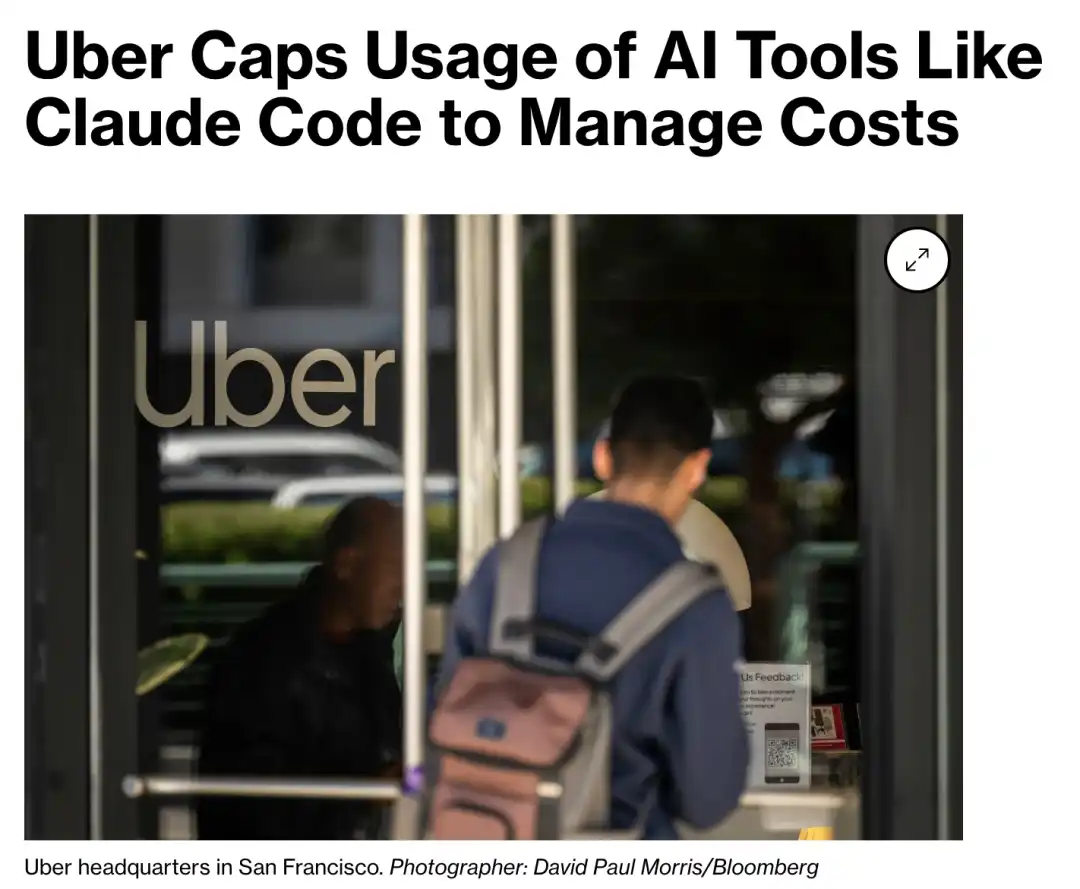
"Imagine a company as heavily reliant on AI as Uber hitting a wall this quickly," was discussed on a TechCrunch podcast. "The question is: Can AI labs bring costs down to meet customers' willingness to pay?"

A little-known fact: When ChatGPT Plus was initially priced at $20/month, there wasn't much strategic consideration; "they just threw out a number." The entire industry is still paying for that starting point.

"Your Job Won't Be Replaced by AI, But Your Budget Might"

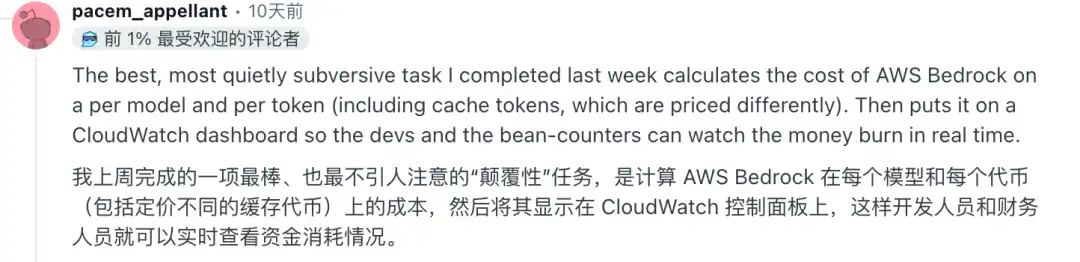
There are more thought-provoking details on Reddit. Someone built an AWS Bedrock cost monitoring dashboard at their company, displaying real-time spending per model and per token (including cached tokens) on CloudWatch, "so developers and finance can watch the money burn together." The comment section's reaction was: "Congratulations, you just gave them a new KPI."
Another large company has already faced similar tightening: after AI credits ran out, everyone was forcibly downgraded to GPT-4.2, losing even the VSCode integration.

An observer from outside the tech industry voiced a sentiment shared by many: "The mental energy and actual man-hours this whole thing consumes have already started impacting the delivery of work that actually makes the company money."

While the entire industry remains immersed in the narrative that "AI will replace everything," a more realistic question has surfaced: the bill for compute power must ultimately be paid. And "Tokenpocalypse" might just be the beginning of this reckoning.


Criptos en tendencia

Preguntas relacionadas

QWhat is 'Tokenpocalypse' and what event triggered its discussion?

A'Tokenpocalypse' or 'Token Doomsday' refers to a scenario where the rising costs of using AI tokens begin to outweigh their productivity benefits. The discussion was triggered by Microsoft's pricing overhaul for GitHub Copilot, which, starting June 1, shifted entirely to a token-based billing model with significant cost disparities between models.

QWhat is the 'absurd dilemma' faced by enterprises regarding AI tool usage as described in the article?

AThe article describes an absurd dilemma where companies have previously mandated employees to use AI tools, reprimanding those who used too few tokens. However, with the new pricing model, employees are now also reprimanded for using too many tokens, putting them in a 'damned if you do, damned if you don't' situation.

QWhat key functionality does GitHub Copilot currently lack, according to the article, and what is its potential consequence under the new pricing?

AAccording to the article, GitHub Copilot's team has not yet implemented an 'employee-level token limit' feature. This means that under the new pay-per-use model, a single employee could potentially exhaust the company's entire monthly token budget in one day.

QHow does the Uber case illustrate a broader industry problem with AI costs?

AThe Uber case serves as an industry microcosm. The company discovered its AI budget was being depleted much faster than anticipated within just a month and a half, forcing it to hastily implement usage caps and employee restrictions. This highlights the challenge of unpredictable and escalating AI operational costs even for large, tech-savvy companies.

QAccording to the article's conclusion, what is the more immediate and realistic threat compared to the narrative of 'AI replacing everything'?

AThe article concludes that a more immediate and realistic threat than 'AI replacing everything' is the financial burden of the compute bill. The 'Tokenpocalypse' represents the beginning of a financial reckoning where someone ultimately has to pay for the computational power, potentially impacting budgets and work delivery more directly than job replacement.

Lecturas Relacionadas

Visión de Vitalik sobre stablecoins algorítmicas: Interpretación del mecanismo y desafíos desde la perspectiva de las opciones

El fundador de Ethereum, Vitalik Buterin, ha propuesto un nuevo diseño para una moneda estable algorítmica que utiliza principios de opciones financieras para evitar los riesgos de liquidación. En este sistema, un ETH se divide en dos partes: una (P) que ofrece estabilidad hasta un precio de ejercicio determinado, y otra (N) que captura las ganancias por encima de ese nivel. Juntas, siempre equivalen a un ETH completo. El autor, Dan Rysk, señala que el activo estable (P) funciona esencialmente como una opción call cubierta sintética. Para mantener la estabilidad, este "call" debe estar profundamente dentro del dinero y renovarse (rodarse) continuamente a precios de ejercicio más bajos, lo que introduce desafíos como el deslizamiento en la renovación y la posible manipulación por delante de las operaciones. El mayor obstáculo para la escalabilidad del sistema es la necesidad constante de que alguien mantenga el lado alcista (N), que es una posición apalancada larga en ETH sin tasas de financiación ni riesgo de liquidación. Encontrar demanda sostenida para este rol es crucial. El artículo concluye que, aunque las opciones como producto directo han tenido dificultades en DeFi, su verdadero potencial reside en ser un módulo financiero básico para construir productos más complejos como monedas estables, productos de rendimiento o índices, tal como explora la propuesta de Vitalik y la plataforma Rysk V12.

marsbitHace 1 hora(s)

Visión de Vitalik sobre stablecoins algorítmicas: Interpretación del mecanismo y desafíos desde la perspectiva de las opciones

marsbitHace 1 hora(s)

SpaceX, IA y XRP: ¿Por qué la próxima transferencia de riqueza podría ser diferente?

La atención generada por la posible salida a bolsa de SpaceX refleja una tendencia más amplia: el capital está empezando a dirigirse hacia infraestructuras que podrían definir el próximo sistema económico global. Este nuevo ciclo de inversión podría abarcar infraestructura espacial, redes de satélites, centros de datos, inteligencia artificial y sistemas de comunicación avanzados. Todas estas áreas requieren grandes cantidades de materias primas, lo que sugiere el posible inicio de un superciclo estructural de commodities, impulsado por la demanda industrial y tecnológica, más que por el consumo. En este contexto, tecnologías como blockchain podrían evolucionar desde un enfoque especulativo hacia un papel de infraestructura de liquidación en tiempo real. Activos digitales centrados en pagos e interoperabilidad, como XRP y XLM, ganarían importancia para facilitar transacciones transfronterizas, pagos entre máquinas o la gestión de activos tokenizados. La creciente convergencia entre la IA y blockchain es clave, ya que los agentes de IA necesitarán infraestructuras capaces de ejecutar pagos y liquidar transacciones autónomamente. La clarificación regulatoria en mercados como EE.UU. se presenta como un catalizador esencial para una mayor adopción institucional de estas tecnologías. El futuro podría consistir en una fusión en la que la IA genere actividad económica y las redes blockchain proporcionen la capa de liquidación subyacente. En conclusión, la fusión de la infraestructura espacial, la IA, blockchain, los commodities y marcos regulatorios más claros sugiere una transición hacia un nuevo ciclo económico basado en infraestructura. La cuestión principal ya no es si estas tecnologías convergerán, sino a qué velocidad y qué redes se convertirán en la columna vertebral de esta próxima fase.

marsbitHace 2 hora(s)

SpaceX, IA y XRP: ¿Por qué la próxima transferencia de riqueza podría ser diferente?

marsbitHace 2 hora(s)

Cuenta regresiva para GPT-5.6: Abandona la fantasía de la API única, incluso la iteración más rápida del poder de cómputo no puede competir con una sola regulación

A mediados de junio, tres eventos aparentemente inconexos —las restricciones regulatorias a Claude Fable 5, el lanzamiento en código abierto de GLM-5.2 y la filtración del lanzamiento inminente de GPT-5.6— marcan un punto de inflexión para la industria global de IA. Estos cambios reflejan una reconfiguración fundamental: la "disponibilidad" supera en importancia a la "vanguardia técnica", dando paso a un sistema dual de modelos cerrados controlados y de código abierto local. La retirada de Fable 72 horas después de su lanzamiento, por restricciones de exportación estadounidenses dirigidas a ciudadanos no estadounidenses, evidencia que el avance técnico ahora conlleva un riesgo regulatorio equivalente. Esto crea una vulnerabilidad para las empresas que dependen de APIs cerradas. Como contrapeso, el modelo de código abierto GLM-5.2 de Zhipu AI, compatible con plataformas de semiconductores locales y con un rendimiento cercano a los modelos cerrados líderes, ofrece una alternativa estable y de menor costo. Su despliegue local se convierte en una estrategia de redundancia crítica para la continuidad del negocio ante riesgos geopolíticos. Mientras tanto, OpenAI se prepara para lanzar GPT-5.6, desplazando su foco de la inteligencia lingüística a la "inteligencia espacial" o modelos mundiales, un campo que requiere una inmensa potencia de cálculo. Este movimiento busca establecer una nueva ventaja competitiva en simulaciones industriales, robótica y diseño 3D. En conclusión, la lógica de la cadena de suministro de modelos grandes ha cambiado. La evaluación crítica para las empresas ya no es solo el rendimiento, sino una combinación de capacidad técnica, cumplimiento normativo y estabilidad de acceso. Para los desarrolladores, depender exclusivamente de una API cerrada supone un riesgo inaceptable. Diseñar arquitecturas "agnósticas al modelo" que permitan cambiar rápidamente a alternativas locales y de código abierto se ha convertido en un requisito básico para garantizar la continuidad del negocio.

marsbitHace 4 hora(s)

Cuenta regresiva para GPT-5.6: Abandona la fantasía de la API única, incluso la iteración más rápida del poder de cómputo no puede competir con una sola regulación

marsbitHace 4 hora(s)

Trading

Spot
Futuros

Artículos destacados

Cómo comprar BILL

¡Bienvenido a HTX.com! Hemos hecho que comprar Billions Network (BILL) sea simple y conveniente. Sigue nuestra guía paso a paso para iniciar tu viaje de criptos.Paso 1: crea tu cuenta HTXUtiliza tu correo electrónico o número de teléfono para registrarte y obtener una cuenta gratuita en HTX. Experimenta un proceso de registro sin complicaciones y desbloquea todas las funciones.Obtener mi cuentaPaso 2: ve a Comprar cripto y elige tu método de pagoTarjeta de crédito/débito: usa tu Visa o Mastercard para comprar Billions Network (BILL) al instante.Saldo: utiliza fondos del saldo de tu cuenta HTX para tradear sin problemas.Terceros: hemos agregado métodos de pago populares como Google Pay y Apple Pay para mejorar la comodidad.P2P: tradear directamente con otros usuarios en HTX.Over-the-Counter (OTC): ofrecemos servicios personalizados y tipos de cambio competitivos para los traders.Paso 3: guarda tu Billions Network (BILL)Después de comprar tu Billions Network (BILL), guárdalo en tu cuenta HTX. Alternativamente, puedes enviarlo a otro lugar mediante transferencia blockchain o utilizarlo para tradear otras criptomonedas.Paso 4: tradear Billions Network (BILL)Tradear fácilmente con Billions Network (BILL) en HTX's mercado spot. Simplemente accede a tu cuenta, selecciona tu par de trading, ejecuta tus trades y monitorea en tiempo real. Ofrecemos una experiencia fácil de usar tanto para principiantes como para traders experimentados.

281 Vistas totalesPublicado en 2026.05.07Actualizado en 2026.06.02

Cómo comprar BILL

Discusiones

Bienvenido a la comunidad de HTX. Aquí puedes mantenerte informado sobre los últimos desarrollos de la plataforma y acceder a análisis profesionales del mercado. A continuación se presentan las opiniones de los usuarios sobre el precio de BILL (BILL).

活动图片