Investing $5 Billion: Cerebras Uses a 'Redemption Bond' to Enter Sam Altman's Hall of Gods

marsbitPublicado a 2026-05-14Actualizado a 2026-05-14

Resumen

Cerebras Systems, the chipmaker known for its massive wafer-scale WSE-3 processor, is making a dramatic IPO push with a $48 billion valuation. This move follows a crucial deal with OpenAI, where Cerebras will provide 750 megawatts of computing power over three years. In exchange, OpenAI receives warrants for a 10% stake in Cerebras, valued at around $5 billion. This agreement, termed a "computing ransom note," secures Cerebras a place within Sam Altman's influential network while sacrificing a significant portion of its potential profits from the deal. The partnership has supercharged Cerebras's market prospects, granting it a premium valuation and positioning it as a core OpenAI partner. The article frames this as part of "Altman Economics," where OpenAI leverages its model sovereignty to extract concessions from hardware suppliers, reshaping the AI hardware landscape into a hierarchy of sovereigns and vassals.

On Wall Street's monitors, the flames of the digital oracle burn ever brighter.

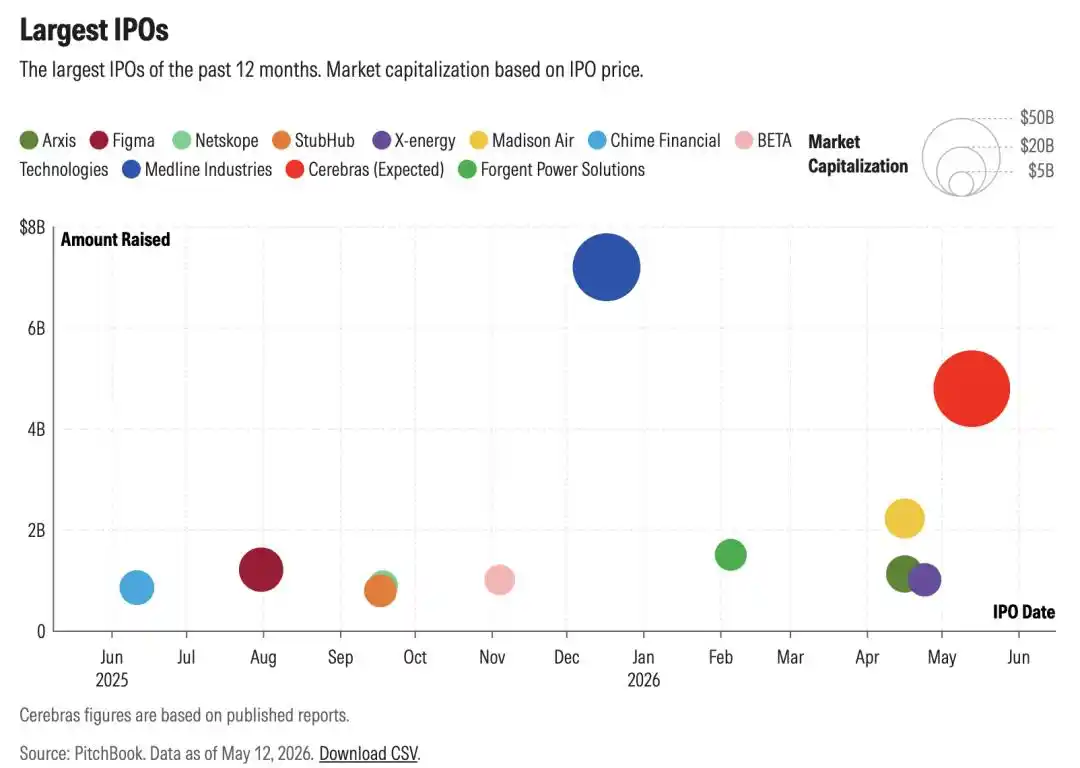
This week, the chip industry's 'maverick', Cerebras Systems, charged towards an IPO with a valuation of $48 billion

This is the largest listing of 2026, a commercial ritual imbued with both sanctity and brutality.
To squeeze into Sam Altman's 'Hall of Gods', Cerebras personally cut away 10% of its own 'flesh and blood'—stock warrants worth approximately $5 billion.

This is no longer a simple IPO. It is a tribute from underlying hardware to model sovereignty, paid in the twilight of an era.

And standing behind all this prosperity is the man known as the 'new lord of Silicon Valley'.

The Return of Brutalist Aesthetics

It Forged a 'Silicon-based Leviathan'

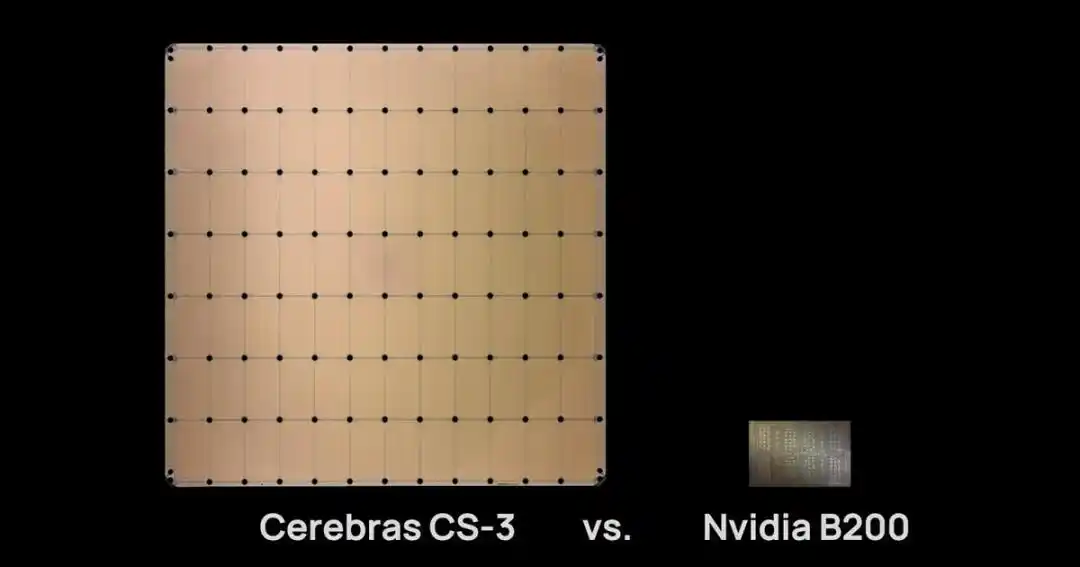
If Nvidia proudly calls its B200 chip an exquisite postage stamp, then Cerebras's flagship product, WSE-3, is a massive dinner plate.
For the past three decades, the semiconductor industry's creed has been 'miniaturization'—dancing on a pinhead, stacking transistors at the nanoscale.

But Cerebras took a counterintuitive path: Since memory bandwidth is the Achilles' heel of AI inference, why not just make the entire wafer into a single chip.

This 'silicon-based leviathan' is nearly half a square foot in size, featuring over 4 trillion transistors (19 times that of Nvidia's B200), 900,000 AI-optimized cores, and 125 petaflops of AI compute—making its total computing power 28 times that of the B200.

Its design is fundamentally about 'trading space for time': etching cores directly onto a single 12-inch wafer, flattening the 'memory wall' where data shuttles between the chip and external storage.

This brutalist aesthetic shows terrifying dominance in the 'Age of Inference':

When running top-tier models from OpenAI, Cognition, Meta, etc., it can achieve a throughput speed of up to 3000 tokens per second, outpacing traditional GPUs by 70 times.
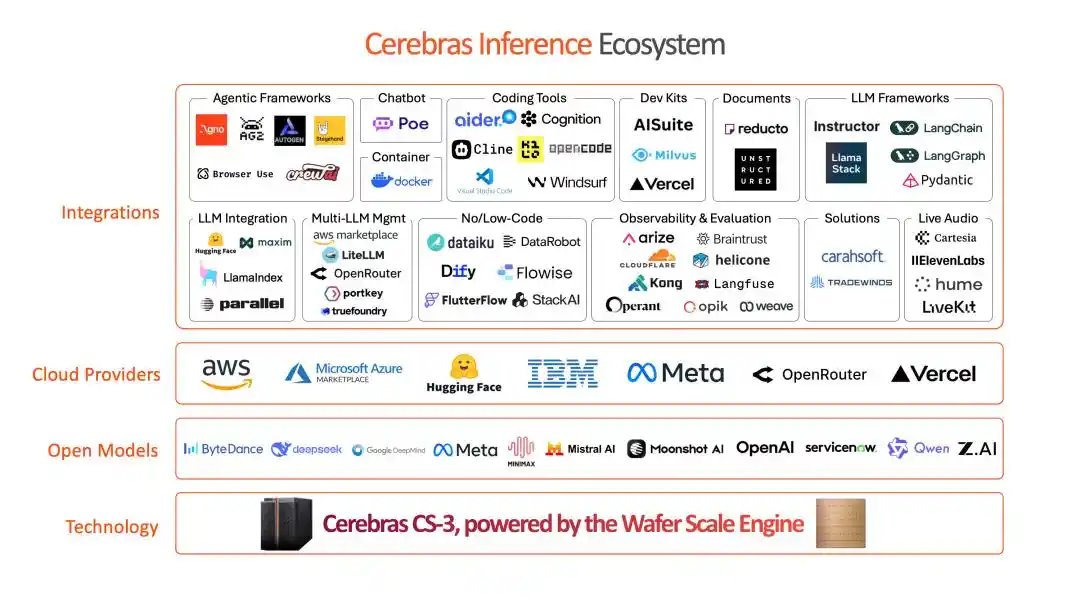
However, in 2026, the hardest technology, if it can't be converted into the fastest Tokens, is just expensive sand.

Eighteen months ago, Cerebras was a forlorn geek.

In 2025, its revenue was only $510 million, almost entirely from a single customer, the UAE's G42. It operated at a loss of $145.9 million, forcing the postponement of its IPO plans.
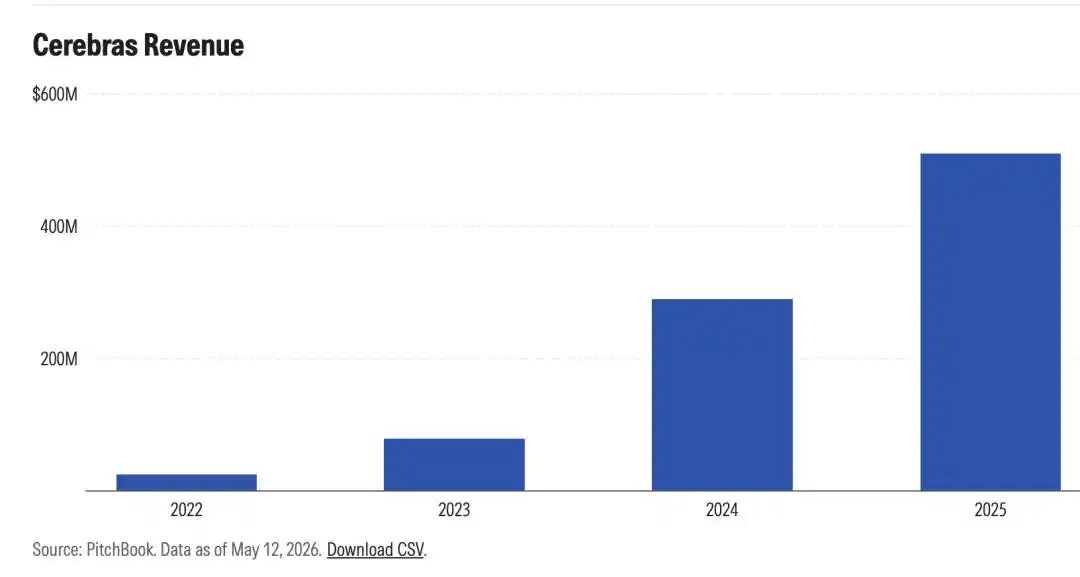
Despite possessing performance surpassing Nvidia's, its fate hung on the checkbook of a single client, like an orphan at constant risk of drowning.

Until it knocked on the door leading to Sam Altman's inner circle.

The $5 Billion 'Redemption Bond'

The Golden Ticket to the Future

In the world of AI, Moore's Law is giving way to the 'Law of the Circle'.

In exchange for survival and explosive growth, Cerebras signed an agreement that left outsiders dumbfounded: providing OpenAI with 750 megawatts of computing capacity over the next three years.

Calculated at current market prices (750 MW is roughly worth $9 billion annually), this deal could bring about $27 billion in revenue and $10 billion in gross profit.

For a company still in the red last year, this was a lifeline.

More tellingly, these 750 megawatts constitute just one-fortieth of the total computing power OpenAI believes it will need by 2030. This leftover order is enough to catapult Cerebras from a 'marginal player' to a market focal point.

But there is no free lunch, only expensive endorsements.

In exchange, Cerebras must gradually grant stock warrants to OpenAI. Upon exercise, OpenAI would hold 10% of Cerebras's shares—worth about $5 billion at the offering price midpoint of $155.

This means Cerebras generously offered up half the potential future profits from this mega-deal as a 'tribute' directly to OpenAI.

This is not an equal exchange. This is the AI era's 'computing power redemption bond'.

OpenAI is the 'lord' holding the power to allocate traffic and demand, while Cerebras is a heavily armored knight providing advanced tools of production—to enter the lord's domain, the knight must pay homage and share half his spoils.
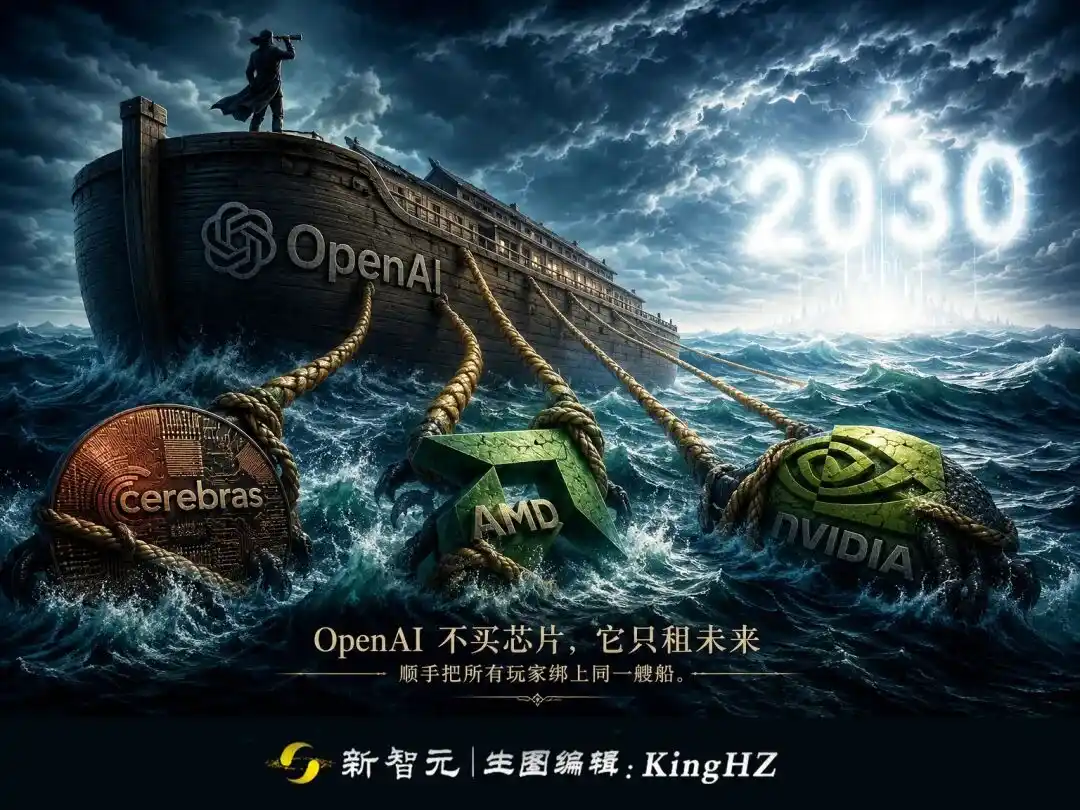
Once branded as OpenAI's core blood ally, Cerebras's price-to-sales (P/S) ratio instantly skyrocketed to 15 times, a level even Nvidia must respectfully acknowledge.

'Altmanomics'

He Is Cashing Out the Hardware Giants

Cerebras is not the only computing power enterprise bowing to Sam Altman.

Last October, AMD's stock doubled after reaching a similar agreement with OpenAI; earlier, Nvidia was rumored to have deepened its ties with OpenAI through a $30 billion financing round.

A clear map of power is emerging: OpenAI is evolving from a software company into a global 'tax authority' over the AI hardware landscape.

Sam Altman's true ambition is not merely to acquire data centers for training and running its models, but to quietly expand the group of companies and investors who have a 'vested interest in OpenAI's success.'

He is weaving a vast web of an 'interest community'.
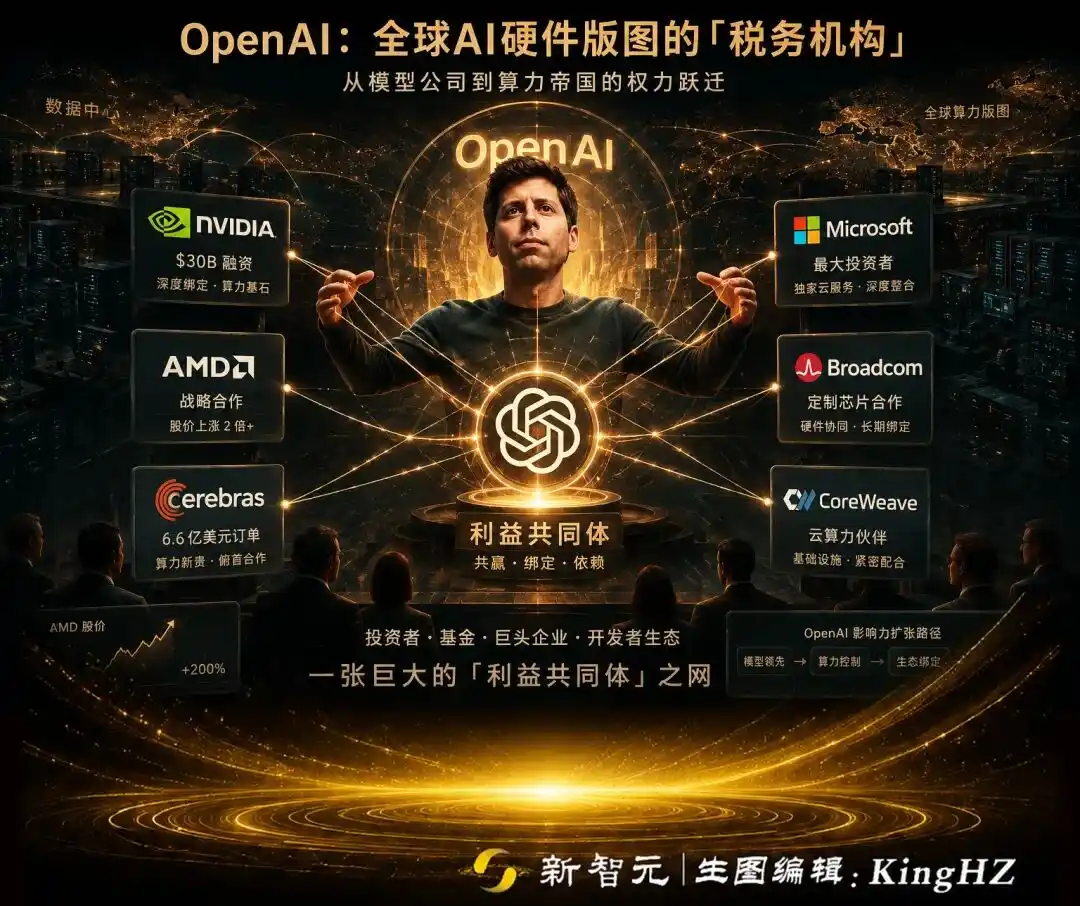
OpenAI doesn't buy chips; it only rents the future—and in the process, binds all players to the same ship.

For hardware vendors: Even with profits halved, obtaining the 'OpenAI certification' and a 15x P/S valuation is a worthwhile deal.

For Sam Altman: He not only secures the computational foundation for the next decade but also becomes a shareholder in all potential competitors.
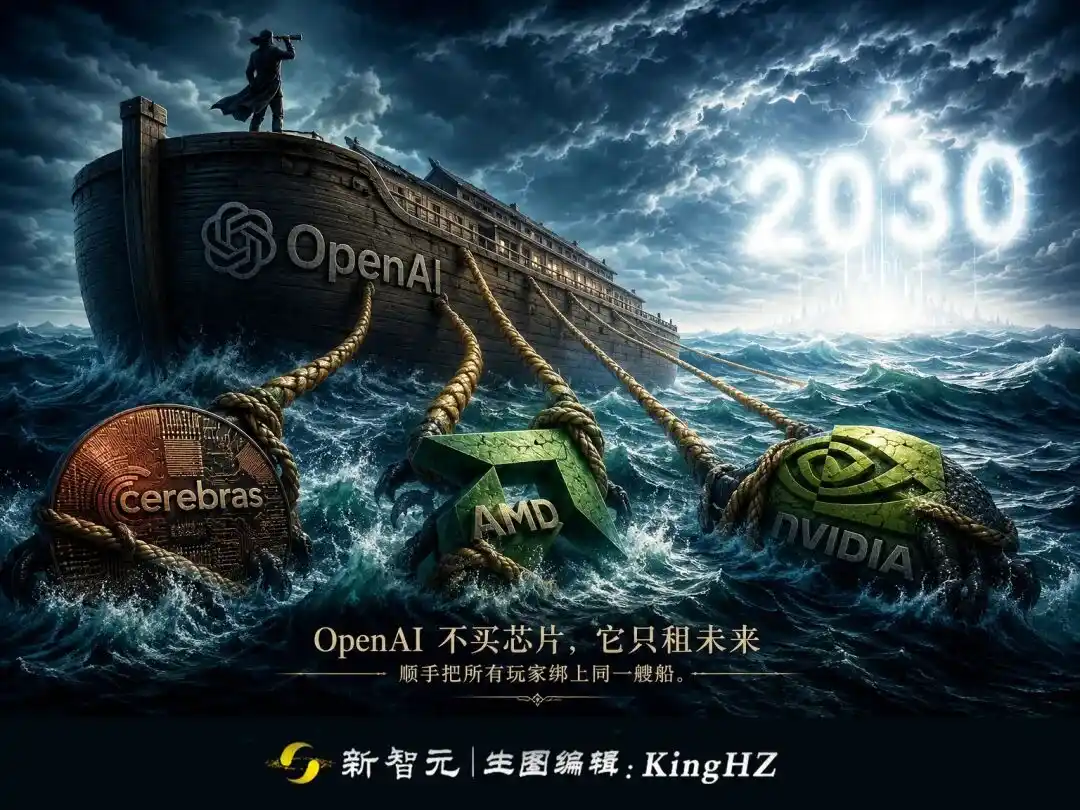
This is the essence of 'Altmanomics': In the second half of the AI race, whoever defines the demand for models holds the 'power to tax' the underlying supply chain.

Can $48 Billion Buy a Seat at the Power Table?

This Thursday, Cerebras's IPO received 20 times oversubscription. The pricing range was raised to $150-$160 per share, implying a valuation of $48 billion, coinciding with semiconductor stocks rising 53% cumulatively from their March lows.
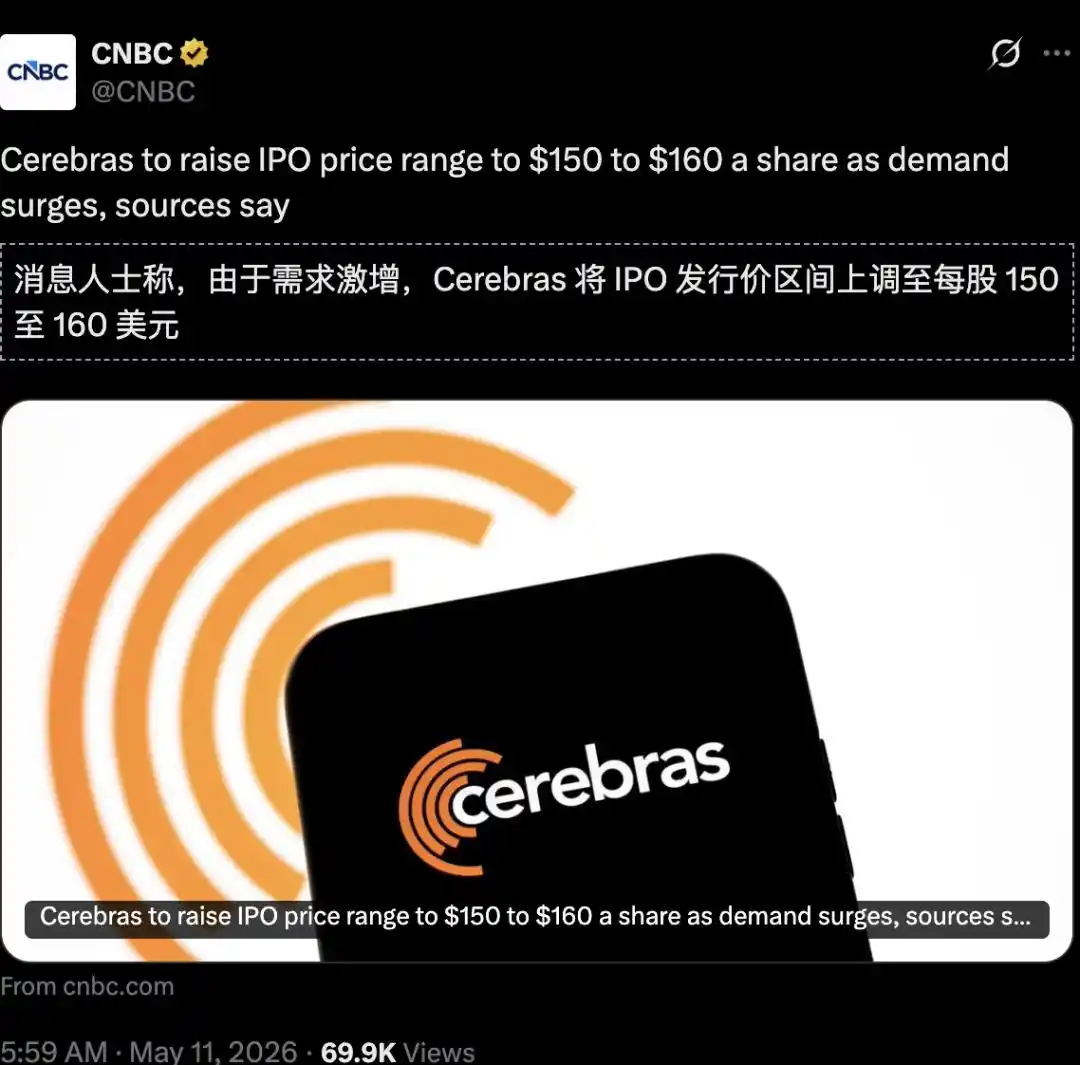
The capital market's frenzy is almost blind. They no longer care whether Cerebras lost $140 million last year or if its P/S ratio has already surpassed Nvidia's.

They are buying a kind of 'certainty'.

In the uncertain landscape of 2026, what identity tag is more certain than being a 'Core Partner of OpenAI'?

This is precisely the most intriguing aspect of this IPO. Cerebras's high valuation is essentially a market premium for the 'Altman endorsement'.

Conclusion: Sovereignty or Vassalage?

This 2026 listing marks the semiconductor industry's entry into a brutal era of stratification.

Future chip companies have only two paths:

Either, like Nvidia, rely on first-mover advantage to build their own ecological empire and become the rule-maker; or, like Cerebras, offer up half their soul in a high-stakes gamble for a ticket into the core circle.

If you cannot become a god, then become the most expensive offering.

This is not just a technological battle; it's a battle for sovereignty.

In every megawatt of electricity flows the 'tribute' from chipmakers to Silicon Valley's new overlord.

References:

https://x.com/FT/status/2054141078710768006

https://www.ft.com/content/3f77f8ad-16b8-4f97-ae55-0bd2e31122fa?syn-25a6b1a6=1

https://www.theinformation.com/newsletters/ai-agenda/startup-helping-openai-optimize-ai-cerebras-chips

https://www.morningstar.com/stocks/why-ai-chip-designer-cerebras-is-2026s-hottest-ipo-yet

This article is from the WeChat public account "Xin Zhi Yuan," author: Xin Zhi Yuan, editor: KingHZ


Criptos en tendencia

Preguntas relacionadas

QWhat is the core technology and design philosophy behind Cerebras Systems' WSE-3 chip, and how does it differ from traditional chip designs?

ACerebras Systems' WSE-3 chip employs a radical design philosophy that contrasts with the traditional industry focus on miniaturization. Instead of shrinking components, it uses an entire 12-inch silicon wafer to create a single, massive chip. This 'brute-force' approach, described as 'trading space for time,' is aimed at eliminating the 'memory wall' bottleneck by providing immense on-chip memory bandwidth. It contains over 4 trillion transistors (19x more than NVIDIA's B200), 900,000 AI-optimized cores, and delivers 125 petaflops of AI computing power. Its key difference is its monolithic wafer-scale design versus the traditional multi-chiplet or discrete GPU designs, prioritizing high-speed data access for AI inference.

QWhat was the crucial strategic deal Cerebras made with OpenAI to enable its 2026 IPO, and what were the key terms?

AThe crucial deal was a multi-year agreement where Cerebras committed to supply 750 megawatts of computing capacity to OpenAI. In exchange for this massive, revenue-guaranteeing contract—valued at approximately $27 billion in revenue and $10 billion in gross profit over three years—Cerebras granted OpenAI warrants. Upon exercise, these warrants would give OpenAI a 10% equity stake in Cerebras, valued at around $5 billion based on the IPO's mid-range share price. This deal, framed as a 'ransom note' or 'tribute,' provided Cerebras with the financial credibility and market validation needed for a successful high-valuation IPO.

QHow does the article characterize the evolving power dynamic in the AI industry, particularly regarding OpenAI's role?

AThe article characterizes the power dynamic as a shift where OpenAI is evolving from a software company into a dominant 'tax authority' or 'feudal lord' over the global AI hardware landscape. By securing large, long-term compute capacity deals from hardware makers like Cerebras, AMD, and NVIDIA—often in exchange for equity or favorable terms—OpenAI is locking in its future compute foundation. More importantly, it is weaving a vast 'community of interest,' binding these suppliers to its success. This grants OpenAI 'taxation rights' over the hardware supply chain, as it defines model demand and controls access to the most lucrative market segments.

QWhat does the term 'Altmanomics' (Altman Economics) refer to in the context of this article?

AIn this article, 'Altmanomics' refers to the strategic and economic model pioneered by OpenAI's Sam Altman. Its essence is that in the later stages of the AI race, the entity that defines the demand for AI models gains the power to 'tax' the underlying hardware supply chain. Instead of merely purchasing chips, OpenAI 'rents the future' by making long-term capacity deals that often include equity stakes. This strategy allows OpenAI to secure its computational base at favorable rates while simultaneously making shareholders and partners out of potential hardware competitors, thereby consolidating its ecosystem power and ensuring alignment of interests.

QAccording to the article's conclusion, what two paths are available for semiconductor companies in the new AI era, as exemplified by NVIDIA and Cerebras?

AThe article concludes that semiconductor companies now face two distinct paths: 1) Become a rule-maker like NVIDIA, which uses first-mover advantage and ecosystem strength to establish its own empire and dictate distribution rules. 2) Become a vassal or 'high-value offering' like Cerebras, which trades a significant portion of its potential sovereignty and profits (through equity and deals) to a dominant AI platform (OpenAI) in exchange for a guaranteed, high-value ticket into the core industry circle. The choice is between maintaining sovereign control or becoming a strategically important, yet subordinate, partner to the new 'lords' of silicon.

Lecturas Relacionadas

Bonos del Tesoro de EE.UU., IA e inflación: no se puede tener todo. ¿A qué apuesta el BTC?

**Resumen del artículo: "Bonos del Tesoro de EE.UU., IA e inflación: ¿dónde apostar Bitcoin?"** EE.UU. enfrenta un trilema macroeconómico: mantener estable el mercado de bonos, sostener el ciclo de inversión en IA y controlar la inflación. La presión sobre los bonos a largo plazo (rendimientos cerca de máximos de 20 años) proviene de la inflación persistente, el elevado déficit fiscal y la competencia por capital de las grandes tecnológicas que financian infraestructuras de IA. El análisis sugiere que Washington priorizará la estabilidad del mercado de deuda y la inversión en IA, asumiendo una inflación más alta y prolongada. La Tesorería, bajo el Secretario Besante, probablemente intervendrá para aliviar la presión en el largo plazo mediante repos, emitiendo más deuda a corto plazo y protegiendo a grandes tenedores como Japón. Esta "transferencia de duración" y potencial expansión de liquidez actuarían como un "QE encubierto". Esto crea un viento de cola para activos percibidos como cobertura contra la devaluación monetaria. El oro ya ha subido fuertemente (≈90% desde 2024), impulsado por la erosión de la confianza en el dólar y la lógica inflacionaria. Bitcoin, aunque históricamente no ha seguido al oro en rallyes inflacionarios, mostró un comportamiento divergente y positivo recientemente (subió 22.2% en una semana frente al 5.9% del oro), posiblemente comenzando a ser visto como un activo de liquidez/riesgo. **Conclusión:** Si persisten la alta inflación, el déficit y la demanda de capital para la IA, la estrategia probable de EE.UU. (favorecer la estabilidad de la deuda y el crecimiento) implicará más liquidez y tolerancia a la inflación, beneficiando a Bitcoin. Este escenario se revertiría si la inflación cae sostenidamente al 2%, hay consolidación fiscal creíble o la IA se autofinancia.

marsbitHace 10 min(s)

Bonos del Tesoro de EE.UU., IA e inflación: no se puede tener todo. ¿A qué apuesta el BTC?

marsbitHace 10 min(s)

El HBM está siendo redefinido

A medida que los modelos de entrenamiento e inferencia de IA continúan despegando, el cuello de botella del rendimiento de los chips de cómputo ha pasado de las unidades de procesamiento al ancho de banda de memoria, haciendo que la memoria de alto ancho de banda (HBM) sea un factor clave. En la conferencia HotChips 2026, Samsung y SK Hynix revelaron la hoja de ruta tecnológica para HBM4, lo que representa un cambio significativo en su evolución. En lugar de centrarse únicamente en aumentar la velocidad de DRAM o las capas de apilamiento, HBM4 se centra en tres innovaciones principales: la actualización del proceso lógico del dado base (Base Die), el apilamiento 3D con unión híbrida y el empaquetado heterogéneo con EMIB. Esto marca una transición de HBM como un simple dispositivo de memoria a un sistema integrado que abarca memoria, lógica, empaquetado, IP y herramientas EDA. Se observan dos enfoques distintos: Samsung utiliza su proceso lógico de 4 nm para el dado base, mientras que SK Hynix colabora con TSMC para un dado base de 12 nm. Este cambio hacia procesos lógicos en el dado base optimiza la integridad de la señal, permite mayor ancho de banda y crea espacio para el procesamiento de datos cercano a la memoria, aunque también aumenta la complejidad de la cadena de suministro. En cuanto al empaquetado, además de la tecnología CoWoS de TSMC, se está evaluando el EMIB de Intel para una integración 2.5D más flexible y posiblemente menos costosa entre HBM4 y las GPU, aunque CoWoS seguirá siendo crucial para aplicaciones de alto rendimiento. Internamente, la tecnología de unión entre los dados DRAM está en transición hacia la unión híbrida (Hybrid Bonding), clave para futuros apilamientos de 16 o más capas, aunque aún no está lista para producción masiva. La gestión térmica se ha vuelto crítica, con soluciones como componentes de refrigeración integrados. Además, la IP de alta velocidad y las herramientas EDA 3D para diseño heterogéneo se han convertido en barreras de entrada esenciales, determinando el rendimiento y el rendimiento de fabricación de HBM4. En resumen, la industria del HBM está evolucionando de una mejora incremental a una competencia basada en la optimización sistémica y la integración de arquitectura, empaquetado, proceso y ecosistema de software y hardware.

marsbitHace 15 min(s)

El HBM está siendo redefinido

marsbitHace 15 min(s)

La era de invertir 3.000 yuanes para aspirar a 200.000 ha terminado: los cómics de IA no son una mina de oro fácil

"La era en la que se podían ganar 200.000 yuanes con una inversión de 3.000 ha terminado. Los dramas de cómic con IA ya no son una oportunidad para ganar dinero fácil". Recientemente, numerosas cuentas de dramas de cómic con IA, pintura con IA y tutoriales de IA, consideradas anteriormente como "oportunidades de emprendimiento de bajo umbral", han dejado de publicar contenido de forma concentrada. El detonante directo de esta ola de pausas es la nueva normativa de "atracción de nuevos usuarios" implementada por Tomato Novel el 17 de agosto, que establece requisitos de contenido y derechos de autor para los "dramas cortos gratuitos de Hongguo (dramas de cómic)". Sin embargo, la normativa es solo la gota que colmó el vaso. Lo que realmente llevó a este sector al borde de una reestructuración fue la combinación, en un mismo verano, del endurecimiento de las reglas de las plataformas, mayores exigencias de derechos de autor, aumento de la presión de costes y homogenización del contenido. El desequilibrio entre inversión y rendimiento es grave. Un creador calculó que el coste diario de producción de cinco minutos de contenido supera los 500 yuanes, pero los ingresos por un video con 60.000 reproducciones pueden ser de solo 45 yuanes. Aunque hubo casos exitosos con costes bajos y ganancias altas, para la mayoría de los creadores individuales o pequeños es difícil replicar ese éxito, y muchos operan con pérdidas. La nueva normativa exige autorización formal del autor original o del titular de los derechos para las adaptaciones, limita la duración y el contenido mostrado, y prohíbe terminología que sugiera series. Esto golpea el modelo de negocio de "producción en masa y arbitraje de tráfico". Frente a la imposibilidad de asumir los costes de derechos de autor y al riesgo de que se anulen sus ingresos, muchos creadores optaron por detener la producción. Para los autores de novelas web, la normativa es positiva, ya que aborda problemas generalizados de infracción de derechos de autor por parte de los dramas de cómic con IA, donde a menudo no se obtenían permisos ni se compensaba a los autores. El rápido crecimiento de los dramas de cómic con IA se basó en un frágil terreno gris, utilizando modelos de IA para generar rápidamente contenido a partir de textos publicados, sin abordar adecuadamente los derechos de autor. Esto condujo a una alta homogenización de temas y tramas, generando fatiga estética en la audiencia. La pausa masiva no significa el fracaso de la tecnología de IA, sino un ajuste inevitable hacia un desarrollo más regulado y de mayor calidad. Los frutos fáciles del tráfico se han agotado. El futuro del sector dependerá de un contenido sólido y del uso de la IA como herramienta para la creación, no como un atajo. Algunos creadores están ahora buscando regularizar derechos de autor. La próxima implementación de las "Medidas de gestión para micro-dramas" por la autoridad reguladora el 1 de septiembre de 2026 consolida esta transición hacia un sector más normativo, donde sobrevivirán aquellos que se centren en la creación de valor real.

marsbitHace 15 min(s)

La era de invertir 3.000 yuanes para aspirar a 200.000 ha terminado: los cómics de IA no son una mina de oro fácil

marsbitHace 15 min(s)

Trading

Spot

Artículos destacados

Cómo comprar GODS

¡Bienvenido a HTX.com! Hemos hecho que comprar Gods Unchained (GODS) sea simple y conveniente. Sigue nuestra guía paso a paso para iniciar tu viaje de criptos.Paso 1: crea tu cuenta HTXUtiliza tu correo electrónico o número de teléfono para registrarte y obtener una cuenta gratuita en HTX. Experimenta un proceso de registro sin complicaciones y desbloquea todas las funciones.Obtener mi cuentaPaso 2: ve a Comprar cripto y elige tu método de pagoTarjeta de crédito/débito: usa tu Visa o Mastercard para comprar Gods Unchained (GODS) al instante.Saldo: utiliza fondos del saldo de tu cuenta HTX para tradear sin problemas.Terceros: hemos agregado métodos de pago populares como Google Pay y Apple Pay para mejorar la comodidad.P2P: tradear directamente con otros usuarios en HTX.Over-the-Counter (OTC): ofrecemos servicios personalizados y tipos de cambio competitivos para los traders.Paso 3: guarda tu Gods Unchained (GODS)Después de comprar tu Gods Unchained (GODS), guárdalo en tu cuenta HTX. Alternativamente, puedes enviarlo a otro lugar mediante transferencia blockchain o utilizarlo para tradear otras criptomonedas.Paso 4: tradear Gods Unchained (GODS)Tradear fácilmente con Gods Unchained (GODS) en HTX's mercado spot. Simplemente accede a tu cuenta, selecciona tu par de trading, ejecuta tus trades y monitorea en tiempo real. Ofrecemos una experiencia fácil de usar tanto para principiantes como para traders experimentados.

483 Vistas totalesPublicado en 2024.12.13Actualizado en 2026.06.02

Cómo comprar GODS

Discusiones

Bienvenido a la comunidad de HTX. Aquí puedes mantenerte informado sobre los últimos desarrollos de la plataforma y acceder a análisis profesionales del mercado. A continuación se presentan las opiniones de los usuarios sobre el precio de GODS (GODS).

活动图片