Why is Ethereum Urgently Needing ZK-ification?

marsbitPublicado a 2026-01-13Actualizado a 2026-01-13

Resumen

The article discusses the urgent need for Ethereum to adopt zero-knowledge (ZK) technology as a core narrative for its future development. While Ethereum previously focused on ICOs, DeFi, and being a global financial settlement layer, it now lacks a compelling new narrative. ZK technology is highlighted as a critical solution, with Ethereum being the blockchain most invested in its development. ZK-EVM has reached the Alpha stage, a milestone celebrated by Vitalik Buterin. The primary motivation for ZK integration is to maintain Ethereum’s decentralization while improving scalability. Currently, increasing the Gas limit boosts TPS but raises node operation costs, potentially centralizing the network. ZK proofs allow nodes to verify transactions efficiently without expensive hardware upgrades, similar to automated exam grading versus manual checking. ZK itself doesn’t directly increase TPS but enables future Gas limit hikes with minimal node cost increases. The recent Fusaka upgrade, including PeerDAS, advances this goal. A ZK-powered Ethereum could achieve over 1000 TPS, strengthening its narrative. The article also addresses the role of third-party ZK teams (e.g., Polygon, Scroll, ZKsync, Taiko), which remain crucial for innovation and testing different ZK-EVM types (Type 1 to 4). ZK-VMs, like Brevis, are noted for higher performance and diversity, as they aren’t constrained by EVM compatibility. While ZK L1 may attract some L2 users, it also benefits L2s by reducing costs...

One of the most frequently asked questions recently is, how to view Ethereum's narrative?

Admittedly, Ethereum focused on ICOs and the world computer in 2017, and on DeFi and the financial settlement layer in 2021. However, for the 2025 cycle, there seems to be few new narratives that can match the height of the old ones.

Perhaps ETF and Staking ETF count as half, but this is not within the control of Ethereum developers. If there is another half, it can only be ZK.

Ethereum is undoubtedly the public chain that has bet the most on ZK in the entire Crypto world.

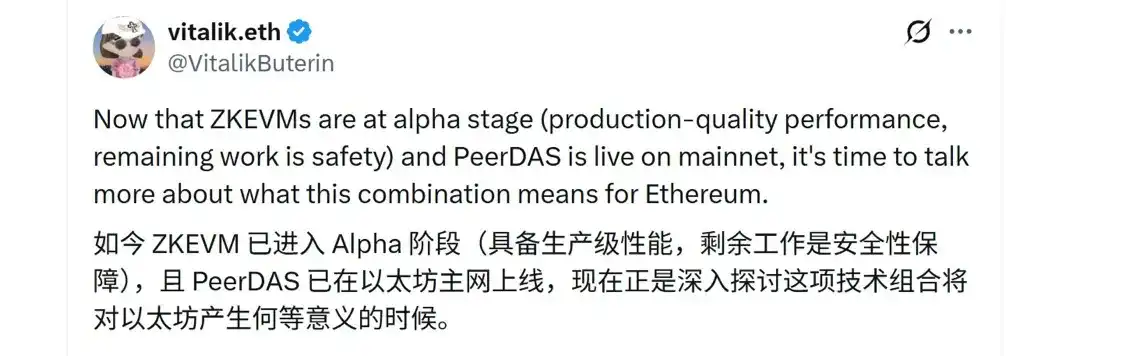
A few days ago, Vitalik was quite excited. He officially announced on Twitter that ZKEVM has now entered the Alpha stage.
Why is Ethereum so persistent about ZK?

Actually, Ethereum's TPS is not low anymore, with the theoretical peak already increased to over 200 TPS. The main reason is that Ethereum has repeatedly raised the Gas limit.
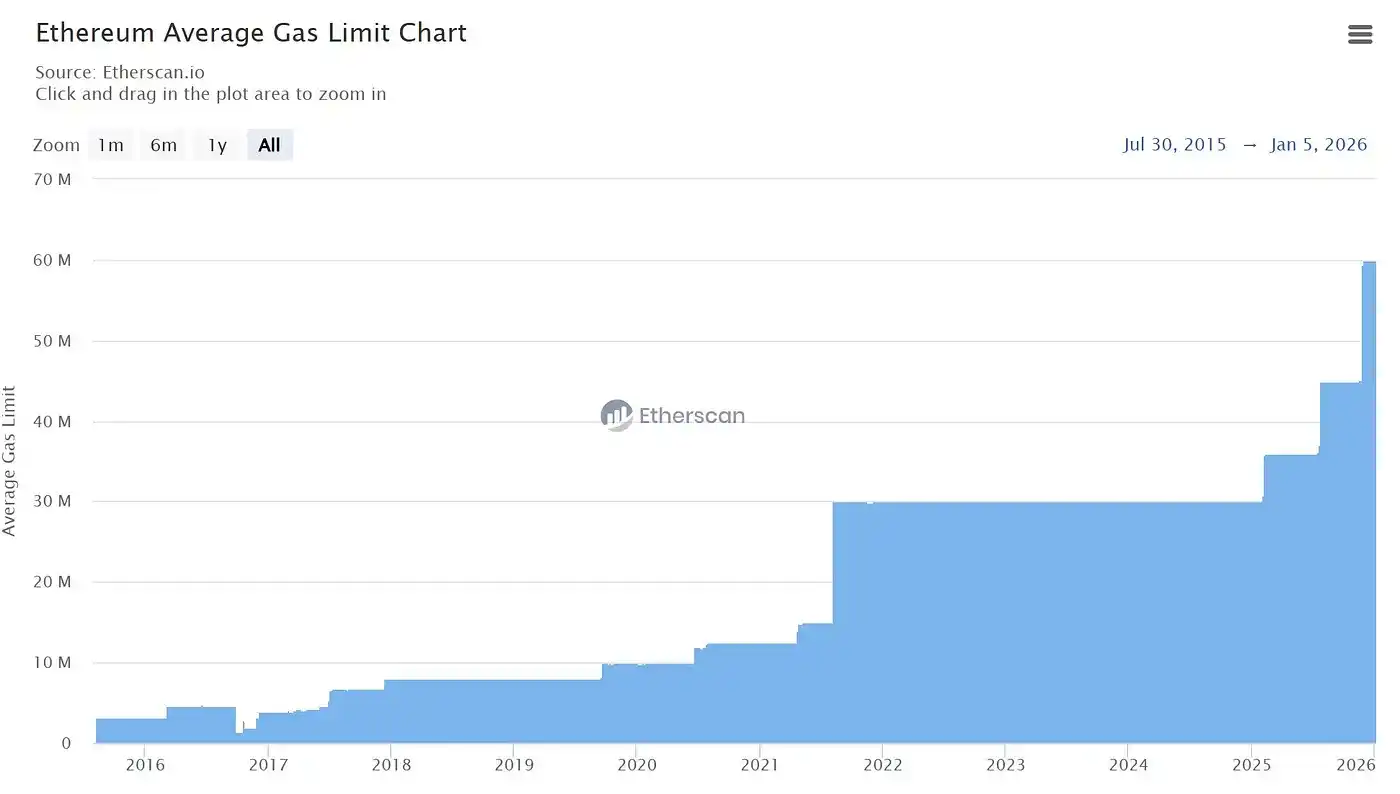
However, raising the Gas limit comes at a cost and cannot be done indefinitely. Its cost is that nodes need more expensive servers to run.

But Ethereum also wants to maintain its proud high degree of decentralization, so it cannot push node server performance too high (refer to Solana, where a single server is about 5–10 times more expensive than an ETH server).

Therefore, the mainnet must be ZK-ified. Note, this is not about creating a few ZK L2s; this is a full ZK-ification of the L1 mainnet.

So what are the benefits after ZK-ification?

Those ETH nodes can simply verify these ZK proofs, without needing to tediously verify transactions one by one as in the past.
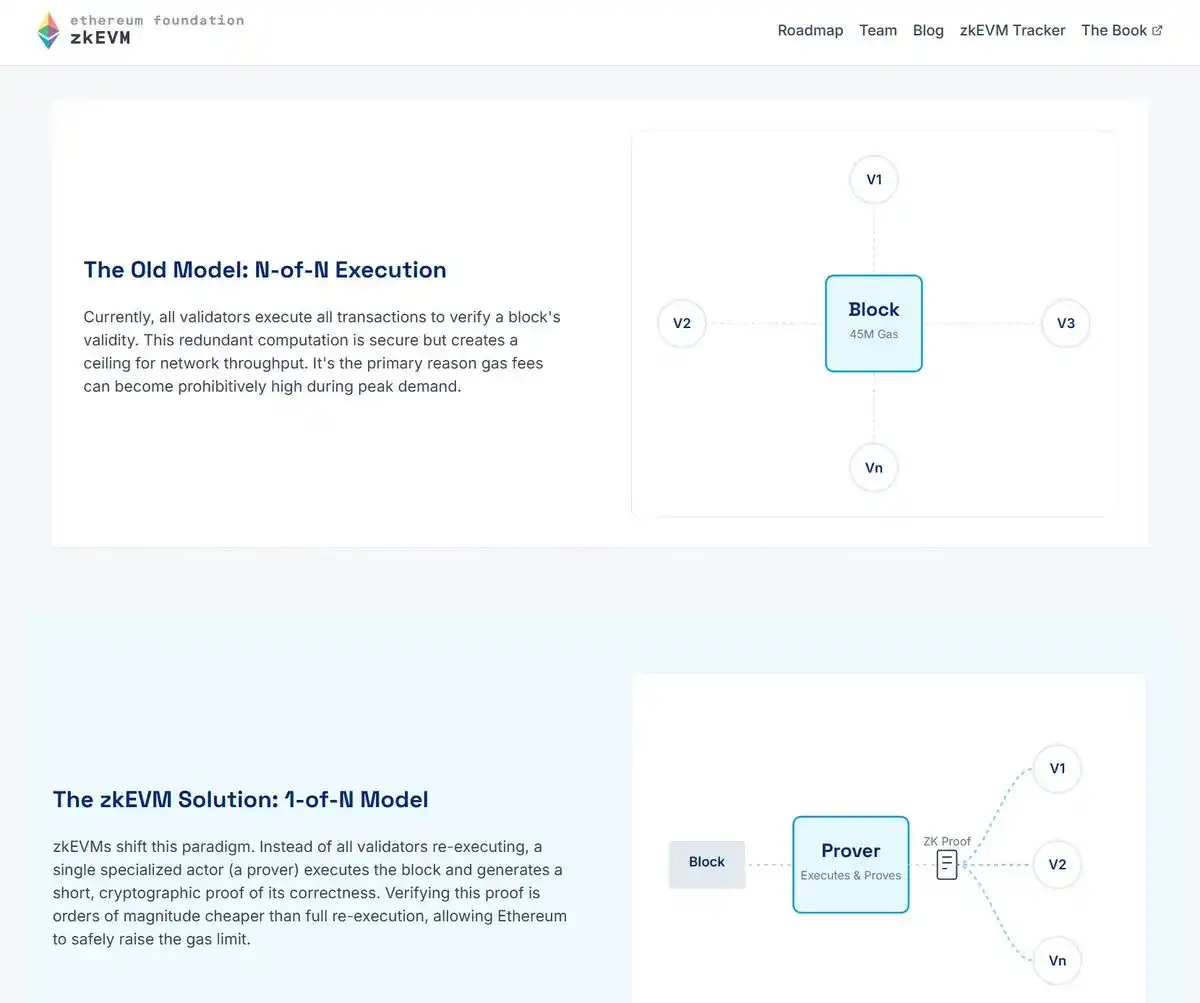
For example, if you are a grading teacher (node), the transactions are the students' exam papers.

In the past, manually grading papers was slow. But since the invention of the answer sheet (ZK-ification)神器, the machine calculates the total score in a second, so as a teacher, aren't you much more relaxed?

You are relaxed; in the past, one person could only grade 50 papers, but now they can grade 1000. The person is the same, but efficiency skyrockets.

Therefore, Ethereum must first ZK-ify the mainnet, and then it can significantly raise the Gas limit again.

ZK-ification itself does not directly increase TPS; it is a prerequisite. Improving performance still relies on raising the Gas limit, but after ZK-ification, nodes do not need to increase server costs much, making the代价很小.

After the recent Fusaka upgrade (especially the PeerDAS upgrade) performed well, Ethereum has taken another step closer to mainnet ZK-ification, which is why Vitalik is so excited.

Imagine a mainnet with TPS breaking thousands; for Ethereum, that indeed counts as a decent narrative.

Someone raised a question:

If Ethereum itself builds a ZK-EVM for the mainnet, are other ZK teams still meaningful?

First, the conclusion is, they are still meaningful.

Why?

First, ZK engineering is one of the most difficult developments in the entire network, sitting at the same table as FHE. It requires a large number of cryptography talents.

It is believed that the ETH Foundation has some reserves in this area, but as an open-source community, Ethereum adheres to the philosophy that many hands make light work. It needs a large number of third-party ZK teams for trial, error, and innovation. In return, Ethereum will give substantial support.

Second, there are four types of ZK-EVM, from type 1 to type 4. Several groups, including Polygon, Scroll, ZKsync, and Taiko, are like each认领任务,分别实现其中一个类型.

Additionally, there is ZK-VM, such as Brevis.

In fact, ZK-VM's position is even more stable compared to ZK-EVM.

The reason is that among the four major ZK-EVM types, it is highly likely that one with the best cost-performance ratio will eventually be chosen to become part of the designated solution for Ethereum's mainnet ZK-EVM, which may affect the other three.

However, for ZK-VM, it is not EVM-compatible by nature, so it will definitely be part of Ethereum's diversity.

Moreover, since VM is not constrained by EVM limitations, its performance can run very high. Ethereum's ZK-EVM poses no threat to it; instead, the Ethereum official will continue to encourage it.

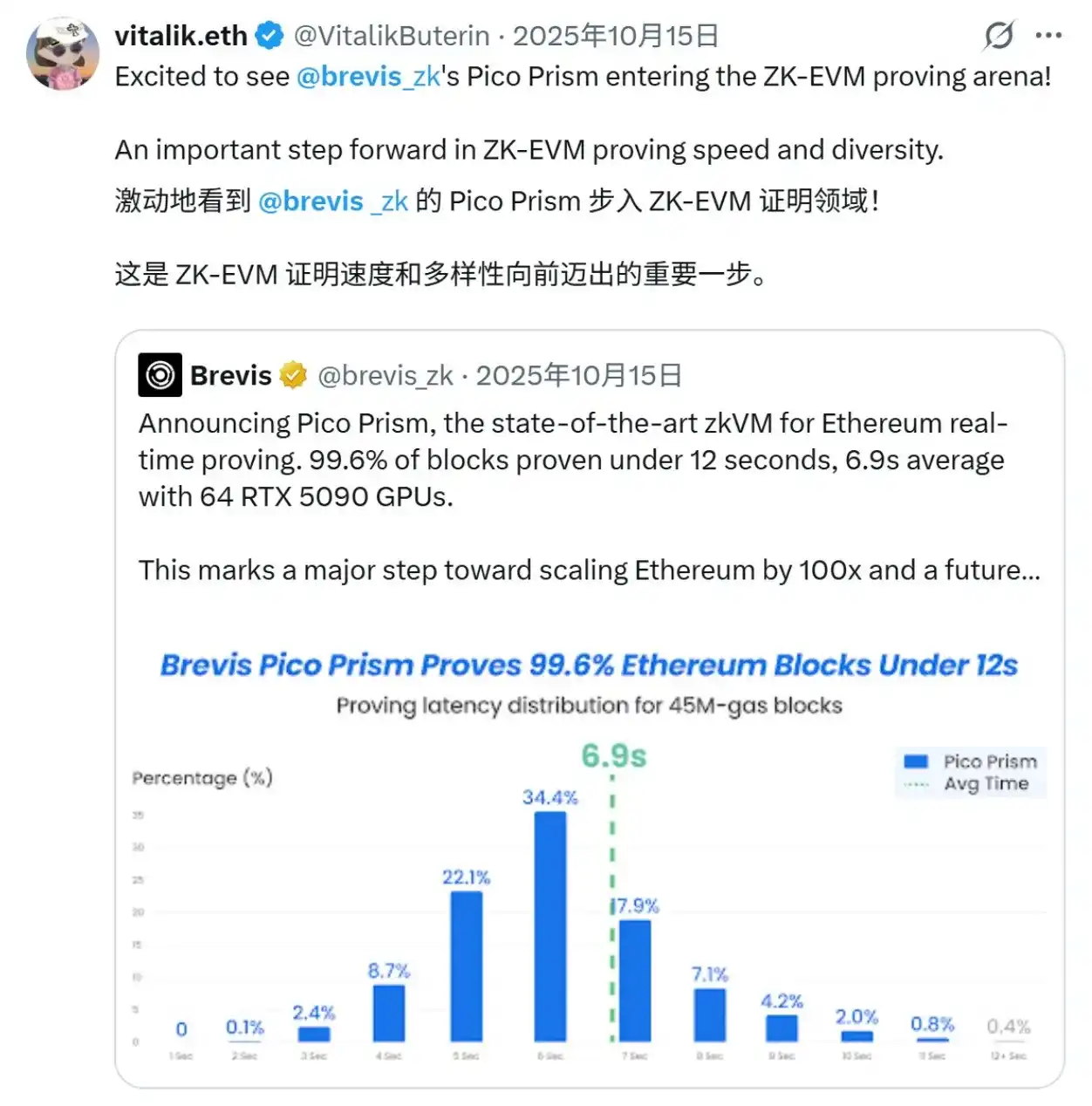
For example, Vitalik previously specifically mentioned the performance of Brevis's ZK-VM and expressed期待它们进入 ZK-EVM 领域.
What about L2?There might be some impact, but it's still not significant.

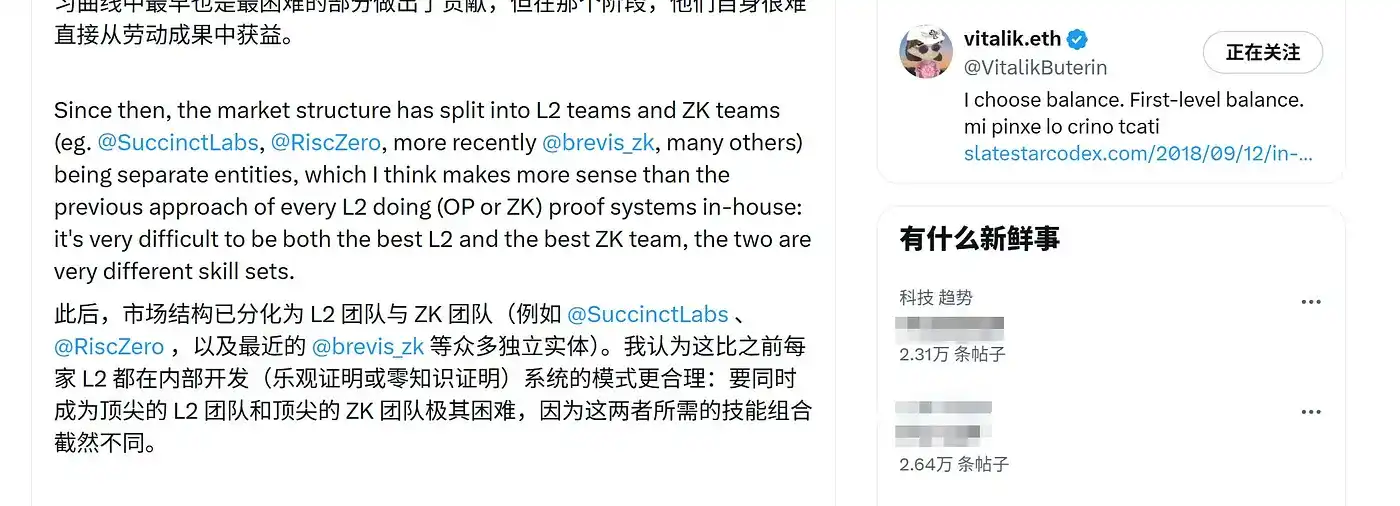
Vitalik once said when discussing Polygon that ZK and L2 should be separated比较好.

The ZK-ified L1 will certainly attract back some users from ZK L2s. After all, if L1 is cheap enough, the number of users on L2 may decrease.

But think about it the other way: if L1 is the foundation and L2 is the skyscraper, the foundation must be as solid as possible. So, if the L1 mainnet is ZK-ified, L2 fees will also decrease, which is beneficial.

Moreover, in that tweet, Vitalik also specifically mentioned Brevis, which works on ZK-VM. The reason is that much of Brevis's ZK work is not limited to L2, meaning "ZK research and L2 research are separated."

For example, they have a ZK computing power market, helping with ZK-ified reward distribution for Uniswap's hooks, which is application-driven.
In summary, Ethereum has been online for 10 years now, and the slogan of ZK-ification has been proposed for five or six years. After continuous cultivation, ZK-ification has finally entered the Alpha stage. This is thanks to the continuous investment from Ethereum and numerous third-party ZK teams including Brevis and Polygon.


Preguntas relacionadas

QWhy does Ethereum urgently need to become ZK-based according to the article?

AEthereum needs to become ZK-based to significantly increase its TPS by raising the Gas limit without forcing node operators to use prohibitively expensive servers, thereby preserving its high degree of decentralization while scaling.

QWhat is the role of ZK technology in improving Ethereum's node efficiency?

AZK technology allows nodes to simply verify cryptographic proofs of transaction batches instead of manually verifying each transaction individually, dramatically increasing the number of transactions a node can process without a proportional increase in computational cost.

QHow does the article differentiate between ZK-EVM and ZK-VM, and which one is considered more stable?

AThe article states that ZK-VM is considered more stable because it is not EVM-compatible and exists as part of Ethereum's diversity. It is not threatened by Ethereum's own ZK-EVM development and is performance-optimized without EVM constraints.

QWhat impact might a ZK-based Ethereum L1 have on existing ZK L2s?

AA cheaper and more scalable ZK-based L1 might attract some users back from L2s. However, it also benefits L2s by providing a more robust foundational layer (L1), which can lead to lower fees on L2s as well.

QWhat is the significance of the 'Alpha stage' announcement for ZKEVM mentioned in the article?

AThe announcement that ZKEVM has entered its Alpha stage signifies a major milestone after years of development, indicating that the core technology for Ethereum's full ZK integration is becoming operational and bringing the vision of a high-TPS, decentralized mainnet closer to reality.

Lecturas Relacionadas

La cadena XRP Ledger lanza la nueva denominación XRPLd con la actualización de la versión 3.2.0

La versión 3.2.0 de XRP Ledger ya está disponible, introduciendo una importante mejora de infraestructura y un cambio de marca del software central, que pasa de llamarse "rippled" a "xrpld". Esta actualización se centra en optimizaciones de back-end y eficiencia, incluyendo medidas de optimización de memoria que pueden reducir hasta un 40% el uso de memoria del servidor, preparando la arquitectura para una futura escalabilidad. Las principales novedades incluyen la modificación `fixCleanup3_2_0`, que refuerza la seguridad de módulos como bóvedas de activos únicos, protocolos de préstamo y exchanges descentralizados. Se han añadido nuevas comprobaciones de invariantes para garantizar la consistencia del libro mayor. Además, las aplicaciones ahora pueden recuperar información sobre el protocolo y definiciones del servidor sin necesidad de conexión directa, facilitando el desarrollo de carteras y exploradores. En cuanto a escalabilidad y estabilidad, la actualización introduce tamaños de bloque configurables, soporte opcional de TLS/mTLS para servidores gRPC y un cambio en el puerto predeterminado para conexiones entre pares. También incluye varias correcciones para creadores de mercado automáticos, pagos y tokens de múltiples propósitos. Las invariantes de transacción se desactivaron temporalmente por rendimiento, sin comprometer la seguridad.

TheNewsCryptoHace 9 min(s)

La cadena XRP Ledger lanza la nueva denominación XRPLd con la actualización de la versión 3.2.0

TheNewsCryptoHace 9 min(s)

AGI no es el destino final: nuevo estudio de DeepMind afirma que el verdadero progreso de la IA apenas comienza al avanzar hacia una ASI

El documento de DeepMind plantea que la Inteligencia Artificial General (AGI) no será el punto final del desarrollo de la IA, sino un paso hacia una Inteligencia Artificial Superintendente (ASI) que supere colectivamente a los mejores equipos de expertos humanos. El informe explora cuatro posibles caminos hacia la ASI: 1) escalar recursos (cómputo, modelos, datos), 2) avances algorítmicos o nuevos paradigmas, 3) mejora recursiva automática de los sistemas, y 4) la coordinación de múltiples agentes de AGI para crear una inteligencia colectiva. También identifica cuellos de botella clave, como el límite de los datos de alta calidad generados por humanos, las presiones sobre recursos económicos y naturales, las posibles limitaciones de los paradigmas actuales de redes neuronales, la creciente dificultad de la investigación, las "barreras de abstracción" para descubrir nuevos conceptos fundamentales, y los factores de gobernanza y aceptación social. El documento destaca la necesidad urgente de desarrollar nuevos marcos de evaluación, ya que las métricas basadas en el rendimiento humano quedarán obsoletas una vez alcanzada la AGI. Finalmente, concluye que el progreso hacia la ASI es incierto y estará sujeto a restricciones físicas y prácticas, requiriendo un esfuerzo de investigación multidisciplinar global para monitorear y guiar su desarrollo.

marsbitHace 1 hora(s)

AGI no es el destino final: nuevo estudio de DeepMind afirma que el verdadero progreso de la IA apenas comienza al avanzar hacia una ASI

marsbitHace 1 hora(s)

Entrevista al Director de Estrategia Digital de Morgan Stanley: No es imposible que Bitcoin alcance un millón de dólares, pero espero que sea más lento

Aunque el Bitcoin podría alcanzar un millón de dólares, una ejecutiva de Morgan Stanley prefiere una subida más lenta y sostenible. Amy Oldenburg, responsable de estrategia de activos digitales del banco, analiza la evolución del criptoactivo desde sus raíces en mercados emergentes, donde la descentralización ofrecía una alternativa vital a sistemas financieros frágiles o corruptos. Explica por qué grandes instituciones como Morgan Stanley, sujeta a estrictas normas bancarias, han tardado en adoptar el Bitcoin de lleno. A pesar del récord de demanda de su ETF de Bitcoin (MSBT), señala que muchos asesores financieros aún son reticentes a recomendarlo, en parte por su volatilidad y la falta de educación. Oldenburg cree que el próximo gran impulso para el Bitcoin podría no venir de un producto nuevo, sino quizás de una crisis que fracture el sistema tradicional, demostrando el valor de un activo descentralizado e inmutable. Mientras tanto, espera una adopción gradual, con más participantes educándose poco a poco. Reconoce la tensión entre el ideal criptoanarquista de auto-custodia y la comodidad que ofrecen los productos institucionales como los ETP, pero subraya la importancia crucial de entender las diferencias entre tener exposición al precio y poseer Bitcoin directamente. En definitiva, Oldenburg ve un largo camino por delante para los activos digitales, con el Bitcoin jugando un papel fundamental en un ecosistema financiero futuro más diverso y tecnológicamente avanzado.

marsbitHace 1 hora(s)

Entrevista al Director de Estrategia Digital de Morgan Stanley: No es imposible que Bitcoin alcance un millón de dólares, pero espero que sea más lento

marsbitHace 1 hora(s)

¿Ya no bastan los 'Siete Magníficos'? SpaceX cotiza, los minoristas compran masivamente y Wall Street presenta los 'Diez Gigantes de la IA y la Tecnología'

El debut en bolsa de SpaceX, que captó 1.170 millones de dólares de inversores minoristas en su primer día y representó el 56% de sus compras totales en EE.UU., ha reavivado el debate sobre la redefinición de los grandes valores tecnológicos. La firma de investigación Vanda propone sustituir el conocido grupo de "Las Siete Magníficas" por un nuevo concepto: los "FAB 10" (Frontier AI & Big Tech 10). Esta lista ampliada incluiría, además de las siete gigantes tradicionales, a SpaceX, OpenAI y Anthropic, estas dos últimas aún no cotizadas pero con expectativas de salir a bolsa este año con valoraciones billonarias. El informe argumenta que estas diez empresas representan colectivamente la dirección de la industria tecnológica y de IA para la próxima década. No es la única propuesta; Bank of America tiene su propia lista "AI Big 10", que incluye a fabricantes de semiconductores como Broadcom, AMD y Micron, mostrando una apuesta diferente por los motores físicos de la IA frente a los modelos de software y la exploración espacial. Vanda advierte de que el fervor por SpaceX podría estar desviando capital de otros sectores tecnológicos calientes, como los semiconductores. Además, señala que las elevadas valoraciones del sector, ejemplificadas por los 1,75 billones de dólares de SpaceX, presentan signos de burbuja, dejando abierta la cuestión de cuánto durará este optimismo en el mercado.

marsbitHace 1 hora(s)

¿Ya no bastan los 'Siete Magníficos'? SpaceX cotiza, los minoristas compran masivamente y Wall Street presenta los 'Diez Gigantes de la IA y la Tecnología'

marsbitHace 1 hora(s)

Trading

Spot
Futuros

Artículos destacados

Cómo comprar ZK

¡Bienvenido a HTX.com! Hemos hecho que comprar ZKsync (ZK) sea simple y conveniente. Sigue nuestra guía paso a paso para iniciar tu viaje de criptos.Paso 1: crea tu cuenta HTXUtiliza tu correo electrónico o número de teléfono para registrarte y obtener una cuenta gratuita en HTX. Experimenta un proceso de registro sin complicaciones y desbloquea todas las funciones.Obtener mi cuentaPaso 2: ve a Comprar cripto y elige tu método de pagoTarjeta de crédito/débito: usa tu Visa o Mastercard para comprar ZKsync (ZK) al instante.Saldo: utiliza fondos del saldo de tu cuenta HTX para tradear sin problemas.Terceros: hemos agregado métodos de pago populares como Google Pay y Apple Pay para mejorar la comodidad.P2P: tradear directamente con otros usuarios en HTX.Over-the-Counter (OTC): ofrecemos servicios personalizados y tipos de cambio competitivos para los traders.Paso 3: guarda tu ZKsync (ZK)Después de comprar tu ZKsync (ZK), guárdalo en tu cuenta HTX. Alternativamente, puedes enviarlo a otro lugar mediante transferencia blockchain o utilizarlo para tradear otras criptomonedas.Paso 4: tradear ZKsync (ZK)Tradear fácilmente con ZKsync (ZK) en HTX's mercado spot. Simplemente accede a tu cuenta, selecciona tu par de trading, ejecuta tus trades y monitorea en tiempo real. Ofrecemos una experiencia fácil de usar tanto para principiantes como para traders experimentados.

323 Vistas totalesPublicado en 2024.12.13Actualizado en 2026.06.02

Cómo comprar ZK

Discusiones

Bienvenido a la comunidad de HTX. Aquí puedes mantenerte informado sobre los últimos desarrollos de la plataforma y acceder a análisis profesionales del mercado. A continuación se presentan las opiniones de los usuarios sobre el precio de ZK (ZK).

活动图片