The U.S. Treasury and Internal Revenue Service (IRS) have officially approved staking for crypto exchange-traded funds (ETFs), marking a historic turning point for digital asset investing.
Related Reading: Hedera Hashgraph Added To Google BigQuery Public Datasets
The new guidance, issued under Revenue Procedure 2025-31, allows ETFs and trusts holding proof-of-stake (PoS) assets such as Ethereum (ETH) and Solana (SOL) to stake their holdings and distribute staking rewards directly to investors, without jeopardizing their tax status.
U.S. Treasury Opens Door for Crypto ETF Staking
Treasury Secretary Scott Bessent described the advances as a major step in keeping the U.S. at the forefront of blockchain innovation.
The framework introduces a “safe harbor” for regulated funds, clarifying how staking rewards will be taxed and distributed. Investors will now pay taxes only when they take control of rewards, while the ETFs themselves remain exempt from trust-level taxation.
Industry experts hailed the decision as the final piece of regulatory clarity needed to unlock institutional participation in staking. Analysts estimate the change could bring $3 billion to $6 billion in new inflows to staking-based crypto products within the next year.
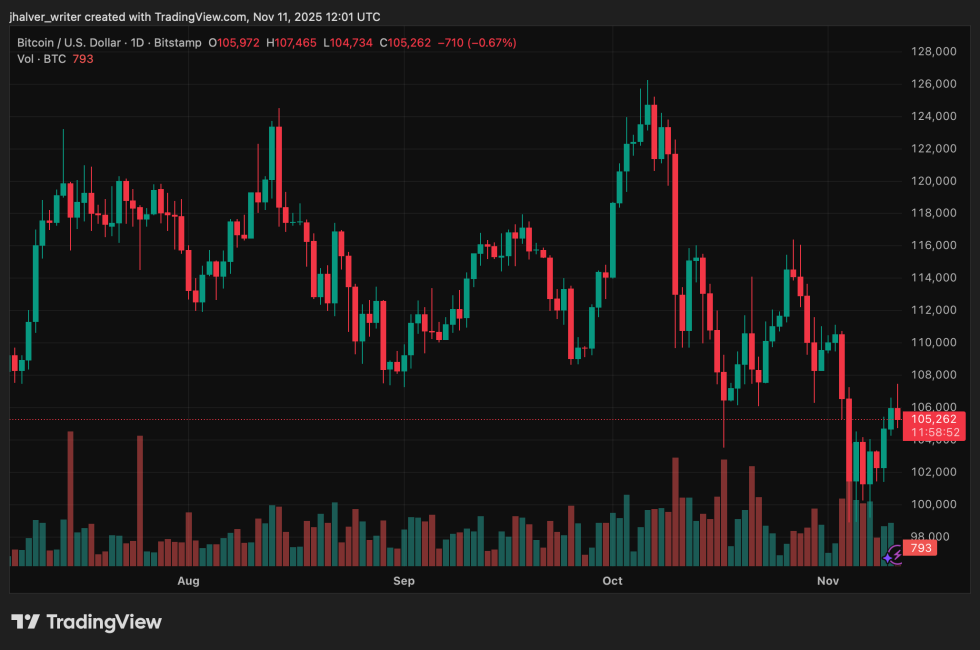
BTC's price trends to the downside on the daily chart. Source: BTCUSD on Tradingview
Strict Compliance Rules for Fund Managers
To qualify under the new framework, ETFs must meet specific conditions. Funds can only hold a single digital asset and cash, work with qualified custodians for key management, and engage independent staking providers to handle validator operations.
This structure ensures investor protection while bridging traditional finance and decentralized blockchain systems. It mirrors earlier SEC approvals from September 2025, which cleared listing rules for crypto ETFs and confirmed that certain staking operations do not constitute unregistered securities.
Bill Hughes, senior counsel at Consensys, said the policy “eliminates the biggest legal and tax uncertainty that kept institutions from integrating staking into regulated products.”
The guidance, he added, gives fund sponsors confidence to offer yield-bearing ETFs that generate passive income for investors through network validation.
From Policy Uncertainty to Passive Income
Until now, U.S. fund managers had avoided staking due to regulatory ambiguity and fear of losing favorable tax treatment. With this guidance, both retail and institutional investors can earn 3–7% annual staking rewards on assets like ETH and SOL through ETFs, without running their own nodes or managing wallets.
The announcement follows weeks of government inactivity during the record 40-day U.S. shutdown, making it one of the first major regulatory actions since the reopening. It signals a return to policy momentum and a broader embrace of digital assets by Washington.
Related Reading: Bitcoin Price Dump Finally Over? Analyst Explains Why It Is Time To Invest
Analysts believe this decision cements America’s position as a global leader in digital asset regulation, potentially sparking a new wave of staking-enabled ETFs from financial giants like BlackRock and Fidelity.
Cover image from ChatGPT, BTCUSD chart from Tradingview

Related Posts