Will USDT be the next stablecoin that collapses, just like UST did?

Huobi ResearchPublicado a 2022-07-04Actualizado a 2022-07-04

Resumen

Prices of cryptocurrencies have been trending upwards in the past week. Bitcoin hit close to US$22,000 over the weekend and is currently trading at US$20,355

Abstract

This week, we focus on the following events: 1) Crypto Hedge Fund Three Arrows Capital Was Ordered to Liquidate; 2) Entrepreneur First Completes US$158 Million Series C Funding, Will Invest in Web3 and Other Fields; 3) U.S. SEC Has Rejected Grayscale Spot Bitcoin ETF Application; ______________________________________________________________________________

Project Analysis: Tether’s USDT lost its peg to the US dollar briefly when Terra’s UST imploded. Hedge funds are now shorting BTC using futures contracts as well as Decentralised Finance applications (DeFi). Will USDT be the next stablecoin that collapses?

1. Industry overview

I. Overall market trend
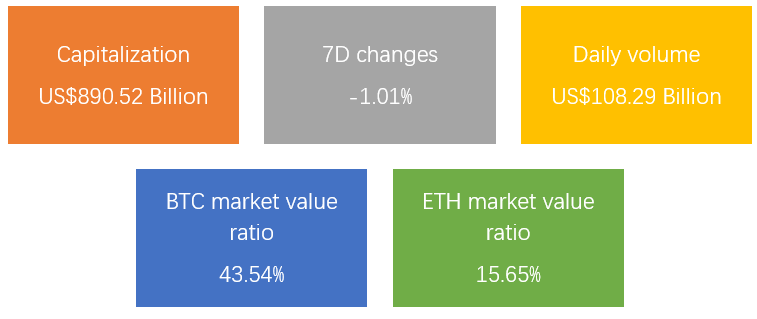
Figure 1. Overall market data

Source: CoinMarketCap

Prices of cryptocurrencies have been trending upwards in the past week. Bitcoin hit close to US$22,000 over the weekend and is currently trading at US$20,355, a major improvement from the US$17,500 that we witnessed early this month. Ethereum likewise saw a big jump back to US$1,200 and is currently trading at US$1,152. Altcoins are currently in the red as BTC dropped from its US$22,000 high last week. ADA and XRP fell 3.5% while SOL dropped 4.5% as the hype around its upcoming Saga mobile phone eased.
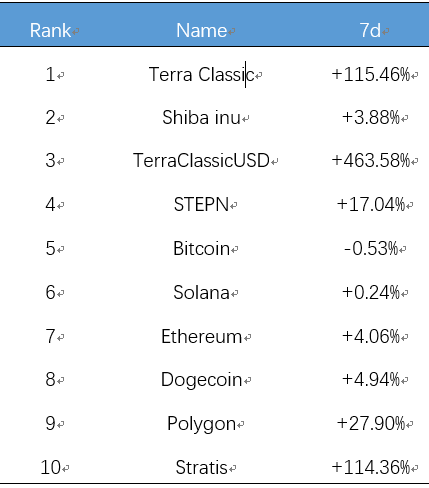
Table 1. Last week's hot currencies

Source: CoinMarketCap

While Bitcoin and Ethereum have risen from their recent low of US$17,500 and US$880 respectively, we believe that this might potentially be a bull trap and investors should be cautious as we may witness a further drop given the ongoing macroeconomic uncertainty. The war in Ukraine, rising interest rates and rising inflation all signal that we have yet to see the worst. There is likely to be another sell off in the cryptocurrency market. Martin Hiesboeck, head of blockchain and crypto research at Uphold, says that whether BTC holds above US$20,000 has little to do with BTC itself and more with the overall geopolitical and macroeconomic situation which many believe will not improve in the near future.

II.NFT
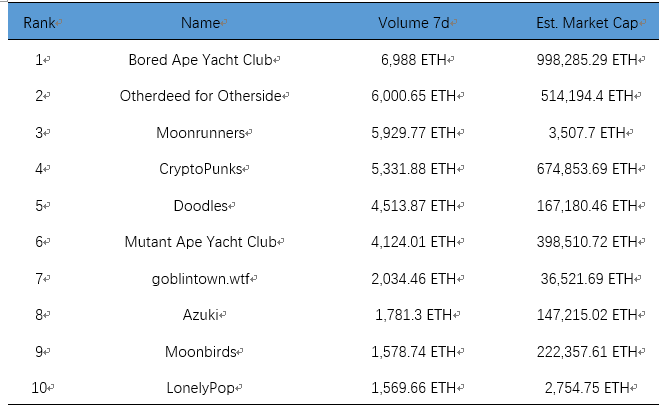
Table 2. NFT Collections Listed By Sales Volume (7d)

Source: CoinMarketCap

While Ethereum has plunged more than 80% since November 2021 and weekly NFT sales have fallen below US$200 million from over US$1.8 billion in August, there is still optimism in the market as evident from the 15,000 people who registered to listen to the 1500+ speakers at the NFT.NYC event that was held recently. Magic Eden, a marketplace which allows its users to create, buy and collect NFTs has recently raised US$130 million in new funding, bringing its valuation to US$1,6 billion, attaining unicorn status. This tells us that investors still believe in the NFT market in the long run despite the current crypto market dipl.

The NFT market has an estimated aggregate market cap of US$41 billion and has exhibited weakness alongside other risky assets. Amongst the top collections, the Bored Ape Yacht Club floor price has had a 64% year-to-date decline from approximately US$270,000 to US$98,000. CryptoPunks and Mutant Ape Yacht Club (MAYC) have declined 70% and 66% YTD respectively as well.
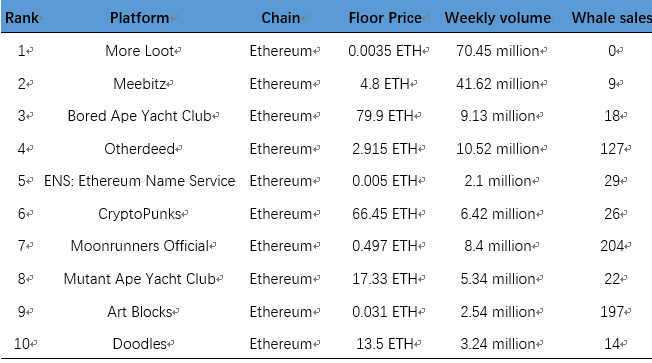
Table 3. Top trending collections on NFTGO (by daily volume)

Source: NFTGO

III.DeFi
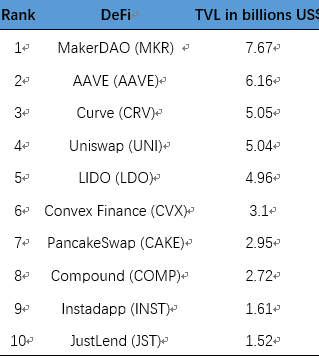
Table 4. DeFi market TVL ranking

Source: DefiLlama

IV.Layer 2
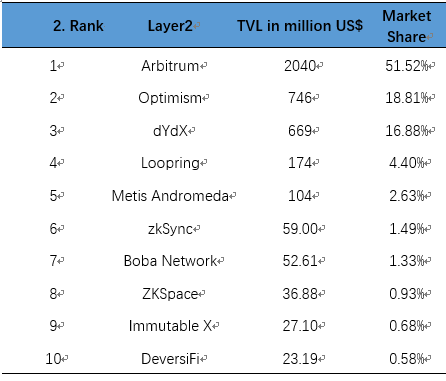
Table 5. Layer2 protocols ranking and market share

Source: l2beat

3. Market news

I. Industry news

Grayscale GBTC has a Negative Premium of 28.46%, and The Number of Coins Held Is 638,500 BTC

According to Coinglass data, Grayscale Bitcoin Trust has a negative premium of 28.46%, holding 638,500 BTC, with a value of US$12.949 billion. Ethereum Trust has a negative premium of 30.2%, ETC Trust has a negative premium of 60.29%, LTC Trust has a negative premium of 44.72%, and BCH Trust has a negative premium of 16.67%. The U.S. SEC has rejected the Grayscale spot Bitcoin ETF application, and Grayscale’s CEO has said that the Trust has filed a lawsuit against the U.S. SEC.

Crypto Hedge Fund Three Arrows Capital Was Ordered to Liquidate

A British Virgin Islands court has ordered the liquidation of Singapore-based cryptocurrency hedge fund Three Arrows Capital, adding to the crisis sweeping the global digital asset industry, Sky News reported. Crypto industry insiders said Wednesday that the liquidation will be a momentous moment in the current unraveling of the cryptocurrency industry, which has grown at an alarming rate in recent years. It is unclear what immediate financial impact the liquidation will have on Three Arrows' creditors. But the company's collapse could raise further questions about regulatory oversight for cryptocurrencies and other digital assets in the world's major financial centers.

The Total Amount of NFT Transactions On The Solana Chain Exceeded US$2.7 billion, A Record High

According to the latest data from CryptoSlam, the NFT transaction volume on the Solana chain has exceeded US$2.7 billion, which at the time of writing this article is US$2,702,776,099, and the total number of transactions on the chain has reached 8,547,947.

II. Investment and Financing

Entrepreneur First Completes US$158 Million Series C Funding, Will Invest in Web3 and Other Fields

Entrepreneur First, an investment fund, announced the completion of a US$158 million Series C round of financing. Many people in the technology industry participated in the investment, including Stripe co-founder John Collision, LinkedIn co-founder Reid Hofman, and Certific co-founder Taavet Hinrikus. It is reported that the fund was established in 2011 and focuses on investment in financial technology, D2C, Web3 and creator tools.

Blockchain Fintech Company PolySign Raises US$53 million In Series C Funding

PolySign, a blockchain financial technology company, has completed a US$53 million Series C round of financing. Investors include Cowen Digital, Brevan Howard, GSR Markets, etc. In addition to this, PolySign has also secured a US$25 million line of credit from private equity firm Boathouse Capital. PolySign provides institutional-grade infrastructure to investors through its subsidiary, Standard Custody & Trust Company, and fund management through PolySign's recently acquired MG Stover Company.

Blockchain Technology Company Circulor Completes US$25 million Series B Financing, Led By Westly Group

British start-up Circulor on Tuesday announced the completion of a US$25 million Series B round led by Westly Group, with participation from Volvo Cars, Jaguar Land Rover (JLR) and the venture capital arm of BHP Billiton Group. Circulor has raised a total of US$45 million over the past two years. Funds from this round will be used for expansion, primarily in the U.S. market. By leveraging blockchain technology, Circulor is working with Volvo, JLR, BHP Billiton and TotalEnergies, among others, to trace its supply chain in pursuit of environmental, social and corporate governance (ESG) goals. Circulor CEO Douglas Johnson-Poensgen said Circulor plans to conduct an IPO "in due course."

III. Supervision

U.S. SEC Has Rejected Grayscale’s Spot Bitcoin ETF Application

The U.S. Securities and Exchange Commission (SEC) on Wednesday rejected Grayscale’s application to convert its US$13.5 billion Grayscale Bitcoin Trust (GBTC) into a spot Bitcoin ETF. The SEC said in its filing that the applicatoin failed to answer SEC questions about preventing market manipulation, among other concerns. In addition, Bitwise’s application for a spot Bitcoin ETF was also rejected by the SEC.

European Council To Set Up Anti-Money Laundering Agency (AMLA) To Oversee Crypto Firms

The European Council on Wednesday agreed on some of its positions on a proposal to launch a dedicated anti-money laundering agency (AMLA) to oversee certain crypto asset service providers, or CASPs. It is reported that AMLA was first proposed in July 2021 and is scheduled to start operating in 2024. The agency will be one of the first regulators with the power to oversee money laundering in much of Europe, coordinating with countries' financial intelligence units and cooperating with local regulators.

EU Policy Decides Not To Subject Most Transfers to Non-custodial Crypto Wallets to AML Checks

The European Union has agreed on anti-money laundering (AML) rules for crypto transactions, with a policy decision to exempt most transfers to non-custodial crypto wallets from AML checks. EU lawmaker Ondřej Kovařík confirmed the provisional agreement in a tweet. “EU institutions have reached an interim political opinion on money transfer rules, which I believe strikes the right balance of reducing AML risks in the cryptocurrency industry without hindering innovation and overburdening businesses,” the tweet said.

4. Trending project analysis – Will USDT be the next stablecoin to collapse, just like UST did?

What is the current stablecoin climate like?

The mounting concerns about stablecoins are omnipresent following the collape of Terra’s algorithmic stablecoin, UST. The notorious UST debacle resulted in users selling off their assets, wiping out US$8 billion from UST as it lost its USD peg. This has unsurprisingly brought up questions as to whether there needs to be stricter and more comprehensive stablecoin regulations.

Regulators are mainly concerned about protecting retail investors, ensuring products like algorthimic stablecoins are safe for crypto investors and also whether there are broader financial stability concerns with them. Many have already made their intentions to regulate crypto more comprehensively known. U.S Treasury Secretary Janet Yellen has brought up Terra independently twice last week during separate congressional hearings on the Financial Stability Oversight Council (FSOC).
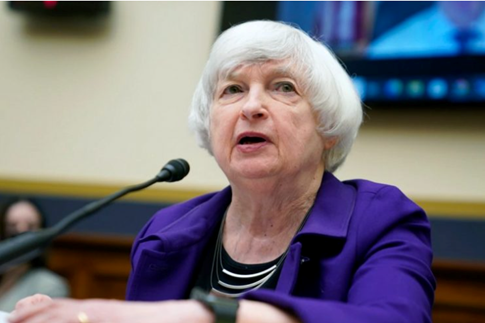
Figure 1: Janet Yellen, Secretary of United States Treasury, calling for stablecoin regulation

Source: Coinfomania

A spokesperson for the U.K government has also mentioned that they are ready to take further action on stablecoins and Britain’s plan to bring stablecoins within the scope of electronic payments regulations could result in stablecoin issuers, Tether and Circle becoming subject to supervision by the relevant authorities. There are also separate propsals in the European Union that would bring stablecoins under strict regulatory oversight.

How was USDT affected by the collapse of UST?

The UST fiasco also impacted USDT, as investors redeemed huge amounts of USDT when Terra’s UST imploded. According to CoinGecko, investors withdrew US$1.7 billion from Tether in a single week back in mid-June 2022 and the total market capitalization of Tether has dropped by over US$20 billion since mid-May 2022. It also lost its dollar parity on 12 May 2022 when it fell to US$.969, according to Coinbase, but has since gained back its peg.

Hedge Funds are shorting Tether’s USDT

According to a report by the Wall Street Journal, crypto-focused hedge funds are starting to short Tether (USDT) amid the bleak market outlook. However, there is also a spike in interest from traditional hedge funds looking to short USDT as mentioned by Leon Marshall, head of institutional sales at Genesis Global. These short positions by hedge funds are by no means small and are worth hundreds of millions of dollars, and include funds such as Fir Tree Partners and Viceroy Research. While there isn’t a clear picture as to why these shorts are occurring, such actions can likely be attributed to a few reasons.

Firstly, many have cited that Tether has not been transparent about the asset’s actual backing. Tether claims that the stablecoin is backed by fiat currencies, and equivalent asset investments such as commercial papers, bank deposits, bonds, gold and cryptocurrencies. It has refutesdall claims as to its lack of transparency, and maintains that it holds 100% of the backing. If its reserve backing is verifiably proven to be false, that would spell trouble for USDT and will most likely result in another UST-like debacle. When investors and traders all rush to exchange their USDT to USD and realize that Tether is unable to fulfil these orders, investors might be forced to sell off their other crypto holdings which will likely cause panic that might even spill over into non-crypto markets.

Secondly, some of these funds are using these shorts as a bet against the broader economy due to rising interest rates, in order to curb the current 40-year-high inflation and the prospect of an impending recession.

How are traders shorting USDT?

The bets against USDT are occurring mainly on two fronts, futures that are tracking USDT as well as liquidity pools on DeFi applications. Traders go on exchanges such as FTX and Binance to trade futures. USDT futures producst have seen more than US$65 million in trading volume in the past 24 hours, and the number of unsettled futures contracts have a total value of more than US$400 million as of 29 June 2022. On DeFi applications, traders short USDT by borrowing USDT and exchanging it for USDC. If USDT drops in value, the loan along with its interest can then be paid back at a cheaper price when traders swap USDC back to USDT, and the difference would then be the profit they can keep.
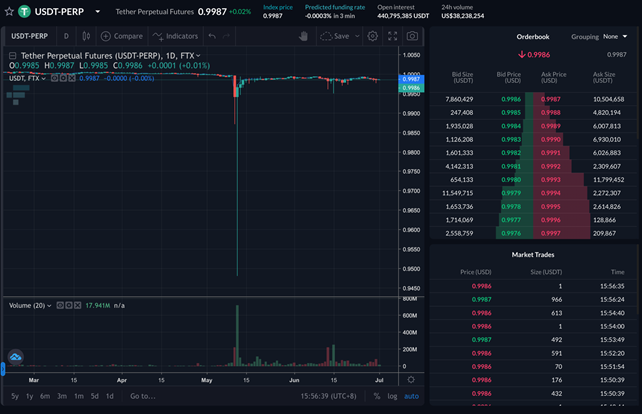
Figure 2: USDT futures on FTX exchange

Source: FTX

What does Tether think about this whole situation?

Paolo Ardoino, Chief Technology Officer of Tether is aware of the actions on the part of hedge funds and believes that they are trying to cause panic in the market after the collapse of UST. Ardoino mentioned, “It really seems from the beginning a coordinated attack, with a new wave of FUD, troll, armies, clwons, etc.” Even amidstt all the controversy, Tether is still the largest stablecoin with a market cap of US$66.3 billion, with USDC in its rear view mirror at US$55.8 billion. Ardoino also stated that “Tether is the only stablecoin that is proven with fire under extreme pressure”.

Figure 3 : Poalo Ardoino, Chief Technology Officer of Tether

Source: Beincrypto

What does the future hold for USDT?

If the hedge funds manage to successfully cause Fear Uncertainty and Doubt in the market, we might witness an increase in the number of people and institutions shorting USDT.Traders will be naturally concerned if they will be able to cash out of Tether, and will be seeking out safer and more transparent stablecoins like USDC. While there are hundreds of millions being shorted, this amount is still relatively small as compared to the overall market capitalization of Tether, only time will tell if USDT is here to stay as most of the reasons as to why these funds are shorting are speculative in nature.

It is worth noting that Tether was previously found to have held sufficient reserves in its account for only a quarter of the sample period that spanned over 26 months between 2016 and 2018. This led to Tether paying a US$41 million fine to the Commodity Futures Trading Commision which conducted the investigation. This has definitely had an substantial impact on Tether’s reputation and is definitely a factor taken into consideration by the hedge funds shorting USDT.

5. Calendar of future popular asset events

I. NTF mint Calendar
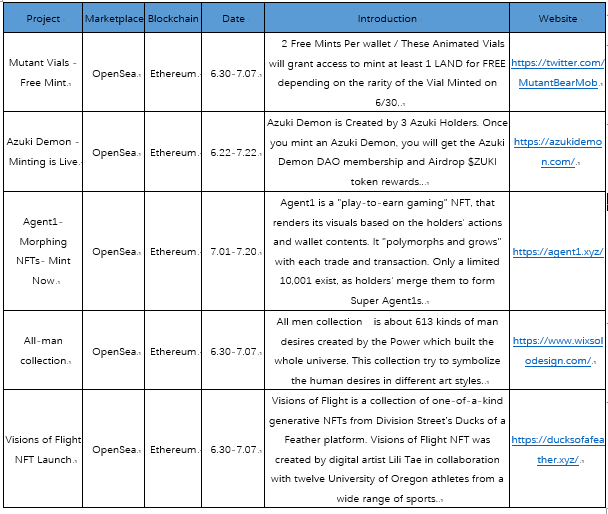
II. Token Airdrops
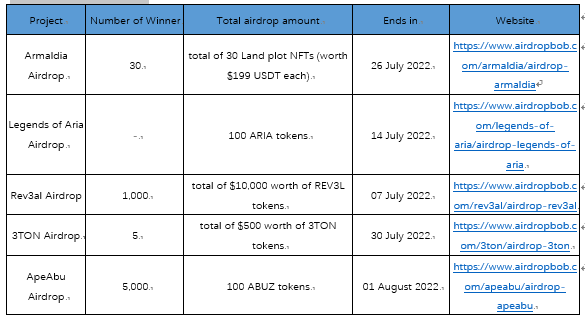
About Huobi Research Institute

Huobi Blockchain Application Research Institute (referred to as "Huobi Research Institute") was established in April 2016. Since March 2018, it has been committed to comprehensively expanding the research and exploration of various fields of blockchain. As the research object, the research goal is to accelerate the research and development of blockchain technology, promote the application of blockchain industry, and promote the ecological optimization of the blockchain industry. The main research content includes industry trends, technology paths, application innovations in the blockchain field, Model exploration, etc. Based on the principles of public welfare, rigor and innovation, Huobi Research Institute will carry out extensive and in-depth cooperation with governments, enterprises, universities and other institutions through various forms to build a research platform covering the complete industrial chain of the blockchain. Industry professionals provide a solid theoretical basis and trend judgments to promote the healthy and sustainable development of the entire blockchain industry.

Official website:

https://research.huobi.com/#/

Consulting email:

research@huobi.com

Twitter: @Huobi_Research

https://twitter.com/Huobi_Research

Medium: Huobi Research

https://medium.com/huobi-research

Disclaimer

1. The author of this report and his organization do not have any relationship that affects the objectivity, independence, and fairness of the report with other third parties involved in this report.

2. The information and data cited in this report are from compliance channels. The sources of the information and data are considered reliable by the author, and necessary verifications have been made for their authenticity, accuracy and completeness, but the author makes no guarantee for their authenticity, accuracy or completeness.

3. The content of the report is for reference only, and the facts and opinions in the report do not constitute business, investment and other related recommendations. The author does not assume any responsibility for the losses caused by the use of the contents of this report, unless clearly stipulated by laws and regulations. Readers should not only make business and investment decisions based on this report, nor should they lose their ability to make independent judgments based on this report.

4. The information, opinions and inferences contained in this report only reflect the judgments of the researchers on the date of finalizing this report. In the future, based on industry changes and data and information updates, there is the possibility of updates of opinions and judgments.

5. The copyright of this report is only owned by Huobi Blockchain Research Institute. If you need to quote the content of this report, please indicate the source. If you need a large amount of reference, please inform in advance (see "About Huobi Blockchain Research Institute" for contact information) and use it within the allowed scope. Under no circumstances shall this report be quoted, deleted or modified contrary to the original intent.


Criptos en tendencia

Lecturas Relacionadas

¿Por qué está todo el mundo nervioso por la subida de tipos de Japón?

En junio de 2026, el Banco de Japón elevó los tipos de interés al 1%, su primer aumento significativo desde 1995. Aunque esta cifra sigue siendo baja comparada con Estados Unidos o Europa, marca un cambio de rumbo crucial para la economía global. Japón, tras casi tres décadas de tipos cero o negativos, había actuado como el principal centro de financiación barata del mundo. A través del conocido "carry trade del yen", los inversores internacionales tomaban préstamos en yenes de bajo coste para invertir en activos de mayor rendimiento en todo el mundo, impulsando así mercados bursátiles, bonos y bienes inmuebles a nivel global. La decisión del banco central japonés responde a un cambio estructural interno: una inflación sostenida por encima del objetivo del 2%, un crecimiento salarial notable tras décadas de estancamiento, y la presión del yen débil. Sin embargo, la preocupación global no se centra en el nivel del 1%, sino en la tendencia. Si Japón abandona permanentemente su política de dinero ultrabarato, podría desencadenar un proceso de desapalancamiento a escala mundial. Los inversores que dependían de financiación barata en yenes podrían verse forzados a revaluar sus estrategias y reducir riesgo, lo que contraería la liquidez global y afectaría a la valoración de los activos de riesgo. No obstante, la dirección final de los flujos de capital la marcará principalmente la política de la Reserva Federal de EE.UU. Mientras persista un amplio diferencial de tipos entre EE.UU. y Japón, el atractivo del dólar seguirá siendo fuerte. El verdadero punto de inflexión se produciría si la Fed inicia un ciclo de recortes mientras Japón sigue subiendo los tipos. En definitiva, el movimiento del Banco de Japón simboliza el posible fin de una era de financiación ilimitada y barata, lo que obligaría a los mercados globales a redefinir sus lógicas de inversión y riesgo.

marsbitHace 2 hora(s)

¿Por qué está todo el mundo nervioso por la subida de tipos de Japón?

marsbitHace 2 hora(s)

El Congreso Aplaza la Prohibición de la CBDC hasta 2030 mediante una Importante Ley de Reforma de Vivienda

Los legisladores han aprobado un proyecto de ley de reforma de vivienda, la "Ley del Camino a la Vivienda del Siglo XXI", que incluye una prohibición temporal hasta el 31 de diciembre de 2030 para que la Reserva Federal emita un dólar digital (CBDC). La medida, integrada en esta legislación bipartidista más amplia, define el CBDC como un activo digital denominado en dólares y accesible para todos los estadounidenses. Sus defensores argumentan que esta pausa permite más tiempo para evaluar los impactos potenciales, reflejando preocupaciones sobre privacidad, vigilancia financiera y el papel del gobierno en los pagos digitales. La prohibición se aplicaría a cualquier CBDC minorista, ya sea emitida directamente por la Fed o a través de intermediarios, aunque se contemplan excepciones para dólares digitales privados que mantengan un nivel de privacidad comparable al efectivo físico. Aunque el foco del proyecto de ley son las reformas para mejorar la vivienda asequible y la oferta, la cláusula sobre el CBDC ha captado una atención significativa en la comunidad cripto, ya que podría influir en el futuro de los pagos digitales y en el debate sobre el lugar de los activos digitales en el sistema financiero del país. El desarrollo del proceso legislativo determinará si la prohibición entra en vigor durante la próxima década.

TheNewsCryptoHace 3 hora(s)

El Congreso Aplaza la Prohibición de la CBDC hasta 2030 mediante una Importante Ley de Reforma de Vivienda

TheNewsCryptoHace 3 hora(s)

Interpretación de informe: MRVL, el auge de la IA óptica, ¿por qué un analista estrella de Morgan Stanley opta por mantenerse neutral ante la alta valoración?

**Resumen: Análisis de Morgan Stanley sobre Marvell - IA óptica despega, pero la valoración alta frena al analista** El analista Joseph Moore de Morgan Stanley actualizó su informe sobre Marvell (MRVL) el 28 de mayo. A pesar de unos resultados récord y una fuerte mejora en las perspectivas anuales de la dirección, Moore mantiene una calificación **"Equal-Weight" (Neutral)** y un precio objetivo de **$195**. **Motivos para el optimismo (impulsores de la IA):** 1. **Interconexión óptica**: Expectativas de crecimiento para FY27 elevadas a más del 70%. La línea de módulos ópticos podría alcanzar ingresos anualizados de $1,000 millones pronto. 2. **Chips personalizados para IA**: Creciente confianza en el crecimiento para FY28, con un nuevo gran cliente entrando en producción masiva ese año. **Motivo para la cautela (valoración):** El precio objetivo de $195 implica una valoración de ~40x las ganancias esperadas para 2027. Moore señala que, a precios de acción similares (~$198 vs ~$212), **Nvidia** ofrece más del doble de ganancias por acción esperadas para el próximo año fiscal que Marvell. La valoración actual de MRVL ya refleja un crecimiento futuro impecable. **Conclusión del analista:** La oportunidad en IA es real, pero el precio de la acción ya la descuenta. Para justificar la valoración, Marvell necesita ejecutar perfectamente en: 1) el despliegue continuo de óptica, 2) la rampa de producción de sus chips personalizados, y 3) la recuperación de sus negocios de almacenamiento y redes empresariales. Hasta ver más evidencia, se mantiene Neutral.

marsbitHace 3 hora(s)

Interpretación de informe: MRVL, el auge de la IA óptica, ¿por qué un analista estrella de Morgan Stanley opta por mantenerse neutral ante la alta valoración?

marsbitHace 3 hora(s)

Trading

Spot
Futuros

Artículos destacados

Qué es BITCOIN

Comprendiendo HarryPotterObamaSonic10Inu (ERC-20) y Su Posición en el Espacio Cripto En los últimos años, el mercado de criptomonedas ha sido testigo de un aumento en la popularidad de las monedas meme, capturando el interés no solo de los traders, sino también de aquellos que buscan participación comunitaria y valor de entretenimiento. Entre estos tokens únicos se encuentra HarryPotterObamaSonic10Inu (ERC-20), un proyecto intrigante que fusiona referencias culturales en el tejido de las criptomonedas. Este artículo ahonda en los aspectos clave de HarryPotterObamaSonic10Inu, explorando sus mecanismos, su ética impulsada por la comunidad y su compromiso con el panorama cripto más amplio. ¿Qué es HarryPotterObamaSonic10Inu (ERC-20)? Como su nombre indica, HarryPotterObamaSonic10Inu es una moneda meme construida sobre la blockchain de Ethereum, clasificada bajo el estándar ERC-20. A diferencia de las criptomonedas tradicionales que pueden enfatizar la utilidad práctica o el potencial de inversión, este token prospera en el valor de entretenimiento y la fuerza de su comunidad. El proyecto tiene como objetivo fomentar un entorno donde los usuarios comprometidos puedan reunirse, compartir ideas y participar en actividades inspiradas por diversos fenómenos culturales. Una característica notable de HarryPotterObamaSonic10Inu es su cero impuesto sobre las transacciones. Este elemento atractivo busca incentivar el comercio y la participación comunitaria, sin cargos adicionales que puedan disuadir a los traders de pequeña escala. El suministro total de la moneda se establece en mil millones de tokens, cifra que marca su intención de mantener una circulación sustancial dentro de la comunidad. Creador de HarryPotterObamaSonic10Inu (ERC-20) Los orígenes de HarryPotterObamaSonic10Inu están algo envueltos en misterio; los detalles sobre el creador siguen siendo desconocidos. El desarrollo de este token carece de un equipo identificable o un plan explícito, lo cual no es raro dentro del sector de las monedas meme. En su lugar, el proyecto ha surgido de forma orgánica, con su progreso fuertemente dependiente del entusiasmo y la participación de su comunidad. Inversores de HarryPotterObamaSonic10Inu (ERC-20) En cuanto a inversiones externas y respaldo, HarryPotterObamaSonic10Inu también se mantiene ambiguo. El token no enumera ninguna fundación de inversión conocida o apoyo organizacional significativo. Más bien, la savia del proyecto es su comunidad de base, que informa su crecimiento y sostenibilidad a través de la acción colectiva y la participación en el espacio cripto. ¿Cómo Funciona HarryPotterObamaSonic10Inu (ERC-20)? Como una moneda meme, HarryPotterObamaSonic10Inu opera principalmente fuera de los marcos tradicionales que a menudo rigen el valor de los activos. Hay varios aspectos distintivos que definen cómo funciona el proyecto: Transacciones Sin Impuestos: Sin comisiones fiscales en las transacciones, los usuarios pueden comprar y vender el token libremente sin preocuparse por costos ocultos. Compromiso de la Comunidad: El proyecto prospera en la interacción comunitaria, aprovechando plataformas de redes sociales para crear expectación y facilitar la participación. Las discusiones, el intercambio de contenido y el compromiso son elementos cruciales que ayudan a expandir su alcance y fomentar la lealtad entre los seguidores. Sin Utilidad Práctica: Cabe señalar que HarryPotterObamaSonic10Inu no ofrece una utilidad concreta dentro del ecosistema financiero. Más bien, se clasifica como un token principalmente para actividades de entretenimiento y comunitarias. Referencia Cultural: El token incorpora hábilmente elementos de la cultura popular para atraer interés, conectando con entusiastas de los memes y seguidores de criptomonedas por igual. HarryPotterObamaSonic10Inu ejemplifica cómo las monedas meme operan de manera diferente a los proyectos de criptomonedas más tradicionales, ingresando al mercado como constructos sociales innovadores en lugar de activos utilitarios. Cronología de HarryPotterObamaSonic10Inu (ERC-20) La historia de HarryPotterObamaSonic10Inu se caracteriza por varios hitos notables: Creación: El token surgió de un meme viral, capturando la imaginación de muchos entusiastas de las criptomonedas. No se disponen de fechas específicas de creación, lo que subraya su ascenso orgánico. Listado en Exchanges: HarryPotterObamaSonic10Inu ha logrado estar presente en varios exchanges, facilitando el acceso y el comercio por parte de la comunidad. Iniciativas de Compromiso Comunitario: Actividades en curso destinadas a mejorar la interacción comunitaria, incluidos concursos, campañas en redes sociales y generación de contenido por parte de fans y defensores. Planes de Expansión Futura: La hoja de ruta del proyecto incluye el lanzamiento de una colección de NFT, mercancía y un sitio de comercio electrónico relacionado con sus temas culturales, involucrando aún más a la comunidad e intentando añadir más dimensiones a su ecosistema. Puntos Clave Sobre HarryPotterObamaSonic10Inu (ERC-20) Naturaleza Impulsada por la Comunidad: El proyecto prioriza la aportación y creatividad colectiva, asegurando que la participación de los usuarios esté en el centro de su desarrollo. Clasificación como Moneda Meme: Representa la epítome de la criptomoneda basada en el entretenimiento, diferenciándose de los vehículos de inversión tradicionales. Sin Afiliación Directa con Bitcoin: A pesar de la similitud en el nombre del ticker, HarryPotterObamaSonic10Inu es distinto y no mantiene ninguna relación con Bitcoin u otras criptomonedas establecidas. Enfoque en la Colaboración: HarryPotterObamaSonic10Inu está diseñado para crear un espacio para la colaboración y el intercambio de historias entre sus poseedores, proporcionando una vía para la creatividad y la unión comunitaria. Perspectivas Futuras: La ambición de expandirse más allá de su premisa inicial en NFTs y mercancía delinean un camino para que el proyecto potencialmente ingrese en avenidas más convencionales dentro de la cultura digital. A medida que las monedas meme continúan capturando la imaginación de la comunidad de criptomonedas, HarryPotterObamaSonic10Inu (ERC-20) destaca por sus lazos culturales y su enfoque centrado en la comunidad. Aunque puede no encajar en el molde típico de un token impulsado por la utilidad, su esencia radica en la alegría y la camaradería fomentadas entre sus simpatizantes, destacando la naturaleza evolutiva de las criptomonedas en una era cada vez más digital. A medida que el proyecto sigue desarrollándose, será importante observar cómo las dinámicas comunitarias influyen en su trayectoria en el panorama en constante cambio de la tecnología blockchain.

2.3k Vistas totalesPublicado en 2024.04.01Actualizado en 2024.12.03

Qué es BITCOIN

Cómo comprar BTC

¡Bienvenido a HTX.com! Hemos hecho que comprar Bitcoin (BTC) sea simple y conveniente. Sigue nuestra guía paso a paso para iniciar tu viaje de criptos.Paso 1: crea tu cuenta HTXUtiliza tu correo electrónico o número de teléfono para registrarte y obtener una cuenta gratuita en HTX. Experimenta un proceso de registro sin complicaciones y desbloquea todas las funciones.Obtener mi cuentaPaso 2: ve a Comprar cripto y elige tu método de pagoTarjeta de crédito/débito: usa tu Visa o Mastercard para comprar Bitcoin (BTC) al instante.Saldo: utiliza fondos del saldo de tu cuenta HTX para tradear sin problemas.Terceros: hemos agregado métodos de pago populares como Google Pay y Apple Pay para mejorar la comodidad.P2P: tradear directamente con otros usuarios en HTX.Over-the-Counter (OTC): ofrecemos servicios personalizados y tipos de cambio competitivos para los traders.Paso 3: guarda tu Bitcoin (BTC)Después de comprar tu Bitcoin (BTC), guárdalo en tu cuenta HTX. Alternativamente, puedes enviarlo a otro lugar mediante transferencia blockchain o utilizarlo para tradear otras criptomonedas.Paso 4: tradear Bitcoin (BTC)Tradear fácilmente con Bitcoin (BTC) en HTX's mercado spot. Simplemente accede a tu cuenta, selecciona tu par de trading, ejecuta tus trades y monitorea en tiempo real. Ofrecemos una experiencia fácil de usar tanto para principiantes como para traders experimentados.

6.6k Vistas totalesPublicado en 2024.12.12Actualizado en 2026.06.02

Cómo comprar BTC

Qué es $BITCOIN

ORO DIGITAL ($BITCOIN): Un Análisis Exhaustivo Introducción al ORO DIGITAL ($BITCOIN) ORO DIGITAL ($BITCOIN) es un proyecto basado en blockchain que opera en la red Solana, cuyo objetivo es combinar las características de los metales preciosos tradicionales con la innovación de las tecnologías descentralizadas. Aunque comparte un nombre con Bitcoin, a menudo denominado “oro digital” debido a su percepción como un almacén de valor, ORO DIGITAL es un token separado diseñado para crear un ecosistema único dentro del paisaje Web3. Su meta es posicionarse como un activo digital alternativo viable, aunque los detalles sobre sus aplicaciones y funcionalidades aún están en desarrollo. ¿Qué es ORO DIGITAL ($BITCOIN)? ORO DIGITAL ($BITCOIN) es un token de criptomoneda diseñado explícitamente para su uso en la blockchain de Solana. A diferencia de Bitcoin, que proporciona un papel de almacenamiento de valor ampliamente reconocido, este token parece centrarse en aplicaciones y características más amplias. Aspectos notables incluyen: Infraestructura Blockchain: El token está construido sobre la blockchain de Solana, conocida por su capacidad para manejar transacciones de alta velocidad y bajo costo. Dinámicas de Suministro: ORO DIGITAL tiene un suministro máximo limitado a 100 cuatrillones de tokens (100P $BITCOIN), aunque los detalles sobre su suministro circulante no se han divulgado actualmente. Utilidad: Aunque las funcionalidades precisas no están delineadas explícitamente, hay indicios de que el token podría ser utilizado para diversas aplicaciones, potencialmente involucrando aplicaciones descentralizadas (dApps) o estrategias de tokenización de activos. ¿Quién es el Creador de ORO DIGITAL ($BITCOIN)? En la actualidad, la identidad de los creadores y el equipo de desarrollo detrás de ORO DIGITAL ($BITCOIN) sigue siendo desconocida. Esta situación es típica entre muchos proyectos innovadores dentro del espacio blockchain, particularmente aquellos alineados con las finanzas descentralizadas y los fenómenos de monedas meme. Si bien tal anonimato puede fomentar una cultura impulsada por la comunidad, intensifica las preocupaciones sobre la gobernanza y la responsabilidad. ¿Quiénes son los Inversores de ORO DIGITAL ($BITCOIN)? La información disponible indica que ORO DIGITAL ($BITCOIN) no tiene patrocinadores institucionales conocidos ni inversiones destacadas de capital de riesgo. El proyecto parece operar bajo un modelo de peer-to-peer centrado en el apoyo y la adopción de la comunidad en lugar de rutas de financiación tradicionales. Su actividad y liquidez se sitúan principalmente en intercambios descentralizados (DEX), como PumpSwap, en lugar de plataformas de trading centralizadas establecidas, lo que resalta aún más su enfoque de base. Cómo Funciona ORO DIGITAL ($BITCOIN) Los mecanismos operativos de ORO DIGITAL ($BITCOIN) se pueden elaborar en función de su diseño blockchain y atributos de red: Mecanismo de Consenso: Al aprovechar el único mecanismo de prueba de historia (PoH) de Solana combinado con un modelo de prueba de participación (PoS), el proyecto asegura una validación eficiente de transacciones que contribuye al alto rendimiento de la red. Tokenómica: Aunque los mecanismos deflacionarios específicos no se han detallado extensamente, el vasto suministro máximo de tokens implica que podría atender microtransacciones o casos de uso nicho que aún están por definirse. Interoperabilidad: Existe el potencial de integración con el ecosistema más amplio de Solana, incluyendo varias plataformas de finanzas descentralizadas (DeFi). Sin embargo, los detalles sobre integraciones específicas siguen sin especificarse. Cronología de Eventos Clave Aquí hay una cronología que destaca hitos significativos relacionados con ORO DIGITAL ($BITCOIN): 2023: El despliegue inicial del token ocurre en la blockchain de Solana, marcado por su dirección de contrato. 2024: ORO DIGITAL gana visibilidad al estar disponible para el comercio en intercambios descentralizados como PumpSwap, permitiendo a los usuarios comerciar contra SOL. 2025: El proyecto presencia actividad de comercio esporádica y un posible interés en compromisos liderados por la comunidad, aunque no se han documentado asociaciones notables o avances técnicos hasta la fecha. Análisis Crítico Fortalezas Escalabilidad: La infraestructura subyacente de Solana soporta altos volúmenes de transacciones, lo que podría mejorar la utilidad de $BITCOIN en varios escenarios de transacción. Accesibilidad: El potencial bajo precio de negociación por token podría atraer a inversores minoristas, facilitando una participación más amplia debido a oportunidades de propiedad fraccionada. Riesgos Falta de Transparencia: La ausencia de patrocinadores, desarrolladores o un proceso de auditoría públicamente conocidos puede generar escepticismo sobre la sostenibilidad y confiabilidad del proyecto. Volatilidad del Mercado: La actividad comercial depende en gran medida del comportamiento especulativo, lo que puede resultar en una volatilidad de precios significativa e incertidumbre para los inversores. Conclusión ORO DIGITAL ($BITCOIN) surge como un proyecto intrigante pero ambiguo dentro del ecosistema de Solana en rápida evolución. Si bien intenta aprovechar la narrativa del “oro digital”, su alejamiento del papel establecido de Bitcoin como almacén de valor subraya la necesidad de una diferenciación más clara de su utilidad y estructura de gobernanza previstas. La futura aceptación y adopción dependerán probablemente de abordar la actual opacidad y definir sus estrategias operativas y económicas de manera más explícita. Nota: Este informe abarca información sintetizada disponible hasta octubre de 2023, y pueden haber ocurrido desarrollos más allá del período de investigación.

83 Vistas totalesPublicado en 2025.05.13Actualizado en 2025.05.13

Qué es $BITCOIN

Discusiones

Bienvenido a la comunidad de HTX. Aquí puedes mantenerte informado sobre los últimos desarrollos de la plataforma y acceder a análisis profesionales del mercado. A continuación se presentan las opiniones de los usuarios sobre el precio de BTC (BTC).

活动图片