Ripple Vs. SWIFT Battle Heats Up With ‘Fax Machine Vs. Internet’ Comment Fanning The Flames

bitcoinistPublicado a 2025-10-07Actualizado a 2025-10-07

Resumen

The decades-long rivalry between Ripple and SWIFT took a new turn this week after a bold comment from SWIFT’s Chief...

Trusted Editorial content, reviewed by leading industry experts and seasoned editors. Ad Disclosure

The decades-long rivalry between Ripple and SWIFT took a new turn this week after a bold comment from SWIFT’s Chief Innovation Officer, Tom Zschach, drew sharp reactions from the Ripple and XRP community. Zschach argued that calling a private token a “bridge currency” was like calling a fax machine ”the internet.” The remark set off heated debates among Ripple supporters, many of whom felt the analogy was either misguided or a thinly veiled jab at XRP’s role in global cross-border settlements

Ripple Community Fires Back At SWIFT’s “Fax Machine” Remarks

In a post on X social media, Zschach sparked controversy by dismissing the idea of private tokens serving as bridge currencies. His analogy of a fax machine and the internet ignited discussions across the Ripple community, adding that while private tokens can offer speed, they are only revolutionary in a world without WiFi.  

One Ripple supporter, known as 24HRSCRYPTO on X, countered Zschach’s analogy by flipping it back on SWIFT itself. They argued that SWIFT’s decades-old infrastructure resembled the fax machine while XRP represented the internet of value. 

Other community members pointed out that XRP is not a private token, but rather a publicly traded and openly accessible asset across the XRP Ledger, CEXs, and DEXs, highlighting its transparency compared to proprietary, bank-owned solutions. They also mocked Zschach for asking Grok what a private token was, suggesting it exposed a weak understanding of the subject and proved why SWIFT is slowly being replaced.  

The criticism of Zschach’s remarks went further when market analyst Crypto Sensei questioned why SWIFT had ignored blockchain technology for years if it truly lacked revolutionary value. He suggested that SWIFT’s recent experiments with digital assets only confirmed that blockchain was indeed a competitive force reshaping the global payments landscape. 

Ripple Dev Matt Hamilton also joined the discussion, emphasizing that public, permissionless tokens like XRP ultimately stand a better chance of adoption compared to private, closed systems that banks seek to control. The debates and discussions on X highlighted not just a clash of technologies, but a deeper battle between centralized legacy finance and decentralized open-source innovation. 

SWIFT’s Legacy Fees Face Scrutiny

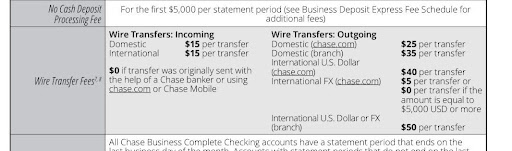
The controversy sparked by Zschach’s remarks did not stop there. In a detailed follow-up post, 24HRSCRYPTO exposed what they described as the hidden costs of the SWIFT system. Having worked within the industry, they revealed that sending a simple wire transfer could cost $17.50 from the sending bank and another $17.50 from the receiving bank, amounting to $35 in fees before the money is even moved. In some cases, if funds went missing, customers are charged an additional “investigation fee” just to trace their own transaction. 

According to the post, this fee-driven model highlighted how SWIFT’s profitability stemmed from friction rather than efficiency. Ripple, by contrast, seeks to eliminate that friction with near-instant settlement and transaction costs reduced to a fraction of a cent. 
Ripple
Source: Chart from 24HRSCRYPTO on X

24HRSCRYPTO went further, stating that banks are already adapting to the evolving financial landscape by shifting to digital assets rather than clinging to outdated infrastructure. While banks may lose billions in transfer fees, the argument suggested they could regain financial ground by accumulating XRP, the new power of the emerging financial system.

Ripple
XRP trading at $2.98 on the 1D chart | Source: XRPUSDT on Tradingview.com
Featured image from Getty Images, chart from Tradingview.com
Editorial Process for bitcoinist is centered on delivering thoroughly researched, accurate, and unbiased content. We uphold strict sourcing standards, and each page undergoes diligent review by our team of top technology experts and seasoned editors. This process ensures the integrity, relevance, and value of our content for our readers.

Scott Matherson is a leading crypto writer at Bitcoinist, who possesses a sharp analytical mind and a deep understanding of the digital currency landscape. Scott has earned a reputation for delivering thought-provoking and well-researched articles that resonate with both newcomers and seasoned crypto enthusiasts. Outside of his writing, Scott is passionate about promoting crypto literacy and often works to educate the public on the potential of blockchain.

Lecturas Relacionadas

Hyperliquid, la tienda de conveniencia para operaciones de Wall Street las 24 horas

Hyperliquid, una plataforma de negociación descentralizada y de código abierto, opera las 24 horas del día, los 7 días de la semana, convirtiéndose en el destino preferido para los traders de Wall Street, especialmente durante los fines de semana cuando los mercados tradicionales están cerrados. Su fundador, Jeff Yan, ex trader cuantitativo, creó la plataforma tras el colapso de FTX, con el objetivo principal de que los usuarios custodien sus propios activos. La plataforma ofrece una amplia gama de contratos perpetuos con alto apalancamiento, que cubren desde criptomonedas como Bitcoin hasta índices bursátiles (S&P 500), materias primas (petróleo) e incluso empresas no cotizadas como SpaceX. Un ejemplo notable es el de un trader de fondos de cobertura que obtuvo un retorno del 243% operando derivados del petróleo durante una escalada de tensión geopolítica. A pesar de que los usuarios estadounidenses tienen prohibido oficialmente el acceso, muchos operan a través de VPN. La CFTC de EE. UU. ha comenzado a establecer un marco regulatorio para los contratos perpetuos, lo que podría cambiar el panorama. La plataforma, respaldada por una empresa de solo 11 empleados, generó unos 800 millones de dólares en ingresos el año pasado, y su token nativo, HYPE, tiene una capitalización de mercado de unos 160.000 millones. Su atractivo radica en su interfaz sencilla, su vibrante comunidad en línea (con memes como el gato Hypurr) y la transparencia de su sistema, que funcionó sin problemas durante una volatilidad extrema del mercado que provocó liquidaciones por valor de 100.000 millones de dólares solo en Hyperliquid. Los críticos advierten sobre los riesgos de los complejos contratos perpetuos para los inversores minoristas. Los planes futuros de Hyperliquid incluyen la expansión hacia mercados de predicción y opciones.

marsbitHace 4 min(s)

Hyperliquid, la tienda de conveniencia para operaciones de Wall Street las 24 horas

marsbitHace 4 min(s)

¿Quién financia a los agentes?

En marzo, OpenAI eliminó una función que permitía a los agentes de IA realizar compras por los usuarios, ya que en cinco meses solo 30 tiendas de Shopify la habían usado. El problema no era la infraestructura de pago, sino la falta de normas claras sobre qué podían comprar los agentes, impuestos, fraude o devoluciones. Esto abre una oportunidad en la economía de los agentes. Aunque en el último año los agentes de IA manejaron transacciones por 73 millones de dólares, McKinsey prevé que para 2030 podrían facilitar entre 3 y 5 billones en comercio global. El valor ya no está solo en procesar pagos (donde las comisiones tradicionales son inviables para transacciones promedio de 0,31$), sino en la capa de gobernanza: controles de gasto, verificación de identidad, políticas y auditoría. Empresas como Stripe y Coinbase están compitiendo por dominar esta capa. Stripe, por ejemplo, adquirió Privy para gestionar carteras y aplicar normas antes de que los fondos se muevan. Quien controle la gobernanza podrá establecer reglas, aprobar accesos y cobrar tarifas por ello. Se estima que, para un volumen de 3 billones, incluso una pequeña tarifa de gobernanza del 0,1% generaría unos 30.000 millones anuales. La integración vertical en varias capas (cartera, liquidación, gobernanza) será clave para competir, permitiendo ingresos por saldos inactivos, tarifas de transacción y por aplicar políticas.

marsbitHace 30 min(s)

¿Quién financia a los agentes?

marsbitHace 30 min(s)

Trading

Spot
Futuros
活动图片