CleanCore Defies Trend: 500M DOGE Treasury Shows Why This Memecoin Strategy Beats ETH

bitcoinistPublicado a 2025-09-13Actualizado a 2025-09-13

Resumen

CleanCore Solutions has crossed a significant milestone in its aggressive Dogecoin accumulation plan, revealing it now holds over 500 million...

Trusted Editorial content, reviewed by leading industry experts and seasoned editors. Ad Disclosure

CleanCore Solutions has crossed a significant milestone in its aggressive Dogecoin accumulation plan, revealing it now holds over 500 million DOGE in its treasury. This is contrary to the institutional investments in traditional cryptos like Ethereum and Bitcoin, which have earned massive returns over the past few months.

The initiative, managed by House of Doge and backed by the Dogecoin Foundation, ranks CleanCore as one of the largest corporate holders of the memecoin.

CleanCore Long-term Dogecoin Strategy

The company is targeting 1 billion DOGE within 30 days, with Chief Investment Officer Marco Margiotta describing the move as a “disciplined accumulation strategy.”

He emphasized CleanCore’s vision of establishing Dogecoin as a reserve asset while promoting its role in payments, tokenization, staking-like products, and global remittances.

Long-term, the firm aims to control 5% of Dogecoin’s circulating supply, a goal that would solidify its status in the digital asset treasury landscape. Custody is handled through Bitstamp in partnership with Robinhood, ensuring compliance and security.

Adding further credibility, Elon Musk’s lawyer Alex Spiro recently joined as board chairman, reportedly helping align CleanCore’s treasury strategy with the Dogecoin Foundation’s broader objectives.

DOGE Price Surges on Treasury Buys and ETF Optimism

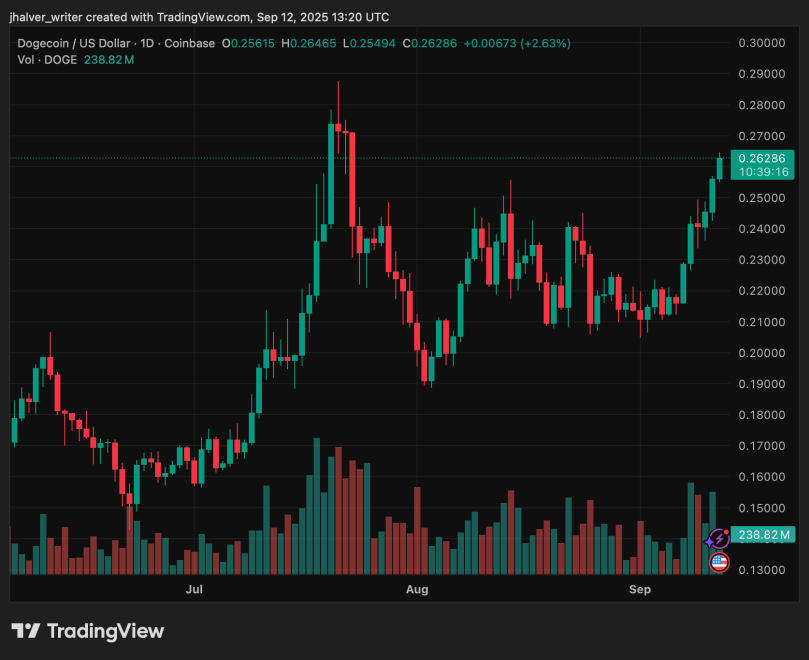
The announcement comes as Dogecoin’s market performance strengthens. Over the past week, DOGE has surged 22%, with a 3.6% gain in the last 24 hours alone.
Dogecoin DOGE DOGEUSD

DOGE's price trends to the upside on the daily chart. Source: DOGEUSD chart on Tradingview

This bullish momentum has been fueled not only by CleanCore’s treasury expansion but also by excitement surrounding the proposed REX-Osprey DOJE ETF, the first U.S.-regulated Dogecoin exchange-traded fund.

Breaking above the $0.25 resistance level, Dogecoin now looks set to test the $0.288 zone, with strong liquidity reducing the chance of sharp corrections. Analysts see treasury adoption and institutional financial products as key steps toward turning DOGE from a speculative token into a mainstream asset.

Corporate Competition Heats Up in DOGE Accumulation

CleanCore is not the only firm betting on Dogecoin’s long-term potential. Rival BitOrigin recently disclosed a 40.5 million DOGE purchase as part of its $500 million treasury plan, signaling growing corporate interest in the meme-inspired cryptos.

The Dogecoin Foundation’s efforts, particularly through House of Doge, aim to push the coin beyond its meme status by expanding its utility in payments, tokenization, and real-world applications. With CleanCore halfway to its billion-DOGE target, the competition to secure treasury dominance is intensifying.

For now, CleanCore’s bold strategy places it at the forefront of memecoin adoption, challenging not only Ethereum’s dominance in corporate strategies but also reshaping the way companies view digital assets as reserve holdings.

Cover image from ChatGPT, DOGEUSD chart from Tradingview

Editorial Process for bitcoinist is centered on delivering thoroughly researched, accurate, and unbiased content. We uphold strict sourcing standards, and each page undergoes diligent review by our team of top technology experts and seasoned editors. This process ensures the integrity, relevance, and value of our content for our readers.

Lecturas Relacionadas

Los creadores de ChatGPT ya no usan ChatGPT para trabajar

Los creadores de ChatGPT ya no lo utilizan para trabajar. En su lugar, OpenAI ha adoptado de forma masiva el agente de IA "Codex", que ahora genera el 99,8% de los tokens de salida semanales de la empresa, frente a menos del 10% hace solo 10 meses. Codex, impulsado por GPT-5.5, ha evolucionado de una herramienta de codificación a un agente autónomo capaz de manejar flujos de trabajo completos y prolongados, desde tareas legales y financieras hasta ingeniería. El cambio, acelerado desde septiembre del año pasado, es generalizado: ingenieros (99% de tokens), así como departamentos legales, financieros y de recursos humanos (más del 85% cada uno) utilizan Codex como herramienta principal. Su adopción crece más rápido entre usuarios no desarrolladores. Codex permite delegar tareas que requieren desde 30 minutos hasta más de 8 horas de trabajo humano, y el 25% de las tareas que realizan con él profesionales no técnicos implican programación, desdibujando los límites tradicionales entre roles. La transformación clave es el cambio de paradigma: de la interacción de preguntas y respuestas con un chatbot a la delegación de tareas complejas y de larga duración a un agente autónomo. Los usuarios más intensivos llegan a generar más de 60 horas de trabajo de agente en un solo día. Codex optimiza incluso su propia infraestructura. El informe sugiere que la futura ventaja competitiva residirá en la capacidad de delegar flujos de trabajo cada vez más extensos y críticos a los agentes de IA.

marsbitHace 12 min(s)

Los creadores de ChatGPT ya no usan ChatGPT para trabajar

marsbitHace 12 min(s)

El auge de las stablecoins en América Latina no es, en esencia, una 'victoria de la criptotecnología'

El auge de las stablecoins en América Latina no es, en esencia, una "victoria de la tecnología cripto". Surge de una necesidad histórica y profundamente arraigada: enviar dinero a casa. Durante siglos, desde las "cartas de plata" de los inmigrantes chinos hasta las remesas modernas, la región ha buscado formas de mover valor a través de fronteras de manera confiable. Hoy, stablecoins como USDT o USDC llenan ese vacío. No son vistas como activos especulativos, sino como dólares digitales que resuelven problemas prácticos: evitar la inflación (Argentina, Venezuela), reducir costos y tiempo en las remesas (México, Centroamérica), o facilitar pagos transfronterizos para freelancers y comercio. Su adopción responde al fracaso de los sistemas financieros tradicionales, demasiado lentos, caros o inaccesibles. Sin embargo, el desafío real no está en la tecnología blockchain, sino en los extremos de la transacción: cómo convertir ingresos locales en stablecoins y, sobre todo, cómo convertirlas nuevamente en moneda local de forma rápida y segura, ya sea en una cuenta Pix (Brasil), SPEI (México) o en efectivo. El éxito dependerá de integrarse de manera invisible en infraestructuras de pago locales, cumplir con marcos regulatorios emergentes y, ante todo, ofrecer la certeza que millones de familias necesitan: saber que el dinero llegó.

marsbitHace 1 hora(s)

El auge de las stablecoins en América Latina no es, en esencia, una 'victoria de la criptotecnología'

marsbitHace 1 hora(s)

Trading

Spot
活动图片