Trump Media Announces Bitcoin Treasury Holdings Reached $2 Billion – Details

bitcoinistPublicado a 2025-07-22Actualizado a 2025-07-22

Resumen

US President Donald Trump’s social media company, Trump Media, has revealed its multi-billion Bitcoin (BTC) holdings as part of its...

Trusted Editorial content, reviewed by leading industry experts and seasoned editors. Ad Disclosure

US President Donald Trump’s social media company, Trump Media, has revealed its multi-billion Bitcoin (BTC) holdings as part of its crypto treasury strategy. The news follows the President’s recent post praising the flagship cryptocurrency.

Trump Media Continues Bitcoin Treasury Strategy

On Monday, Trump Media and Technology Group (TMTG) announced that the company has accumulated approximately $2 billion worth of Bitcoin and BTC-related securities for its BTC treasury strategy.

The company, which operates the social media platform Truth Social, the streaming platform Truth+, and the FinTech brand Truth.Fi, revealed that its Bitcoin Treasury holdings account for two-thirds of its nearly $3 billion in liquid assets.

Trump Media stated that it has also allocated around $300 million for purchasing options tied to BTC-related securities, but did not offer a breakdown of the $2 billion holdings. Additionally, it shared its plans to continue buying Bitcoin and BTC-related assets, and convert its options into spot Bitcoin, depending on market conditions, to “generate revenues and potentially acquire additional crypto assets.”

Trump Media’s CEO and President Devin Nunes said, “We’re rigorously implementing our publicly announced strategy and fulfilling our bitcoin treasury plan.” He reaffirmed that the company’s strategy helps ensure its financial freedom and protect it “against discrimination by financial institutions and will create synergies with the utility token we’re planning to introduce across the Truth Social ecosphere.”

In May, Trump Media announced its plan to invest in the flagship crypto as part of its BTC strategy. As reported by Bitcoinist, the company secured commitments from approximately 50 investors to raise $2.5 billion with the sale of common stock and convertible notes.

At the time, Nunes described the BTC investment as a pivotal step in defending the company, affirming, “We view Bitcoin as an apex instrument of financial freedom, and now Trump Media will hold cryptocurrency as a crucial part of our assets.”

US Continues Crypto Regulation

Trump Media announcement follows President Trump’s recent Truth Social post praising the flagship crypto to conclude the historic “Crypto Week,” which saw the highly anticipated GENIUS Act being signed into law on Friday.

On Sunday, the US president shared Coin Center research director Peter Van Valkenburgh’s 2018 testimony during a Senate Banking Committee hearing, calling it the “greatest Bitcoin explanation of all time.”

Van Valkenburgh argued that BTC and Blockchain technology are transforming global finance as “the world’s first public digital payments infrastructure.” During the 2018 hearing, he explained that:

Bitcoin’s not the best money on every margin. It’s not yet accepted everywhere. It’s not used often to quote prices, and it’s not always a stable store of value. But it is working, and the mere fact that it works without trusted intermediaries is amazing. It’s a computer science breakthrough, and it will be as significant for freedom, prosperity, and human flourishing as the birth of the internet.

Moreover, the White House is set to release its first crypto policy report on Tuesday, which is expected to include an official inventory of the US federal BTC holdings. For context, President Trump signed an executive order on January 23 mandating that the Digital Assets Working Group submit a report within 180 days of the order’s date.

The report is expected to outline the Working Group’s regulatory and legislative recommendations and proposals to advance the executive order’s policies, as well as its evaluation of the follow-up order to establish a national digital asset stockpile.
Bitcoin, btc, btcusdt

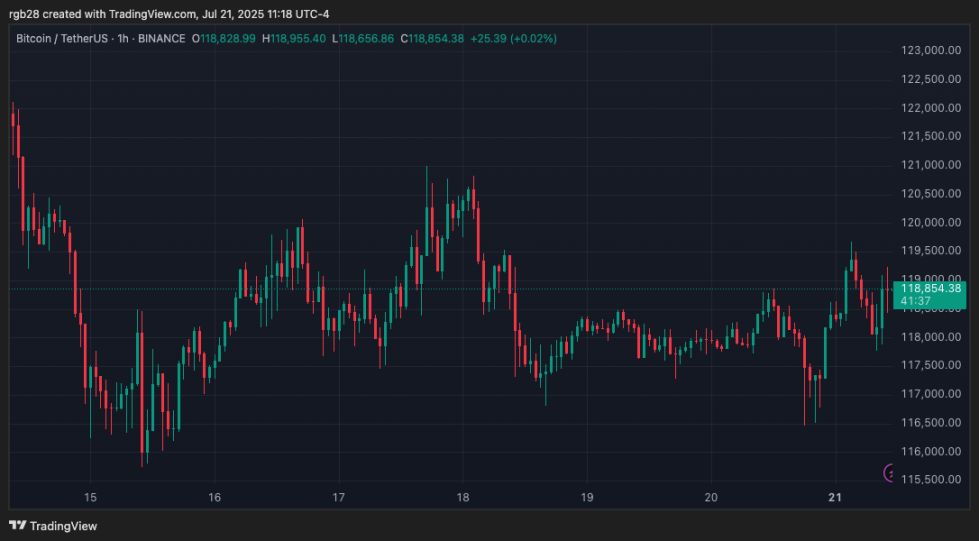
Bitcoin's performance in the one-week chart. Source: BTCUSDT on TradingView
Featured Image from Unsplash.com, Chart from TradingView.com
Editorial Process for bitcoinist is centered on delivering thoroughly researched, accurate, and unbiased content. We uphold strict sourcing standards, and each page undergoes diligent review by our team of top technology experts and seasoned editors. This process ensures the integrity, relevance, and value of our content for our readers.

Rubmar is a crypto enthusiast who likes learning and improving constantly. She enjoys reporting on the latest news and developments in the crypto industry. Rubmar also enjoys scrapbooking, crafting, simulation games, and watching football.

Lecturas Relacionadas

El último artículo de Fei-Fei Li: Cuando la generación de vídeo, la robótica y NVIDIA se autodenominan modelos del mundo, necesitamos una taxonomía

El artículo de Fei-Fei Li clarifica el término "modelo del mundo", utilizado de manera confusa en IA, proponiendo una taxonomía basada en el ciclo POMDP (Proceso de Decisión de Markov Parcialmente Observable). Identifica tres categorías funcionales: 1) **Renderizador**: genera observaciones (píxeles) visualmente fieles para humanos, como los modelos de video Sora o Genie, pero sin comprensión física precisa. 2) **Simulador**: produce estados del mundo con precisión geométrica, física y dinámica, sirviendo tanto para visualización profesional como para entrenamiento de agentes (robots, vehículos autónomos). 3) **Planificador**: deduce acciones a partir de observaciones y objetivos, cerrando el ciclo percepción-acción, como los modelos de lenguaje-visión-acción (VLA). El artículo argumenta que el simulador es el componente clave y subestimado, pues proporciona la base estructural para la renderización y la planificación. Mientras los renderizadores tienen madurez comercial pero limitaciones físicas, y los planificadores son prometedores pero inmaduros para despliegues reales, los simuladores abarcan aplicaciones cruciales en robótica, diseño y digitalización. La tendencia actual es la fusión de estas categorías, impulsada por la idea de que comparten conocimiento subyacente. Modelos como Marble de World Labs ejemplifican esta convergencia, generando tanto representaciones visuales (splats gaussianos) como mallas para simulación física. La visión final es un **modelo del mundo unificado** capaz de alternar entre renderizar, simular y planificar según la necesidad, avanzando hacia una inteligencia espacial que permita a las máquinas entender e interactuar con el mundo físico.

marsbitHace 4 hora(s)

El último artículo de Fei-Fei Li: Cuando la generación de vídeo, la robótica y NVIDIA se autodenominan modelos del mundo, necesitamos una taxonomía

marsbitHace 4 hora(s)

Especial de Forbes: Las remesas transfronterizas con stablecoins son más rápidas, pero aún no más baratas

**Los pagos transfronterizos con stablecoins son más rápidos, pero aún no más baratos** El sector de pagos transfronterizos con stablecoins está creciendo rápidamente, con tecnología disponible, mejoras regulatorias y mayor volumen de transacciones. Sin embargo, aunque estas transacciones son más rápidas, accesibles y fiables, aún no han cumplido su promesa de ser más baratas. La diferencia de costos es clara: los corredores de divisas tradicionales suelen cobrar entre 60 y 70 puntos básicos por pagos a proveedores internacionales, mientras que las stablecoins prometen reducirlos a solo 2-5 puntos básicos. El problema actual es la falta de pools de liquidez suficientemente profundos y escalados para materializar este ahorro. Según Imran Ahmad de Bitso Business, hasta que los bancos e instituciones inyecten liquidez masiva en estos canales, la ventaja de coste seguirá siendo teórica. Un obstáculo clave para la adopción en pagos B2B es la confianza. Los importadores establecidos suelen confiar en sus agentes de divisas de larga data, una relación personal que las soluciones tecnológicas aún deben superar. Como explica Ezra Kebrab de Caliza, no se trata solo de ser más rápido y barato, sino de garantizar fiabilidad y cumplimiento en cada transacción. Las empresas exitosas en este espacio no buscan reemplazar la infraestructura existente como SWIFT, sino complementarla. Caliza, por ejemplo, utiliza stablecoins pero aún canaliza muchas transacciones a través de SWIFT para garantizar la precisión en datos críticos como números de identificación fiscal, evitando retrasos en aduanas. Este enfoque híbrido ha impulsado un crecimiento mensual sostenido superior al 40%. El futuro del sector dependerá de quién logre consolidar tres pilares fundamentales: licencias regulatorias, acceso sólido a canales de moneda fiduciaria y liquidez profunda. Sin ellos, las empresas corren el riesgo de ser meros intermediarios. Ahmad prevé una inevitable consolidación en el sector, donde solo las empresas con estas bases sólidas sobrevivirán y prosperarán.

marsbitHace 4 hora(s)

Especial de Forbes: Las remesas transfronterizas con stablecoins son más rápidas, pero aún no más baratas

marsbitHace 4 hora(s)

Trading

Spot
活动图片