Crypto Crackdown: Hungarians Face 5-Year Jail For Unauthorized Digital Asset Trading

bitcoinistPublicado a 2025-07-16Actualizado a 2025-07-17

Resumen

Hungary has taken a hard line on crypto trading. On 1 July 2025, the country’s updated criminal code kicked in....

Trusted Editorial content, reviewed by leading industry experts and seasoned editors. Ad Disclosure

Hungary has taken a hard line on crypto trading. On 1 July 2025, the country’s updated criminal code kicked in. Anyone caught trading on an unlicensed crypto‑asset exchange could face jail time.

That applies even if a trader swaps just HUF 5 million (about $14,600) worth of tokens. Hungary is now one of the strictest places in Europe for private crypto users.

Strict Penalties For Crypto Traders

According to the new code, anyone swapping between HUF 5 million and HUF 50 million on an unauthorized platform may be sentenced to up to two years in prison.

Anybody whose trading volume falls between HUF 50 million and HUF 500 million (about $145,950–$1.46 million), could serve up to three years behind bars.

And those moving more than HUF 500 million face a term of up to five years. Each tier scales the penalty based solely on how much money changes hands.
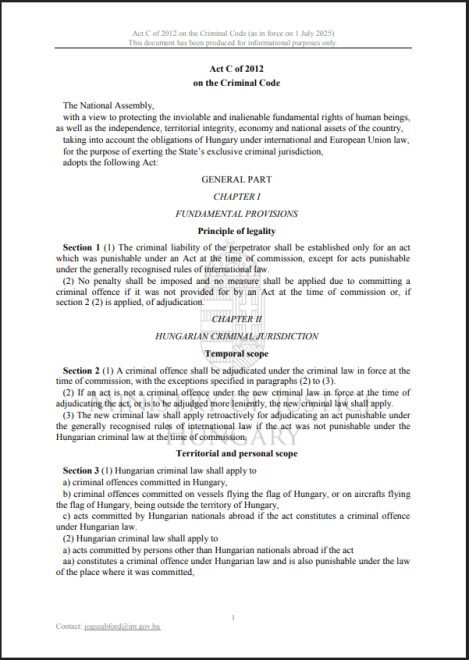
 Hungary released a document outlining the government's criminal codes. Source: Hungary Ministry of Justice.

Service Providers Face Harsher Terms

Based on reports, companies running unlicensed exchange services are in even deeper trouble. Providers handling up to HUF 50 million risk a prison sentence of up to three years.

If they process between HUF 50 million and HUF 500 million, they might spend as long as five years in jail. And any firm that handles more than that amount can be penalized with up to eight years in prison.

BTCUSD trading at $118,175 on the 24-hour chart: TradingView

Revolut Pulls Crypto Services

The fallout has already begun. Revolut, the UK‑based fintech app used by many Hungarians, stopped all crypto buying, selling and staking. A notice to local customers blamed “the recently introduced Hungarian legislation.”

Users now can’t deposit or cash out their digital tokens until Revolut sorts out its legal position. For some, that means weeks or even months of waiting.

Comparisons With Other Markets

Other parts of the world have criminalized unlicensed crypto services. The US, the UK, Hong Kong, and South Korea all fine or jail unlicensed operators, but they rarely go after everyday traders.

Singapore recently warned its local firms to quit serving overseas clients without a license, under threat of up to three years in prison or a fine of SG$250,000. Yet Hungary stands out for targeting private users based on their transaction amounts.

Hungary’s Supervisory Authority for Regulatory Affairs has 60 days from 1 July to set clear rules. Until then, nobody knows how to get the mandatory “validation certificate” that every authorized exchange must hold.

Featured image from Goway, chart from TradingView

Editorial Process for bitcoinist is centered on delivering thoroughly researched, accurate, and unbiased content. We uphold strict sourcing standards, and each page undergoes diligent review by our team of top technology experts and seasoned editors. This process ensures the integrity, relevance, and value of our content for our readers.

Christian, a journalist and editor with leadership roles in Philippine and Canadian media, is fueled by his love for writing and cryptocurrency. Off-screen, he's a cook and cinephile who's constantly intrigued by the size of the universe.

Lecturas Relacionadas

¿Es la zona de precio de $1 de XRP una trampa para los bajistas? Esto es lo que sugieren los datos

Habla de un nuevo ciclo de altcoins está resurgiendo. Esta semana, Bitcoin (BTC) subió más del 5%, pero Ethereum (ETH) atrajo el doble de entradas de capital, elevando el ratio ETH/BTC casi un 7%. Ripple (XRP) no se quedó atrás, con una subida semanal de casi el 9%, alcanzando los 1,18 dólares, un nivel no visto desde mediados de junio, lo que señala un fuerte interés comprador. Un analista destacó que una ballena abrió una posición larga de 16 millones de dólares en XRP a 1,10 dólares, con una ganancia no realizada de unos 477.000 dólares. Esto sugiere una creciente convicción en que XRP aún puede subir más. Sin embargo, el posicionamiento largo en XRP se está disparando, lo que aumenta el riesgo de un evento de volatilidad y liquidaciones si el sentimiento cambia, especialmente cerca de la zona de oferta de 1 dólar. Aun así, los ETFs de XRP en EE.UU. registraron entradas netas de 17,19 millones de dólares esta semana, sumando nueve semanas consecutivas de entradas, lo que indica un interés institucional sostenido. En contraste, los ETFs de Ethereum tuvieron salidas netas. En resumen, mientras el apalancamiento largo supone un riesgo a corto plazo, el flujo constante hacia los ETFs de XRP sugiere que la demanda institucional es sólida. Esto hace que la consolidación alrededor de 1 dólar parezca más una posible trampa para bajistas (bear trap), con presión alcista añadida por el posicionamiento largo.

ambcryptoHace 7 hora(s)

¿Es la zona de precio de $1 de XRP una trampa para los bajistas? Esto es lo que sugieren los datos

ambcryptoHace 7 hora(s)

Trading

Spot
活动图片