ECB Plans Crypto Ledger Technology as CBDCs Advance: Choose Best Wallet Custody Instead

bitcoinistPublicado a 2025-07-02Actualizado a 2025-07-02

Resumen

The European Central Bank (ECB) is planning distributed ledger technology (DLT) for financial settlement, which shows a good intention to...

Trusted Editorial content, reviewed by leading industry experts and seasoned editors. Ad Disclosure

The European Central Bank (ECB) is planning distributed ledger technology (DLT) for financial settlement, which shows a good intention to modernize the Eurozone’s financial infrastructure.

How will they do it? Through a ‘dual-track strategy’ that explores immediate and long-term applications of DLT. While the developments will bring novel technology into traditional finance, the conversation around Central Bank Digital Currencies (CBDCs) also intensifies.

It begs several questions, mostly regarding financial autonomy and privacy, especially when contrasted with solutions like Best Wallet.

ECB’s Dual-Track DLT Strategy and the Rise of CBDCs

The ECB’s dual-track strategy involves two distinct initiatives, ‘Pontes’ and ‘Appia’.

1. The Short-term Track (Pontes)

It links DLT platforms and existing TARGET Services for the settlement of wholesale transactions in central bank money.

This approach seeks to leverage DLT to improve efficiency and security within the current financial framework.

2. The long-term vision (Appia)

It shapes a future-ready, innovative, and integrated financial ecosystem within Europe and eventually globally.

This long-term track suggests a more fundamental rethink of the market infrastructure. Which potentially invites tokenized assets and more sophisticated DLT applications.

The duality in approach shows a forward-looking perspective on digital assets.

Simultaneously, central banks (including the ECB) are actively investigating and developing CBDCs. The digital euro, for instance, wants to have a foundation by October 2025.

You might argue that CBDCs are more secure and efficient, and might replace cash in an increasingly cashless society. Their goal – to enable faster interbank settlements, improve cross-border payments, and strengthen monetary sovereignty, of course.

But. And there’s a big but here.

The push for CBDCs comes with some significant privacy concerns. For one, centralized control from banks—they’ll theoretically see all your transactions and potentially impose limitations on your account.

These contrast sharply with the inherent privacy and control offered by self-custody solutions like Best Wallet (one of the leading non-custodial crypto wallets).

Best Wallet: Your Shield Against Centralized Control

CBDCs inherently allow for surveillance and potential control over your financial transactions. This doesn’t happen with cash or decentralized crypto transactions. And it’s also where Best Wallet’s self-custody solution shines, offering true financial freedom.
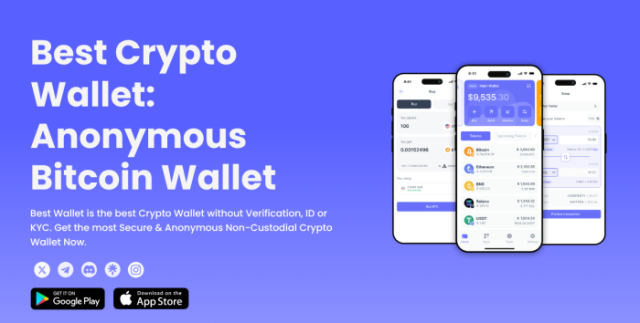
Best Wallet landing page

Best Wallet is a non-custodial platform that puts the control back into your hands. No more third parties that can freeze or control your transactions, it’s all you.

You also eliminate third-party risk, no longer worrying about hacks or insolvency affecting CEXs. Best Wallet made our list of top anonymous crypto wallets for its security, including its Fireblocks MPC, which splits your private key into several shards shared between several parties.

Unlocking Exclusive Advantages with the Best Wallet Token ($BEST)

Think of Best Wallet as your vehicle to complete financial control. The Best Wallet Token ($BEST) is the key that unlocks a world of exclusive benefits.

Holding $BEST offers significantly reduced transaction fees. You’ll also get enhanced staking rewards, which maximizes your earnings on your staked assets, and early access to high-potential crypto presales in the ‘Upcoming Tokens’ section.

With this, you can be among the first to invest in promising new projects, potentially front-running the market.
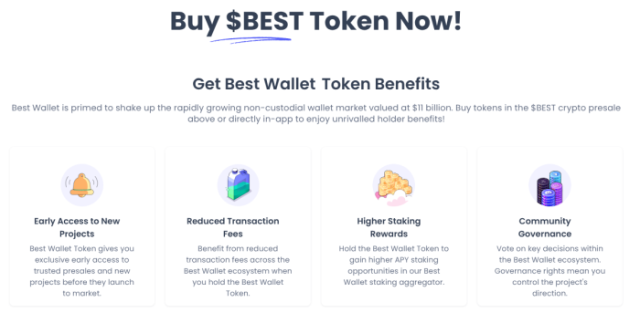
Best wallet token benefits.

Furthermore, you’ll receive priority access to new features like the Best Card, which will allow you to seamlessly spend your cryptocurrency anywhere Mastercard is accepted. In the future, you’ll also gain governance rights, influencing the future direction of the Best Wallet platform as the ecosystem evolves.

You can buy $BEST for $0.025265, but a price increase is imminent. We predict it will reach $0.072 by the end of 2025, which will see an ROI of 184.

The Future of Finance: Centralization vs. Self-Custody

The ECB’s DLT and CBDC advancements aim to modernize finance but raise privacy concerns. Best Wallet offers a self-custody alternative, providing financial freedom and control over your digital assets.

Holding $BEST unlocks even more benefits, providing further incentive. As finance evolves, understanding the implications of centralized versus self-custody solutions is crucial.

Remember, this information is for educational purposes only and not financial advice

Editorial Process for bitcoinist is centered on delivering thoroughly researched, accurate, and unbiased content. We uphold strict sourcing standards, and each page undergoes diligent review by our team of top technology experts and seasoned editors. This process ensures the integrity, relevance, and value of our content for our readers.

Ben is a freelance writer specializing in crypto developments (mainly altcoins) and the intricate ways global economics shape the digital asset space. His B.Ed. in Education provides a unique foundation for his writing, enabling him to distill complex crypto concepts and market shifts into clear, digestible insights. This skill is key to helping readers adapt and apply their understanding to the ever-evolving world of crypto investment. Passionate about making crypto accessible, Ben crafts content designed to educate a broad audience, from current market events to the essential foundational knowledge that underpins them. His goal is to empower readers through understanding. When he’s not immersed in crypto analysis and breaking down complex topics, Ben is an avid Pokémon fan and enjoys all things Disney.

Lecturas Relacionadas

Claude Code revela su increíble origen: surgió de la alineación de seguridad, Boris: "Solo hemos completado el 1%"

**Claude Code: El origen inesperado y su futuro infinito** La historia de Claude Code, la herramienta de IA que está transformando la forma de programar, comienza de forma insólita: nació de un proyecto interno de *alineación de seguridad* (Alignment) en Anthropic. Su creador, Boris Cherny, revela que, a pesar de su impacto, solo han completado "el 1%". Todo empezó en 2021 con un equipo liderado por Ben Mann, que construyó una extensión inicial para VS Code. Investigadores como Dawn Drain y Shauna Kravec trabajaban en una visión más ambiciosa: la *ingeniería de software autónoma*. Sin embargo, los desafíos técnicos, como crear un entorno seguro para ejecutar código, fueron una pesadilla, y el proyecto quedó temporalmente en el olvido. Para 2022-2023, el equipo interno desarrolló *clide*, una herramienta de línea de comandos donde los usuarios podían "chatear" con Claude para editar código. Era potente pero demasiado adelantada a su tiempo: lenta, frágil e inestable. El punto de inflexión llegó en septiembre de 2024 con la incorporación de Boris Cherny. Con la misión de crear un sistema de "coding agéntico", Cherny construyó un prototipo de CLI. Un momento clave fue cuando copió un problema en *clide* y este escribió automáticamente un *pull request* completo de 5-10 líneas. La reacción fue de asombro: tenían todas las piezas, solo faltaba ensamblarlas. En diciembre, un pequeño equipo inició un sprint de dos semanas que culminó en el lanzamiento de Claude CLI en febrero de 2025, pronto renombrado como Claude Code. Su icónico logo en ASCII se volvió emblemático. El lanzamiento de modelos más potentes como Claude 4 Sonnet fue decisivo para su adopción masiva, conquistando a líderes tecnológicos y cambiando la forma de trabajar en Silicon Valley. Hoy, Cherny declara que ya no escribe código manualmente; Claude Code lo hace todo en segundo plano. Los usuarios han pasado de revisar cada solicitud de permiso a aceptarlas automáticamente, señal de una creciente confianza. Sin embargo, Cherny insiste en que solo están en el 1%. El futuro del 99% incluye capacidades como autonomía de larga duración, memoria persistente, gestión de contextos complejos y planificación en mundo abierto. El rol del ingeniero humano está evolucionando de arquitecto de código a supervisor de IA, marcando solo el comienzo de cómo los agentes de IA resolverán problemas complejos del mundo real.

marsbitHace 34 min(s)

Claude Code revela su increíble origen: surgió de la alineación de seguridad, Boris: "Solo hemos completado el 1%"

marsbitHace 34 min(s)

Trading

Spot
活动图片