[Key interpretation] BTC miners' selling unexpectedly increased by 1.53 times, and ETH leverage ratio rebounded

Huobi ResearchPublicado a 2022-06-23Actualizado a 2022-07-07

Resumen

After 24500 BTCs were sold, the miners sold them again.

1、 BTC vulnerable consolidation

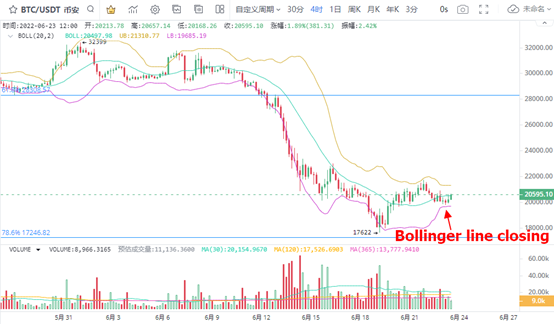
The recent fluctuation of BTC has narrowed, and the price has been below the middle rail of brin line, so there is a demand for further price change. At the same time, the brin line has closed significantly in the near future, and the distance between the brin line and the brin line has narrowed after the off track of the brin line picks up. This shows that the market is on the eve of further changes. In the 4-hour K-line chart, if BTC operates at the current trading volume, the energy to pull up the price is limited.
2. Significant increase in BTC miners' selling

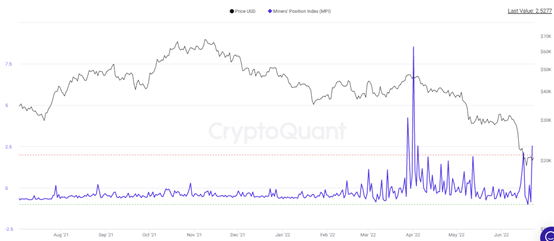
The trading direction of investors has a relatively important impact on the price trend. When more BTCs change hands at low prices, the trading heat of miners rises. On June 22, the MPI index rebounded to a high of 2.53, which means that the selling volume has been at a high level.

The MPI measure is defined as the ratio of the dollar outflows of all mining companies divided by their 365 day moving average. During the index recovery period, it raised the signal that the selling volume of miners increased. The MPI index rose to 2.53, the highest since April 4. The number of BTC sold by miners is 2.53 times of the average value in one year, and the price decline signal can be properly paid attention to. After the MPI reached 8.54 and 2.54 in the early stage, BTC entered the stage of continuous decline, so the prompt effect on the market may be verified again.
3. BTC sold by more investors

On the judgment of BTC investors' trading direction, the capital flow of ETF represents the trading intention of more investors. On June 17, 24510 BTCs were sold, indicating that there are many opportunities for BTCs to fall. After June 17, the flow of BTC purpose ETF decreased significantly. Therefore, it can be confirmed that after BTC's selling pressure was released, the market did not continue to change much, and the market was still obviously bearish. In the short term, the current price of BTC is below US $21000, which is similar to the price at which BTC was sold off in a large amount on June 17 in the previous period. The short-term selling pressure can be paid due attention.

4. Eth returns below the pressure level

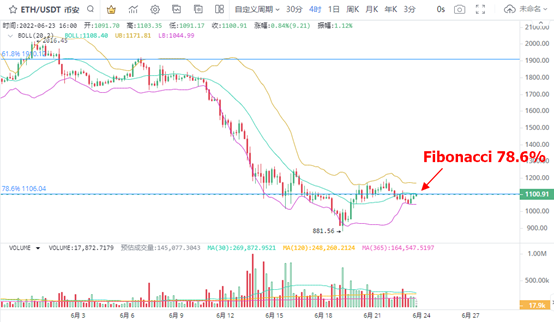
The most important technical support line of eth, Fibonacci, with 78.6% of the corresponding support of USD 1106, was rebounded and confirmed. Soon after, the price of eth retreated below the split line again. This shows that there are still many changes in the market. At present, there are more opportunities for adjustment below the pressure level.

In the 4-hour K-line chart, the BTC bottom reversal is in the process of confirmation, but the reversal can only be tested after the price rises. At present, the ETH trading volume is shrinking slowly, and there are signs that the market rhythm is slowing down.
5. ETH contract position bottoming sign

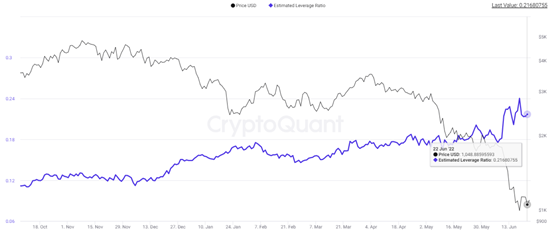
The leverage ratio of eth contract is stable and still at a high level within one month. The ETH leverage ratio on June 22 was 0.216, which was significantly higher than 0.175 at the beginning of June, with a rebound space of 23%. Compared with the leverage ratio near 0.1 at the beginning of 2020 and 0.15 at the beginning of 2022, the current eth leverage ratio growth space is 116% and 44%. The ETH leverage ratio has great room for growth, and with the fall of eth price, the possibility of extreme market near 1100 cannot be ruled out.

Lecturas Relacionadas

Exploit de gobernanza de Token of Power drena $1.58 millones en WETH, según TRM

La empresa de inteligencia de blockchain TRM Labs ha detallado un ataque de toma de control de gobernanza contra el protocolo Token of Power, que drenó aproximadamente 1,58 millones de dólares en WETH. Según el análisis, el atacante explotó una debilidad en la configuración de la DAO de Aragon del protocolo: la ausencia de un timelock. Esto permitió al atacante proponer, votar y ejecutar una acción de gobernanza maliciosa en un solo bloque. El atacante financió la operación con 662 ETH retirados de Tornado Cash, compró suficientes tokens TOP para obtener poder de voto mayoritario, acuñó 10 mil millones de nuevos TOP y los cambió por WETH a través de un grupo de Balancer antes de devolver los fondos mediante Tornado Cash. La explotación ejemplifica cómo el diseño de gobernanza puede convertirse en un riesgo de seguridad directo. Los timelocks están diseñados para dar tiempo a los usuarios y equipos de seguridad para reaccionar antes de que una propuesta sea ejecutable. Para los usuarios de DeFi, este caso recuerda que el riesgo no se limita a los errores de código; los parámetros de gobernanza y los controles del tesoro son igual de cruciales. El siguiente paso será monitorear si los fondos robados se mueven nuevamente y si el protocolo, Aragon o los proveedores de liquidez afectados publican más detalles sobre remediación. Este informe se basa en datos del reporte de seguridad de TRM Labs.

bitcoinistHace 5 min(s)

Exploit de gobernanza de Token of Power drena $1.58 millones en WETH, según TRM

bitcoinistHace 5 min(s)

Los honorarios diarios de XRP Ledger caen por debajo de los 400 dólares mientras resurge el debate sobre la actividad de la red

El libro mayor de XRP vuelve a ser analizado después de que datos de tarifas mostraran que las comisiones diarias de la red cayeron por debajo de los 400 dólares. Aunque las tarifas bajas son un diseño fundamental de XRPL y suelen considerarse una fortaleza, la generación de comisiones también puede utilizarse como indicador de la actividad, la demanda y el uso de transacciones pagadas en la red. La quema semanal de aproximadamente 3.100 dólares subraya el contraste con cadenas de altas comisiones como Ethereum y Bitcoin. Para los partidarios, las tarifas bajas significan que XRPL sigue siendo eficiente y accesible, mientras que para los críticos, una generación de tarifas muy baja puede plantear dudas sobre si la red está experimentando suficiente demanda de alto valor en relación con su capitalización de mercado y su narrativa de pagos de larga data. Esta tensión es la que hace que los datos importen. La historia de XRP a menudo depende de los pagos, la liquidez y la adopción empresarial; los datos de tarifas en cadena ofrecen a los operadores una forma de evaluar si la red está viendo actividad transaccional significativa. Es importante no exagerar la conclusión: un día de tarifas bajas no significa que la red esté fallando, sino que agrega un punto de datos al debate sobre el uso de XRPL. También crea un contraste útil con el impulso más amplio de Ripple hacia RLUSD, pagos con agentes de IA e infraestructura de liquidación empresarial. Se debe observar si la cifra de tarifas se recupera, si los recuentos de transacciones cuentan una historia diferente y si exploradores nativos como Bithomp confirman la misma tendencia. La historia pertenece a la conversación diaria del mercado, destacando cómo las fuertes narrativas en cripto provienen cada vez más de datos en cadena y actualizaciones de protocolos, no solo de comentarios.

bitcoinistHace 2 hora(s)

Los honorarios diarios de XRP Ledger caen por debajo de los 400 dólares mientras resurge el debate sobre la actividad de la red

bitcoinistHace 2 hora(s)

Trading

Spot
Futuros
活动图片