Stablecoin Adoption Is Exploding – This Is the Best Wallet to Ride the Wave

bitcoinistPublicado a 2025-06-11Actualizado a 2025-06-11

Resumen

The world can’t get enough of stablecoins. Central banks are taking action, regulators are scrambling, and crypto fans are quietly...

Trusted Editorial content, reviewed by leading industry experts and seasoned editors. Ad Disclosure

The world can’t get enough of stablecoins. Central banks are taking action, regulators are scrambling, and crypto fans are quietly stocking up for what’s coming next.

In South Korea, the Bank of Korea’s governor has called a high-level meeting with top banks to discuss how won-backed stablecoins should be handled.

Over in the US, Ripple’s Brad Garlinghouse pointed to Circle’s initial public offering (IPO) as a sign that long-awaited stablecoin regulation could soon pass – with the GENIUS Act potentially becoming law by August.

Across the pond, the UK’s Financial Conduct Authority appointed Sarah Pritchard as deputy CEO to bolster its oversight of stablecoins and digital assets.

In the digital dollar age, every investor needs a secure, user-friendly wallet built for stablecoins.

Powered by the Best Wallet Token ($BEST), Best Wallet delivers the tools, rewards, and security investors need to thrive in the next phase of crypto adoption.

Everyone’s Talking About Stablecoins

Stablecoins, cryptocurrencies pegged to a stable asset like a national currency, have gone from background buzz to front-page news.

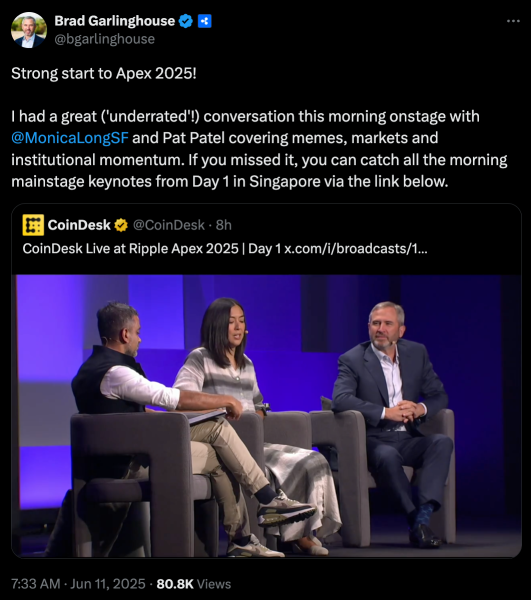
Just this week, South Korea’s central bank scheduled a meeting with the country’s largest commercial banks to address stablecoin issuance, as political support grows for won-pegged tokens. The move reflects increasing pressure to balance innovation with monetary sovereignty.Brad Garlinghouse at Apex 2025.Meanwhile, Ripple’s CEO Brad Garlinghouse, speaking at the Apex 2025 summit, called Circle’s IPO a wake-up call for American lawmakers — saying it signals real momentum behind stablecoin regulation and the likely passage of the GENIUS Act this summer.
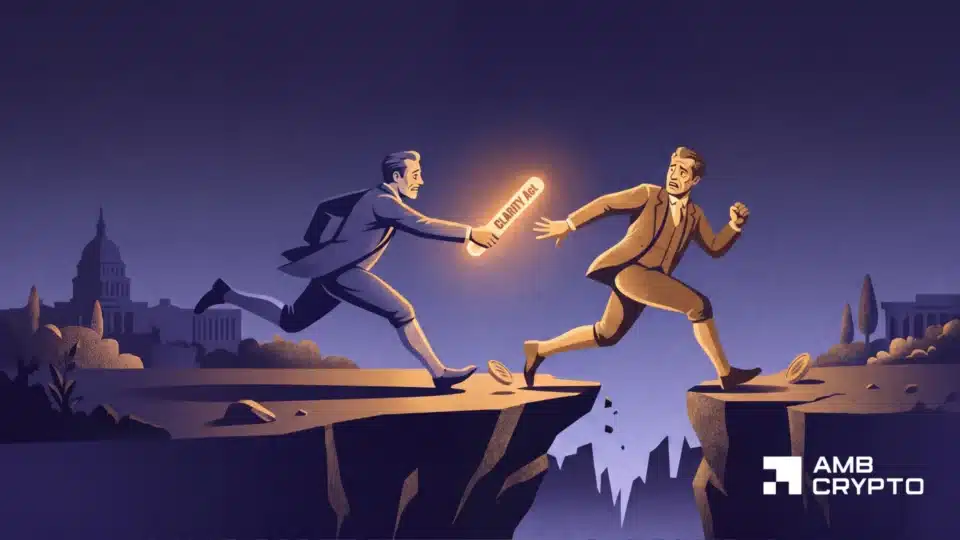
Over in the UK, the Financial Conduct Authority appointed Sarah Pritchard as its first-ever deputy CEO to oversee the stablecoin push.

Translation? Governments no longer ban or ignore stablecoins – they’re gearing up to control them.

The fact is, stablecoins like $USDC and $USDT are now the lifeblood of crypto. They let people move money across borders, earn yield, and escape inflation – all without relying on traditional banks.

But as adoption grows, so do the risks.

Hacks, scams, rug pulls – you name it. In a space that’s moving this fast, holding your stablecoins in the wrong wallet is like carrying water in a hemp sack.

Enter Best Wallet & $BEST: Two Power Players in One Ecosystem

Best Wallet happens when you toss everything frustrating about MetaMask and build something smarter, faster, and even fun.

The first of a new generation of non-custodial crypto wallets, Best Wallet combines cutting-edge tech, sleek usability, and industry-first tools to help you trade in and store everything from stablecoins to meme coins.
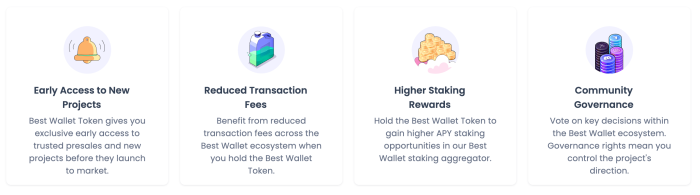
Best Wallet benefits.

Fireblocks’ MPC-CMP technology provides military-grade security, without the military-grade complexity.

But what sets this wallet apart is Best Wallet’s exclusive Upcoming Tokens feature, which gives you exclusive access to new token launches – all within the app.

The wallet aims to capture 40% of the burgeoning crypto wallet market, and to do so, it has launched Best Wallet Token ($BEST). The token is now in presale, and available through the Best Wallet app or the official presale website.

Holding $BEST unlocks early access to new crypto projects, reduced fees, ecosystem governance, and even bonus perks through Best Wallet’s fast-growing iGaming partnerships.

You can buy $BEST at the early bird price of $0.025165. So far, investors have poured in over $13.2M, hoping to capitalize on Best Wallet’s anticipated meteoric rise.

Why $BEST Might Be 2025’s Smartest Buy

At the current price of $0.025165, $BEST is still in the early innings, but forecasts suggest it could reach $0.072 by the end of 2025 if the wallet continues to see 50% month-on-month growth.
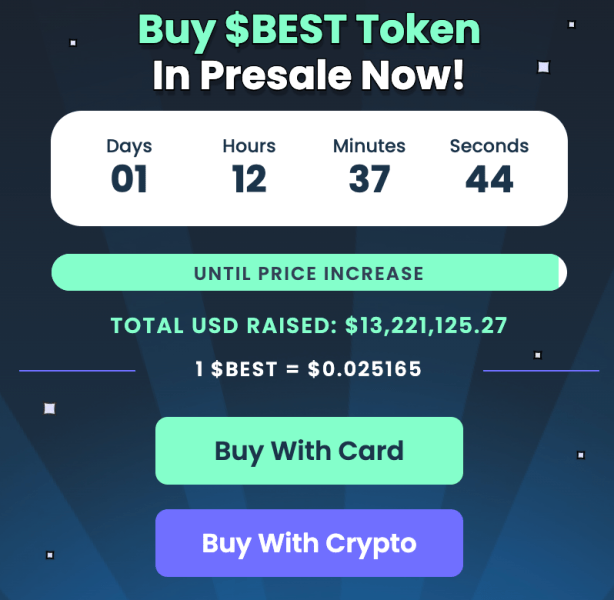
Buy $BEST in the presale phase.

That’s a 186% increase. And if you’re more patient? Predictions for 2026 hit $0.62, which is over 2,360% of today’s price.

Let’s say you grab 10K $BEST at the current price – a $251.65 investment. $BEST offers a 20% APY through staking, so after one year, you’d have 12,000 $BEST.

Even if the price stayed flat, that’s already more tokens in your bag. But if that price hits $0.072 in 2025, your stack would be worth $864 – that’s more than 3x your money in less than a year.

Fast forward to 2026. At $0.62, your 12K tokens could be worth $7,440. That’s from a $250 starting point. You didn’t find a golden goose – you just downloaded a wallet and made a smart play.

Presales come and go, but when a token powers a fast-growing product and delivers real utility, the upside isn’t just hype – it’s structural.

A Smart Time to Get In

The stablecoin era is just getting beginning. Regulation is coming, adoption is rising, and the tools we use today will shape the future of finance.

If you’re looking for a safe bet in a wild market, Best Wallet and $BEST are worth your attention.

Remember that this is not financial advice. Always do your research before investing in crypto.

Editorial Process for bitcoinist is centered on delivering thoroughly researched, accurate, and unbiased content. We uphold strict sourcing standards, and each page undergoes diligent review by our team of top technology experts and seasoned editors. This process ensures the integrity, relevance, and value of our content for our readers.

As a crypto writer, Bogdan’s responsibilities are split between researching and writing articles and entertaining the team with his humor bordering on the politically incorrect, an aspiring Bill Burr, if you will. Thanks to his 12+ years of writing experience in just as many fields, including tech, cybersecurity, modelling, fitness, crypto, and other topics-that-shall-not-be-named, he's become a genuine asset to the team. While his position as a senior writer at PrivacyAffairs thought him valuable lessons about the power of self-management, his entire writing career was and is an exercise in self-improvement. Now, he's ready to sink his teeth into crypto and teach people how to take control of their own money on the blockchain. With fiat as an eternally devaluing currency, Bitcoin and altcoins seem like the best-fitting alternative for Bogdan. Bogdan’s biggest professional accomplishment, aside from securing a position as a main writer for Bitcoinist, was his 5-year run as a writing manager at Blackwood Productions, where he coordinated a team of four writers. During that time, he learned the value of teamwork and that of creating a working environment that breeds efficiency, positivity, and friendship.

Lecturas Relacionadas

Tiger Research: Zuckerberg comienza a apostar por los mercados de predicción, mientras que los países asiáticos aún los ven como apuestas

El artículo de Tiger Research explora el auge de los mercados de predicción, destacando que, tras años siendo solo un concepto, la industria despegó alrededor de 2020 con un volumen de negocios mensual que ahora supera los 140.000 millones de dólares. La entrada de Meta, con Mark Zuckerberg liderando el desarrollo de la aplicación Arena, se señala como prueba de que esta industria ha superado su fase experimental. El texto repasa sus orígenes, desde las apuestas políticas informales del siglo XVIII hasta el mercado académico de la Universidad de Iowa (IEM) y su similitud con las opciones binarias. Explica su funcionamiento actual: se negocian contratos binarios (sí/no) sobre eventos diversos, cuyos precios, determinados en un libro de órdenes, reflejan la probabilidad del resultado. Los "oráculos", descentralizados o centralizados, son los mecanismos que certifican el resultado final. Se argumenta que estos mercados han evolucionado hacia una infraestructura de "información financiera", superando a encuestas y pronósticos tradicionales porque los participantes arriesgan su propio dinero ("skin in the game"), lo que genera señales de precios más fiables y precisas, como se ha visto en predicciones de política monetaria o elecciones. Sin embargo, se subraya una gran divergencia regulatoria: mientras en EE.UU. los tribunales los han reconocido como instrumentos financieros legítimos, en las principales jurisdicciones asiáticas todavía se equiparan al juego de azar y están prácticamente ausentes del debate político. Esta postura, según el artículo, genera tres problemas: fomenta el arbitraje regulatorio y la fuga de usuarios a plataformas offshore sin supervisión; priva a los países de datos valiosos sobre el sentimiento social que se acumulan en el extranjero; y deja a los usuarios sin protección alguna. La conclusión llama a un cambio de perspectiva en Asia: en lugar de bloquear estos mercados, es necesario iniciar debates para integrarlos en el sistema formal, establecer mecanismos de supervisión transparentes y aprovechar los datos que generan como un activo para la sociedad.

marsbitHace 2 hora(s)

Tiger Research: Zuckerberg comienza a apostar por los mercados de predicción, mientras que los países asiáticos aún los ven como apuestas

marsbitHace 2 hora(s)

Solo 11 días: Claude reescribe millones de líneas de código, un proyecto épico de IA que provoca indignación

El mundo tecnológico se debate tras la controvertida decisión del equipo de Bun, un popular runtime de JavaScript/TypeScript, de reescribir en solo 11 días todo su código base (un millón de líneas) de Zig a Rust utilizando la herramienta Claude Fable 5 de Anthropic, con un coste estimado de 165.000 dólares en APIs. El motivo esgrimido son problemas de estabilidad y bugs de seguridad de memoria en la versión original de Zig, así como el veto de la comunidad Zig al código generado por IA, con la que Bun depende en gran medida. Esta decisión "épica" ha desatado una agria polémica, especialmente por la reacción del creador de Zig, Andrew Kelley, quien en un blog acusó al fundador de Bun, Jarred Sumner, de tener malos hábitos de ingeniería y generar "código basura". Kelley afirmó sentirse aliviado de que Bun abandonara Zig, por miedo a que dañara la reputación del lenguaje. La comunidad se divide entre quienes lo ven como una defensa necesaria de la calidad del código y quienes lo consideran una falta de profesionalidad. Las principales dudas giran ahora en torno al resultado: si bien el proceso fue rápido y relativamente barato, la nueva base de código en Rust, generada mayormente por IA mediante traducción directa, contiene 27.000 líneas de código "unsafe". Muchos expertos temen que esto pueda crear una enorme deuda técnica, haciendo el código difícil de mantener y entender para los desarrolladores humanos en el futuro, anulando así los ahorros iniciales. El proyecto se presenta como un hito ambivalente en la era de la IA, cuyo verdadero impacto solo el tiempo dirá.

marsbitHace 5 hora(s)

Solo 11 días: Claude reescribe millones de líneas de código, un proyecto épico de IA que provoca indignación

marsbitHace 5 hora(s)

Trading

Spot
活动图片