SEC Files New Crypto Lawsuit Against Unicoin Over Alleged $100M Fraud

bitcoinistPublicado a 2025-05-22Actualizado a 2025-05-22

Resumen

The US Securities and Exchange Commission (SEC) has charged New York-based crypto investment Unicoin and three top executives for allegedly...

Trusted Editorial content, reviewed by leading industry experts and seasoned editors. Ad Disclosure

The US Securities and Exchange Commission (SEC) has charged New York-based crypto investment Unicoin and three top executives for allegedly misleading investors and defrauding over $100 million from customers.

Crypto Company Hit With SEC Lawsuit

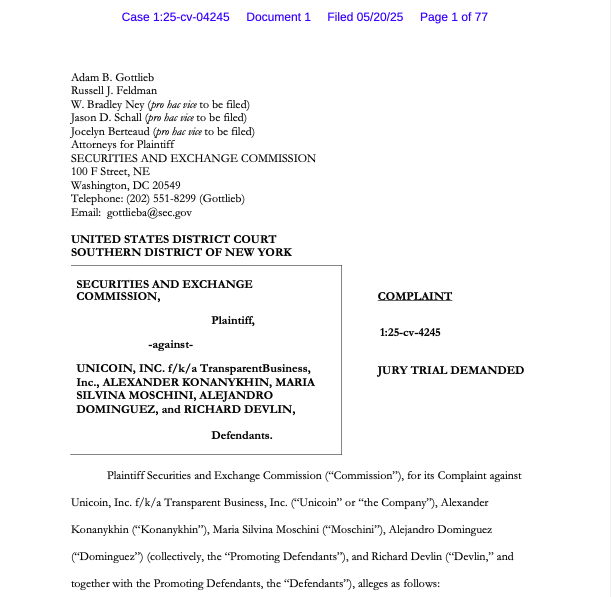
On Tuesday, the SEC announced it had filed a lawsuit in the US District Court For The Southern District of New York against crypto company Unicoin, its CEO and Board Chairman Alex Konanykhin, its former president Silvina Moschini, and its former CIO Alex Dominguez.

The regulatory agency accused the Defendants of making false and misleading statements related to the Unicoin token and the offering of the company’s common stock, charging Unicoin, Konanykhin, Moschini, and Dominguez with violations of the antifraud provisions of the federal securities laws.
crypto

SEC's complaint against Unicoin and its top executives. Source: SEC

It also charged Konanykhin and Unicoin with violating the registration provisions of the Securities Act of 1933, and Konanykhin as a control person for certain of the company’s antifraud violations.

Additionally, it accused Richard Devlin, Unicoin’s general counsel, of violating federal securities laws by making similar false statements in private placement memos the company used to offer and sell rights certificates and Unicoin common stock.

According to Mark Cave, Associate Director in the SEC’s Division of Enforcement, Unicoin and the executives “exploited thousands of investors with fictitious promises that its tokens, when issued, would be backed by real-world assets including an international portfolio of valuable real estate holdings.”

However, “the real estate assets were worth a mere fraction of what the company claimed, and the majority of the company’s sales of rights certificates were illusory. Unicoin’s most senior executives are alleged to have perpetuated the fraud, and today’s action seeks accountability for their conduct,” Cave explained.

Unicoin To ‘Fight Back’ Allegations In Court

The SEC’s complaint affirms that, since February 2022, Unicoin and Konanykhin violated the federal securities laws by engaging in unregistered offers and sales of rights certificates, with Konanykhin offering and selling over 37.9 million of his rights certificates “to offer better pricing and target investors the company had prohibited from participating in the offering to avoid jeopardizing its exemption to registration requirements.”

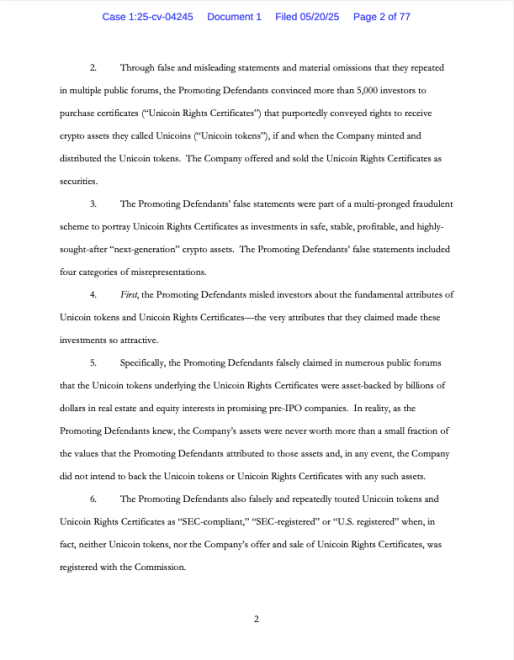
The executive trio is accused of convincing over 5,000 investors to purchase rights certificates “through false and misleading statements that portrayed them as investments in safe, stable, and profitable ‘next generation’ crypto assets,” including claiming that the tokens had sold more than $3 billion in rights certificates, when it seemingly raised just $110 million.
crypto

 SEC's complaint accuses the Defendants of false and misleading statements. Source: SEC

The SEC also alleges that the crypto company falsely claimed the right certificates and Unicoin tokens were “SEC-registered” or “US-registered,” and made extensive promotional efforts to market the right certificates to the public, including advertisements in major airports, New York taxis, on television, and on social media.

As such, the complaint seeks permanent injunctive relief, disgorgement of ill-gotten gains with prejudgment interest, and civil penalties against the Defendants. Additionally, it seeks officer-and-director bars against Konanykhin, Moschini, and Dominguez.

In an April interview with crypto journalist and podcast host Eleanor Terret, Unicoin’s CEO revealed the company planned to fight the SEC’s allegations in court as news of a potential lawsuit emerged.

Following the financial watchdog’s complaint, Konanykhin told Terret they lament the SEC’s actions, affirming they are persecuting “the most compliant cryptocurrency company in the country using blatantly false charges.”
bitcoin, btc, btcusdt, crypto

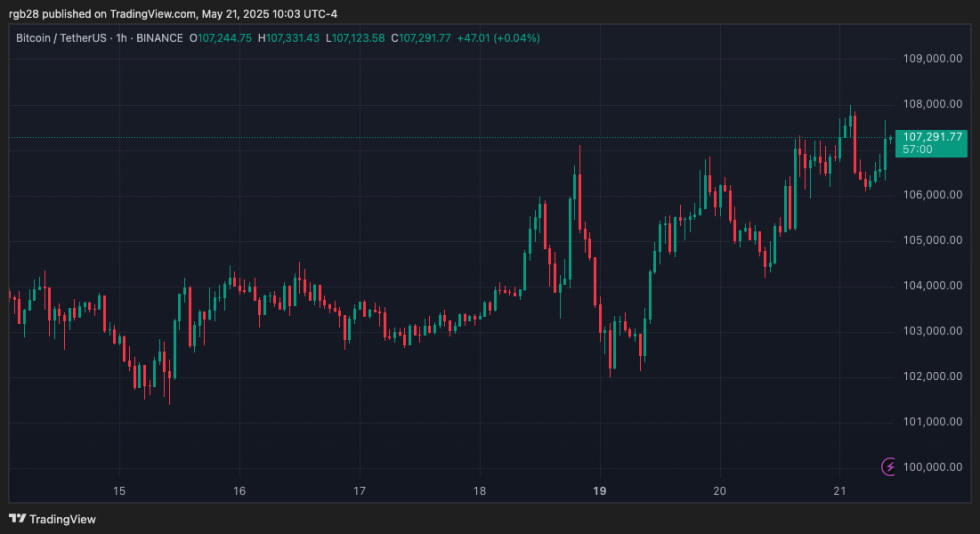
Bitcoin (BTC) trades at $107,291 in the one-week chart. Source: BTCUSDT on TradingView
Featured Image from Unsplash.com, Chart from TradingView.com
Editorial Process for bitcoinist is centered on delivering thoroughly researched, accurate, and unbiased content. We uphold strict sourcing standards, and each page undergoes diligent review by our team of top technology experts and seasoned editors. This process ensures the integrity, relevance, and value of our content for our readers.

Rubmar is a crypto enthusiast who likes learning and improving constantly. She enjoys reporting on the latest news and developments in the crypto industry. Rubmar also enjoys scrapbooking, crafting, simulation games, and watching football.

Lecturas Relacionadas

La caída de Zapper: ¿Fuerzas de la naturaleza o error humano?

Zapper, una vez una estrella de DeFi con 2 millones de usuarios activos mensuales que procesó más de $13 mil millones en transacciones, anunció su cierre definitivo para agosto de 2026. Nacido en 2020 de la fusión de DeFiZap y DeFiSnap, Zapper se impulsó durante el "DeFi Summer", ofreciendo un panel unificado para rastrear carteras en múltiples protocolos y una función "Zap" para operaciones complejas en un solo clic. Atrajo $16.5 millones en financiación de inversores destacados. Sin embargo, no logró convertir su gran volumen de usuarios en un modelo de ingresos sostenible. Su principal fuente, pequeñas comisiones de agregación de DEX, se vio presionada por una competencia feroz, mientras que los altos costos de infraestructura para mantener índices de datos multicalena persistían. Además, el ecosistema DeFi evolucionó hacia una concentración de capital en protocolos líderes, reduciendo la necesidad de las herramientas de diversificación de Zapper. La plataforma intentó varias reinvenciones sin éxito: un sistema de puntos con NFT (2021), la app social Chainchat (2023) y el anunciado protocolo ZAP con token (2024), que nunca se lanzó. La crítica principal es que Zapper, inmerso en un "fundamentalismo blockchain", siguió centrándose en productos costosos para usuarios finales (2C) en lugar de fortalecer sus funcionalidades generadoras de ingresos, y no se adaptó a los cambios del mercado. Su caída sirve como advertencia para los proyectos de herramientas en Web3: la mera tracción inicial no garantiza la supervivencia; se requiere un modelo de negocio claro, adaptabilidad y un enfoque en soluciones que resuelvan problemas reales y generen valor sostenible.

Foresight NewsHace 14 min(s)

La caída de Zapper: ¿Fuerzas de la naturaleza o error humano?

Foresight NewsHace 14 min(s)

Zuckerberg comienza a apostar por los mercados de predicción, mientras que los países asiáticos aún los consideran apuestas

Mark Zuckerberg comienza a apostar por los mercados de predicción, mientras que los países asiáticos aún los consideran apuestas. Estos mercados, que han alcanzado un volumen comercial mensual de 140.000 millones de dólares, transforman la incertidumbre futura en probabilidades en tiempo real a través de contratos binarios (resultado a 1 o 0 dólares). Su mecanismo se basa en que los participantes arriesgan su propio capital, lo que convierte la información del mercado en más fiable. Aunque su origen se remonta a siglos atrás, la tecnología blockchain los ha hecho mainstream. Grandes empresas como Meta, con su proyecto "Arena", los validan como industria. Funcionan como infraestructura de información financiera, superando en precisión a sondeos tradicionales en áreas como política o macroeconomía, ya que el error tiene un coste real. Occidente los está integrando en su sistema financiero regulado. Sin embargo, en Asia predominan las prohibiciones al equipararlos al juego. Este enfoque plantea problemas: fuga de capitales a plataformas extranjeras no reguladas, pérdida de soberanía sobre datos valiosos de predicción social y desprotección de los usuarios. El artículo argumenta que Asia debe pasar de bloquear estos mercados a debatir cómo incorporarlos de forma responsable al sistema formal, aprovechando sus datos como un activo, en lugar de ceder el liderazgo a actores externos.

marsbitHace 17 min(s)

Zuckerberg comienza a apostar por los mercados de predicción, mientras que los países asiáticos aún los consideran apuestas

marsbitHace 17 min(s)

Trading

Spot
活动图片