2026 Hong Kong Web3 Carnival Unveils First Batch of Guest Lineup

深潮Publicado a 2025-12-19Actualizado a 2025-12-19

Resumen

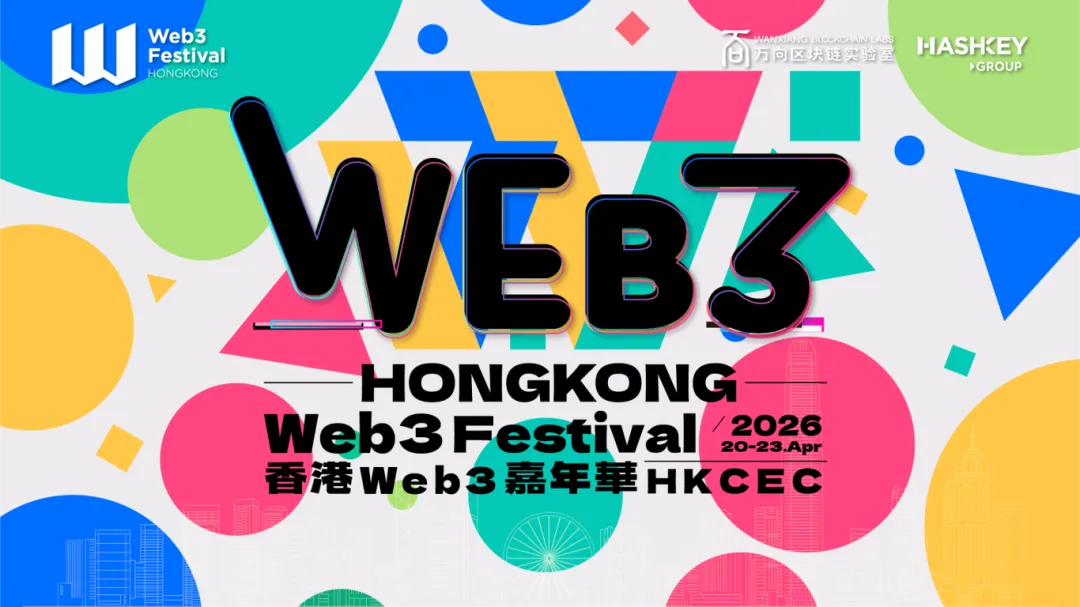
The 2026 Hong Kong Web3 Carnival, co-organized by Wanxiang Blockchain Lab and HashKey Group, will take place from April 20 to 23 at the Hong Kong Convention and Exhibition Centre. This annual event, now in its fourth consecutive year, aims to bridge traditional and innovative sectors while connecting Eastern and Western global perspectives. Prominent confirmed speakers include John Lee, Financial Secretary of the Hong Kong SAR; Xiao Feng, Chairman of Wanxiang Blockchain and HashKey Group; Solana Foundation President Lily Liu; and other key industry leaders. The event is supported by strategic partners such as the Hong Kong Trade Development Council and sponsors including OKX Web3, Qtum, and SlowMist. The carnival has already attracted over 500 high-level executives from traditional finance and real-world asset sectors, indicating strong cross-industry interest. It serves as a critical platform for high-net-worth individuals and core decision-makers to explore Web3 opportunities. Since its inception in 2023, the event has grown into one of the most influential crypto conferences globally, with over 120,000 attendees, 350 projects, and 1,200 speakers across its previous editions. It continues to foster a global ecosystem, leveraging Hong Kong’s unique position to connect Asian markets with international resources, driving integration of technology, business models, and regulatory practices. The 2026 Hong Kong Web3 Carnival aims to not only showcase the future of Web3 but al...

"The Web3 Carnival is the most locally distinctive industry summit and the only one that can reach millions of high-level local developers, entrepreneurs, and newcomers."

— John, Head of Asia-Pacific at TON Foundation

"As a sponsor for four consecutive years of the Hong Kong Web3 Festival, we have witnessed the entire process of Hong Kong's Web3 ecosystem from its infancy to accelerated development. This stage not only connects the most forward-looking technological forces globally but also practically promotes the industry in finding a balance between security, compliance, and innovation. We look forward to continuing to work with ecosystem partners to build a more secure Web3 infrastructure and drive long-term value and safe development in the industry."

— SlowMist

......

From April 20 to 23, 2026, the 2026 Hong Kong Web3 Carnival, jointly organized by Wanxiang Blockchain Lab and HashKey Group, will once again take place at the Hong Kong Convention and Exhibition Centre.

As an annual event held in Hong Kong for four consecutive years, this year's Carnival will continue to unleash its "home advantage," linking tradition with innovation and connecting the East with the West, allowing global wisdom to converge here.

Gathering of Authorities: The 2026 Grand Event Begins Anew

Heavyweight speakers and global ecosystem partners have gathered to form a solid foundation and diverse structure for this year's event.

Currently, Paul Chan Mo-po, Financial Secretary of the Hong Kong Special Administrative Region; Xiao Feng, Chairman of Wanxiang Blockchain and CEO of Hashkey Group; Duncan Chiu, Legislative Council Member (Technology and Innovation Sector) of the Hong Kong Special Administrative Region; Lily Liu, President of Solana Foundation; Cynthia Wu, Co-founder and Chief Business Officer of MatrixPort; Yat Siu, Co-founder and Chairman of Animoca Brands; and Professor Lee Kwok Chan, Dean of the Global FinTech Institute and Professor at Singapore University of Social Sciences (listed in no particular order), among other global thought leaders, have confirmed their attendance to share cutting-edge insights and perspectives. More heavyweight guests will be announced continuously. Stay tuned.

Simultaneously, this year's Carnival is honored to collaborate with strategic partner the Hong Kong Trade Development Council and has received strong support from title sponsor OKX Web3, platinum sponsor Qtum, exclusive dinner sponsor Sui Foundation, first-tier booth sponsors bitbaby, HappyMeta, and SlowMist, second-tier booth sponsors Ellipal, Fufuture, and Passey, and third-tier booth sponsor RWA.LTD (sponsors of the same tier listed in alphabetical order), among other global ecosystem partners, to jointly create a global industry event deeply integrating ideas, resources, and opportunities.

Breaking Boundaries: Linking Tradition and Innovation

The appeal of this year's Carnival extends beyond the native Web3 domain, with even stronger "boundary-breaking" momentum already evident.

Leveraging the deep积淀 of Wanxiang Blockchain Lab and HashKey in resource channels and brand building, as of December 2025, the 2026 Hong Kong Web3 Carnival has attracted over 500 executives from traditional finance and实体产业 to participate. These attendees are all high-net-worth individuals and core corporate decision-makers with a strong interest in the Web3 field.

Tangible cooperation begins with high-quality encounters. This is also one of the core values of this year's Carnival: building a dialogue bridge between cutting-edge digital innovation and vast traditional industry resources, making subsequent integration truly possible.

Connecting East and West: Building a Global Ecosystem

Since its inaugural event in 2023, the Hong Kong Web3 Carnival has rapidly grown into one of the world's most influential crypto summits, providing a high-standard, high-quality, and in-depth platform for global East-West exchange.

Over the past three events, it has attracted over 100,000 on-site participants, gathered more than 350 cutting-edge projects, invited over 1,200 speakers to share insights, and spawned over 400 side events, successfully building a vibrant ecosystem centered around the conference and radiating throughout the city.

As partners have stated, this platform is both "the most locally distinctive industry summit and the only one that can reach millions of high-level local developers, entrepreneurs, and newcomers" and is always committed to "connecting the most forward-looking technological forces globally," continuously "promoting the industry in finding a balance between security, compliance, and innovation."

As a hub connecting Eastern and Western Web3 ecosystems, the 2026 Hong Kong Web3 Carnival will continue to leverage Hong Kong's unique advantage of "being backed by the mainland and facing the world" to build an efficient channel between the Asian market and global resources. This year's event will be dedicated to promoting the deep integration of global cutting-edge technologies, business models, and compliance practices with the Asian market. Simultaneously, it will help local outstanding developers, entrepreneurial teams, and innovative projects step onto the international stage, achieving comprehensive connectivity and value linkage from technology and resources to markets.

In April 2026, let us gather once again in Hong Kong to not only witness the future but also participate in it and define it!


Preguntas relacionadas

QWhen and where will the 2026 Hong Kong Web3 Carnival be held?

AThe 2026 Hong Kong Web3 Carnival will be held from April 20 to 23, 2026, at the Hong Kong Convention and Exhibition Centre.

QWho are the co-organizers of the 2026 Hong Kong Web3 Carnival?

AThe 2026 Hong Kong Web3 Carnival is co-organized by Wanxiang Blockchain Laboratory and HashKey Group.

QWhich notable figures have been confirmed as speakers for the event?

AConfirmed speakers include Paul Chan Mo-po (Financial Secretary of the HKSAR), Xiao Feng (Chairman of Wanxiang Blockchain and Hashkey Group), Duncan Chiu (Legislative Council Member for Technology & Innovation), Lily Liu (President of Solana Foundation), Cynthia Wu (Co-founder & CCO of MatrixPort), Yat Siu (Co-founder & Chairman of Animoca Brands), and Professor Lee Kwok Choy (President of the Global FinTech Institute and Professor at Singapore University of Social Sciences).

QWhat is a key 'breakthrough' focus of the 2026 Carnival mentioned in the article?

AA key 'breakthrough' focus is its strong appeal beyond the native Web3 field, attracting over 500 executives from traditional finance and实体产业 (physical industries) by December 2025, who are high-net-worth individuals and core corporate decision-makers interested in Web3.

QWhat role does the Hong Kong Web3 Carnival aim to play in the global ecosystem according to the article?

AThe Carnival aims to serve as a hub connecting Eastern and Western Web3 ecosystems, leveraging Hong Kong's unique advantage of 'backing onto the Mainland and facing the world' to build an efficient channel between Asian markets and global resources, facilitating the deep integration of global technologies and practices with Asia and helping local talent reach the international stage.

Lecturas Relacionadas

$GCOIN de Playnance se lista en KoinBX en medio del rápido crecimiento en India

Playnance, el ecosistema web3 de iGaming basado en blockchain, anunció el 18 de junio que su token nativo, $GCOIN, se ha listado en el intercambio KoinBX. Esta medida busca facilitar el acceso a una de las comunidades de más rápido crecimiento de la plataforma, particularmente en India, donde más de 130 socios del programa "Be the Boss" se han unido, creando comunidades con miles de jugadores activos. A través del modelo "Be the Boss", los participantes pueden crear y gestionar sus propias comunidades de juego, recibiendo incentivos por su actividad. Pini Peter, CEO de Playnance, destacó que India se ha convertido en uno de los mercados más comprometidos. Un ejemplo es el socio Dr. Nicolas, quien ha ganado más de 57.000 dólares en los últimos meses y valora la oportunidad de construir una comunidad propia. El token $GCOIN es el centro de este ecosistema, actuando como token de utilidad para recompensar la participación y alinear incentivos entre jugadores y "Bosses". Su listado en KoinBX forma parte de la estrategia de expansión global de Playnance, que busca aumentar la utilidad y accesibilidad de $GCOIN combinando propiedad comunitaria, participación gamificada e incentivos en blockchain. Fundada en 2020, Playnance procesa alrededor de un millón de transacciones diarias y desarrolla productos en cadena no custodiados con el objetivo de atraer a usuarios convencionales (Web2) hacia entornos blockchain, simplificando la experiencia del usuario sin perder transparencia.

TheNewsCryptoHace 6 min(s)

$GCOIN de Playnance se lista en KoinBX en medio del rápido crecimiento en India

TheNewsCryptoHace 6 min(s)

STRC cae a un mínimo histórico, la máquina de movimiento perpetuo de Saylor se atasca

El año pasado, Michael Saylor presentó STRC a Wall Street como un "motor de crédito digital", un ciclo perpetuo donde los inversores obtenían dividendos, MicroStrategy compraba Bitcoin, y todos ganaban. Hoy, ese motor se ha detenido. El 19 de junio, STRC cayó a un mínimo histórico de 85,32 dólares, muy por debajo de su valor nominal de 100 dólares, con un volumen de negociación inusualmente alto. Esta caída pone en duda la lógica central del producto: mantener un precio estable cerca del valor nominal para financiar continuamente la compra de Bitcoin. La máquina de Saylor funciona así: si STRC cotiza por encima de 100$, MicroStrategy emite nuevas acciones (ATM) para recaudar dinero y comprar más Bitcoin. Si Bitcoin sube, la máquina continúa. Pero ahora, tres factores convergen para una "tormenta perfecta": 1) El precio de Bitcoin se ha reducido a más de la mitad desde sus máximos. 2) Los recursos para pagar el dividendo del 11,5% de STRC se han reducido drásticamente tras pagar deuda, obligando a MicroStrategy a vender, por primera vez desde 2022, 32 BTC para cubrir dividendos, rompiendo el tabú de "nunca vender". 3) Un producto rival, SATA de Strive, ofrece mayor rentabilidad y seguridad, atrayendo a los inversores y ampliando la brecha de precio con STRC. Así, se activa un "volante de inercia inverso": Bitcoin cae, STRC se desploma, se detiene la financiación vía ATM, se vende Bitcoin para pagar dividendos, la confianza se erosiona y STRC cae aún más. Aunque Saylor argumenta que el modelo es matemáticamente sostenible con una apreciación anual del Bitcoin del 2,3%, el mercado no solo opera con lógica matemática. La narrativa ha cambiado de "nunca vender" a "vender para pagar", probando la resistencia del modelo de "empresa del Tesoro de Bitcoin" en un mercado bajista. La supervivencia de MicroStrategy no está en juego, pero la prueba de estrés para su fe en el mecanismo de financiación ha comenzado. En el clima actual de temor del mercado y señales alcistas de la Fed, ese 2,3% necesario parece más pesado que nunca.

marsbitHace 24 min(s)

STRC cae a un mínimo histórico, la máquina de movimiento perpetuo de Saylor se atasca

marsbitHace 24 min(s)

Guía para aprovechar los mínimos del mercado: Cómo evaluar las criptomonedas utilizando el flujo de caja

**Guía de Inversión en Cripto: Evaluación por Flujo de Caja con Aave como Caso de Estudio** Los inversores enfrentan el desafío de valorar activos digitales tras las caídas del mercado. Mientras que activos como Bitcoin son similares a productos básicos, muchos tokens, especialmente en DeFi, se asemejan a derechos financieros y pueden valorarse mediante flujos de caja. Este análisis toma como ejemplo a Aave, un protocolo líder de préstamos descentralizados. El informe clasifica los criptoactivos en un espectro entre "activos tipo mercancía" (ej. Bitcoin) y "activos con flujo de caja" (ej. tokens DeFi). Estos últimos derivan su valor de los ingresos generados por el protocolo subyacente y de los mecanismos que capturan este valor para los tenedores del token. Aave opera como un mercado de préstamos en cadena, generando ingresos a partir de diferenciales de tasas de interés, su stablecoin nativa GHO y su tesorería. Presenta datos financieros transparentes con un fuerte crecimiento de ingresos y márgenes de beneficio neto cercanos al 50%. Aunque ha enfrentado desafíos recientes, su dominio en el sector de préstamos DeFi, su tesorería diversificada y su hoja de ruta de desarrollo (GHO, Horizon, V4) respaldan su fundamento. Utilizando un análisis de flujo de caja descontado (DCF) y comparaciones de múltiplos P/E, Grayscale Research estima un valor razonable para el token AAVE entre 80 y 100 dólares, cercano a su precio actual (~75$). En un escenario base optimista con adopción acelerada de stablecoins y tokenización de activos reales (RWA), el valor podría subir a aproximadamente 175 dólares en un año. El informe destaca la **importancia crítica del mecanismo de captura de valor**: que un protocolo genere ingresos no garantiza que el token se aprecie. Es esencial evaluar cómo las ganancias se transfieren a los tenedores, ya sea mediante recompra y quema, dividendos u otras estructuras. Aave ha evolucionado su gobernanza para alinear más directamente los incentivos económicos del protocolo con los poseedores de AAVE. A pesar de las incertidumbres regulatorias en torno a las DAOs, marcos como la propuesta "Ley CLARITY" podrían ofrecer mayor claridad. La maduración del mercado está premiando a los proyectos con fundamentales sólidos y modelos de negocio sostenibles, marcando un alejamiento de la pura especulación hacia un análisis basado en flujos de caja y métricas tradicionales.

marsbitHace 1 hora(s)

Guía para aprovechar los mínimos del mercado: Cómo evaluar las criptomonedas utilizando el flujo de caja

marsbitHace 1 hora(s)

Tras el liderazgo del sector de semiconductores, ¿está el capital comprando pedidos de IA o una recuperación macroeconómica?

Resumen ejecutivo: Tras la noticia de un posible acuerdo entre EE.UU. e Irán que alivió la tensión en el estrecho de Ormuz, los mercados subieron el 18 de junio, destacando los semiconductores y la cadena de hardware de IA. El artículo argumenta que esta subida no se debe principalmente a una mejora fundamental repentina en la IA, sino a una ventana de reparación de valoraciones abierta por la reducción del riesgo geopolítico (que baja las expectativas de inflación y la presión sobre los tipos). La clave es ver qué áreas atrajeron el capital durante esta ventana. El análisis sugiere que el dinero no fluyó de manera generalizada a toda la tecnología, sino que se centró de forma selectiva en áreas como chips, interconexión óptica, memoria y fabricación local, partes de la infraestructura de IA con narrativas de ingresos más verificables a corto plazo (pedidos, gasto de capital). El fuerte repunte de Intel, impulsado por declaraciones políticas sobre una posible colaboración con Apple, se presenta más como un catalizador de sentimiento dentro de esta ventana, que como un cambio fundamental confirmado. En conclusión, la subida parece una reparación selectiva de la aversión al riesgo. Para que se convierta en una tendencia más sostenida del ciclo de infraestructura de IA, será necesario que los próximos resultados trimestrales confirmen la solidez del gasto en capital de las nubes públicas, los pedidos de servidores de IA y las guías de ingresos de empresas de hardware específicas.

marsbitHace 1 hora(s)

Tras el liderazgo del sector de semiconductores, ¿está el capital comprando pedidos de IA o una recuperación macroeconómica?

marsbitHace 1 hora(s)

Trading

Spot
Futuros
活动图片