Capture the Latest Opportunity: How ViaBTC Capital Picks the Promising GameFi Projects

newsbtcPublicado a 2022-04-14Actualizado a 2022-04-14

Resumen

Lately, the crypto market has been hit by certain short-term impacts as a result of Anton Nell and Andre Cronje’s...

Lately, the crypto market has been hit by certain short-term impacts as a result of Anton Nell and Andre Cronje’s departure from crypto. As the market pins its hope on new projects, investors are also in an urgent search for promising projects. ViaBTC Capital, a rising star in crypto investment, has started to invest in new crypto categories starting from late 2022. It has focused on GameFi, a small category that may promise huge returns. Analyzing on-chain/off-chain indicators and the gaming fundamentals, ViaBTC Capital is looking for the next hit in GameFi.
New opportunities amidst current tensions
Although the market now remains sluggish, some promising GameFi projects are still emerging. Turning challenges into opportunities, ViaBTC Capital is exploring a new crypto category with great potential. At ViaBTC Capital, investment strategies are never confined to the immediate interest. Instead, the institution focuses on long-term development. For example, from a long-term perspective, it helps cryptocurrencies capture the spotlight in global finance, which brings both challenges and opportunities.
The same also applies to the GameFi market. Though 2022 is still waiting for the appearance of phenomenal projects with worldwide impact, the GameFi category is merely a start from the viewpoint of the entire gaming market. Along with the progress of technologies such as blockchain, AR/VR, the Internet of Things, and the metaverse, GameFi mechanisms will grow more diversified in the future. This, coupled with the P2E model, allows GameFi to integrate life, entertainment, and work, which will broaden its growth prospect.
Finding the next hit in GameFi
Having noticed the potential of GameFi, ViaBTC Capital has made fast moves and invested in emerging projects, including four new GameFi projects (STEPN, Edenbrawl, Infinite launch, and AAG).

  1. STEPN

Official website: https://stepn.com/
STEPN is a Web3 lifestyle app with inbuilt Game-Fi and Social-Fi elements. Players will first need to purchase or rent NFT sneakers. In STEPN, you can make handsome earnings by walking, jogging, or running outdoors. STEPN is currently under the public beta phase.
With Game-Fi, STEPN aims to nudge millions toward a healthier lifestyle, combat climate change, and connect the public to Web 3.0 while building a SocialFi platform that fosters user-generated Web 3.0 content and promotes the Web 3.0 lifestyle.
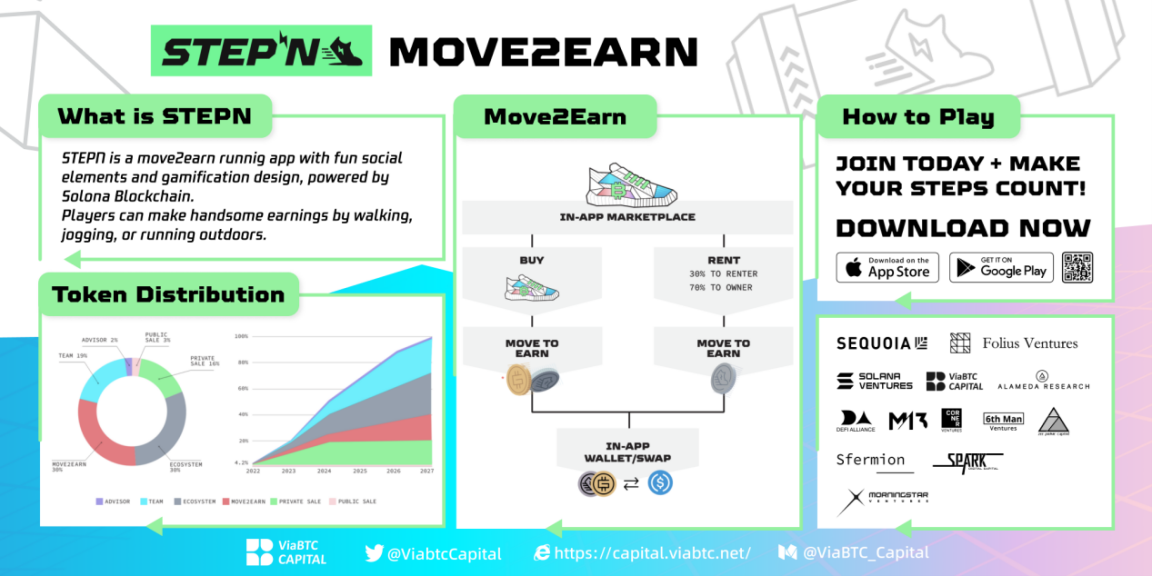
STEPN’s One Page

  1. Infinite launch

Official website: https://infinitelaunch.io/
Focusing on GameFi and NFTs Infinite Launch will be the first launchpad to have its own blockchain games to help new crypto adopters get acquainted with NFTs and Play-to-Earn models. Right now, three GameFi projects plan to go through IDO on Infinite Launch. In addition, the platform has also launched the NFT Whale Club.
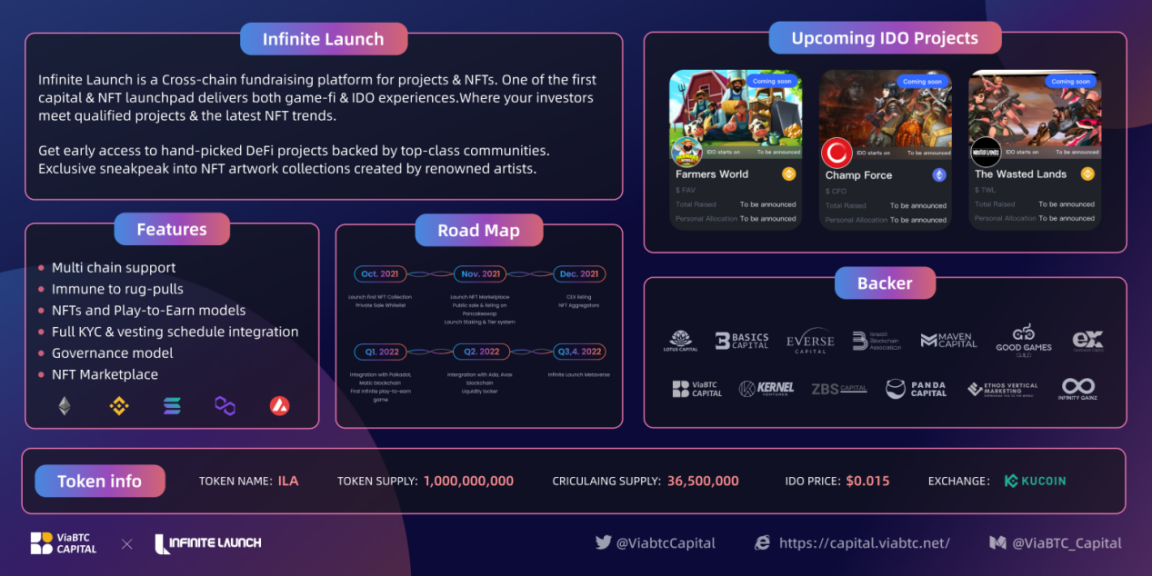
Infinite’s One Page

  1. Edenbrawl

Official website: https://www.edenbrawl.com/
Edenbrawl (formerly “Circuits and Shields”) combines the action combat of a brawler with the endless depth of a MOBA to create a “Mobrawler”. In Edenbrawl, players can kill or block their enemy or land the ball in the enemy’s “endzone” to win the 20-minute MOBA match.
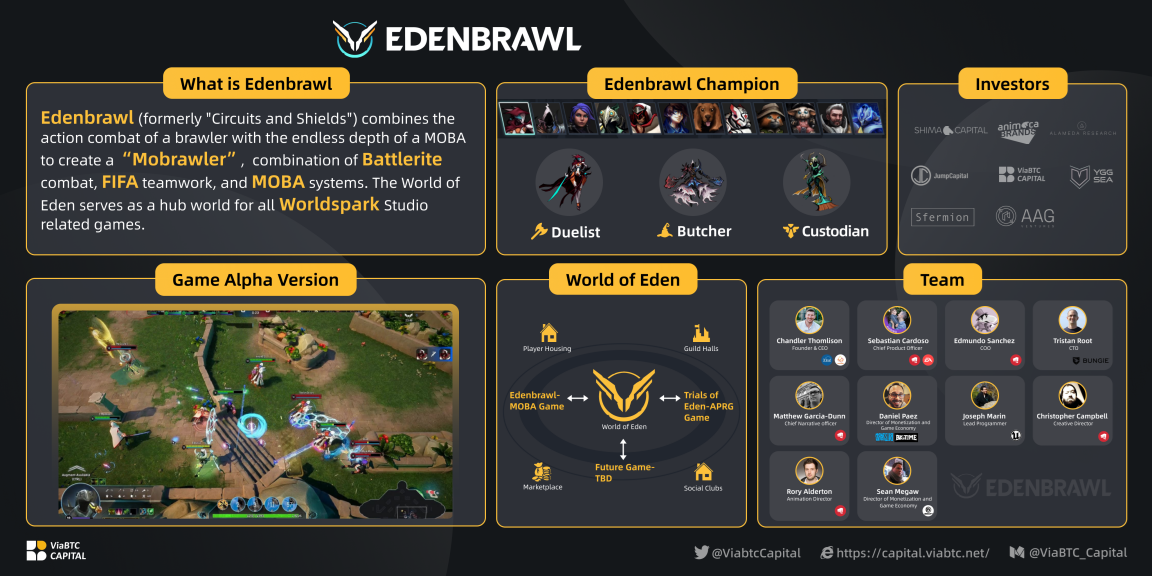
Edenbrawl’s One Page

  1. AAG

Official website: https://aag.ventures/
AAG, a one-stop platform for players, guilds, and investors, aims to create economic freedom for the unemployed worldwide through the metaverse economy. It is also one of the fastest-growing guilds in the P2E industry. As of 2021, AAG covered seven countries and created an environment where players, guilds, and investors could interact seamlessly and make earnings through the services it provides.
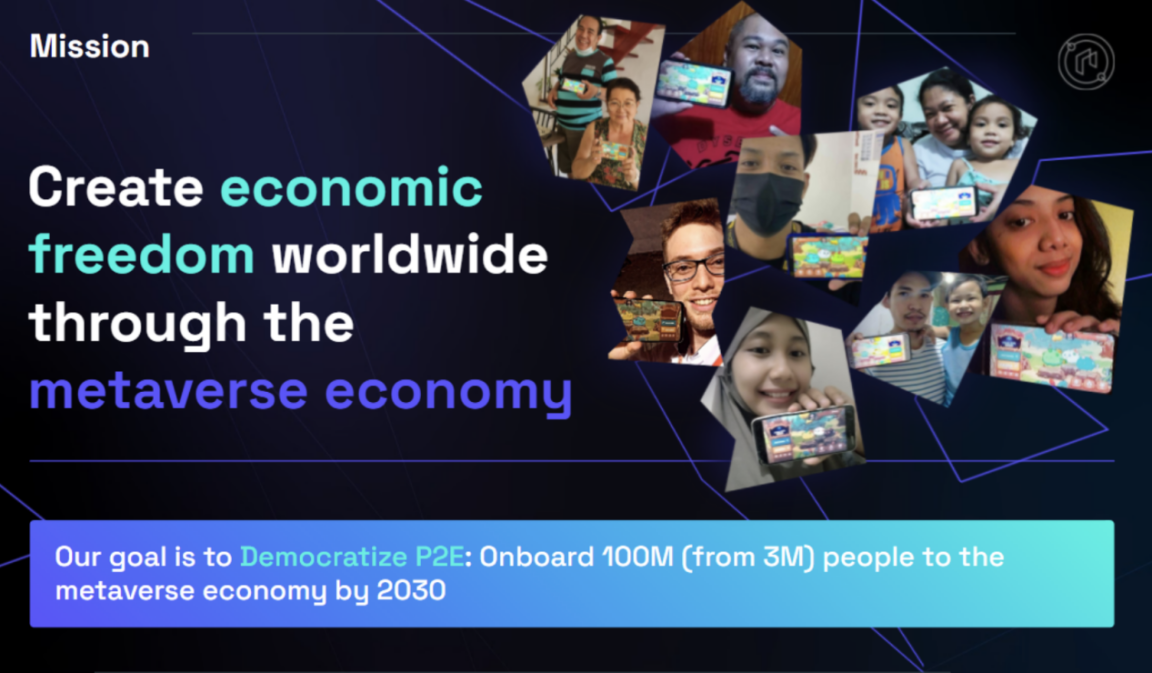
Official website of AGG
AAG is not just a platform. It has built an all-new model. It has partnered up with many guilds, games, and investors, including ViaBTC Capital. Such a powerful investment network provides AAG with a strong business foundation and empowers it in fields that include gaming, blockchain, DeFi, and community building.
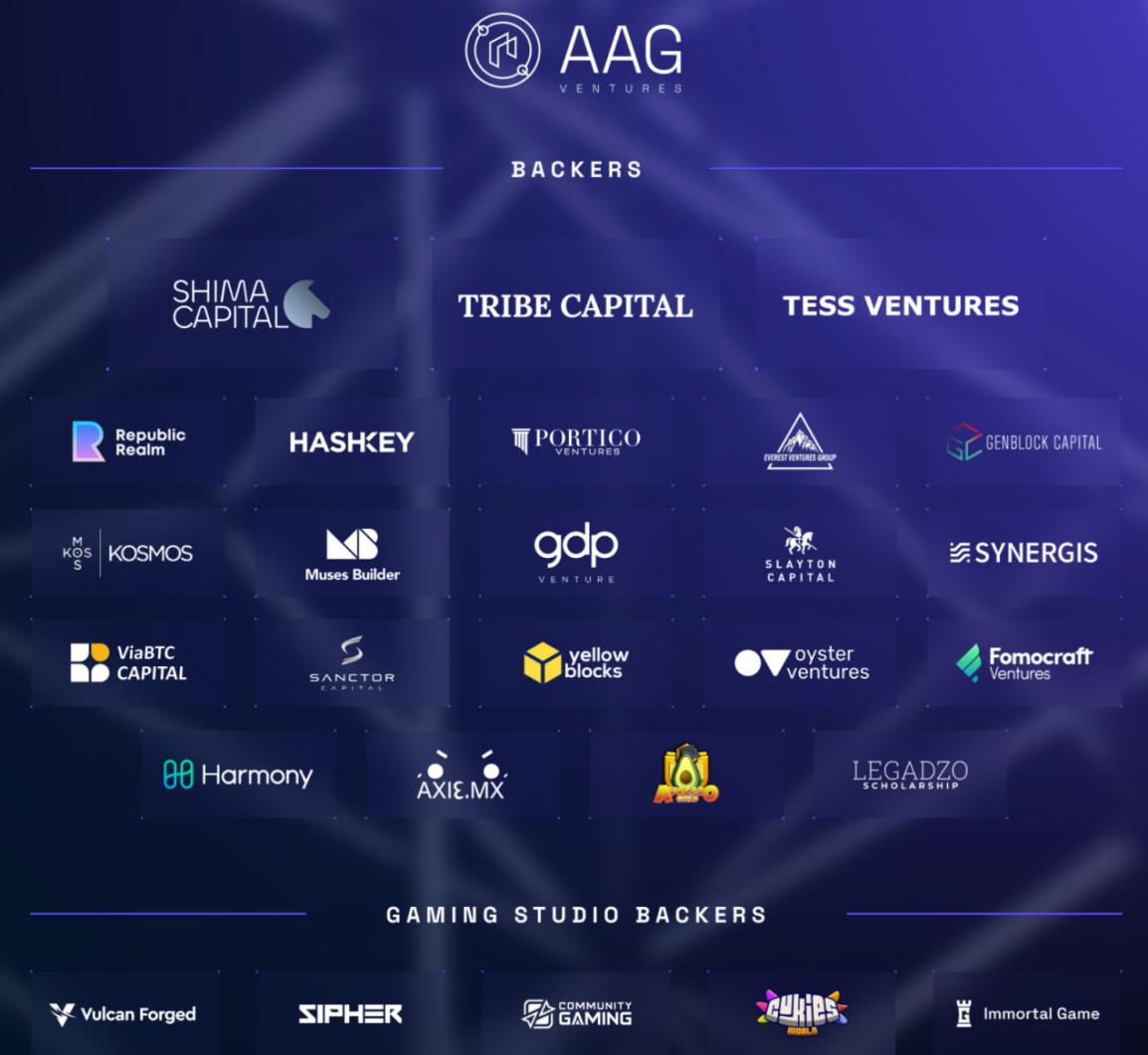
Institutional investors backing AAG
A time of both challenges and opportunities
The GameFi market is shifting to second-generation and third-generation blockchain games. The market landscape of GameFi differs from that of other blockchain categories. Its relationship with the rest of the blockchain space resembles that between the metaverse and the Internet. GameFi successfully duplicates the financial sector, lending/borrowing system, and value-storing framework in the real world through its distributed structure and the confirmation of asset ownership via blockchain, which is also the reason behind its fast growth.
First-generation blockchain NFT games like CryptoKitties diminished due to the lack of long-term players. Second-generation blockchain games (P2E games like Axie Infinity) run the assets on Layer 2 blockchain networks and operate the game itself off-chain, thereby enabling gameplay with few costs and fast results. In such games, players can earn and monetize in-game tokens by playing the game for minutes. However, they still lack the advantages of conventional AAA games in terms of gaming experiences, game designs, and graphics. As such, second-generation blockchain games failed to build a mature market. ViaBTC Capital has captured the exponential growth of the demand for third-generation blockchain games that stimulate users through paid entertainment such as superior gaming experiences and gameplay, rather than P2E alone.
Having inherited all the advantages of blockchain technology, GameFi has brilliant prospects. In the future, ViaBTC Capital will continue to focus on the value-based investment of gaming ecosystems and engage in investment analysis and project empowerment according to the trend of game development. Meanwhile, it will push for the sound growth of GameFi and help build a prosperous ecosystem of third-generation blockchain games.

Lecturas Relacionadas

Senadores de EE.UU. presionan a los reguladores bancarios para obtener reglas de capital "justas" para las criptomonedas

Un grupo de senadores republicanos estadounidenses está presionando a los reguladores bancarios para que establezcan un marco de capital más claro y justo para las actividades con criptoactivos. En una carta dirigida a la Fed, la FDIC y la OCC, los legisladores, encabezados por la senadora Cynthia Lummis, criticaron los estrictos estándares de capital del Comité de Basilea, que asignan una ponderación de riesgo del 1250% a los criptoactivos, calificándola de "penalización general" que actúa como una prohibición efectiva. Los senadores elogiaron la guía interagencial reciente sobre valores tokenizados, que aclara que deben recibir el mismo tratamiento de capital que sus equivalentes no tokenizados, basándose en el riesgo del activo subyacente y no en la tecnología. Instaron a que este principio se aplique de manera consistente a otros activos digitales y a que se desarrolle un nuevo marco regulatorio, aprovechando también el progreso del proyecto de ley sobre estructura del mercado cripto. La solicitud coincide con el testimonio de los principales reguladores ante el Congreso, donde destacaron un cambio hacia una supervisión más "basada en el riesgo" y eficiente. El presidente de la FDIC, Travis Hill, y el interventor de la OCC, Jonathan Gould, subrayaron el papel del capital para la resiliencia del sistema y se comprometieron a facilitar la innovación responsable, revisando prácticas supervisoras pasadas e investigando denuncias de exclusión bancaria ("debanking").

bitcoinistHace 3 min(s)

Senadores de EE.UU. presionan a los reguladores bancarios para obtener reglas de capital "justas" para las criptomonedas

bitcoinistHace 3 min(s)

Near vuelve al escenario de la IA: la transformación en cadena pública por problemas para pagar salarios, y los agentes y la privacidad como nueva narrativa de crecimiento

**Resumen: Near regresa a la IA: De una cadena de bloques por problemas de pago a Agentes y privacidad como nueva narrativa** Near, fundada por Illia Polosukhin, coautor del influyente artículo "Transformer" de IA, nació de manera inesperada en 2017. La razón original fue pragmática: una startup de IA que Polosukhin cofundó tuvo que pausar su trabajo en "síntesis de programas" (enseñar a máquinas a escribir código) debido a la dificultad de pagar a desarrolladores remotos en todo el mundo. Ante sistemas de pago transfronterizos ineficientes, él y su cofundador decidieron construir su propia cadena de bloques escalable y de bajo costo: Near. Aunque Near ganó tracción como cadena de alto rendimiento, su momento crucial llegó con el auge actual de la IA. La participación de Polosukhin en eventos como el GTC de Nvidia volvió a poner el foco en su legado en IA. Near ha reposicionado su tecnología hacia dos áreas clave: 1. **Near Intents (Intenciones):** Este sistema abstrae la complejidad de las transacciones entre cadenas. Los usuarios (o futuros Agentes de IA) solo declaran su objetivo (ej. "intercambiar BTC por ETH"), y una red de "solvers" (solucionadores) encuentra y ejecuta la mejor ruta, manejando los costos de gas de fondo. Esta capa ha procesado más de **200.000 millones de dólares** en volumen y generado **más de 34 millones** en tarifas, integrada en 25 cadenas. 2. **Transacciones Privadas:** Near ha lanzado funciones de "Intenciones Confidenciales" e "Intercambios Confidenciales" que ocultan los detalles de las operaciones (monto, dirección) hasta su liquidación. Esto protege a los grandes traders del "MEV" y del deslizamiento. Sorprendentemente, este tipo de transacciones ya representa **más del 40%** del volumen reciente en Near, mostrando una fuerte demanda, pero también planteando posibles desafíos regulatorios en el futuro. En resumen, Near ha vuelto a sus raíces en IA, aprovechando su tecnología de cadena abstracta para facilitar la economía de los Agentes de IA y abordando la creciente demanda de privacidad en DeFi, mientras navega por las oportunidades y riesgos de este nuevo capítulo.

marsbitHace 2 hora(s)

Near vuelve al escenario de la IA: la transformación en cadena pública por problemas para pagar salarios, y los agentes y la privacidad como nueva narrativa de crecimiento

marsbitHace 2 hora(s)

De Ethereum a la IA, 'CROPS': ¿Qué son estas 'variables lentas' que Vitalik enfatiza repetidamente?

En las últimas semanas, Vitalik Buterin ha destacado repetidamente el concepto CROPS, definido en el mandato de la Fundación Ethereum (EF Mandate) como los principios rectores fundamentales para Ethereum: Resistencia a la Censura, Resistencia a la Captura, Código Abierto, Privacidad y Seguridad. Más que un lema, CROPS constituye un marco estratégico que orienta el desarrollo de Ethereum hacia la soberanía del usuario, la descentralización robusta y la sostenibilidad a largo plazo, priorizando estos valores sobre mejoras puramente transaccionales como velocidad y costes. La relevancia de CROPS se amplifica con el auge de la IA. A medida que los agentes de IA se integran en billeteras y automatizan operaciones financieras, surge un riesgo crítico: los usuarios podrían ceder el control sobre sus activos, datos e identidad a plataformas centralizadas de IA. Vitalik vincula así "CROPS Ethereum" con "CROPS AI", planteando la necesidad de un ecosistema donde el acceso a la cadena de bloques y la ejecución de modelos de IA sean privados, verificables y resistentes a la censura. Propone soluciones como llamadas remotas a LLM pagadas con pruebas de conocimiento cero (ZK) y lecturas confidenciales de RPC para proteger la privacidad del usuario. En esencia, CROPS trasciende a Ethereum para abordar una cuestión central de la era digital: cómo preservar la autonomía y seguridad del usuario frente a sistemas cada vez más poderosos y potencialmente opacos. Este enfoque podría redefinir el diseño de billeteras y la experiencia de interacción en Web3, posicionando la privacidad, la apertura y el control verificable como pilares esenciales para el futuro.

marsbitHace 2 hora(s)

De Ethereum a la IA, 'CROPS': ¿Qué son estas 'variables lentas' que Vitalik enfatiza repetidamente?

marsbitHace 2 hora(s)

Trading

Spot
Futuros
活动图片