3 reasons why cryptocurrencies are down, these Altcoin are still raking in millions of dollars

Tap Chi BitcoinPublicado a 2023-06-05Actualizado a 2023-06-05

Resumen

This week the crypto market took a hit, with investment sentiment dwindling.

This week the crypto market took a hit, with investment sentiment dwindling.

There are countless factors that contribute to the above negative influence. In the past 4 days alone, the price of Bitcoin has dropped by more than 5% and the price of Ethereum has also dropped by 3%.

In this article, we'll take a closer look at these factors before highlighting Altcoin that are still holding out against the bear wave and raking in millions of dollars in their early sale.

Volatility continues to spread across the crypto coin market, only last week's uptrend has been superseded by a dramatic price reversal.

A key component of this change has been the financial uncertainties surrounding the US Government debt ceiling.

In the past two weeks, American politicians have engaged in intense negotiations to find a solution to reach an agreement to raise the public debt ceiling, thereby preventing the risk of default.
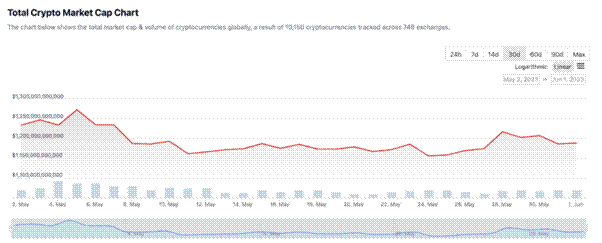
The risk of default on the US debt has made countless investors restless because the country has never had a history of public debt default.

However, in the event that this scenario actually occurs, it will most likely cause a chain of domino effects on financial markets – and the crypto market will not escape that fate.

According to CNBC, the US House of Representatives passed a bill to raise the debt ceiling yesterday, but the bill still needs to be XEM and approved by the Senate before it can take effect.

Another factor causing the market to falter is the recent downtrend in the price of Bitcoin ($ BTC).

Based on CoinGecko's analysis, Bitcoin's market cap is currently at $521 billion, which equates to the coin dominating 44% of the entire market.
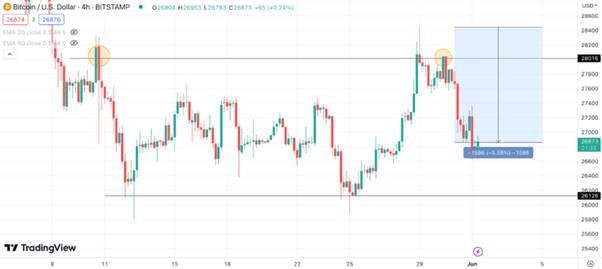
As such, the Bitcoin price and related trends will often affect the entire cryptocurrency market. When Bitcoin encounters any kind of uncertainty, other cryptocurrencies will often suffer – this is a scenario that is almost certain to happen in today's context.

Finally, the crypto market is also being influenced by personal consumption expenditure (PCE) data , and it is important that this data shows that inflation is still at its high point in April.

It's pouring cold water on investors who are still hoping the Fed will stop raising rates — or even cut rates.

When interest rates are high, "high-risk" assets like cryptocurrencies only make investors more nervous, choosing instead to focus on safer assets, such as bonds. .

Therefore, when the PCE index has no new movement, investors' sentiment in the market may continue to be negatively affected.

Insecurity about the recent price volatility of Bitcoin and Ethereum, many crypto investors are looking for other ways to hedge their risk.

One option that has gained a lot of attention in this area is yPredict ($YPRED) – a cryptocurrency analysis platform built on the Polygon network.

The platform is designed to be the world's first "all-in-one" analytics ecosystem using AI technology, aimed at developers, traders and market analysts.

In order to fulfill that mission, the yPredict team has developed a range of valuable tools and services into a convenient and amateur-friendly platform.
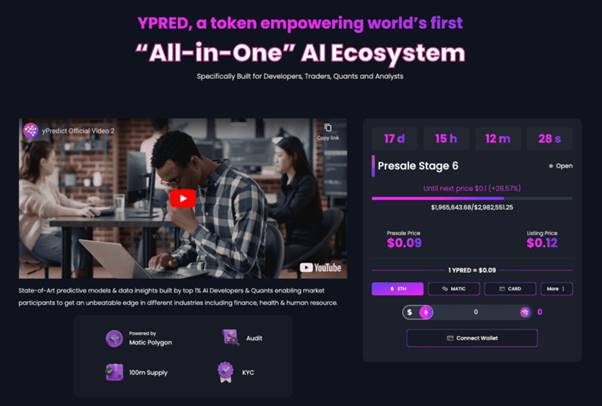
According to the project guidance report, some of the key features included in the platform are real-time trading signal monitoring, crypto market trend analysis, technical analysis using AI technology. , and automatic chart pattern recognition.

Furthermore, yPredict will also have a specialized trading marketplace where traders can access a premium prediction model developed by the world's top 1% of artificial intelligence and machine learning experts. .

This market has immediately received a lot of attention since it allows traders to access models that are only available to institutional investors, while at the same time creating passive profit opportunities for AI/ML developers.

Traders must use $YPRED, yPredict's native trading token, to have exposure to these models – of course token holders in hand will also have free access to the tools other analysis of the ecosystem.

With its advanced features, yPredict has attracted great interest from the community – recent reports show that more than 20,000 people are already on the project's waiting list.

Currently, yPredict is still in the early sale stage and has raised nearly 2 million USD from investors.

This early sale is in Phase 6 of a total of 8 phases, the token $YPRED is priced at $0.09 – 33% less than the planned exchange listing price.

XEM yPredict's Early Sale Now

Another project that is also going against the trend of other crypto markets is Launchpad XYZ ($LPX) .

Like the Wall Street Meme, Launchpad XYZ is currently in the early sale phase and has just broken through the $800k milestone.

This Ethereum-based project is opening a new path in the crypto space thanks to its fully centralized Web3 platform, which aims to streamline the digital asset investment process.

The Launchpad XYZ ecosystem includes many features, such as the NFT DEX or the early sale of cryptocurrencies, to help new players easily integrate into the ever-changing Web3 environment. .
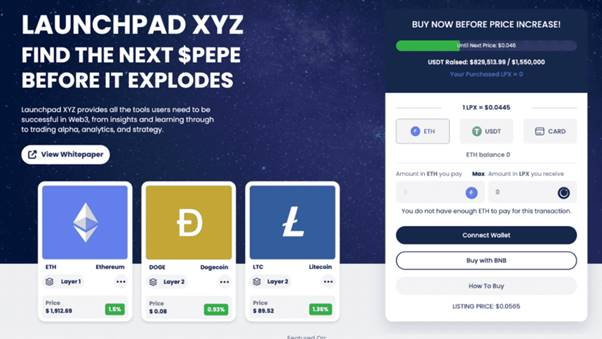
In addition, Launchpad XYZ also focuses on the education sector. The platform offers the “Inside Edge” newsletter and a Telegram channel dedicated to trading signals to all of its users.

That's not all, those looking for a more immersive and in-depth experience can check out Launchpad XYZ's metaverse library – ensuring that whatever you want, the platform can satisfy it.

Launchpad XYZ's utility token, $LPX, is vital in supporting all of the platform's features. This token is not only used to pay for transaction fees, but holders can also stake their tokens for exclusive perks – like access to the NFT whitelist.

Investors can now buy $LPX through Launchpad XYZ's early sale for just $0.0445 - 26% below the expected list price.

Attend Launchpad XYZ Early Sale

Finally, the sustainable development-focused project Ecoterra ($ECOTERRA) is also making great strides in the crypto market, having brought in more than $4.6 million even before its official launch.

Investors have been eagerly looking forward to owning the ticker $ECOTERRA during the ongoing early sale, especially as these tokens are being offered for sale at relatively low prices.

Like the two projects listed above, Ecoterra is in the spotlight, even as the cryptocurrency market plunges continuously. The project's Twitter account has more than 16,000 followers.

The craze around Ecoterra stems from its eco-friendly mission: to encourage individuals and businesses to move towards sustainability through the Recycle2Earn app, in which users will be rewarded with the code -20232023202320232023-3 - each recycling of common materials.
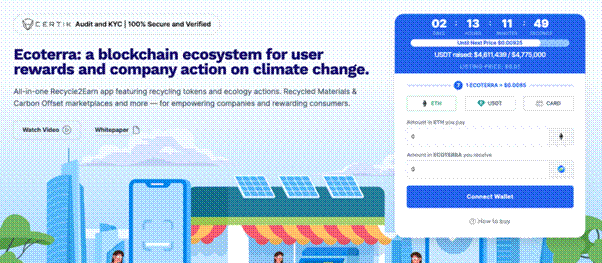
The Ecoterra ecosystem also opens up a Carbon Offset Market, a Recycled Materials Exchange, and even a public “Influence Profile” for each user – thereby maintaining its status as a global solution. represent crypto players who care about the environment.

Players can now own $ECOTERRA by participating in Phase 7 of the early sale, at a discounted price of only $0.0085 per token.

However, the number of tokens distributed for this period is rapidly decreasing – and once the early sale ends, the token will be listed for $0.00925.


Lecturas Relacionadas

Huang Renxun: El Prompt está quedando obsoleto, Loop es el nuevo paradigma

En el mundo de la IA, se está produciendo un cambio de paradigma: el "prompt" (instrucción directa) pierde relevancia frente al "loop" (bucle o ciclo). Según expertos como Jensen Huang (fundador de NVIDIA), Peter, Boris Cherny (creador de Claude Code) y Andrew Ng, la nueva tarea clave no es escribir prompts detallados, sino diseñar y gestionar loops. ¿Qué es un loop? Es un sistema automatizado donde la IA recibe un objetivo general, ejecuta tareas, las verifica automáticamente y, si no cumple los criterios, reintenta de forma independiente hasta completarlo o alcanzar un límite. Esto libera al humano de supervisar cada paso, transformándolo de "instructor" a "diseñador de reglas". Un loop no es lo mismo que un agente de IA: el agente ejecuta, mientras que el loop es el mecanismo que orquesta y automatiza su trabajo continuo sin intervención constante. Productos como Claude Code y OpenAI Codex ya implementan esta idea. Claude Code ofrece funciones como `/goal` (ejecución orientada a objetivos) y `/schedule` (tareas programadas), utilizando modelos separados para generar código (modelo principal) y para validarlo (modelo más pequeño como Haiku), asegurando una verificación objetiva. Codex emplea una "línea de ensamblaje automatizada" con múltiples subagentes que trabajan en paralelo. Boris Cherny describe cómo dirige cientos de pequeños agentes en loops automatizados que manejan desde issues de GitHub hasta fallos en CI, interviniendo solo en casos excepcionales. Para implementar loops efectivos, se recomienda: 1) Evaluar si la tarea es repetitiva, verificable automáticamente, con presupuesto de tokens viable y con herramientas adecuadas. 2) Comenzar con un loop mínimo viable (disparador, habilidad/Skill, archivo de estado STATE.md y compuerta/Gate de verificación). 3) Separar siempre la generación de código de su validación, usando agentes o modelos independientes para evitar sesgos. 4) Evitar errores comunes: establecer condiciones de parada claras (límites de tokens, iteraciones), persistir el estado en archivos, asignar solo tareas con criterios objetivos verificables por máquina (como corrección de Lint) y revisar los cambios (diffs) para mantener la comprensión del código. 5) Medir el éxito por el "costo promedio por modificación aceptada"; una tasa de aceptación inferior al 50% indica ineficiencia. Este enfoque representa la evolución natural en la ingeniería de IA: desde el "Prompt Engineering" (2023-2024, enfocado en redactar instrucciones), pasando por el "Context Engineering" (2024-2025, organizar la información de fondo), luego el "Harness Engineering" (2025-2026, crear entornos de ejecución con herramientas), hasta el actual "Loop Engineering". El nivel de control humano asciende desde frases específicas hacia el diseño de sistemas autónomos. Conceptos académicos como el marco ReAct (Reason+Act, 2022) de Shunyu Yao, que integra razonamiento y acción en un ciclo, sentaron las bases teóricas. A pesar del entusiasmo, expertos como Addy Osmani (Google) advierten sobre la etapa temprana de esta tecnología y los costos de tokens. Andrej Karpathy subraya una reflexión crucial: aunque la IA puede externalizar la ejecución, la comprensión profunda del problema sigue siendo responsabilidad humana. El loop marca un paso hacia una automatización más autónoma, pero su adopción requiere cuidado y criterio.

marsbitHace 28 min(s)

Huang Renxun: El Prompt está quedando obsoleto, Loop es el nuevo paradigma

marsbitHace 28 min(s)

GPT diseña GPT

OpenAI ha presentado su primer chip, Jalapeño, un cambio estratégico que va más allá de competir con Nvidia. La empresa busca controlar todo el proceso de producción de inteligencia artificial, desde los modelos hasta el hardware, la energía y los centros de datos. La brecha entre modelos líderes se está reduciendo, mientras que la ventaja competitiva se desplaza a capas más profundas: suministro de computación, costes de inferencia y eficiencia de sistemas. Cada token generado implica un costo, y OpenAI, con productos de gran consumo como ChatGPT, necesita reducir esta "tasa de inferencia" para fortalecer su rentabilidad y defensa competitiva a largo plazo. Jalapeño, un chip ASIC optimizado para inferencia de modelos de lenguaje, fue desarrollado en solo nueve meses con Broadcom. Este plazo résubevela la ventaja clave de OpenAI: utiliza su propio conocimiento interno sobre cómo se ejecutan sus modelos masivos en producción para guiar el diseño del hardware. Esencialmente, GPT ayuda a diseñar las máquinas que ejecutarán la próxima generación de GPT, creando un ciclo de retroalimentación potente. El enfoque en la inferencia es crucial porque, a diferencia del entrenamiento (una inversión puntual enorme), la inferencia consume el flujo de caja diario. Al optimizarla, OpenAI reduce costes operativos fundamentales para su escalabilidad comercial, especialmente con futuros agentes de IA que realizarán cadenas largas de razonamiento. Este movimiento refleja una ambición mayor: OpenAI no quiere ser solo un proveedor de modelos, sino construir un ecosistema integrado al estilo de Apple, donde el software, el hardware y la infraestructura se optimizan mutuamente en un ciclo cerrado. A corto plazo depende de Nvidia, pero al trazar su propia hoja de ruta de chips, emerge como un nuevo tipo de actor en la infraestructura de IA. En resumen, OpenAI ya no aspira solo a crear la inteligencia más avanzada, sino a controlar los medios completos de su producción.

marsbitHace 54 min(s)

GPT diseña GPT

marsbitHace 54 min(s)

La directora ejecutiva interina de la Fundación Ethereum alza la voz: ¿Cuál es nuestra misión?

El director interino de la Ethereum Foundation (EF), Aerugo, define la misión de la fundación: garantizar que Ethereum sea y siga siendo una infraestructura verdaderamente sin permiso, resistente a la censura, privada y segura, y que permita la coordinación a gran escala respetando la soberanía individual. El artículo detalla en qué **no** se centrará la EF: popularidad, atraer a grandes instituciones financieras o satisfacer a especuladores a corto plazo. Su propósito es **eliminar vulnerabilidades** en capas clave del ecosistema: * **Proceso de transacciones/MEV**: Combatir la extracción dañina de MEV, evitar monopolios en la construcción de bloques y garantizar la ejecución neutral. * **Privacidad**: Es fundamental. Un libro mayor público sin privacidad por defecto se convierte en una plataforma de vigilancia. * **Staking**: Debe ser accesible, privado y diverso para evitar puntos centralizados de control. * **Interfaces de acceso**: Facilitar que los usuarios (individuales e institucionales) interactúen con Ethereum de forma autónoma y resistente a la coerción. La EF también debe **aprovechar oportunidades**, como convertir a Ethereum en: * La primera infraestructura global resistente a ataques cuánticos. * Efectivo digital privado y una plataforma para la coordinación privada. * La base para carteras personales con agentes de IA controlados por el usuario. * Una opción competitiva y sin custodia para casos de uso institucional. Respecto a los cambios internos, el artículo confirma salidas de personal por ajustes estratégicos o de rol, pidiendo respeto y evitando el debate público sobre casos individuales. También anuncia que algunos trabajos se externalizarán en "empresas derivadas" (spin-offs). La EF solo financiará proyectos externos si son cruciales para su misión, evitando apoyar trabajos que se desvíen de sus principios fundamentales. La postura final es clara: La EF no es neutral respecto a la dirección de Ethereum. Su compromiso es con los principios de infraestructura sin permiso y neutral que respete la soberanía, y colaborará con quienes compartan este objetivo.

marsbitHace 1 hora(s)

La directora ejecutiva interina de la Fundación Ethereum alza la voz: ¿Cuál es nuestra misión?

marsbitHace 1 hora(s)

Habla el Director Ejecutivo Interino de la Fundación Ethereum: ¿Cuál es nuestra misión?

La Fundación Ethereum (EF) reafirma su misión fundamental: garantizar que Ethereum siga siendo una infraestructura verdaderamente sin permisos, resistente a la censura, de código abierto, privada y segura, que soporte la coordinación soberana a escala. La EF no existe para buscar popularidad, atraer a especuladores a corto plazo o promover cada aplicación. Su papel es fortalecer las defensas de Ethereum en todas las capas (protocolo, acceso, usuario, instituciones) para prevenir la extracción, el control por parte de cárteles o estados, y las herramientas de vigilancia. Esto implica abordar puntos débiles como el flujo de transacciones (MEV dañino), la privacidad (imprescindible por defecto), el staking (infraestructura de riesgo del protocolo) y las interfaces de acceso (para preservar la autonomía del usuario). La EF también actuará internamente, adoptando ETH y stablecoins nativas para pagos, alineándose con el sistema que busca mejorar. Paralelamente, la EF debe aprovechar oportunidades clave: preparar a Ethereum para ser resistente a la computación cuántica, lograr una pila de protocolo completamente autoverificable y privada, establecer a Ethereum como efectivo digital privado y digno, integrar agentes de IA en carteras personales soberanas, y demostrar que la infraestructura neutral puede manejar la coordinación a escala institucional de manera competitiva. Finalmente, la EF aborda cambios internos y proyectos derivados ("spinoffs"). Algunas salidas de personal son ajustes estratégicos o naturales. Los proyectos que dejan la EF serán evaluados para financiación externa basándose estrictamente en su alineación con la misión central: proteger y expandir la autonomía soberana dentro del ecosistema Ethereum, sin crear dependencias o desviar recursos de las prioridades fundamentales.

链捕手Hace 1 hora(s)

Habla el Director Ejecutivo Interino de la Fundación Ethereum: ¿Cuál es nuestra misión?

链捕手Hace 1 hora(s)

Trading

Spot
Futuros
活动图片