Fed Uncertain About More Rate Hikes, Minutes Show

BarronsPublicado a 2023-05-25Actualizado a 2023-05-25

Resumen

Fed officials continue to debate whether to raise interest rates or hold them steady when the policy committee next meets in mid-June.

Federal Reserve officials appear increasingly divided over the appropriate path forward for monetary policy, with participants acknowledging significant uncertainty at their May meeting and emphasizing a need to keep their options open as they debate whether to continue raising interest rates or holding them steady in the coming months.

Minutes from the central bank’s May 2-3 meeting show that while officials remain focused on reining in “unacceptably high” inflation, they are balancing the need to rein in price growth with the growing likelihood that fallout from recent banking failures will have a dampening impact on economic growth.

“Participants generally expressed uncertainty about how much more policy tightening may be appropriate,” the minutes say.

Several officials felt the impact of stricter financial conditions and the lag with which monetary policy operates could mean their tightening campaign was nearly finished if the economy continued to evolve in line with the current outlook, the minutes say. Some others, however, felt the progress in bringing inflation back in line with the Fed’s 2% target would continue to be “unacceptably slow” and further rate hikes would be necessary.

Officials were able to agree in general on the need to keep a close eye on incoming economic data and to keep their options open ahead of the next policy meeting, scheduled for June 13-14.

The fresh insight, released Wednesday afternoon, underscores how seriously Fed officials considered changing course and holding interest rates steady when they met earlier this month. Officials voted unanimously in May to raise interest rates by a quarter-point to a range of 5-5.25%. The minutes suggest there was significant discussion over what the Fed should do after that and whether it would be time to pause the tightening campaign and hold rates steady.

“In short, the hawks were still in charge in early May,” wrote Ian Shepherdson, chief economist with Pantheon Macroeconomics, after the minutes were released. “But the next round of CPI, PPI, and labor market data likely will strengthen the case for a June pause.”

After the minutes were released on Wednesday, traders put the probability that the Fed holds rates steady at the June meeting at 72%, according to the CME FedWatch Tool.

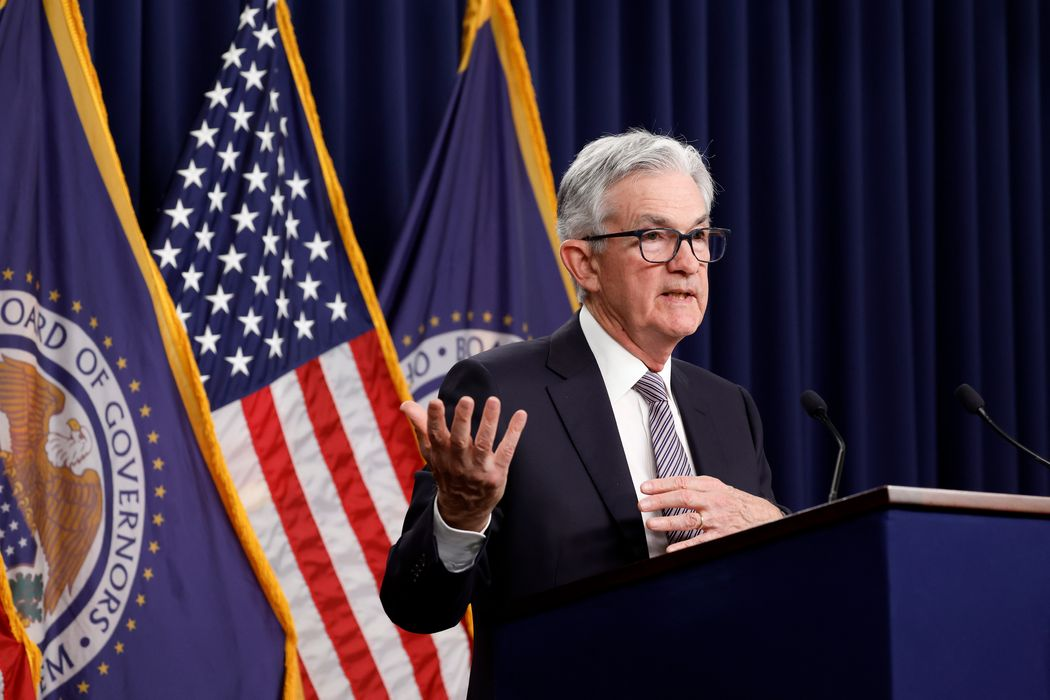
Fed Chairman Jerome Powell laid the groundwork at his postmeeting press conference in May for the central bank to hold rates steady at its next meeting, and officials deleted a line from their policy statement that said “ongoing increases” in the policy rate would be appropriate.

But Powell was careful not to suggest that officials had made a decision about what was coming next, and the minutes show other participants were focused on making sure the shift in their stance wasn’t misinterpreted. Some officials emphasized during the meeting the need to make clear that the changes to the statement didn’t mean the central bank had ruled out further rate hikes this year, or that it was leaning toward cutting rates, the minutes show.

Fed officials have said for months that they don’t anticipate lowering the federal-funds rate this year but will instead be holding it steady once they determine that they have reached a sufficiently restrictive level. That view stands at odds with the consensus forecast among investors, who continue to price in a significant likelihood of at least one quarter-point rate cut by the end of this year.

The Fed’s May rate hike came despite a view from committee staff economists that tightening in the pipeline so far, alongside the expected further tightening in bank credit conditions, would lead to a mild recession beginning later this year, the minutes show. Staff first released their recession forecast during the March meeting, which was held in the immediate aftermath of the failures of Silicon Valley and Signature Banks. The May meetings show committee staff see the downturn being followed by a “moderately paced” recovery.

Fed officials appeared to take a somewhat less dour view of the economic outlook, however, noting that while tightening credit conditions were likely to weigh on economic activity, “the extent of these effects remained uncertain.”

Ultimately, though, their decision on how to move forward in the coming meetings will depend largely on what forthcoming economic data show. April’s personal-consumption expenditures price index—the Fed’s preferred inflation gauge—will be released Friday, while May jobs numbers arrive next week and May consumer-price-index data will come the week after.


Lecturas Relacionadas

Habla el Director Ejecutivo Interino de la Fundación Ethereum: ¿Cuál es nuestra misión?

La Fundación Ethereum (EF) reafirma su misión fundamental: garantizar que Ethereum siga siendo una infraestructura verdaderamente sin permisos, resistente a la censura, de código abierto, privada y segura, que soporte la coordinación soberana a escala. La EF no existe para buscar popularidad, atraer a especuladores a corto plazo o promover cada aplicación. Su papel es fortalecer las defensas de Ethereum en todas las capas (protocolo, acceso, usuario, instituciones) para prevenir la extracción, el control por parte de cárteles o estados, y las herramientas de vigilancia. Esto implica abordar puntos débiles como el flujo de transacciones (MEV dañino), la privacidad (imprescindible por defecto), el staking (infraestructura de riesgo del protocolo) y las interfaces de acceso (para preservar la autonomía del usuario). La EF también actuará internamente, adoptando ETH y stablecoins nativas para pagos, alineándose con el sistema que busca mejorar. Paralelamente, la EF debe aprovechar oportunidades clave: preparar a Ethereum para ser resistente a la computación cuántica, lograr una pila de protocolo completamente autoverificable y privada, establecer a Ethereum como efectivo digital privado y digno, integrar agentes de IA en carteras personales soberanas, y demostrar que la infraestructura neutral puede manejar la coordinación a escala institucional de manera competitiva. Finalmente, la EF aborda cambios internos y proyectos derivados ("spinoffs"). Algunas salidas de personal son ajustes estratégicos o naturales. Los proyectos que dejan la EF serán evaluados para financiación externa basándose estrictamente en su alineación con la misión central: proteger y expandir la autonomía soberana dentro del ecosistema Ethereum, sin crear dependencias o desviar recursos de las prioridades fundamentales.

链捕手Hace 14 min(s)

Habla el Director Ejecutivo Interino de la Fundación Ethereum: ¿Cuál es nuestra misión?

链捕手Hace 14 min(s)

STRC cae por debajo de su valor nominal: el experimento del tesoro de Bitcoin entra en su segunda mitad

STRC, la acción preferente con dividendos emitida por MicroStrategy, ha caído por debajo de su valor nominal de 100 dólares, lo que ha generado un nuevo debate sobre el modelo de "empresas con tesorería en Bitcoin". Este evento representa una repreciación del balance, donde el mercado comienza a evaluar no solo la tenencia de BTC de la compañía, sino también su ciclo de financiación, la fuente de dividendos y su dependencia de los mercados de capitales. El modelo de MicroStrategy realiza tres conversiones clave: transformar acciones en exposición al Bitcoin, convertir tenencias de BTC en crédito de mercado y empaquetar un activo sin flujo de caja (BTC) en un valor que paga dividendos. La tensión central radica en que el activo es volátil y no genera caja, mientras que la estructura de capital requiere desembolsos constantes de efectivo. La caída del STRC indica que la presión se ha trasladado del precio del activo al costo de las herramientas de financiación. Aunque las pérdidas contables en BTC son significativas, el riesgo real es el desajuste de flujo de caja. La compañía tiene obligaciones de dividendos anuales por unos 1700 millones de dólares, muy por encima de los ingresos de su negocio de software. El desafío para MicroStrategy será gestionar tres costos crecientes: el de los dividendos (con rendimientos ya al 11.5%), el de la dilución por emitir más acciones ordinarias y el costo reputacional de vender BTC, rompiendo su narrativa de "solo comprar". Para el mercado de cripto, esto podría reducir un comprador marginal estable y reevaluar la narrativa de las "empresas tesoro", añadiendo primas por riesgo de financiación y liquidez a su valoración. En resumen, el experimento continúa, pero el descuento del STRC advierte que la sostenibilidad del modelo no depende solo del precio del Bitcoin, sino de la ventana de financiación, las reservas de efectivo y la prima de confianza que los inversores estén dispuestos a pagar.

marsbitHace 54 min(s)

STRC cae por debajo de su valor nominal: el experimento del tesoro de Bitcoin entra en su segunda mitad

marsbitHace 54 min(s)

Standard Chartered vuelve a entonar una fantasía desbocada de 50 veces, pintando un pastel para AAVE que apunta a los 3.500 dólares

El banco británico Standard Chartered ha lanzado una predicción audaz: el token AAVE, del protocolo de préstamos descentralizados Aave, podría aumentar 50 veces su valor para 2030, alcanzando los 3.500 dólares. Esta proyección optimista se basa en dos tendencias clave previstas por el banco: el valor total bloqueado (TVL) en DeFi crecería 37 veces hasta unos 2,7 billones de dólares, y la penetración de activos del mundo real (RWA) en DeFi aumentaría del 3,5% al 30%. Según su modelo, el crecimiento de los depósitos impulsaría los ingresos por comisiones y, en última instancia, la capitalización del token. La nota destaca la sólida posición de Aave en el mercado. Un informe de Grayscale señala que Aave es un activo impulsado por flujos de efectivo y está infravalorado, generando 142 millones de dólares en ingresos en 2025. Además, el protocolo captura más del 80% de las ganancias netas del sector de préstamos DeFi, a pesar de representar solo la mitad de su TVL, mostrando una rentabilidad dominante. Sin embargo, el artículo también señala debilidades estructurales. El modelo de préstamo "peer-to-pool" de Aave conlleva una significativa pérdida de eficiencia del capital, estimada en unos 52 millones de dólares anuales en sus principales mercados, debido a la necesidad de mantener liquidez inactiva como reserva. Este problema, junto con vulnerabilidades expuestas en incidentes como el hackeo de KelpDAO, representa un desafío. Competidores como Morpho, que ofrecen modelos más eficientes, están ganando terreno. En resumen, Aave se encuentra en una encrucijada entre la ambiciosa visión de crecimiento pintada por actores tradicionales y la necesidad de abordar sus limitaciones operativas para escalar de manera sostenible hacia una adopción masiva de activos en cadena.

链捕手Hace 1 hora(s)

Standard Chartered vuelve a entonar una fantasía desbocada de 50 veces, pintando un pastel para AAVE que apunta a los 3.500 dólares

链捕手Hace 1 hora(s)

Trading

Spot
Futuros
活动图片