Bitcoin HODLing Has Never Been More Popular

CoinDeskPublicado a 2023-05-24Actualizado a 2023-05-24

Resumen

More BTC than ever has been held for at least a year, according to Glassnode, a potentially bullish sign.

Investors are hanging onto their bitcoin (BTC) longer than ever – HODLing in industry parlance – according to data from Glassnode.

The proportion of BTC that’s been held for at least a year has climbed to a record 68%, Glassnode data shows, while 55% of bitcoin has been held for at least two years and 40% for three years.

Many analysts consider it bullish when BTC sits dormant on grounds that investors are choosing to hold on rather than sell. The prevalence of buy-and-hold in crypto contrasts with the long-term shift in U.S. stocks, a market where investors now hold assets for dramatically less time than they used to.
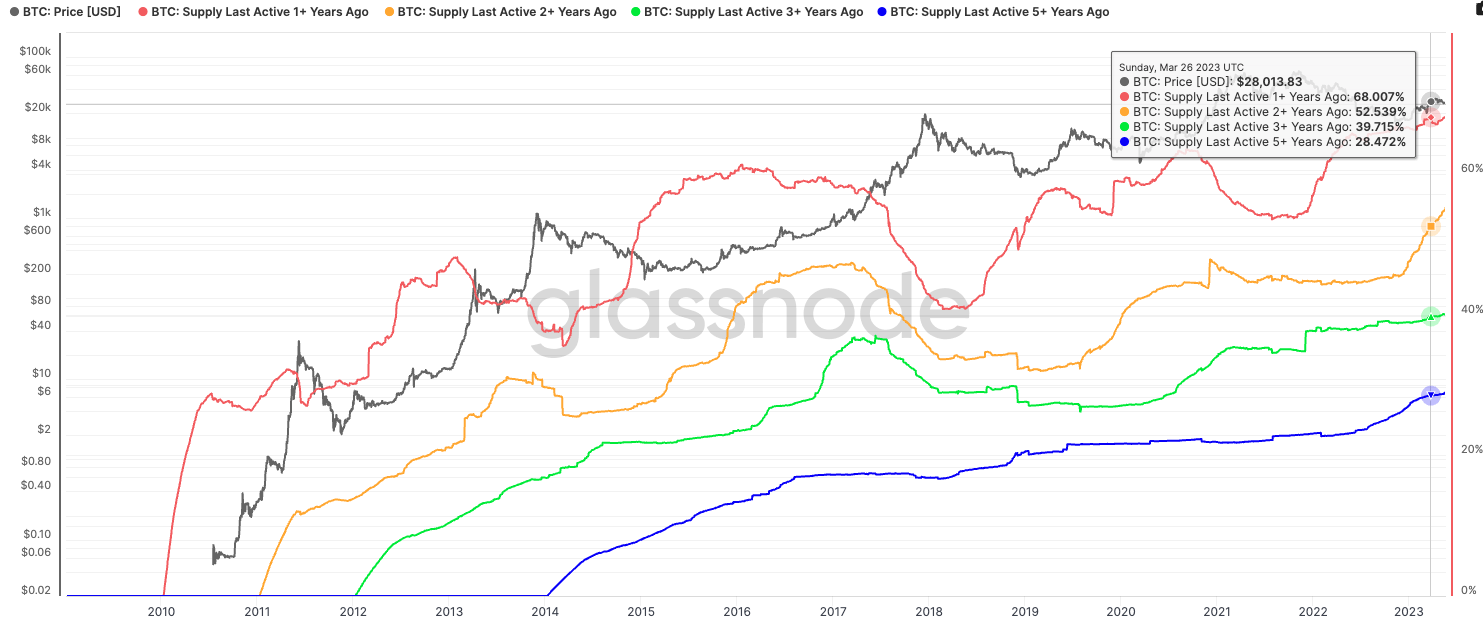
BTC: supply last active 1yr + age bands (Glassnode)

Sean Farrell, head of digital assets research at FundStrat, said that being a long-term holder has tended to get more popular over time. The exception is when markets get frothy and investors who bought dips sell their older coins to eager buyers.

“The trend is bullish insofar it means that higher prices are ahead in this cycle and any reticence to sell from current HODLers could result in a mini-supply squeeze,” said Farrell.

He added that looking at long-term holder supply metrics is not necessarily useful for short-term price signals.

Long-Term-Holder Supply, which Glassnode deems as coins held for longer than 155 days, has also seen a new all-time high — reaching 14.46 million bitcoin. “This reflects coins acquired immediately after the FTX failure maturing into long term holder status,” said the report.
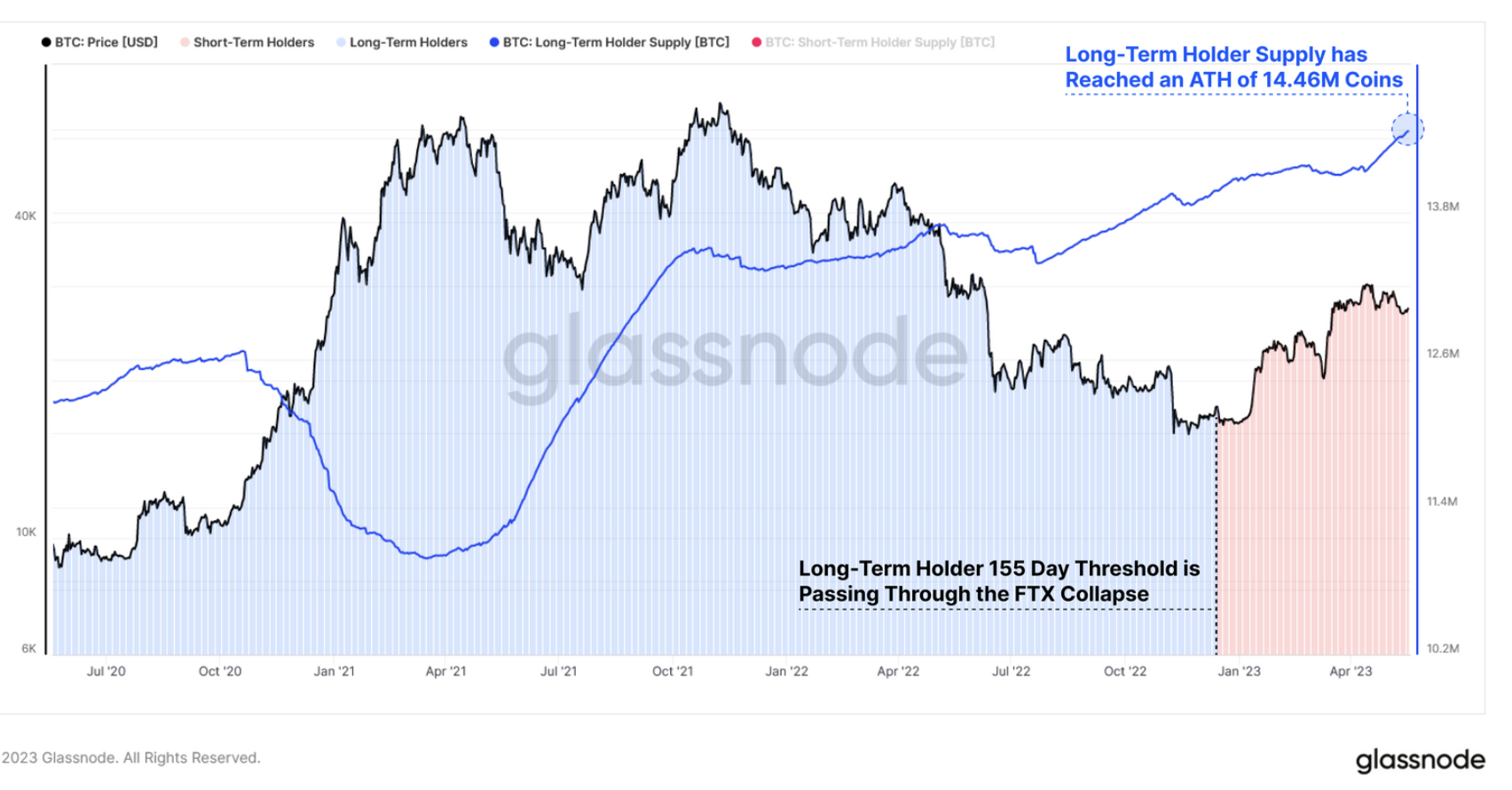
Bitcoin long term/short term holder threshold (Glassnode)

Glassnode’s Liveliness metric – which compares the relative balance between HODLing and spending behavior – also shows investors are hanging on. It has fallen to the lowest level since December 2020.

Lecturas Relacionadas

Arbitraje de Harness, rescatando DeFi desde el borde del SaaS

# Resumen en español europeo El artículo explora la intersección entre la inteligencia artificial (IA) y las finanzas descentralizadas (DeFi), argumentando que el modelo organizativo y de *tokens* de la IA es más eficiente que el de DeFi. Señala que el capitalismo ha evolucionado hacia la cuantificación de la mano de obra y los datos de los usuarios, pero la organización humana sigue siendo difícil de medir. La IA, mediante *tokens* asequibles y *agents* prácticos, está transformando esto al convertir las capacidades humanas en *skills* cuantificables y redefinir la colaboración en espacios digitales (*Harness*). DeFi, aunque pionera, se ha convertido en un modelo SaaS tradicional, centrado en cobrar por transacciones en lugar de innovar. La IA amenaza este modelo al vender "capacidad de trabajo" en lugar de *tokens*, democratizando habilidades antes monopolizadas por grandes empresas. El autor sugiere que la IA puede reformar DeFi mejorando la seguridad de los contratos inteligentes (ej. con sistemas como Mythos), optimizando la organización humana y reinventando la economía de *tokens* para reflejar mejor el rendimiento del capital y el riesgo en tiempo real. Concluye que, aunque la IA reduce el valor de los datos y el contenido hasta casi cero, abre nuevas oportunidades económicas para los individuos, con *agents* manejando tareas repetitivas y micro-pagos, mientras el valor real reside en el comportamiento humano único.

marsbitHace 4 hora(s)

Arbitraje de Harness, rescatando DeFi desde el borde del SaaS

marsbitHace 4 hora(s)

Trading

Spot
Futuros
活动图片